
This article is a follow-up, in part, to a previously published piece titled, How I Chose My Meat Rabbit Breeds and Why.

Jump to:
- How it Started
- What’s Changed in Terms of Breeds in the Rabbitry
- The Plan Was Always to Reduce the Number of Different Meat Rabbit Breeds I Was Keeping
- Difficulties keeping three different meat rabbit breeds
- Any of the Three Can Be Mixed, Matched, and Crossed
- The New Zealand Rabbits Served Me Well, But It Was Time to Move On
- VIDEO: What Happened To My New Zealand Rabbits?
- Would I Ever Keep New Zealand Meat Rabbits Again?
- Summarizing My Thoughts and Experiences with New Zealand Meat Rabbits
How it Started
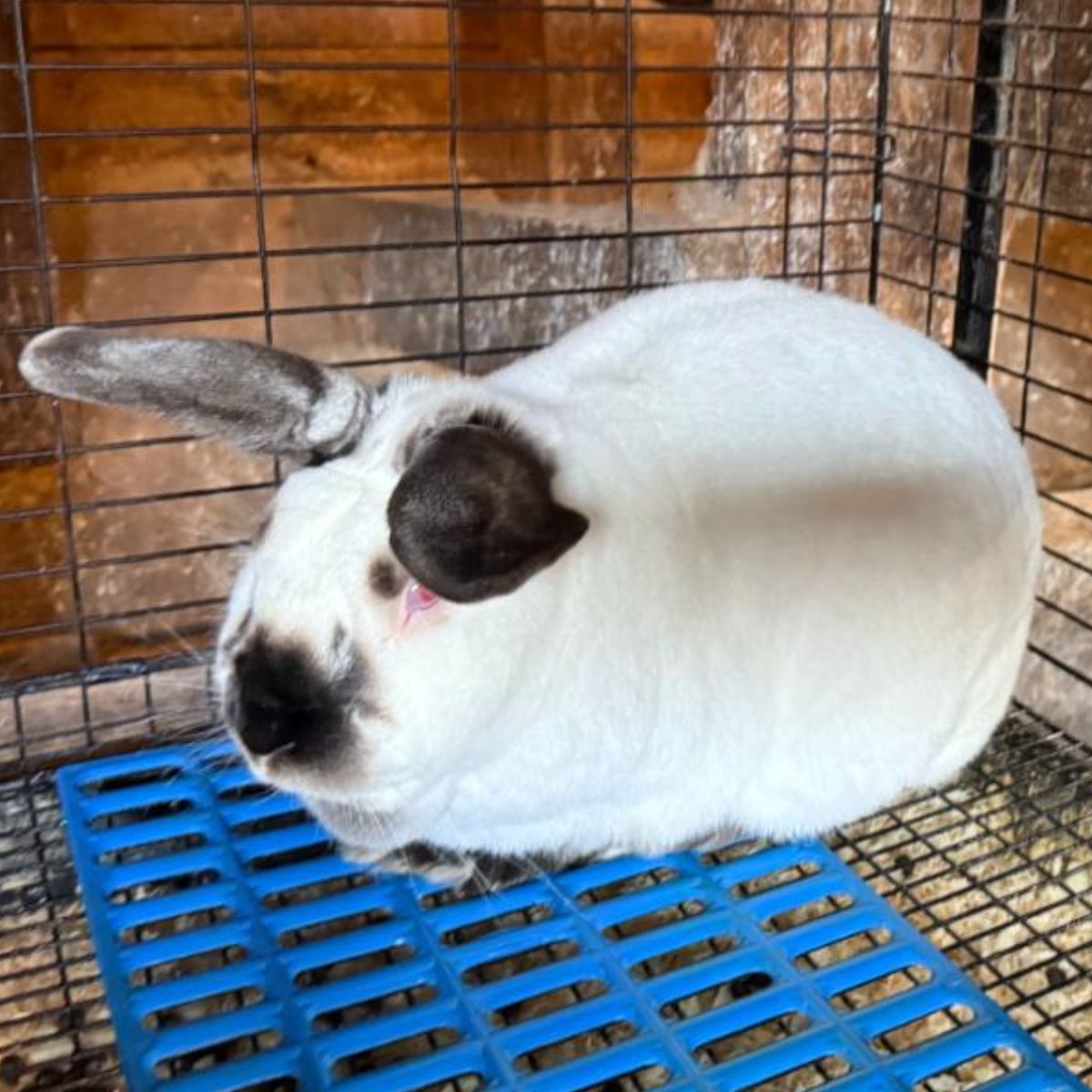
Originally, my chosen meat rabbit breeds were New Zealands and Californians. Frequently, I would cross the two for a crossed Californian x New Zealand grow out. These gave me grow outs with a fast growth rate and a good rate of gain (mostly from the New Zealands) and also a meaty carcass with more muscling and a good bone to meat ratio (characteristics from the Californians).
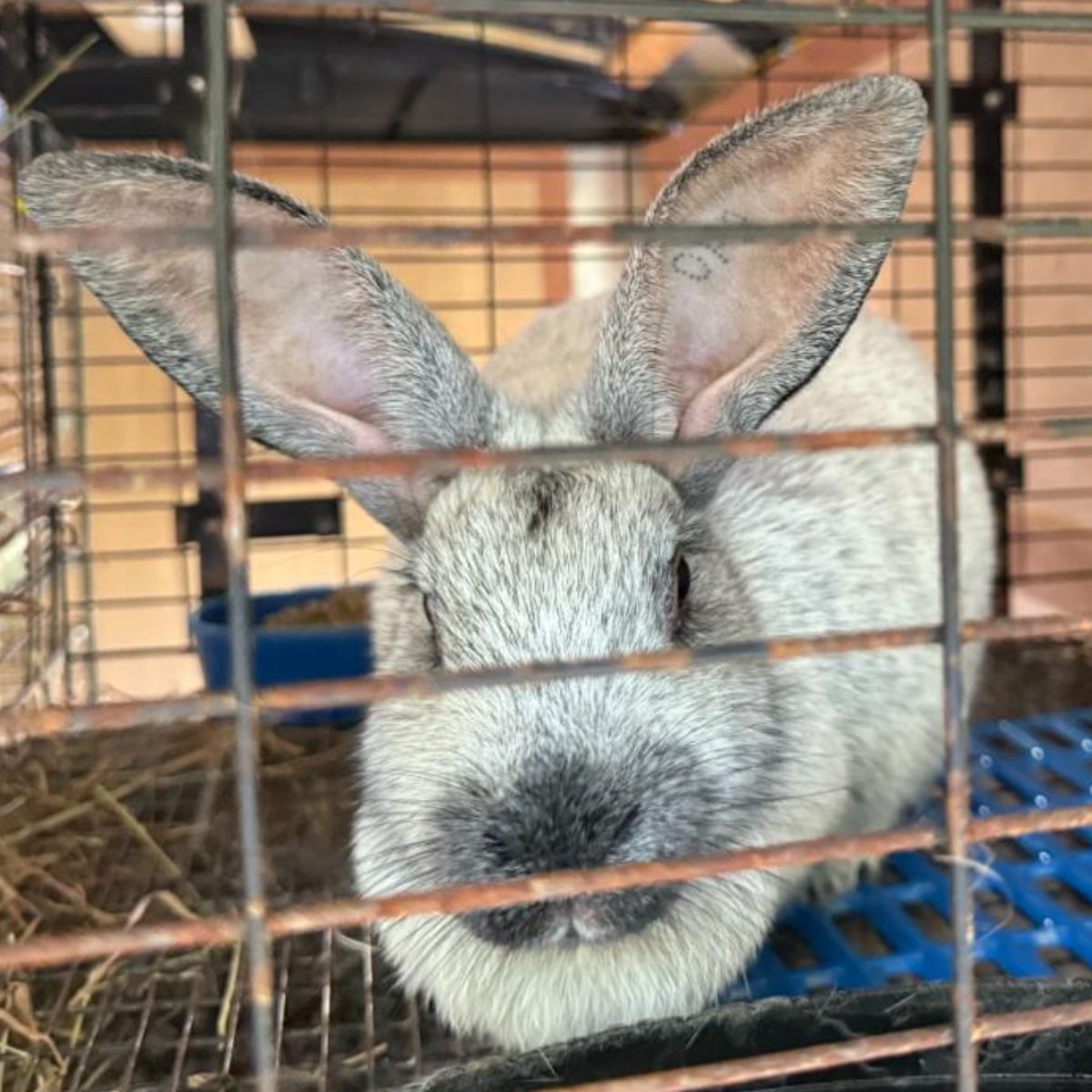
Over time, I became intrigued with the Champagne D’Argent meat rabbit breed. These are an old breed that also brings great rate of growth and excellent meatiness, along with good temperaments and fine coats (for those interested in tanning pelts, which I have not done so far -- but I have sold a few to others).
What’s Changed in Terms of Breeds in the Rabbitry

Today, I am no longer keeping New Zealand meat rabbits, at least not at this time.
Why?
First, let me say that all three of these breeds make excellent meat rabbits. I would not not recommend any one of them to others who ask me which breed of meat rabbit they should keep. They all have favorable traits that translate well into meat production, on either a small or large scale. (I would consider my rabbitry size to be on the moderate scale.)
When I brought in a third breed (the Champagne D’Argent rabbits), things were getting just a little too unwieldy. I gave the champagnes time to come up to mature breeding age and had some successful litters (and some not entirely successful, but okay litters). Once the champagnes got going, it was time to make some decisions.
The Plan Was Always to Reduce the Number of Different Meat Rabbit Breeds I Was Keeping
Really, the plan was always to reduce the number of different breeds I was keeping. I had toyed with possibly continuing to keep all three breeds, but only for a brief moment.
There were some potential benefits of keeping all three breeds:
- Potential for grow out crosses with favorable traits
- Potential to cross and capture hybrid vigor
- Three breeds gave me three different opportunities for purebreds that I could sell to others who wanted purebred stock for breeding, showing, or even as pets
- I had backups if one breed proved unsuccessful or undesirable in any way
- Californians and New Zealands are probably the most well-known and often the most popular and sought-after breeds for meat breeders, so I had two breeds of popular stock for selling
Difficulties keeping three different meat rabbit breeds

The problem with keeping three different breeds of meat rabbits is that it makes management efficiencies difficult.
- To keep three different purebred lines, I needed at least one doe and one buck of each
- However, one buck of any type could easily service three or more does, so I ended up keeping more bucks than necessary this way
- To really be able to have options in offering breeding pairs and trios for sale, I needed more diversity in the lines than what a single pair of each could give me.
- Line breeding is not uncommon in the meat rabbit world, and it’s not a negative when done right, but most buyers do not want breeding stock with only one set of genetics behind them.
- To be able to choose the best of the best for breeding and selling, I needed a range of animals to always choose from in the litters. Not all that are born should necessarily be sold.
- The highest level of quality and progress in a breeding program comes from careful selection, and a pair of each breed doesn’t give you as much to choose from.
- To create the diversity and options buyers wanted, I’d need to keep two pairs of each breed to really be able to offer what I wanted to, and what buyers wanted, especially if they were not interested in breeding crosses.
Mostly, to sum up, the problem with keeping multiple breeds is that I’m feeding too many breeders for not enough return. In fact, the lack of diversity and genetics is probably hurting breeder sales more than it is helping. And as far as the grow outs go and meat for my own household goes, I don’t need to keep anywhere near that many animals for what we want for eating.
Any of the Three Can Be Mixed, Matched, and Crossed

There is nothing wrong with keeping multiple breeds of rabbits if you want to. Crossing different meat rabbit breeds can result in some excellent offspring and often some “best of both worlds” favorable traits. (Like the fast-growing New Zealands and the meaty bone to meat ratio of the Californians when crossed together.)
For those with the space and inclination, this is something to consider and do, if it suits you.
What I was finding, considering all of the above, is that a lot of what I was getting out of the New Zealand purebreds and the New Zealand crosses, I could get from the champagne d’argents, either as pure breedings or when crossed with the Californians.
And so, at the end of the day, and with all things considered, it was sensible for me to let the New Zealands go and focus on the Champagne d’Argents and the Californians.
The New Zealand Rabbits Served Me Well, But It Was Time to Move On
So, why did I choose to cut out the New Zealands instead of one of the other breeds?
For the most part, the New Zealands were always a second string breed for me. When I brought the champagnes in, I figured those would be the breed I would cut out. I like the Californians, and the champagnes were my new venture, with a lot of benefits and interest for me, personally.
I am still on the early side of developing the champagne d’argent here, so the choice on who to cut was always between the Californians and the New Zealands.
Ultimately, what decided me on ending the New Zealand program was this:
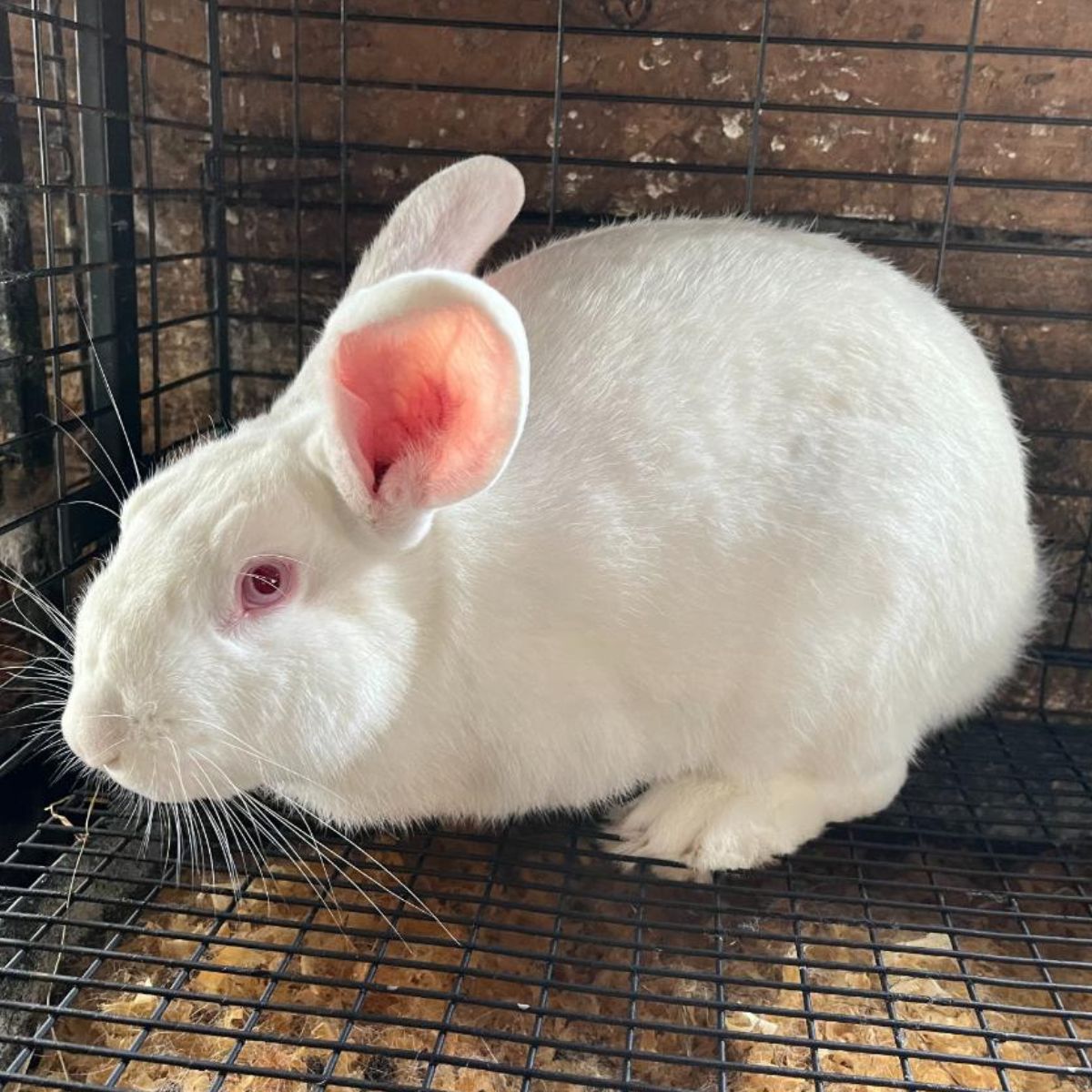
- Of the two breeds, the does I’d had the most breeding issues with were the New Zealand (NZ) Red Eye Whites (REW) (one never bred, and the other always had some issue when she kindled -- stretched, large kits that were stillborn, always at least one dead kit, sometimes more…underformed kits…there was always something)
- The New Zealand REW I had were only “okay” mothers and often lacked in mothering instinct; however, the broken NZ I had was superior to most, superior to probably all my breeding does.
- The New Zealand buck I had performed well enough, but was never as enthusiastic as I like to see in a breeder, and he tended toward smaller litters than the other bucks (either Californians, of which I’d had two, or the two champagne bucks)
- My broken New Zealand doe was, however, an excellent breeder until she’d reached old age, and even then was not much of a quitter
- The New Zealands were not aggressive, but they were more skittish; they were the more easily frightened and startled, and were overall less friendly than the Californians, and definitely less friendly than the champagne d’argents, which are very friendly and calm rabbits.
- On a practical note, the New Zealands were now my oldest rabbits and were aging out.
- To continue to keep New Zealands, I would have had to decide to invest in breeding stock, and the breed overall was not the top of my list, so I opted to phase them out through retirement and attrition to focus on the other two breeds (mostly the champagnes).
VIDEO: What Happened To My New Zealand Rabbits?
Would I Ever Keep New Zealand Meat Rabbits Again?

As I said, I would never tell anyone not to keep New Zealand rabbits. But when I am asked for breed recommendations, I typically say champagne d’argent (mostly for their fast growth rate and good weighty carcasses in a short time). I also recommend Californians.
But I will also say New Zealands are good, with the caveat that of the three, I’d had the most issues with the New Zealands. Those issues, though, were not what I would consider major. I do think that to continue with them, I’d need to bring in a few options in terms of stock, and select and cull to avoid some of the problems I’d had before.
On the other hand, the breed is so prolific that it is an option (to find more breeding stock nearby), whereas it is not always an option with some of the more limited breeds like the Champagnes and many of the breeds on the Livestock Conservancy lists of threatened breeds.
I would consider keeping New Zealands again. Mostly, I would consider it if I end up finding that the champagne d’argents don’t work out. I don’t expect that to be the case, but we do have some wrinkles to iron out there, so it’s a possibility.
I also have some interest in the Creme d’Argent breed, because it is a breed that is under “Watch” status with the Livestock Conservancy, and I like the idea of helping to preserve some of the breeds that need preserving. I also suspect the cremes, though they are a little smaller and probably a little slower growing than the champagnes, may potentially smooth out some of the wrinkles that the champagnes have. That said, I don’t intend to stop keeping the champagnes, either. It’s more to the point that before I bring New Zealands back in, I’m probably likely to try out the Creme d’argent breed first.
Summarizing My Thoughts and Experiences with New Zealand Meat Rabbits

In summary, the New Zealand rabbit breed is still an excellent meat rabbit breed to keep. I would never say “don’t go there!”. The New Zealands had a place here, but all things considered, I chose to explore other avenues and the New Zealand were the breed of rabbits that made the most sense to me, personally, to remove from my rabbitry.
New Zealand meat rabbits remain a good, solid breed of meat rabbit that is worth considering.


Leave a Reply