
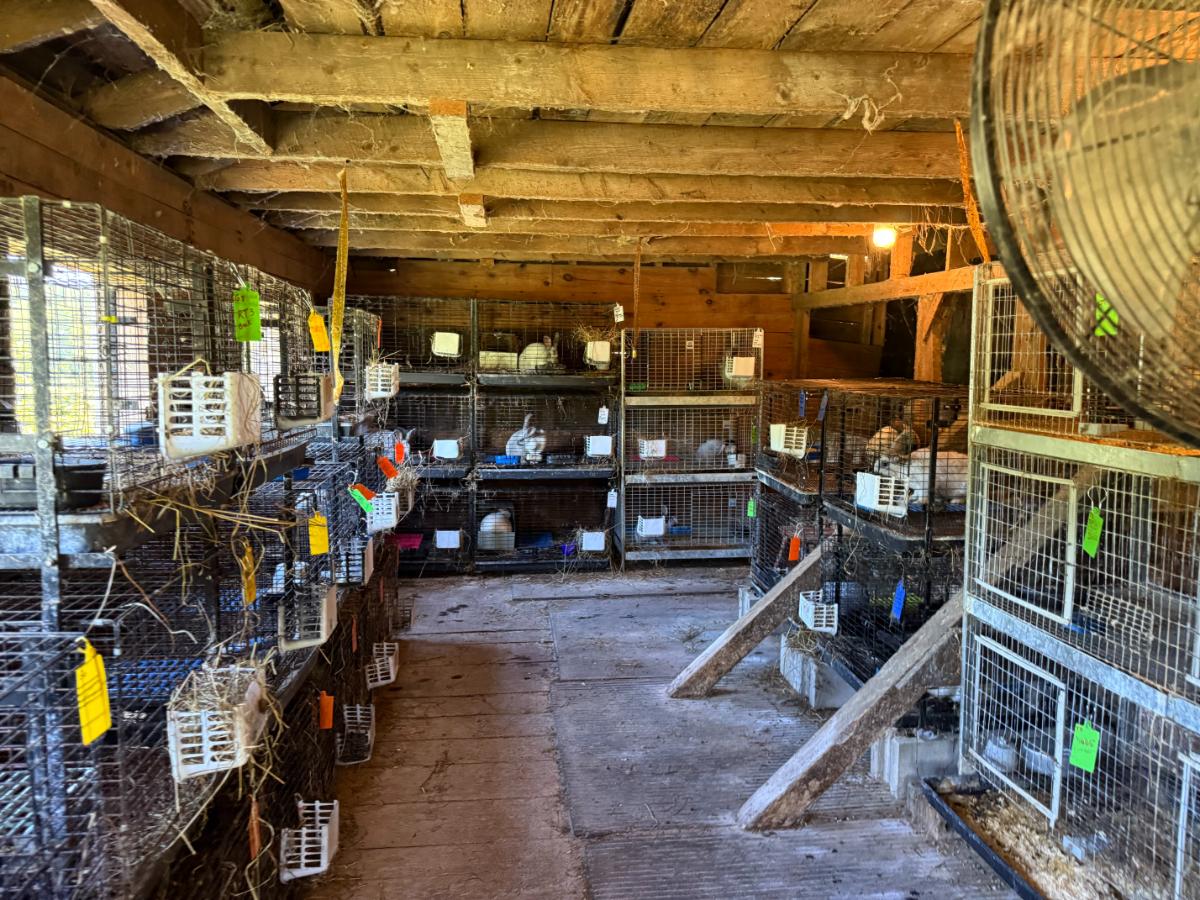
If you’ve done any research into raising meat rabbits at all, you’ve heard that good air circulation is critical and that ammonia smells in the rabbitry are very bad.
Practically every resource will mention this.
But why is this so bad for your meat rabbits? [In truth, for all rabbits of any kind.]
What are the actual physical impacts of ammonia smells on meat rabbits?
Jump to:
- Where Do Ammonia Smells Come From in the Rabbitry?
- Where There is Smoke, There’s Fire, and Where There Are Ammonia Smells, There is Ammonia Gas
- What Does Having Ammonia in the Air Do to Meat Rabbits?
- Ammonia’s impact on a healthy immune and digestive system
- Does Ammonia Make Meat Rabbits Sick?
- VIDEO: How Exactly Does Ammonia in the Air Make Meat Rabbits Sick?
- How Bad is Too Bad for Meat Rabbits and Ammonia Smells?
- How Can You Limit and Control Ammonia in the Rabbitry or Meat Rabbit Barn?
- Regular Care and Management Makes Ammonia Injury a Non-issue
- More Useful Reading and Resources
Where Do Ammonia Smells Come From in the Rabbitry?
Ammonia is produced when microbes break down the nitrogen that is excreted in rabbit manure and waste.
Rabbits, as with all animals, don’t make the most efficient use of nitrogen and excrete a significant percentage of what they intake into their waste. This is then broken down by natural processes by microbes. When this happens, ammonia gas is released into the air.
In short, where there is rabbit waste, there is always some amount of ammonia. The key is to not let this level get so high as to be detrimental to your rabbits.
Where There is Smoke, There’s Fire, and Where There Are Ammonia Smells, There is Ammonia Gas
You can buy ammonia test kits, which will tell you if ammonia is present and at what levels. However, practically speaking, it is not realistic to constantly be testing the ammonia levels in your rabbit barn.
If you keep your rabbits outside, this would be difficult to do anyway, but outside rabbits, depending on their housing conditions, can fall victim to the presence of too much ammonia, too.
If you can smell or detect ammonia in your rabbit barn or outdoors around your rabbit cages, then you have ammonia gas. And your rabbits have been detecting it long before you were.
What Does Having Ammonia in the Air Do to Meat Rabbits?
“The number of cases of pneumonia is directly proportional to the level of ammonia in the cage, hutch, or rabbitry. Ventilation is of utmost importance to provide good air quality.” -- Merck Veterinary Manual [Online]
“Keeping ammonia levels under control eliminates one powerful predisposing factor to respiratory disease.” -- Karen Patry, The Rabbit Raising Problem Solver.
The most often noted impacts on meat rabbit health associated with high environmental levels of ammonia are respiratory illnesses. These can include, but may not be limited to,
- Sneezing
- Congestion
- Lung ailments
- Labored breathing
- Colored mucus in the nose
- Wet nose
- Lethargy and low energy
- Reduced appetite
- Difficulty breathing
- Mouth breathing
- Head thrown back in an attempt to get air
- Blue lips from lack of oxygen
- Fevers
- Bronchitis
- Pneumonia
- Chronic respiratory illness
- Chronic sensitivities that result in symptoms such as those listed above
Other issues in rabbits that may be traceable to ammonia levels include weeping or infected eyes and nasal passages.
Ammonia’s impact on a healthy immune and digestive system
The respiratory tract is not the only bodily system that is impacted by high ammonia. The digestive system and immune system are negatively impacted as well. This can lead to illness and disease of those systems.
A study in China showed that high ammonia levels in the rabbit environment negatively impact every system of the body, including growth rates. The impacts included damage to the cecum (where cecotropes are produced).
Gut flora, so critical to rabbit digestion and nutrition, is interrupted when lipid metabolism breaks down and causes damage to the intestinal barrier. In turn, this resulted in poor growth rates and performance.
Further links were made to the importance of balanced intestinal and digestive flora and its role in maintaining a strong immune system, thus showing further impacts to meat rabbit immunity and the maintenance of health in general.
Does Ammonia Make Meat Rabbits Sick?
By itself, ammonia does not cause illness. But it does cause irritation and inflammation that sets the stage for illness to set in.
The presence of ammonia as an irritant weakens the rabbit’s respiratory tract and other essential internal organs and functions. It makes the rabbit vulnerable to all sorts of illnesses and diseases.
Irritation from ammonia can cause
- Lesions in the nasal passages, throat, airways, and lungs (basically, burns)
- Barrier breakdowns in the intestines and digestive tract
- Breakdown of hind gut fermentation
- Other impacts on the body, systems, and function that predispose the rabbit to illness or disease
It makes it far easier for a virus, bacteria, mold, or fungus to take hold in systems that have been injured and compromised by high ammonia. So, because the rabbit is already weakened, and because its digestion and protective gut flora are already compromised, the rabbit’s immunity is compromised.
Exposure to a virus, bacteria, mold, or pathogen that might otherwise be manageable now becomes a full-on infection. Both primary and secondary illnesses and infections may occur.
Further, most rabbits are carriers of potential pathogens like Pasteurella and E. Cuniculi. Rabbits with a strong immune system may simply be lifelong carriers. Many are. But rabbits in challenging environments or that are otherwise stressed or compromised may experience a clinical illness (in other words, active infection with symptoms instead of a manageable load of dormant germs or parasites).
This is often the case for meat rabbits in poor housing, messy colonies, cages, or barns, wet environments, or housing with poor air quality.
Karen Patry, in the Rabbit Raising Problem Solver, explains it simply:
“It is not that ammonia causes pneumonia, but high levels of ammonia in the air irritate the linings of airways, making it easier for germs to purchase a foothold within the respiratory tract. With an inflamed and now infected respiratory tract, an infection can quickly progress to pneumonia.”
VIDEO: How Exactly Does Ammonia in the Air Make Meat Rabbits Sick?
How Bad is Too Bad for Meat Rabbits and Ammonia Smells?
Ammonia that is detectable by you is already too high for your rabbits.
Reports of damaging ammonia levels focus more on other types of livestock than rabbits (as is often the case for rabbit research), but to put some perspective on the matter, humans begin to experience the negative of effects of environmental ammonia at 50 parts per million (ppm), while damage to the trachea and mucosal linings in chickens is observed at just 10 ppm.
The takeaway is this: clean your rabbit barn before you start smelling ammonia. If you can detect an ammonia smell, the level is already too high.
Certainly, if you are experiencing watering eyes or irritated breathing, the ammonia is far too high for your rabbits.
Of course, some typical rabbit smells are normal. But when this odor goes beyond “rabbity” and starts smelling like a household cleaner layered on top of your manure and rabbit body odors, it’s far too high.
Don’t let ammonia odors get high enough that you can smell them -- ventilate daily and regularly, exchange barn air daily, and clean before you smell them as ammonia.
How Can You Limit and Control Ammonia in the Rabbitry or Meat Rabbit Barn?
“Frequent manure removal is essential. Excess manure leads to unacceptable levels of ammonia in the air, which predisposes to respiratory disease if housed indoors.” -- Merck Veterinary Manual [Online]
There is a simple way to control ammonia smells in your barn. A few key practices will easily keep ammonia levels at a low, healthy rate for your rabbits.
The keys to controlling ammonia in your rabbitry?
- House rabbits in wire cages
- Regular cleaning
- Air flow
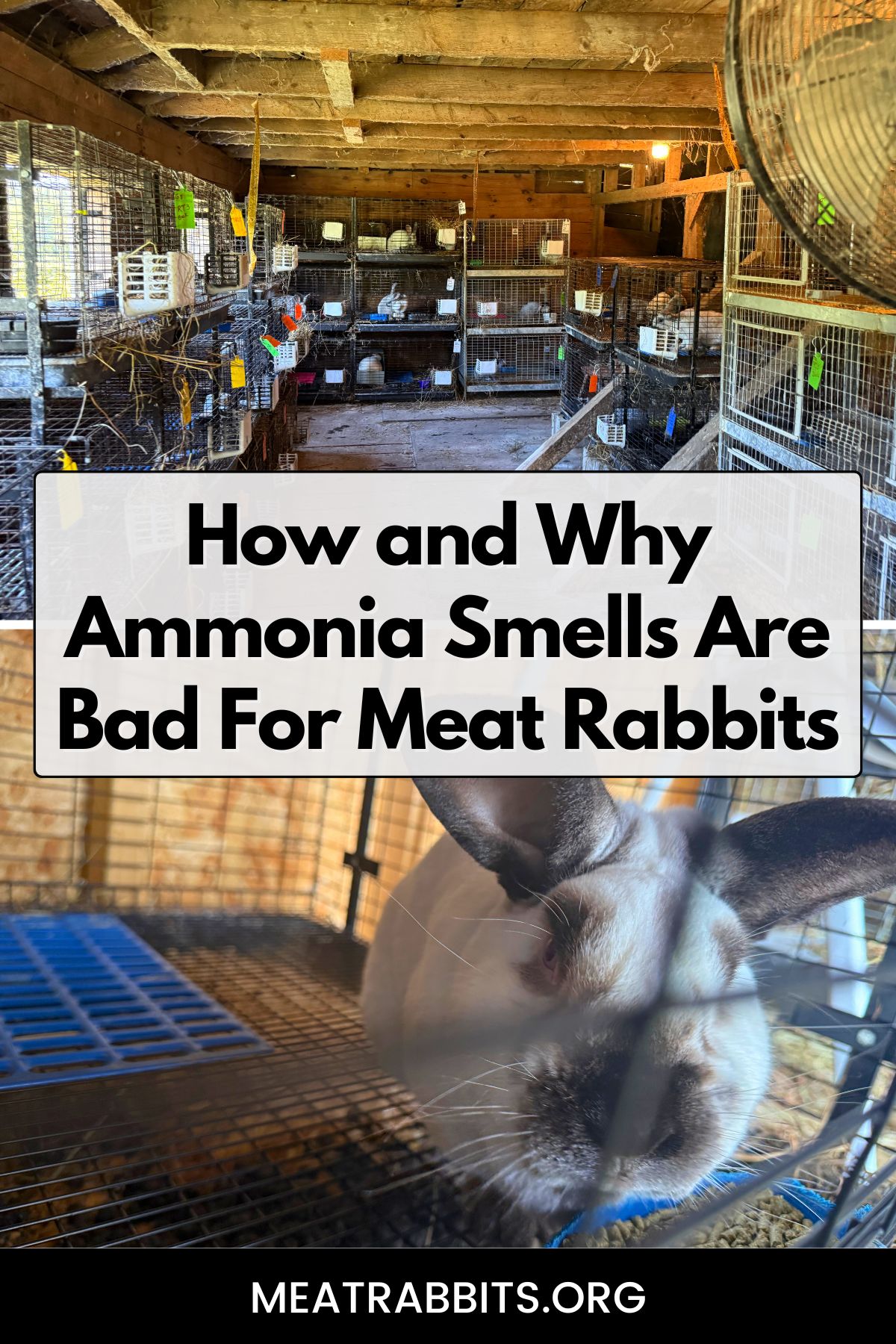
Housing rabbits in wire cages allows for optimal airflow. It also allows the urine and waste to fall below the rabbits, keeping them out of direct contact with it and keeping it from piling up close to their sensitive respiratory systems.
Regular cleaning will keep the amount of off-gassing waste to a minimum and will keep detectable levels low.
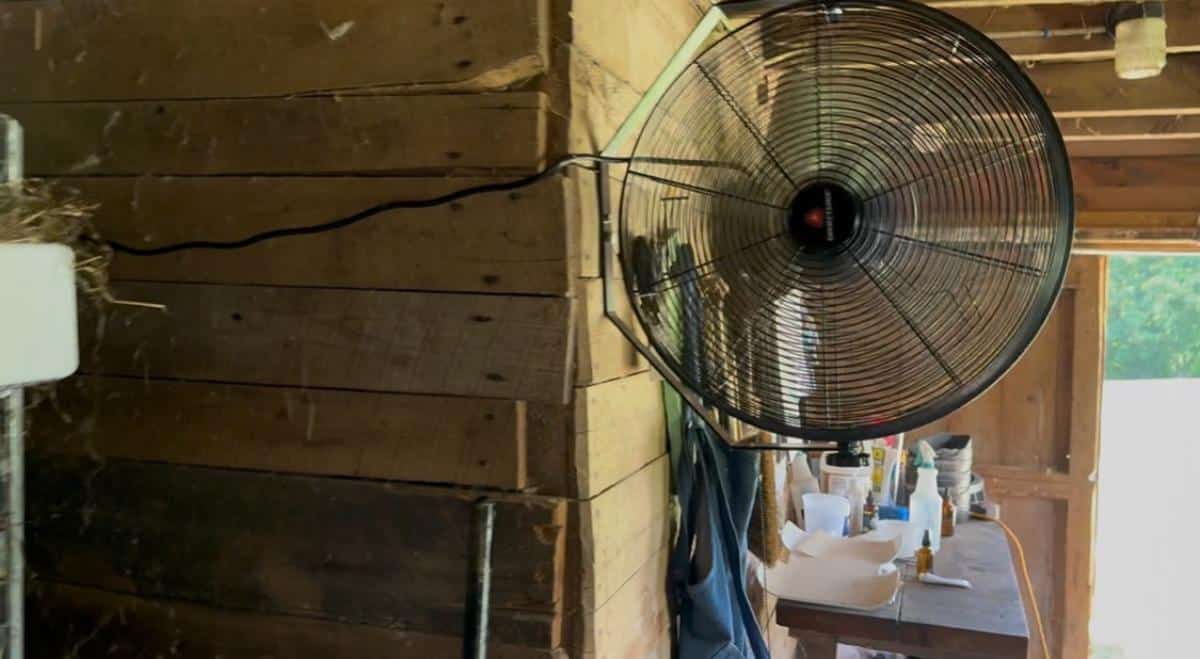
Good airflow, either because you have adequate doors, windows, or vents for barn ventilation or because you house your rabbits outside in cages, colonies, or hutches, is critical. If you find the air to be too stagnant and still in your rabbitry, consider adding one or two fans to move in and through the barn. This will help dissipate the ammonia gas.
To be more specific
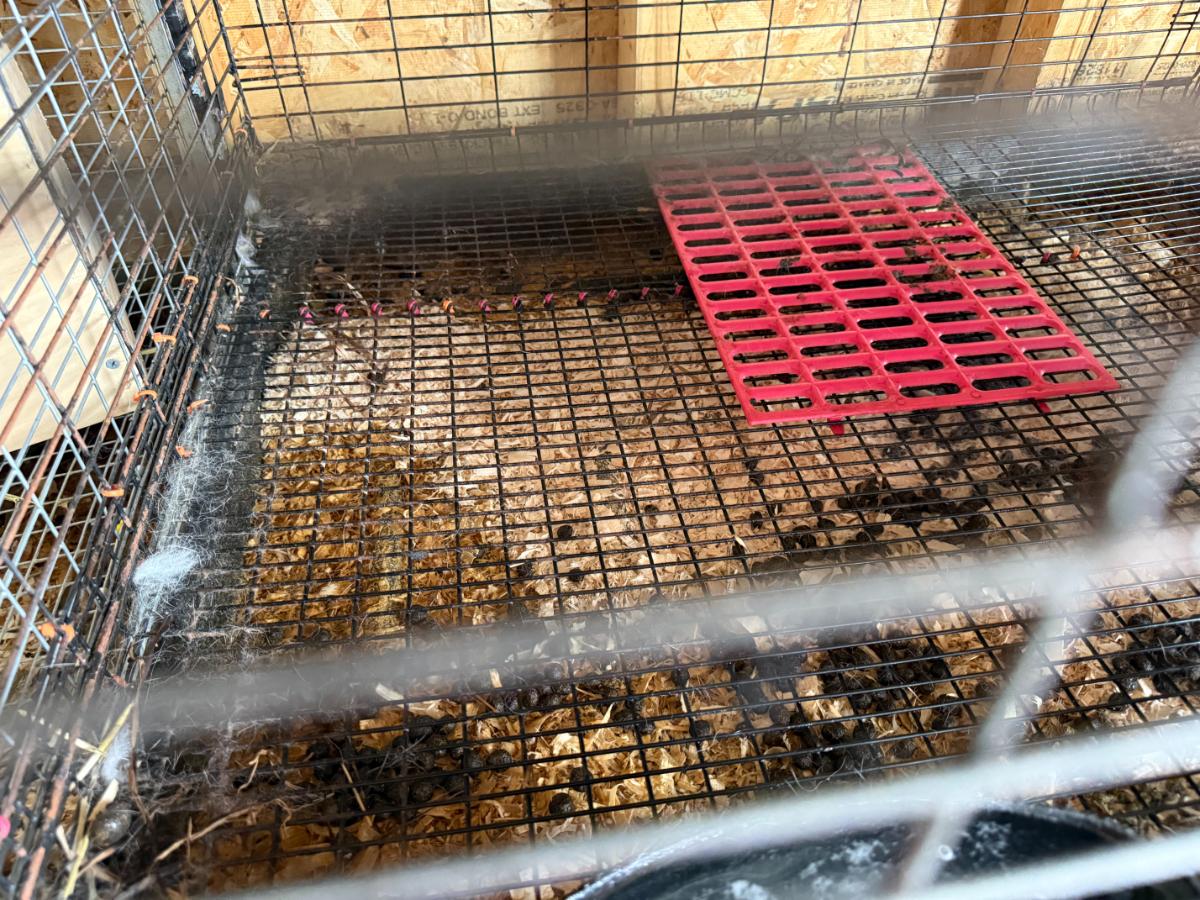
- If you are using drop pans, plan to clean your rabbitry at least once a week
- In warmer weather or if you have higher numbers in your rabbitry, you may need to clean twice weekly
- Spray drop pans or collection containers/units out when you clean them to get rid of excess waste and urine
- Even in hanging cages with piled waste below the cages, if indoors, you will probably have to clean weekly [shovel out refuse], or perhaps biweekly if you are doing a layered type of system (such as covering with a full layer of shavings one or more times per week)
- Some breeders use diversion systems that allow urine and waste to either be separated or run off, or to be sprayed down through a channel system outside the barn
- Separating urine from manure can decrease ammonia production
- Another option is hanging cages with large totes underneath that can be emptied once or more per week
- Try not to disturb waste in between cleanings, as this can release more ammonia gas
- Ammonia production increases in hotter temperatures, so you may need to clean more often in hot weather
- Humidity enhances the effects of ammonia, so keep this in mind in periods of high humidity
- This can make ammonia a problem in winter, especially in periods of warm and cold cycles, when humidity in the barn may increase
- Humidity makes ammonia gas, which is usually lighter than air, heavier when it binds to water in the air
- This can make ammonia settle and be more difficult to ventilate through the barn
- Though cold temperatures help control ammonia, it is important to consider winter air quality because we tend to have our barns and cages more closed up during these periods, and ventilation may be reduced in an effort to control cold exposure -- another reason why you shouldn’t fear the cold for your meat rabbits!
- Winter can also increase ammonia because we cannot always clean as completely or as often as we would like to, and then we may be struck with a sudden ammonia=producing warm or humid spell -- with a lot of waste around to produce it!
Keep your meat rabbits well watered
Well-watered meat rabbits will have less concentrated and thus less odorous urine. Access to plentiful water will keep your meat rabbits well hydrated, their urine less concentrated, and will improve overall health and growth rates (because water consumption is directly correlated to feed consumption, hence growth).
You can also add apple cider vinegar (preferably organic with the mother) to your rabbits’ water, which can help break down and decrease ammonia and odors in urine.
Absorbents to help control ammonia in meat rabbit barns
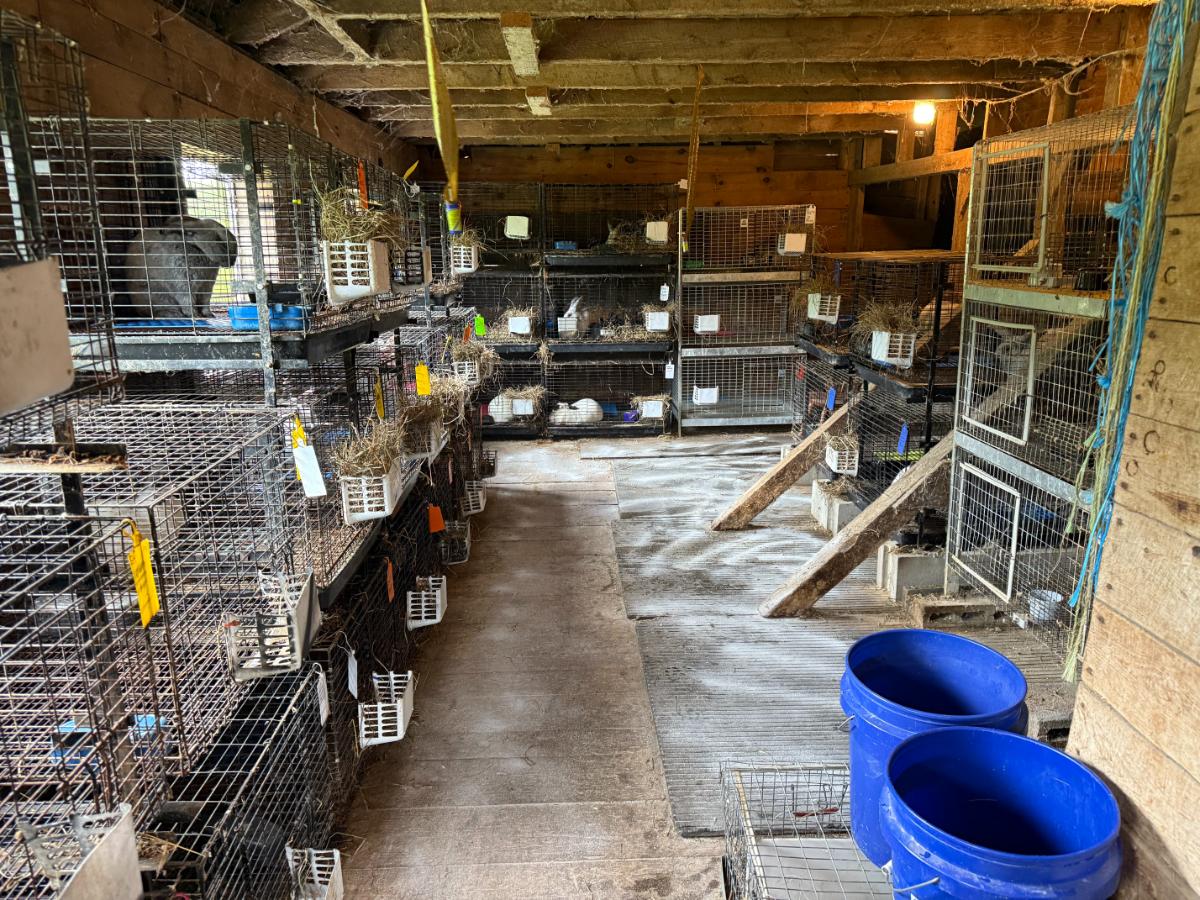
There are different materials that you can use in dropping trays, under-hanging cages, or in deep pack waste systems that will help keep ammonia off-gassing and odors under control.
Some examples include:
- Kiln-dried absorbent pine shavings
- Lime or barn grip lime (can be used on piles of waste, in dropping pans, and/or sprinkled on the barn floor for more insect and odor protection)
- Paper litter pellets
- Pet/animal safe wood pellets
- Shredded paper
- Baking soda
- Pelletized bedding materials such as Sweet PDZ stall or coop refresher or similar ammonia-absorbing products
For any product you use that is accessible to the rabbits (i.e., that they can come into direct contact with), make sure it is safe for rabbits to lie in, touch, and potentially consume -- because rabbits will chew everything!
If you use rabbit waste in your gardens or compost, consider what you are using as absorbers in the barn or dropping trays. This will end up in your garden ground, too! Most of these products are fine and perfectly safe; however, they do also have the potential to dramatically change compost or soil pH.
Which is just to say…you may want to test the compost to see where the pH range is before applying it, and you may want to retest soil where you have directly applied rabbit barn or rabbitry waste to make sure it is staying in the range you want it to stay in.
Controlling ammonia outdoors
It is typically easier to control ammonia smells for meat rabbits living outdoors, but do not assume that just because your rabbits live outside, ammonia will not build up or be a problem for them.
- Clean under raised hutches or cages regularly so that there is no detectable odor coming up to stifle the rabbits
- Remember that composting waste will heat up (just like a compost pile!), and this can cause more odors and heat rising up toward your rabbits if not regularly removed
- Avoid turning waste piles and disturbing them in between cleanings -- this releases more ammonia gas
- Wait until you can remove waste completely and let it compost elsewhere!
- Remember that if you can smell it, the ammonia is too strong and is affecting your rabbits
- If using rabbit tractors or similar mobile units, move regularly so that rabbits are not sitting on urine-soaked ground
- Make sure that hutches and cages do not have places in the cages or the hide areas or shelters where waste is piling up. A small amount of urine and manure in a small hide box or shelter can easily become trapped.
Regular Care and Management Makes Ammonia Injury a Non-issue
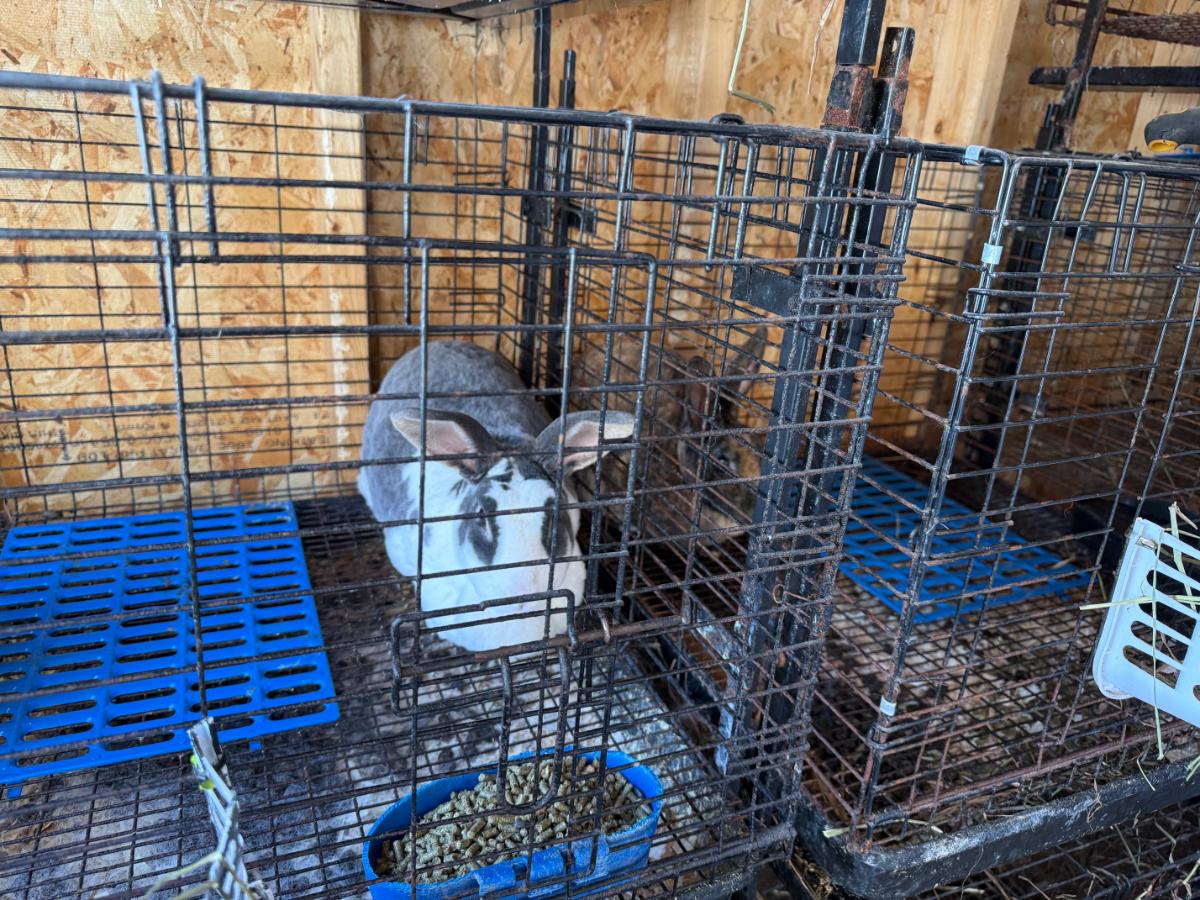
The good news is that ammonia dissipates easily under the right conditions. It has a “short atmospheric lifetime”. So if you ventilate well and clean often, you can easily keep ammonia levels low in a well-ventilated and well-maintained rabbitry.
This is one of those rabbit issues that sounds both simple and complex. But at the end of the day, maintaining good, sweet air and healthy rabbits is made far easier by simple good management, a good, regular cleaning routine, and managed health and wellness of your rabbits.
More Useful Reading and Resources
- The Rabbit-Raising Problem Solver: Your Questions Answered about Housing, Feeding, Behavior, Health Care, Breeding, and Kindling
- House ammonia exposure causes alterations in microbiota, transcriptome, and metabolome of rabbits
- Concentration and Emission of Airborne Contaminants in a Laboratory Animal Facility Housing Rabbits - PMC
- Ammonia Emission from Animal Feeding Operations and Its Impacts | Ohioline
- Water: The Most Important Nutrient for Meat Rabbits
- 15 Ways to Use Apple Cider Vinegar For Meat Rabbits
- Bacterial and Mycotic Diseases of Rabbits - Exotic and Laboratory Animals - Merck Veterinary Manual
- Housing of Rabbits - Exotic and Laboratory Animals - MSD Veterinary Manual
- Ammonia Odor and Its Effect on Your Rabbits
- Effects of ammonia on growth performance, lipid metabolism and cecal microbial community of rabbits | PLOS One
- Why Is my Rabbit Sneezing
- Baking soda in paper pellet bedding - Binky Bunny

Leave a Reply