
We tend to focus so much on the weights of grow outs and younger meat rabbits that it is easy to forget that we should continue to take periodic weights on adult rabbits, too.
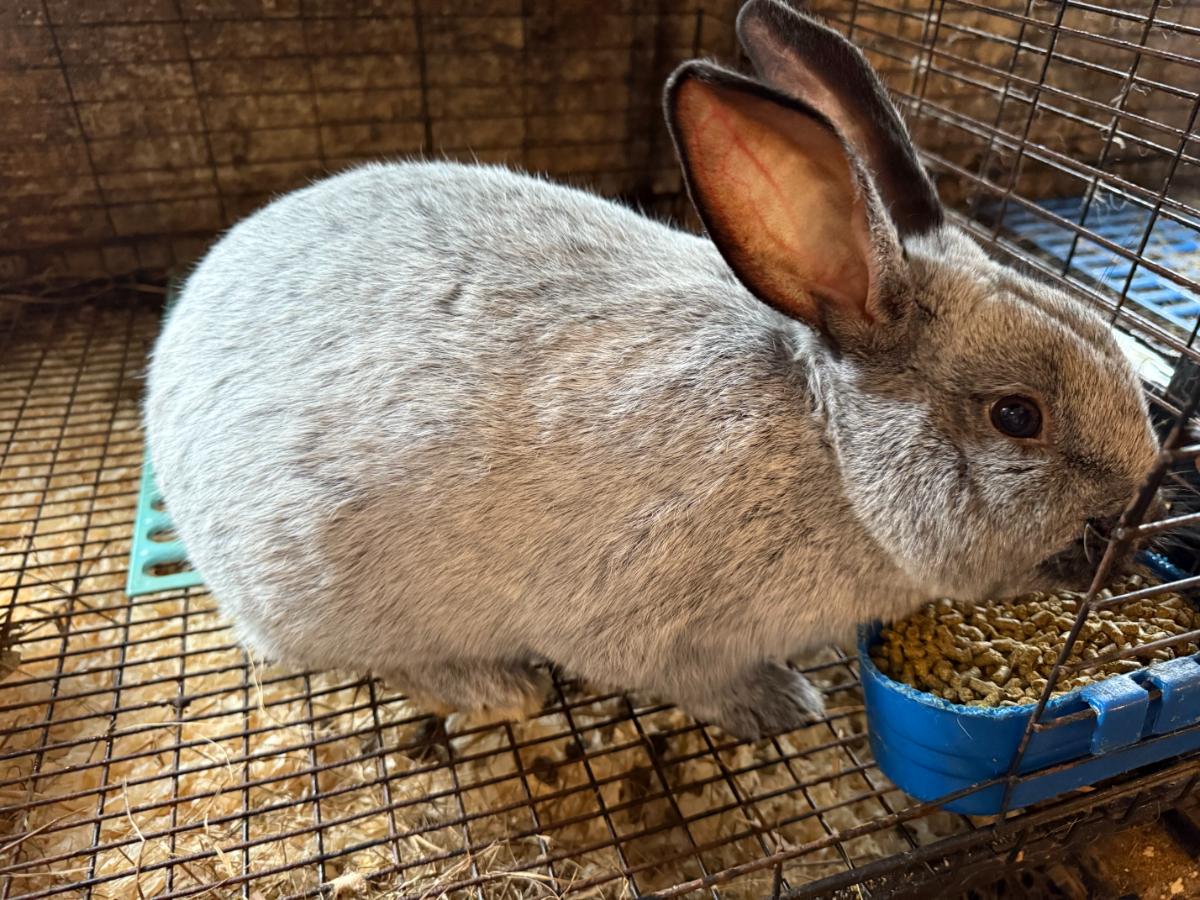
There isn't a call to weigh breeding meat rabbits and adults as often as we do for grow outs or prospective up-and-coming breeding stock, but that doesn’t mean that it should never be done or that there isn’t value in doing it.
Weighing mature meat rabbits can give valuable information that might otherwise be missed.
Jump to:
- Why Adult Meat Rabbit Weight Tracking Is Important
- Times and reasons when you should weigh your meat rabbit breeders and mature stock:
- VIDEO: Why You Should Weigh Your Adult Meat Rabbits, Too
- When or How Often to Weigh Adult Meat Rabbits and Breeders
- Weight Is Just Once Measure
- Observe Daily, But Back Yourself Up With Periodic Weights and Evaluations
Why Adult Meat Rabbit Weight Tracking Is Important
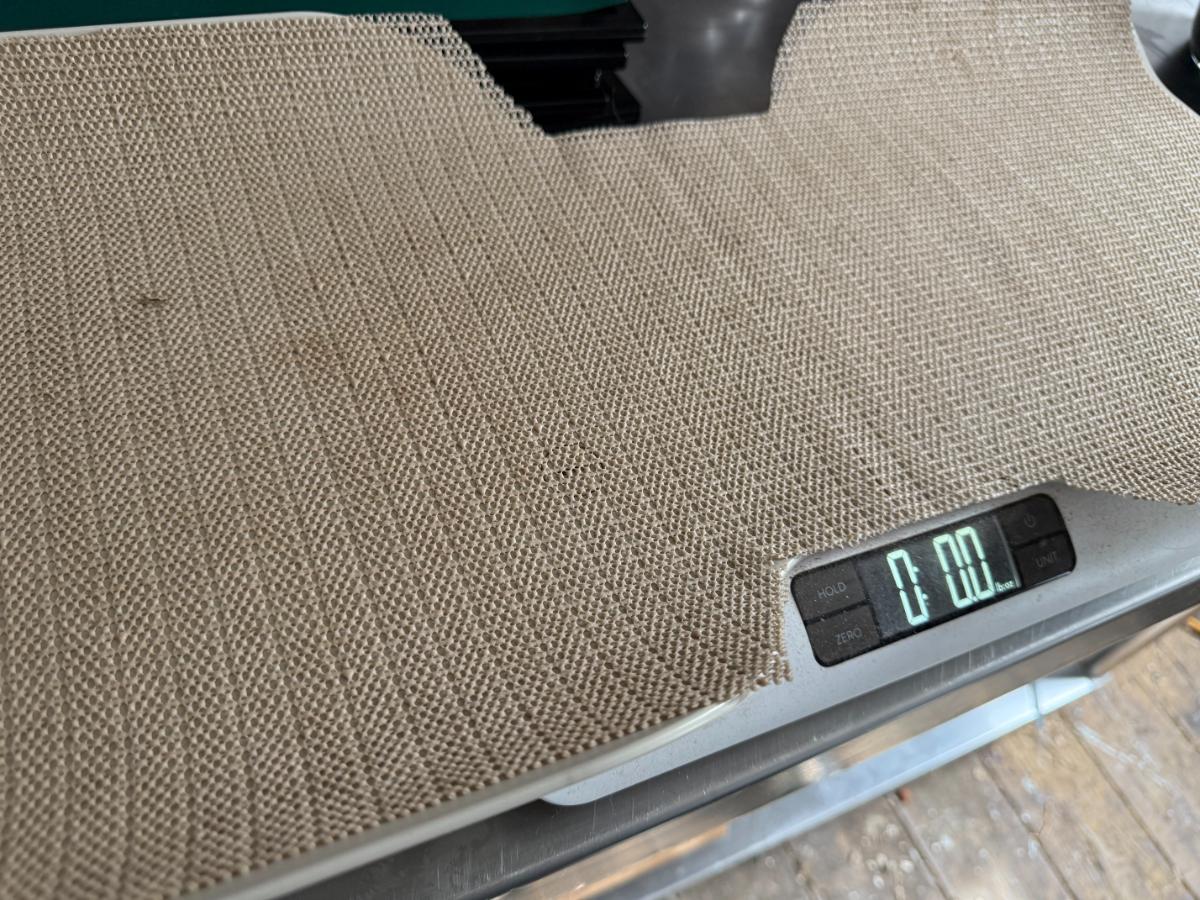
This is a link to the scale I use for weighing my meat rabbits. You can zero, tare, and select from different weight settings -- pounds and ounces, pounds and decimal, kilograms, grams...
Weighing meat rabbit breeders can give us insight into the health, condition, and general fitness of our breeding stock meat rabbits. This is just as true for seemingly healthy rabbits.
Overweight can be as problematic as underweight in a breeding meat rabbit. Possibly even more. On balance, you are more likely to have healthy but overweight breeding rabbits than you are to have issues with anything else. Overweight is a big problem for breeding does, and a pretty significant issue for breeding bucks, too.
Of the things that can go wrong in your meat rabbit program, overweight breeders who fail to produce are probably the very top of the list.
These are a few things that weighing adult rabbits can reveal to us, possibly before we even know that something might be heading in the wrong direction:
- Whether our rabbits are meeting the standard for their breed
- Whether they are within a healthy, beneficial range for selection and propagation
- Breeding stock is heading toward (or has arrived at) being overweight, risking reproductive problems
- Older breeding stock is beginning to lose weight, which can indicate a loss of condition or reveal advanced aging
- This can tell us it is time to replace a breeder, or at least bring something up behind them to keep breeding on track
- Fast weight loss indicates an illness, parasite, or digestive issue
Times and reasons when you should weigh your meat rabbit breeders and mature stock:
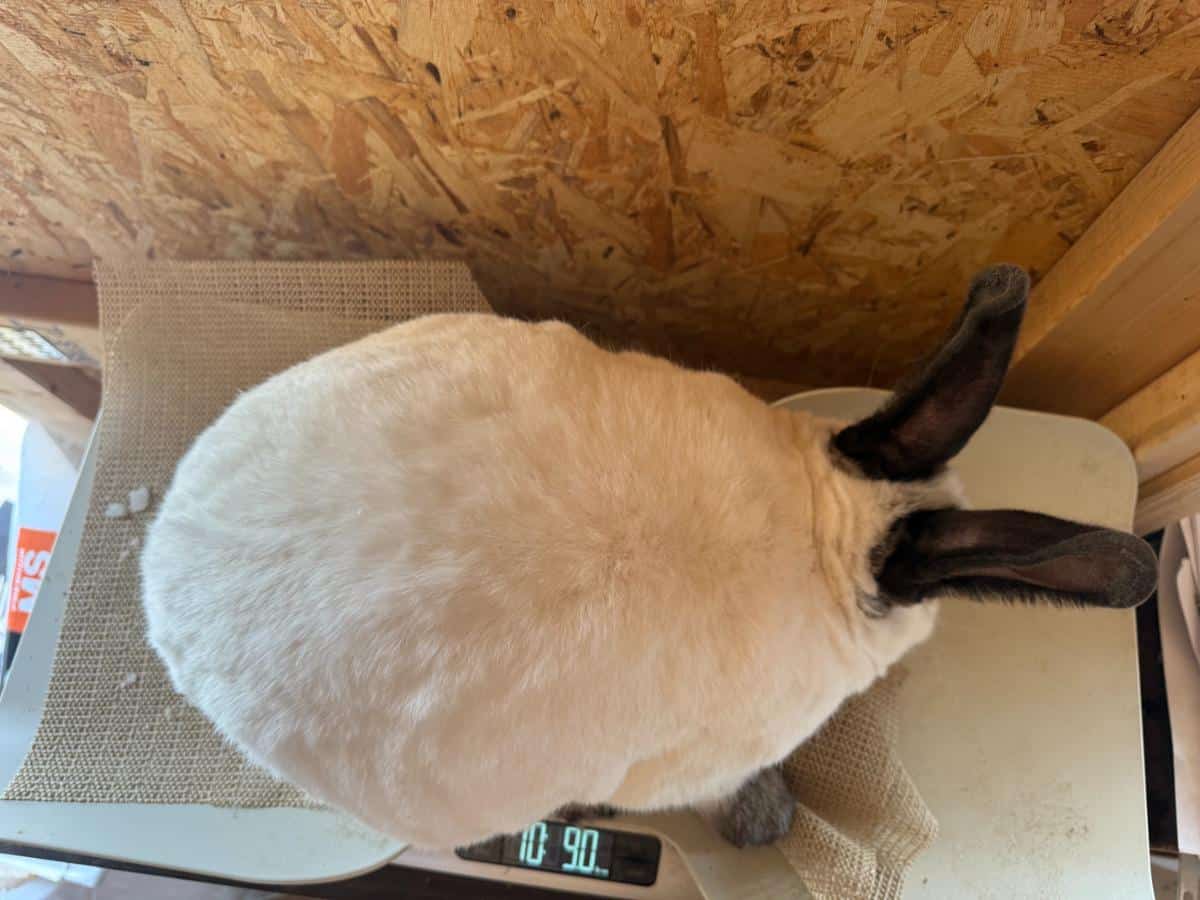
- Two to four times per year, if only as a baseline and check-up
- Before or at the time of breeding -- this can tell you if a doe (or buck) is heavy, which can be valuable information if you have trouble getting them to breed or getting the pregnancy to take
- Weekly for does after breeding -- optional, but it can tell you if she is gaining weight well for the pregnancy, and it can be a sign that indicates she is probably bred (weight gain)
- At weaning, to evaluate the condition and recovery from pregnancy and nursing
- Any time the rabbit has been suspected of an illness or treated for one
- During quarantine, to determine whether they show signs of illness or steady health
- After a move, relocation, transport, or travel (typically wait a few days)
- At 8 to 9 months old, for a mature adult weight for a pedigree (or for your own records, even if you don’t keep pedigrees) -- this can be valuable information for breeder selection and for sales of the adults or their offspring
VIDEO: Why You Should Weigh Your Adult Meat Rabbits, Too
When or How Often to Weigh Adult Meat Rabbits and Breeders
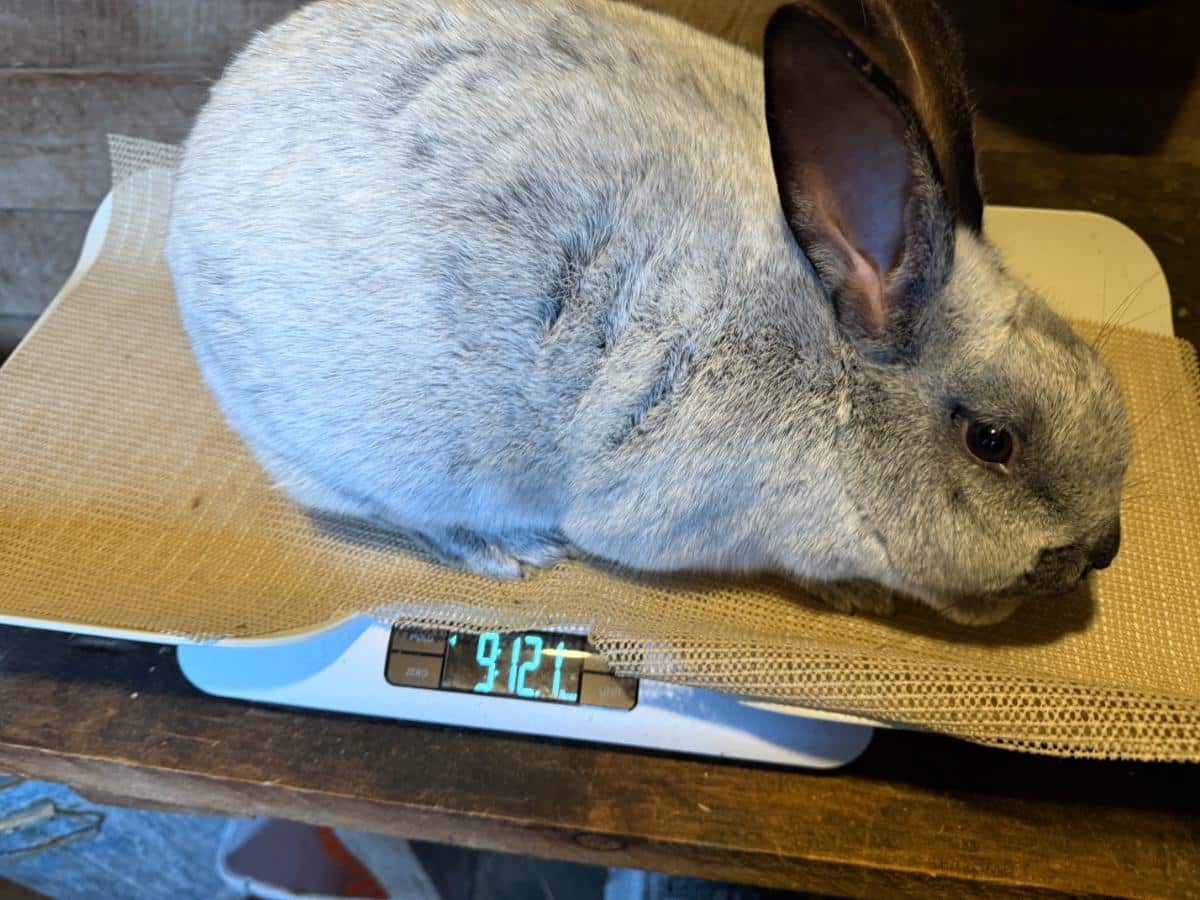
While there are no hard and fast rules, periodic weight measurements at regular intervals can create a pattern that makes it easier to spot problems as they arise -- whether those problems are from losing weight or being too far overweight.
You can’t really weigh your adult rabbits and breeder meat rabbits too often, so weighing more frequently than what is outlined here is okay, too. Do be aware, however, that minor, small variations in weight are normal, within a handful of ounces from day to day or week to week.
So if you weigh very often, it’s easy to worry yourself unnecessarily. There is probably little to be gained by weighing mature meat rabbits more than once a month (or even once a quarter) unless you have a specific reason for doing so.
If you suspect a loss of condition or a serious weight loss, you might choose to weigh your rabbits more often as you work to bring them back into optimal health and condition. This will tell you if you are making progress or not. But if it’s just for run-of-the-mill weights and there are no other reasons or concerns, weighing your rabbits quarterly or a few times a year will suffice.
Weight Is Just Once Measure
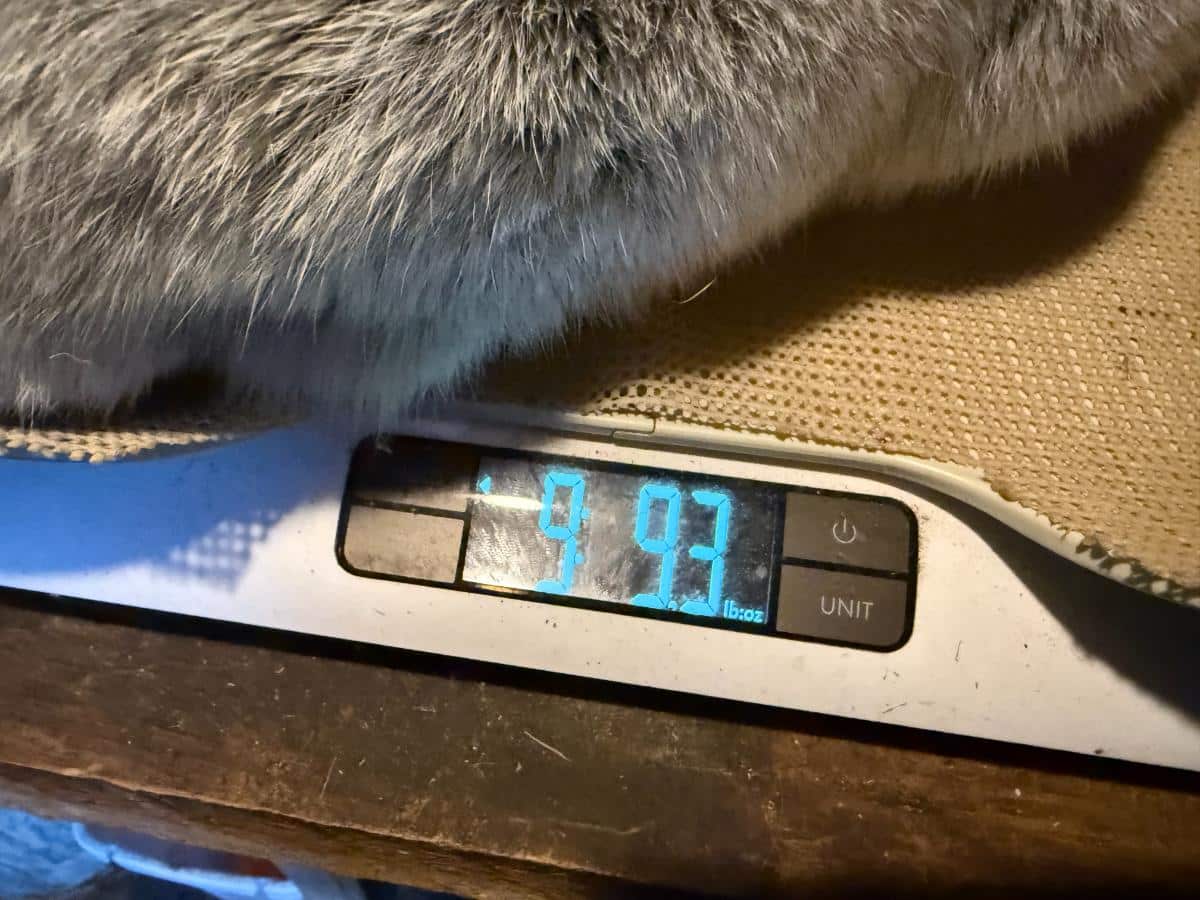
Weight is an excellent measure of what is going on with our meat rabbits. But it’s important to remember that it is just one measure.
A rabbit can meet the range for the standard for its breed, for example, but still be underweight for itself as an individual. For reasons such as these, we need to look at the weight, but we need to put it into context with the animal itself.
Step back and look at the rabbit’s condition and conformation overall. Ask yourself some questions, like
- Are the rabbit’s ribs showing?
- Is the spine protruding?
- Does the spine feel sharp when you run your hand down the spine?
- Do hip or tail bones stick out?
- Does the rabbit feel generally smooth of coat and firm under the hand?
- Are there obvious or excessive fat pockets in odd areas of the body? (such as extra or excessively large dewlaps, pronounced dewlaps, or neck fat on males, or collections of fat along the belly or legs that are not normal for the breed)
- How is the rabbit’s energy level?
- Is the rabbit lethargic?
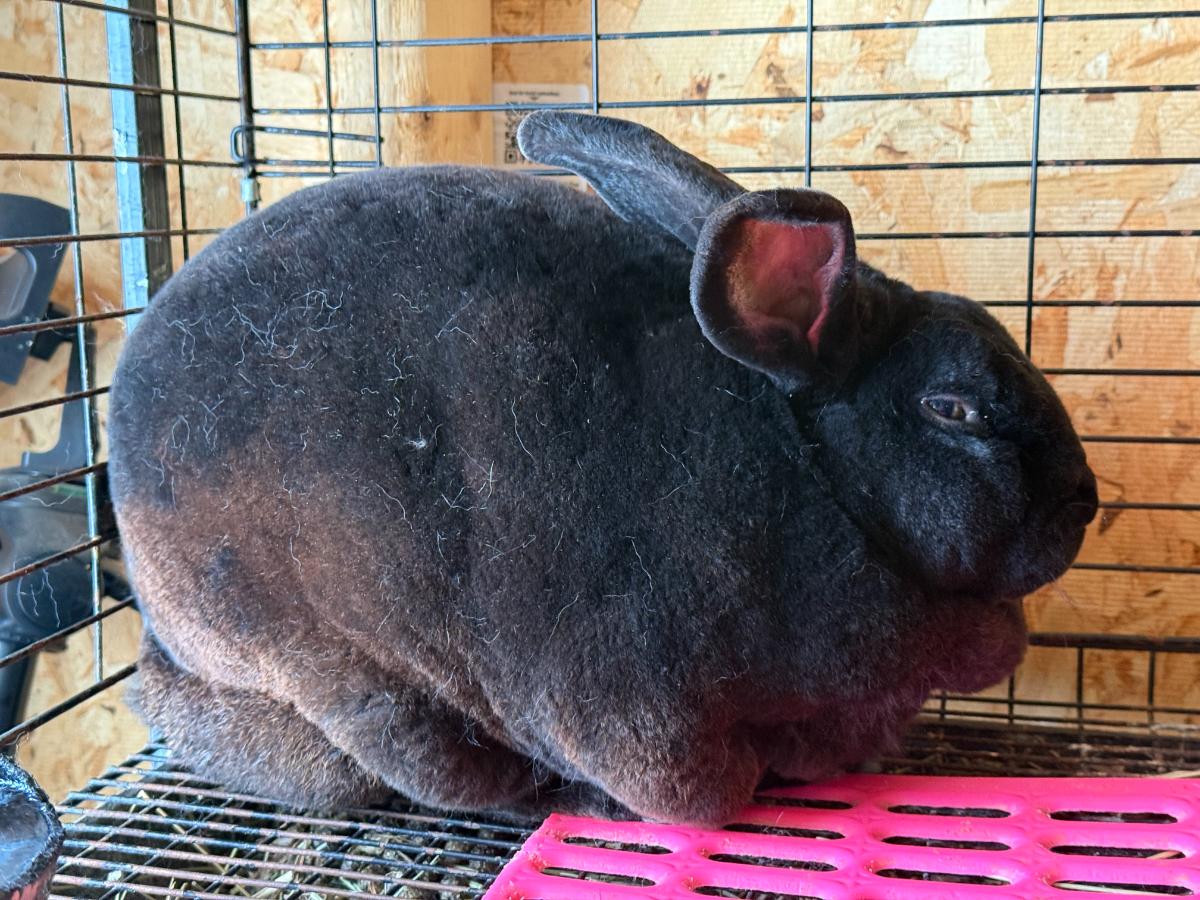
- Are eyes shiny and bright and healthy looking?
- Is the rabbit eating as expected?
- Does the rabbit drink normally or suddenly drink significantly more (not attributed to increases in seasonal heat)?
- Is the rabbit overeating unnecessarily?
- Are the lungs clear? (listen)
- Are there any facial or bodily discharges?
- Is urine output normal?
- Is urine within the normal range of meat rabbit urine colors? (understanding that the healthy colors can range quite widely)
- Is fecal output normal and as expected?
Asking yourself these and other general health questions, along with objective measures like weight, will put you in a good place to manage the health of your rabbitry and the future of it, too.
When meat rabbit breeders decline, sometimes it is not as a result of illness as such, but simply the result of increasing age. There is not always any stopping this. But you can translate that to tell you when it is time to build up replacement breeding stock to keep your meat rabbit production going. Or, to make other hard decisions for the sake of the whole.
Observe Daily, But Back Yourself Up With Periodic Weights and Evaluations
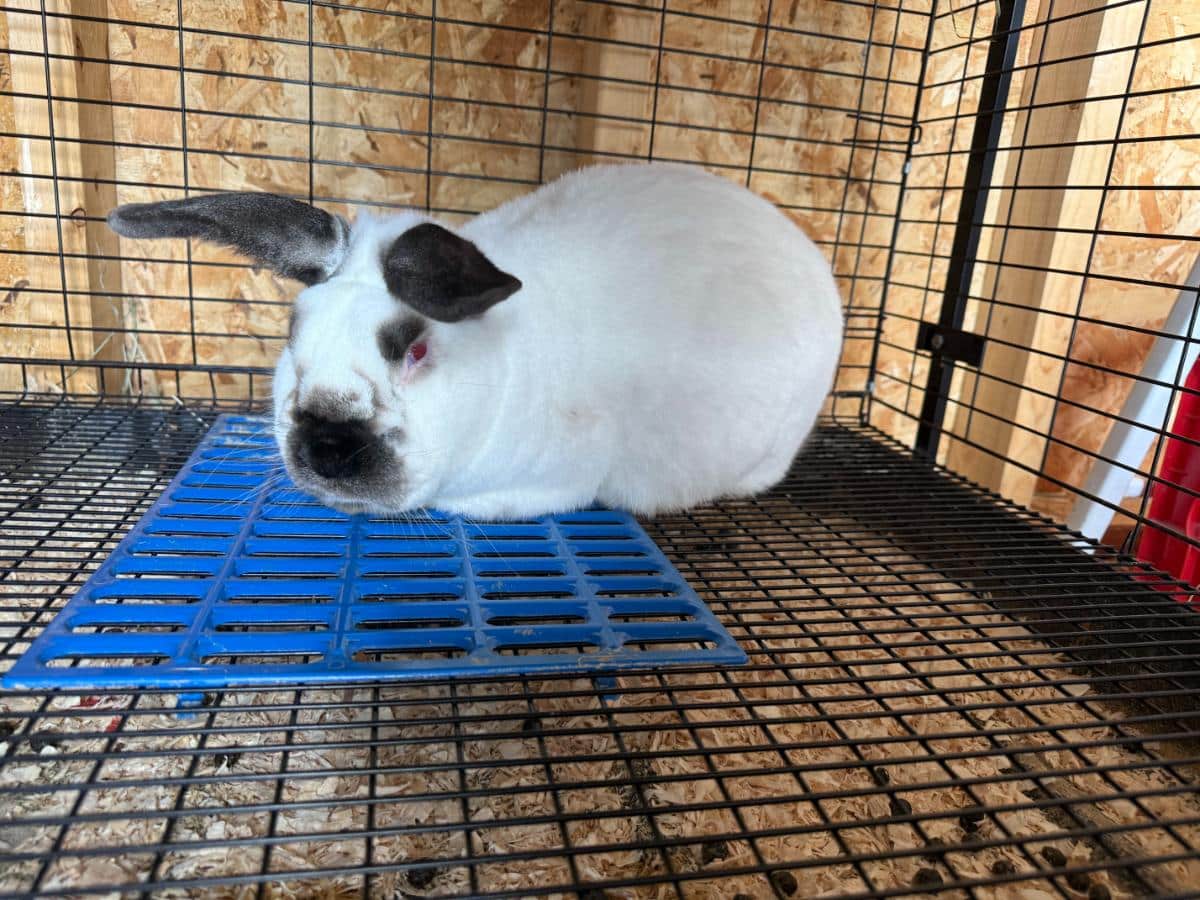
Yes, you should observe your meat rabbits daily and note their condition when you do your daily chores. But the problem is that we are very good at not seeing the changes in our meat rabbits, even though we are looking at them every single day. And that is because we are looking at them every single day.
We tend not to notice the small changes that creep up (or down) on a daily basis. Often, it is after a day or two away that something will strike us. We don’t notice things like slowly progressing weight gain or weight loss.
When our perspectives become skewed due to an overfamiliarity or an overattention toward an animal, the best way to step back and look objectively at the rabbit’s whole, overall condition is to use objective benchmarks. Physical inspections for injury, symptoms of illness, or abnormalities are one such benchmark.
One of the most objective measures we have for meat rabbits is weight -- numbers on the scale. Even when we don’t think there is anything out of the ordinary going on, a quick step onto the scale can show us that that might not be so.
It’s a simple task. One that can be as routine as cutting their nails (and in fact, is a good thing to do when you perform that maintenance task!). But that little bit of information might very well just go a long way to keeping things on the best course in your meat rabbitry.
Leave a Reply