
The Californian meat rabbit is easily categorized as one of the best breeds of meat rabbits to keep. They are among the most popular breeds for meat production as well.

Californians are generally a hardy breed fit for all climates. Not only are they an excellent and productive purebred meat rabbit, but they cross well with other leading breeds to produce meaty, fast-growing grow outs.
Jump to:
- Vital Statistics for Californian Meat Rabbits:
- About the Californian Meat Rabbit Breed
- VIDEO: Get to Know the Californian Meat Rabbit Breed (Breed Profile)
- Noteworthy Benefits of Californian Meat Rabbits:
- Downsides to the Californian Rabbit Breed
- Consult the ARBA Standard of Perfection or the Standard of your Governing Body for Specifics for Show Animals
- VIDEO: Why I Raise Californian and New Zealand Rabbits
- References and Further Recommended Reading:
Vital Statistics for Californian Meat Rabbits:
| Adult Size: | (over 8 months) |
| Doe: | 9 to 11 lbs; ideal weight: 9 ½ lbs |
| Buck: | 8 ½ to 10 ½ lbs; ideal weight: 9 lbs |
| Temperament: | Quiet, friendly |
| Age of Maturity for Breeding: | 20 to 24 weeks |
| Productivity: | Very good |
| Mothering Instincts: | Very good |
| Average Litter Size: | 8 to 10 |
| Growth Rate: | Good to very good |
| Bone to Meat Ratio: | Excellent |
| Other Notes of Interest: | Solid, reliable meat rabbits, good to cross with other breeds for vigor and meatiness |
About the Californian Meat Rabbit Breed

Californian rabbits were developed specifically for meat purposes, and this is why they excel as a meat breed. They were developed around 1920 in the United States, in the state of California, by a breeder named George West.
West crossed several top breeds of medium-breed rabbits to arrive at the Californian. Some of the breeds included in the development of the Californian breed are New Zealand, Himalayans, and Chinchillas.
They have all-white bodies with temperature-sensitive “points”, the result of the Himalayan gene. The points are the dark colors of the points of the body -- ears, nose, feet, and tail. In the summer, their feet, ears, tail, and nose color often thins out or becomes lighter, and then darkens again in the winter.
Since the usable portion of the body is all white, Californians were and continue to be used as a fur breed. (White was the most in-demand color for pelts during the height of the fur trade since it matched other white pelts and could also be easily dyed to any other color). If the dark points extend too far beyond what is considered acceptable, this would be a disqualification for show animals and could be for fur buyers as well.
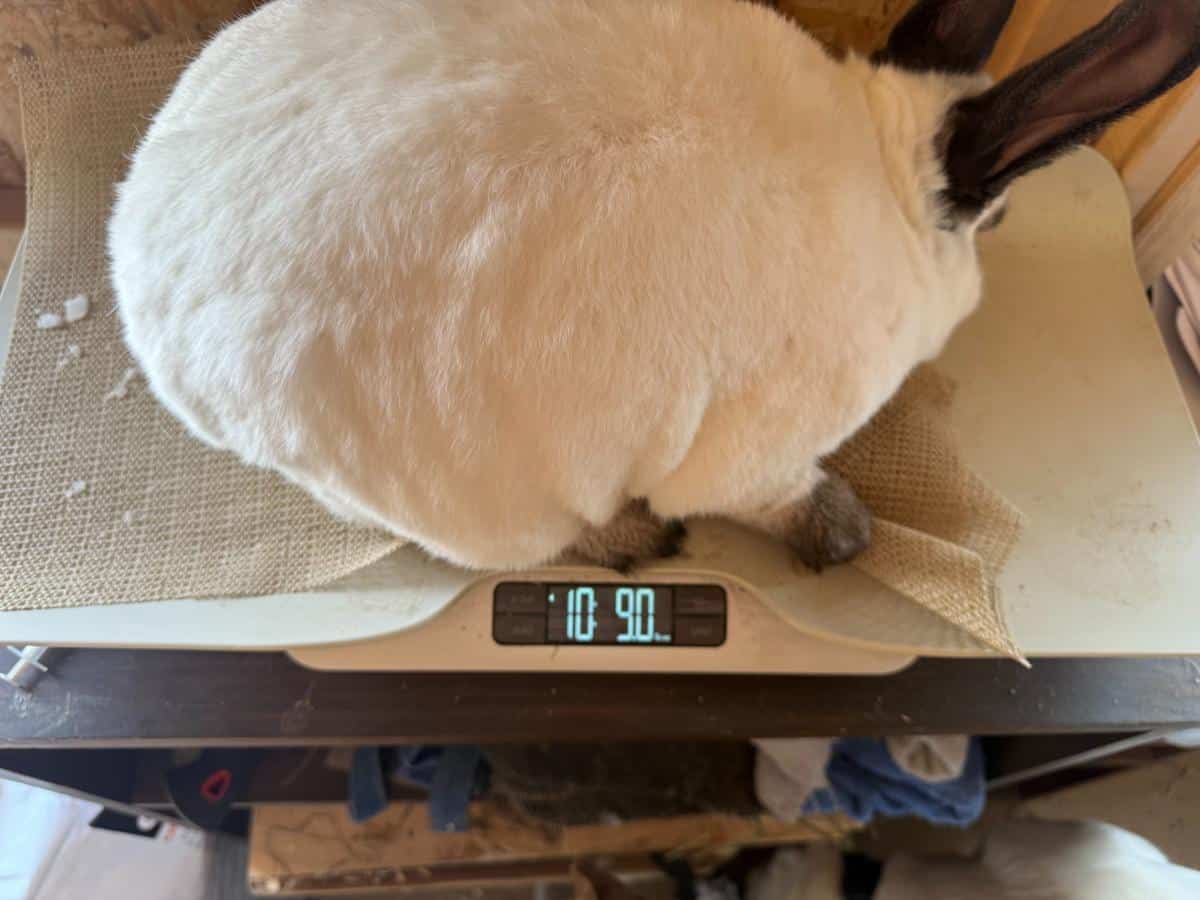
The Californian has a very meaty, blocky body with fine bone structure, giving it a good meat-to-bone ratio. It is this blockiness that was specifically developed for the purpose of meat production.
Californians are often crossed with New Zealand meat rabbits to produce a fast-growing meat rabbit grow out with good F1 (first generation) hybrid vigor that combines the size of the New Zealand with the meaty blockiness of the Californian.
Purebred Californians can tend to be a little slower to grow out as compared to breeds like the New Zealand, Champagne d’Argent, and others, but they are efficient converters of feed that do produce solid grow outs.
They are a popular show rabbit, which also translates into options and versatility, but sometimes the show lines do tend to grow out a little more slowly. Still, this is within reason, and the tradeoff with the slightly slower Californians is their hardiness and easy-keeping nature.
VIDEO: Get to Know the Californian Meat Rabbit Breed (Breed Profile)
Noteworthy Benefits of Californian Meat Rabbits:

- Popular breed
- Easier to find breeding stock (due to popularity)
- Excellent for cross-breeding for meaty structure
- Quiet, easy temperaments
- Large litters
- Interesting point color options, including black, chocolate, and lilac, though only black is acceptable for the ARBA standard showing
- Good mothering
- Fine boned with a good meat-to-bone ratio
- Good for beginners as well as experienced meat rabbit breeders because they are hardy and reliable
Downsides to the Californian Rabbit Breed

There are few, if any, downsides or negatives to the Californian meat rabbit as a breed. Obviously, buyers must beware, as there are good, healthy specimens as well as rabbits that are in poor condition due to housing, health, or management.
If there were a complaint to be made about the Californian, it would be the somewhat diminished grow out rate; however, this is also not always a negative. Some of the very fast-gaining and fast-growing meat rabbit breeds present other problems, like weaning enteritis that comes on from fast and furious feed consumption as youngsters.

The health and vigor of the Californian can very easily balance out a slightly slower growth rate. This is also a trait that you can build upon and select with an eye toward enhancing, to a reasonable degree.
As with all meat rabbit breeds, consider and evaluate the individual before you, and don’t rely solely on the breed’s description as a guarantee of performance or production.
Consult the ARBA Standard of Perfection or the Standard of your Governing Body for Specifics for Show Animals

Note that this website primarily focuses on backyard meat rabbits and homestead-type rabbit meat production on a small to large scale. For that reason, the focus in breed descriptions leans more towards production goals for the small to medium producer. Very little focus is on breeding for show.
These breed guides will serve as a good introduction to the breed, but for more specifics about the details and nuances you should be looking for in a show rabbit, we urge you to consult the American Rabbit Breeders Association’s Standard of Perfection or the guides provided by your local authority on meat rabbit breeds and standards acceptable for showing.
VIDEO: Why I Raise Californian and New Zealand Rabbits
References and Further Recommended Reading:
- Storey’s Guide to Raising Rabbits, 5th Edition – Bob Bennett – Amazon
- Raising Rabbits for Meat – Eric & Callene Rapp – Amazon
- Standard of Perfection 2025–2030 – American Rabbit Breeders Association – Amazon
- How I Chose My Meat Rabbit Breeds – Meat Rabbits
- Sourcing Meat Rabbits – Where Can You Buy Meat Rabbits? – Meat Rabbits
- Californian – ARBA (American Rabbit Breeders Association)
- National Californian Rabbit Specialty Club
- Californian Rabbits – Little Creek Farms
- Californian Rabbits – Rise and Shine Rabbitry
- Best Meat Rabbit Breeds – Mother Earth News
- Californian Rabbit: Care, Breeding, and Ownership Guide – Everbreed





Leave a Reply