
Thyme is yet another herb that we can easily access, even in a grocery store, that we can easily grow, and that offers great health benefits to our meat rabbits.
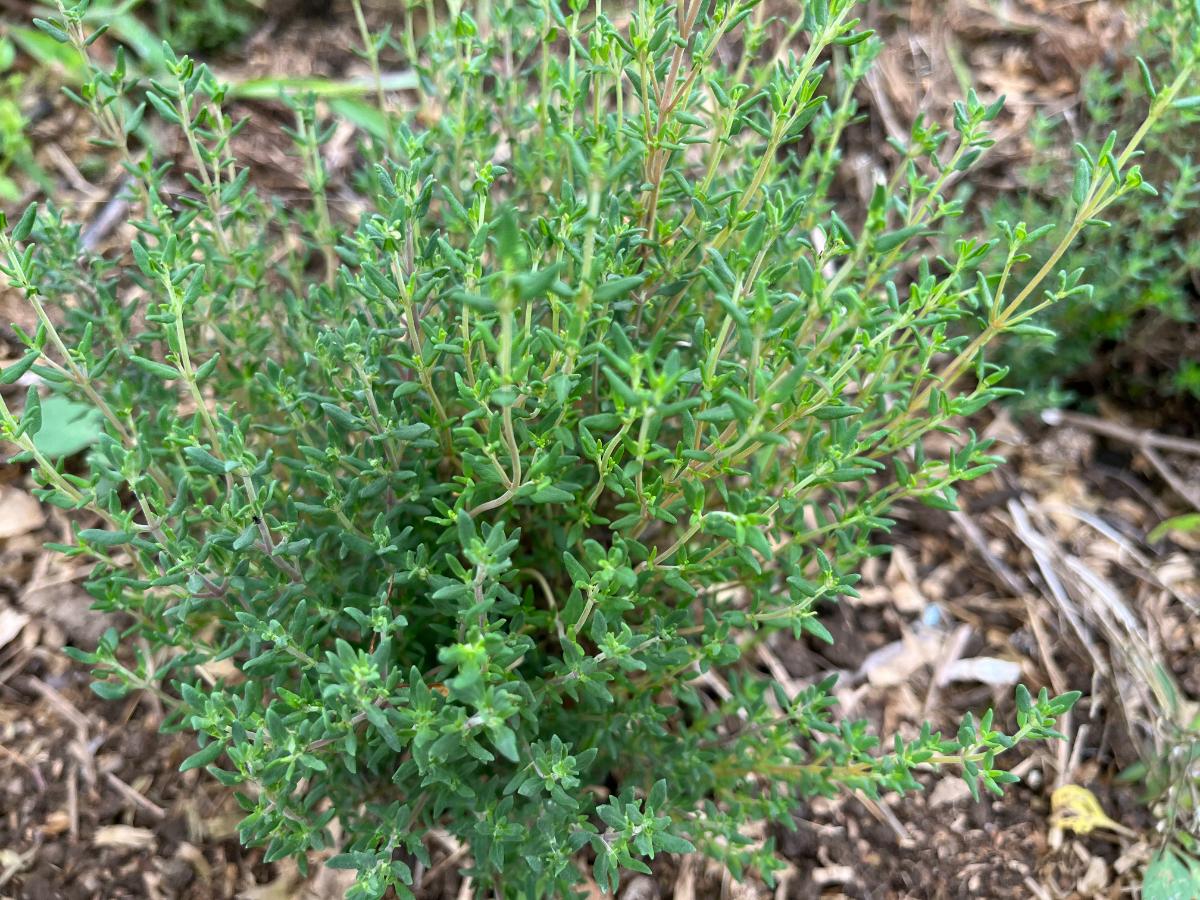
Thyme can be fed as a sort of home remedy to address specific problems that creep up in your meat rabbits, or it can be offered as a regular supplemental browse or forage. Offered this way, thyme can be fed by itself as a treat or mixed with other herbs and forages.
Jump to:
- Beneficial Properties of Thyme
- Types of Issues and Ailments Thyme Can Prevent or Solve
- How to Feed Thyme to Meat Rabbits
- Growing Thyme for Meat Rabbits
- Harvesting Thyme for Meat Rabbits and Off-Season Storage
- Other Interesting Findings Relating to Thyme for Rabbits
- Further Reading and Additional Resources on Feeding Thyme to Meat Rabbits
Beneficial Properties of Thyme
There are several actions and beneficial properties that thyme provides for meat rabbits; it is
- Antioxidant
- Antimicrobial
- Antidiarrheal
- Immune support
Thyme is a good source of essential vitamins and nutrients, including vitamins A and C. It is also a good source of fiber.
Types of Issues and Ailments Thyme Can Prevent or Solve
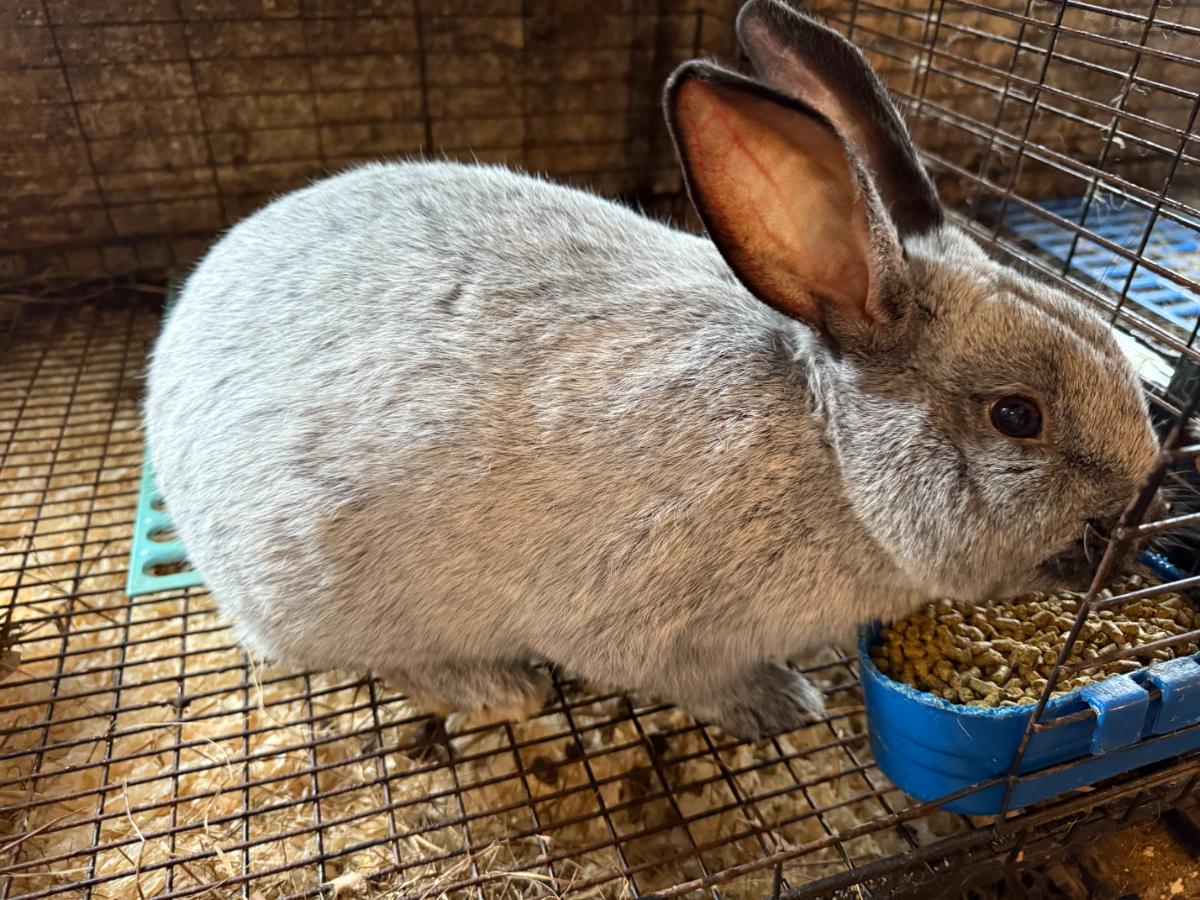
Between what has been experienced in the meat rabbit breeding world and what studies are showing when feeding thyme or thyme oils to meat rabbits, there are a great number of benefits of dietary thyme. Thyme is useful as a natural remedy or treatment for ailments in meat rabbits, too.
Many of the studies that directly studied thyme and its impacts on meat rabbits come from places like Egypt, where rabbits are more highly valued for their efficiency and ease of growing as a source of protein. There is a lot that can be gleaned from reading these interesting reports, which we are much less likely to see in the U.S. and other supposedly “advanced” nations!
Thyme has been shown to be helpful for
- Helping rabbits perform under heat stress
- Improved reproductive health of bucks during periods of high heat
- Decrease fat in rabbits
- Improves growth and carcass quality when used as a feed supplement
- Lowers ammonia levels in waste
- Improved rate of growth and weight gain
- Improved organ function
- Increased testosterone levels and fertility in studied males under hot conditions
- Prevents and treats diarrhea
- Digestive remedy for stomach issues and feed problems
- Warming and recovery for chilled rabbits, especially associated with digestive ailments or diarrhea
- Natural dewormer
- Improved water retention in muscles
- Improved kidney function
- Improved digestive tract integrity
- Improved liver function
How to Feed Thyme to Meat Rabbits
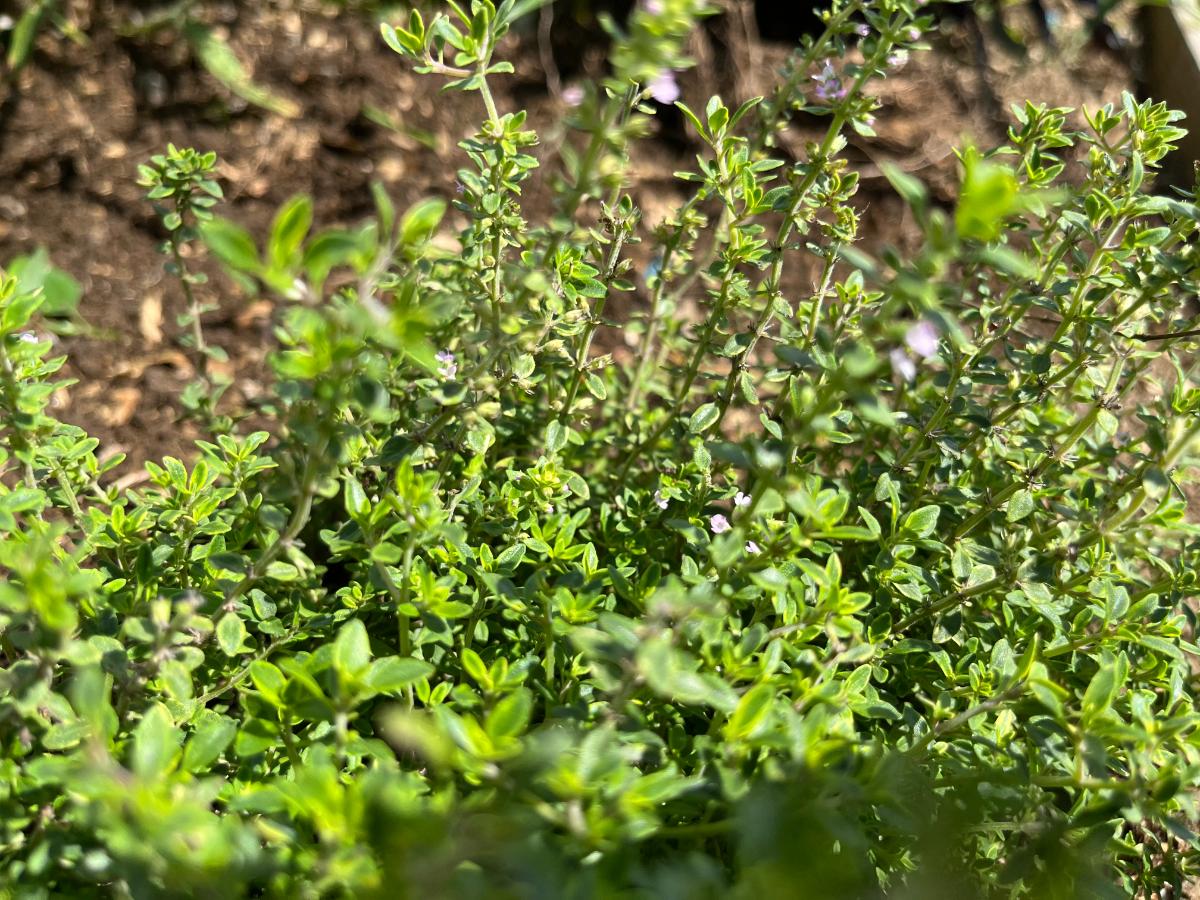
There are a few options for how to feed thyme to meat rabbits.
- Feed as clipped fresh sprigs from the thyme plant
- Feed fresh leaves stripped from the plant
- Feed dried thyme leaves
- Feed dried sprigs from bundles from the herb garden
- Use drops of thyme oil on feed or in water
Boyd Craven, author of Beyond the Pellet and the Rise and Shine Rabbitry website, recommends feeding sprigs of fresh or dried herbs to meat rabbits and letting them choose or refuse what you give them. He says that this better mimics how a rabbit would eat in the wild -- foraging, picking, and choosing and eating a variety of herbs and plants and seeking out what they need when they need it.
This is another option for how you might feed thyme to your meat rabbits. To do so, you’d offer a handful of herb sprigs with a variety for the rabbit to choose from on a regular basis.
Most backyard and homestead-type meat rabbit growers recommend feeding sprigs of thyme from the plant. This is a reasonable and probably the most available (and least labor-intensive) way to feed thyme in the small to medium rabbitry.
It is easy to snip a few twigs of thyme and toss them in with your rabbits.
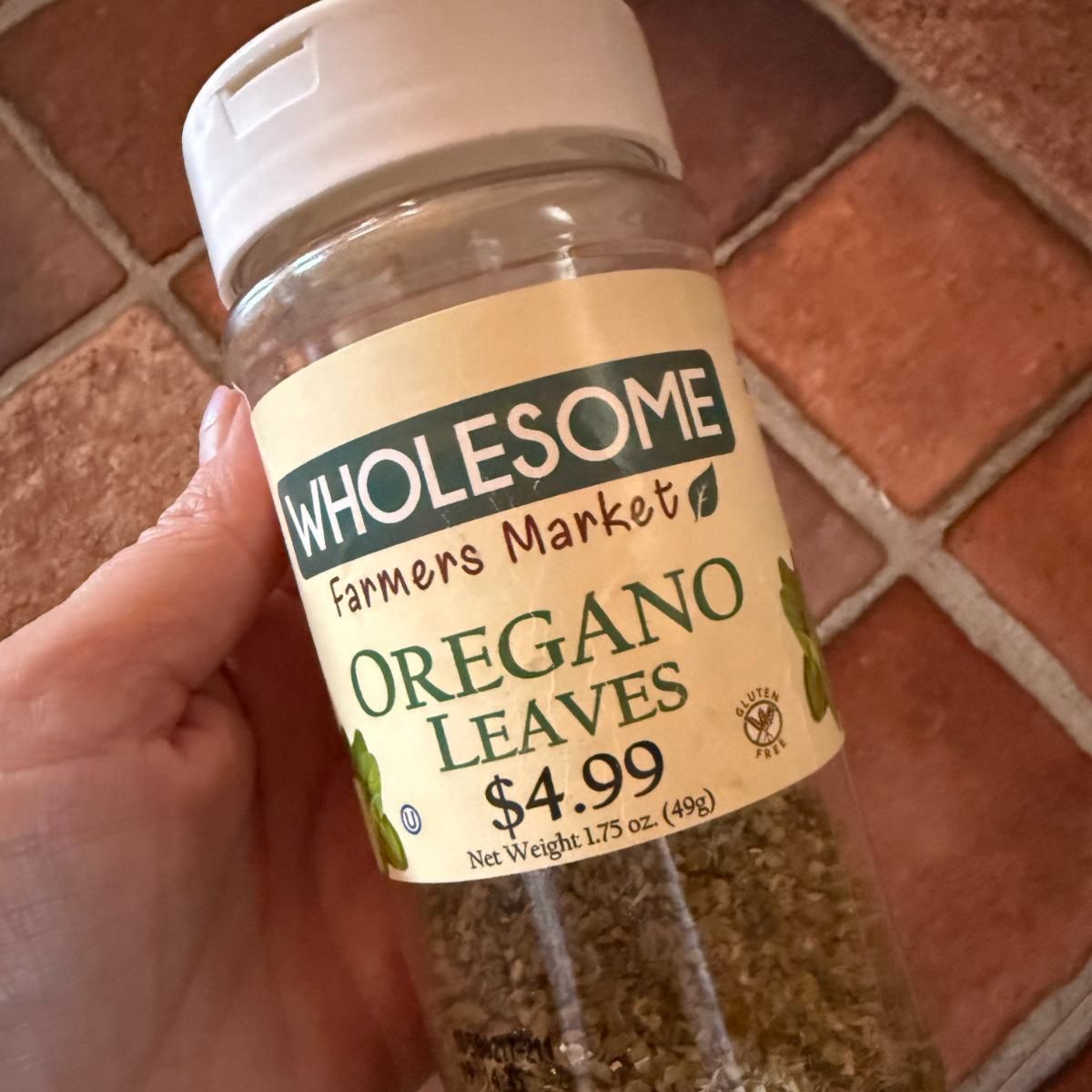
Dried thyme and thyme leaves from the spice aisle of the grocery store are fine to feed, too. Just make sure the herbs you buy are the herbs only and do not contain any kind of preservative, color, or treating agent. Your ingredients list should just say, “thyme”!
Studies used thyme in different ways. One study used thyme essential oil carried in olive oil. Another feed thyme leaves to rabbits (which is nice to see, since this is a much more manageable and available source for the backyard meat rabbit raiser).
What parts of the thyme plant can meat rabbits eat?
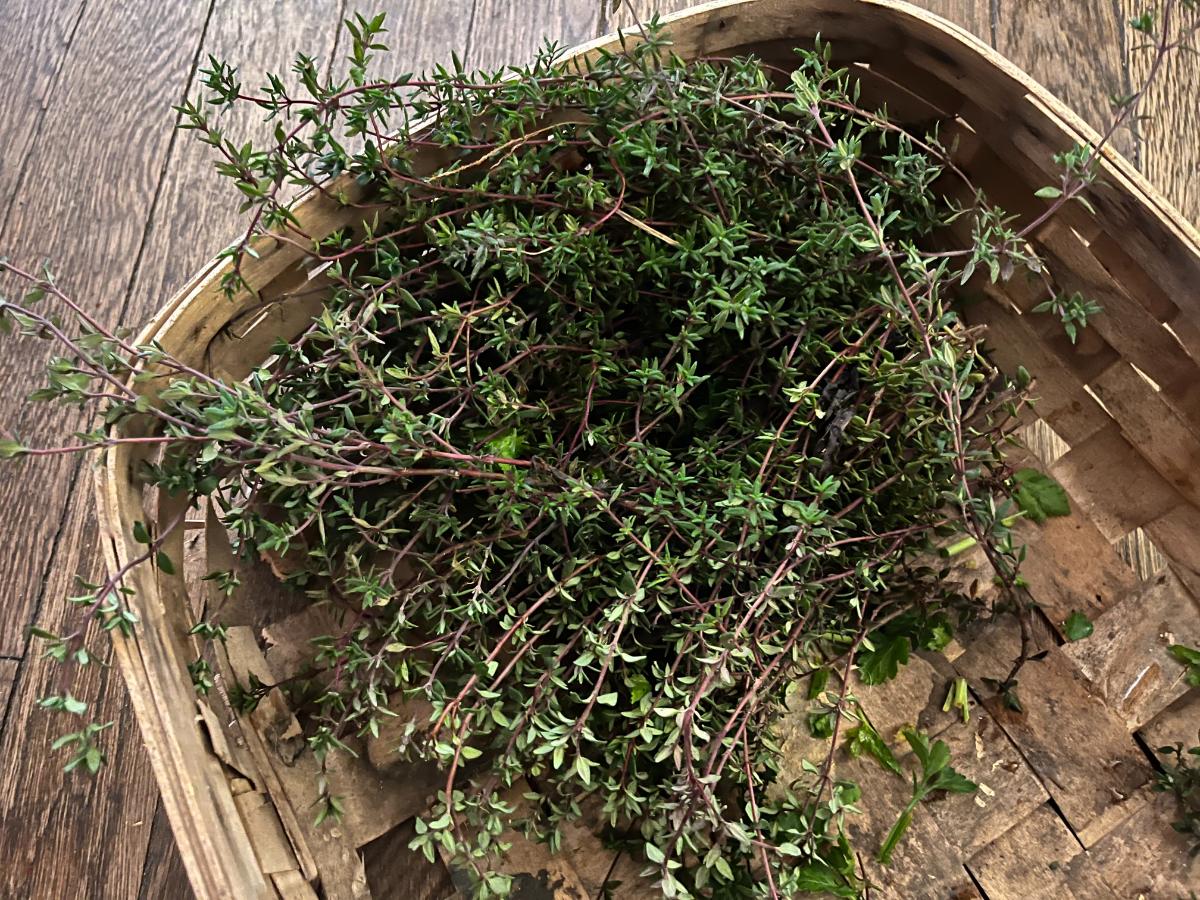
Rabbits can eat the stems, leaves, and flowers of the thyme plant, though they may not always like the stems. The younger the stems are, the softer and more palatable they are for rabbits. Younger stems tend to have a more subtle flavor, which is part of the reason rabbits may like them better.
The stems and leaves stay softer and less strongly flavored if harvested before or during flowering, which is before the stems start to turn woody.
Do meat rabbits like thyme?
Generally, yes, meat rabbits do like thyme. While it is not as strong as oregano, it is still an aromatic herb that can be more potent when dried. It may take your rabbits some time to get used to eating thyme. Or, they may love it, and it might not take them any time at all!
It is generally agreed that rabbits don’t always take to the stems once they are woody. Harvesting thyme when the leaves are soft, before or just during flowering, will give you more tender sprigs.
You may see that your rabbits nibble the leaves off and leave the woody stems behind. This is fine. Just discard them when your rabbits are done with them.
How much thyme should you give to meat rabbits?
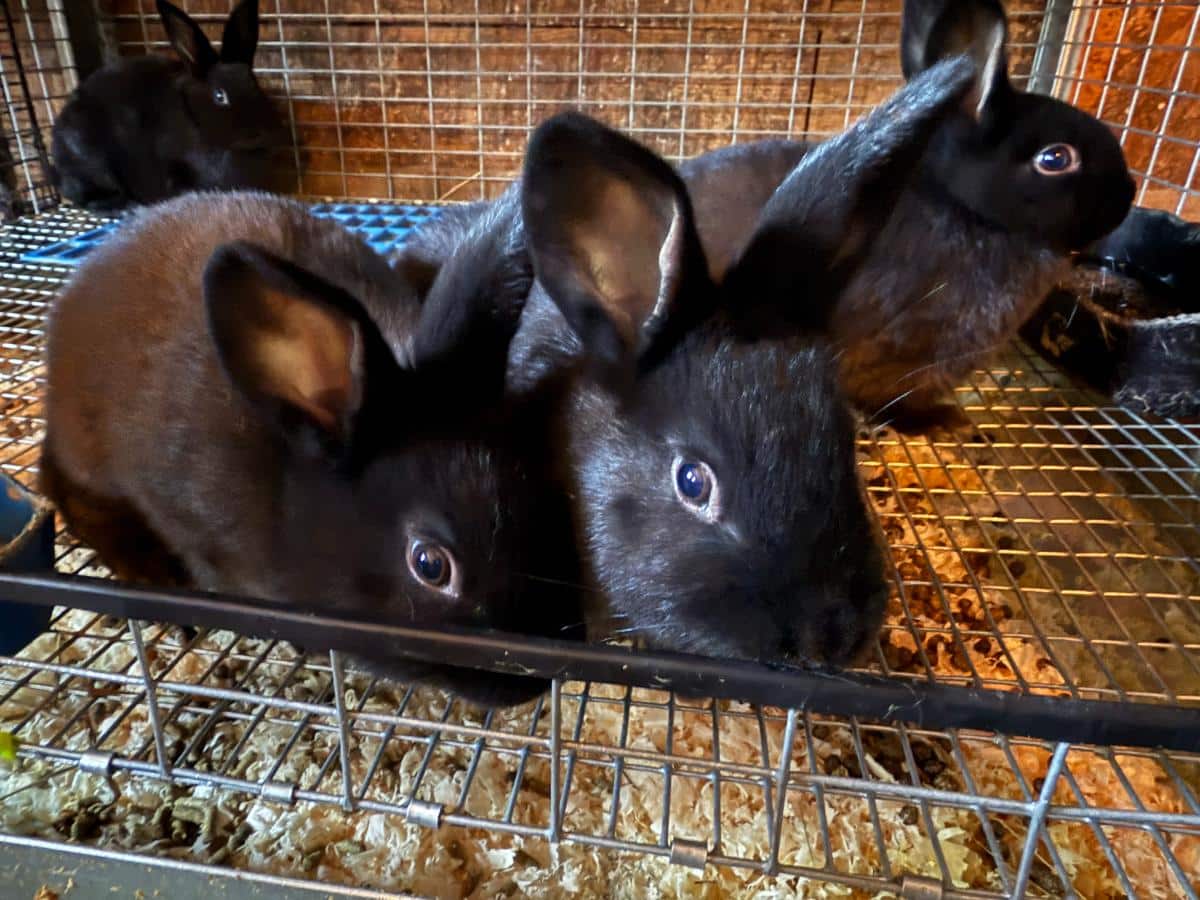
- As part of a forage and feed ration, feed a few sprigs of thyme per day with other feeds
- For leaves/dried herb preparations, sprinkle over the feed bowl, about the equivalent of a teaspoon per day*
- If using thyme oil, one to two drops per day, either over pellets or in water
Note that there is no set ration for thyme and other herbs, but any reasonable amount in combination with a varied program (including pellets, which include various ingredients) should be fine.
As always, it is wise to start with a small amount of thyme and then increase as you go on to allow the rabbit’s microbiome to develop with the feed.
Growing Thyme for Meat Rabbits
Thyme is easy to grow in a home garden with little maintenance. It tends to stay fairly well contained and grow mostly as a single plant, branching from a low main stem. It does not have a reputation for spreading invasively throughout your garden.
Thyme is a perennial plant in hardiness zones 5 through 9 and their equivalents.
Thyme also grows well as a container plant. You can also bring containers of thyme inside for the winter and continue to enjoy and use it.
Harvesting Thyme for Meat Rabbits and Off-Season Storage
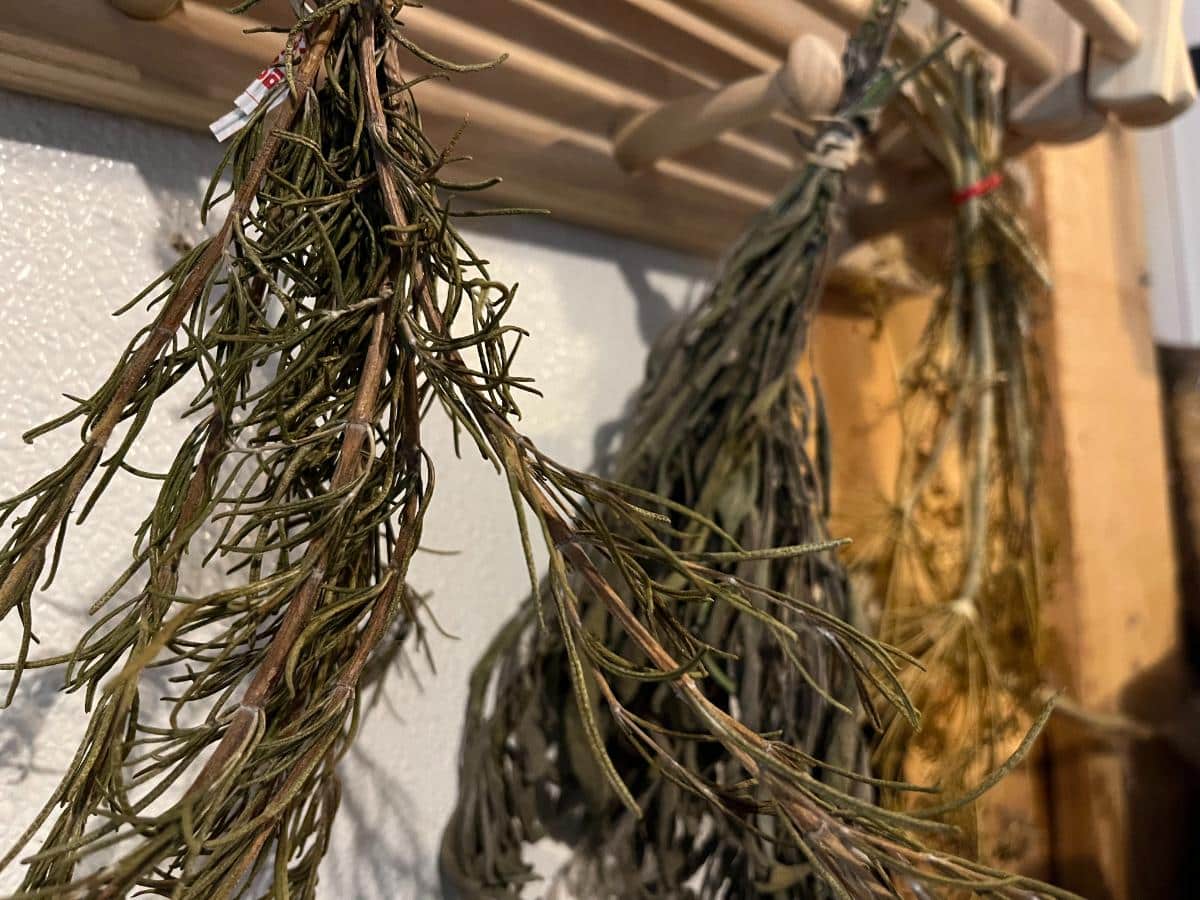
Thyme is easy to harvest. Simply cut from the bottom of the stem, low on the plant.
You can easily dry thyme for use later. Just bundle and hang the bundles to dry. The leaves will mostly stay on, but you can also put a paper bag over the sprigs to catch falling thyme leaves as they dry.
You can feed your rabbits entire dried sprigs or strip off the leaves from the dried sprigs.
Threshing the bundles in the bag (basically knocking the bag around) will also strip the dried leaves and catch them when they fall.
Other Interesting Findings Relating to Thyme for Rabbits
Studies found other benefits of feeding thyme as part of a feed regimen. A number of these had to do with processed carcasses. Some included:
- Higher weight carcasses and better growth rates (in part due to appetite stimulation)
- Less oxidative breakdown in meat
- Better natural color retention in the meat, the result of delayed breakdown
- Better preservation and holding of the meat carcass post-processing
- Increased moisture in meat
Further Reading and Additional Resources on Feeding Thyme to Meat Rabbits
- Veterinární medicína. Thyme leaves as an eco‑friendly feed additive improves both the productive and reproductive performance of rabbits under hot climatic conditions.
- Rise and Shine Rabbitry. Medicinal Herbs for Rabbits.
- Rise and Shine Rabbitry. Medicinal Herbs for Rabbits.
- Rise and Shine Rabbitry. Safe Food List for Rabbits.
- Animal Nutrition. Thyme oil inclusion levels in a rabbit ration: Evaluation of productive performance, carcass criteria and meat quality under hot environmental conditions.
- PubMed / Animal Nutrition. Thyme oil inclusion levels in a rabbit ration: Evaluation of productive performance, carcass criteria and meat quality under hot environmental conditions.
- Homestead Rabbits. Raise Meat Rabbits: Quick Start Guide.
- I Am Countryside. What Herbs Can Rabbits Eat?
- Tradition and Modernity in Veterinary Medicine. Influence of thyme (Thymus vulgaris L.) supplementation in feed on fattening rabbit’s performance.
- Gardening.org. How To Propagate Thyme — With Growing Tips!
- Healthline. 12 Health Benefits of Thyme — Including Immunity Support.
Leave a Reply