
This is a critical question that needs to be answered before you bring your meat rabbits home: What will you feed them?
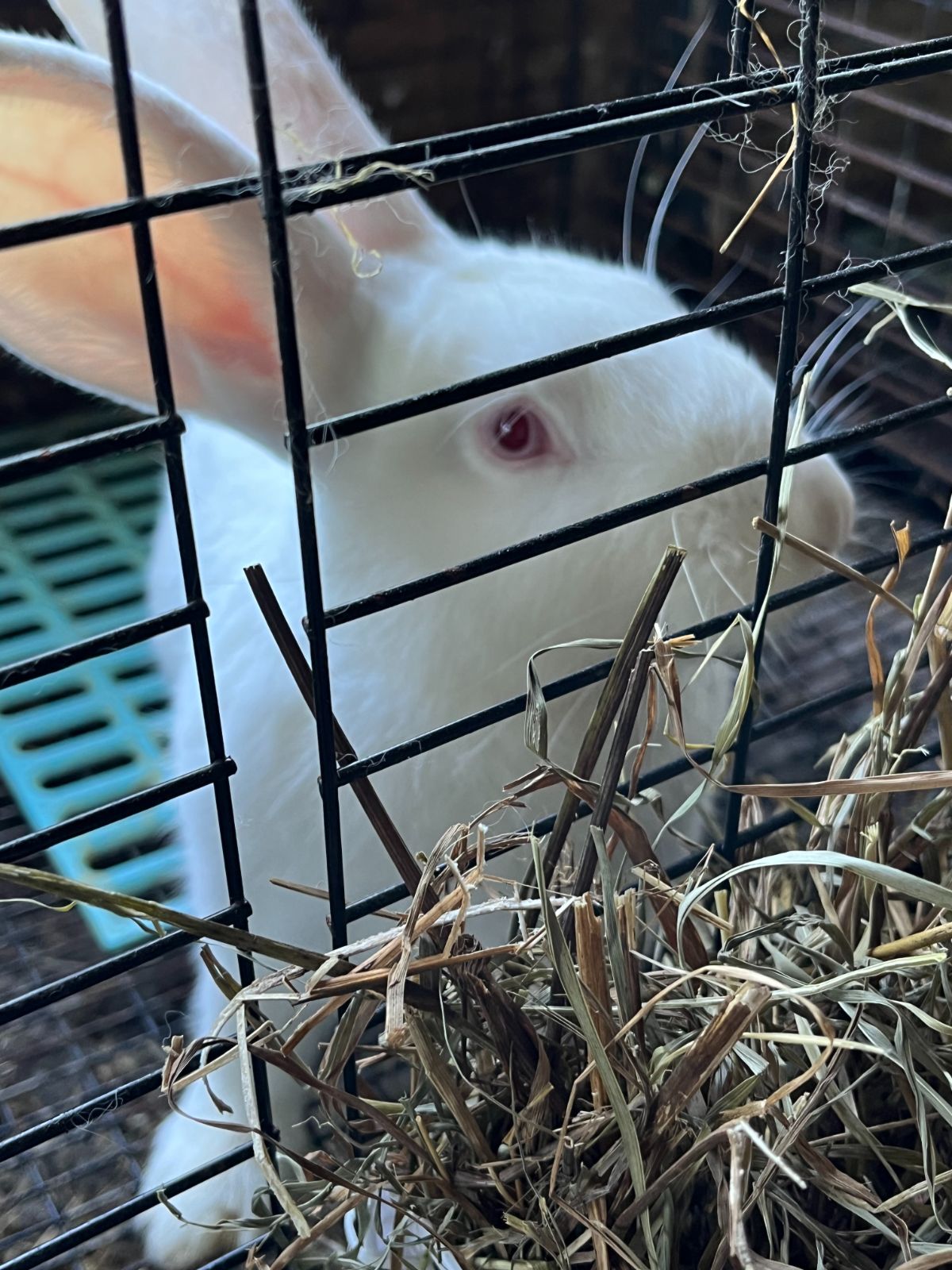
While there are options, including growing and harvesting your own feed, fodder systems, feeding a natural plant or grass diet in tractors or by harvest, and growing your own feed in your garden (or in a dedicated rabbit garden), we’re going to save those more complicated conversations for another day and give you the best basics for feeding your meat rabbits.
What’s presented here is a good, solid set of instructions for feeding your meat rabbits. Use it as a start until you can explore those more complex systems more thoroughly, or use it as your long-term plan for feeding your rabbits well and getting good growth rates out of them. That’s why I do, and I am most likely to keep doing it.
This is a recommended meat rabbit feeding program for all rabbit keepers but for beginner meat rabbit growers especially.
Jump to:
The Triangle of Rabbit Health and Growth: Three Key Elements
There are only three things your rabbits need for a well-balanced diet. Truth be told, you could get away with two—a lot of people do.
Here’s all your meat rabbits need for a quality, balanced diet, good gut health, good growth, and healthy living:
Water
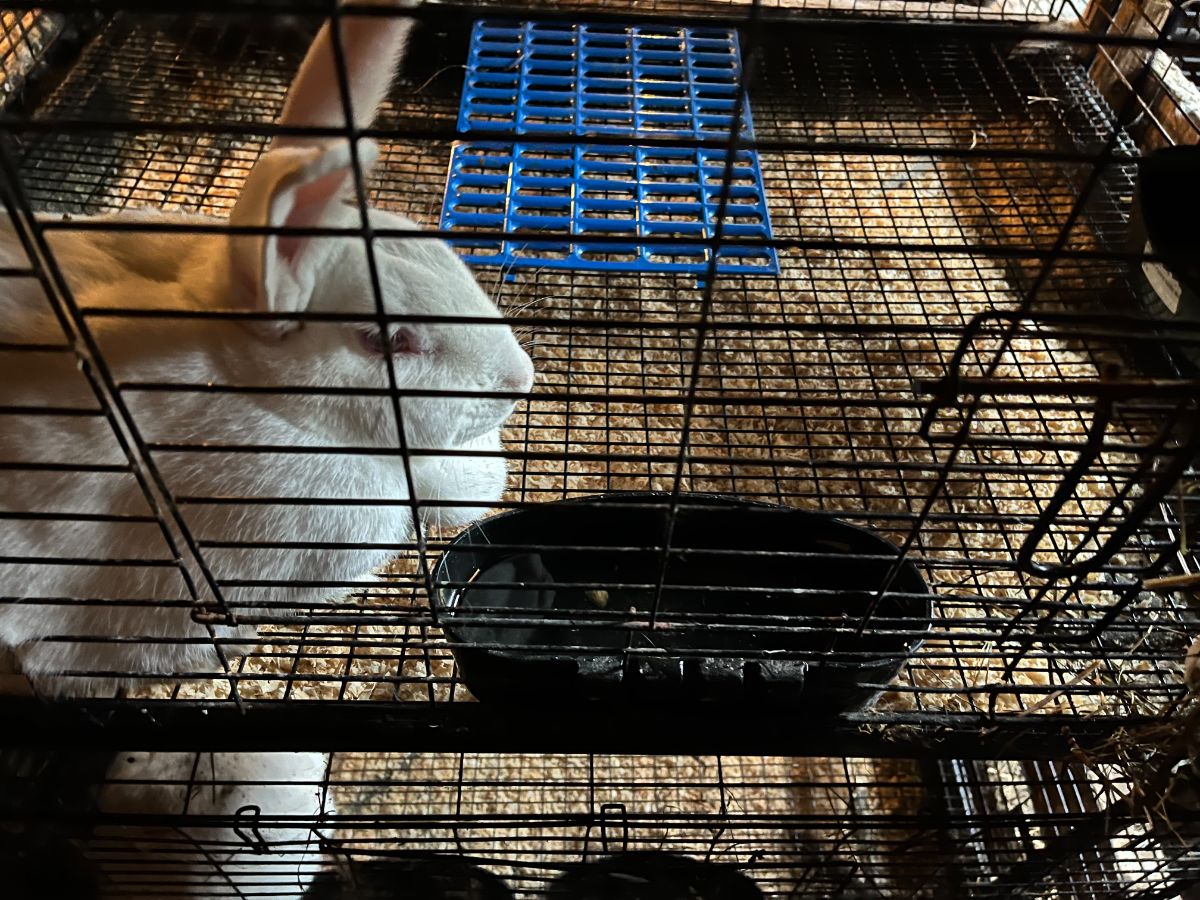
Water is, of course, essential for all living things. Like us, a large part of the rabbit’s body is made up of water—about 66% of its body. Water isn’t only needed for hydration. It is also critical for proper digestion, use, and absorption of food and nutrients and for eliminating waste.
By volume, rabbits need more water than food. Their water dish or bottle should be at least twice as big as their food dish. A good general idea of how much water a rabbit needs in a day is about one liter or one quart for average medium-size meat rabbit breeds (though large meat rabbits are considered a medium breed).
Keep in mind that the amount of water a rabbit drinks will change with the seasons—also not unlike us. When it’s hot, they’ll drink more and eat less. Water is critical for a rabbit to be able to cool off. They’re not actually that good at it; they don’t have sweat glands like people do, so rabbits rely on heat dissipation through their ears and on panting—like a dog—to cool off.
This means that rabbits evaporate a lot of water when they pant. Even in cool months, they’re losing water steadily through normal body processes.
In warmer weather and especially when it is hot, check your rabbit’s water more often. Give them a large enough bottle or crock to keep water available all the time, and only have to fill it once or twice per day (twice or more is best in the summer and hot locations!). Dishes or crocks allow rabbits to lap up water, which is more natural, and they are preferred for other reasons, too (click the link above).
Fill your rabbit’s watering vessel with fresh, clean water at least once a day.
Quality, Livestock Grade Rabbit Pellets
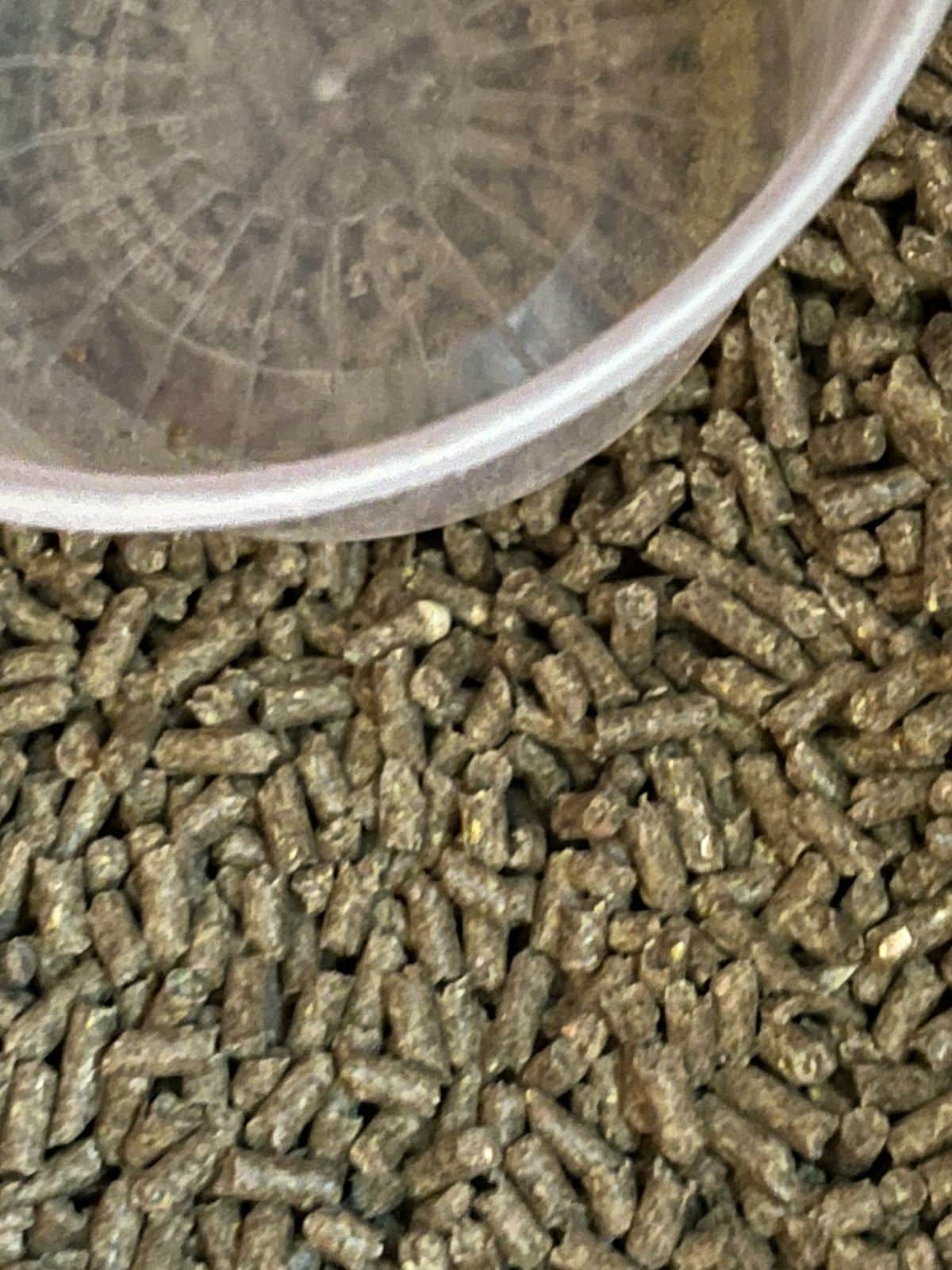
Feed your meat rabbits a quality, livestock-grade feed pellet. Make sure it is one labeled and designed expressly for rabbits. If it is livestock quality, it will be mostly designed for meat rabbits. This could also be fed to pet rabbits, but the point is that you want your production meat rabbits on a feed designed for production animals – that is, one designed for farmer types and livestock raisers.
There are two reasons you don’t want to be feeding pet rabbit feed to your meat rabbits. (In fact, I probably wouldn’t even feed them to pet rabbits! They, too, would live better on a quality livestock type of rabbit feed!):
Pet rabbit food is FAR more expensive—unaffordable for meat rabbits!
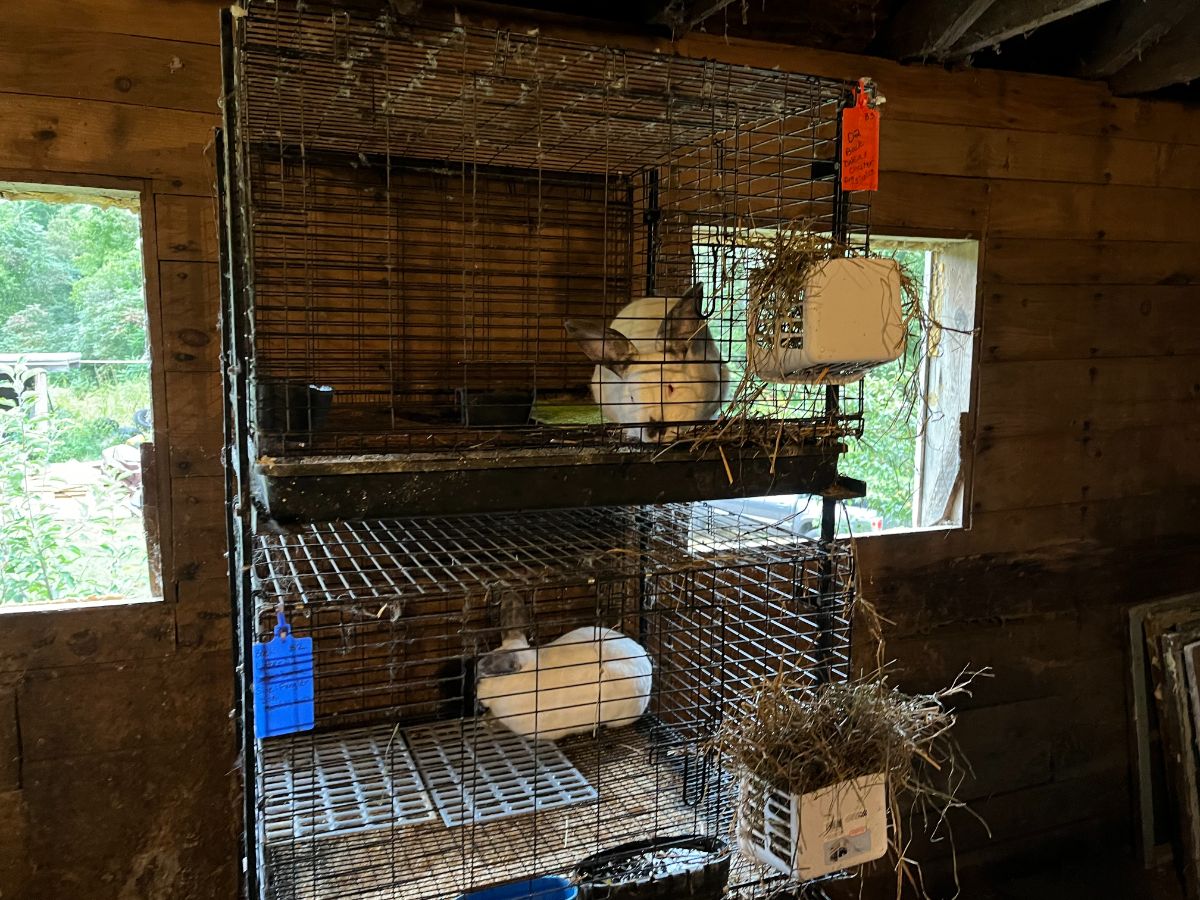
The first reason is cost. Pet rabbits' feeds are sold mostly at pet stores and more retail-oriented establishments. They’re sold in small sizes because pet rabbit owners don’t go through feed very fast since they are usually only feeding one or two rabbits. The price point is higher per pound; pet rabbit keepers don’t think much of it because the cost might only be $10 or $15 a bag, and they don’t realize how little they’re getting for that amount of money since it lasts them a while.
Here are a couple of examples of cost comparisons at my two most local stores (at the time of writing). (These costs are sure to go up, but proportionally—if one goes up, the other will, too, though pet prices may go up more often!).
- Example A: Pet rabbit food at a local pet store: $14.99 for a 4-pound bag
- Example B: Quality 18% rabbit feed at a local farm and livestock feed store: 22.49 for a 50-pound bag
- Example A price per pound: $3.75
- Example B price per pound: $.49 (49 Cents)
Meat rabbit livestock feed is more nutritionally balanced
The second reason is nutrition. Livestock feeds are well-designed feeds with the needs of larger production rabbits in mind. They come in higher protein levels, which is critical for good muscle development and meat growth. But overall, they are just well-balanced, healthy feeds based on science and the nutritional needs of rabbits (and I say rabbits, period—again, this is what I would feed a pet that I cared about, too).
Pet feeds are often full of fillers with crappy filler ingredients as their main ingredients. They have a lot of colorful “treats” in them that make the owner feel good like they’re providing something tastier and more enjoyable for their rabbit instead of the grasses and grains they should be filling up on. To get those colors, unnecessary dyes are added. They contain a lot of sugars, which are not good for rabbits.
Think about it—livestock rabbit pellets are green because their first ingredients are some type of grass or legume and grain. The grass is green. So, where do the orange chunks and brown pellets in pet food come from? I think of it as being like feeding your kids Fruity Pebbles instead of real granola. Your rabbits should not live off sugary, unnaturally colored Fruity Pebbles.
A good quality rabbit pellet is a complete feed. You could feed just the pellet with plenty of water and never feed anything else. Your rabbits will be happy, and they will thrive. They will grow fast and grow well and will not typically develop digestive issues on this type of steady diet.
For meat rabbits, you want a protein content of 16% or 18%. Sixteen percent protein is adequate, but you will get better muscle and faster meat growth on an 18% pellet. However, 18% pellets cost more—a dollar or two per bag, usually, depending on brand and location.
Not everyone has a source of 18% pellets available to them, and so if 16% is what you can get, feed that. It’s still a good feed, and many growers only feed 16% all the way around. You’re not underfeeding or undercutting your rabbits on a quality 16% pellet. If you were to trial the two, you’d probably see shinier coats and moderately better growth rates on 18%, but your 16% rabbits would also do well.
Many breeders will keep two different feeds: 16% for bucks and does when not pregnant (and many will keep their pregnant does on 16%, too) and 18% for fast-growing grow outs to maximize their muscling. For ease of feeding, you may just decide to feed the same pellet to everyone. Michigan State University points out that this is a sensible and perfectly acceptable approach and that higher protein is not a problem, even for unbred breeders.
How much pellet to feed per rabbit per day
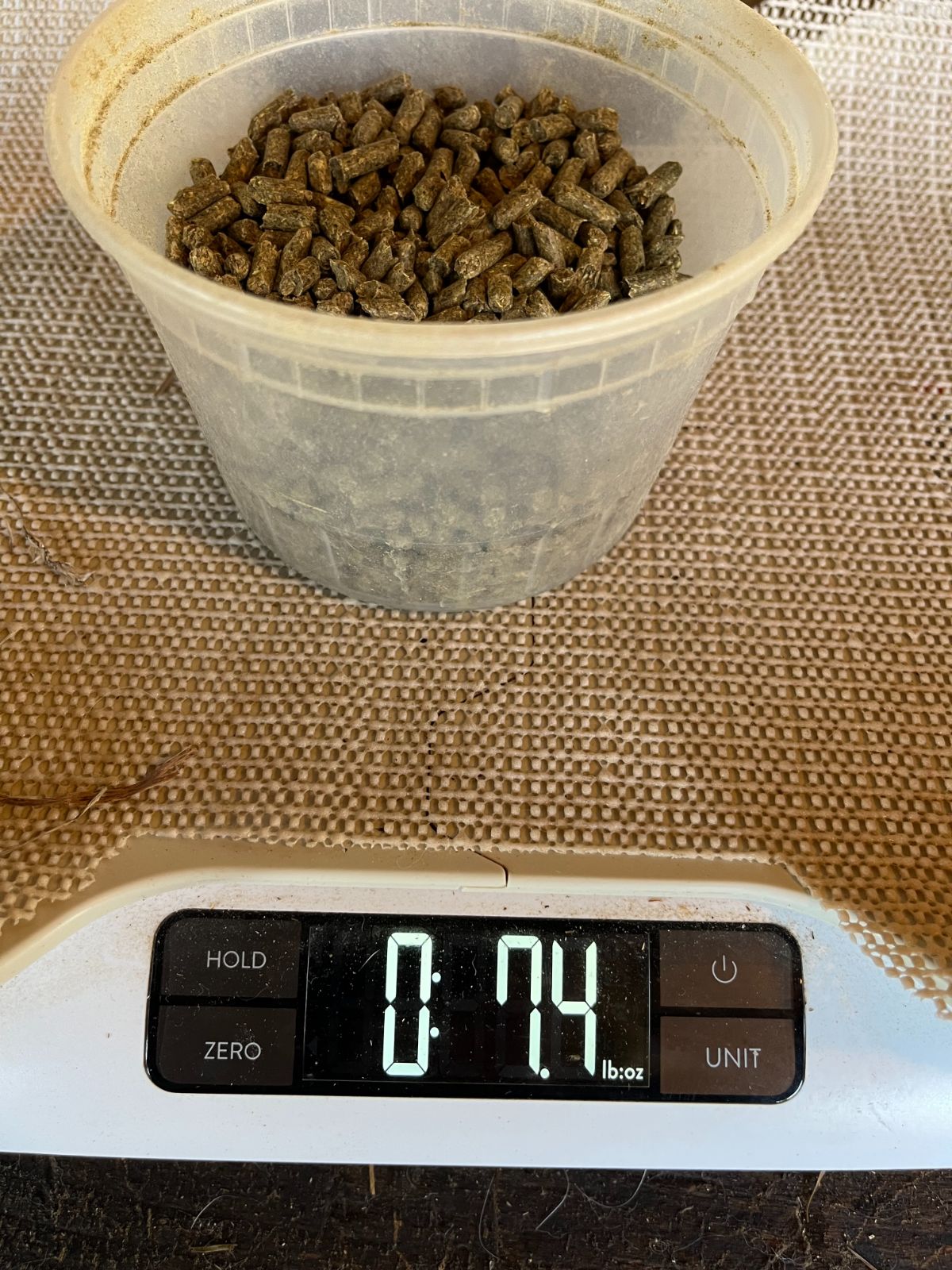
What you are striving for in a pellet ration is enough pellets that your rabbits will eat them all in a day without being overfed. This is a bit different for grow outs, though. Also, the breed of rabbit makes a difference, and some breeds will eat a bit more pellet and will require a little more to stay in good growth and condition.
Here is a good pellet feeding guideline for meat rabbits at different ages and stages:
- Breeding does, not bred, not pregnant: 6 ounces of pellets per day
- Bred, pregnant does: offer 8 ounces per day (she may or may not eat it all), increase if she is dropping condition or seems thin. You may choose to free-feed pregnant does
- Nursing does and does with litter in the cage: free feed pellets at all times (if using crocks, you should have some pellet left in the bottom when you go back to feed again—even if it’s just a bit)
- Bucks: 5 to 6 ounces of pellets per day
- Weaned grow outs: 8 ounces per day/free feed (Most grow outs won’t need more than 8 ounces per day, but many breeders free-feed pellets to grow outs to make sure they keep eating and growing and putting on muscle. This is fine as long as they’re not playing, dumping, or wasting feed).
No medium breed rabbit (I.e., meat rabbits excluding large and giant breeds) that is not pregnant or raising a litter needs more than 8 ounces of pellets per day. Rabbits can be good actors and may always act starving, but a ration of no more than 8 ounces of a well-balanced pellet per day is enough. Especially when feeding hay.
You do not want to overfeed breeders when not bred because does will pack on internal fat, which hinders breeding, and males will be heavier and less in shape, and they’ll have a more difficult time carrying their own weight to perform. The does don’t need a fat, heavy buck on their backs, either.
Which brand of rabbit pellet is best?
This is a question that is asked often on the rabbit breeding forums—probably weekly. The problem is it’s almost impossible to answer. Why? Because the feed that is available to you is probably not available to everyone on the forum.
Livestock feeds tend to be pretty regional. With a few exceptions, the brands that are available in one part of a country will be much different from another. That doesn’t mean the feed is, though. If someone in a forum gives you the name of a quality feed that has performed well for them and been clean and healthy and with good quality (no mold or excessive dust issues, etc.), you can look that feed up, see what the ingredients and “Guaranteed Analysis” is, and see how it compares to yours.
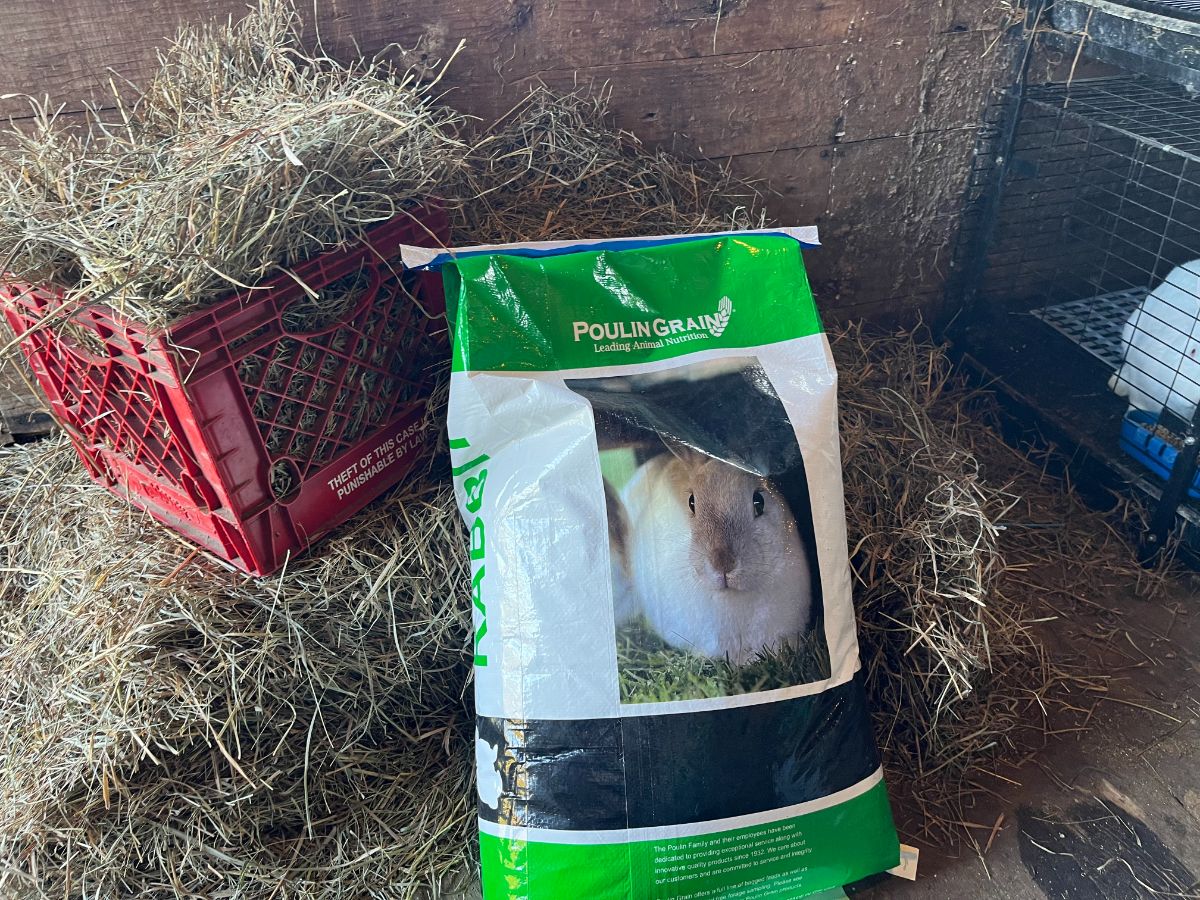
For example, I live in the Northeast United States. Here, Poulin Grain is a good, fairly local, and widely used regional feed provider. I can recommend their 16 and 18% rabbit feeds (I buy 18% for all my rabbits in 50-pound bags, but the same feed can often be found in 25-pound bags...though 50 pounds is a good manageable size for meat rabbit breeders with many mouths to feed). As a northern U.S. company, their feed is not usually available to people in the mid-west or the south; maybe not even outside of New England and New York.
If you can, ask around locally and see what people are using and what they would and would not recommend. Ask at the feed store. Ask for a list of ingredients and analysis for fat, protein, vitamins, and minerals. This is just a list like the labels we have on our food.
Hay
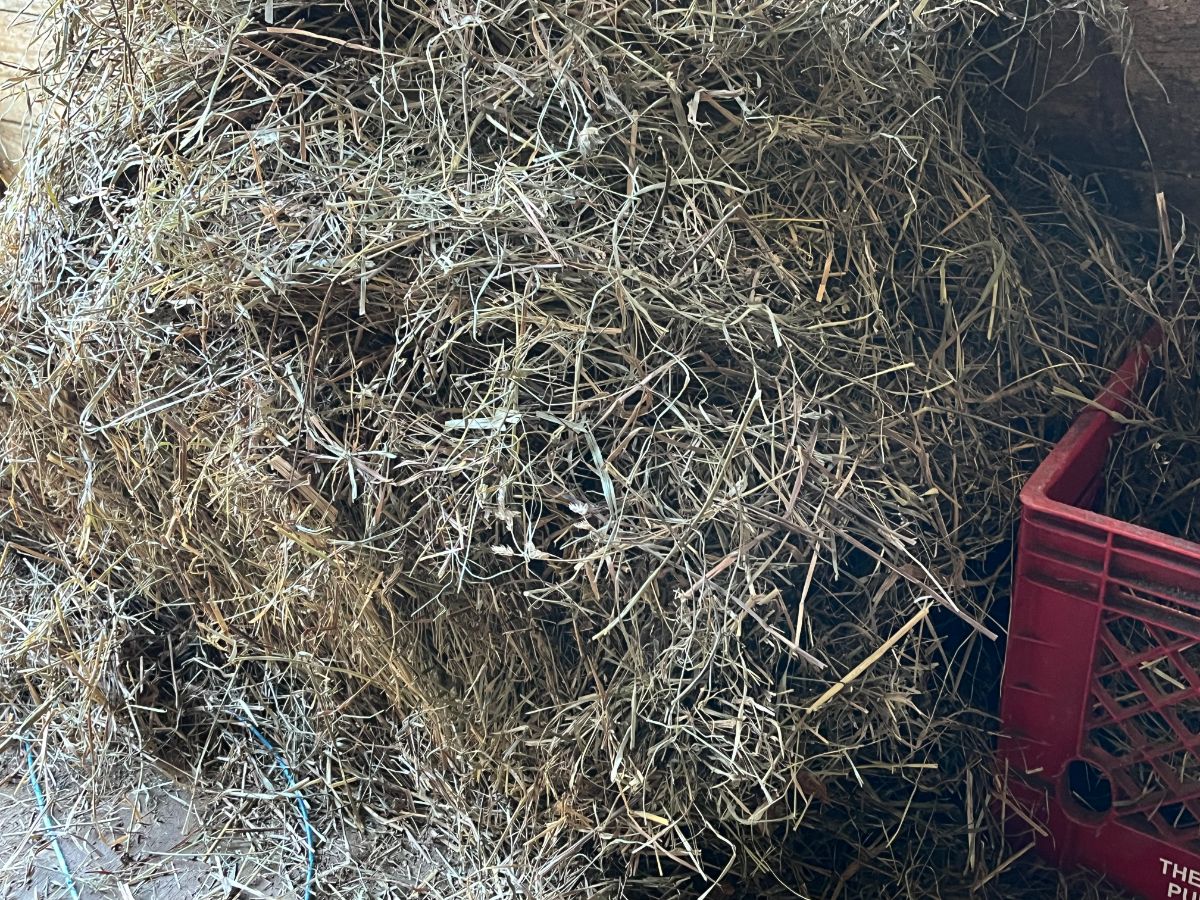
With a complete pellet, rabbits could live without hay. If you don’t have affordable hay sources near you, you may even skip feeding hay (or you might look at alfalfa blocks or forage extenders that are compressed hay in hard-dried hay blocks).
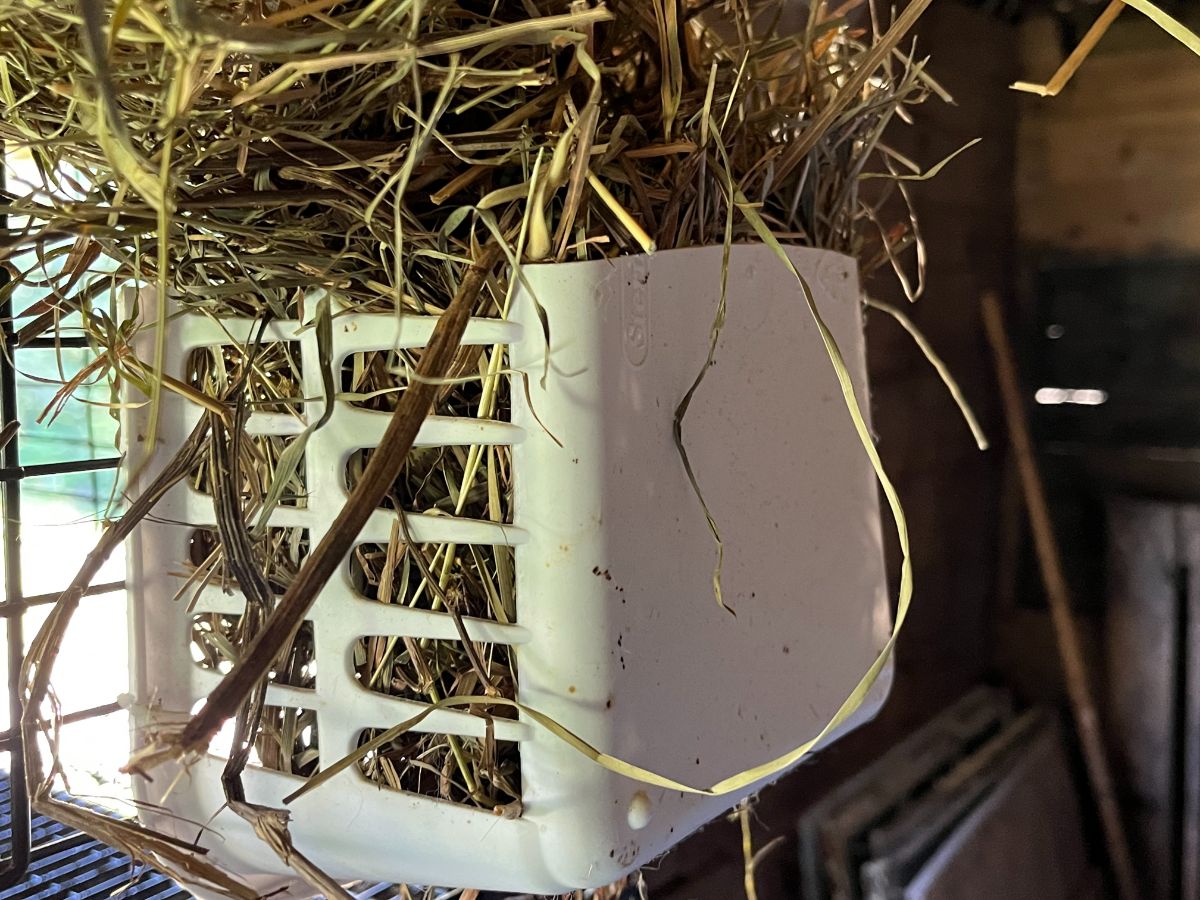
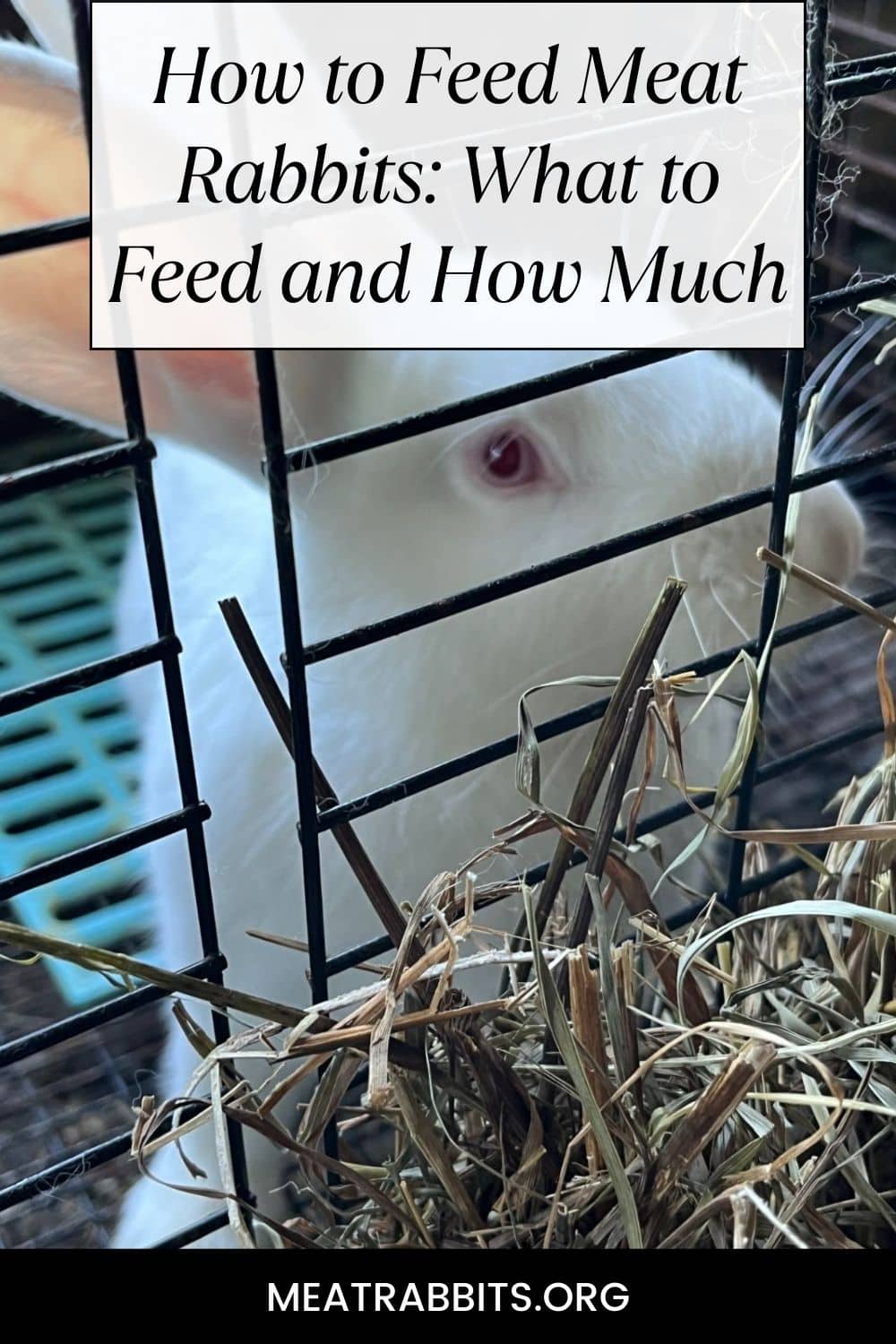
Many growers give a free-choice rack of hay along with pellets. This does a couple of things. It gives your rabbits good forage, which keeps their digestive tracts moving and prevents GI stasis, and it ensures that your rabbits are full and content, even if they eat all their pellets.
Feeding hay also gives meat rabbits something to do, so they’re occupied and less likely to chew on feed bowls and cages just for the heck of it. It can moderate your feed costs and might reduce the expense of pellets, too.
Personally, I do recommend feeding a rack of hay per day. Some rabbits eat it more than others, so adjust accordingly. Don’t worry if a rabbit doesn’t care for much hay. The pellets are the goal anyway, and in that they will get all the calories and nutrition they need.
What hay is right for meat rabbits? Alfalfa is good, though probably limited in sources for all-alfalfa hay. Any good quality livestock hay will be fine. You want hay that smells nice, not moldy or musty, and it should not have any blackened or brown patches that indicate fermenting, mold, or rot. It should not be dusty or visibly moldy, either.
Rabbits have sensitive respiratory tracts, and moldy, dusty hay will not serve them well and may cause illness or sneezing. Aside from this, any good field hay is good hay for rabbits.
Why is This My Recommended Meat Rabbit Feed Feeding Program?
Water, hay, and pellets are my recommended feeding program because I find it to be a good, balanced diet that my rabbits thrive on, grow well on, and they do not fall ill with digestive issues, bloat, or GI stasis. I have happy, healthy rabbits that are easy to care for and grow well and that always have feed available to them, whether in the pelleted or hay form. It works well. It’s recommended by many reputable breeders, experts, and authors with good experience.
Benefits and Advantages of a Pellet and Hay-Based Meat Rabbit Diet
- It’s consistent
- It’s fast and easy
- Easy transition if you must switch feeds (pellets)
- One-size-fits-all in your rabbitry
- Good growth rates
- Growing feed and mixing your own takes a serious time commitment, and that starts with hours of thorough research.
- It is easy to have a substitute person feed for you if the rations and instructions are simple, quick, and easily managed.
- It’s a reliable, good, researched, science-based feed program.
- It's good to have rabbits used to eating hay in case of emergency or pellet shortage.
A Few Pieces of Advice and Some Important Precautions:
- Don’t play around with your feed too often. Abrupt and frequent Changes in diet are difficult for rabbits, upset their probiotics and gut flora, and lead to digestive distress and diseases and conditions that will kill them with little notice and with little you can do about it.
- Don’t feed more than rabbits need. It’s a waste of money and creates more problems than it solves.
- When buying new rabbits, ask if they are willing to give you a baggie of feed for the first few days and ask what they are feeding. If you do not want to continue feeding that feed, transition your rabbit slowly—even if the feed is crap pet food!!
- To transition rabbits, slowly mix together the two feeds and transition over the course of a week or two, gradually decreasing the old feed and replacing more with the new.
- Let the condition of your rabbits guide your feed program. If coats are dull, losing hair, or generally look sub-par, or if the rabbits seem unwell, sluggish, or thin, and if you feel their back and ribs and you feel sharp, jutting bone, you need to make a change. Often, you need to increase the amount of feed or perhaps the protein level (usually up). You may need to consider switching feeds if the problem persists and rabbits don’t respond to intelligent changes.
Tone Irene Andersen
What about sunflower seeds? Can i give them that also?
Mary Ward
Yes, you can. Sunflower seeds are a good, high protein supplement but it should only be used as a supplement because it is also high in fat. The author of the book "Beyond the Pellet" (runs Rise and Shine Rabbitry) suggests only about 6 seeds per rabbit sprinkled over the top of their pellets. Most people use Black Oil Sunflower Seed (you see everyone talking about "BOSS").
There is a recipe for a rabbit feed in the Storey's Guide to Raising Meat Rabbits book that includes sunflower seed in the mix and it makes up about 9% of the total mix.
It's useful as a feed ingredient or supplement but shouldn't be the feed's feature ingredient. Some of the reasons people feed it are to provide vitamin E to bring a reluctant doe into heat/breeding receptiveness, to provide extra fat and energy in winter months to help maintain body condition and helps rabbits stay warm, to give a milk-production boost to nursing does, and to help a doe put back on weight and maintain condition after or during pregnancy (especially helpful for older does who have a harder time bouncing back).
Just to warn you--often, when I sprinkle it on pellets, the rabbits dig and waste a lot of pellet looking for the seeds. It's helpful to feed it in a separate crock, but then that's a lot of crocks to manage, too.
I can recommend the book mentioned above for more on this, and this article from the author of Beyond the Pellet: https://riseandshinerabbitry.com/2012/11/25/feeding-rabbits-black-oil-sunflower-seeds/
Tone Irene Andersen
Thank you for the help 🙂
Tone Irene Andersen
The reason why i asked. The feed in Norway for rabbits are 14,5% protein. Im not able to get 16% or 18%. So can i supplement with sunflower seeds or other seeds to get the protein up to 16% or 18%? And how much would i have to add to gain those extra %? So confusing all of it.
Mary Ward
That is confusing. I'm not a feed analyst, but if it were me, I would stick with mixing in about 9-10% sunflower with your pellets. I would not want to start with too much because of the fat issue.
That said, if you feel your rabbits are hitting your goals for weight and condition, you don't absolutely have to get protein up that high. I do select my breeders according to who does well with my chosen feed program. But if you think you need to boost them (which I can see), I would try out supplementing the sunflower.
I would recommend doing some trials with your rabbits. Track some weights for a set or two of grow outs if you can. See if you can get them to those recommended weight goals.
Feeding alfalfa hay (if it is available) might help, too. It averages around 17% protein.
By the way--what breed of meat rabbits are you working with in Norway?
Tone Irene Andersen
I have this website to decide what breeds i want. https://nkf-kanin.no/kaninraser/
Right now im considering, Silver Fox and New Zealand Red. I got a pretty big stall for rabbits coz i have an old sheephouse im not using and they have extra rooms. I have a breeder nearby that is helping me to get a breeder couple of both breeds. I did have french loop rabbits before but i think i overfed them and they died on me. But this time i will weigh the feed and stuff before i give them any.
Your pointers are truely helpful 🙂 Thanks
Mary Ward
I'm truly glad this helped. If you have more questions, ask away and I'll see what I can do.