
This is a question that not only I get, but it’s one that is asked frequently on meat rabbit forums.
The question:
How do you deal with the emotional side of harvesting meat rabbits?
How do you slaughter an animal you raised from an infant?
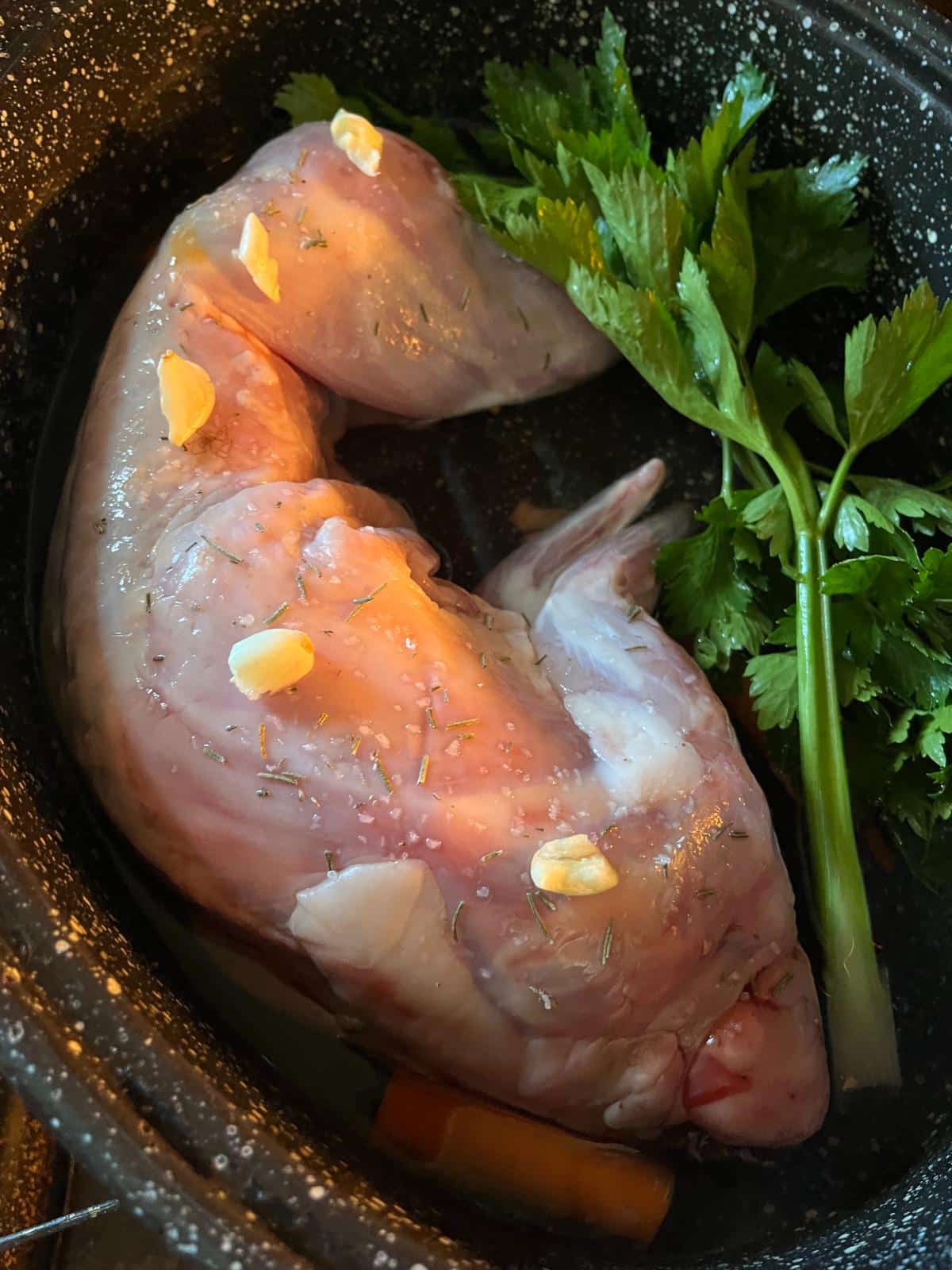
There is both a simple and a complex answer to this question. One that can be difficult to put into words, but that you can certainly come to terms with, with the right frame of mind.
Jump to:
- Keep Perspective and Focus on the Animal’s Purpose
- Video: Keeping Meat Rabbits with Children
- VIDEO: Why Our Words Matter Even to Our Own Selves
- Keep Perspective on Your Purpose
- Know What You Grow
- Educate Yourself on Humane Dispatch Methods
- Video: Recommended Meat Rabbit Processing and Butchering Resources – Where We Learned It!
- A Little Thanks Can Go A Long Way
- It’s Okay to Feel Something When Butchering -- You Should!
- The First Time is the Worst Time (And That’s Not That Bad, Either)
- The Realities of Livestock Raising Ease the Emotional Burden
- Other Tips that Help Smooth the Road to Harvesting Homegrown Meat Rabbits
- “How Can You Butcher Those Cute Bunnies?”
- Finally, Take Pride In Your Accomplishment!
- Reading and Other Resources on Harvesting Your Own Meat and Meat Rabbits
Keep Perspective and Focus on the Animal’s Purpose
Purpose and planning go an awfully long way to making it possible for you to overcome the emotion and anxiety attached to slaughtering an animal. Any animal.
When we start out clearly from the beginning, identifying and naming the purpose of the animal on your farm or homestead, it is far easier to keep that separation and keep lines from blurring.
This is true for any children who may be connected or involved in your meat rabbit raising, and it is true for you, too. (In fact, in my experience, children are even better at this than adults, if they are clearly and purposefully led.)
If you want a pet rabbit, keep a pet rabbit -- away from your meat rabbits, and preferably of an entirely different breed.
The rabbits that you buy with the intention of raising as livestock should always be looked upon as livestock. Housed and managed as such.
This does not mean you need to be cool or cold or that those animals get ill-treated - definitely not! It means good care and always humane treatment. Right up until processing time. At which time, you also process them in a humane manner.
By setting boundaries, you’ll prepare yourself from the beginning for processing day.
Video: Keeping Meat Rabbits with Children
Use appropriate meat and livestock terminology
Using the proper and appropriate terminology for meat rabbits keeps a clear and solid perspective on the animals and their purpose.
What we say in our own heads and how we talk in presentations to others matters. It shows meat rabbits as the resource that they are. An appreciated resource, but a resource with a purpose, nonetheless.
Use the right words from the very start. Start as you mean to go on. Use the right terms for all stages of breeding, delivery, growth, and development. This will put you in a livestock and production state of mind and keep you there.
VIDEO: Why Our Words Matter Even to Our Own Selves
Keep Perspective on Your Purpose
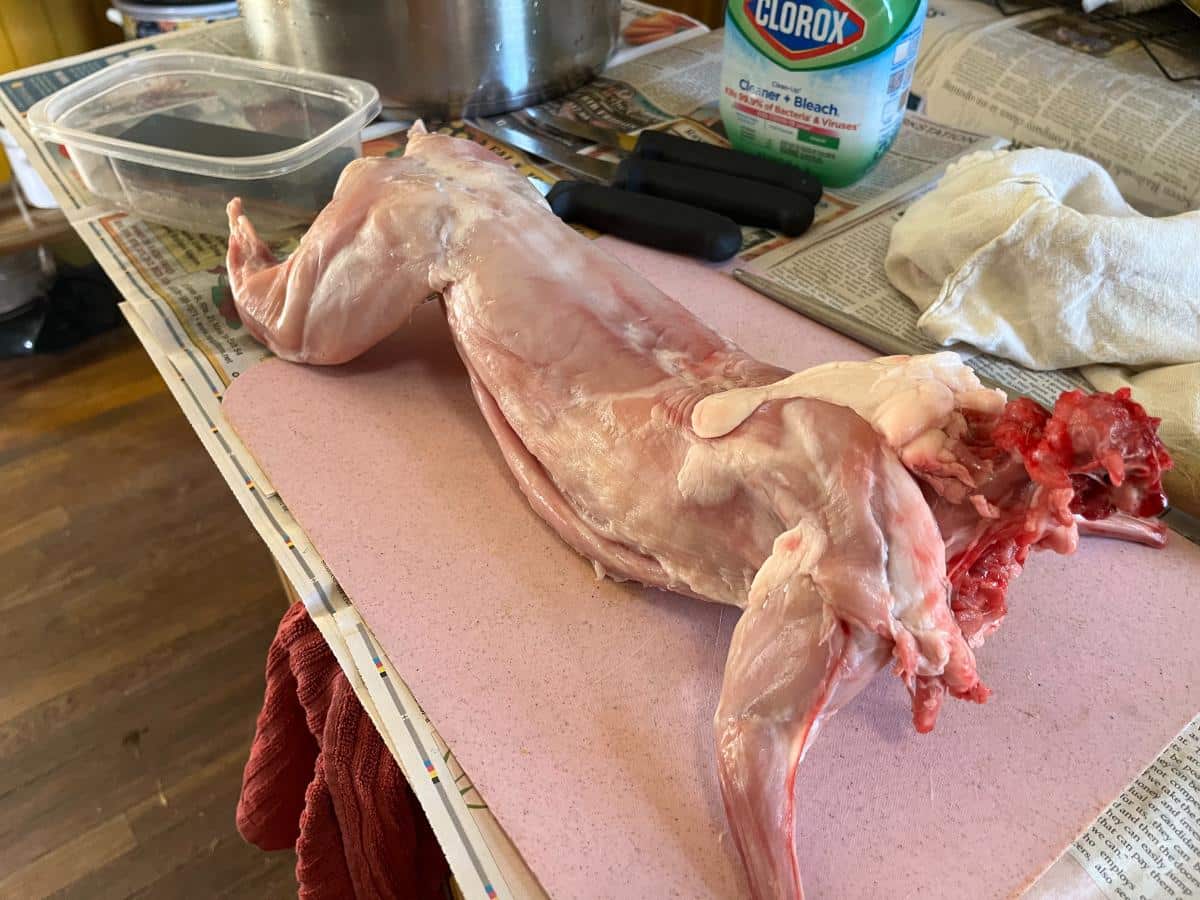
Your purpose is very much connected to the rabbits’ purpose, but it is also personal.
There is a reason you decided to raise your own meat rabbits for your table. There are probably many. These range from anything from growing meat cheaper than you can buy it, to knowing what went into the food you are eating, to how it was raised and handled.
Whatever your purpose, keep that perspective. It will be your guiding premise. And it will make it easy to see the importance of the harvest for you and yours.
Perspective not only keeps you on the right path, but it also shifts the way you view the whole endeavor. The physical (and emotional) act of the harvest is a lesson unto itself. By default, it delivers and solidifies that perspective.
Alyssa Davis of Brick House Acres Rabbitry puts it very well in her“Quick Start” Meat Rabbit Guide and in her online course:
“As strange as it sounds, butchering an animal humanely actually opens your heart to be a kinder, more thoughtful person. You are flooded with gratitude and respect for the beautiful creature that gave it’s life for your nourishment. You naturally become less wasteful and want to make sure nothing goes to waste as a way of honoring its life and sacrifice. You finally understand what it means to be part of the circle of life.”
That is probably one of the most succinct and meaningful ways I’ve heard to explain something that can be difficult to put into words, but that is very much the truth. Until you experience this, doubt can prevail. Pushing yourself through the anxiety that we all feel will get you to the other side. It’s well worth the push!
Know What You Grow
Know what you are growing, and keep that at the forefront of your mind.
Biology talks. We, as human animals, are omnivores. Only a very small percentage of the American population considers itself vegetarian -- just four to five percent, with another one to four percent self-reporting as vegan.
One of the most recent Gallup polls puts the number at a total of five percent vegetarian and vegan combined. It’s a number that’s been declining in recent years. The percentages are about the same in the UK and Europe, though several developed nations are much lower, at one or two percent.
This article is not, of course, an essay on vegetarianism in any of its forms. It’s not a criticism of it, either. This is relevant only to make the point that 95% or more of the population is eating meat. This is worth remembering when someone comes at you with their hypocritical criticisms.
Rabbit is one of the most efficient, highest-protein meats you can grow. It’s an extremely healthy source of meat.
And if you’re going to eat meat, which almost everyone is, it is far better for it to be from healthy animals that lived a good life, that you know for sure were fed, cared for, and treated well.
You can draw confidence from this.
You do not need to feel dirty about treating an animal well and then giving it a clean end. It should be exactly the opposite of this. We do not need to build walls between the meat animals and us; we keep.
You can -- and should -- also draw confidence from knowing exactly what you’re feeding your family.
Educate Yourself on Humane Dispatch Methods
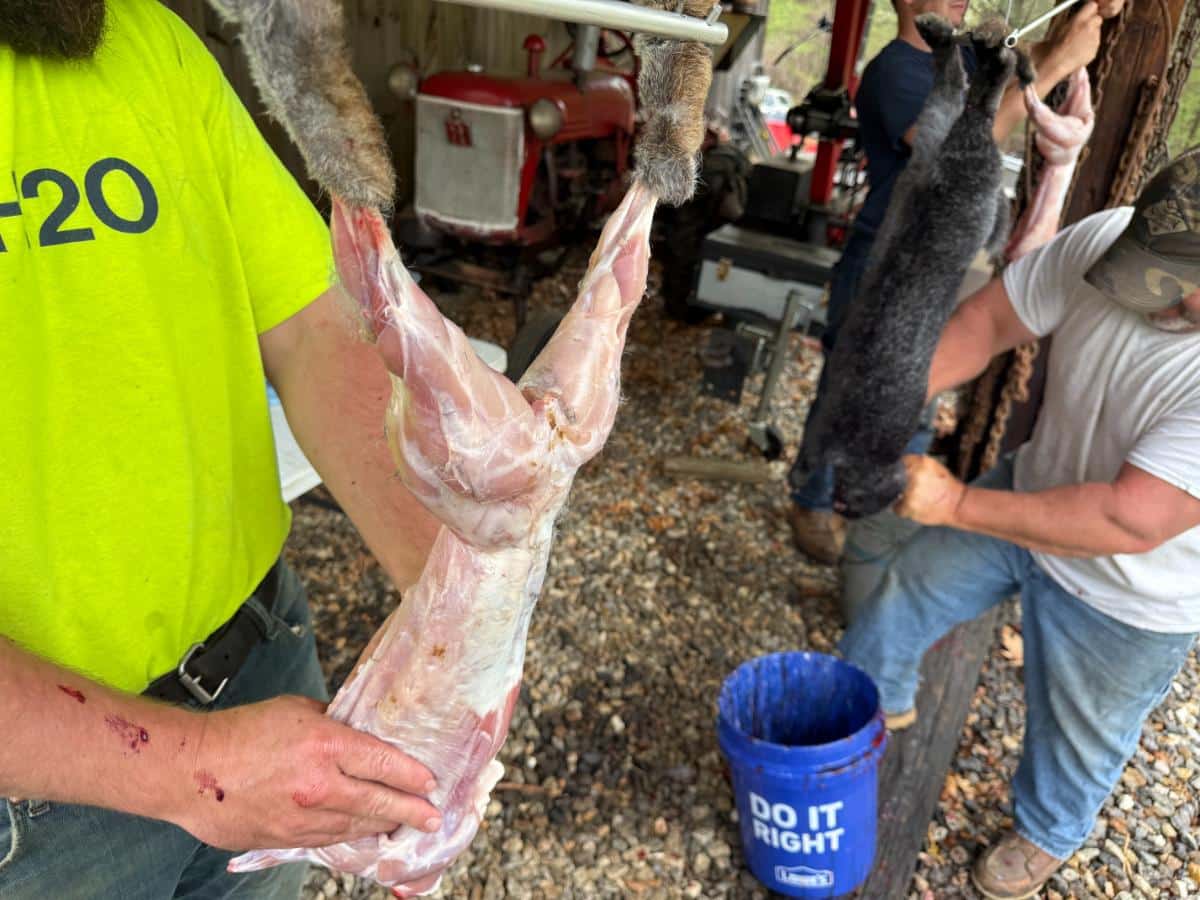
The surest way to increase anxiety and lose confidence in your harvesting ability is to have a bad experience with processing. That said, know that everyone makes mistakes.
The best way to limit mistakes is to take the time long before you plan to process to learn how to do the job right.
There are a few different ways to humanely dispatch a meat rabbit. Most processors prefer one over another. You should choose whichever you feel most comfortable and confident in. It is also okay to try different methods to find what fits best, but you should start with one method that you have researched and planned for before your first harvest.
A great deal of dealing with the emotional side of harvesting and processing meat rabbits is in having the confidence to do so. Solid research, planning, and preparation are all crucial to building that confidence.
Top resources for learning how to process meat rabbits
This article will link you to my top recommended resources for processing meat rabbits. There is a mix of online videos, but also an affordably priced meat rabbit processing course from BHA Rabbitry. It’s completely online and is about the next best thing to taking an in-person rabbit slaughtering course.
- Top three recommendations for learning to process meat rabbits
- Complete online rabbit processing course
Video: Recommended Meat Rabbit Processing and Butchering Resources – Where We Learned It!
These are the resources I recommend for people who need to learn about processing meat rabbits. They are clear and cover the options and processes well.
A Little Thanks Can Go A Long Way
An appreciation of the circle of life, a reverence for the gift and opportunity that it is to grow your own food, to have the skills to put food on your own table, and to sustain you and yours, goes a very long way.
Many meat rabbit raisers will talk about the moment of thanks they give -- whether verbal, in the head, or spiritual -- that helps them through the initial processing.
This may or may not be for you, but I think in some way, those of us who continue to keep and respect our animals do this, on some level. And it can go a long way to mediating concerns over meat processing.
It’s Okay to Feel Something When Butchering -- You Should!
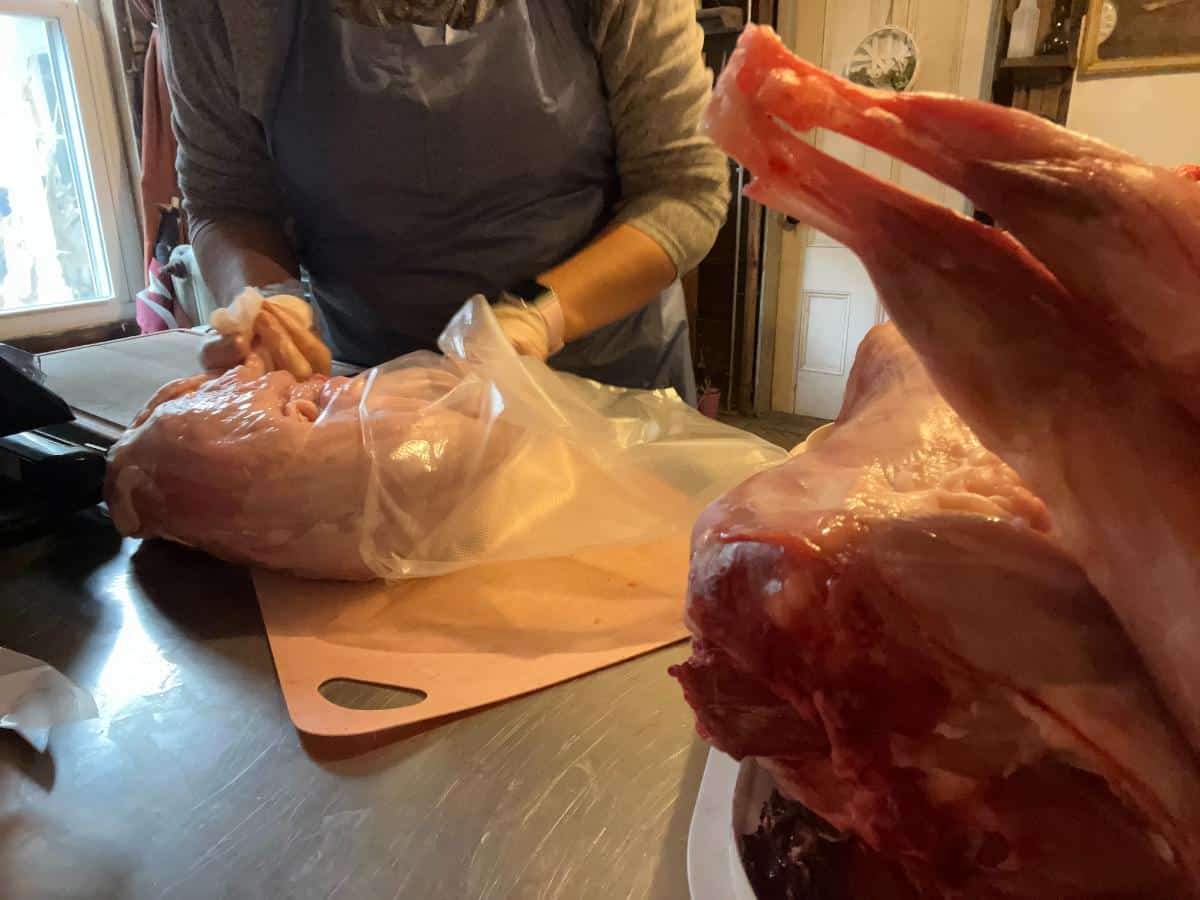
You are not alone in your hesitance or in harboring anxious feelings surrounding the real act of dispatching and processing animals for your table.
Just because it does not look hard for people, doesn’t mean it isn’t so, or that it wasn’t once hard for them to come to terms with the final steps of growing and harvesting their own food.
Life does come from death. Even plants are living things. This is the way of survival for every single living organism.
The real point here is to know that you are not alone in these feelings. Knowing that will not only give you a sense of connection to a community of like-minded growers, but it will also help to show you that this is something people experience and work through. The perspective of knowing that possibility is empowering.
The First Time is the Worst Time (And That’s Not That Bad, Either)
Properly prepared mentally and physically, and with the right plan and equipment, harvesting meat rabbits is really not that bad. And that is the worst you will experience.
Each time you process a set of meat rabbits, it will get easier. It will become a chore that needs doing, just like cleaning the barn.
It’s not that we love doing it; it’s that it needs doing.
And the reward is worth it.
Might you always feel a little twinge come processing time? Sure. But it will become more of a blink that you hardly notice, and much less of a feeling of dreadful anticipation.
The Realities of Livestock Raising Ease the Emotional Burden
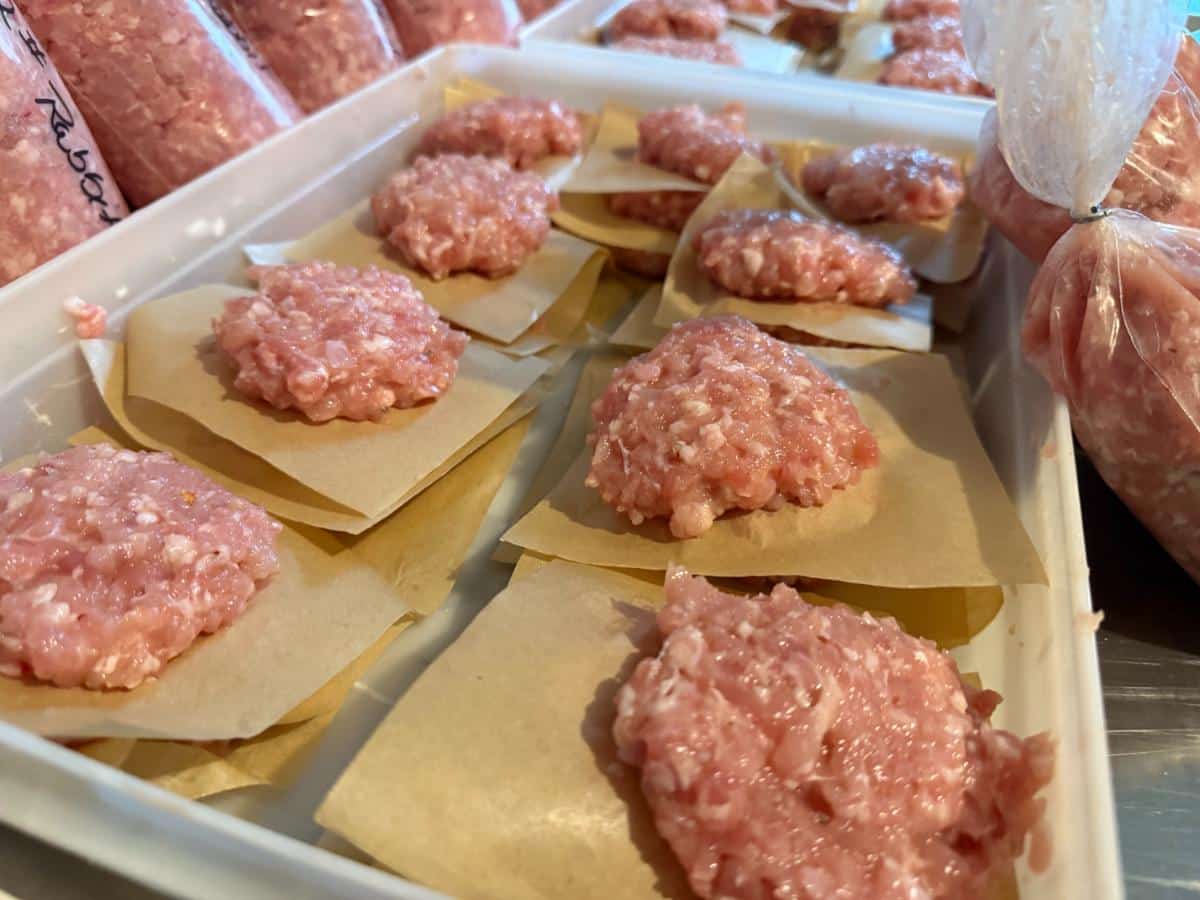
The work of having 40 animals to clean and feed, the pain in the butt juveniles harassing each other and spilling feed for the fun of it, the increased feed bills come slaughter time, the simple fact that the harvestable grow outs are not cute, cuddly babies, and yes, the scratches from the high-strung or attitudinal individuals….
If we’re being completely open and honest, all of these things come into play and make harvesting meat rabbit grow outs easier.
Even the boredom that people begin to feel as the rabbits get older and the novelty wears off is a real occurrence that works in your favor.
At least when the newness wears off for you, your animals will have a meaningful purpose. How many pet rabbits are ignored after a few months? Meat rabbits often see much more attention and care than mostly abandoned and forgotten pets!
It may sound cold to some, but this is reality. This is real life in the barn trenches, day to day.
The fact of the matter is that with a barn full of rabbits, you don’t see individuals the way we see pets. You see a harvest. You see, if we’re being honest, work that can grow to the point of overwhelming.
You see that a harvest can also be a rest, like a season or a cycle.
Harvesting is the season of rest that comes with keeping meat rabbits. Like your garden in winter, that season then gives you a time to rest and reset, and time to rebuild your purpose and appreciation again.
Other Tips that Help Smooth the Road to Harvesting Homegrown Meat Rabbits
- Recognize the morality, value, and importance of rabbit meat among other cultures
- While rabbit may not be very mainstream for Americans, it is in many other cultures
- Rabbit is a critical protein source in many less developed countries, and places where they naturally do not have good biological infrastructure for large livestock and large cropping; knowing this makes rabbit a much more acceptable -- normal -- meat
- Raise meat rabbit breeds that have little to no variation in color and appearance
- When all the rabbits look alike, when they are all the same basic color and markings, none stand out to become preferred or favorite, either by you or your children
- Some of the top meat rabbit breeds easily accomplish this -- Californians, New Zealand Whites, Champagne D’Argents, Creme D’Argents, Silver Fox
- Name breeders, but do not name grow outs that are intended for meat -- these are not pets for naming and getting to know
- If you are holding back grow outs to evaluate as potential future breeders, give them an identifying code, but wait to name them until you have selected them as breeders who will be staying
- On harvest day, plan to harvest early in the day so that you do not have time to overthink the job
- Set a date, block out plenty of time, and get the job done
- Have help if possible -- to share the load and the anxiety, and to help move each other through the process (also, to help work through practical points of butchery should you get stuck on a part of the process)
- Keep your learning resources (books, diagrams, YouTube videos) on hand for quick reference -- no one remembers everything the first time!
- Find a mentor if you can
- A mentor will not only teach you the process, but they will keep you focused on the job, and on the how and the why
- Plan for a small harvest for your first time
- This gives you the mental and physical fortitude without overly taxing yourself, but it also gives you more time
- Making the time to take your time and do the job right will help ensure that things go more smoothly
- It will also teach you what points of the process to work on for an even better experience next time
“How Can You Butcher Those Cute Bunnies?”
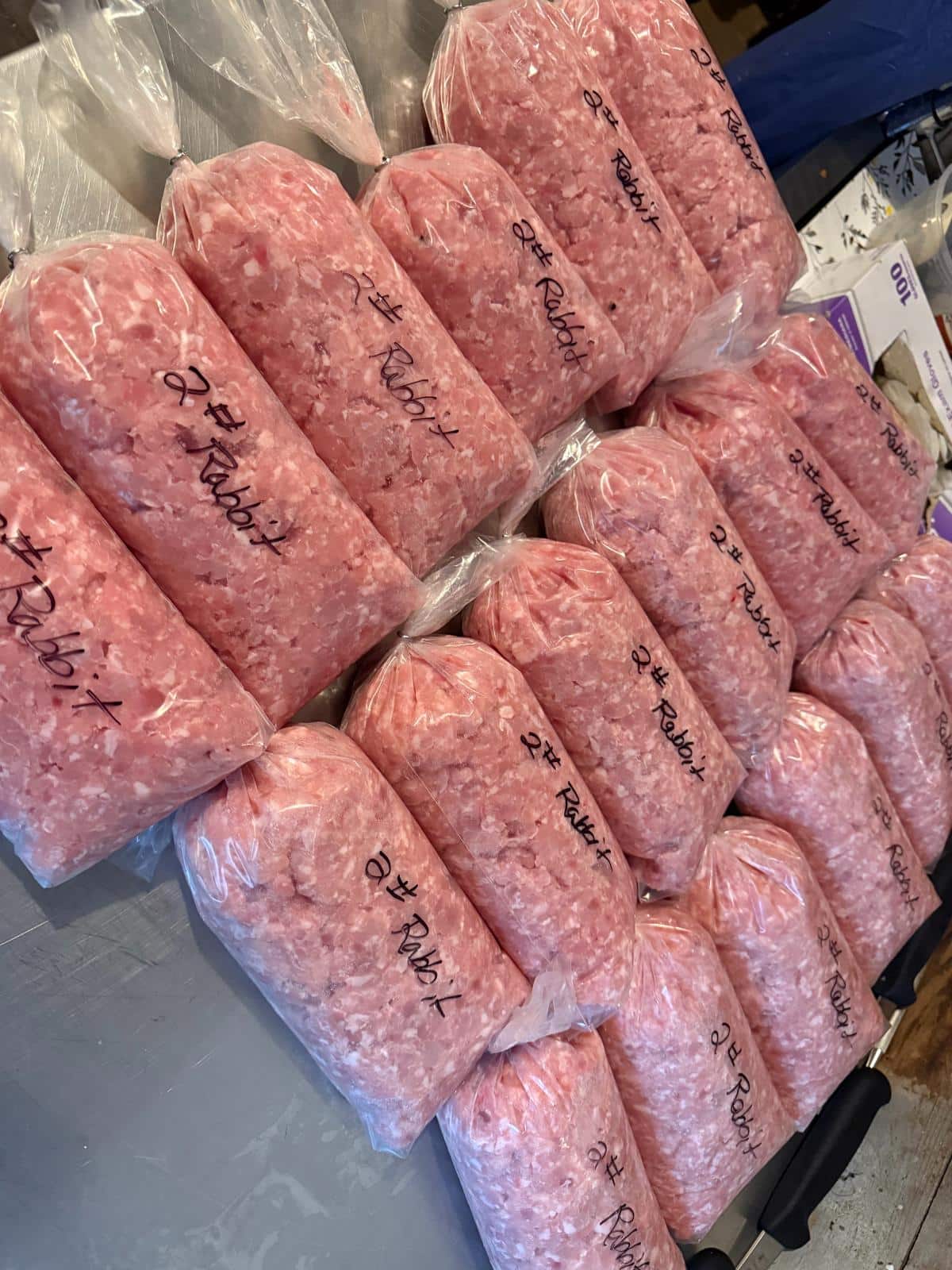
This is the question that probably every meat rabbit grower gets from someone, at some time (usually someone who is living off cheap, bleached, factory-farmed chicken who could never eat that chicken if they took the time to learn how it was grown).
First off, I never consider that I "butcher cute bunnies”.
I do not, in fact, butcher “cute bunnies”.
I raise meat rabbits for meat, and I harvest and process juvenile meat rabbits.
Infant bunnies (which should be called kits, which is what they are) are not killed here unless there is a reason. That reason would never be meat for my table. It would be one of mercy for an animal that is not viable.
So how do I butcher such adorable little animals?
I just can. I was raised with a clear perspective and the boundaries we talked so much about before, for all types of livestock. Real life on the farm. And I’ve brought this into my meat rabbit raising and harvesting.
I look upon meat rabbits the same way I looked upon the beef that we grew, rose veal we grew, and a thousand meat chickens we’ve grown and processed over the years.
I can because these animals were never meant to be pets. I can because biologically and evolutionarily, these animals serve as a foundational animal in the food chain, for us and for many species.
I can because I also recognize that without me and my purpose, these animals would never have lived at all.
I can because I know my why. And I know the value I bring to my family’s meals.
Finally, Take Pride In Your Accomplishment!
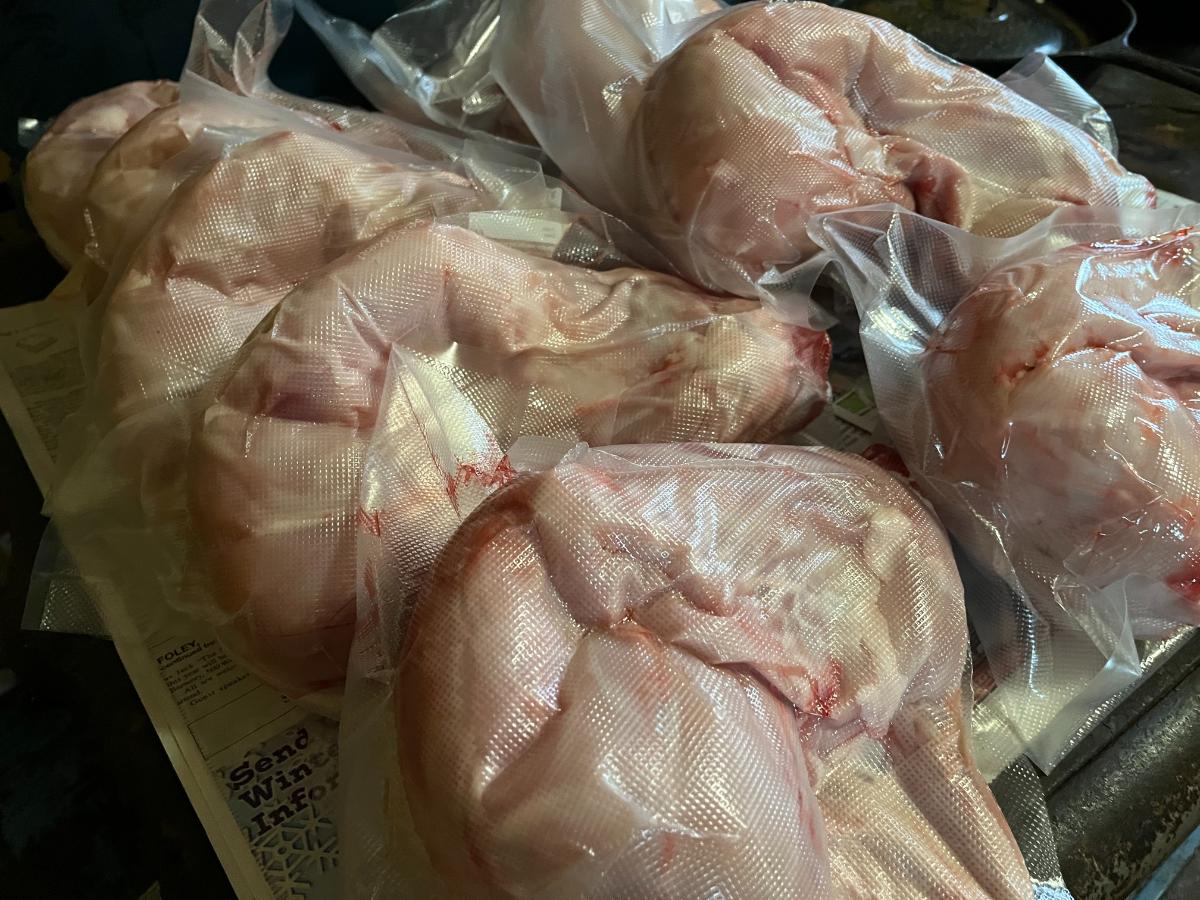
Finally, once you do find yourself on the other side of the harvesting and processing task, take the time to feel your accomplishment. Growing your meat should be a point of pride and confidence!
It is not shameful to allow yourself to feel that pride. Don’t let anyone make you feel that way. If they can’t understand your purpose and accomplishment, that is their cross to bear, not yours.
You’ve come to meat rabbit raising for a reason. You’ve educated yourself on how to grow healthy meat, humanely. And you’ve gained a level of knowledge and skill that relatively few others in this world have.
You should feel good about knowing that you can sustain yourself and others. And that is an accomplishment worth celebrating.
Reading and Other Resources on Harvesting Your Own Meat and Meat Rabbits
- Meat Rabbits. Keeping Meat Rabbits With Kids.
- Gallup News. In U.S., 4% Identify as Vegetarian, 1% as Vegan.
- Green Queen. Number of Vegans in the U.S. at 10‑Year Low as Americans Favor Vegetarian Diet — Gallup Poll.
- Gallup News. Snapshot: Few Americans Are Vegetarian or Vegan.
- Wikipedia. Vegetarianism by Country.
- Meat Rabbits. Top 3 Recommended Meat Rabbit Butchering Videos.
- Homestead Rabbits. Complete Online Meat Rabbit Processing Course.
- Meat Rabbits. Why Words Matter: Using Proper Rabbit Terminology.
- Homestead Rabbits. Homestead Rabbits.
- Homestead Rabbits. Raise Meat Rabbits: Quick Start Guide.
- The Elliott Homestead. Harvesting the Rabbits.
- Homestead.org. Raising Meat Rabbits: Lessons Learned Back to Front.
- Homesteading Family. Raising Rabbits for Meat: A Comprehensive Guide.
- Mother Earth News. Processing Meat Rabbits.
- Mississippi State University Poultry Science. Slaughtering and Dressing Rabbits.
- Mother Earth News. How to Butcher a Rabbit.


Leave a Reply