

There are many meat rabbit breeds to choose from. Meat rabbit breeders choose their breeds for different reasons.
Jump to:
- Breeders Choose Different Rabbits for Different Reasons
- Characteristics of the “Best” Type of Meat Rabbit
- What Breed of Meat Rabbit Has Shown to Be the Best Performer on the Whole?
- VIDEO: What Breed of Meat Rabbits Performed the Best?
- Can Meat Rabbit Mutts or Crosses Be Used as Breeding Stock?
- Are Purebred Meat Rabbit Breeds Worthwhile?
- For More Reading and Reference:
Breeders Choose Different Rabbits for Different Reasons

- You can choose based solely on popularity.
- You can choose to raise a breed of meat rabbit that needs conserving, such as a threatened breed of which not many remain in production.
- You can choose based on temperament.
- You can choose based on body type, growth rates, size…or any number of other factors.
- You can choose a breed of meat rabbit just because they intrigue you, or you like their looks.
And breeders do.
There is no right or wrong breed of meat rabbits to keep or to raise. They all taste the same. Where there are trade-offs, there is usually something positive to balance it out.
If you were to ask me, though, taken as a whole, and based solely on overall, well-rounded performance, which type of meat rabbit has performed the best over the seven years or so that I’ve been keeping meat rabbits, there is one solid answer I would give.
Characteristics of the “Best” Type of Meat Rabbit
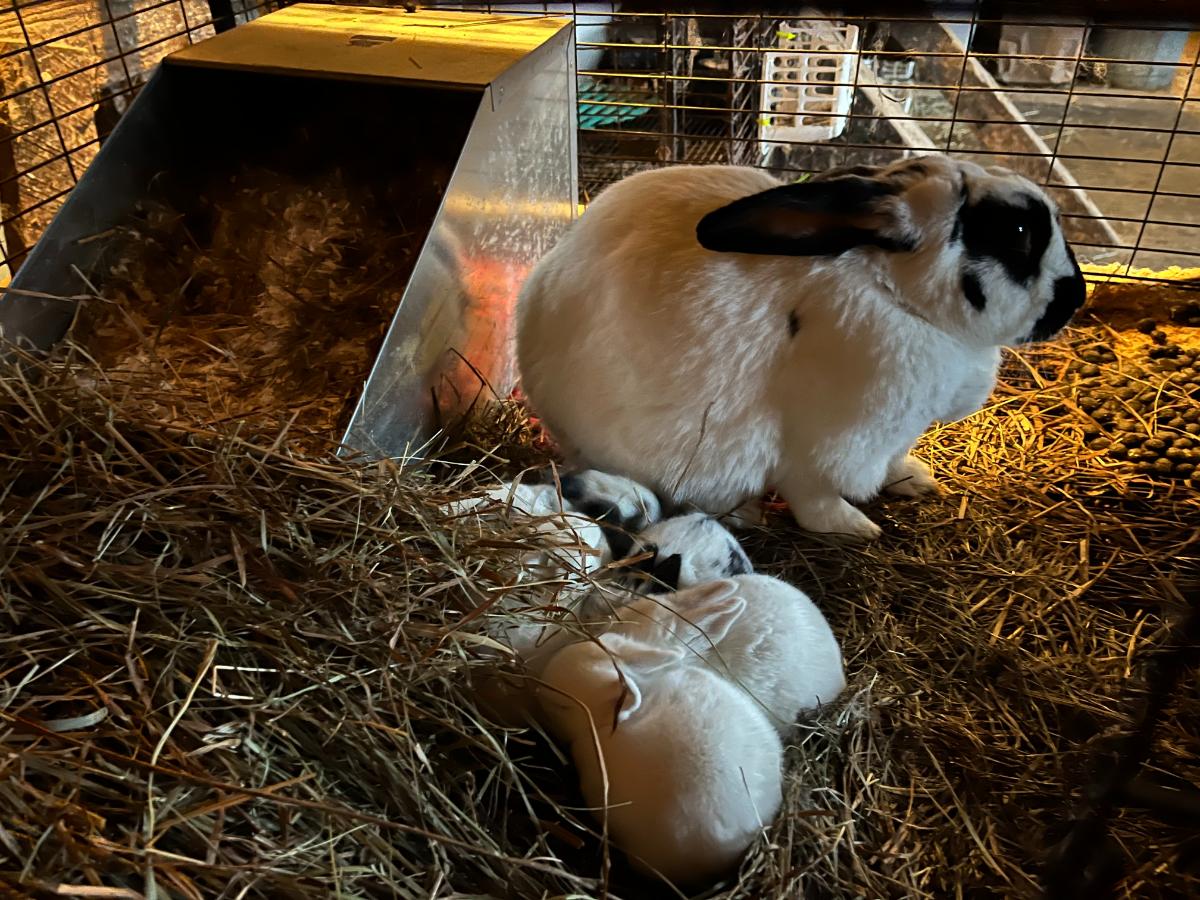
There is no one set of definitions to judge what the “best” type of meat rabbit is. But there is a general set of criteria by which I am basing my answer to this question.
When someone asks me, “What breed of meat rabbit has been your best performer?” I take that to mean:
What type of meat rabbit…
- Has consistently good-sized litters (8 to 10 or 12 kits per litter)?
- Is a good, reliable mother with good mothering instincts?
- Regularly builds good nests and delivers in them?
- Exhibits good nesting behavior?
- Has little or no trouble delivering kits?
- Delivers live kits consistently, with no more than one loss per kindling, if any at all?
- Has hardy kits that don’t need a lot of intervention from birth through the growout period?
- Produces kits with few, if any, health problems?
- Produces kits with little to no issue of weaning enteritis?
- Produces kits with no feed sensitivities that contribute to illness?
- Is resistant to illness or endemic parasites or illnesses?
- Has good growth rates, reaching five pounds live weight consistently by 10 to 12 weeks or better?
- Has few, if any, overall losses within litters?
- Is resilient and resistant to the effects of parasites, illness, and weather and climate conditions?
- Displays good temperament in handling and management?
Basically, what I’m looking for to answer this question is that the rabbits are consistently easy to care for, require no specialty care or feeds, and produce large litters of kits that they are able to care for. The kits grow out well, efficiently, within the standard window of time.
All of this without me having to do the work for the mother.
What Breed of Meat Rabbit Has Shown to Be the Best Performer on the Whole?

Let me start by saying that to some extent, in some circumstances, this is asking me to split hairs (hares?).
Most of the time, with all of my rabbits, things go well. But if there are issues, it is 99 to 100% of the time, not with the breed that I have picked as “the best”.
And what is that breed?
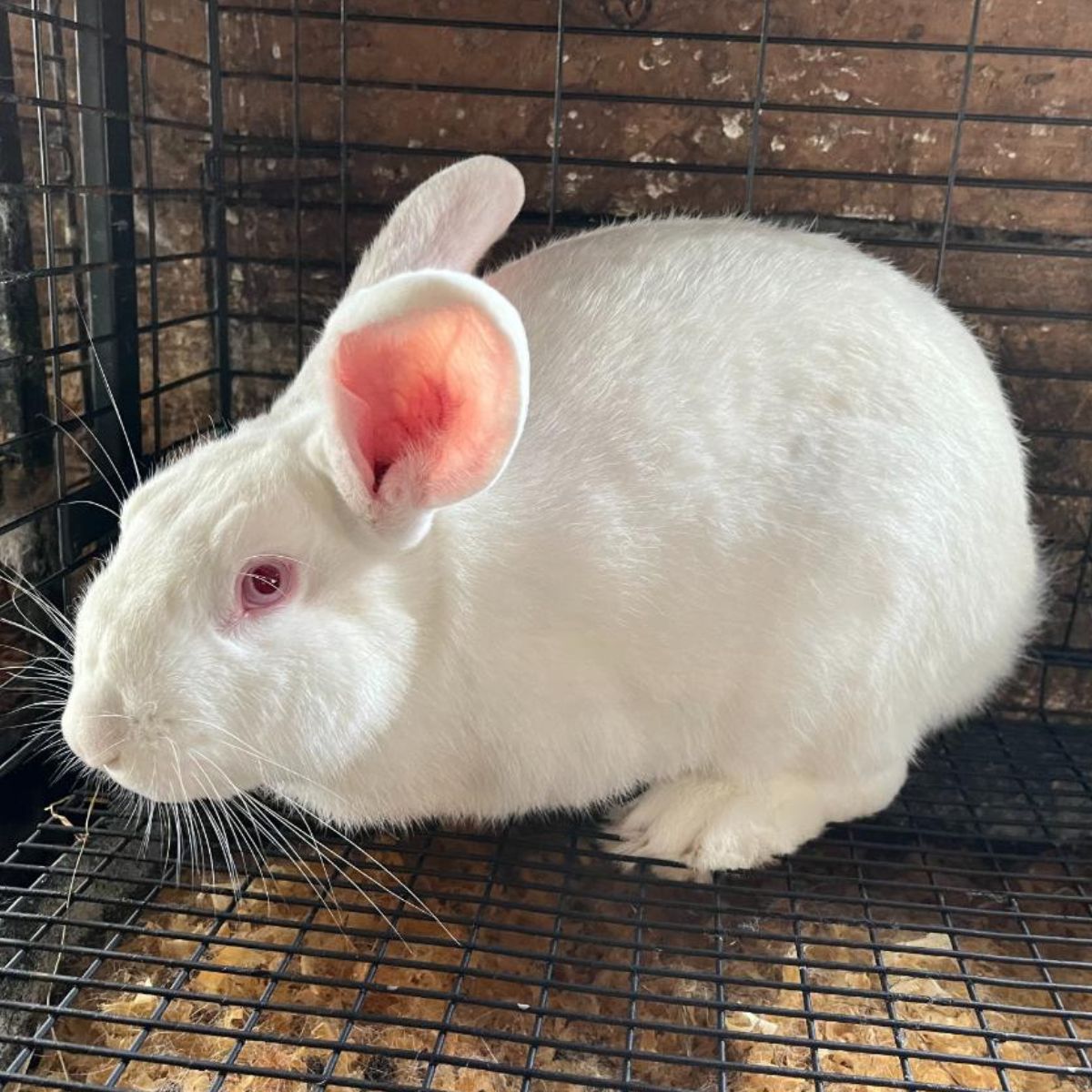
Meat mutts. Crosses. First-generation meat cross rabbits from two (possibly more) breeds.
I have bred crosses of meat rabbits between Californians, New Zealands, Champagne D’Argents, and crosses between crossed does and purebred bucks.
The cross that I’ve had the most experience with is a Californian buck over a New Zealand doe. This is a very common cross that is recommended by many breeders for its ability to capture the best traits of both breeds.
That said, any breed crossing that I have bred has shown similar results (for example, Champagnes and Californians).
The results are:
- Large litters (almost never fewer than eight kits)
- Limited losses at birth
- Limited losses as grow outs
- A tendency not to experience problems like weaning enteritis, illness, or unexplained deaths
- Good climate and weather tolerance at all times of the year
- Good growth rates with rabbits meeting or exceeding five pounds of live weight by 12 weeks old (usually sooner, towards 10 weeks)
- Reaching live weights of seven to eight pounds by 16 weeks (which is the age at which I slaughter, so it is a more accurate benchmark for me)
Why might meat crosses be overall better than purebred meat rabbits?

This comes down to hybrid vigor. The vigor you get from a first-generation cross, which usually (no guarantees and not always, but usually) will harness the best immunity and strength along with the best growth traits from the parents or breeds that produced them.
There simply ends up being more diversity in the genetic material that helps to pull the rabbits away from the traits that sometimes become instilled in a purebred line.
VIDEO: What Breed of Meat Rabbits Performed the Best?
Can Meat Rabbit Mutts or Crosses Be Used as Breeding Stock?

In short? Yes.
There are breeders who will say that crossbred grow outs are an excellent thing, but that you should never reserve those grow outs for breeding. Usually, the idea is that you don’t know what is still hiding in the backward lineage.
While there is truth to this, it is also true that the same could be said of purebred rabbits if you don’t solidly know their history (and by that, I mean you know or raised their ancestors and have more than just a pedigree to speak for them).
At the end of the day, whether you are breeding purebred rabbit breeds, crosses, or meat mutts, not every rabbit that is born is one worth keeping as a breeder. Selection and performance are what define a rabbit as a worthwhile breeder. You can get that from generational mutts or from purebred top-of-the-line rabbits. Or, you might not get it at all.
It is up to the breeder to continually select and propagate rabbits from promising, performing stock.
Keep watch of your stock
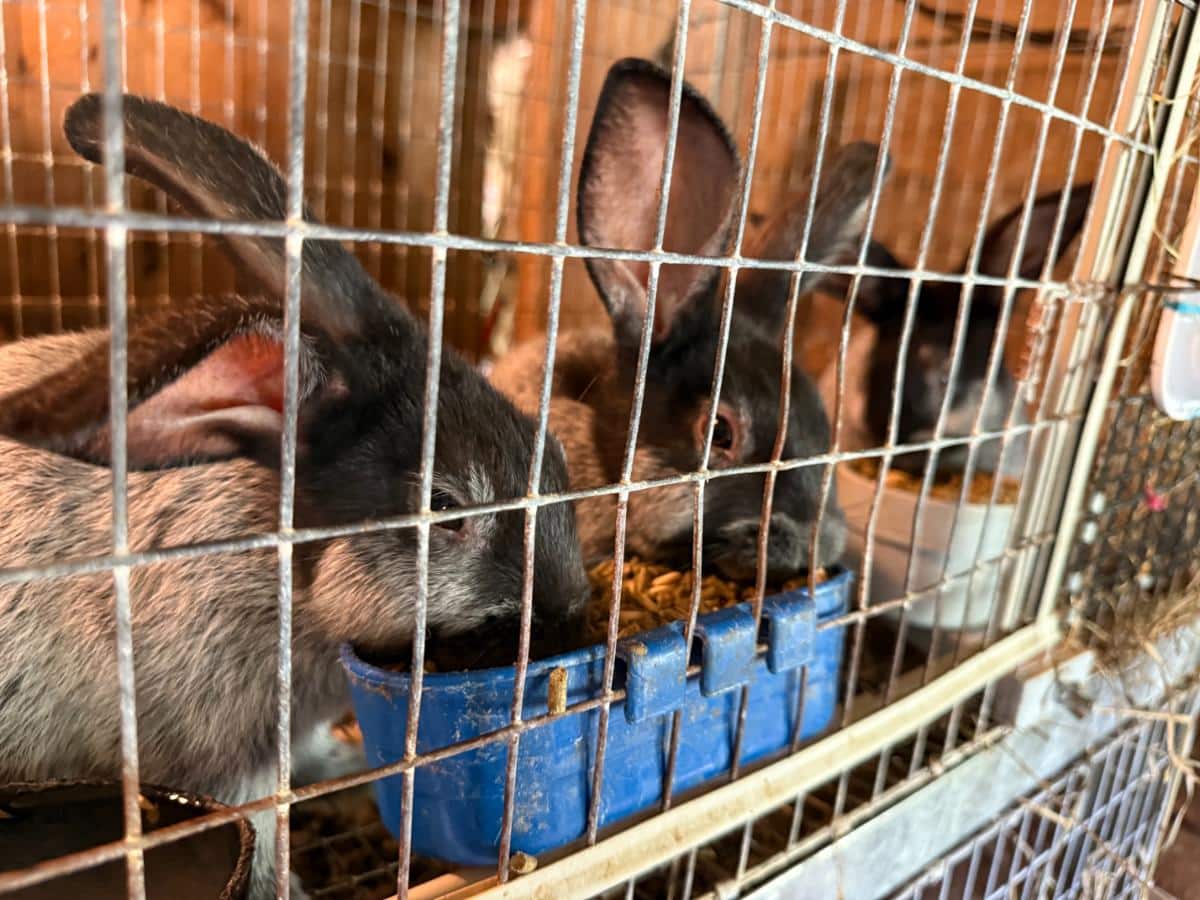
Of course, as you go along and the genetic waters get murkier, there is more potential for traits to out themselves. This can be good or bad. But that doesn’t mean that the offspring of solid meat crossbreeders will not be good.
It just means that sometimes, the further down the lines you go, or the more mixing you do between two mixed parents, the more opportunity for positive traits to fall off, or for negative traits to pair up and amplify. Hiding recessive traits might rise to the top, too.
You might see the growth rate diminish a little, and the growth efficiency fall off. (This is what I’ve tended to see most often). You might see hardiness slip.
The key, if you do start to see this, is to step back in your breeding to a place where you were happy with the results.
- Select well and select often.
- Select heavily for breeders with the traits you favor most.
- Consider breeding back in from a purebred buck or doe if you have one, to recapture that vigor that is becoming diluted.
Are Purebred Meat Rabbit Breeds Worthwhile?
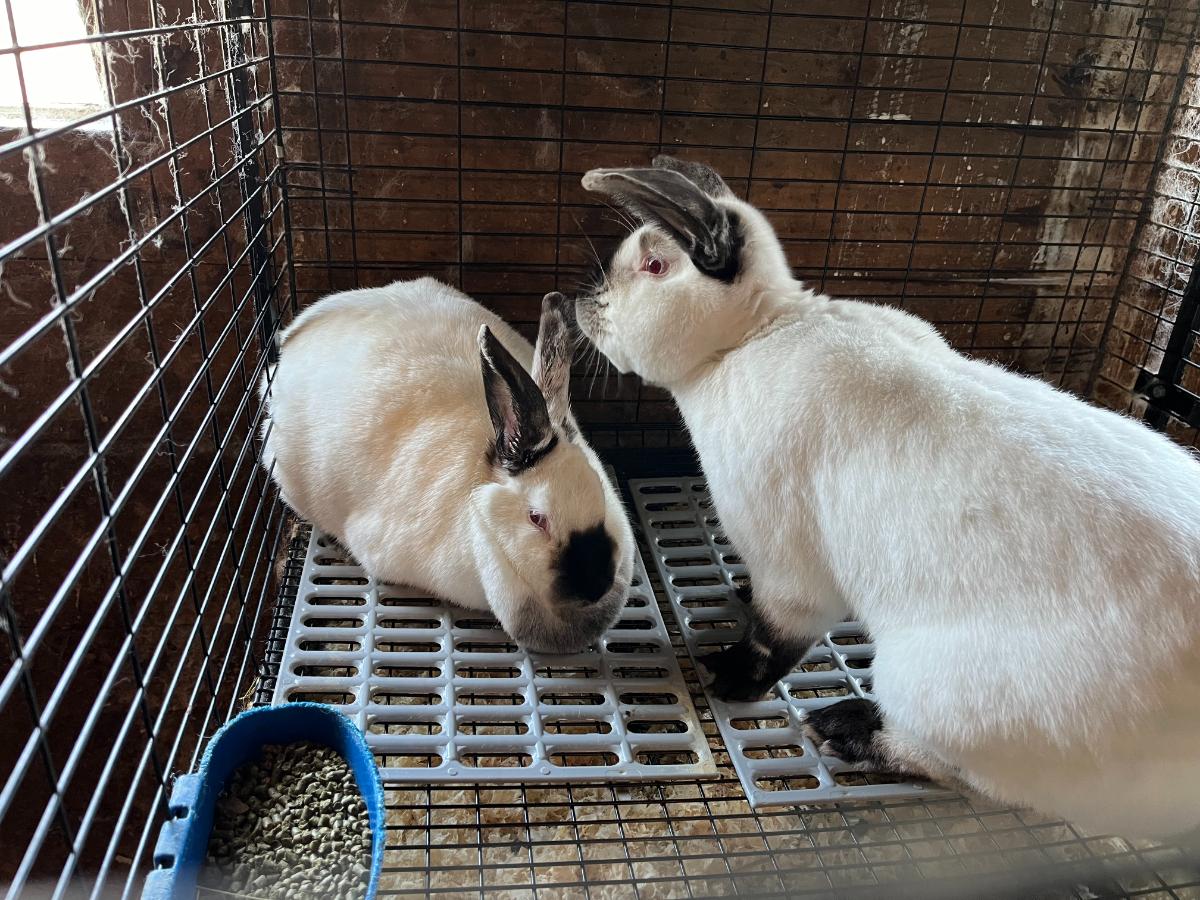
Certainly, the answer here, too, is yes.
I have had very good results with some of my purebreds. I have also had struggles. But it is also those purebreds that have combined to deliver such excellent grow out stock.
I continue to breed litters of growouts for meat and for breeding that are from purebred parents. When I feel like it, I mix them up to produce some hardy grow out stock. If I like the looks of one, on a whim, I might even hold over a good-looking, healthy doe as a breeder.
Neither purebred or crosses are the whole answer. But the question here was which rabbits overall have performed the best, with the least trouble.
That has simply been the meat cross.
Affectionately, not derogatorily, dubbed the “meat mutt”.
For More Reading and Reference:
- Ward, M. (2024, January 24). How I Chose My Meat Rabbit Breeds: What Breeds I Chose and Why. MeatRabbits.org
- Ward, M. (2025, May 22). Why I Am No Longer Keeping New Zealand Meat Rabbits. MeatRabbits.org
- Ward, M. (2024, November 27). Why the Champagne d’Argent Meat Rabbit Breed – Adding a New Breed to My Rabbitry. MeatRabbits.org
- Ward, M. (2025, January 11). Champagne d’Argent Breed Update: 6 Weeks + Weigh‑In. MeatRabbits.org
- Anderson, G. (2014). Backyard Production of Meat Rabbits in Maine (Bulletin #1044). University of Maine Cooperative Extension
- wsmoak. (2013, January 18). So much for hybrid vigor! RabbitTalk.com
- Cannon, A. (2019, October 11). Commercial Meat Rabbit Growth Rates. HomesteadRabbits.com



Leave a Reply