
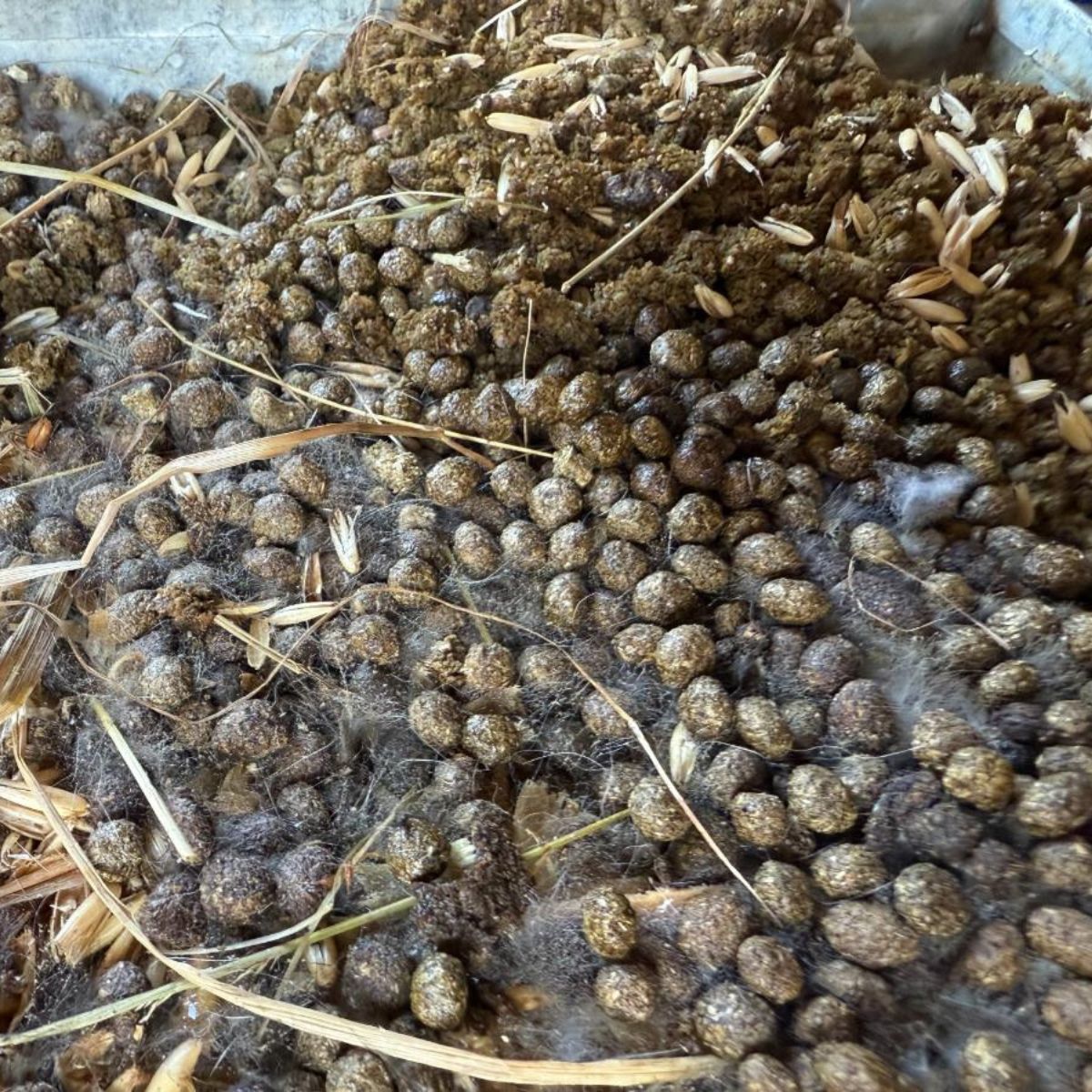
Rabbit refuse, primarily in the forms of manure and urine (but also other refuse from the rabbitry), is highly valuable in the home garden, and potentially for larger farm uses as well.

One often overlooked but highly valuable resource is rabbit urine. Not only is rabbit urine a highly valuable liquid fertilizer and source of nitrogen (along with other important garden nutrients), but it also works to control pests in the garden.
Rabbit urine is an amazing natural dual-purpose farm and garden amendment that is too easily taken for granted and is very much underutilized.
Jump to:
- Interesting Studies, Applications, and Results from Around the World
- Rabbit Urine Spray for Fertilization
- Rabbit Urine Spray as Insect Control
- VIDEO: How Do You Use Rabbit Urine in the Garden Without Burning Plants?
- Summary of the Most Common Dilution for Rabbit Urine for Garden and Crop Applications
- Other Ratios for Rabbit Urine Fertilizer or Pesticide:
- Research, Resources, and Further Reading:
Interesting Studies, Applications, and Results from Around the World
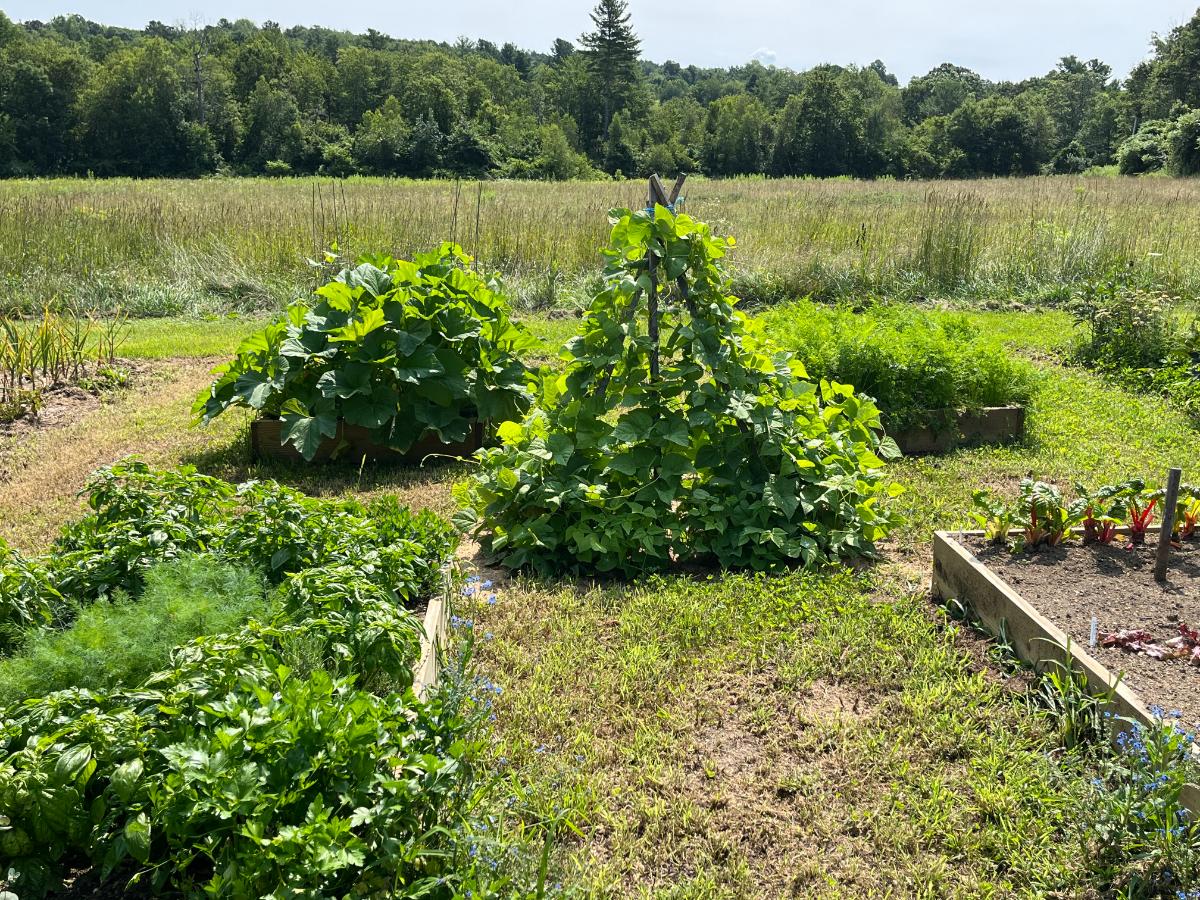
Using rabbit urine as a garden fertilizer or pesticide may be new to many of us, but this is an ongoing practice in other countries.
A study was done in Uganda, studying how farmers there use rabbit urine for crop and garden practices. It indicated that farmers keep rabbits in that country in large part for the fertilization benefits, along with the other uses of the rabbit urine and waste. The study “concluded that obtaining and using rabbit urine was found very cost-effective” and went as far as to say that the use was a driver in positive socio-economics because it boosted agricultural development.
The study showed that farmers used diluted rabbit urine at different ratios, but that the most popular mixing ratio was a ratio of one part urine to two parts water. It was used for both fertilization and as a pesticide/repellent. For both purposes, the most common ratio was a 1:2 dilution.
A second paper from Kenya, published in the International Journal of Horticultural Science, touts rabbit urine as an alternative to more costly and toxic synthetic fertilizers and pesticides.
They say, “Rabbit urine is a dual product that acts as both a biofertilizer and a bio-pesticide. As a bio-fertilizer, rabbit urine supplies crops with essential nutrients, mainly nitrogen, phosphorus, and potassium.” They studied equal ratios of dilution of rabbit urine as compared to synthetic fertilizer and found that it still beat out the synthetic preparations in levels of nitrogen, phosphorus, potassium, and calcium.
“Unlike inorganic fertilizers and synthetic pesticides, rabbit urine is environmentally friendly and has low mammalian toxicity…Since it is alkaline (pH 8.5), rabbit urine also neutralizes soil acidity caused by the commercial fertilizers”. The report then goes on to explain that soil enzymes are not negatively impacted by rabbit urine.
The Kenyan study came to the conclusion that “Rabbit urine foliar spray, both a bio-fertilizer and a biopesticide, significantly influenced the yield (total marketable, total non-marketable and grand total yields) and post-harvest quality (total soluble solids, fruit firmness, titratable acidity and sugar acid ratio) of tomato. For optimum yield and post-harvest quality, it is recommended to use 25% rabbit urine foliar spray in tomato production. More research work can be done to determine the effect of spraying intervals of rabbit urine on the yield and post-harvest quality of tomato.”
Rabbit Urine Spray for Fertilization
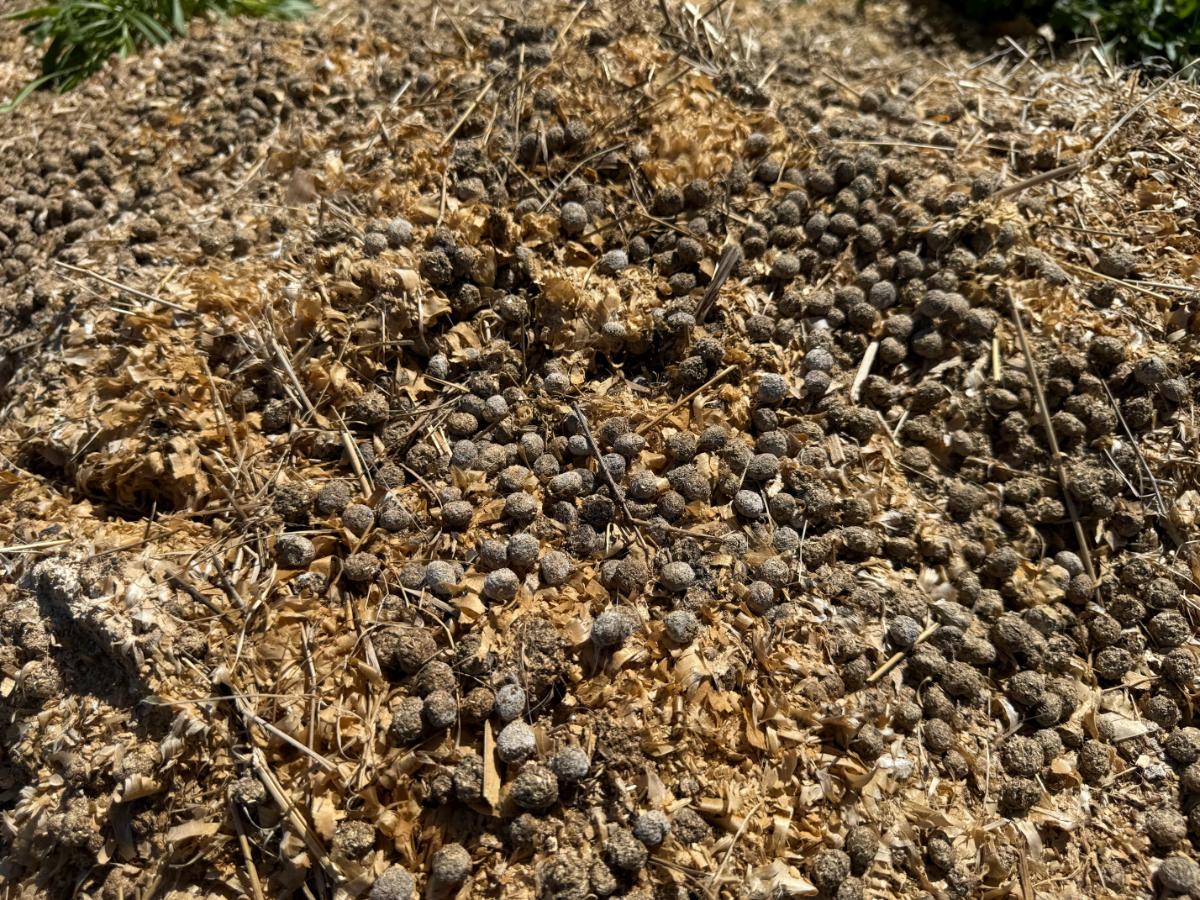
Rabbit urine, on its own, at full strength, may cause burning to plants and some roots if it is concentrated in one area more than another. When mixed with other rabbit refuse, like manure and shavings, the urine is usually diluted enough and distributed enough that it will cause little harm. However, it is always wise to test applications on a small area before applying broadly to all of your plants, or crop or garden ground.
For a straight rabbit urine fertilizer solution, studies have worked with different dilutions and application rates. Most of these vary only a little, and if you follow any of them, they should be both a safe and effective garden fertilizer.
One study found that overall, though several different dilutions proved beneficial, the best dilution rate was a 25% solution of rabbit urine in water. This had the best results for plant health, plant growth, and produce yield without imbalancing the plants to too much green and leafy growth at the expense of fruit or vegetable yields. It also yielded earlier harvests as compared to no urine use.
And so, to sum it up for us lay people, the following ratios would be good ratios with which to start in the home farm and garden:
- 1 to 3 for a 25% solution (one part rabbit urine to 3 parts of water; 1:3 ratio)
- 1 to 4 for a 20% solution (one part rabbit urine to 4 parts of water; 1:4 ratio)
- If you would like to take a more conservative approach, a ratio of 1:5 should still give you notable results
Rabbit Urine Spray as Insect Control
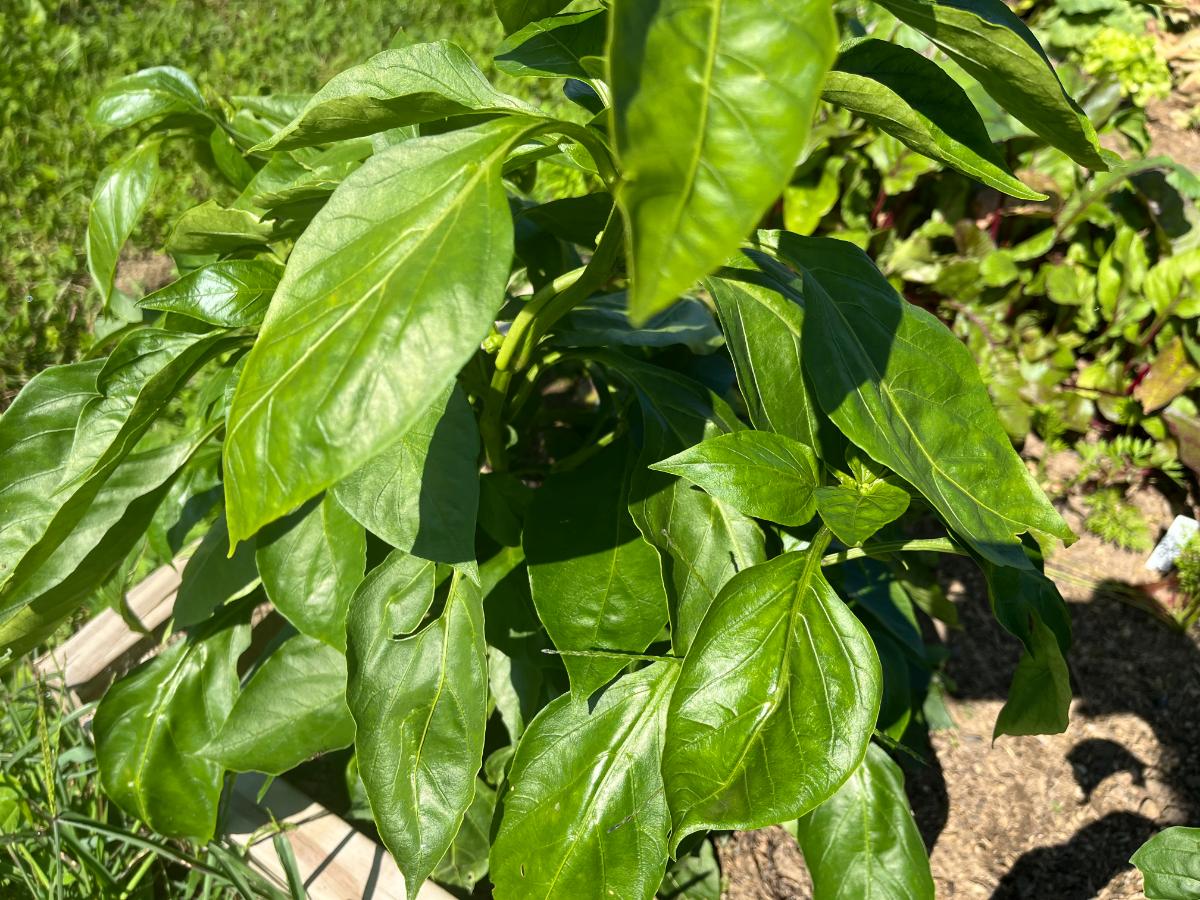
Rabbit urine spray is an effective spray to control insects in the garden. It is known to control aphids, whiteflies, leaf miners, and more.
There are various recommendations for dilution for insect control. Different studies used different ratios for their research, however 1:3 rises as a common ratio (one part urine to three parts water). This rate of dilution is one that should be strong enough to repel insects, but still dilute enough not to burn the plants when sprayed on and around them.
This study, which focused primarily on the control of whiteflies, used a 1:3 urine:water ratio.
Other proposed dilution rates include
- 1:5 for general pest control
- 1:2 for stronger control, including aphids
- 1:10 for a very mild application
It is generally recommended that you apply the spray once every two weeks. The spray can be applied to the ground surrounding plants, but is most often applied as a foliar or plant spray.
Keep in mind that the same urine that is fending off bugs and wildlife pests is acting as a fertilizer by default. This means that you do not need separate applications for foliar fertilization and insect control. The single spray will do both.
That said, ground applications can provide further nutrient support, as can applying the manure to the soil (which is a “cold” manure and can be applied directly, without treatment).
Safety and effects on beneficial insects
The information available regarding insect control focuses primarily on the control of garden and crop pests, so you may want to observe and see what your beneficial insect and pollinator population is doing.
That said, it is noted that the primary action of rabbit urine sprays for insect control focuses primarily on sap-sucking insects and works through nitrogen concentration and odor. Its effects on butterflies and beneficial insects should be expected to be minimal, if at all.
Again, it would be wise to observe to confirm this in your own garden space.
VIDEO: How Do You Use Rabbit Urine in the Garden Without Burning Plants?
Summary of the Most Common Dilution for Rabbit Urine for Garden and Crop Applications
It is a little difficult to nail down one single, definitive recipe for diluting rabbit urine for gardens and other yard and crop applications. Mostly, it seems that this is so because different studies used different dilution rates. Most, if not all of them, proved beneficial with little damage.
If we want to pick one rate of dilution for rabbit urine to use as either a pesticide/pest repellent or a fertilizer, it would be the one-to-three ratio:
- Dilute rabbit urine at a rate of 1:3
- One (1) part rabbit urine: Three (3) parts water
- Examples: 1 cup rabbit urine: 3 cups water, 1 quart rabbit urine:3 quarts water
Other Ratios for Rabbit Urine Fertilizer or Pesticide:
Some other recommended rates and applications found in research include:
- 1:10 for light foliar spray for established plants
- 1:20 for tender young seedlings foliar spray
- 1:5 for drip irrigation for established plants
- 1:10 for drip irrigation for seedlings
- 1:20 for very young seedlings and plants newly potted up (for the first week after potting up)
Though this may sound confusing, don't let the dilution and application overwhelm you.
- Pick a dilution to start
- Apply to one or two plants or a small section
- Apply to the whole planting if no damage is observed
- Consider increasing the rate of dilution if no ill effects occur and/or if you are not noticing enough progress in your plants
Research, Resources, and Further Reading:
- Mutua, E. K., Mwangi, M., & Gaoqiong, L. (2024). Effect of Rabbit Urine Foliar Spray on the Yield and Post-Harvest Quality of Tomato. International Journal of Horticultural Science.
- Kangume, T., Guloba, R., Nassimbwa, F., & Byabashaija, D. (2025). The Usage, Application and Cost Effectiveness of Rabbit Urine in Vegetable Farming in Wakiso District, Central Uganda. International Journal of Multidisciplinary and Current Educational Research (IJMCER), Volume 7, Issue 3, pp. 429–437.
- Løe, Kari. (2023). Rabbit Urine as a Biopesticide and Biofertilizer: How Does a Kenyan Cultural Method Compare to Conventional Chemical Pesticide and Fertilizer? Independent Project in Biology, Swedish University of Agricultural Sciences, Department of Ecology.
- Mutua, E. K., Mwangi, M., Liu, G., & Nyaanga, J. (2024). Response of Whitefly Population to Rabbit Urine Foliar Spray on Tomato (Solanum lycopersicum L.). Advances in Agriculture.
- Kemunto, D., Omuse, E. R., Mfuti, D. K., Tamiru, A., Hailu, G., Rwiza, I., Belayneh, Y. T., Subramanian, S., & Niassy, S. (2022). Effect of Rabbit Urine on the Larval Behavior, Larval Mortality, Egg Hatchability, Adult Emergence and Oviposition Preference of the Fall Armyworm (Spodoptera frugiperda J.E. Smith). Agriculture (MDPI), 12(8), 1282.
- Noe-Hays, A., Cavicchi, J., Saveson, G., Schreiber, T., Davis, A., & Howley, C. (2024). Farmer Guide to Fertilizing with Urine. Rich Earth Institute. Practical guide for farmers on urine-derived fertilizer use and best practices.
- Rich Earth Institute. Guide to Using Urine Fertilizer for Home Gardens. Practical online guide to safe and effective use of urine as fertilizer for home gardens, including collection, application, and nutrient reuse best practices.
- U.S. Food and Drug Administration (FDA). 21 CFR Part 112 — Standards for the Growing, Harvesting, Packing, and Holding of Produce for Human Consumption. Current Code of Federal Regulations outlining federal safety standards for produce handling and agricultural practices.
- GrowVeg. Foliar Feeding — Folly or Wisdom? Comprehensive guide discussing the benefits, limitations, and best practices of foliar feeding for plants.
- University of Wisconsin‑Madison Extension. Safely Using Manure in the Garden. Practical guide on manure types, application timing, and safety considerations for gardeners.
Paul
Amazing, the knowledge you share is so valuable, and so topical now our shop bought cow is criminally expensive. I would love to learn more so will dive into this treasure trove!
Mary Ward
That's great! Happy to help, and always willing to hear what other question or topics people would like to see covered.
Beef has gotten insanely expensive here now, too. Time to breed more rabbits!