
New Zealand meat rabbits are the most popular breed of meat rabbit. This makes them among the most available, too.
One reason why New Zealand rabbits are the most common is that they are also used in laboratories and research, especially the white New Zealands (largely for reasons of uniformity).

White New Zealands also came out ahead when rabbit fur was a more popular textile product. The white pelts were uniform and offered the ability to be dyed into consistent colors.
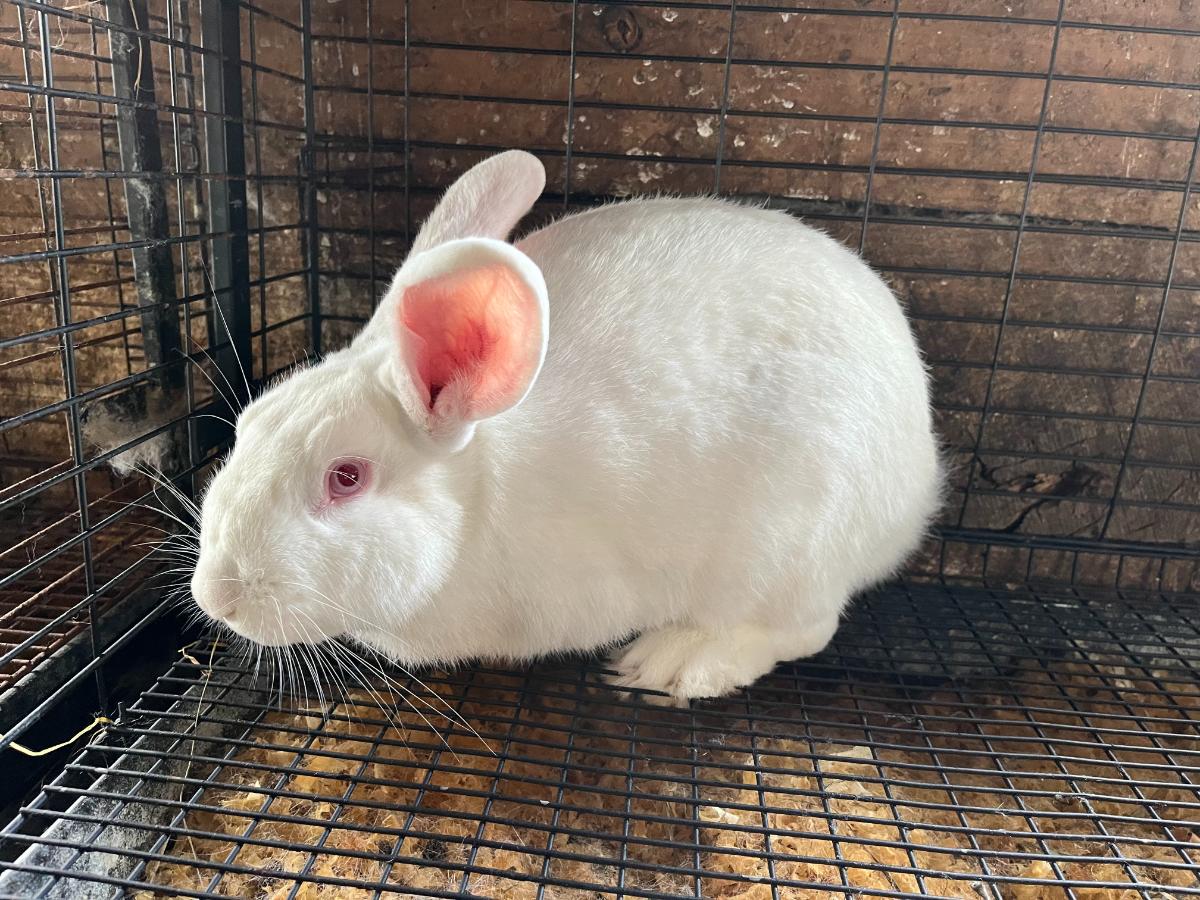
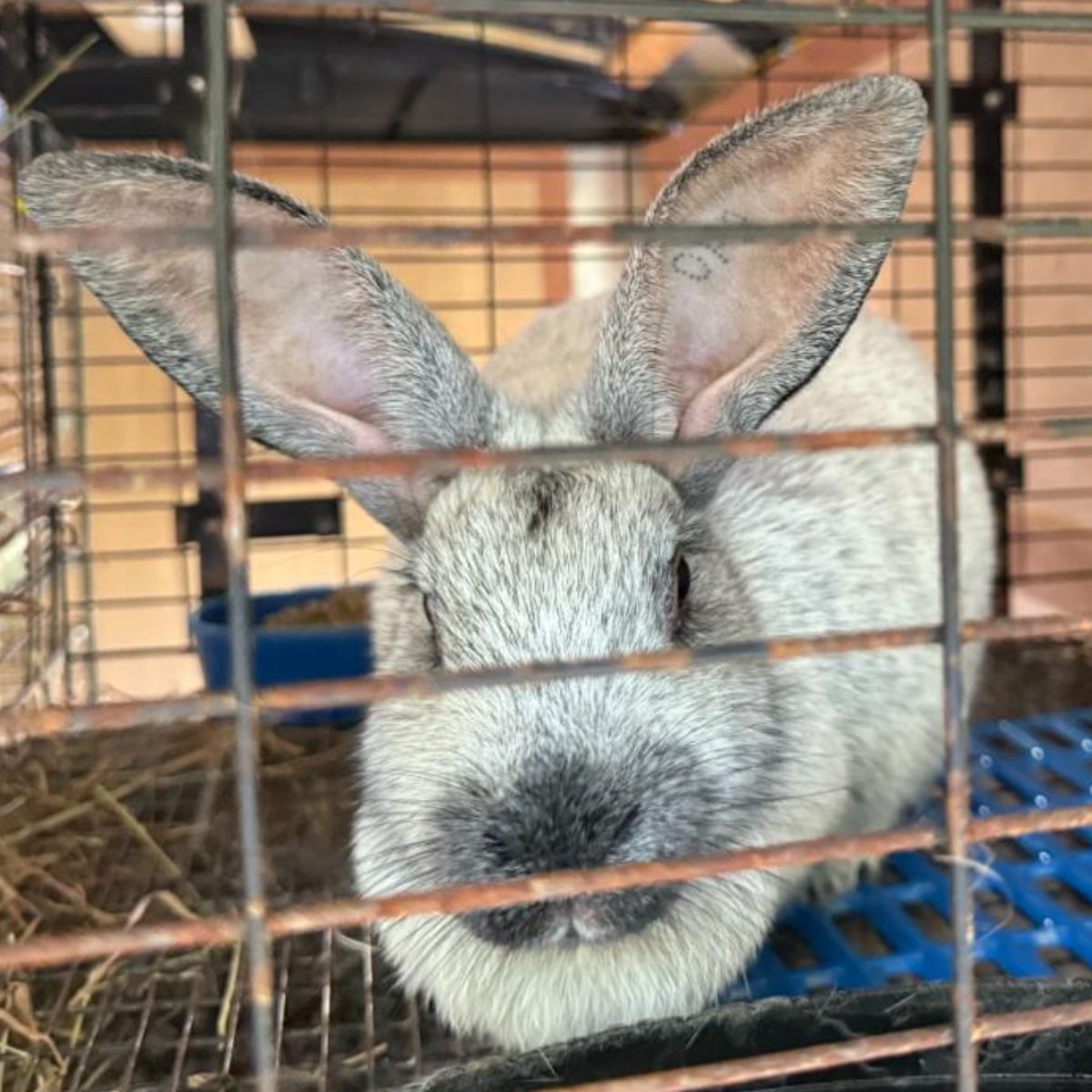
While people often think of those red-eyed white rabbits when they think of New Zealands, there are several colors and patterns of New Zealand rabbits. Any of them can be high-quality medium, commercial-sized rabbits for meat. (“Medium” rabbit breeds are the most productive and efficient breeds for meat production purposes.)
Jump to:
- About the New Zealand Meat Rabbit Breed
- Noteworthy Benefits of New Zealand Meat Rabbits:
- Downsides
- Consult the ARBA Standard of Perfection or the Standard of your Governing Body for Specifics for Show Animals
- VIDEO: Why I Chose New Zealand Meat Rabbits for My Rabbitry
- References and Further Recommended Reading:
Vital Statistics for Californian Meat Rabbits:
| Adult Size Doe: | 10 to 12 lbs |
| Adult Size Buck: | 9 to 11 lbs |
| Temperament: | Calm and manageable, slight excitability |
| Age of Maturity for Breeding: | 5 to 6 months |
| Productivity: | Very good |
| Mothering Instincts: | Very good to excellent |
| Average Litter Size: | 6 to 8 (+) |
| Growth Rate: | Excellent |
| Bone to Meat Ratio: | Very good |
| Other Notes of Interest: | Known as the fastest-growing meat rabbit, crosses well with others to lend a fast growth rate and size |
About the New Zealand Meat Rabbit Breed
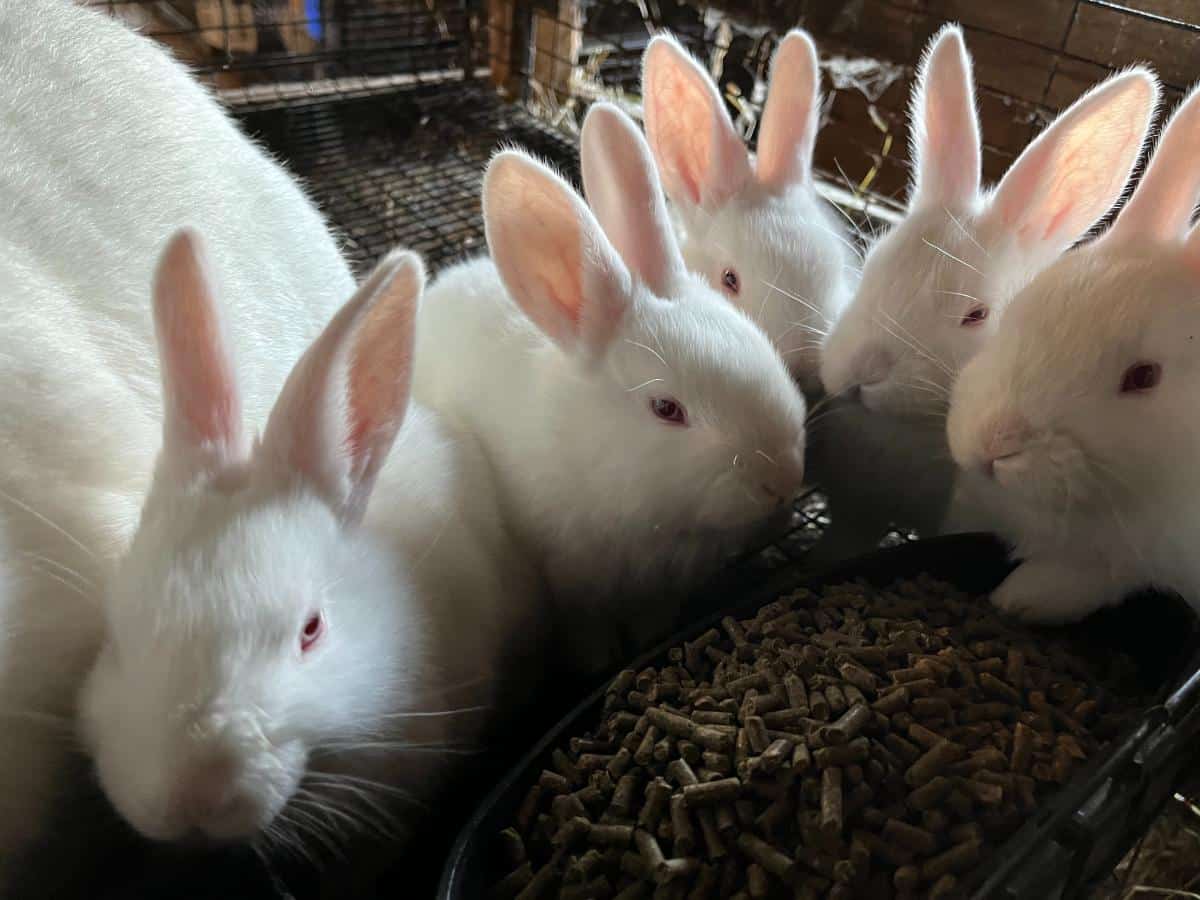
The New Zealand rabbit breed, similar to the Californian breed, was developed in California in the early 1900’s (though it was a couple of decades ahead of the Californian). In fact, the New Zealand White was one of the foundation breeds that was used in the development of the Californian. They [New Zealands] were officially accepted and acknowledged by the American Rabbit Breeder’s Association (ARBA) in 1916.
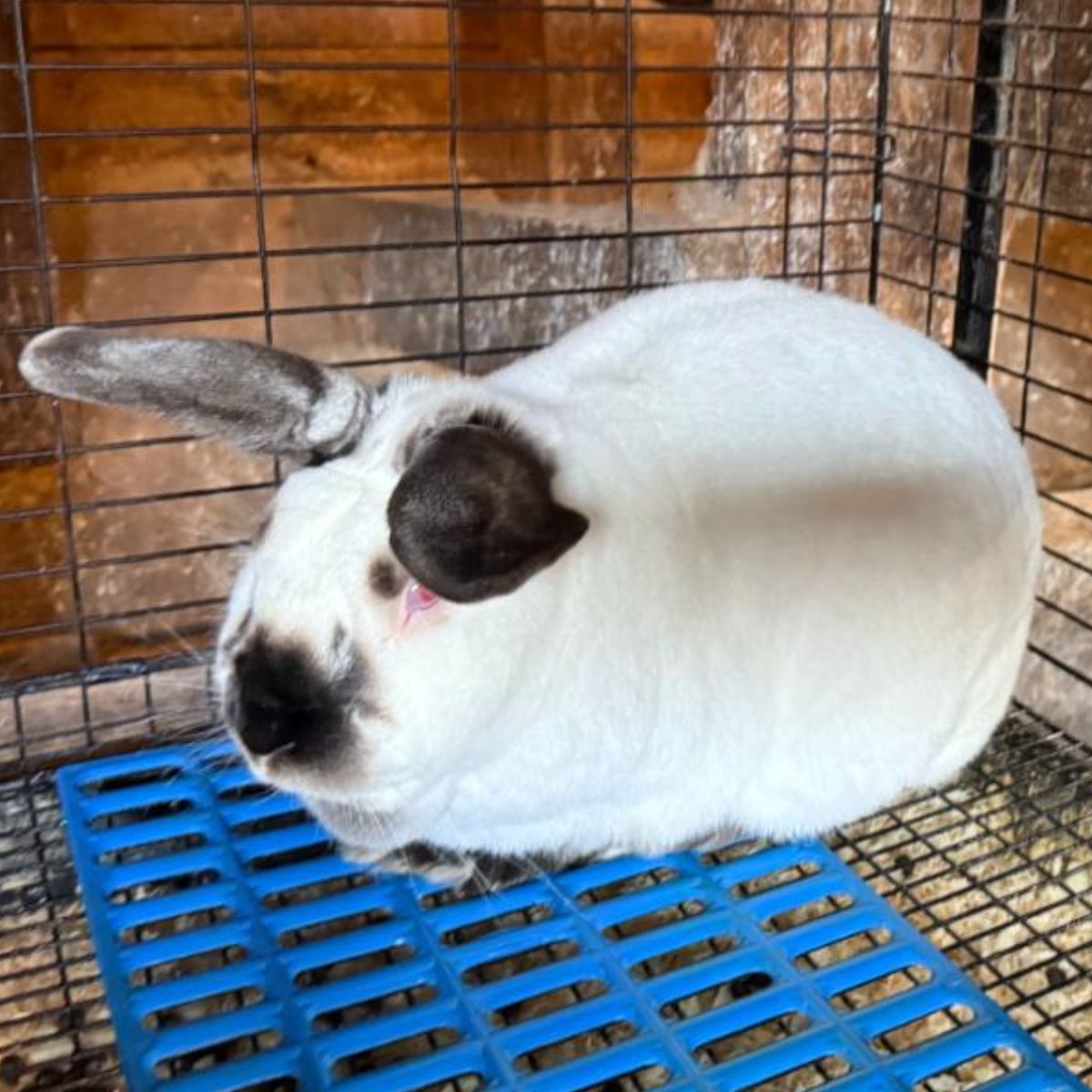
There are several color varieties of the New Zealand Rabbit, including
- White
- Black
- Red
- Broken
New Zealand rabbits are known as being among the fastest, if not the fastest-growing, of the meat rabbit breeds. They are meaty with fine pelts for tanning, but they do tend towards longer and leaner than some other meat breeds, like the Californian or Champagne.
The ideal weight for New Zealand does is 11 pounds, and for breeding bucks, the ideal weight is 10 pounds.
Kits from good lines easily reach 5 pounds of live weight by 12 weeks old, with many lines reaching this by 9 to 10 weeks, and some at 8 weeks old (though this may invite some weaning and digestive issues in the fastest growing kits).
New Zealands are often a breed of choice to be crossed with other purebred meat rabbits, such as the Californian. When such crosses are made, you get the fast growth rate of the New Zealands and if crossed with a heavy meat breed, you then get the blocky meatiness of that breed. The resulting cross should also have good hybrid vigor in the grow outs.

This is not to say that New Zealand rabbits are not excellent meat rabbits on their own -- they are, and they have plenty of meat on a fairly fine bone. This makes them an excellent production breed, and you do not need to feel like you must cross them or keep multiple breeds of rabbits. New Zealands will produce excellent, plentiful meat on their own.
New Zealand does are generally good mothers and deliver good-sized litters, usually between 6 and 8 kits per litter. Larger litters are not uncommon, and if you have a doe that delivers larger litters, she will usually do so consistently.
New Zealand rabbits tend to be mostly calm and manageable, though they are somewhat more excitable than some other breeds. They may spook a little more easily than breeds like the Californian or Champagne d’Argent (such as from loud noises), and they may be prone to nervousness regarding their litters.
However, this is more of an issue of the individual, and it’s important not to read into this as overstatement or that this is a nervous and unmanageable breed. Most of the time, they are not. Bucks tend to be quite quiet.
Of course, as with all meat rabbits, temperament and reactivity also have a lot to do with handling and management.
Noteworthy Benefits of New Zealand Meat Rabbits:
- Popular breed
- Easier to find breeding stock (due to popularity)
- Excellent and reliable meat rabbits
- A variety of colors can keep things interesting while maintaining one breed
- Excellent to cross with other breeds for growth rate, size, and production
- Great bone-to-meat ratio
- One of the fastest-growing meat rabbits to reach harvest weight
Downsides
There are no real negatives to note about the New Zealand meat breed. The previous note about excitability would be the closest “downside”. Individuals may experience some mothering or delivery issues, but this is generally an issue of individuals and not the breed as a whole.
The popularity of the breed means there is a good stock to choose from, but sometimes this can translate into an abundance of lower-quality specimens, too, as a result of high numbers. With care in selection, this is avoidable.
Consult the ARBA Standard of Perfection or the Standard of your Governing Body for Specifics for Show Animals

Note that this website primarily focuses on backyard meat rabbits and homestead-type meat production on a small to large scale. For that reason, the focus in breed descriptions leans more towards production goals for the small to medium producer. Very little focus is on breeding for show.
These breed guides will serve as a good introduction to the breed, but for more specifics about the details and nuances you should be looking for in a show rabbit, we urge you to consult the American Rabbit Breeders Association Standard of Perfection or the guides provided by your local authority on meat rabbit breeds and standards acceptable for showing.
VIDEO: Why I Chose New Zealand Meat Rabbits for My Rabbitry
References and Further Recommended Reading:
- Storey's Guide to Raising Rabbits, 5th Edition: Breeds, Care, Housing
- Raising Rabbits for Meat
- ARBA Standard of Perfection 2025-2030
- How I Chose My Meat Rabbit Breeds (What Breeds I Chose and Why)
- Sourcing Meat Rabbits: Where Can You Buy Meat Rabbits?
- Best Meat Rabbit Breeds
- Californian Rabbit: Care, Breeding, and Ownership Guide - Everbreed
- Breeds - Meat Rabbits
- New Zealand – ARBA
- AFNZRB
- About New Zealand Rabbits
- New Zealand Rabbits: Complete Pet and Breeder Guide - Everbreed
- Californian | Rise and Shine Rabbitry


Leave a Reply