
Fostering is a skill that you should at least be familiar with as a meat rabbit breeder.
You may never have a need to foster any of your kits. You may decide that fostering isn’t worth the risk or effort, for one reason or another.
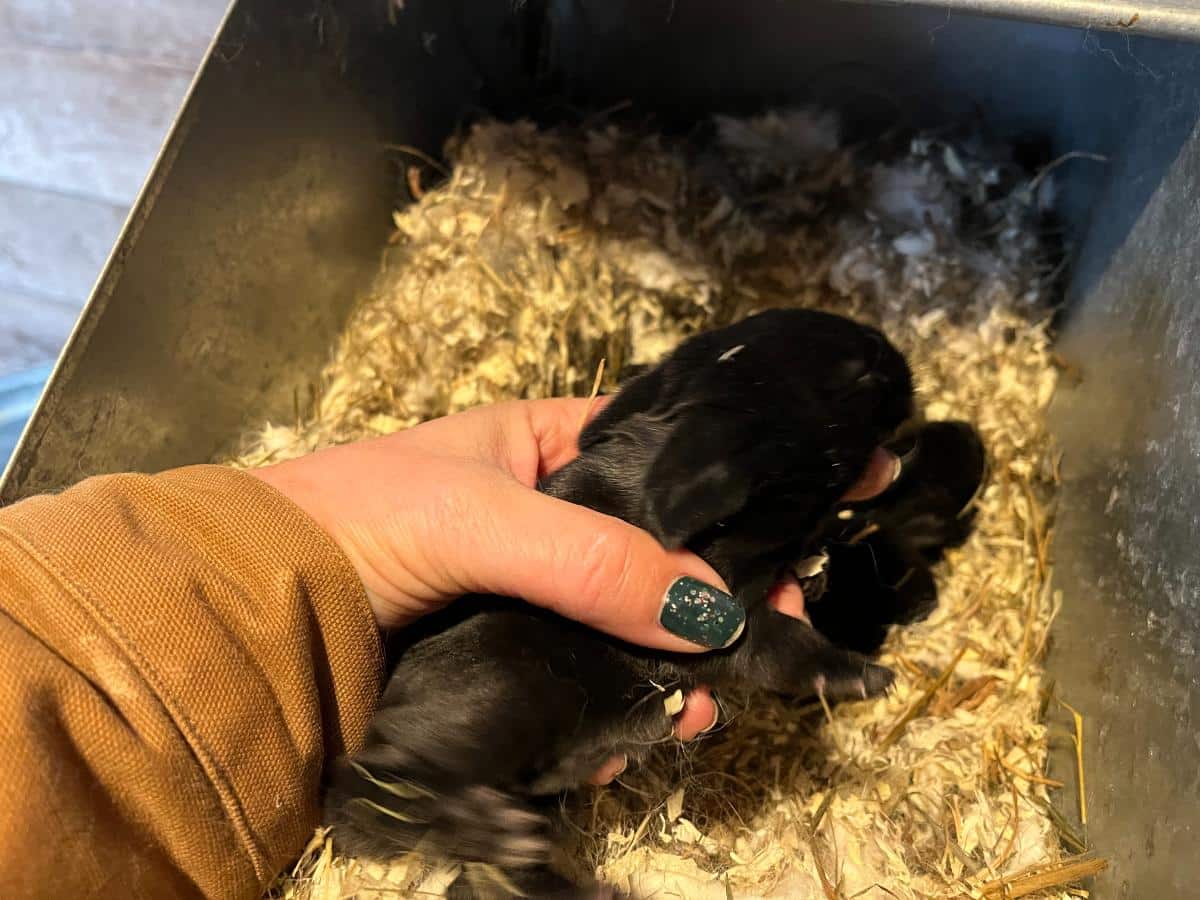
But you may very well come up against a situation in which fostering is in your and your rabbits’ best and most productive interest.
To help you make those decisions and to know what your options are, we’re bringing you this guide and answering some of the most frequently asked questions surrounding fostering meat rabbit kits.
Jump to:
- What is Fostering Meat Rabbit Kits?
- When Should You Consider Fostering Off Meat Rabbit Kits?
- When Should You NOT Foster Meat Rabbit Kits?
- Symptoms of Kits That Are Not Being Cared For
- Planning Breeding for Potential Foster Options
- Which Kits Should Be Moved to the Foster Mother Doe?
- How to Foster Meat Rabbit Kits to Another Doe and Litter
- Identify or Mark the Kits Being Fostered
- Video: Fostering Meat Rabbit Kits -- Questions, Answered!
- Record Moves and Fosters
- How Big an Age Gap Can There Be for Fostered Meat Rabbit Kits?
- Tips and Tricks for Fostering Meat Rabbit Kits
- Reading and More Resources on Fostering Meat Rabbit Kits
What is Fostering Meat Rabbit Kits?
Fostering among meat rabbits means that you move some or all of the kits from one doe’s litter to another doe’s nest for her to care of. The plan is that the doe will accept and care for the kits that you move into her nest. Ideally, she will not realize that the new kits were not part of her original litter…seeing that rabbits can’t count, this is usually the case!
There is a limited window of time, as well as some tips and tricks, when this can happen successfully.
There are a number of reasons why you might want to foster meat rabbit kits from one rabbit to another.
When Should You Consider Fostering Off Meat Rabbit Kits?
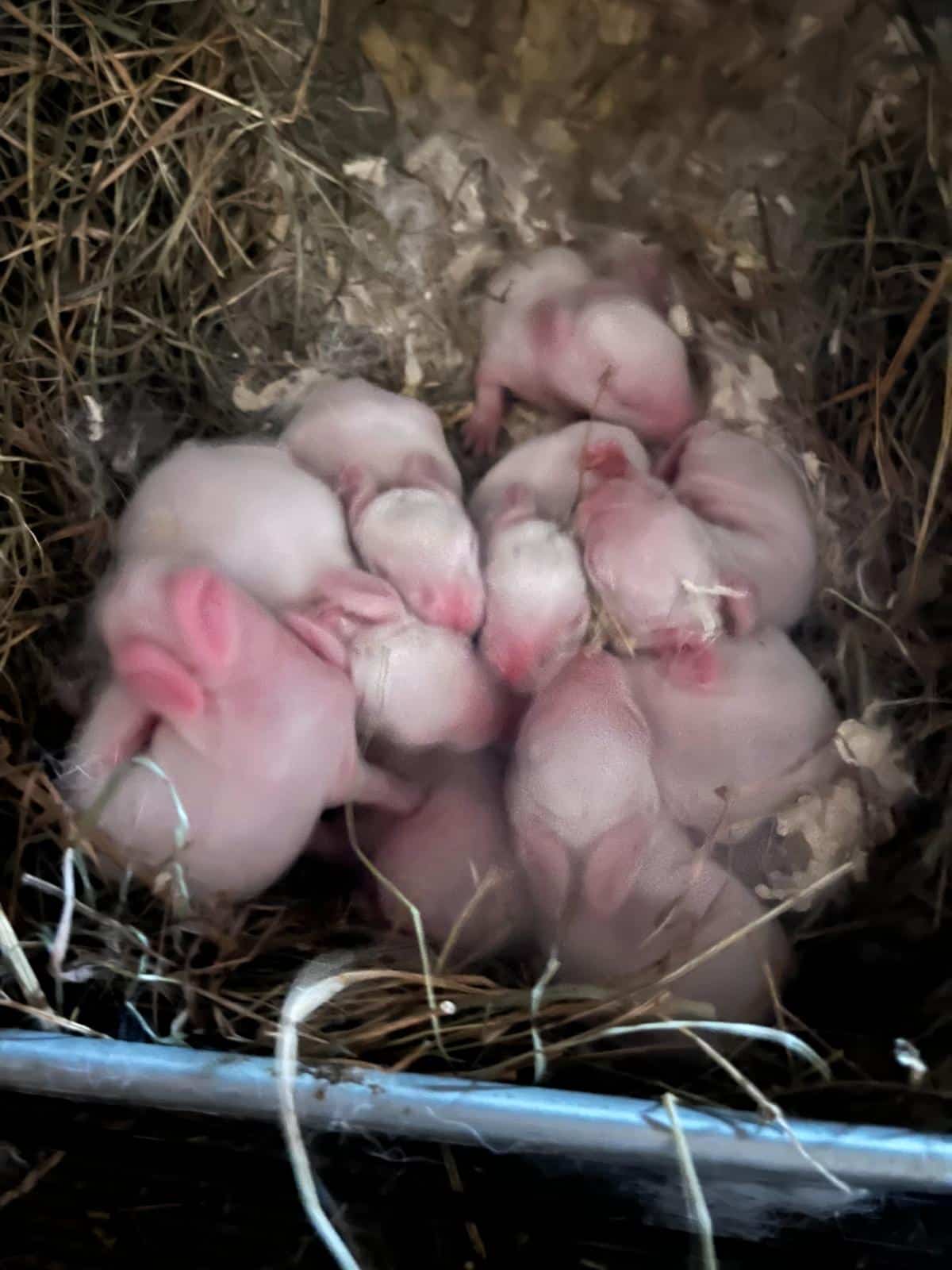
The most common reason for fostering kits is when one doe has a very large litter, and another has room to take her overflow. There are a few other times when fostering might be a good option, too.
The times to think about fostering off kits include:
- When a doe has more than eight (8) kits*
- When kits show signs of not being fed or not being fed enough
- When kits show signs of neglect by the mother
- When a doe dies and leaves live kits behind
- When a doe does not seem to have enough milk to feed her whole litter
- If one doe has a small litter (under four) and you feel the other doe has room for them, combining two litters can free up one doe to be rebred
- If one doe loses kits, such as to kits being born out of a nest box or them being chilled, and there are low numbers left, fostering can be worthwhile for the same reason (rebreeding the doe quickly can be a boost to reinforce and teach better mothering instincts)
- When a litter is too small, and the kits cannot generate enough heat to warm each other
*Most does have eight nipples, so eight is what she can nurse in one sitting without kits having to rotate in and out. Does only feed once or twice a day.
It should be noted that it is not impossible for a doe to raise more kits than she has nipples. A doe successfully raising 11 or 12 kits is not uncommon. But she has to be a good doe.
Even larger litters can and have been raised by good does. But this is a case where it takes an excellent mother to manage the nest and the litter. Often, decisions for litters such as these come down to your familiarity and confidence in your doe.
You may want to perform extra checks on the kits in the first few days and foster if you see signs of weakening kits. It may be that there are specific kits that consistently are pushed off the teat or can’t get to one in time, which would signal that fostering may be a good idea while there is still time to do so.
When Should You NOT Foster Meat Rabbit Kits?
Fostering is not always the answer. If you can avoid it, and the kits are cared for and thriving, they are better off with their mother.
Some times when fostering would not be advisable might include:
- When both does have large litters (do not tax the second doe at her and her own kits’ expense)
- When the only kits not thriving are because it is a problem with the individual kit
- When kits may bring illness into the other nest (this is not always easy to tell with newborn kits and may need to be evaluated based on the health of the doe, etc.)
- When the age difference is too great between the litters
- If the foster mother is not capable of producing enough milk for the expanded litter (something you might only know from experience with the doe; in a good doe, milk supply should rise to meet demand)
- If the foster doe shows signs of illness
Symptoms of Kits That Are Not Being Cared For
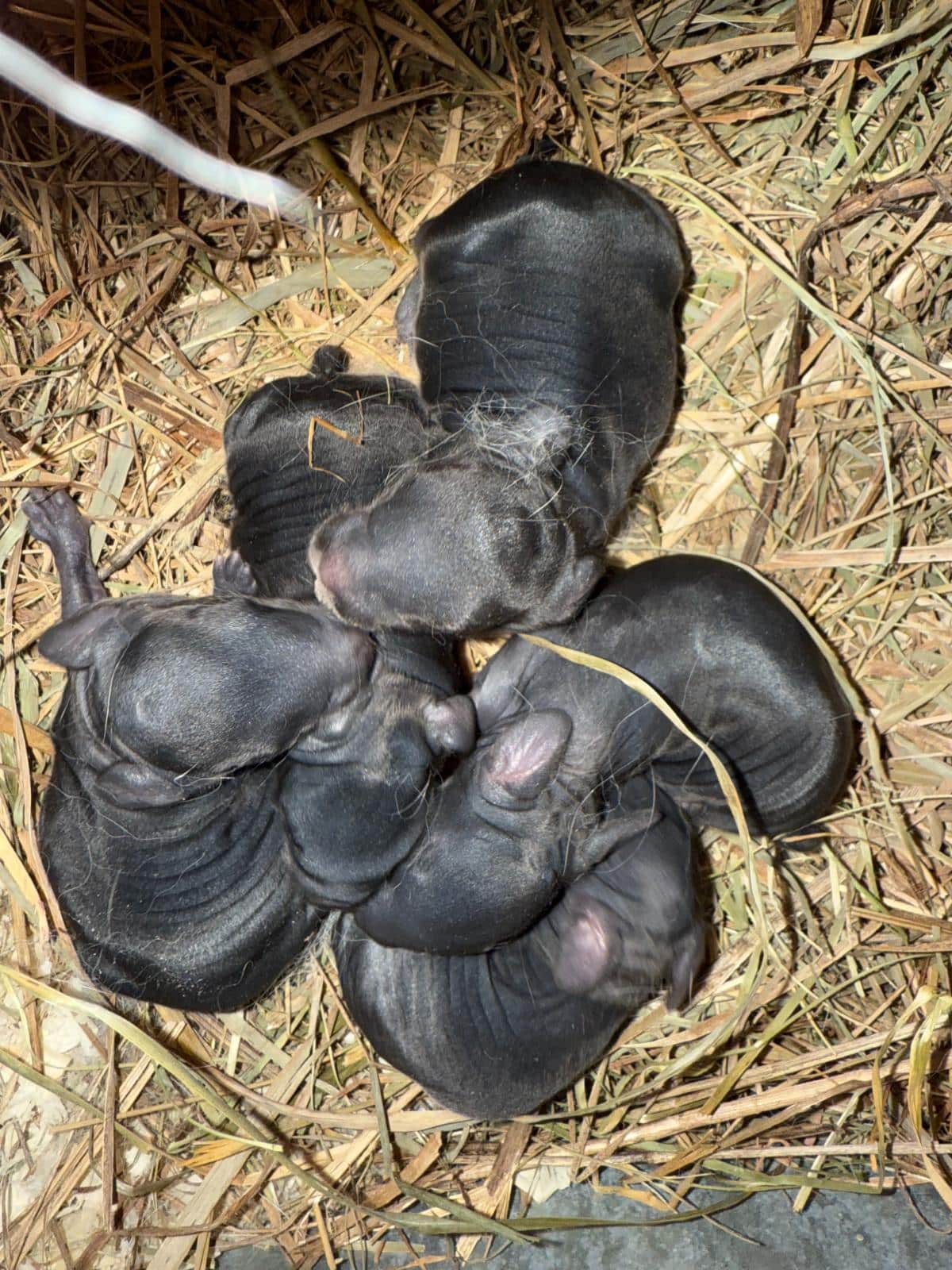
Kits are born hairless and a bit wrinkly, but if they are not being fed or cared for, or if some are not getting a seat at the table, there are signs. The more kits you raise, the more experience and familiarity you will have with healthy, thriving kits versus kits that are being uncared for or inadequately cared for.
- Dry skin
- Shriveled skin
- Flattened bellies
- Cold or cool to the touch
Rabbit kits that are being well fed and hydrated should not be shriveled, should have plump bellies (especially if you know they’ve just been fed), and should be warm to the touch.
Notes on runts and peanuts
Keep in mind that it is common for animals that deliver in litters to have runts. Usually, there will not be more than one runt in a litter. “Peanuts” are not uncommon in rabbits, either. And then, sometimes there are simply kits that are born weak, that manage to survive birth but then begin to decline.
Runts, peanuts, and failure to thrive kits may not be worth fostering. These are circumstances where the issue is with the kits themselves, not due to a lack of mothering or feeding. If these kits can’t thrive with their mother, they are not likely to thrive with another doe, either.
In fact, some breeders have a regular practice of culling any peanuts or runts at birth. True runts (not just smaller kits in a litter, but notably smaller and less vigorous) do not have as high a survival rate to begin with, and those that do survive often do not grow as well and yield as well as their healthier, stronger littermates.
Even if they get all the milk and feed they want, they tend to grow slowly and will be limited by predetermined genetics. Runts simply have a small structure, start to finish. Even though they are small, raising runts often turns into inefficient meat.
For these reasons, some breeders will cull runts and peanuts at birth to allow for the rest of the litter to maximize resources that are more likely to produce faster, better meat yield.
Planning Breeding for Potential Foster Options
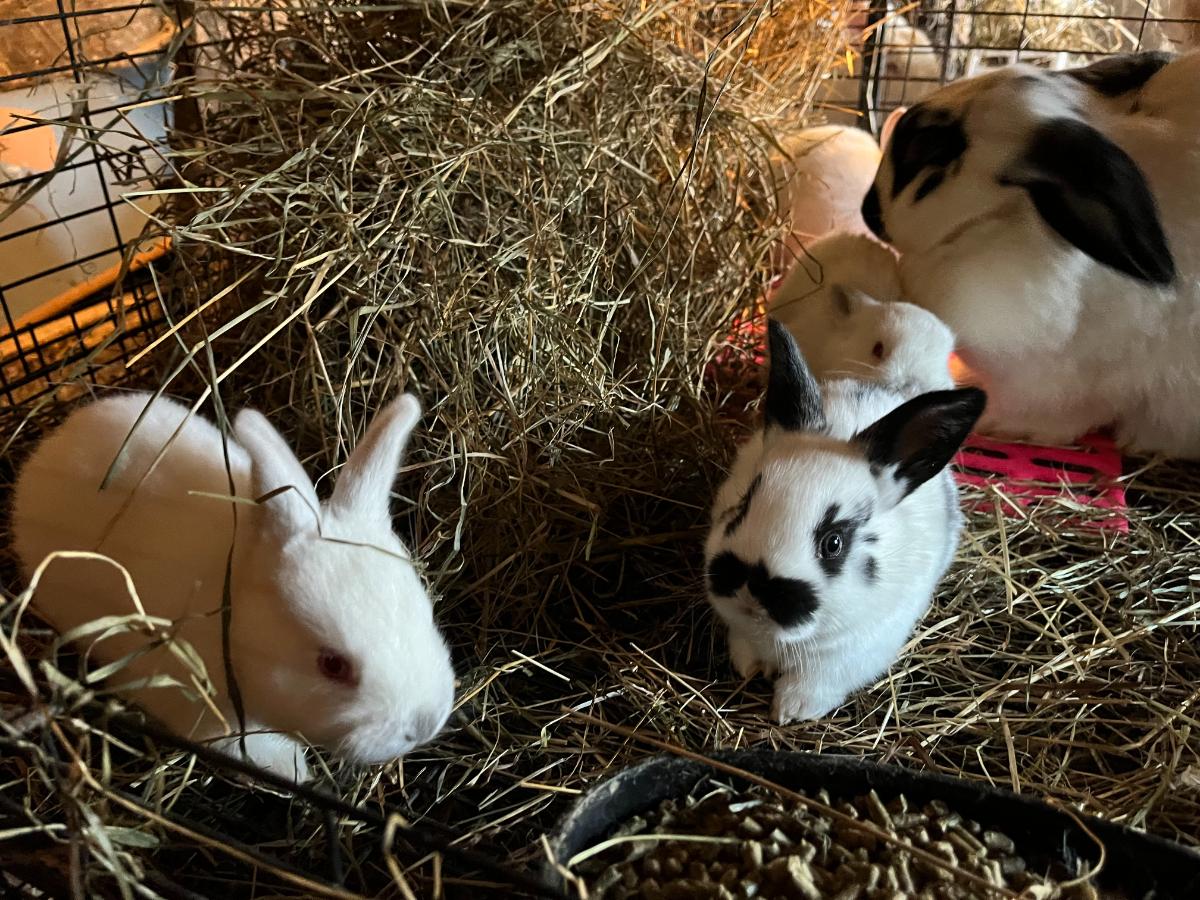
In order for fostering to work, it has to be done while the kits are still very young. Once kits are old enough to be moving around, and the mother doe has had several days to get familiar with her nest and her kits, the window for fostering closes.
What this means in relation to planning and breeding is that you can’t plan to just move kits from one doe to another that has had a litter within the last few weeks. That’s not how successful fosters work.
In order to have successful fostering options, should you need them, you need to breed multiple does at close to the same time. Otherwise, the age gap between letters will just be too great for fostering to even be a consideration.
Most meat rabbit breeders breed with the potential for fostering in mind. For this reason, it is common to breed two or more does at the same time. Then each doe can potentially provide cover for the other.
In order to have does delivering in a window that allows for fostering, do your best to breed as follows:
- Breed two does on the same day
- Breed one doe one day, and the other doe the next day (a good option if you are concerned about taxing the buck or him being less potent for the later breeding)
- Does that deliver within about three days of each other can usually be options for fostering
- It is fine to breed more than two does at the same time, or within the same few days, which will just give you even more fostering options
- It does not matter if you breed the does to the same buck or to another buck entirely
- The rabbits that you breed do not need to be of the same breed, though ideally, the breeds and resulting kits would be expected to be about the same size
Benefits of the younger/older doe breeding pair
Some experienced breeders recommend breeding an older doe at the same time that you breed a younger doe. This is specifically done with the possibility of fostering in mind.
Why?
Because any older doe in your rabbitry should be one that is there because she is a good, proven mother with solid mothering instincts. Also, as she ages, you are likely to see her litter sizes drop off.
The young doe, on the other hand, is more likely to have a large litter size, but less likely to be a good mother right out of the gate (though this is certainly not true for all meat rabbits, and most new does will get the hang of feeding and rearing kits quickly once they are born and she is settled).
So, in case the young doe has issues, and there is a reason to foster some or all of her kits to another, you are likely to have a good mother with few kits to care for in the older doe, and plenty of room in the nest for the fosters.
Which Kits Should Be Moved to the Foster Mother Doe?
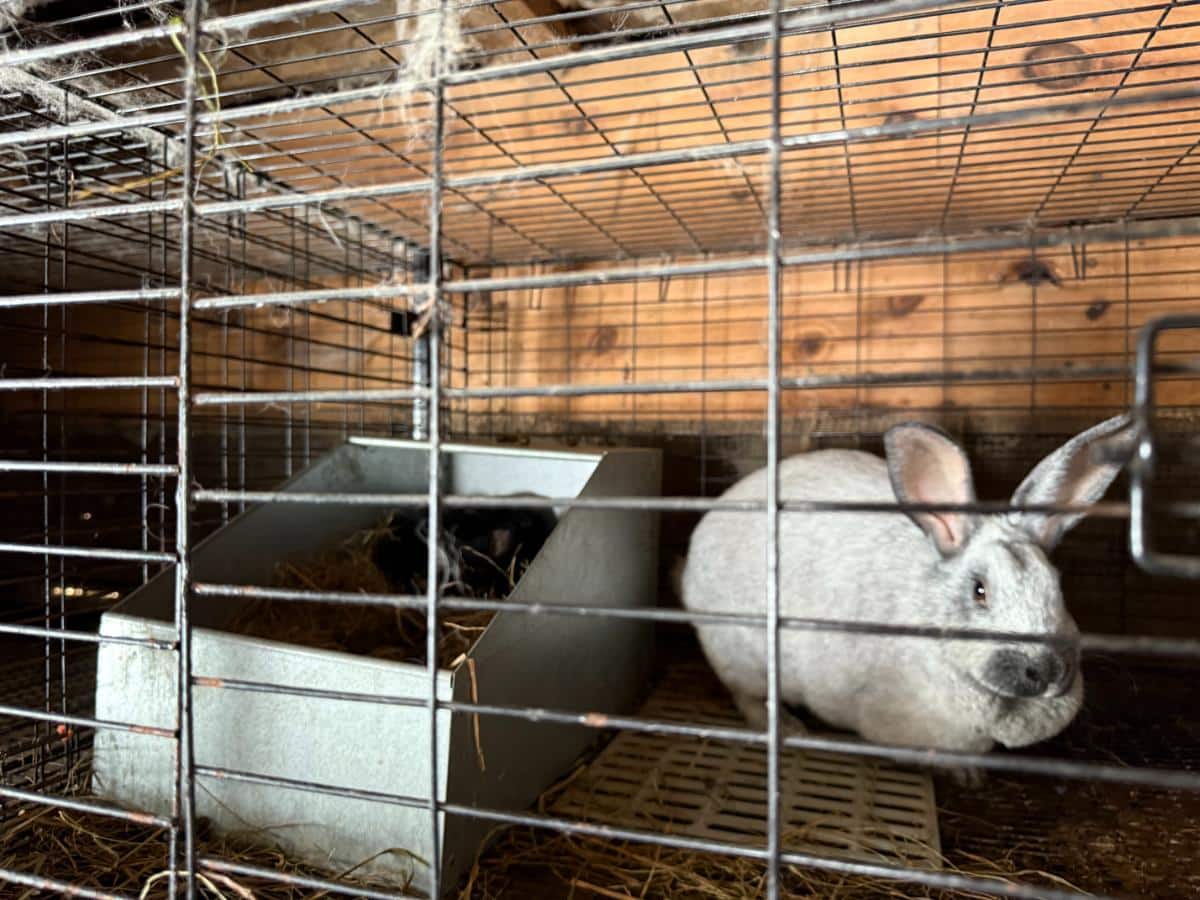
Your instinct might be to move the weaker kits or smaller kits, but in fact it is usually best to move the larger kits out of the nest that needs reducing. This is the advice of the Merck Veterinary Manual.
That is, if you are fostering for the purpose of providing more nursing and care capabilities for the kits. If the doe is ill or has died, you may be looking to move her entire litter, in which case you hopefully don’t have to choose.
Moving the largest and strongest kits has a few advantages:
- The smaller kits will be left with their mother, which will allow for more milk to be available to them
- Fostered kits will be better able to compete for feed in the new nest, whose kits are more likely to be stronger and larger anyway
- Kits in smaller litters tend to grow faster because they get more milk, allowing them to grow larger quite quickly
What if you need to foster a whole litter, or several kits, and it would be too much for the foster mother doe to take on?
You should only give the foster doe as many total kits as she can handle. There is no sense in trying to save kits only to cause others to fail to thrive.
Sometimes farming throws us curveballs, and hard decisions must be made. You may have no choice but to mercy cull kits that have no one to care for them (such as if a doe dies and orphans kits). You can try to hand raise the kits and bottle feed them. This can be done, but it is difficult.
Often, no matter how hard you try, the kits will not survive. The older the kits, the better your chances. You should not take this as your own failure, but simply the rest of biology. Does are made to produce rich milk. Kits are made to nurse and grow on it. It is hard for replacements to be good enough to let young rabbit kits thrive.
Under circumstances such as these, the right answer might be to cull the weakest from both litters and give the remaining doe the strongest and biggest kits from both lots. Or, find a medium of compromise in between (like, culling out runts to make room for more likely thrivers).
How to Foster Meat Rabbit Kits to Another Doe and Litter
The act of fostering meat rabbit kits between litters is a simple process.
- Evaluate the litter and decide which kits should be moved into the foster’s nest
- Distract the does in each cage while you move the kits
- Tuck the foster kits into the nest, under the fur, with the foster mother’s kits
- Tuck the nest back together and move the box back to where it was
- Time in the nest will allow the fostered kits to take on the scent of the nest and the other kits, and generally, this is enough for the mother to accept them (or more accurately, not to notice them)
- (See below for more tips that can help with a move over)
Identify or Mark the Kits Being Fostered
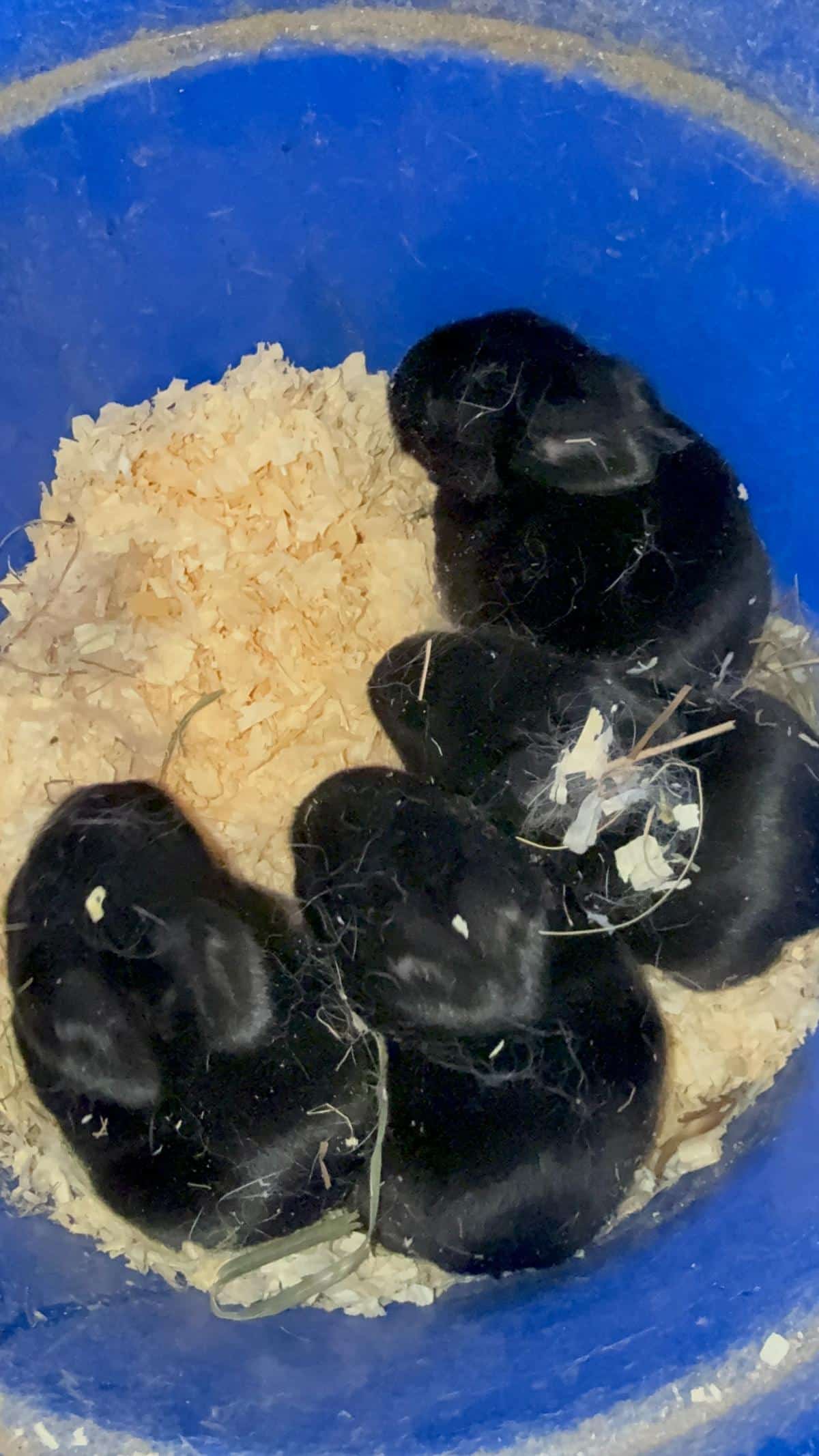
You should mark or have a way to identify the kits that you foster so that you can track them and make sure they are accepted and fed. Look for the same signs as those listed above for kits that are not being fed or thriving.
Some ways to mark fostered kits are
- With a permanent marker
- With a skin/body marker
- With a dab of nail polish on the back of the shoulders or on the nails
- With a tattoo pin of ink in the ear
Inside the ear, on the bare skin, is a good, easy spot to mark. Refresh the marker as needed when you check the kits.
If the rabbits are obviously different in color or breed, marking isn’t necessary. You just want to be able to see and check over the fostered kits.
The other reason to do this is so that when the kits grow, you will know which kits have what for parentage. That will help with maintaining lines and pedigrees and making decisions regarding holdovers for future breeders. This will also give you the right information for possible sales.
Video: Fostering Meat Rabbit Kits -- Questions, Answered!
Record Moves and Fosters
Keep a record of the kits that you foster. It’s easy to think we will remember all the details, but harder to do so in real life!
This meat rabbit litter and weight record is a good place to keep track of litters and fosters.
Keep note of the following:
- The doe the kits were fostered from
- The doe the kits were fostered too
- Age of kits when moved
- How many kits were fostered
- Identifying colors or
- Identifying marks (such as a marker or nail polish)
How Big an Age Gap Can There Be for Fostered Meat Rabbit Kits?
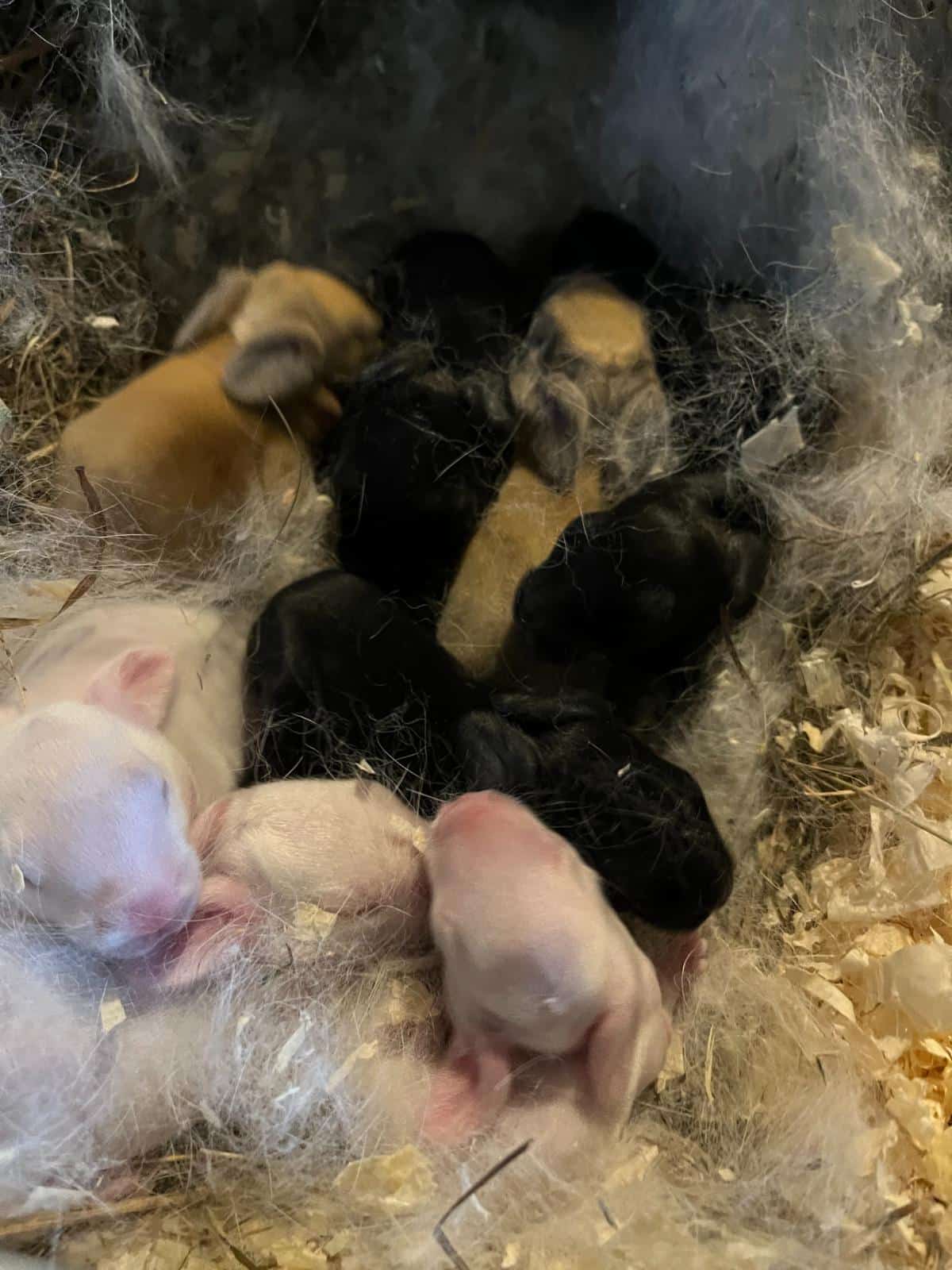
Fostering of kits should be done within the first three to four days of the life of the fosters.
You should not attempt to foster between litters with more than a five-day age gap. Even a five-day age difference is pushing the envelope of safety and well-being.
Rabbits grow very quickly, and there is a distinct difference in size, growth, and development of kits between one and five days old. Five-day-old kits can easily push out smaller kits that are just a handful of days smaller than them.
Even if the foster doe were to accept kits at this late age, which is highly doubtful, they would be unlikely to be able to compete with their new foster siblings. Or, if the fosters are the older and larger set, they may push out the kits from the younger litter.
The other issue is the composition of the doe’s milk. Any rabbit milk will be better than an alternative formula or recipe supplement, but young kits need early milk.
The doe’s early milk will first be colostrum, which has essential antibiotics and immune protection. This will be only the earliest milk produced in the first 24 to 72 hours. After that, it is a thinner but still rich, fattening drink that helps kits grow.
For this reason, the best time to foster kits and give the fosters the benefit of the other doe’s milk is within the first three days of life.
As the lactation progresses, the milk will be thinner and lower in calories. This is fine when age-appropriate for the kits, but newborn kits would not grow as well on milk from a doe that has been in milk for weeks.
That said, the primary reason to only foster kits during the first five days is so that the doe will accept them without notice. She is less likely to accept kits once the kits are moving in and out of the nest.
Also, there is some risk that, as older kits, the foster siblings may pick on the newcomers. One and two-week-old kits do not have the ability or sense to fight other kits.
As a side note, usually kits at a young age of four to six weeks will accept other rabbits into the litter without issue, but that would be for mixing weaned litters because the doe would not be likely to fold in kits at that late an age.
Tips and Tricks for Fostering Meat Rabbit Kits
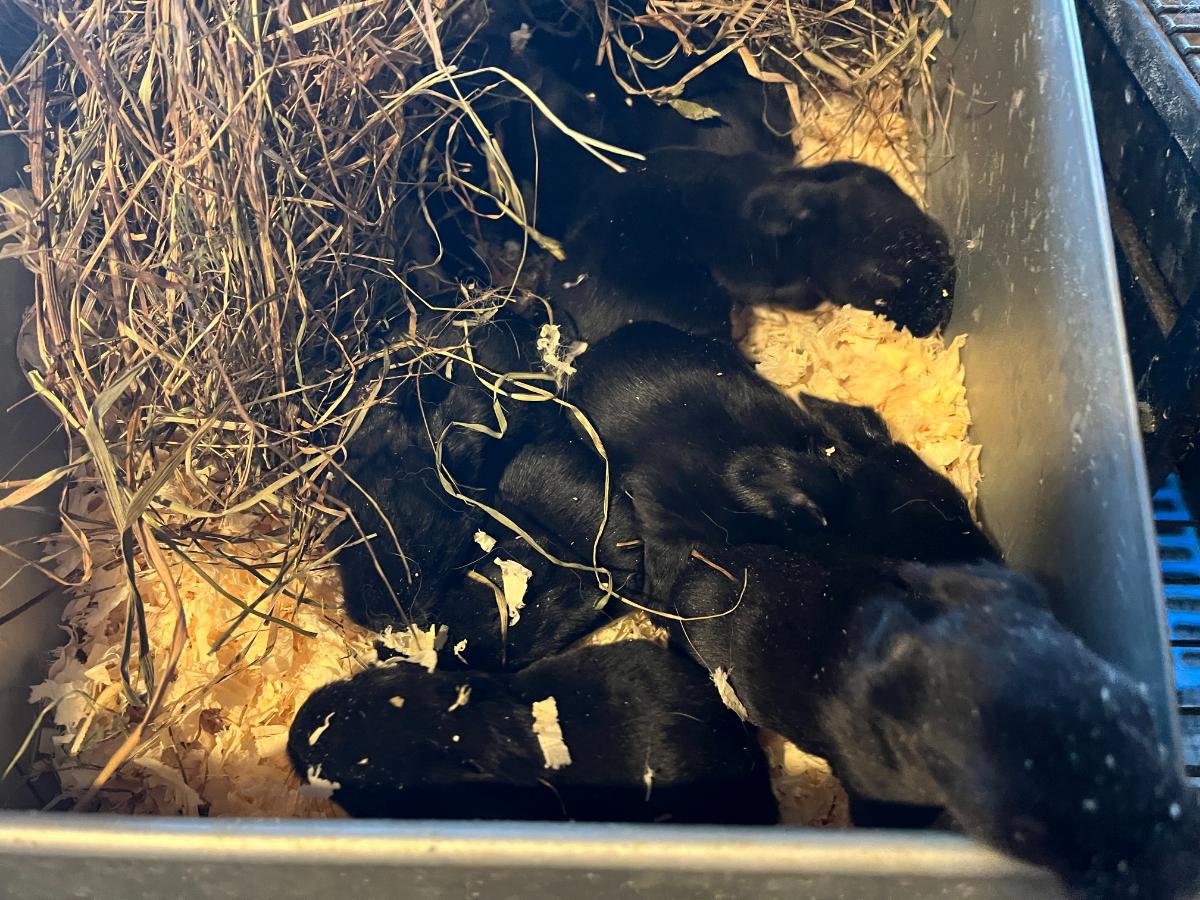
- Select breeding does for moderate-sized litters that the doe can handle without fostering
- Fostering should only be done if you need to, not simply for the matter of evening out litters
- There is always a risk that fosters will be rejected, so keeping kits with the birth mother is best unless there is a good reason to foster
- Try to move kits when there are several hours before the next feeding -- this gives time for fosters to take on the scent of the nest and for kits to blend unnoticed
- Some breeders will remove both nest boxes, remove and then mix the litters as planned, and shelf the nests for a couple of hours before returning them to each mother
- Mark nest boxes and make sure you get them each back in the right cage! The doe WILL be able to tell that the nest is not her own -- it will have her distinct scent!
- Some recommend rubbing an unscented washcloth or rag over the mother or wiping it around the edges of the nest box and then using it to wipe down the fostered kits before placing them in the nest -- this helps to transfer the doe and the litter’s scent and “hide” the newcomers
Reading and More Resources on Fostering Meat Rabbit Kits
- Merck Veterinary Manual. Breeding and Reproduction of Rabbits.
- Utah State University Extension. Basic Rabbit Selection and Breeding Considerations.
- Rise & Shine Rabbitry. Fostering Kits.
- Mad Hatter Micro Farm. Fostering Kits.
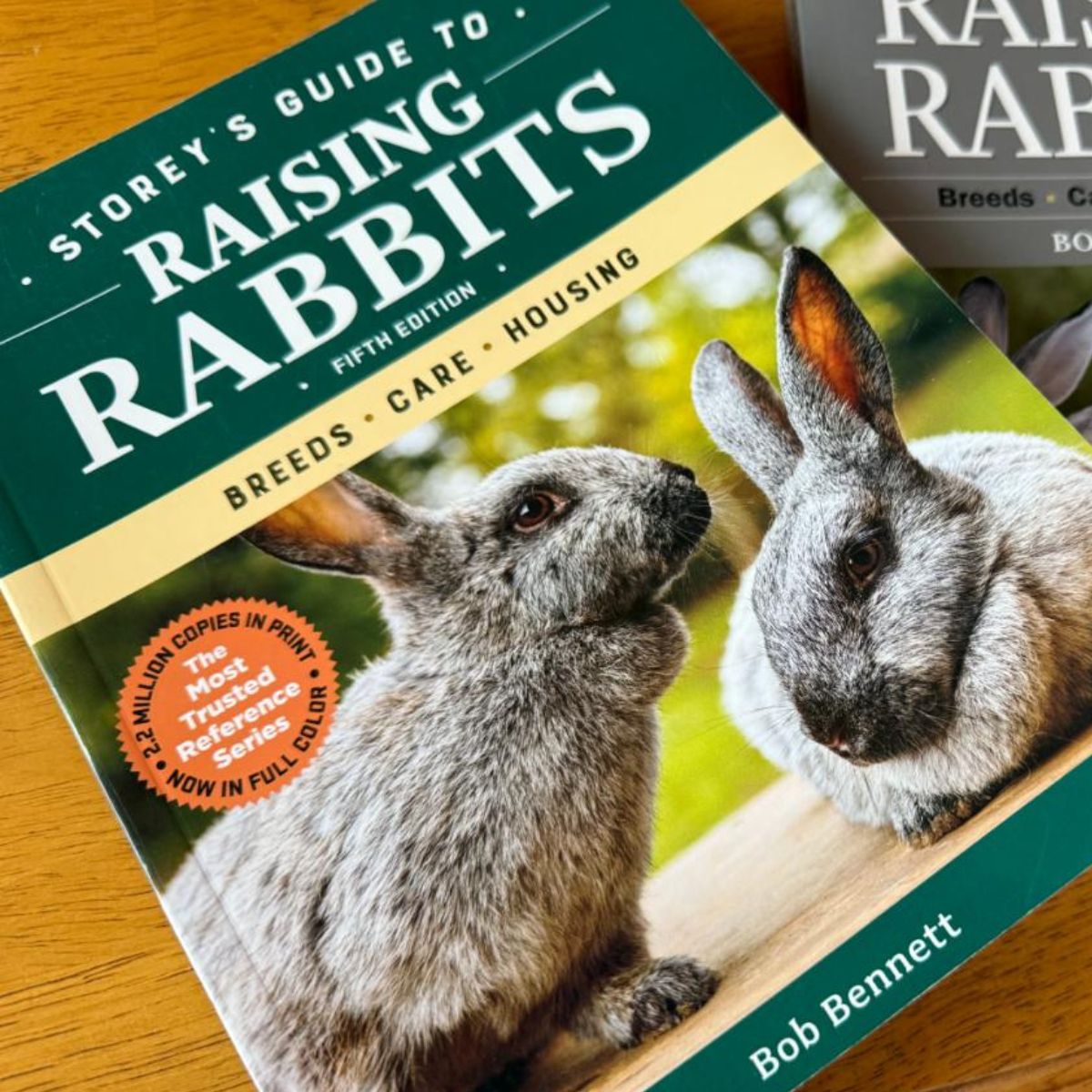
- Storey’s Guide to Raising Rabbits. Jean Storey. Storey Publishing.
- Rabbit Raising Problem Solver: Questions Answered. Karen Patry. Storey Publishing.
- Raising Rabbits for Meat. Eric Rapp & Callene Rapp. New Society Publishers.
Leave a Reply