
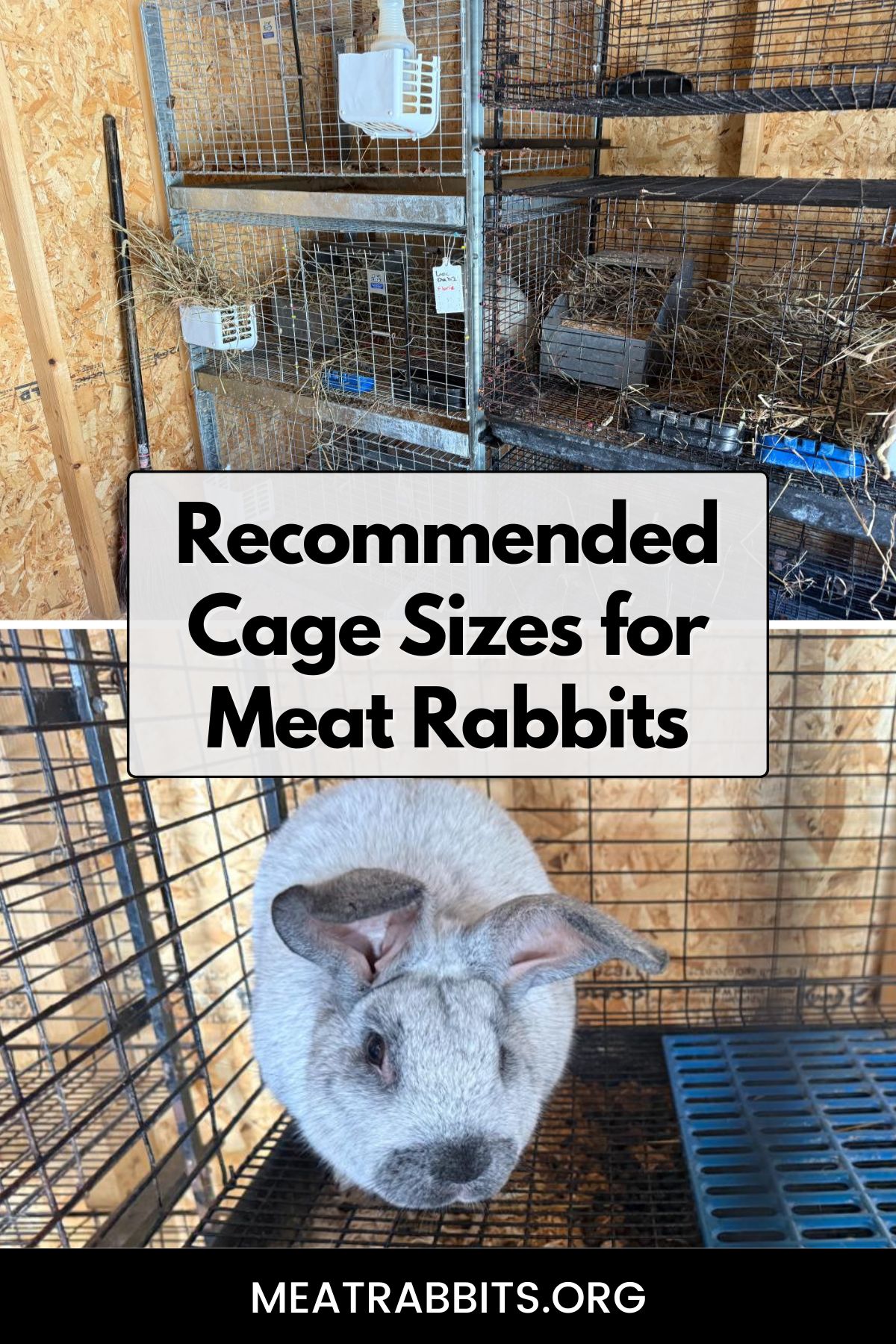
How small is too small when it comes to cages for meat rabbits? How big is big enough?
There are but a scant few resources on this topic. It is quite likely that there will not be a state or local statute that will specifically lay out how large cage sizes should be for your meat rabbits (though in some areas, that is possible). In the U.S., locales typically fall back on the Animal Welfare Act.

However, there are also recommendations from respected authorities and rabbit associations. These are not outrageous, and they are the best rules to follow when determining cage size and space for humanely raised, happy, healthy caged meat rabbits.
Jump to:
- Recommended Cage Sizes Based on ARBA Recommendations (And Others)
- VIDEO: What Size Cages Do Meat Rabbits Need?
- Common, preferred cage sizes for bucks, does, and grow outs
- Table: Common Meat Rabbit Cage Sizes and Appropriate Housing Uses
- Plan for the largest cage size your rabbit will need
- All rabbits in your meat rabbit barn will not need the same size cage
- House All Adult Meat Rabbits and Breeders Separately
- Kits and Grow Outs Can Be Housed Together if Harvested Young
- Backlash (from the public) is Not Uncommon
- Resources and References for Further Reading and Research
Recommended Cage Sizes Based on ARBA Recommendations (And Others)
Note that these recommendations are based on the recommendations for the United States. They are based primarily on the recommendations set forth by the American Rabbit Breeders Association, or ARBA. Their recommendations are based on guidelines outlined in the Animal Welfare Act of the United States Department of Agriculture (USDA).
It is possible (though probably not likely) that a state, city, or town in the U.S. might have its own, more stringent requirements for rabbit cages. Most locations do not outline these types of specifications, but if you do learn that there are regulations in your area, it is up to you as the breeder to research them and to decide to follow them.
If you are located in a country other than the United States, you may (or may not) be subject to regulations, and they may differ from what is outlined here.
All of this considered, most standard cages on the market meet and more than likely exceed the recommendations set forth by ARBA and other reputable bodies, as long as you don’t overcrowd your cages.
And so to summarize, if you need one good set of recommendations to follow to plan your cages and sizes, this is it.
Focus on Square Feet Per Animal
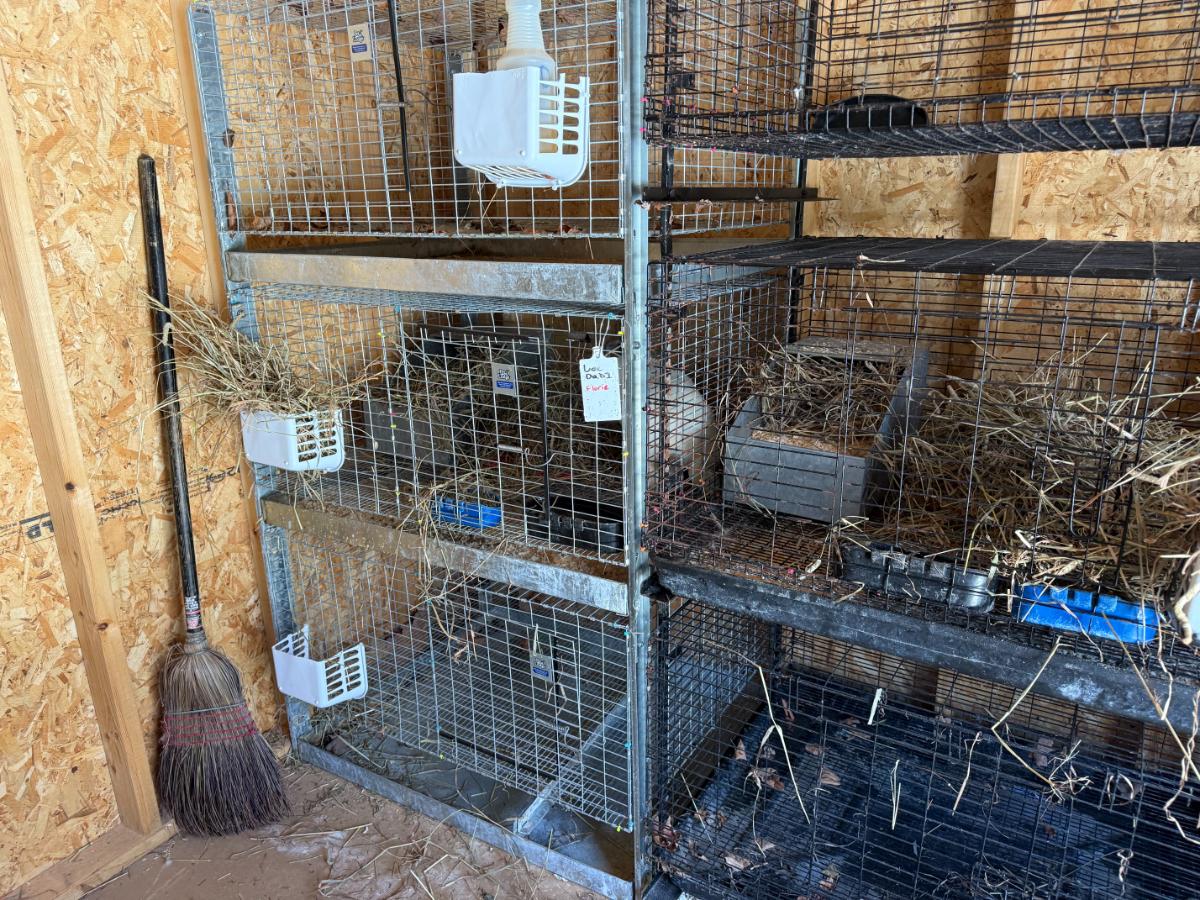
Since there are different sizes and styles of cages for meat rabbits, the best thing to do is to focus on the square footage requirements for the rabbit(s). This is how the ARBA and the USDA break down cage requirements.
Not only does this make sense, but it is a more workable guideline that can be applied across all types of cages, from all wire to hutches, to community grow out cages.
Square footage requirements are based on rabbit size by weight. Therefore, you can reduce the square footage for grow outs as long as you either rotate them through to larger cages as they grow, or you provide a grow out cage that will meet their size and weight requirements for what is expected to be their live weight at harvest age.
This weight requirement would be different for rabbits that are being harvested at around 10 to 12 weeks and a live weight of five pounds than it would be for rabbits that are harvested at an older age, such as those harvested at 16 weeks (which would be expected to be more towards a seven to eight pound live weight).
Square footage requirements for meat rabbit cages
- Rabbits under 4 ½ pounds (lbs): 1 ½ square feet (sq ft) per rabbit
- Rabbits 4 ½ to 9 lbs: 3 sq ft per rabbit
- *Rabbits 9 to 12 lbs: 4 sq ft per rabbit
- Rabbits over 12 lbs: 5 sq ft per rabbit
Cage sizes for does with litters are as follows. The weight suggested is the weight of the doe:
- 4 ½ to 9 lb doe: 5 sq ft
- *9 to 12 lb doe: 6 sq ft
- Does larger than 12 lbs: 7 ½ sq ft
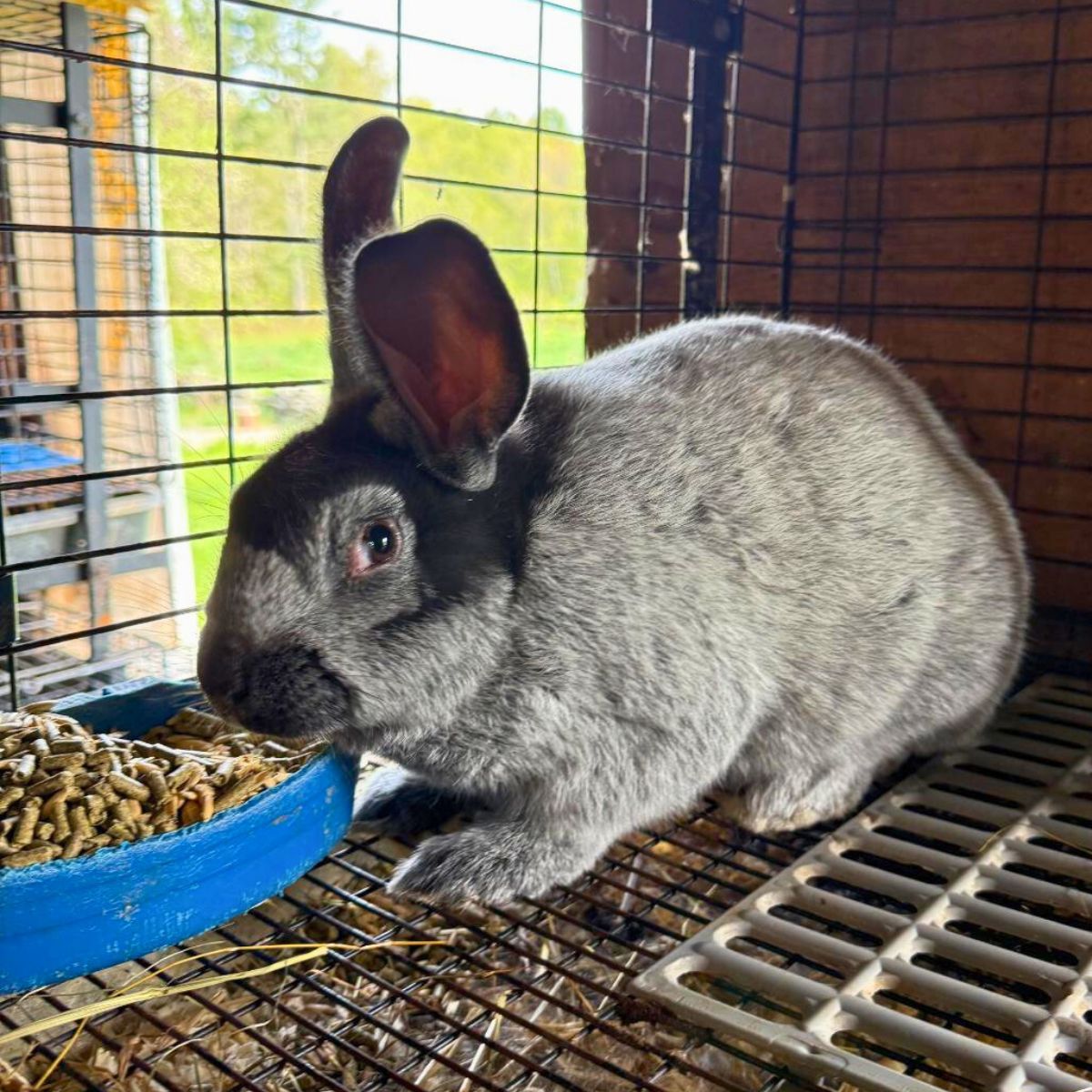
*Bolded weights and cage sizes are for the most common weights/sizes for meat rabbit breeds. These would be for “medium” rabbit breeds, also called "commercial" breeds. These include the most common meat rabbit breeds and almost all but the giant breeds of meat rabbits. These would be appropriate for breeds such as Californians, New Zealands, the argente breeds including D’Argents, silver fox, and many more.
Typical cage sizes for meat rabbits:
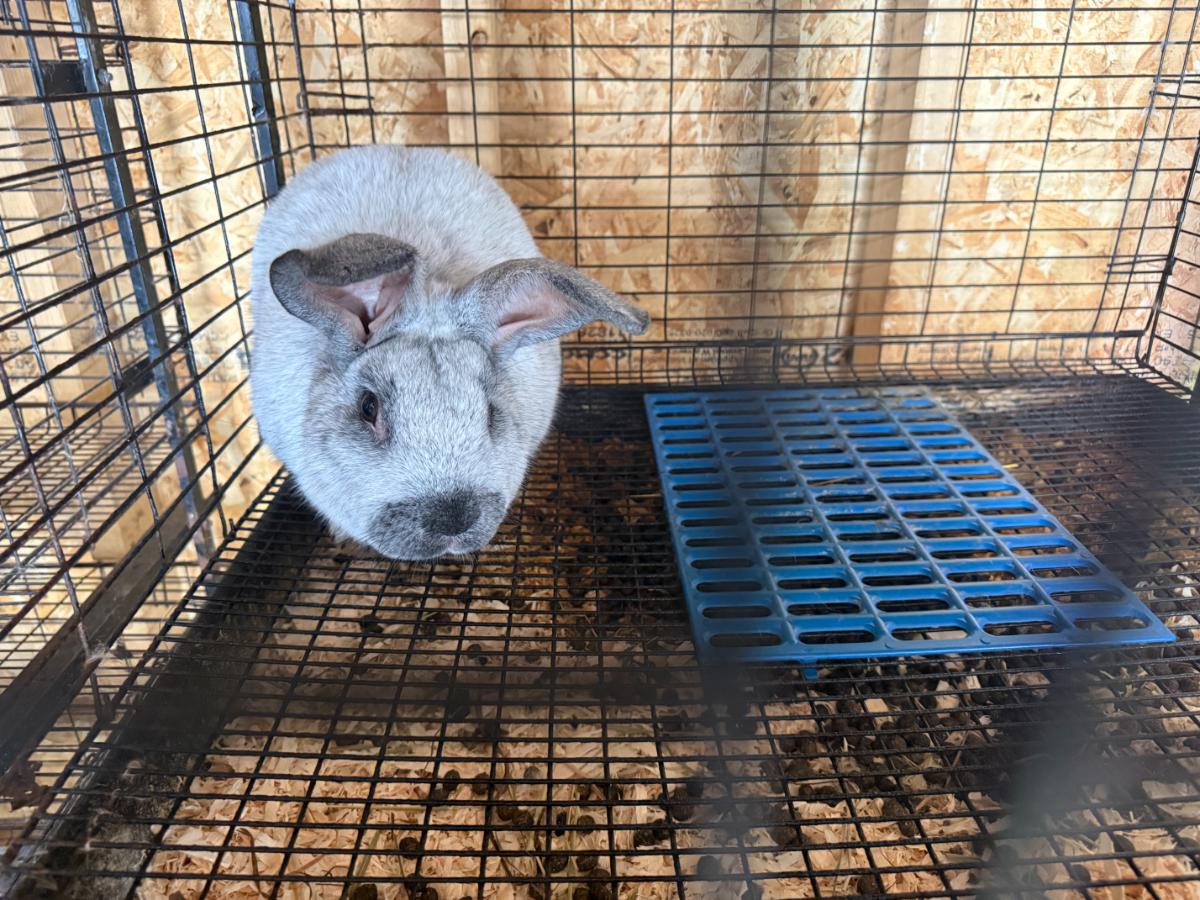
These are some examples of common sizes of rabbit cages that would be appropriate to house different meat rabbits.
This is offered to help make shopping or cage building easier, but note that other cage configurations can still meet adequate meat rabbit housing standards as long as the square footage per rabbit guideline is adhered to.
- 24 x 24 inch: 4 sq ft
- 30 X 30 inch: 6.25 sq ft
- 30 x 36 inch: 7.25 sq ft
- 30 x 24 inch: 5 sq ft
- 36 x 24 inch: 6 sq ft
- 48 x 24 inch: 8 sq ft
- 60 x 24 inch: 10 sq ft
What height of cage should you buy?
Different companies offer different cage heights, ranging from 16 inches to 20+ inches. The most common cage heights for meat rabbits are 18 or 16 inches. Either is acceptable, though for adult rabbits that like to stretch and rabbit does with nest boxes and rest tops, 18 is a bit nicer.
Rabbit cages with a height of 14 inches are available, but they are designed for smaller breeds of rabbits and would not be advisable for meat rabbit breeds. You could consider these for grow out cages if you intend to harvest by five (5) pounds live weight.
Keep in mind, even though smaller cages can sometimes be adequate for grow outs, it’s often better just to stick with the cage sizes and heights that are more typical for meat breeds so that you can maintain flexibility in your rabbitry without ending up with larger rabbits in cages that aren’t an appropriate size for them.
Notes on cage depth
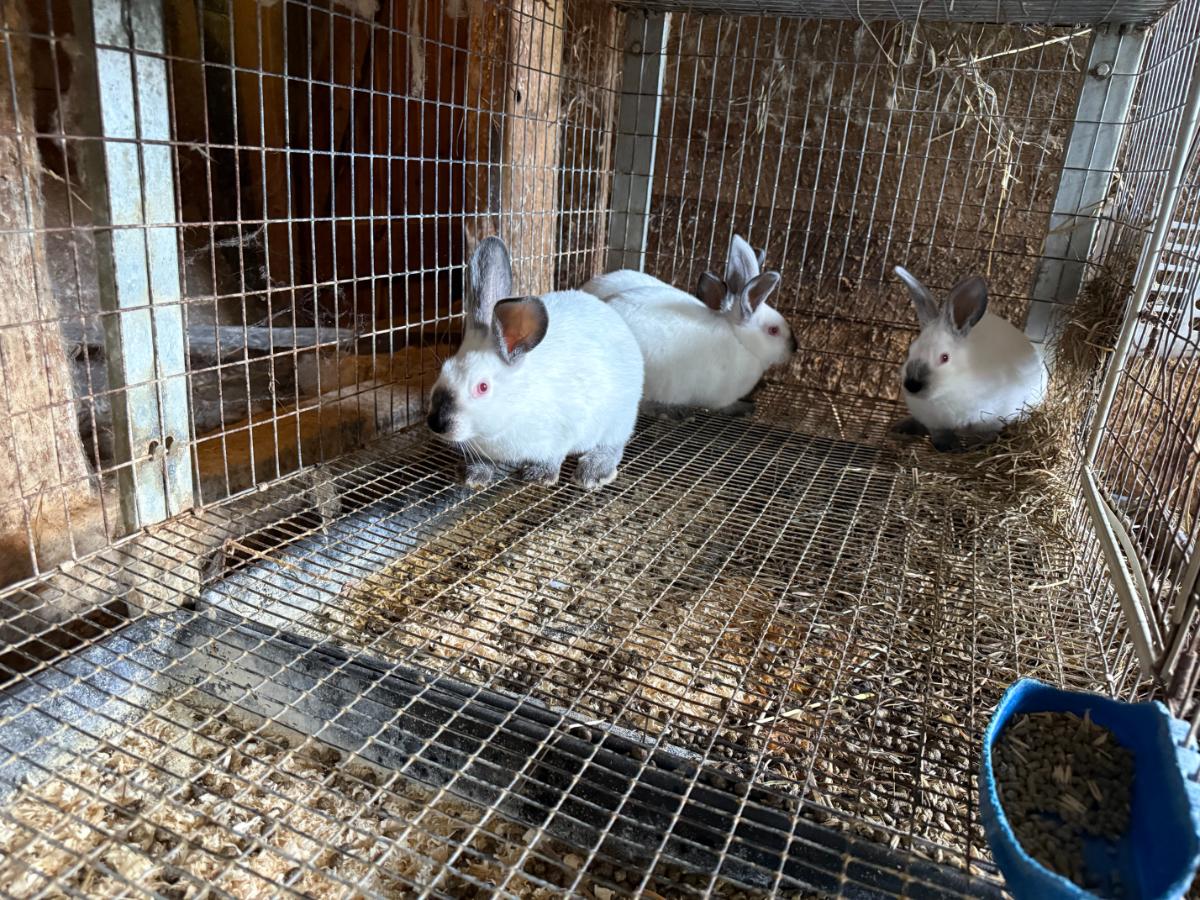
Meat rabbit cages come in different depths, as you can see from the various cage sizes listed throughout this guide.
Deeper cages, such as the cages that are 30 inches deep, provide more space and square footage and they don’t usually impact the space and arrangement in your barn in the same way that cage length does. Usually, we have more room in front of cages than end-to-end.
However, many people prefer a shallower cage with a depth of 24 inches because you can reach into the cage and all the way to the back more easily. There’s a tradeoff here. Thirty-inch deep cages aren’t quite as easy to use, but they do give nice space, especially for does with nest boxes. On the other hand, most average adults can reach the back of a 24-inch deep cage, and moving and managing rabbits is made easier.
As long as the square footage of the cage is appropriate, either is fine as far as the rabbits are concerned. It’s more of an advantage for the breeder.
VIDEO: What Size Cages Do Meat Rabbits Need?
Common, preferred cage sizes for bucks, does, and grow outs
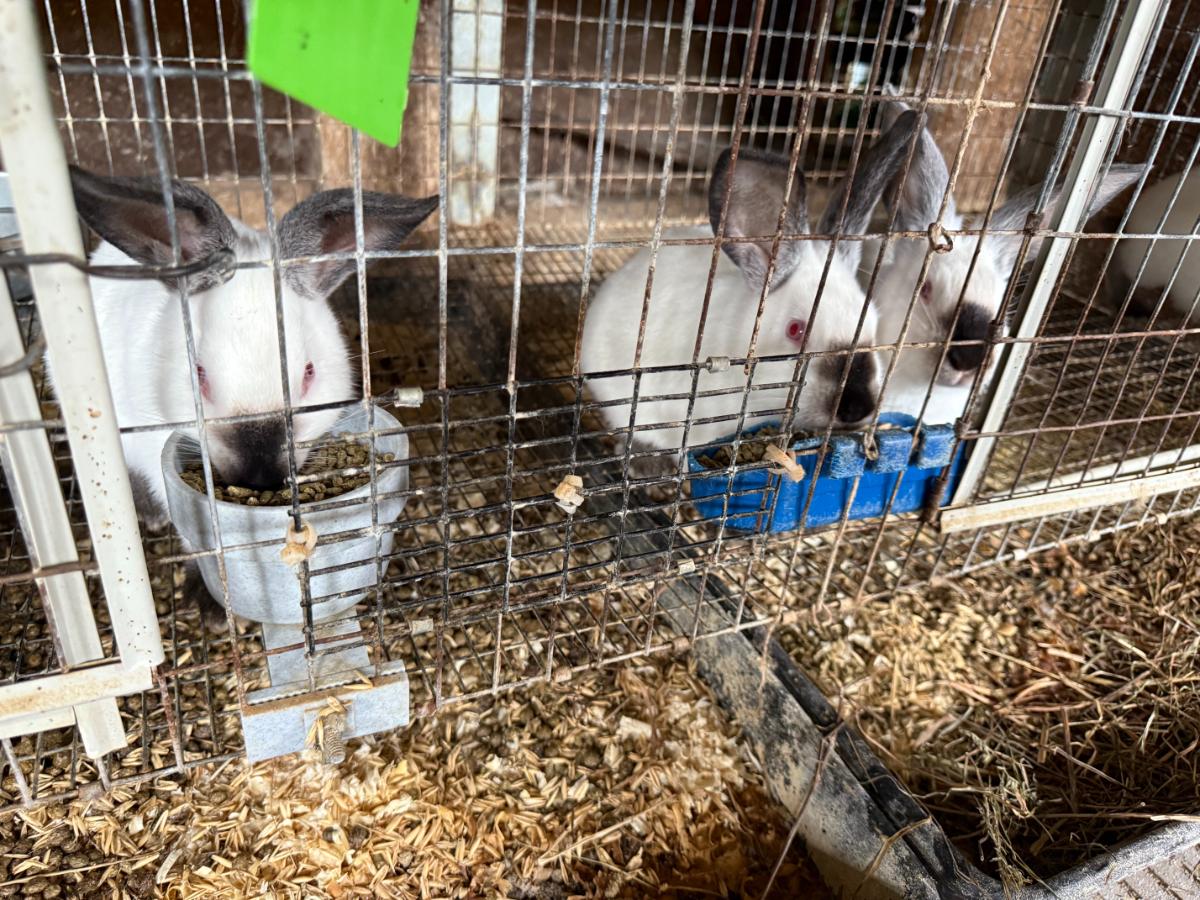
To give just an idea of a commonly recommended cage size for different ages and stages of meat rabbits, the following are recommended from sources such as university extension services:
- Breeding age does (to include does with litters): 36x30 or 36x24
- Bucks: 30x30 preferred, 24x24 acceptable
- Grow outs one per cage: 24x24 (would typically be for grow outs being grown to 16 weeks or more)
- Grow outs two per cage, up to 12 weeks old*: 24x24
- Grow outs in group cages, up to 12 weeks old*, up to 5 rabbits, up to 5 pounds live weight: 30x36
- Grow outs in group cages, up to 12 weeks old*, up to 4 rabbits up to 5 pounds live weight: 36x24
- Grow outs in group cages, up to 12 weeks old*, up to 5 rabbits, up to 5 pounds live weight: 48x24
- Grow outs in group cages, up to 12 weeks old*, up to 7 rabbits up to 5 pounds live weight: 48x30
- Grow outs in group cages, up to 12 weeks old*, up to 6 rabbits, up to 5 pounds live weight: 60x24
- Grow outs in group cages, up to 16 weeks old, separated by sex*, up to 3 rabbits up to 9 pounds live weight: 48x24
- Grow outs in group cages, up to 16 weeks old, separated by sex*, up to 3 rabbits up to 9 pounds live weight: 48x30
- Grow outs in group cages, up to 16 weeks old, separated by sex*, up to 3 rabbits up to 9 pounds live weight: 60x24
Table: Common Meat Rabbit Cage Sizes and Appropriate Housing Uses
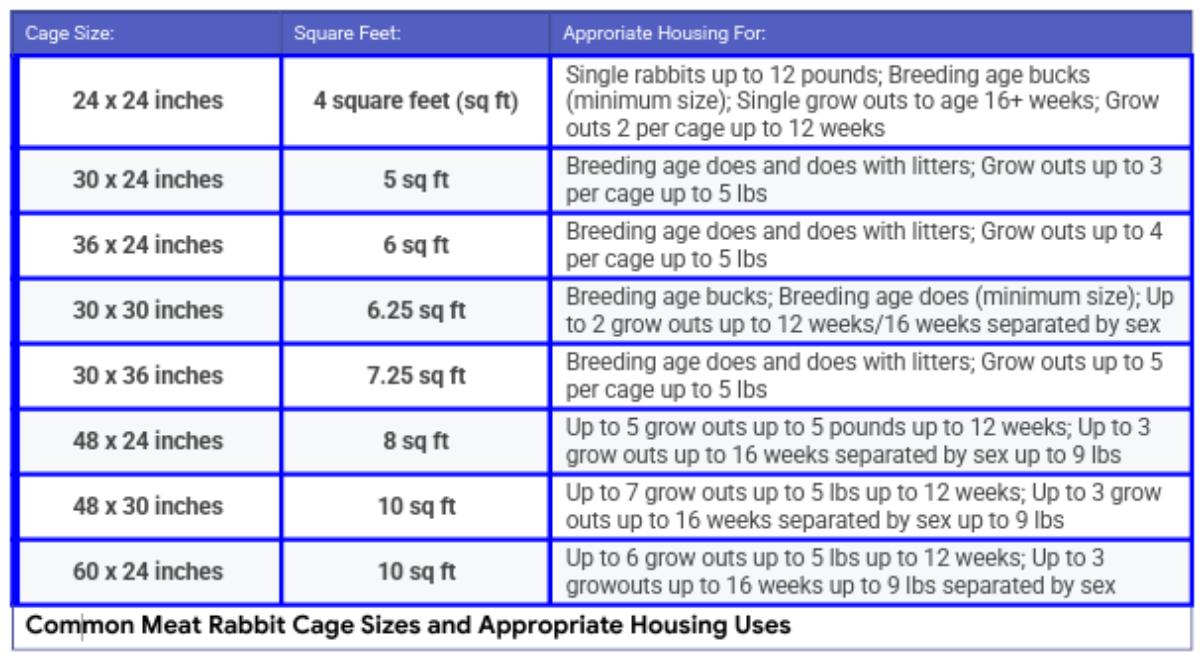
Note: In the column for “Appropriate Housing For”, these are either/or uses. In other words, the cage would be appropriate for each of the uses separately, but you would not combine usage. Uses are divided by a semicolon.
For example, in the first column listing “Single rabbits up to 12 pounds; Breeding age bucks (minimum size); Single grow outs to age 16+ weeks; Grow outs 2 per cage up to 12 weeks”, you could use this cage to house one rabbit that is up to 12 pounds or two grow outs for 12 weeks, but not all three together.
Want to keep this table handy for future use?
Print the screen or download a printable pdf copy of this cage size table here.
Plan for the largest cage size your rabbit will need
Spend the money once. The cage you buy may be larger than what your rabbit needs at the time you buy it, but you need to plan for its final size, not the size at the time of purchase.
When you are shopping, select cages based on the expected largest weight that you will need for the rabbits you are buying the cage for.
If the cage is for grow outs, plan for the live weight you are targeting at the time of harvest and the number of grow outs you plan to keep in each cage. If you don’t keep them too long [too old], then you can house litters or half litters in larger cages together. You just need to do the math to accommodate them!
All rabbits in your meat rabbit barn will not need the same size cage
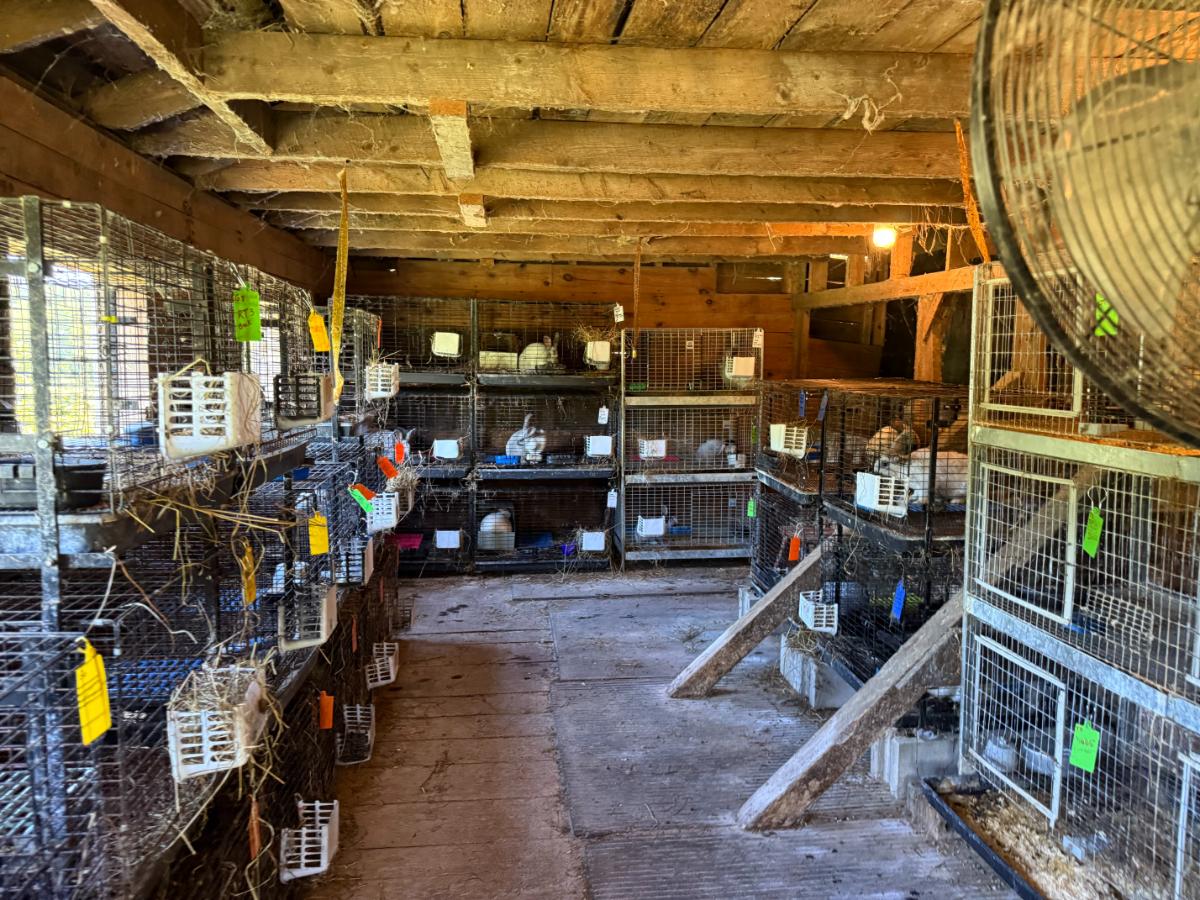
Breeding does have different requirements than grow outs and bucks.
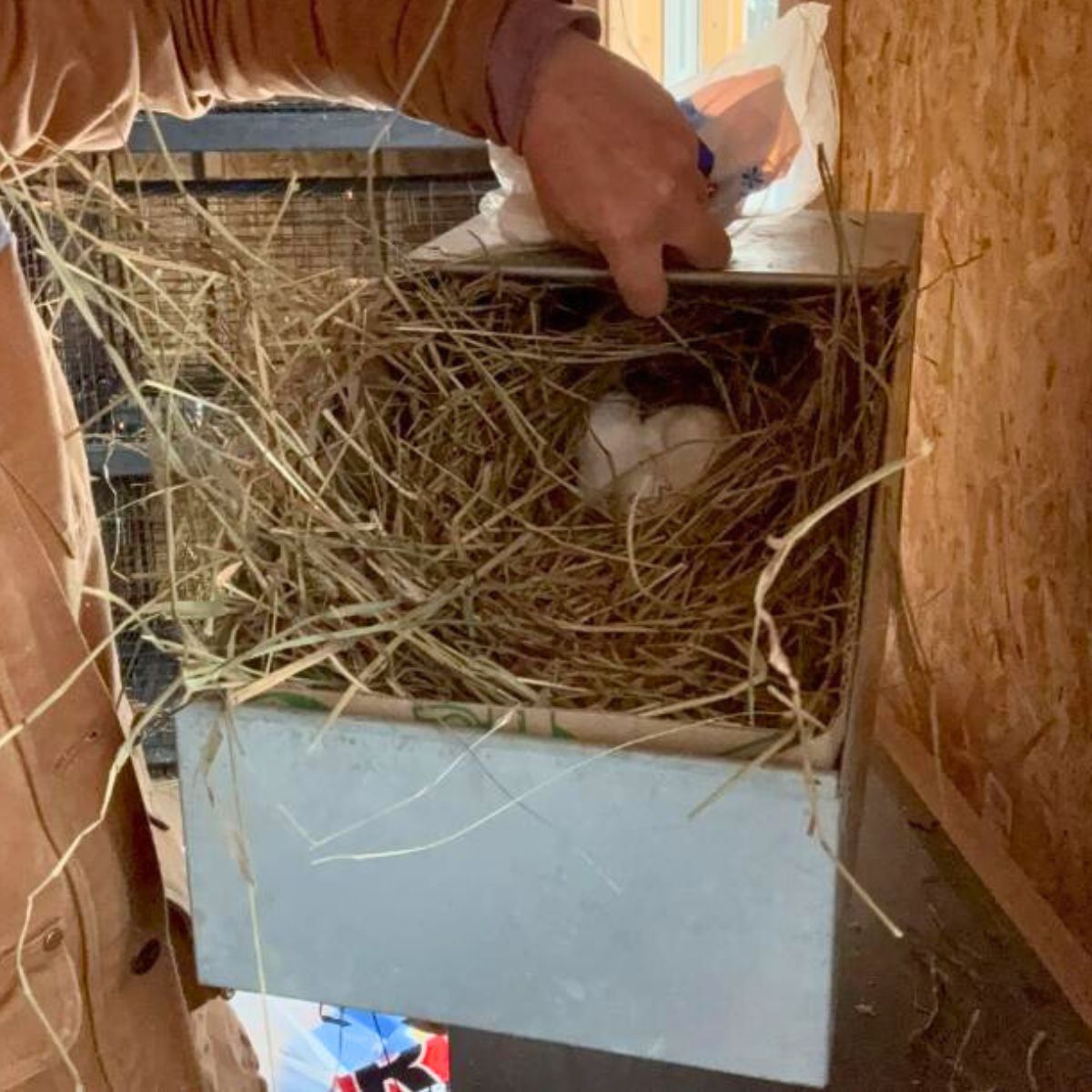
Though as single individual adults they are comparable in adult size to the bucks, there will be many times throughout the year when the doe will have a space-consuming nest box in her cage.
Then for several weeks after, she will have four to 12 extra bodies roaming and taking up space. If quarters are too cramped, you risk unhappy animals and animals at risk of being trampled or laid upon. Growing litters and does need space!
Grow outs are not usually grown to full mature adult weight for their breed, so instead of focusing on how large they would be as adults, plan according to how large they will be by harvest (This is generally 5 to 7 or 8 pounds live weight, depending on age).
Bucks can often be housed according to square footage requirements in cages that are the same size as grow outs, but it is typically recommended that they be kept in a larger cage because their life situation is different and may at times require it.
For example, bucks will spend their entire life in the cage you select for them. Erring in the side of larger and more space may be preferable for you. Also, bucks will need to have room to service does in their cages.
This means that not only does the cage need to be structurally sound for up to 24 pounds of a medium-sized commercial breed meat rabbit, but it also needs to have enough room for them to move and maneuver around. While it might technically be able to be done in a cage as small as two by two feet (24-inch square cage), it is not ideal. The cramped quarters can make it easier for a doe to hide in corners, and more difficult for a buck to mount her successfully.
In short, consider the maximum space that an individual rabbit might need, relative to their lifespan and activity, and the ways the cage will be used.
House All Adult Meat Rabbits and Breeders Separately
This applies to cages, not colonies, which would be a separate topic, but understand that even in a colony situation, there must be enough room for each adult rabbit.
Adult meat rabbits are territorial; their instinct will be to protect their territory, especially when there are kits.
Don’t make the mistake of thinking that your meat rabbits will live happily together for their entire lives. This works until it doesn’t. When it doesn’t, you’ll find rabbits with scabs, bitten genitalia, bite marks on their backs, or worse. These can easily go unnoticed for too long, too.
This can happen suddenly and at young ages, even amongst litter mates and even amongst sibling rabbits of the same sex. This behavior often starts between 12 and 16 weeks as the rabbits begin to reach maturity and work to establish territory in dominance in a group setting that isn’t large enough for communal type living.
Kits and Grow Outs Can Be Housed Together if Harvested Young

Litters of kits and grow outs can be housed together, but to avoid fighting and injury, this should not go on for too long.
Separate by sex by no later than 12 weeks old
If you are intending to raise your grow outs past 12 weeks, you need to separate the grow outs at least by sex. It’s best to separate by sex at weaning time. This is an easy and logical time to sort the kits out. Then, you won’t need to worry about doing it again or missing the 12-week mark.
Though meat rabbits can’t typically breed until 20 weeks, exceptions have occurred. Precocious animals might breed at 16 weeks or younger.
Besides that, even if they do not successfully reproduce, the practice and acts leading up to being able to breed translate into a lot of harassment, chasing, and fighting.
Watch for signs of bullying and fighting -- even amongst litter mates!
As mentioned earlier, grow outs may start to fight or bully even at young ages. Always keep an eye out for signs of fighting when you have grow outs housed together -at all ages from weaning on!
Do not assume you will hear or see fighting in cages! Fights may only be occurring during more active times of the day, or routines like feeding may distract them away from it for a time, only to resume when you’re not in the barn or near the cages.
For this reason, it’s important to check over your community cages and observe the rabbits on a regular [daily] basis.
Some signs to look for include:
- Rough spots on the rabbit’s back from biting or healed bites
- Missing hair
- Screeching or screaming coming from the rabbit room or area
- Cuts or scabs
- Scabby undersides, especially on genitalia
- Undersized rabbits or grow outs are losing weight (usually from being bullied away from food dishes)
Remember, more bodies mean more feeders and waterers
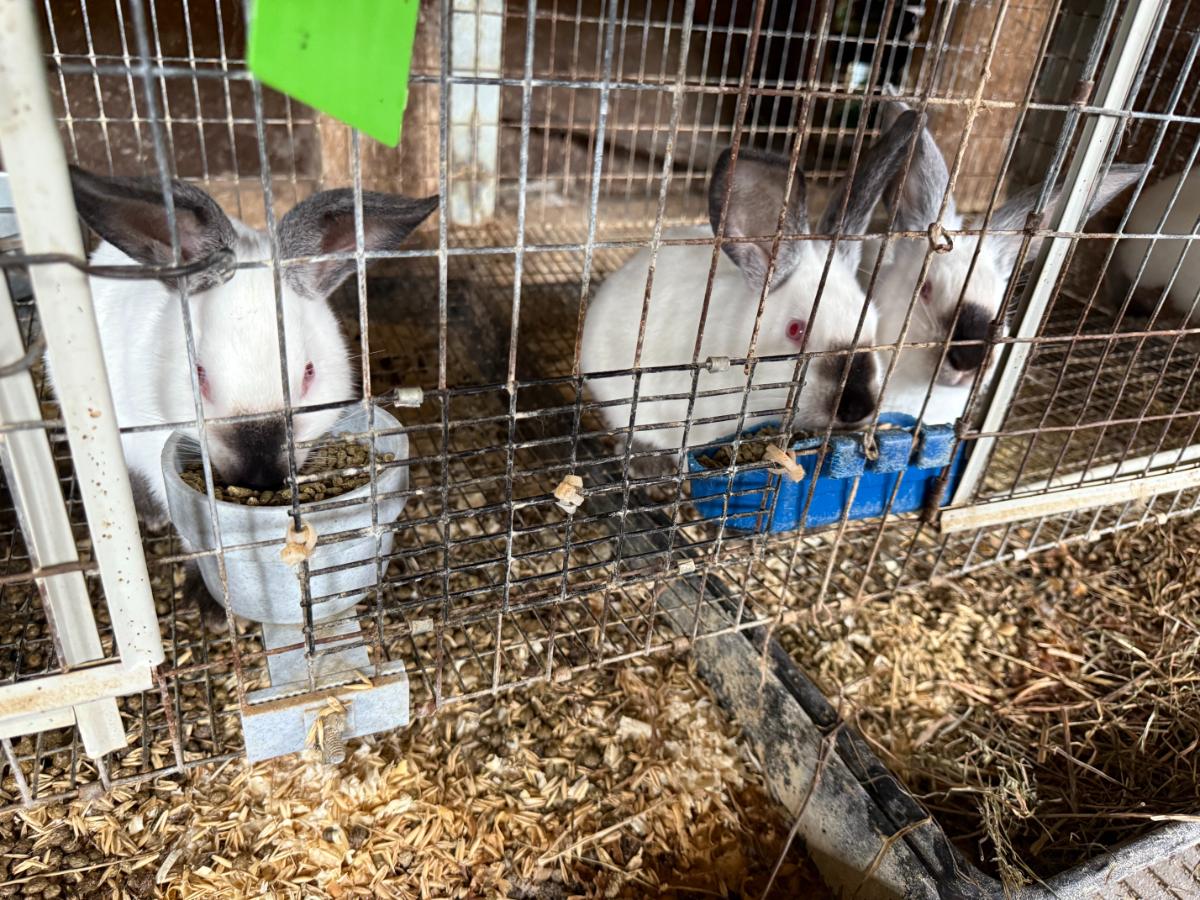
One thing to always keep in mind in community grow out cages is that the more rabbits you have, the more feeders and waterers you need. Either increase the size or increase the number of feed and water dishes.
This may sound obvious, but the other part of this to consider is that if you have to take up a lot of cage space to fit enough feeders and waterers, then you need to increase the square footage requirements to accommodate them. This is best dealt with when you plan and purchase or build your cages so that you don’t find yourself needing more cage space than what you originally planned for.
Backlash (from the public) is Not Uncommon
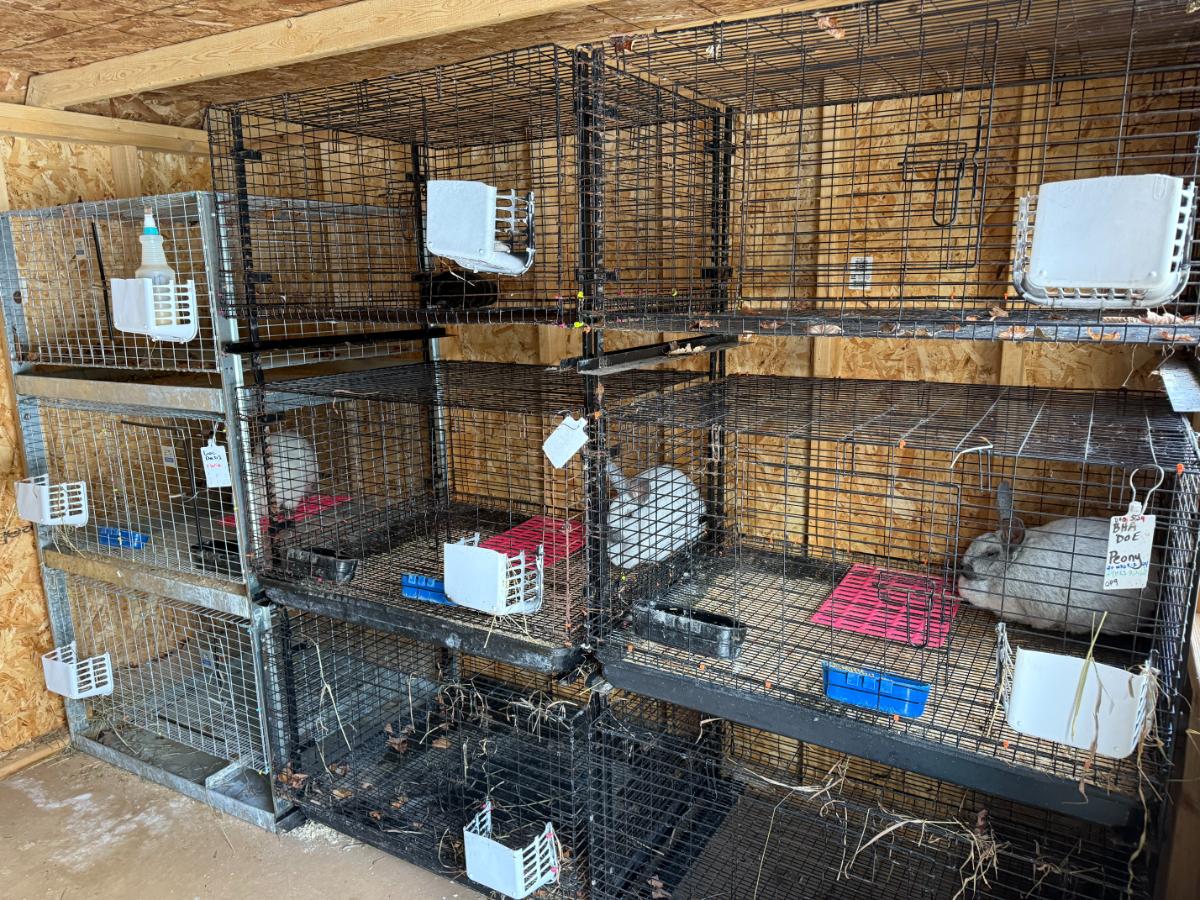
There will always be people who will tell you you are cruel for keeping meat rabbits in cages, or that your cages are not large enough. Sometimes these come from other meat rabbit breeders. Usually, it comes from people who don't understand rabbit biology, health, safety, or needs.
There are very solid reasons for housing meat rabbits in cages. At least 24!
If you follow your conscience and the recommendations outlined here, you can confidently respond that you have done your research and that your rabbits are housed appropriately, according to the leading authorities on the matter. And if you do that, you should never feel pressured to house your rabbits otherwise.
Resources and References for Further Reading and Research
- American Rabbit Breeders Association (ARBA), “ARBA FAQs on Breeding and Meat Rabbits.”
- American Rabbit Breeders Association (ARBA), “Success With Market Rabbits.
- American Rabbit Breeders Association (ARBA), “ARBA Recommendations for the Care of Rabbits and Cavies.”
- Ohio State University Extension, “Rabbit Basics for the Beginner” 4‑H Fact Sheet.”
- Iowa State University Extension and Outreach, “Rabbit Study Guide.”
- Mother Earth News, “Meat Rabbits 101: A Guide to Raising Rabbits for Meat,” by Robin Mather.”
- Teal Stone Homestead, Tiffany Taylor, “The Best Rabbit Growout Hutch Plans.”
- Rise and Shine Rabbitry, “Basics of Raising Meat Rabbits on the Homestead – Part 1.”
- University of Maine Cooperative Extension, “Backyard Production of Meat Rabbits in Maine” (Publication #1044).”
- National Agricultural Library (USDA), “Animal Welfare Act.”
- Bass Equipment Company, “Rabbit Cages Product Listings.”
- KW Cages, “Rabbit Cages Product Listings.”
- Jeffers Pet, “Rabbit Hutch Product Page.”
- Tractor Supply Company, DuMOR brand product listings.

Leave a Reply