
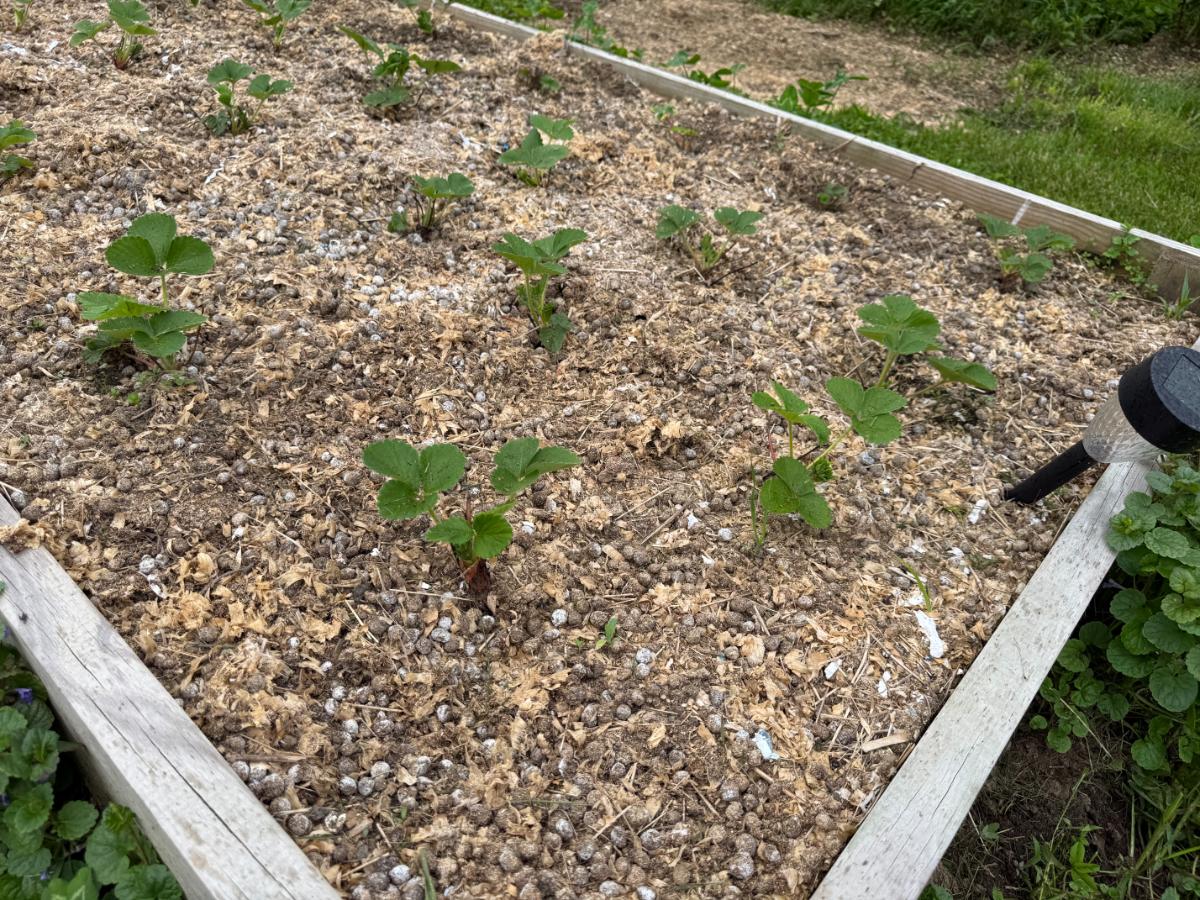
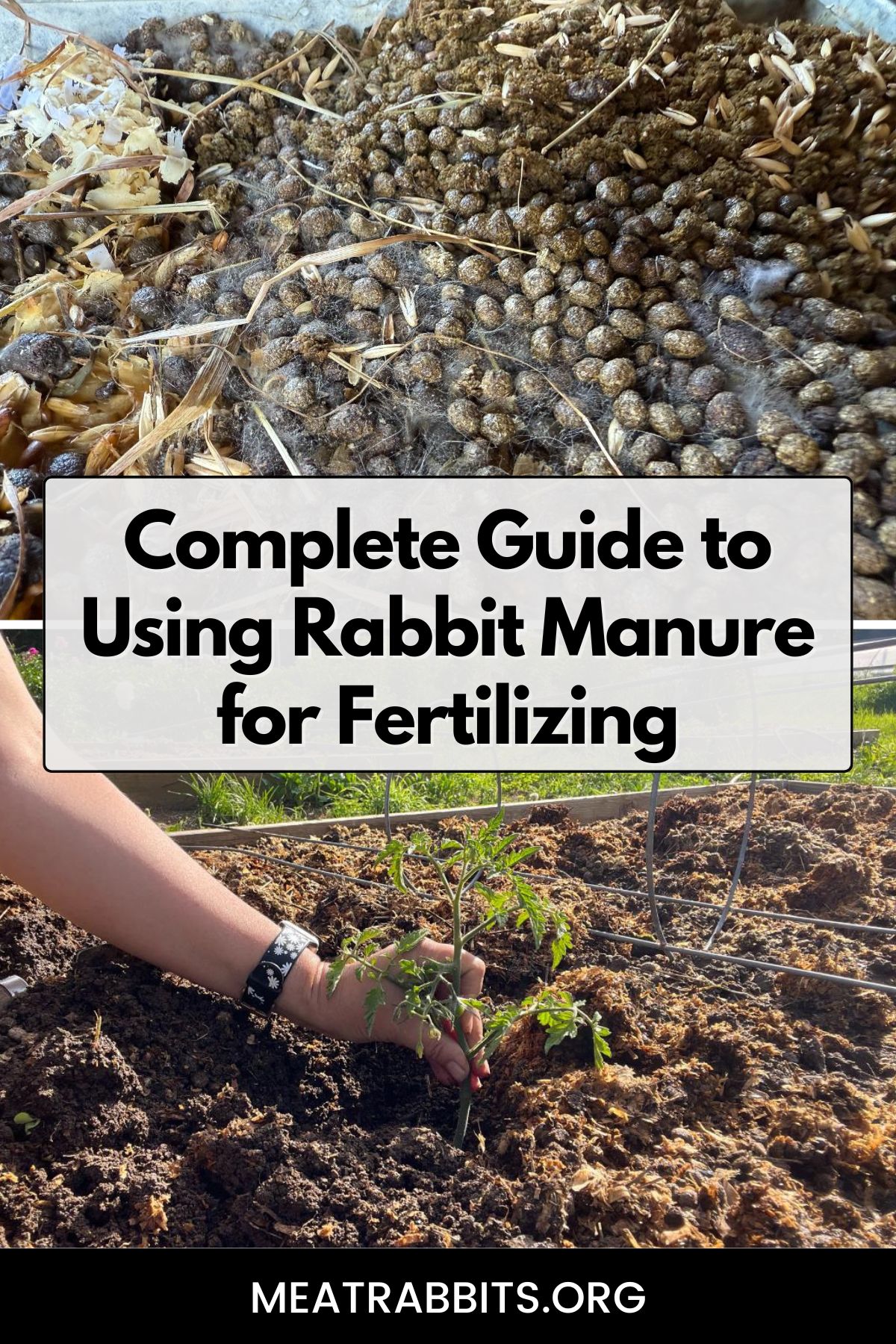
Rabbit manure is an excellent resource for the home yard and garden. In fact, it’s so good that some people are keeping rabbits just so they have a reliable, controllable source of homegrown fertilizer.
Jump to:
- Benefits of Rabbit Manure for Yard and Garden Fertilizer:
- How Much Fertilizer Does One Meat Rabbit Yield
- Composition of Rabbit Manure
- How to Use Rabbit Manure in the Yard and Garden
- VIDEO: Frequently Asked Questions + Rabbit Urine in the Garden
- Recommended Best Practices for Food and Produce Safety
- Rabbit Manure with Other Materials In It (Bedding, etc.)
- Cautions and Other Things to Know About Using Rabbit Manure in the Garden
- Aging or Composting Rabbit Manure before Plant Application
- Reading, Resources, and Where to Look for More Information on Rabbit Manure as Garden Fertilizer
Benefits of Rabbit Manure for Yard and Garden Fertilizer:
- Rabbit manure is a “cold” manure
- Can be used straight from the cage without composting or aging first
- Is a slow-release fertilizer
- Low risk of passing parasites transmissible to humans (this is why it is not recommended to use manure in your gardens from pigs, dogs, cats, or people)
- Adds organic matter and builds soil
- Replaces lost organic matter (such as to erosion, tilling, etc)
- Can be a source of organic matter for poor soils like sandy or clay soils
- Improves the structure of soil -- tilth, aeration, drainage
- Helps soil hold moisture
- Reduces the need for watering and irrigation
- Improves the drought tolerance of soil/plants
- Adds and retains nutrients for plants
- Promotes beneficial microbial communities in soil
- Attracts earthworms
- Reduces soil erosion
- Reduces soil compaction
- Reduces crusting of the soil surface
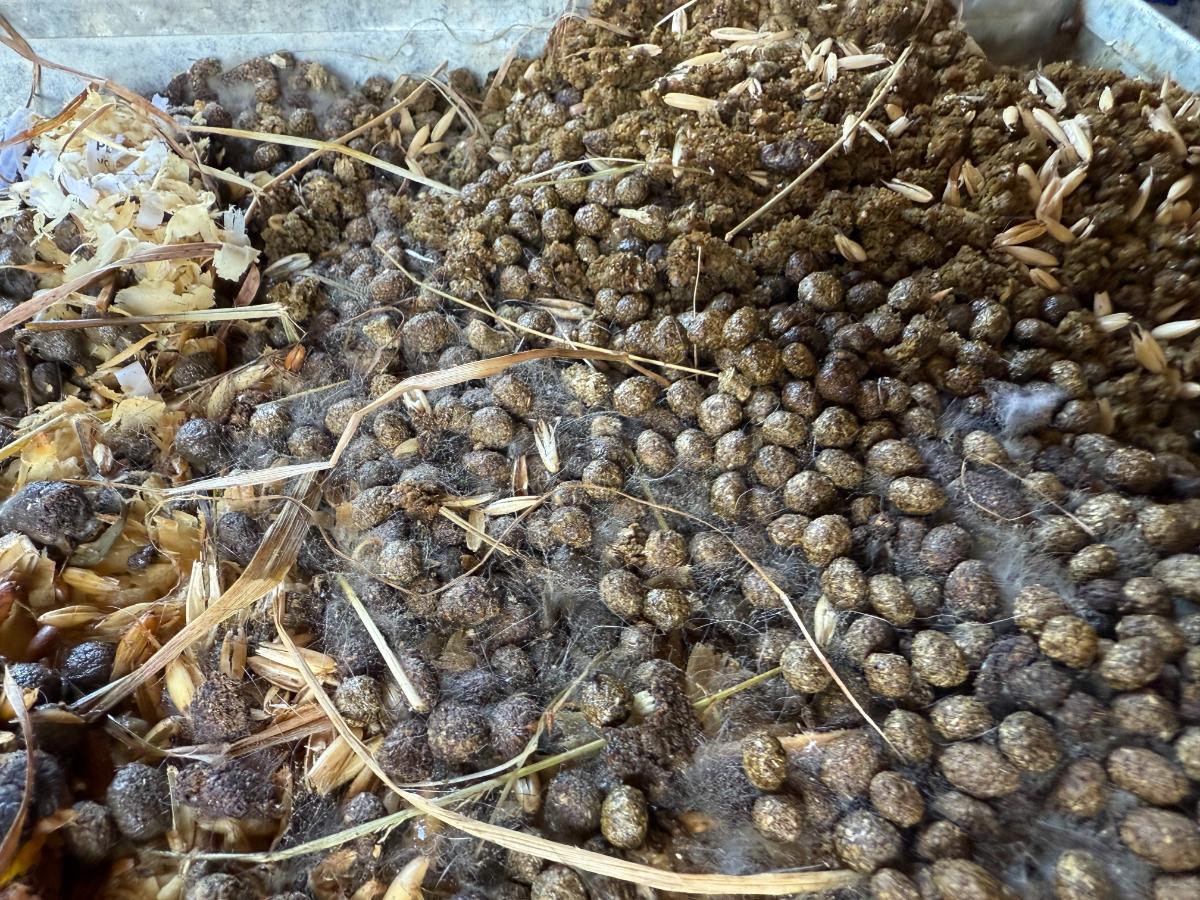
Rabbit manure has even been studied as a substitute for peat moss in growing soil mixes. Used in that way, it can be an answer for people who want to get away from peat because of its ecological impacts, or can be an alternative to be used as a free source of “peat moss” in soil and homemade potting and growing mixes.
Another big benefit worth mentioning is that meat rabbits are not usually considered as livestock, even if you are using them as such (in other words, for their intended purpose!).
That is why meat rabbits are often the livestock of choice for people living in urban and suburban settings. Rabbits can typically be raised in locations that are not zoned for livestock or farm animals.
Their manure is low odor, virtually undetectable in odor when outside, especially when spread right on growing ground and plants, or when tended in a well-tended, regularly turned compost pile.
How Much Fertilizer Does One Meat Rabbit Yield
One adult meat rabbit will produce an estimated 1.65 pounds of manure per day, or .32 square feet of manure per day. Grow outs, depending on their age and stage, will produce about half that in the weeks after weaning (and quite an impressive amount in the weeks up to weaning!).
So, even from just your breeding stock, assuming you keep a breeding trio, you will be producing around five pounds of manure every day! Or, about one square foot of manure per day.
Thirty pounds of manure a week is an excellent resource to have on hand for any grower. And, if you have extras, rabbit manure is in high demand. Selling rabbit manure to other growers and gardeners or selling rabbit compost is a no-waste way to deal with your waste, and make a little money for feed and supplies.
Composition of Rabbit Manure
Rabbit manure is reportedly “the most concentrated manure of any herbivore”. It is reported to be higher in nitrogen, potassium, and phosphorus than any other livestock manure.
The ratio of composition (percentage) of nutrients in rabbit manure is as follows:
- Nitrogen: 2.4
- Phosphorus: 1.4
- Potassium: .60
To give you an idea of a comparison, cow manure ratios are .25 nitrogen, .15 phosphorus, and .25 potassium. Chicken manure, which is a hot manure famous for its nitrogen content, has percentages of 1.1 nitrogen, .80 phosphorous, and .50 potassium.
Comparison of Plant Nutrients, Rabbit vs. Other Manures
| Rabbit | Cow | Chicken | |
| Nitrogen | 2.4 | .25 | 1.1 |
| Phosphorous | 1.4 | .15 | .80 |
| Potassium | .60 | .25 | .50 |
How to Use Rabbit Manure in the Yard and Garden
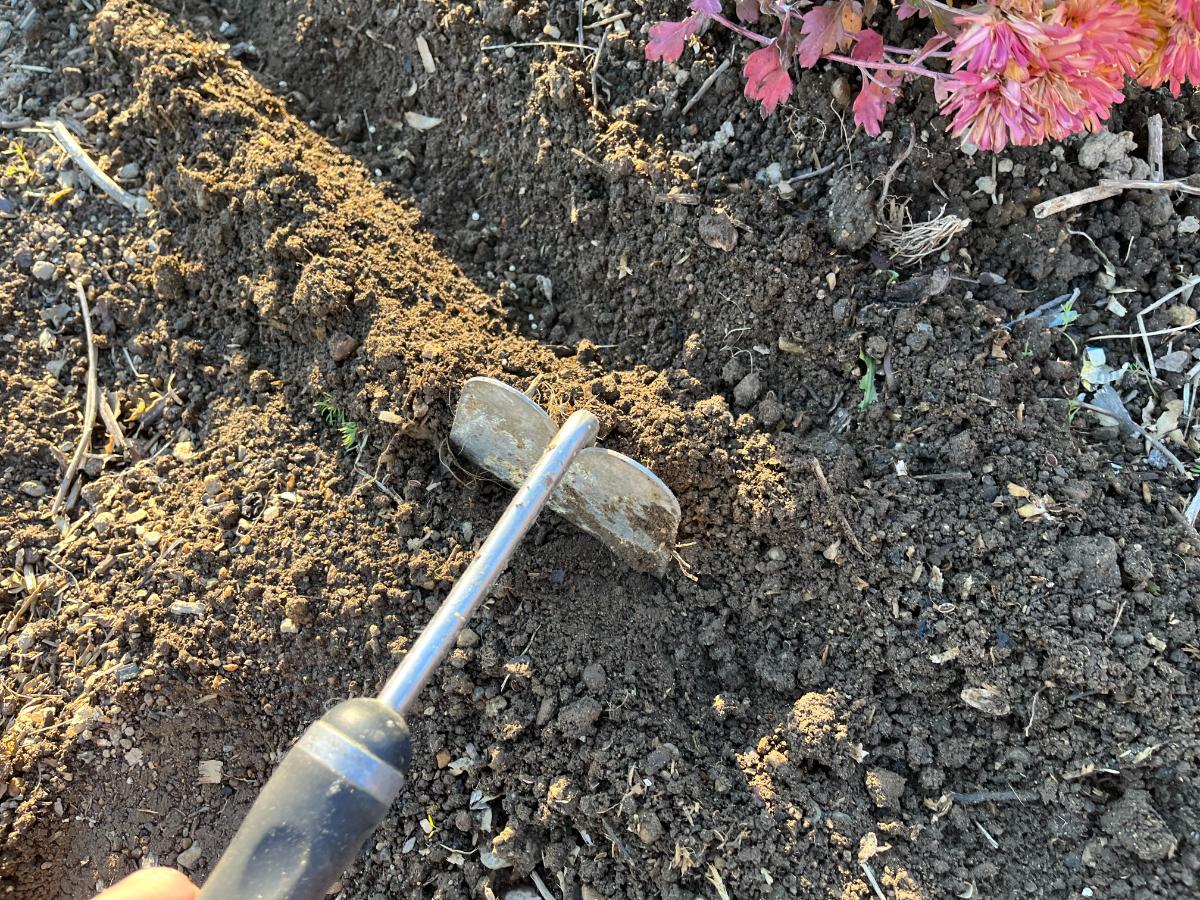
There are different ways to apply rabbit manure to garden soil.
- Apply manure heavily in the fall and till it in so it is ready in the spring
- Apply over garden soils throughout the winter (or other seasons) and work it in or plant through in the spring
- Apply as a top dressing or side dressing throughout the growing season
- Use as a mulch (a good way to use manure that has shavings or bedding in it, and sun and water will break it down and leach into the soil over time
- If you need to build up the tilth and structure of your soil, it is best to till the manure into the soil so that it can mix together with the soil components you are trying to build up
Rabbit manure is easy to use in the garden. Basically, you are going to spread it evenly in a single layer over the soil, tossing it so that some space falls between the pellets. If it is mixed with shavings and other materials, they typically distribute the pellets well.
If you have soil testing done, such as through a university extension service, the testing service should be able to help you determine the rate of application for different crops (usually in pounds per square foot or per acre).
You can apply rabbit manure directly on the garden while plants are growing, or you can apply it before planting. You can till it in or not, or scratch it lightly into the top of the soil if you are top dressing or using a no-till gardening method.
Manure can also be composted first and then used in any of the ways listed above.
VIDEO: Frequently Asked Questions + Rabbit Urine in the Garden
Recommended Best Practices for Food and Produce Safety
Rabbit manure is safer than most other livestock manures because it does not carry as many parasites and cross-species pathogens, but there is still some risk of using manure and spreading pathogens, etc., to fresh foods. E coli, Campylobacter, and Listeria are a few of the potential pathogens that can cause illness in humans, and that can come from soil or manure.
So, depending on what, when, and how you are applying the manure as fertilizer, and on what you are growing and how you are preparing and eating it, there could be some safety concerns, as there would be with any type of manure.
There are recommended best practices when it comes to using manure, such as rabbit manure, on an edible crop. The concern is higher for produce with edible portions that grow in or touch the ground.
To reduce the risk, time your applications according to safe production protocols. Stop application for a time leading up to harvest, especially for root crops and fruits and vegetables like strawberries that may come into contact with the ground.
Stop applying rabbit manure for the following time period before harvesting your produce:
- 120 days for root vegetables and low-growing produce that comes in contact with the manured ground
- 90 days for other types of produce
- Wash all produce before eating, especially raw
- None of these is an issue if you cook the food
Rabbit Manure with Other Materials In It (Bedding, etc.)
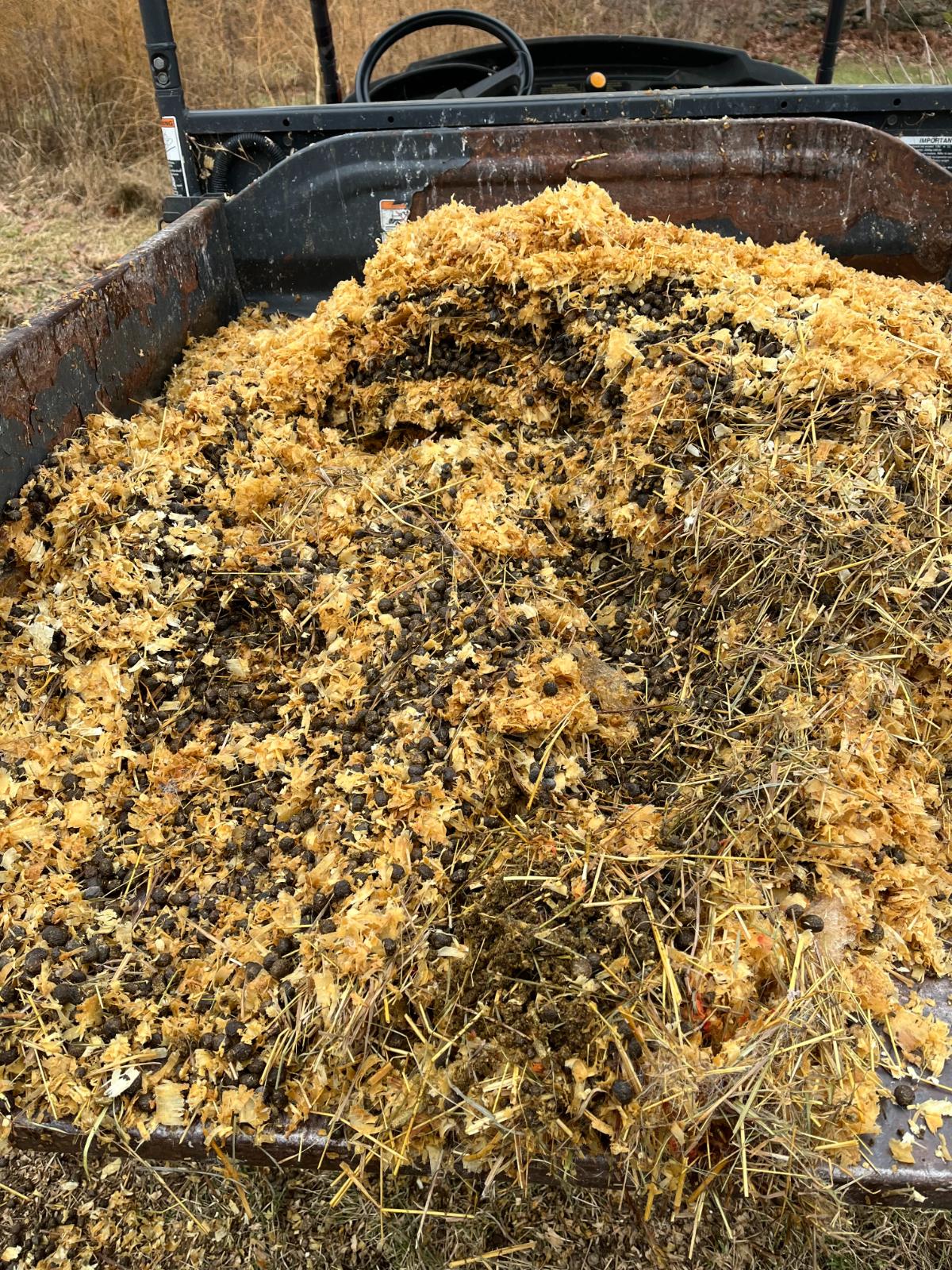
Depending on your setup, you may have other materials in your rabbit manure. The most common among these would be shavings or other types of bedding.
Most of these are safe to use in the garden, and shavings and bedding can also lend to soil texture, structure, moisture-holding ability, and more.
While it is true that wood products like shavings use nitrogen when they break down, this typically balances out, so it is not much of an issue with rabbit waste.
The reason for this is that nitrogen in rabbit manure is high to begin with. So there is usually enough to go around.
Further, the wood products do not strip the nitrogen; they just borrow it as microbes break down the materials. It then returns to the soil.
Rabbit fur is also a good organic material and a beneficial product for soil.
Hay refuse would only be an issue if you are concerned with seed growing into grass in your garden. Composting is a way to overcome this. Hot compost piles kill seed viability.
Feeding hay in these homemade hay racks outside the cage tends to drop the seed on the floor, where it can be swept and discarded elsewhere.
If you use other products, such as lime, you’ll want to consider what impact that might have on your soil and growing. This would be primarily a pH issue. Testing manure or compost can tell you if there might be an imbalance in the manure or compost.
If you use some other sort of bedding or product, such as odor-absorbing pellets, you’ll want to read the label to see if it lists any cautions or concerns related to plant or food growing.
Cautions and Other Things to Know About Using Rabbit Manure in the Garden
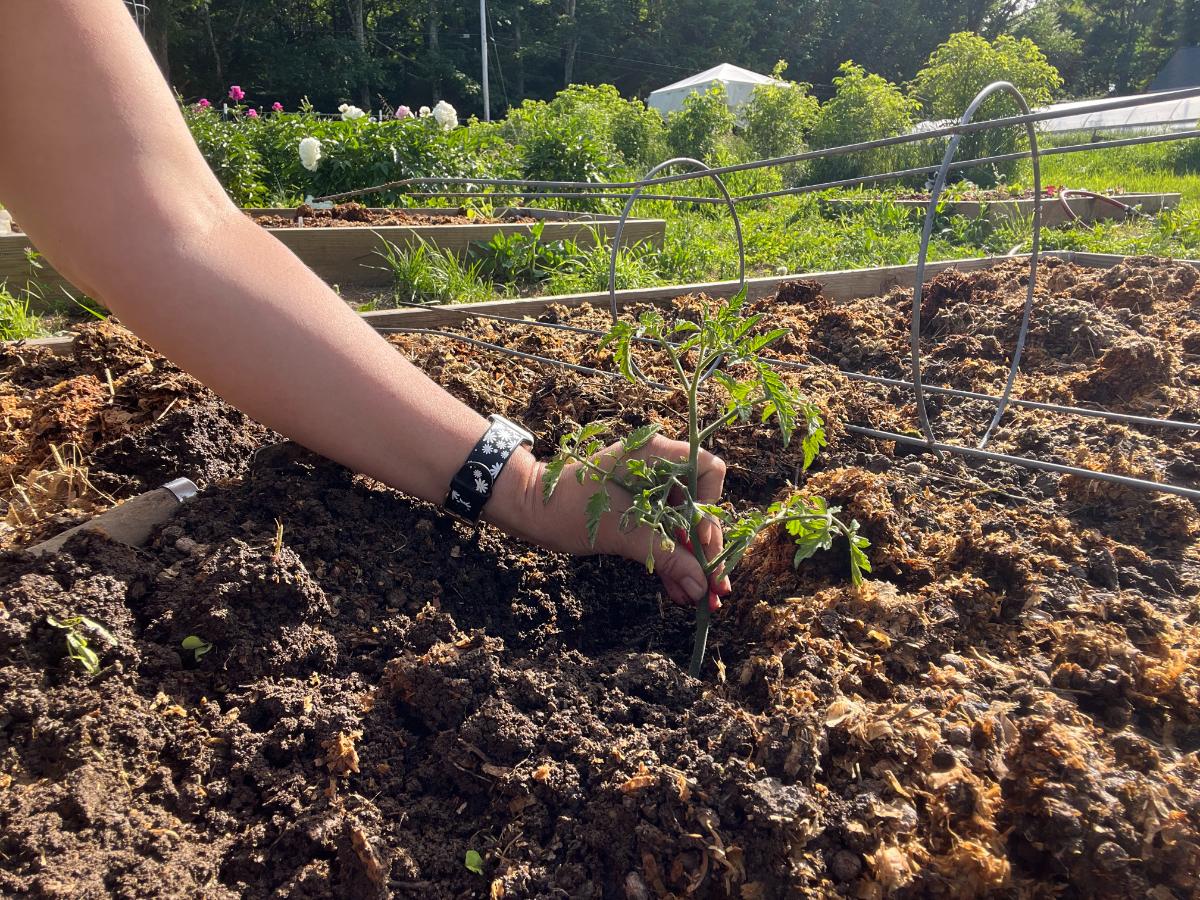
There are a few risks or cautions associated with using rabbit manure as a yard or garden fertilizer. Because it can be applied straight to soil, burning is of little concern. It’s probably overstating things to say there are “risks” involved with fertilizing with rabbit manure, but there are some things to be aware of for the highest level of food safety and plant safety.
- Rabbit manure that is applied to soil at any time ahead of planting is of no real concern
- One of the only concerns about using rabbit manure straight on the garden is that if the manure pellets are mixed with urine, the concentrated urine can sometimes burn plants or their roots
- This is not usually a problem as long as you do not pile the manure up against the base or stem of the plant
- It is more likely to be a spotty or sporadic problem where a plant ends up with a high dose of strong urine
There are some ways to avoid burning plants with urine and still be able to apply the rabbit manure directly to the plants or the garden.
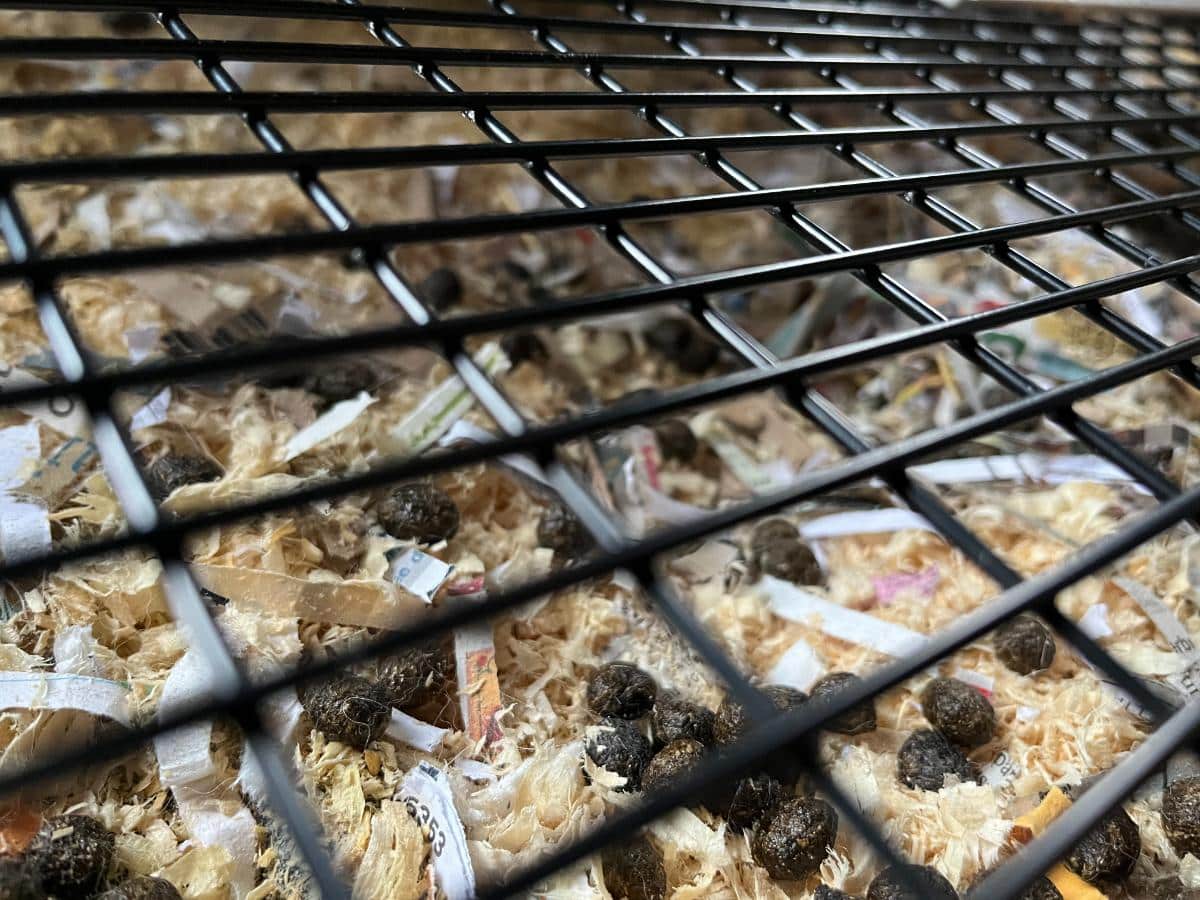
- Separate urine from manure solids by using a screen or sieve system under cages
- Pile the manure to the side for a few days, weeks, or until you’re ready to use it
- Allow manure to dry before applying -- the urea (nitrogen) from the urine will have dissipated to a large degree, and will no longer be strong enough to burn the plants
- Mix the manure around before applying to your plants (“stir” it with your fork or shovel); the problem with manure is that rabbits tend to do their bathrooming in basically one spot, so that waste can get a concentrated dose of urine; mixing it up before applying spreads the urine out better
- Water down waste before applying, which dilutes and redistributes the urine in the waste
- Spread the manure, but then water the soil immediately after spreading, before it has a chance to burn your plants
- Manure that is mixed with shavings or bedding often has the urine already diluted enough as it is absorbed in the materials. However, it can sometimes become concentrated in one spot, as mentioned above -- mixing or diluting with water is helpful if you find this to be a problem
- Tender green-stemmed plants and leafy plants are more susceptible to burn than woody-stemmed plants, bushes, and trees
Aging or Composting Rabbit Manure before Plant Application
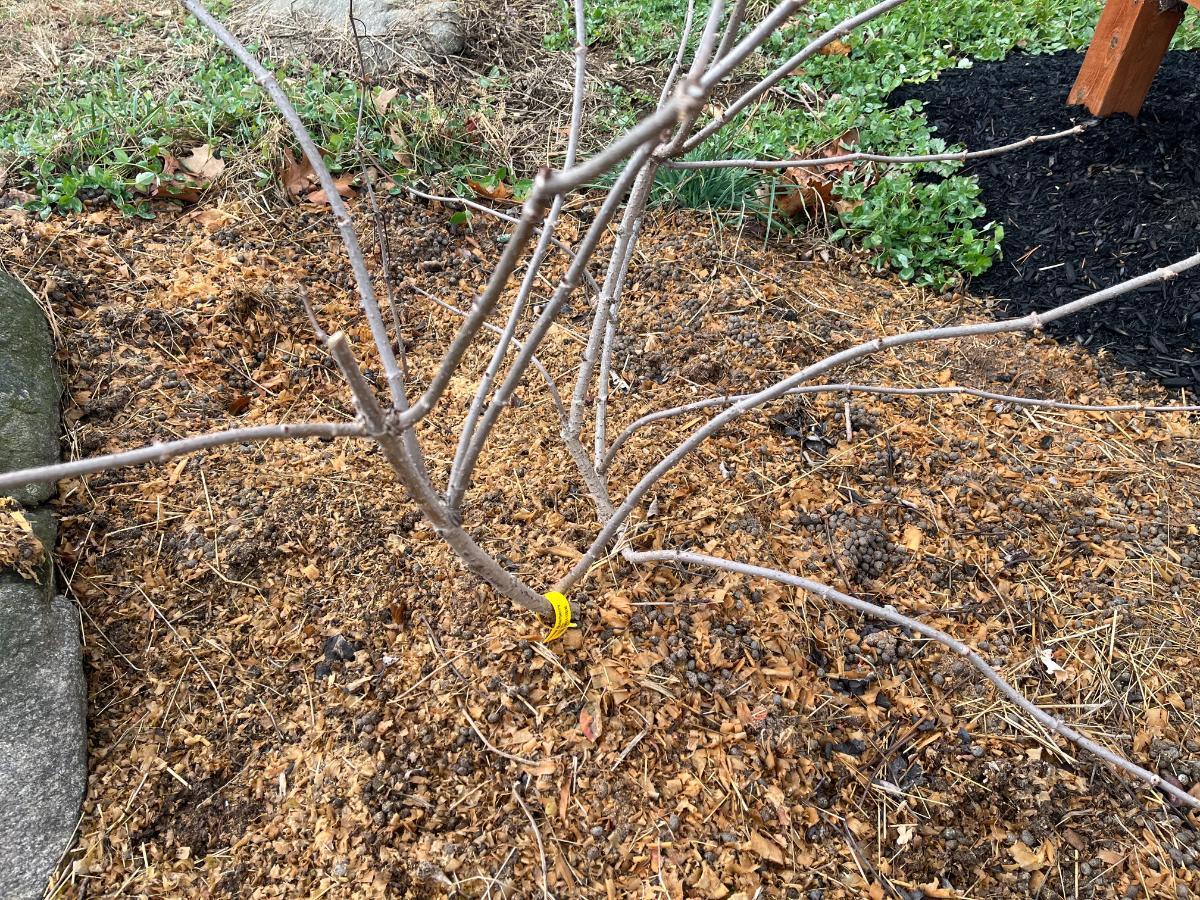
Urine burn is a non-issue if you compost or age the rabbit manure first. This is not necessary, but it does overcome the issue of urine burning the plants.
For this reason, composting your rabbit manure is not a bad idea. Rabbit manure and waste are excellent fuel and nutrient sources for a compost pile, too. If you are using shavings or bedding in your rabbitry, the waste is basically balanced on its own, without having to worry too much about adding either “green” or “brown” materials to the compost pile.
The other reason that composting rabbit manure and waste before applying it to your garden is helpful is that it overcomes the concerns surrounding produce/food safety. Hot composted rabbit manure compost should be about as safe as manure fertilizer can get, and could be used closer to harvest time.
Finally, if you feed hay in your rabbitry, hot composting the waste will kill the viable seed in the pile. That is, if it is properly hot composted at a high enough temperature and for long enough, and if it is turned regularly so that all the parts of the pile are exposed to the high heat.
This will help keep your plantings more weed-free, since your rabbitry waste is bound to have some hay or grass seed in it if you are feeding hay, even in hay racks (and possibly other plants, herbs, and weeds if you feed other fresh foods and forages).
Recommendations for a “safe” hot compost are sustained temperatures between 131 and 140 Fahrenheit (55 to 60 Celcius)for several weeks.
Reading, Resources, and Where to Look for More Information on Rabbit Manure as Garden Fertilizer
- Rise and Shine Rabbitry. The Benefits and Uses of Rabbit Manure.
- Fine Gardening. Rabbit Manure in the Garden.
- Meat Rabbits. How to Make A Good, Cheap Hay Rack for Rabbit Cages.
- Utah State University Extension. How Much Manure Will My Animals Produce?
- PubMed Central (PMC). Rabbit manure compost as a peat substitute for compound growing media: Proportioning optimization according to physiochemical characteristics and seedling effects.
- National Gardening Association. Rabbits for Gardeners.
- The Dispatch. Davidson County Farmers’ Rabbit Manure Fertilizer Earns USDA Certified Biobased Product Label.
- Oregon State University Extension Service. Turn Livestock Manure into Rich Compost for Your Garden.
- Utah State University Extension. Sustainable Manure and Compost Application: Garden and Micro Farm Guidelines.
- University of New Hampshire Extension. Guidelines for Using Animal Manures and Manure-Based Composts in the Garden.
- Michigan State University Extension. Manure Management Index.
- Dakota Master Gardeners. Manure – A Cautionary Tale.
- Hachette Book Group. Gardening with What Rabbits Leave Behind.
- Dave’s Garden. Rabbit Droppings.
- North Texas Vegetable Gardeners Forum. Why Rabbit Manure is an Ideal Fertilizer for Native Soil in the DFW Area.
- David’s Garden Seeds. Rabbit Manure Makes a Great Garden Fertilizer.
- The Easy Garden. Gardening with Rabbit Manure.
- National Gardening Association. Rabbit Manure – Knowledgebase Question.
- Cox Homestead. How I Collect, Sell, and Use Rabbit Manure.
Leave a Reply