
Part of helping people learn to raise meat rabbits is helping them get familiar with how to use the meat.

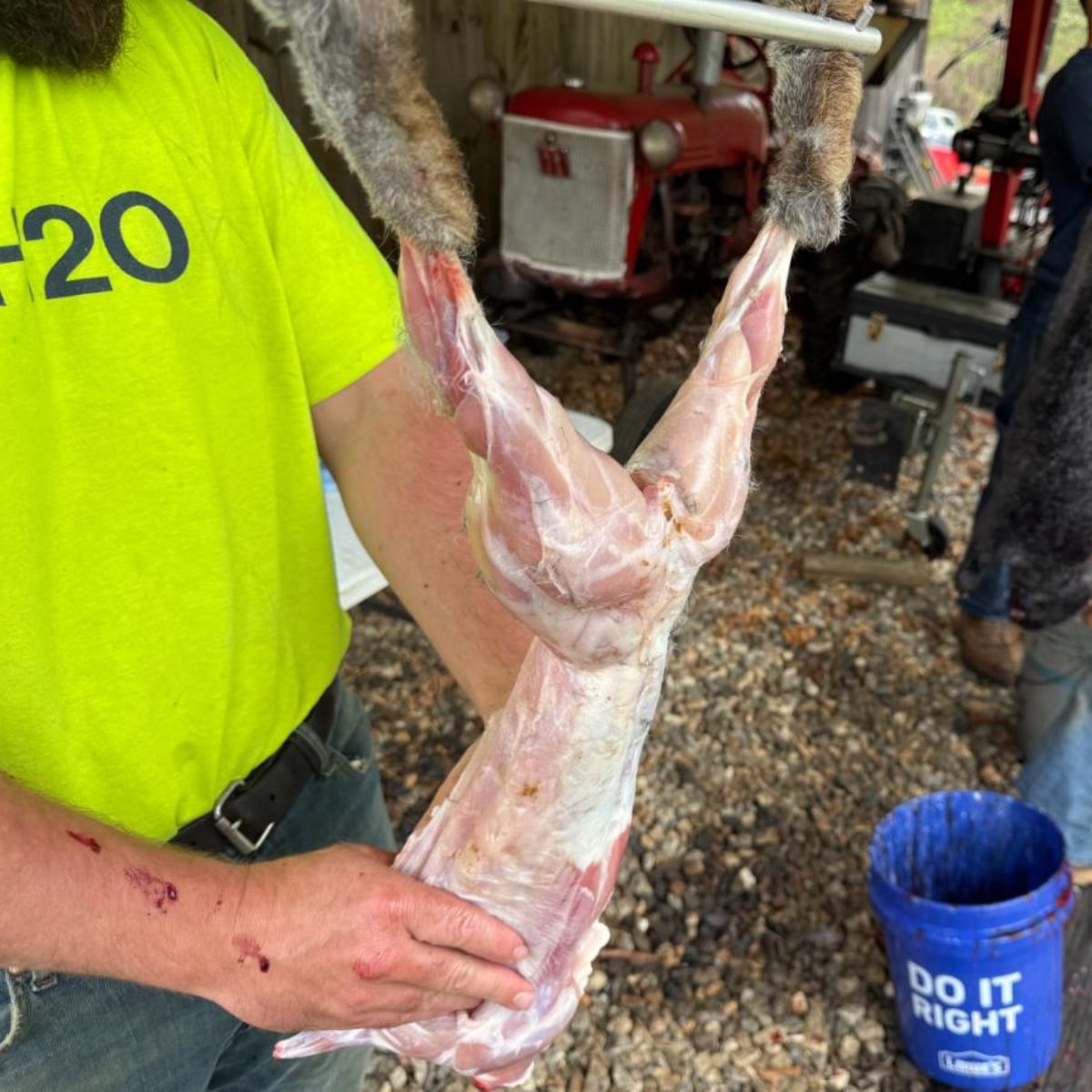
Yes, whole rabbits are delicious and can be roasted and used in a variety of ways. But you’ll get better use of your rabbit meat if you can break it down and butcher it into some useful cuts that are fast and easy to grab – just like the cuts of meat we are used to using from other animals.
Jump to:
Just Like Chicken
I liken it to chicken (as we so often do with meat rabbits). Yes, you love whole chicken, but using whole chickens requires preplanning and thawing. It takes longer to cook a whole chicken.
A whole chicken can really only be prepared in so many ways – which are basically the same.
And you only want to eat so many whole chickens in a month.
Chicken parts, on the other hand, can easily be made into an almost endless array of dishes.
It’s the same with rabbit meat!
If you only eat whole rabbits, you might only use it once a week at best.
But if you have a variety of cuts that you can turn into a variety of dishes with almost endless possibilities, then you’re much more likely to make rabbit meat a regular ingredient on your table.
My “Go-To” Rabbit Meat Cuts

To that end, I thought it might be helpful to give you a look at some of the grinds and cuts that I make with our harvested homegrown rabbit meat. There are so many more possibilities than just parts or whole rabbits!
Here’s a look at the cuts and types of meat I make when I process our rabbits:
Ground Rabbit

The beauty of making ground rabbit meat is that it doesn’t matter how good or how neat of a butcher you are when you cut up your rabbit. It’s all getting ground up anyway.
Grinding also makes it more palatable to use up tougher parts of the rabbit or to use old rabbits, failed breeders that are older than 16 to 20 weeks, retired does, etc.
Ground rabbit can be used anywhere you’d use any other type of ground meat – burgers, patties, casseroles, pasta...just anywhere.
Usually, when I am cutting and processing rabbits, I set aside certain parts to use for trim for grinds and sausage and make some of my favorite sections into other cuts for different dishes and uses.
So, for example, I might save the boneless loins for tender chunks and stew meat, save the belly flaps for cutlets (or sometimes they go into grind or trim, depending on how much I want), cut away the large chunk of thigh muscle, and then just cut up the thin meat over the ribs and saddle, and whatever other trim remains. Then I set that aside for trim for making grinds.
Here’s a bit more on boning out and grinding rabbit meat: How to Grind Rabbit Meat + Tips for Boning and Grinding
Belly Flap Cutlets

People will often just grind the belly flaps, which is perfectly fine, but I do love cutlets of any kind, so I cut them off and make a stack of cutlet meat.
Belly flaps are extremely easy to remove – you just cut this boneless flap away by following the top attachment near the spine and along the side at the rib cage. It’s an obvious cut when you get into it. (It’s a bit harder to explain in writing.)
Though I’ve never done it, some people do make rabbit bacon with this cut. Some make rabbit jerky, too!
Chunked Meat/Stew Meat

I hesitate to call this cut “stew meat” because to me, that usually indicates a tough cut of meat that has to be cooked slow. Rabbits that are harvested at 16 weeks or under aren’t that tough on any part of the body, really (not in my experience).
I’ve even cut up rabbits older than that, 20 weeks or more, and they’ve still been plenty tender to me.
What I’m talking about here is cutting larger portions of rabbit meat into one- or two-inch chunks of meat that can be used anywhere you would want that sort of a cut.
Stewing and pot pies are an obvious choice, but I also use cuts like this for things like rabbit nuggets (“ruggets”, my kids who are really adults would say – we believe in not taking ourselves too seriously!).
Stir-fried meat is another good option. For that, you could also use thinner cuts from the back and ribs and cut it into strips
Cuts that I’ll often use to make my stew meat are the loins because they have good size when deboned; I also use the large cuts off the back legs and thigh meat – also big enough to do the job, but a bit tougher than the loin meat.
Optional: and/or kebob meat
Depending on what I think I might want to cook in the not-too-distant future and the time of year, I might like larger chunks of meat to marinate and make into skewers or kebobs.
Cutting these is basically the same as cutting stew meat. Just cut the hunks into larger pieces that work better for skewers and kebabs.
Sausage

If the recipe section didn’t give you an idea, we love rabbit sausage around here.
Rabbit meat blends and melds with spices and flavorings exceedingly well. It makes such a delicious sausage. It is light and lean and has good moisture despite its lack of fat (though you can mix in pork fat or another fat if you prefer).
To me, it’s a cleaner-tasting sausage because it is so lean.
A few times a year, I make as much sausage as I can. But it never lasts long enough.
You can link the rabbit sausage, package it for loose crumble, or make patties. It’s all delicious!
Some of our favorite flavors of rabbit sausage are
- Red Wine Garlic Rabbit Sausage
- Sweet Italian Rabbit Sausage
- Hot Italian Rabbit Sausage
- Garlic Pesto Rabbit Sausage
- Rabbit Bratwurst
Please don’t ask me to choose just one, though!
Rabbit “Wings”
The front legs of the rabbit aren’t usually worth the time to trim out. There’s a little meat there, but I find it is just as quick, easy, and useful to just cut the front legs off, separate the front arm shank (and throw that into the stock pot), then use the meatier upper portion for rabbit “wings”.
They’re just like chicken wings. Roast them off and flavor with your favorite spices, rub, or sauce – and then eat off the bone with mess fingers and plenty of napkins.
These will get set aside as a cut and then bagged in one or two bulk bags.
Stock Bones

All this cutting and deboning will leave you with spine, ribs, and leg bones.
Don’t let these go to waste!
Roast these in the oven until they are nicely browned, then put them in the stock pot with some salt, pepper, herbs, spices, and vegetables, and you’ll have one of the most flavorful and healthful bone broths.
If you don’t need all of what you cook now, pour the cooled stock into plastic deli containers and freeze it (leave an inch of headspace).
You could also pressure can the stock according to chicken stock directions for a shelf-stable canned broth.
If you don’t have time to make the broth when you butcher your rabbits, it’s fine to freeze the bones for future broth.
Other Cuts to Consider

I’ve listed above the cuts that I like the best and find most useful and versatile. I don’t cut a lot of rabbits into pieces like legs and saddle for bone-in cooking, but lots of people do, and you might like to, too.
It’s not that it’s a bad way to go, it’s just that it’s not what we eat most frequently here. Similarly, we don’t do a lot of chicken legs and parts, either.
Here are some other cuts of rabbit that you might want to consider when you’re breaking down and filling your freezer:

- Parts and pieces, including legs, thighs, saddle
- Loins
- Whole Boneless Rabbit – there is actually a way in which you can debone the whole rabbit in one piece. It’s a little tricky because you have to cut and follow through some thin places over the top of the spine, but even as an amateur I’ve done it with the guidance of this great video. Then, you can stuff, roll, cut into stew meat or strips, etc.
A Few of My Favorite Things to Make with Rabbit Meat

The reason I take the time to break down, butcher, and process my rabbit meat into these cuts is so that I have something quick and easy on hand to use, ready for a wide variety of dishes.
I find that we use more rabbit meat and make better use of it if I have cuts prepped and ready to grab and go to turn into a meal.
What types of meals?
So many!
But here are some of our favorite dishes made with rabbit meat cuts and ground rabbit meat:
- Rabbit Chili
- Rabbit Tacos (affectionately called “Racos” in my house)
- Rabbit Sausage dishes
- Lasagna
- Pasta tossed with sun dried tomato, sliced rabbit sausage, parmesan cheese, and seasonal vegetables (so fast, easy, and delicious!)
- Rabbit Cutlets
- Rabbit Nuggets
- Quesadillas
- Taco-flavored rabbit rice wraps (made with ground rabbit and cheese, served quickly and easily in a wrap, sometimes with sweet potato and black beans included – serves a lot of people quickly and easily!)
- Rabbit sausage in tomato or marinara sauce served with pasta
- Stew
- Meatballs
- Stir fry
- Sausage with cheese tortellini
- Rabbit Pot Pie
- Rabbit and cheese tortellini soup made with rabbit bone broth
- Rabbit Cesar salad
That may be more than a few, but I hope this gives you the picture.
Rabbit meat, when prepared into grinds and cuts, offers a world of possibilities. It is quite easy to make rabbit meat a staple in your freezer and in your cooking when you open yourself up to the possibilities.
What About “Rabbit Starvation”?

Without getting into this too deeply, yes, rabbit starvation can be a thing. However, it is not really a thing that people living and cooking in modern society, especially modern American and North American society, need to be worried about.
So-called rabbit starvation, which is really protein poisoning and can happen any time a person subsists almost exclusively on lean protein without enough carbohydrates or fat in their diet, is not an issue for people who eat a balanced diet.
Even if you ate only rabbit for all your meat sources, if you’re getting carbohydrates and fat from other sources, it’s still not an issue.
This is something that is more of an issue in the case of a survival diet.
Most of us raising meat rabbits eat a variety of meats and foods, even if we eat mostly rabbit meat. But when you mix in fats and carbohydrates from a variety of sources, there’s no cause for alarm.
Just think about some of the other things you eat in your life. Bread, butter, fat from oils, rice, pasta, cheeses, vegetables, potatoes, cereals, yogurt, milk...
This is just a brainstorm off the top of the head but suffice it to say, there’s plenty of variety there for protein starvation to not be a real issue in the modern kitchen.
Now, look back at my list of some of our “favorite things”. Can you see how there’s plenty to balance things out?
Learn a bit about protein poisoning, realize it’s more than just rabbit meat that could potentially cause it, mix up your meals with some other good homegrown or locally sourced quality meats, and don’t worry about it. Unless you’re stuck in the woods someday with only wild rabbits for food.
So, be reasonable and balanced in your diet, and enjoy this healthy, sustainable, highly versatile, and delicious homegrown meat!



Susan Spivey
My question is Do you ever grind bones in the meat for dog consumption?
Mary Ward
Yes, I have done that. They grind surprisingly easily as long as you have a large enough grinder. A butcher recommended that I buy a 1HP grinder with a #22 neck. That can take a whole small rabbit or whole cut down into large pieces (bone in). This grinder from Waltons is what I bought and it works well for this:
https://waltons.com/waltons-22-meat-grinder/?srsltid=AfmBOopbZuT2g4E3-1z_WUiSPKEwSdW3iVUWR3YL_X_WT9Z8Zy7Iou28