
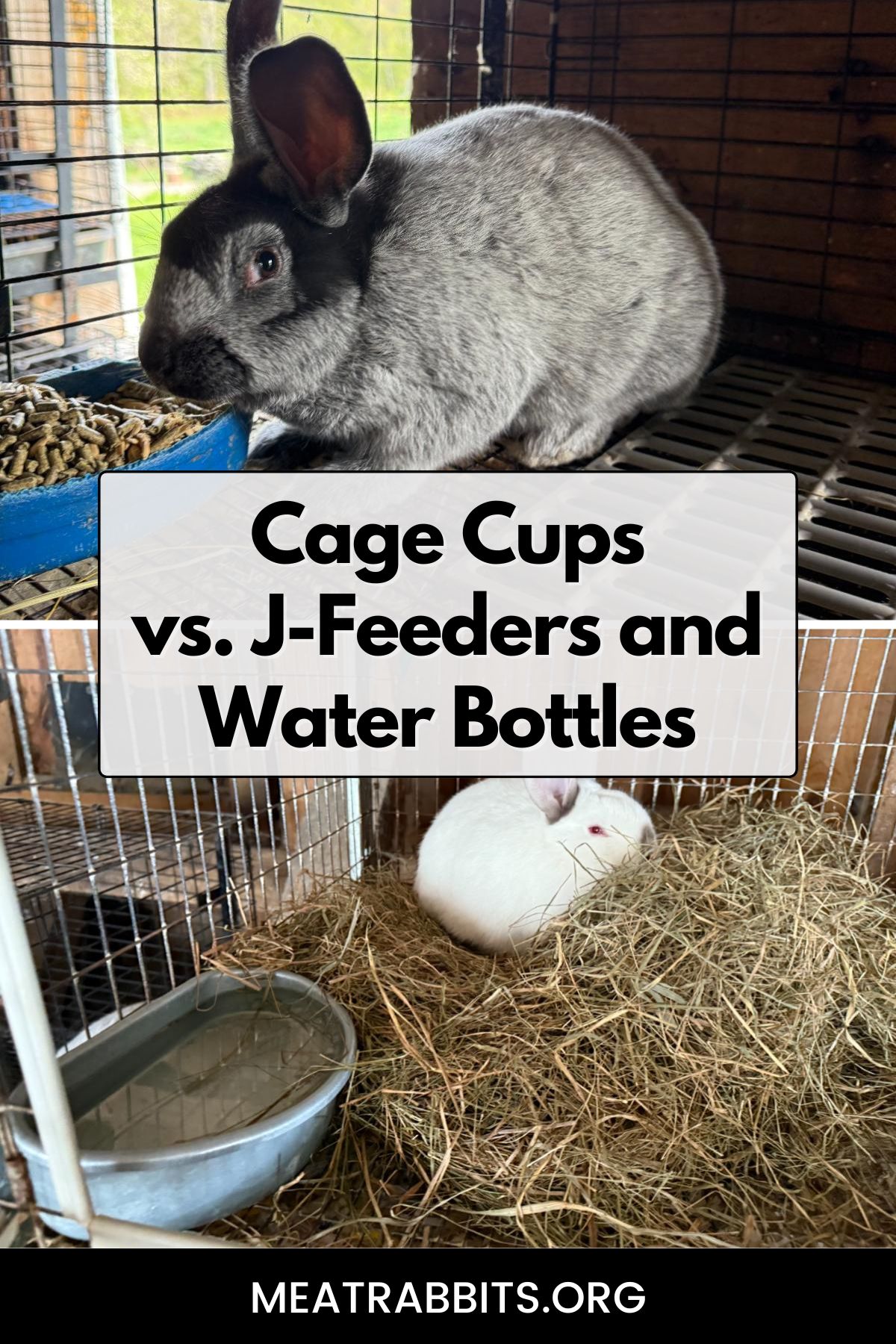
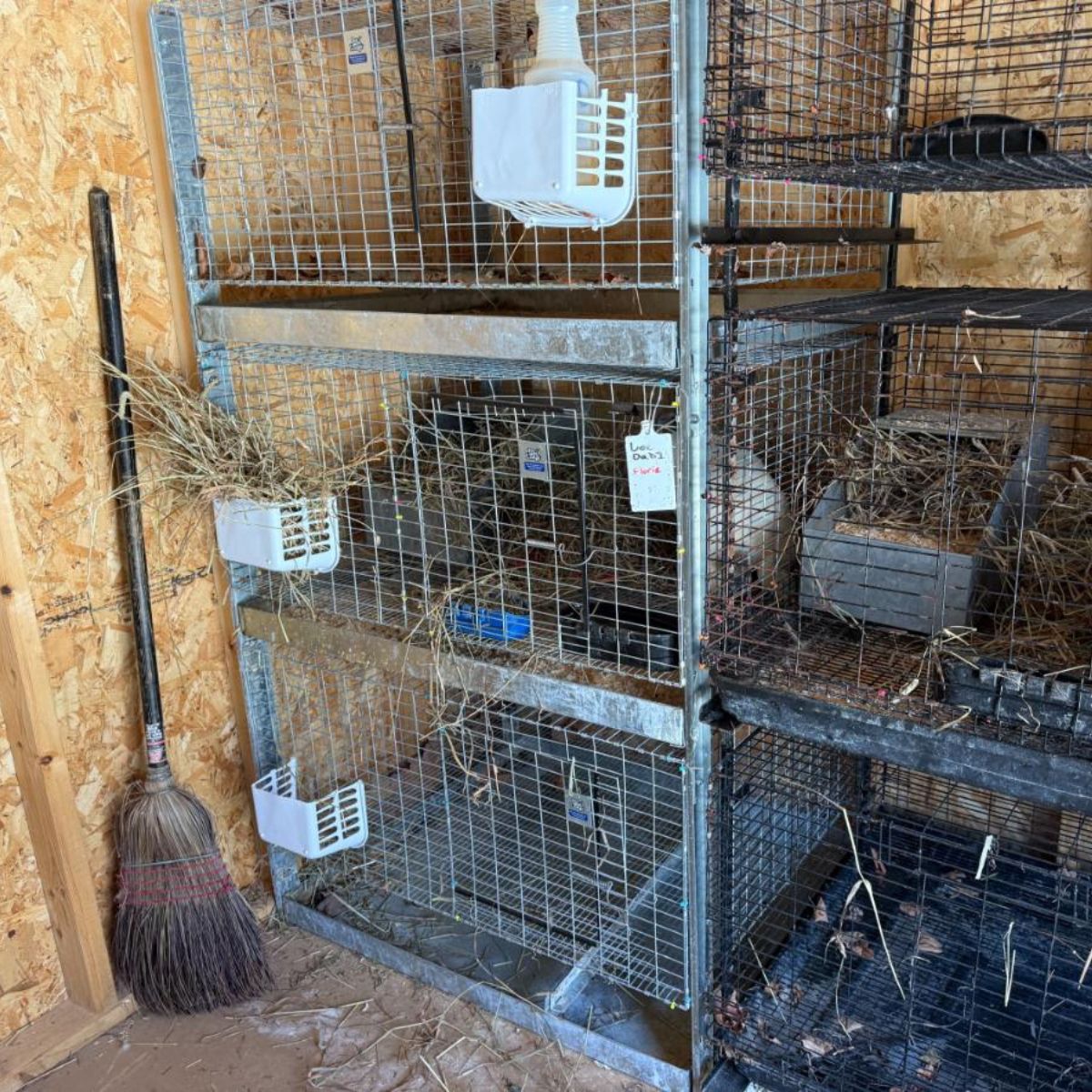
It will come as no surprise to anyone who has seen more than one or two of my meat rabbit barn pictures or any of the videos I’ve produced that my preferred equipment for feeding and watering in the cages is cage cups.
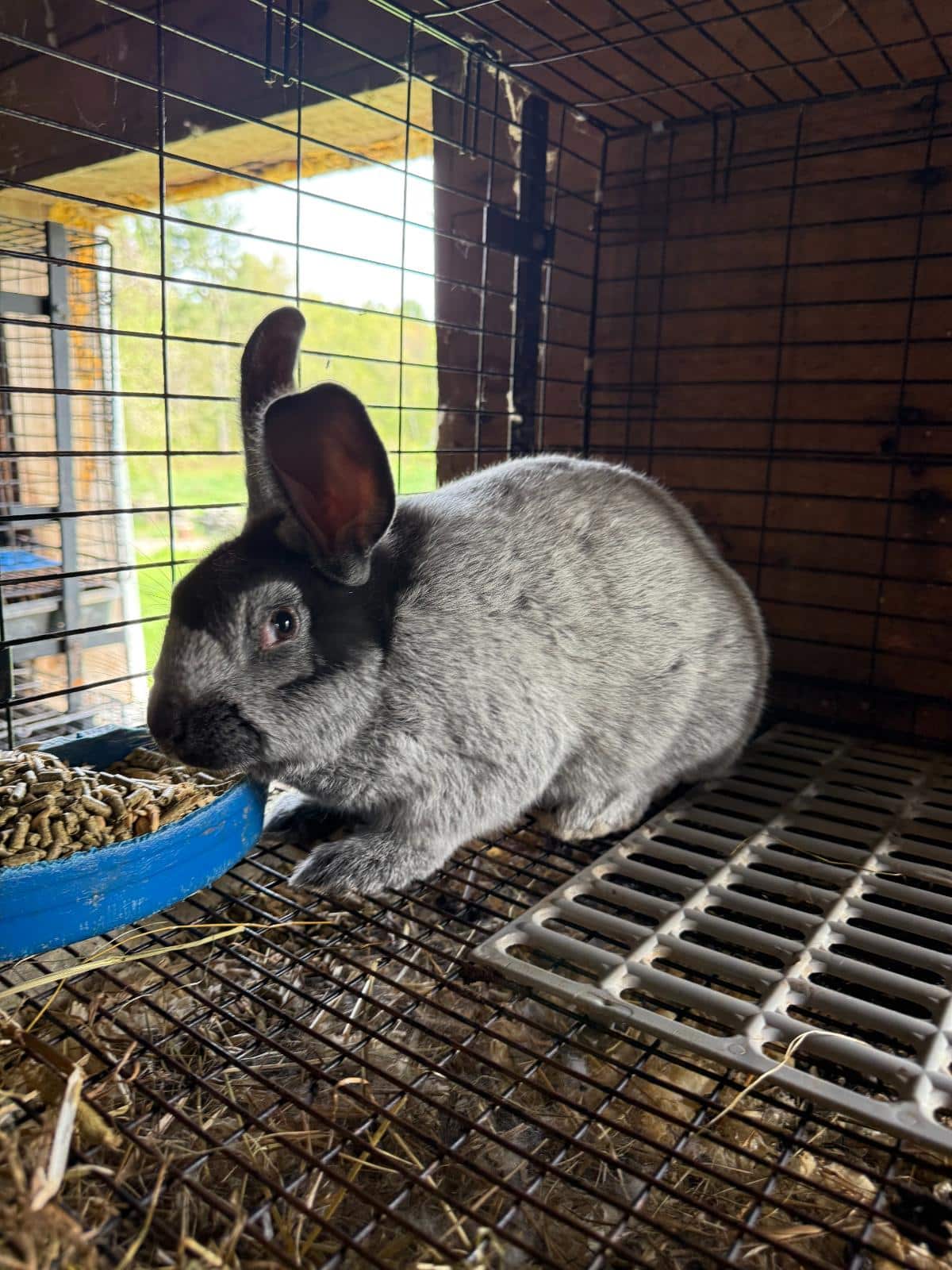
Though I’ve tried both bottles and J-feeders, there are some specific reasons why cage cups are my feeding and watering equipment of choice.
Jump to:
- Why I Prefer [And Recommend] Cage Cups for Meat Rabbits
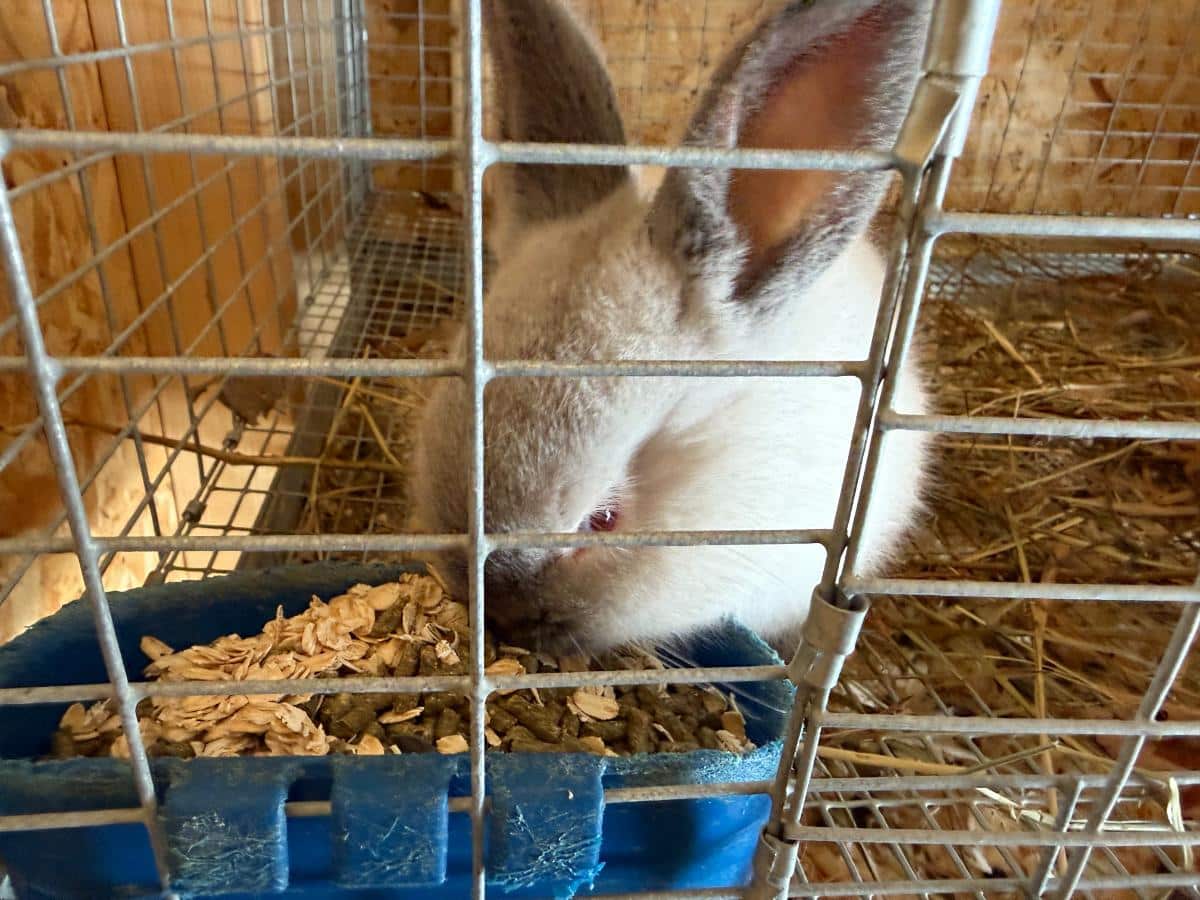
- Pros and Cons of Cage Cups for Feed (Pellets)
- VIDEO: How I Handle Watering in Winter with Cage Cups
- Pros and Cons of Cage Cups for Watering
- Buying Tips for Cage Cups
- Pros and Cons of J-Feeders (Pellet/Grain Feed)
- VIDEO: Here’s Why I Prefer Cage Cups for Feeding and Watering Meat Rabbits
- Pros and Cons of Water Bottles
- Other Feeding and Watering Equipment Options
- References and Further Reading:
Why I Prefer [And Recommend] Cage Cups for Meat Rabbits
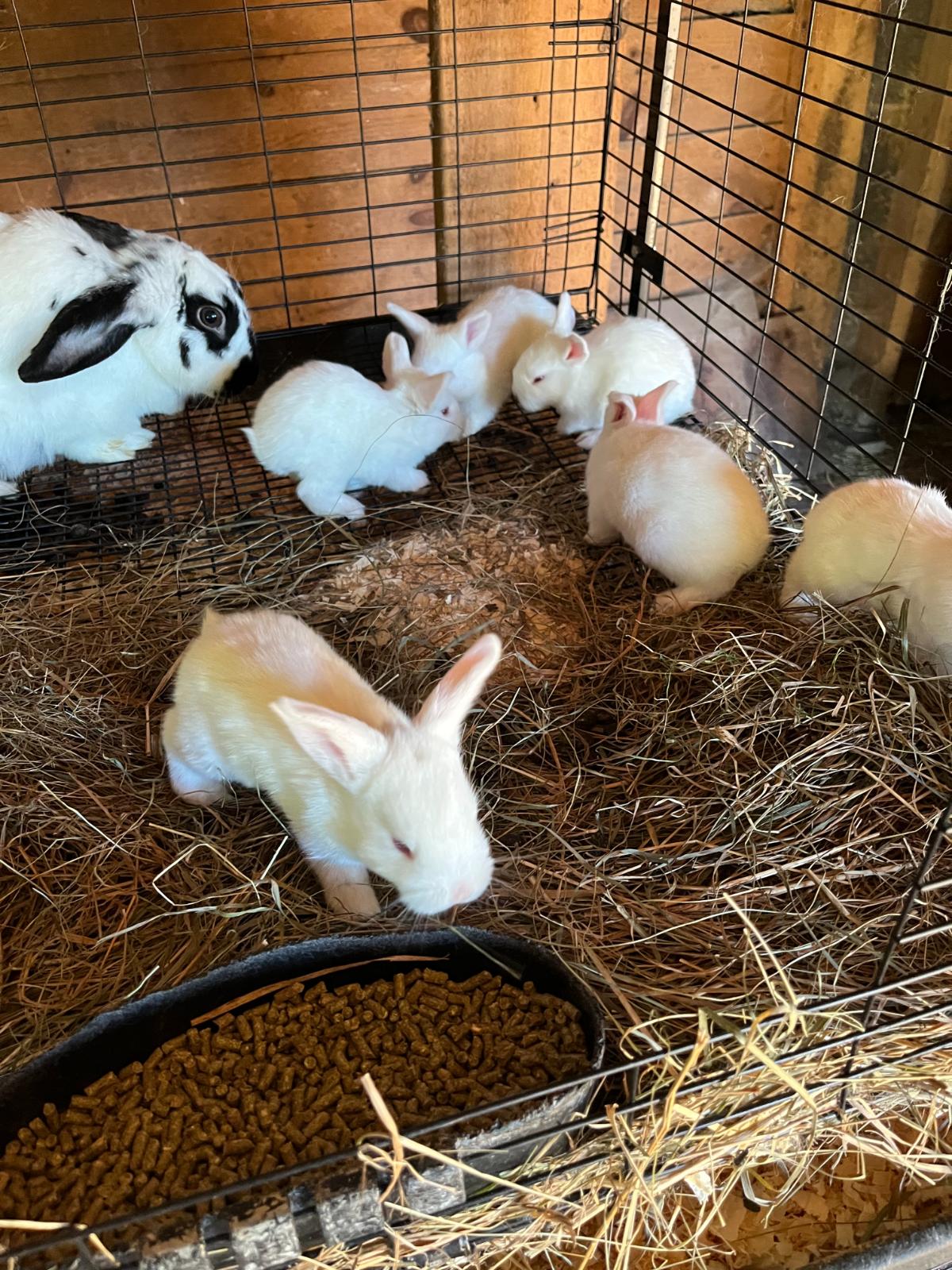
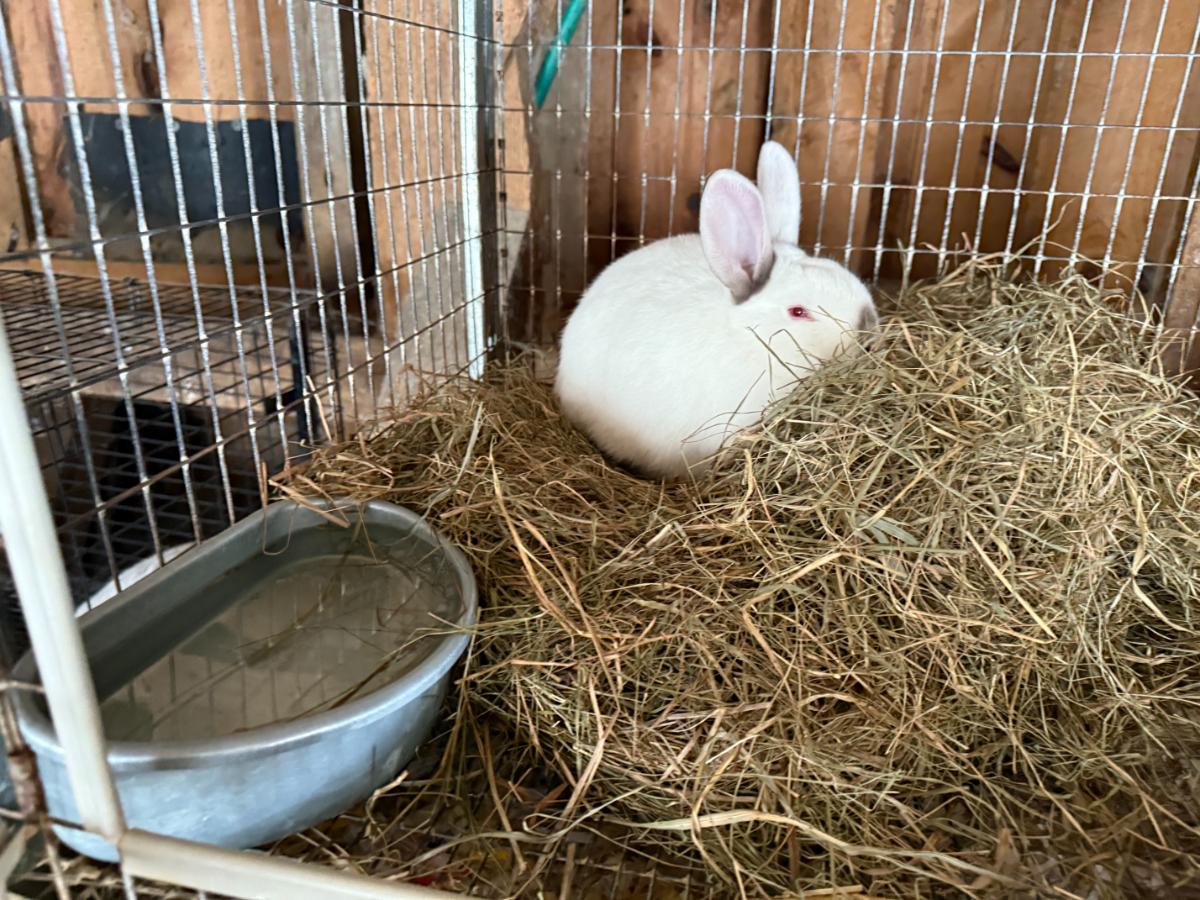
I prefer cage cups because feeding is fast and easy. Watering, at any time of year, is made simpler. You can pop ice out of the cups and refill, exchange empty cups for iced over cups, or dunk cups quickly in warm water in the winter to free them up to refill.
The cups last a long time, even with chewing, and are affordably priced, so even if you choose to keep a spare watering bowl for each cage, you can affordably do so.
Filling with either feed or water is fast in the open cups -- much faster than with water bottles that have to be opened and filled with a small spigot or sink faucet.
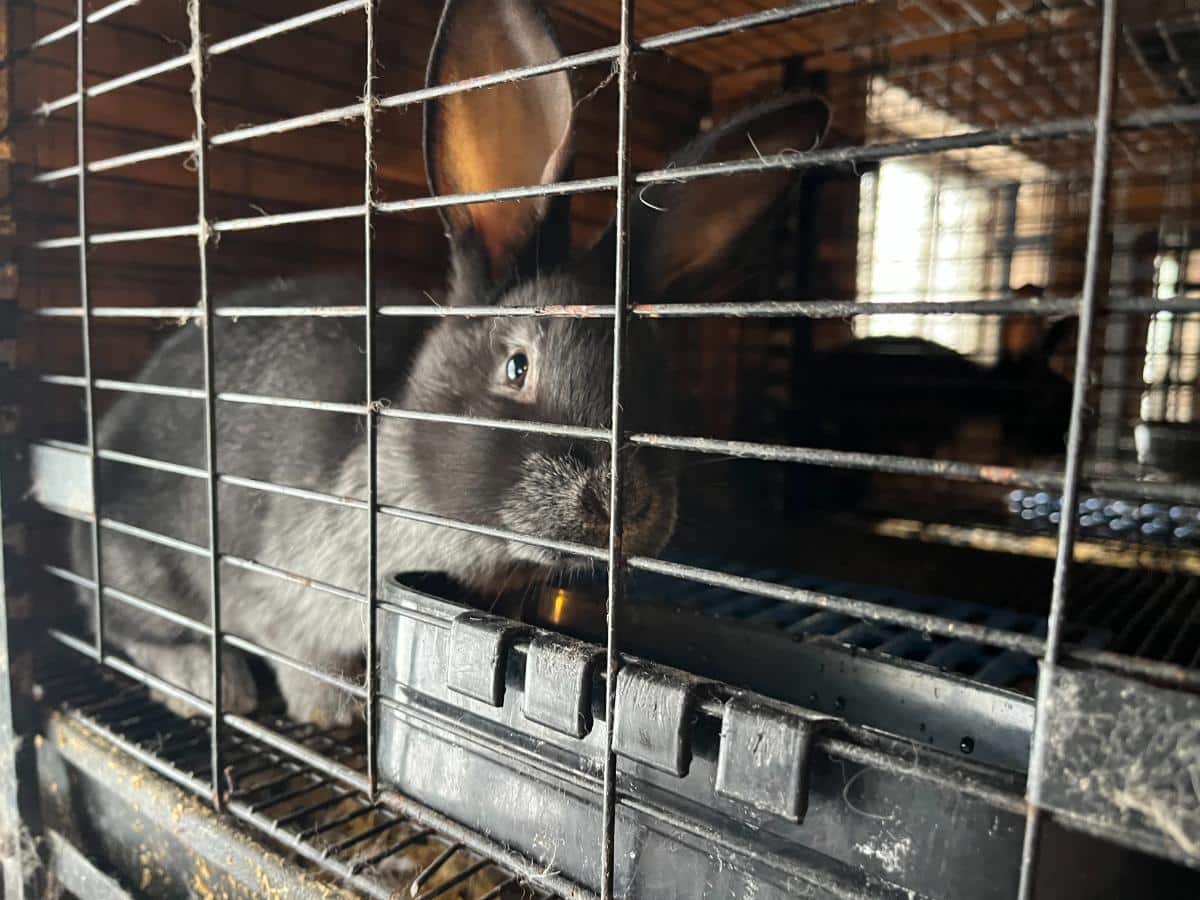
Some people will argue that bottles and J-feeders are simpler because you can go down the line and never have to open a cage door. While this is true, the time is minimal, and there are benefits to rabbits being used to you coming into their cages on a daily basis or more frequently.
As one breeder put it, this also helps to spot illnesses or lethargy sooner. You’re apt to know if a rabbit is acting not quite itself, telling you to look further.
Water bottles can have leaking problems and freeze quickly, especially at the nozzle. When they freeze, the water is completely inaccessible, unlike ice that can at least be licked.
J-feeders also come with installation and mounting concerns.
To properly install most J-feeders, you need to cut through the cage wire, which leaves a vulnerability in the cage. And there is a true risk of kits getting caught in the feeder trays or climbing up and out of the outside of the feeder, falling out of the cage, and often resulting in death.
Grown adult rabbits have also been known to work a feeder out of its mount and escape through the hole in the cage once it falls.
The J-feeder/water bottle combination is also a more costly investment, though quality units can last a long time, so that cost can sometimes even out.
For these and other reasons, J-feeders and water bottles are not my first choice for feeding my meat rabbits. Cage cups are, for me, a much more affordable and maintainable option.
Read below for a summary of points regarding cage cups versus J feeders.
Pros and Cons of Cage Cups for Feed (Pellets)
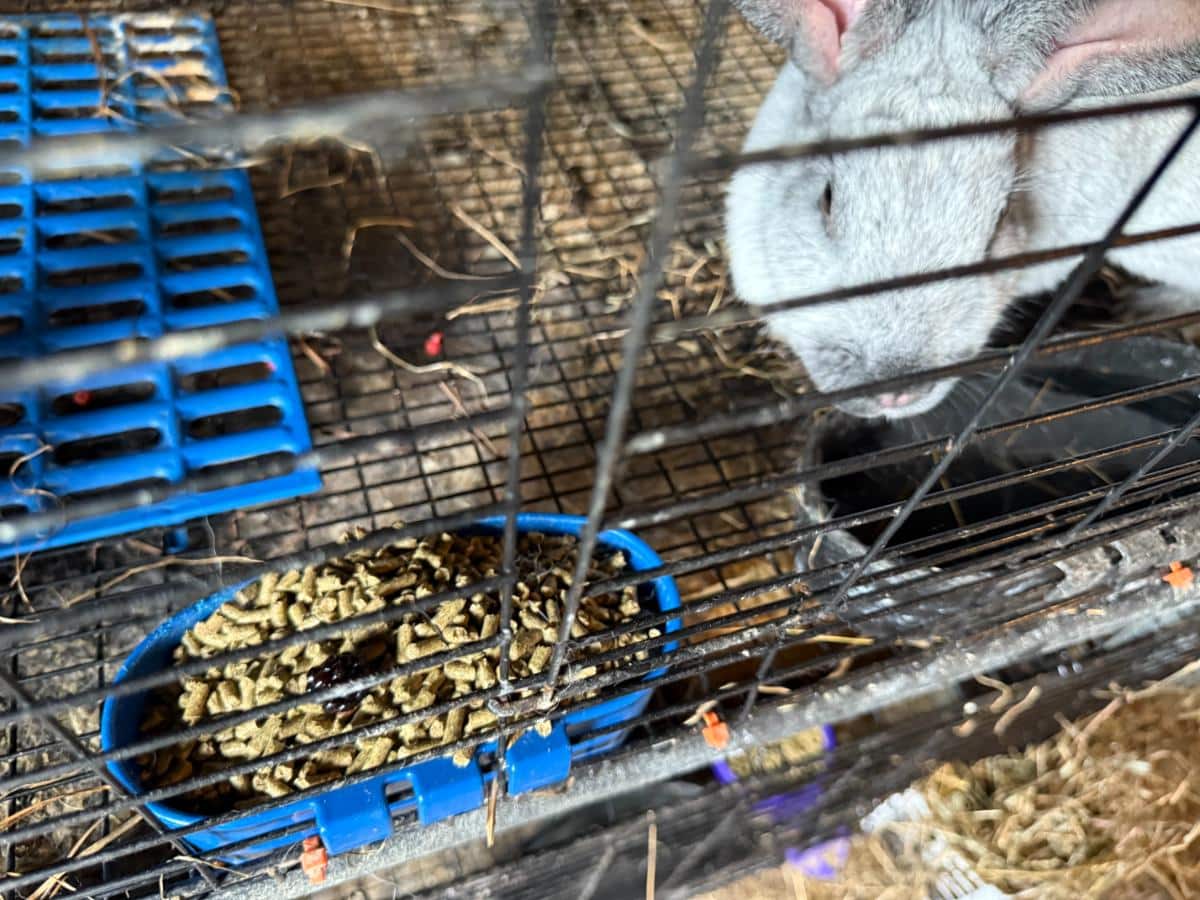
- Can get cups with tabs that clip over cage wire to hold them in place (this is what I use and recommend)
- Fast, easy feeding
- Easy to see if a rabbit is “off” its feed and not eating as much as it normally would
- Easy to dump out spoiled or caked pellets (particularly in summer and humidity)
- Do not screen the fine particles, as they are solid-bottom; however, there are some mesh-bottom cups coming onto the market
- Easier to control the amount of pellets each rabbit gets (by choosing an appropriate size)
- With the right-sized cups, just fill to know how many ounces you’re feeding
- Easy to manage in winter
- Easy to clean and disinfect
- Can be run through a household dishwasher
- Stackable, easy to store
VIDEO: How I Handle Watering in Winter with Cage Cups
Pros and Cons of Cage Cups for Watering
- Fast and easy to fill
- Fast and easy to dump and refresh
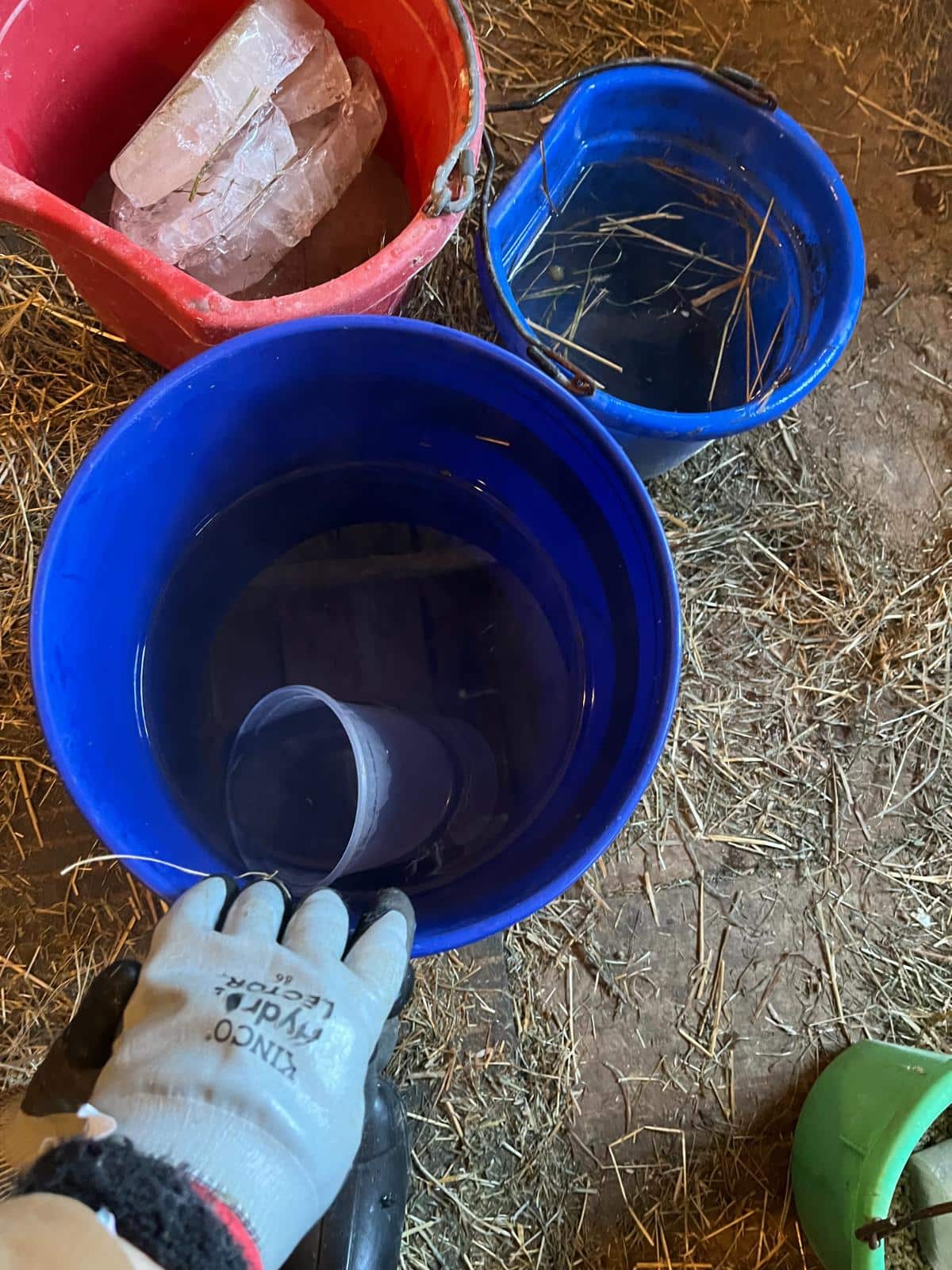
- In winter, can pop ice out of the plastic dishes easily (if too frozen, a quick dip in water will loosen edges enough to pop out)
- Even if water freezes, the rabbits at least have ice to lick and chew -- unlike with water bottles
- Rabbits become accustomed to you having hands in their cages every day, so they are less shy, helping to ease handling and management
- Cage cups also come in metal (usually galvanized)
- Metal holds up well, but the tabs do not always stay in place as well as they should
- One problem with metal is that kits have been known to freeze to metal cage cups if it is very cold,d and if they lie or lean up against the cold or frozen cups, they can easily become too chilled
- In severe cold, some have even known rabbits to freeze to the metal dishes (mouths, etc)
- Easy to clean and disinfect
- Easy to quickly switch out and fill
- Faster than filling and handling water bottles
- Stackable, low profile, easy storage
Buying Tips for Cage Cups
- Locking style or style with tabs, so they are less likely to be pushed around the cage and spilled
- If using bowl-style cage cups, they should be heavy so they are harder for the rabbits to tip over
- Crockery and bowls tend to take up a lot of space
- Larger water bowls are easier for rabbits to tip or walk and jump in (especially rowdy youngsters)
- Buy a heavier plastic, not too soft a plastic cup; rabbits will chew softer, thinner plastics more, and they do not last nearly as long as cage cups made of harder plastic
- Metal won’t be chewed, but be aware of other potential problems
Pros and Cons of J-Feeders (Pellet/Grain Feed)
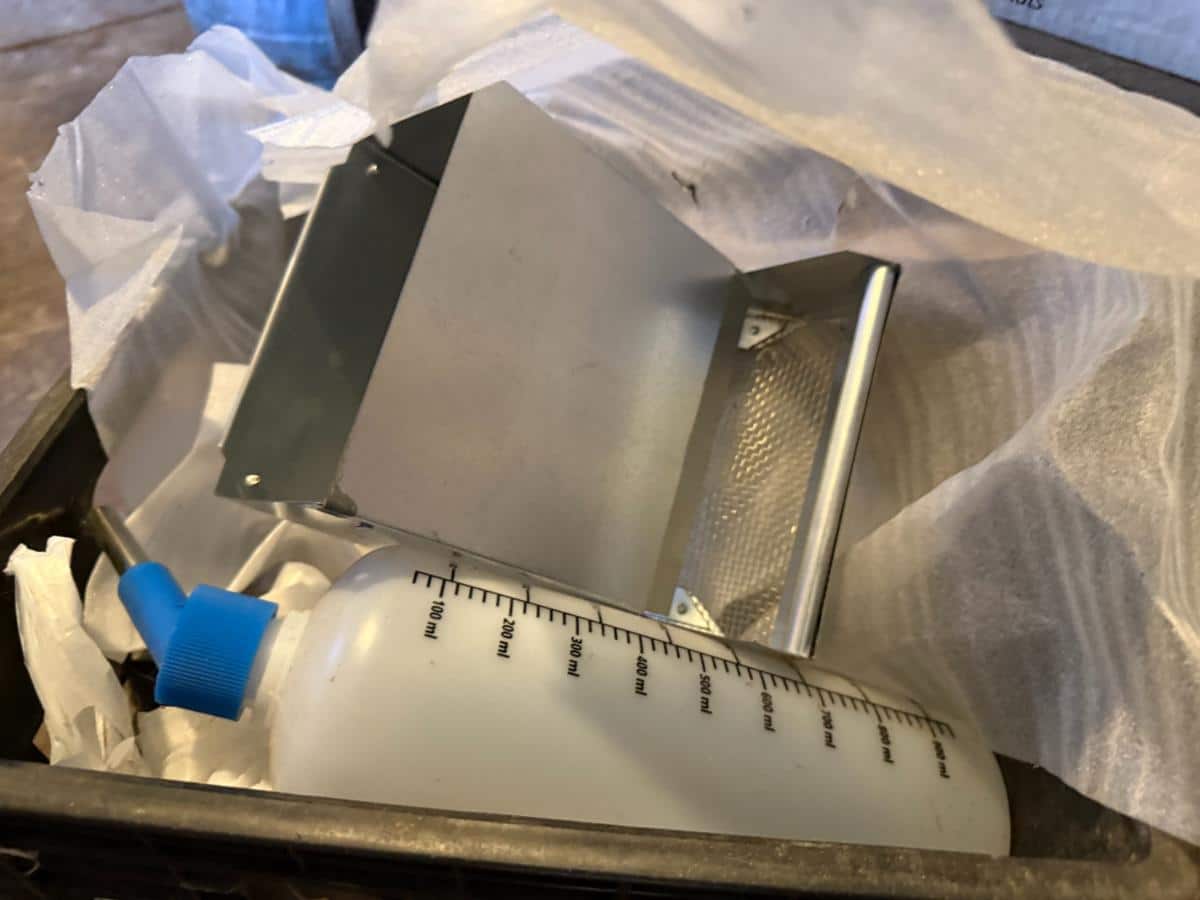
- Most have screened bottoms that sift out the fine particles and dust from feed and pellets
- Need to cut a hole through the wire of the cage to fit the feeder in
- Can sometimes be fashioned inside the cage without cutting, but this takes up a lot of space
- Feeders inside cages can be knocked down
- Risk kits are being stuck under the feeder
- Kits have been known to crawl up and out of the feeders, usually resulting in death
- Feeders mounted through holes in the wire can be knocked out by rabbits or pulled out by predators
- If feeders fall off or out of the cage with the wire cut, there is an exposed hole
- More expensive than cage cups, and the expense can add up
- May rust
- Typically do not need to be replaced as often as cage cups if the cups get chewed
- Easy to overfeed rabbits since they are basically always free-fed (unless you are very good about controlling the amount you feed each day
- High capacity
- Pellets tend to absorb humidity, and this causes caking and moisture, which usually means the rabbits won’t eat the pellets
- Moist pellets are an invitation for flies and maggots
Note, there are now some J Feeder styles that are two pieces and clip through the wire, so that you do not have to cut a hole in the wire. These are relatively new to the market and are seeing mixed reviews.
VIDEO: Here’s Why I Prefer Cage Cups for Feeding and Watering Meat Rabbits
Pros and Cons of Water Bottles

- Bottles are closed, so nothing can land in the water
- Unless you are sanitizing regularly, it can quickly grow algae, mildew, mold, etc
- Can be a harboring point for pathogens
- Cumbersome to open, fill, close, and replace for every cage
- Prone to leaking
- Leaking leaves rabbits without water in winter
- Leaking pours moisture into cages, spoiling bedding and creating ideal conditions for flies and maggots
- Freeze in winter and leave no option for hydration
- Metal nipples can be problematic in winter
- Even if the bottle does not freeze, the nipple might because of cold conduction anda smaller volume
- Rabbits tend to drink less from bottles
- Kits don’t take as easily to water bottles, since open water is more natural to them
- Some rabbits do not take to them, especially if they are used to crocks
Other Feeding and Watering Equipment Options
J feeders, water bottles, and cage cups are the most popular options in rabbit feeding equipment. They also tend to be more affordable. There are a few other options that you can consider. They come with their own pros and cons. Some options include:
- Up-cycled cans and bowls
- Crockery bowls
- Automatic watering systems, gravity feed systems
- Heated or electric watering lines or bottles
- Chicken waterers
- Chicken feeders
- Large capacity feeders are usually only for colony-style housing
Nothing is strictly foolproof when it comes to feeding and watering equipment for meat rabbits. Rabbits will teach you a lot about how many unique ways they can come up with to spoil or spill food and water, no matter what you use!
Of the options, the one that has worked the best for me is cage cups. Now you have my why!
References and Further Reading:
- Meat Rabbits – How to Make a Good, Cheap Hay Rack for Rabbit Cages
- Meat Rabbits – The Basic Cage and Equipment You Need to Start Meat Rabbits
- YouTube - The Best Way to Handle Meat Rabbit Water in Winter (No Electricity Required!)
- Meat Rabbits – Water: The Most Important Nutrient for Meat Rabbits
- Meat Rabbits – How I Handle Watering Meat Rabbits in Winter

Leave a Reply