
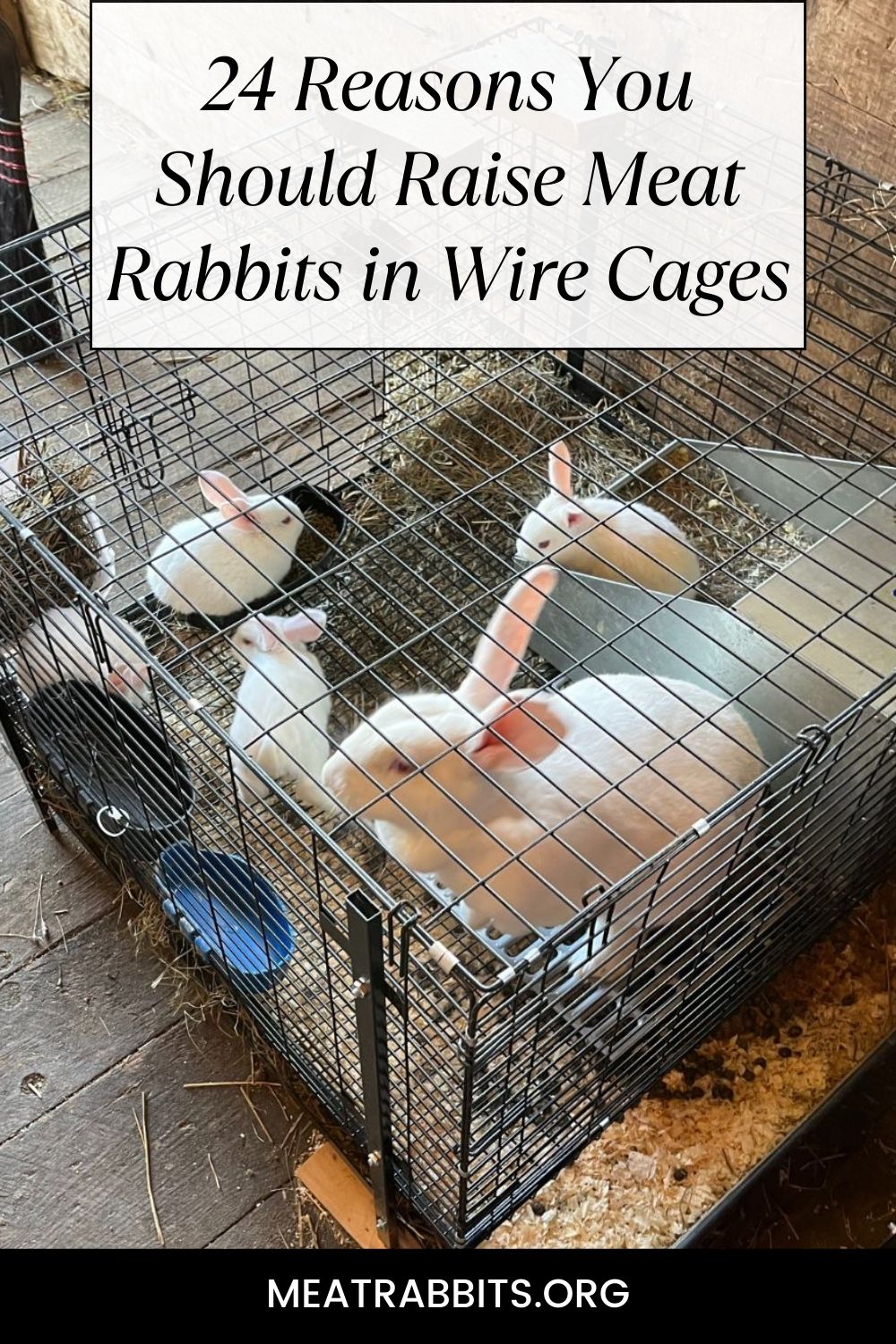
Cages seem to come with some controversy when it comes to raising meat rabbits in cages. There is no reason that it should. Cages are the safest and the healthiest way to raise meat rabbits. There are a lot of good reasons not to raise rabbits any other way.

While we do believe that everyone should follow their own conscience based on their own goals, and we know that in many cases, the best choice is a mix of systems, we do want to put our reasons for cage raising out there. This is based on several years’ experience with raising meat rabbits and on observation of other breeders’ systems, research, and collected information from discussions on meat rabbit social media forums.
With that out of the way, here are the reasons that we believe the best way to raise production meat rabbits for the home and/or for sale is in cages.
Jump to:
Why Cages are Best for Backyard Meat Rabbits (and all meat rabbits, really)

- [Wire] Cages are more hygienic. A wire is the easiest material to clean and doesn’t absorb or hold waste material. It can be sprayed and disinfected, brushed with cleaner, power washed, or even torched for heat sanitizing.
- Rabbits in cages are healthier. It’s simple. Rabbits in cages raised up off the ground just stay healthier. This is especially true in a more raised or protected rabbit house, shed, or barn. Good protection and good airflow are keys.
- Protection from parasites. Rabbits that are on the ground or on the floor are exposed to insects and parasites. This is MUCH more controllable in a raised wire cage environment. Rabbits don’t sit on or in the dirt (or refuse), so they don’t come into contact with parasites. Rabbits on the ground often suffer from coccidia infestations and coccidiosis. They are more likely to have fleas and ticks in their living quarters or to catch ear mites. You can control caged rabbits’ exposure to parasites by controlling who handles the rabbits and asking them to wash their hands and wear protective coverings if you so choose.

- Ground rabbits are subject to weather. Meat rabbits that are kept on the ground in tractors or colony setups are exposed to the whims of weather. This means rain, flooding, pooling and puddles, snow, and all the other extreme elements that don’t stay in one place. Wet conditions are the absolute worst conditions for any type of livestock or animal. Parasites, pathogens, and diseases thrive in such conditions.
- Better predator protection. Secured wire cages are difficult for predators to get into, even outside. If you have an added layer of preauction and can close the access to the rabbits off at night, you have a very good, high level of predator protection. Rabbits on the ground or in partial wooden structures (like hutches with stapled wire sides) are easy to dig into, under, or pull apart, thus exposing your rabbits and opening them up for escape.
- No way to escape. Speaking of escaping, rabbits in well-maintained, intact cages simply cannot get out (note that small kits can if the bottom wire openings are too large—modify breeder cages with solid guards or baby saver wire). The only way a rabbit in a good cage is going to escape is if you or someone else leaves a door open.

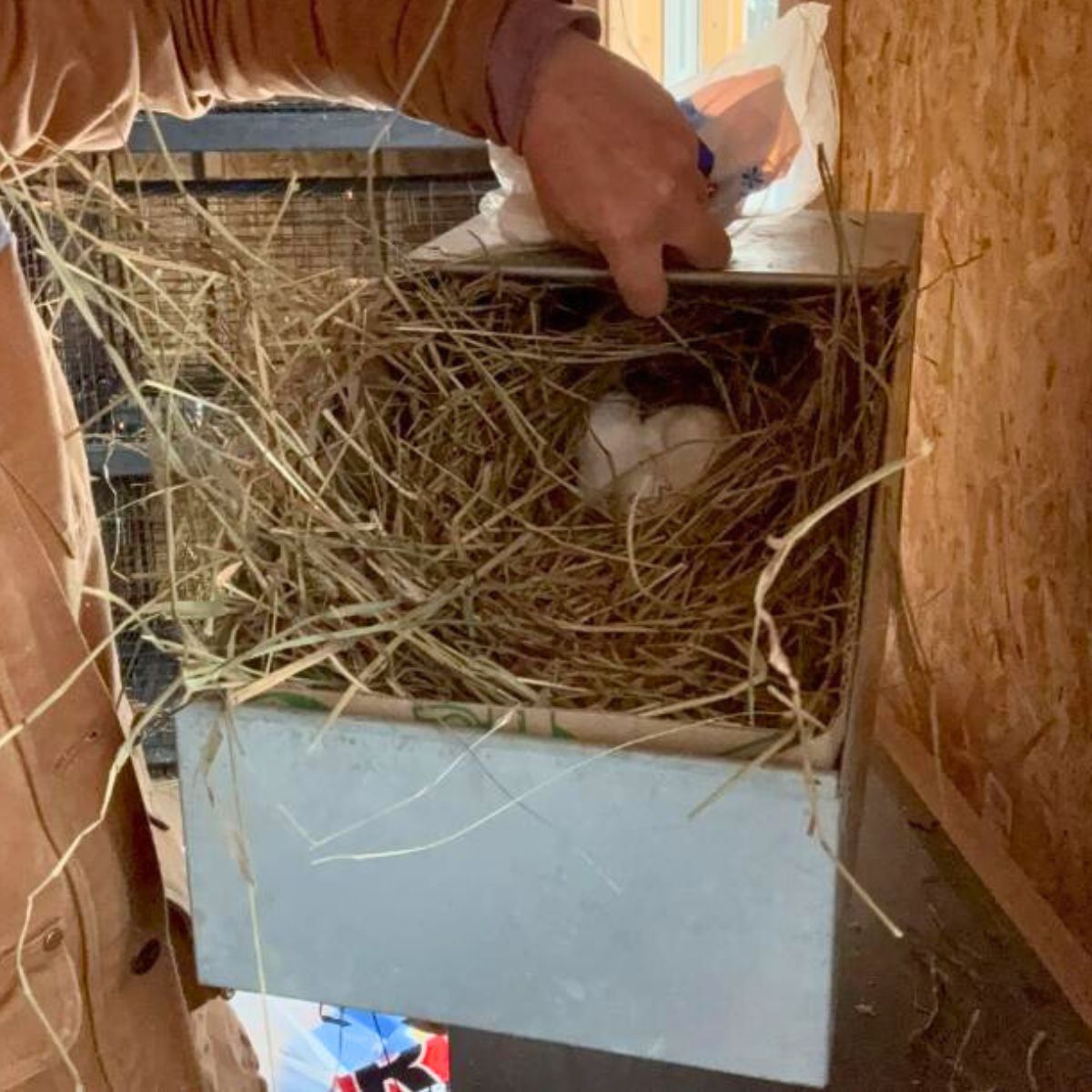
- Easy breeding and population control. There is no way to control rabbits from reproducing in a group or colony type of setup. When your rabbits have their own comfortable homes in their own individual cages, you can breed on your schedule and only on your schedule. Need meat? Breed a rabbit. In 10 weeks, you will have 20 or 30 pounds. Have too many kits, grow outs, or too much meat? Hold off. Do you want to make sure you know when the kits are coming? Take note of when you breed. Do you only want specific pairs to breed together? You put them together, so you control that, too.
- Rabbits in wire cages are social without risk. Rabbits are not, by nature, very social creatures. In the wild, as they age, they separate and go off to build their own nests, lives, and warrens. They live in a sort of separated communal arrangement. Meat rabbits do not need to live together socially, but they do appreciate seeing and knowing there are other rabbits there. Cages allow them to do this without frustration and without fighting and posing a risk to each other. Solid hutches do not do that.

- Separation in cages prevents fighting, territoriality, spraying and urination, etc. Colonies and group homes invite fighting. Rabbits, especially as they mature, will fight, spray each other with urine, compete for dominance, and become territorial. Nature and survival of the fittest will take over. Does may harm or kill other young and kits. Males may kill nesting kits to convince the females to breed again. Separate living prevents all of this and results in cleaner animals with little risk of injury.
- Easy animal identification. With a simple tattoo or cage card, you can record which rabbits are which. You’ll also know which young and grow outs belong to whom and who is related to whom. It’s easy to do when you know what rabbit lives in what cage.
- Easy observation and record keeping of individuals. As above, when you can ID a rabbit, you can keep whatever records you want. You can easily and daily observe the rabbits for health issues. If one stops eating, you’ll know exactly which rabbit it is. If you want to know how fast an individual or a litter of individuals is growing and who will make the best future breeding stock, you can observe. You can then select and keep or cull for temperament and all manner of beneficial (and negative) characteristics. You’re not likely to miss a health issue for long when you are looking at and caring for one rabbit in one cage each day.

- Illness and diseases are not as easily shared. Just as with humans, rabbits in confinement spaces share illnesses and spread disease quickly. This is much reduced in a cage setup. Yes, some illnesses can spread through closed cages, but the likelihood is much less, and you can act to remove the problem before it does spread. The open airflow of cages further reduces the risk.
- Easy to quarantine. If a rabbit is sick, remove it to a quarantine area. If you have a new rabbit coming into the rabbitry, quarantine it until you are reasonably sure it is disease-free. Keep quarantine cages separate, ideally in a separate room. Feed and care for them last when feeding and practice good hygiene. It’s that simple.
- Faster daily care. A good, efficient cage setup makes daily watering and feeding fast and easy. With a good setup, even 30 or more rabbits can be cared for in under a half hour.
- Faster weekly cleaning. Waste in wire cages falls down and away from the animal. It is either collected in a drop pan directly below the rabbit (which also provides a roof and protection for the rabbit below if the cages are stacked). Waste can then easily be removed once or twice per week, which disrupts the life cycle of flies and pests, limits odors, and keeps air quality high in and around the rabbitry. Waste can drop into a pile that can be shoveled, a large tote to be emptied, or drop pans that can be dumped clean.
- Easy to catch and handle. You will have to catch, hold, and handle your meat rabbits. You have to move does to bucks for breeding. You have to do periodic checks for nail trims and care. You need to remove kits for harvesting. If you can’t catch them, you’ve got a problem. Are you faster than a rabbit in a wide-open area?

- Rabbits get more used to humans and handling. It’s easy for rabbits in colonies and open areas to shoot away from you and hide. And they will. Rabbits that are no more than a couple of feet from your hand’s reach, at best, can’t do that. The closer you both are, the more used to you they will be. It doesn’t take long, and it doesn’t take more than a pat or two when you’re feeding to keep your rabbits trusting you and friendly, willing to be touched and handled.
- Cages are easily replaced. Nothing lasts forever. You will get several years out of each of your cages if you keep your rabbits well-cleaned and pay attention to general good maintenance in the rabbitry. When the time does come to replace a cage, it’s easy to order or build a replacement and slot it in.
- Replace only what needs replacing. When you need to replace a cage, you can replace only the cage or cages that need to be replaced. You will not have to build an entirely new hutch or house.
- Economical to build or buy. Wire cages are moderately and reasonably priced, for the most part. You can also build your own, which can save you more money. The same volume of material in a mix of wood and wire is probably not as affordable (or as good as we know from above).

- Many arrangement and organization options. Cages can be stacked, hung, set onto a raised support frame, or slotted into house or shed enclosures...there are many ways that you can organize and arrange wire cages into an efficient, workable rabbitry. Cages are, essentially, modular and so they can easily fit into a preexisting space or into a space designed specifically for them.
- Cages are portable and reusable/reconfigurable. Should the day ever come that you move, or you move your rabbitry, you can easily move and reconfigure your cages. Cages can even be used for transport quite easily.
- Cages prevent harmful (potentially deadly) chewing and eating. Rabbits travel, explore, dig, and chew. Sometimes, they chew things that can be extremely dangerous—like when they chew live electrical wires (yes!! Your rabbit WILL chew live wires!) or find food, poison, or other things that they shouldn’t be eating but will anyway.

- Healthier caged rabbits mean less intervention, medication, and antibiotic use—and healthier meat for you! Your goal in growing your own meat is to have a healthy meat source that you can feel good about, knowing the animals were well managed within your own moral and belief system. Your goal is also to have as natural and clean a meat source as possible. Factory-farmed meat is often fed a steady diet of antibiotics in their feed (medicated chicken feed, for example!). But healthy animals don’t need antibiotics and medication. They’re just...healthy. Even parasites, wormers, and mite treatments are types of drugs and chemical poison (it’s how they kill the parasites). You can prevent medication and antibiotic use by managing your rabbitry well and by giving your rabbits a housing situation that is least likely to expose them to parasites and diseases. We’ll say it again—healthy animals don’t need drugs and chemicals.
Meat Rabbits are Production Animals that Deserve to Live Well and Safely as They Produce

Meat rabbits are production animals. They deserve a good life. They deserve to live healthfully and humanely. And while yes, there are other options, and some people have varying degrees of success with those options, you need to keep in mind that a healthy, humane, productive rabbitry—even one on a small home scale to feed a family—is one that is manageable.
Resist the Temptation to Anthropomorphize

Anthropomorphizing is a long and fancy word that means to assign or ascribe human attributes (thoughts, feelings, desires, etc.) to an animal or object. Apologies for the $10 word, but it’s a good word, and it happens more and more these days. Don’t do it.
Rabbits are not humans. They do not think, feel, or have the awareness and knowledge of life that we do. A rabbit raised in a comfortable cage setup does not know to wish for other things or greener pastures. They’re content in the world in which they live as long as their needs are well met—food and water, for example—and as long as they are comfortable and not in pain, ill, or suffering.
Rabbits in cages do not suffer when well provided and cared for. Resist the urge to assign those thoughts and feelings to them and be confident in the fact that you have chosen your cage setup for the right reasons—healthy, humane meat raising with content animals.
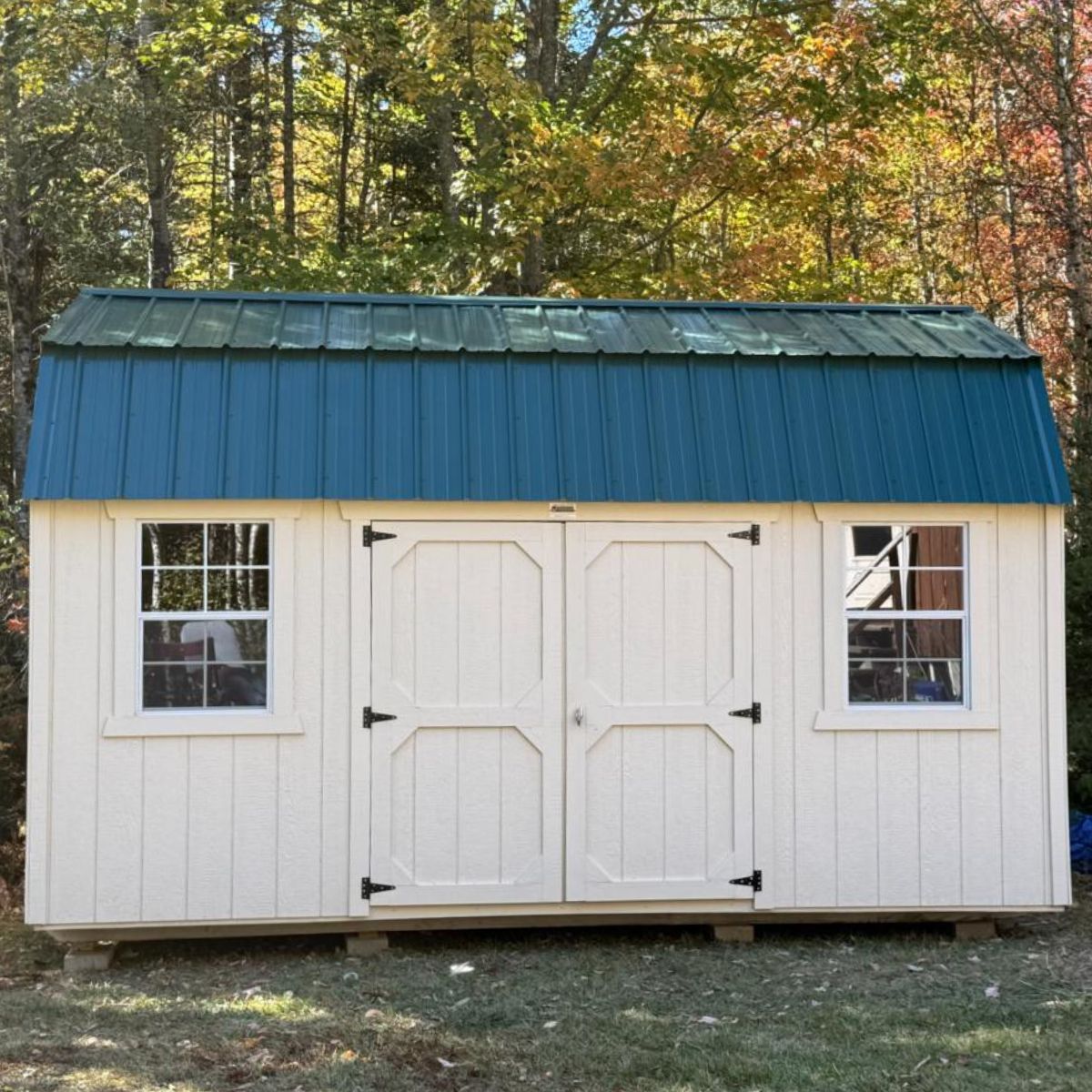
While we respect the right of all rabbit raisers to choose their own housing system for their own reasons, the one that we prefer and promote the most is raising rabbits in cages. For those looking for our reasons, you have them above. For those looking for our recommendations, it is a cage system on a solid raised platform or a stackable system housed inside a barn, rabbit house, or shed that can be closed off from predators.
(You are free to comment with your own housing and management systems and open a respectful discussion, but please know that disrespectful and derogatory language and comments will not be permitted and will not be approved through moderation.)


Nicole White
cages- from where do you purchase your cages?
Mary Ward
My cages are Dumor cages that I buy from Tractor Supply Company. They are not the highest end cages but they do the job, are readily available (which I could not say for all the cage companies since the pandemic) and last with a little extra reinforcement. Other good companies for cages are Bass or KW Cages.
Asa Jeppsson-Klapproth
I want to get started with meat rabbits and have been looking at different options for housing them. I live in New Jersey. It is hot and humid in the summer and cold in the winter. I don’t have a barn where I can keep the wire cages. I could make sure they have shade in the summer, but how do I keep the rabbits warm and dry in the winter if I just have wire cages? I was looking at cages that are off the ground and have a built in area that offer protection from cold and wet weather. Is that going to be less healthy for the rabbits?
Mary Ward
You have a few options.
Sounds like what you're talking about is hutch type housing with built in hide boxes. As long as you keep those clean, they should work fine.
I would prefer something different. Raised cages, yes, but with removal hide boxes and/or a roof. The roof can be as simple as plywood over the top as long as it won't blow away. With these, you'd have more control over the hid boxes and still be able to use all-wire cages which are chewed less, and don't end up with holes or wire being pulled or chewed away.
Also, one or two hutches won't serve all your needs once you start breeding and raising grow outs. And those can get really expensive.
Hutches aren't a bad way to go, but they wouldn't be my first choice.
Look at some of the rabbit "houses" people build. These are basically a wooden frame structure with a roof that allows for good airflow and shade and you can stack cages on different levels. Or you could do single level and let manure drop to the ground.
BHA Rabbitry has a good picture of one of these setups on their site. I think it will at least give you some idea of how little the protection from the element needs to be....or how basic anyway. Here's a link: https://homesteadrabbits.com/raise-meat-rabbits/
If you don't have it already, I also recommend Bob Bennet's Storey's Guide to Raising Rabbits. There are some good housing options in there and a good discussion of pros/cons: https://amzn.to/46Bb6lO
He has a book on rabbit housing, too: https://amzn.to/4fL6Ch1
All of this said, if hutches are what are manageable for you, you should do find in NJ. I am in central MA and have kept pet rabbits outside in this sort of hutch before. I do think they would have been more difficult as the numbers grow, but that's something for you to decide. Whatever you decide, I highly recommend keeping meat rabbits, and what's best for you is what's most manageable and affordable to get you into rabbit raising!
Best of luck. Please come back if I can help with any other questions or if you need more clarification here. And let us know how it goes and what you decide on!