
The Champagne d’Argent meat rabbit breed is one of several Argente breeds of meat rabbits originating in France. The Champagne is considered to likely be the oldest commercial breed of meat rabbit, with its history reaching back into at least the mid 1600’s, and possibly as far back as the 1500’s.
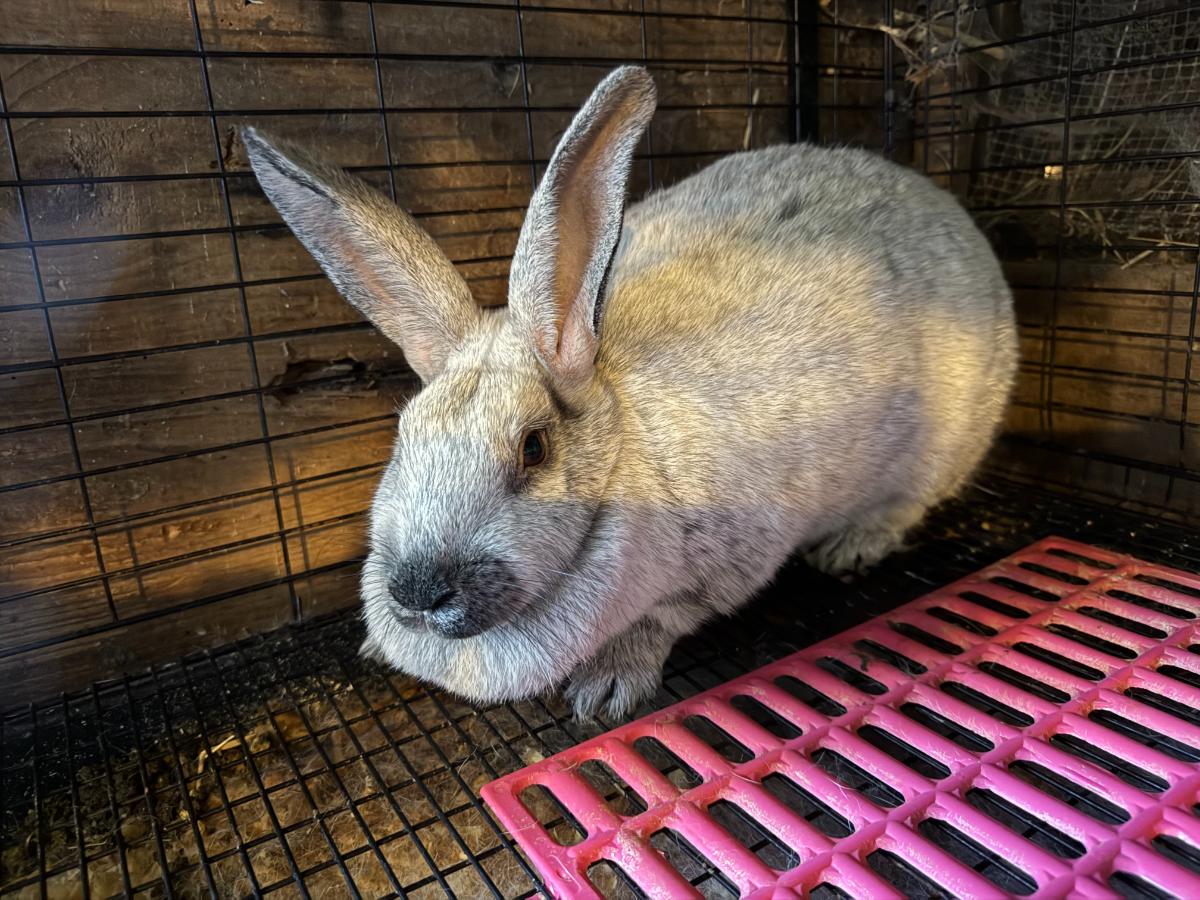
The breed is valued for both its meat and its fur. It was officially recognized as a breed overseas in the early 1900’s. It was brought to the United States in the early 1900’s and modified through breeding and selection into a more Americanized version, which is said to be somewhat shorter-haired and larger than its European and English counterparts.
Along with its relative, the Creme d’Argent, the Champagne d’Argent is a breed recognized by the American Rabbit Breeders Association (ARBA) and can be shown. Other countries recognize more of the argente breeds.
Jump to:
- Vital Statistics for Champagne D’Argent Meat Rabbits:
- About the Champagne D’Argent Meat Rabbit Breed
- Noteworthy Benefits of Champagne D’Argent Meat Rabbits:
- Downsides to the Champagne D’Argent Meat Rabbit Breed
- Consult the ARBA Standard of Perfection or the Standard of your Governing Body for Specifics for Show Animals
- VIDEO: Why I Brought Champagne D’Argent Rabbits into My Rabbitry
- References and Further Recommended Reading:
Vital Statistics for Champagne D’Argent Meat Rabbits:
| Adult Size Doe: | 9 ½ to 11 pounds, ideal 10 ½ lbs |
| Adult Size Buck: | 9 to 11 pounds, ideal 10 lbs |
| Temperament: | Calm, friendly, easy to handle |
| Age of Maturity for Breeding: | 6 months |
| Productivity: | Very good |
| Mothering Instincts: | Good |
| Average Litter Size: | 6 to 8 |
| Growth Rate: | Excellent |
| Bone to Meat Ratio: | Excellent |
| Other Notes of Interest: | Heritage breed with excellent bone to meat ratio; dual fur and meat rabbit |
About the Champagne D’Argent Meat Rabbit Breed
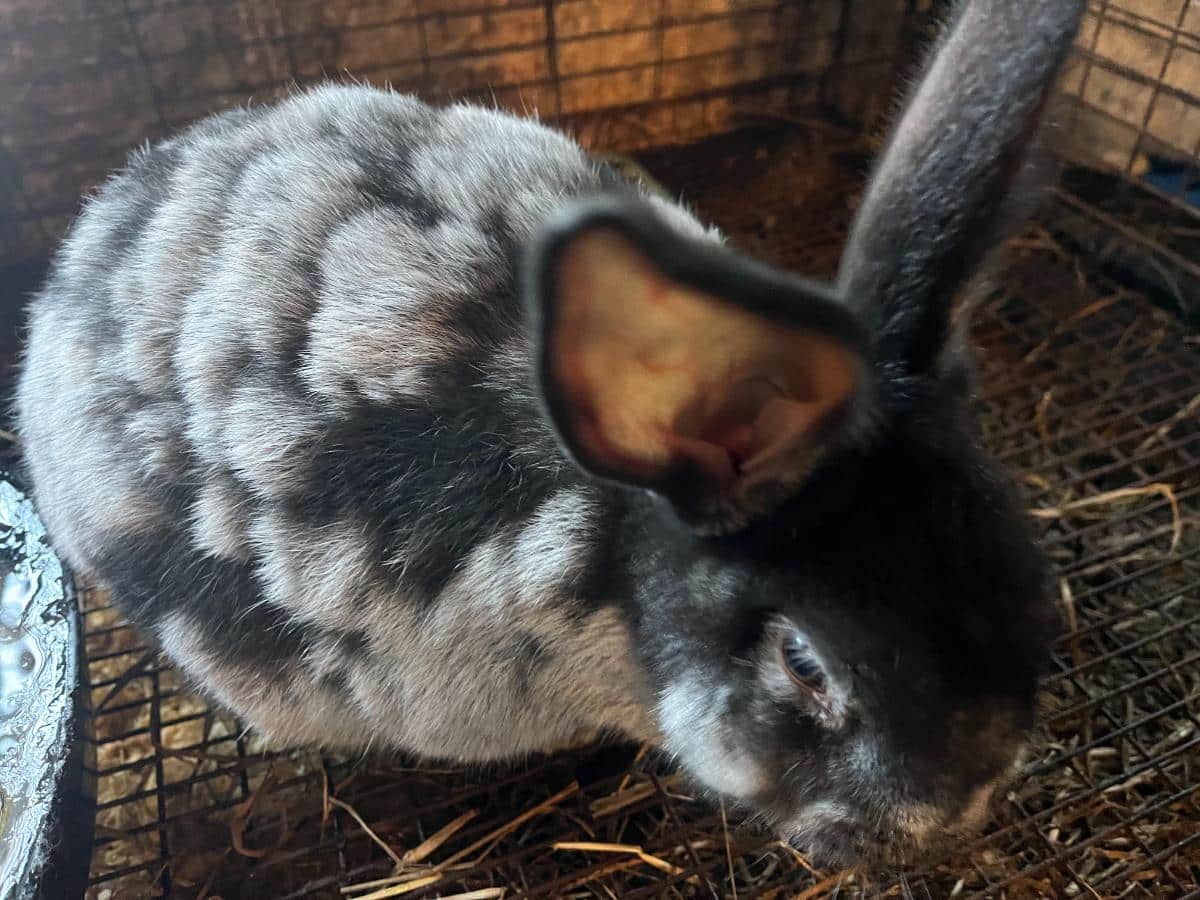
Champagne D’Argent meat rabbits are sometimes referred to as “the color changing rabbit”. This is because the kits are born all black, and then they start to shed that black coat and replace it with silver as they mature. This process starts at around four weeks old.
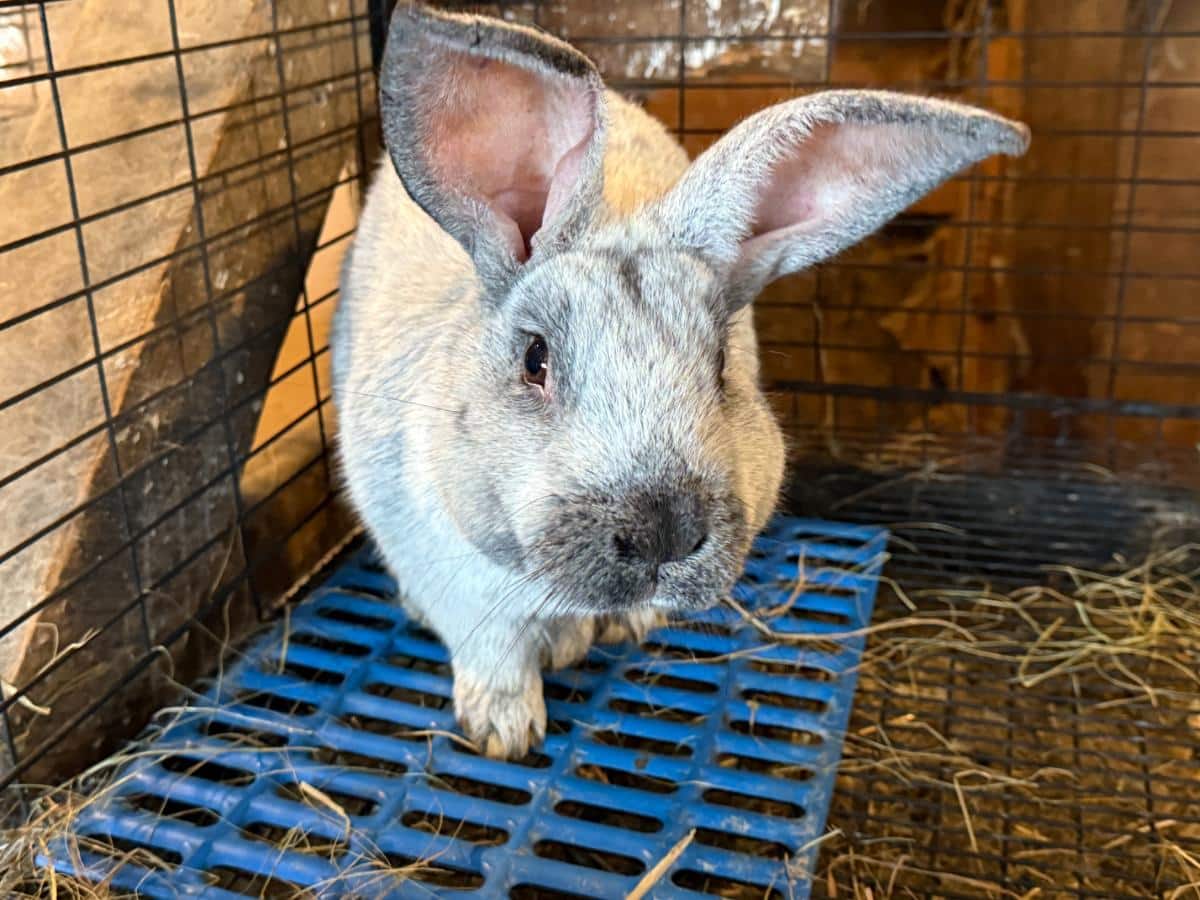
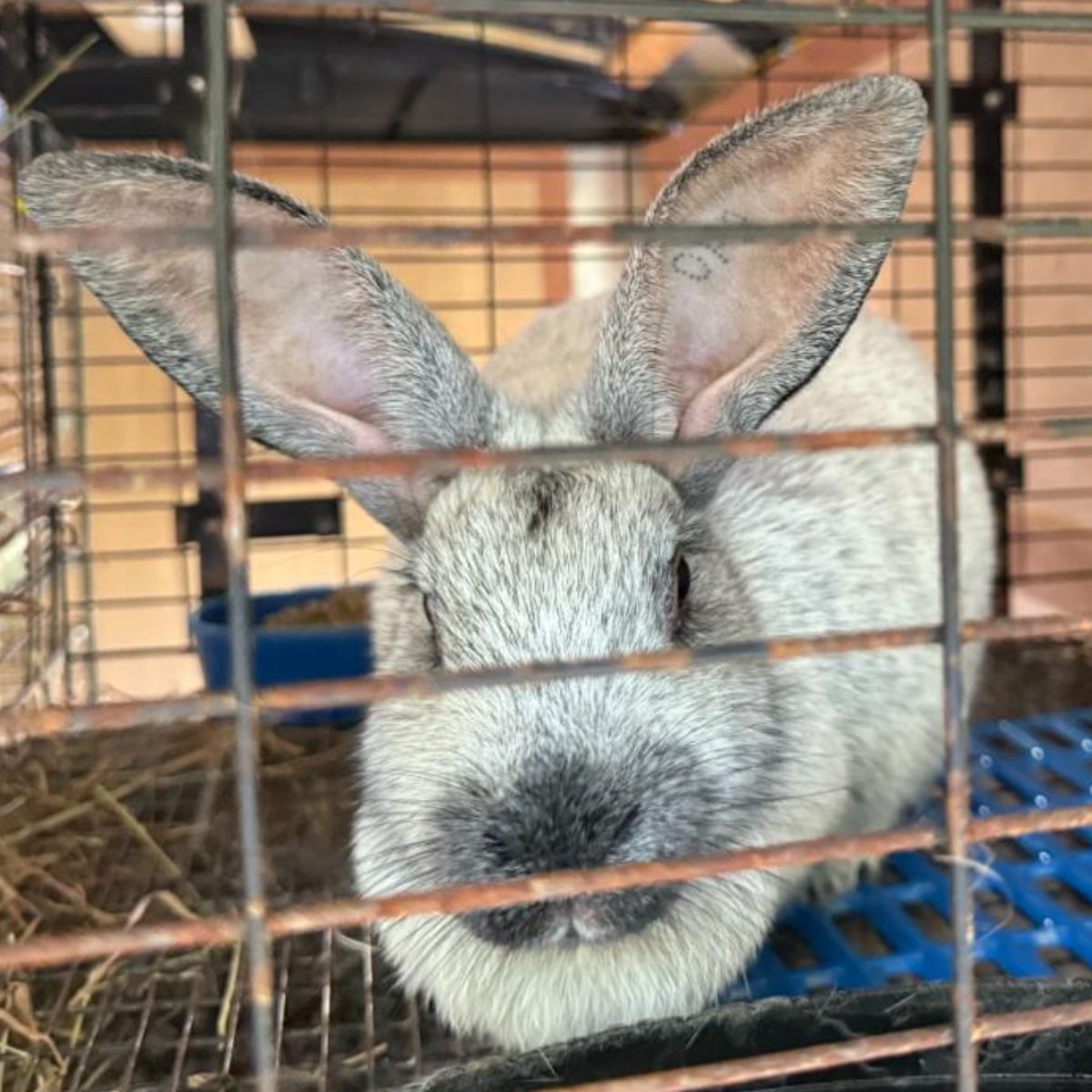
By the time they are mature adults, the rabbits will be completely silvered out. Mature champagne d’argent rabbits are silver in color with darker muzzles.
Hides from Champagne d’Argents are excellent for tanning, soft, and have an attractive two-toned silver. This dual-purpose nature is one thing that makes them attractive as a homestead rabbit.
Beyond their color-changing fun, Champagne d’Argent rabbits are an excellent meat breed of rabbit. They are also a heritage breed, one that was once threatened but is now in a stable status. There are several attributes of the Champagne d’Argent that make it a good choice for a backyard breeder or homestead meat production.
Champagne d’Argents are large rabbits, but they are known for excellent temperaments. They are friendly, calm, and typically easy to handle, despite their large size.

Champagne d’argent does have a reputation for being good mothers. Their litter size is generally somewhat smaller than that of other large breeds of similar size (such as the New Zealand breed), but this can be a benefit to a backyard breeder, too. Litter size ranges from six (6) to eight (8) kits per litter, with some does producing higher and lower sized litters.
Champagnes have one of the best bone-to-meat ratios, often dressing out at 65% of their live weight. Some call them the “black angus” of meat rabbits for their meatiness.
Growth rates of Champagne d’Argent tend to be excellent when coming from good lines. Kits easily reach five (5) pounds live weight by ten (10) weeks old, with some breeding lines reaching this weight even sooner.
It is possible to raise champagne grow outs that reach five pounds live weight as early as 8 weeks old, however these faster-growing kits can be more prone to issues such as weaning enteritis.
Noteworthy Benefits of Champagne D’Argent Meat Rabbits:

- Heritage breed
- Good homestead rabbit
- Dual purpose with quality meat and fur
- Manageable and friendly
- Good with children when handled from a young age
- Fair-sized litters
- Fine boned
- Meaty, heavy carcasses
- Excellent dress-out rate (bone-to-meat ratio)
- Fast grow out rate, reaching 5 pounds live weight by 10 weeks easily
- Economical keepers
- Good resale value of quality show and breeding stock
- Color-changing fun with kits!
- Cross well with other breeds for fast-growing, meaty, productive kits
- Soft, attractive silver coats for tanning
Downsides to the Champagne D’Argent Meat Rabbit Breed

- May experience seasonal breeding difficulties in low-light months
- Can be difficult to get to lift and breed, especially in late fall and early winter months
- Potential for enteritis-type issues with fast-growing kits if growing out too fast (not necessarily a trait exclusive to champagnes, but one that comes up with them as a breed with fast growth rate potential) -- when reaching five pounds by 8 weeks
- Smaller litters than other similarly sized large meat rabbits (however, this can be a benefit from a management perspective, too, especially for a homestead or backyard/family breeder who does not want to be overwhelmed with grow outs on processing day. Smaller litters can sometimes make it easier for you to keep a more regular breeding schedule, too.)
- Fair availability, but limited in some areas
Consult the ARBA Standard of Perfection or the Standard of your Governing Body for Specifics for Show Animals
Note that this website primarily focuses on backyard meat rabbits and homestead-type meat production on a small to large scale. For that reason, the focus in breed descriptions leans more towards production goals for the small to medium producer. Very little focus is on breeding for show.
These breed guides will serve as a good introduction to the breed and are based in part on the ARBA Standard of Perfection, but for more specifics about the details and nuances you should be looking for in a show rabbit, we urge you to consult the American Rabbit Breeders Association Standard of Perfection or the guides provided by your local authority on meat rabbit breeds and standards acceptable for showing.
VIDEO: Why I Brought Champagne D’Argent Rabbits into My Rabbitry
References and Further Recommended Reading:
- Bennett, Bob. Storey’s Guide to Raising Rabbits (5th Edition). Storey Publishing, 2018
- Rapp, Eric. Raising Rabbits for Meat. Storey Publishing, 1995
- American Rabbit Breeders Association. ARBA Standard of Perfection 2025–2030
- Eden Green Farm. “Champagne d’Argent Heritage Rabbits for Sale.”
- Ward, Mary. “How I Chose My Meat Rabbit Breeds (What Breeds I Chose and Why).” MeatRabbits.org, 2024
- Ward, Mary. “Sourcing Meat Rabbits: Where Can You Buy Meat Rabbits?” MeatRabbits.org, 2023
- MeatRabbits.org. “Breeds.”
- Homestead Rabbits. “Champagne d’Argent: The Color Changing Rabbit.” 2023
- American Rabbit Breeders Association. “Champagne d’Argent.” ARBA
- Garcia, Elaina. “Raising Champagne d’Argent Rabbits.” Insteading, April 1, 2021.
- Cherokee Flats. “Champagne D’Argent.” Cherokee Flats
- The Livestock Conservancy. A Guide to Picking Breed Rabbits, 2024


Leave a Reply