
Part of the rabbitry relocation is cleaning and sanitizing the rabbitry equipment. This includes cages, dropping trays, feed cups, waterers, and anything else that is due for a good clean.

Though there is a lot to do when you’re moving a rabbitry (and possibly a household), it’s well worth taking the time to clean and prepare your equipment while you’re prepping for your move. It’s a lot easier to sanitize cages while you’re already reducing and downsizing numbers. Since you’re moving cages and equipment out anyway, attending to these tasks now just saves you extra work.
There are other good reasons to take care of this business now, too.
Jump to:
- Annual Cleaning Keeps Barns and Equipment Fighting Fit
- Leave Infections and Infestations Behind
- Cleaning and Sterilizing Cages
- VIDEO: Next Step in Relocating the Rabbitry: Clean and Shuffle!
- Disinfectant and Sterilization Solutions
- Sterilizing Feed Cups and Waterers
- Repair What Needs Fixing
- Start Off Right in Your New Location
Annual Cleaning Keeps Barns and Equipment Fighting Fit
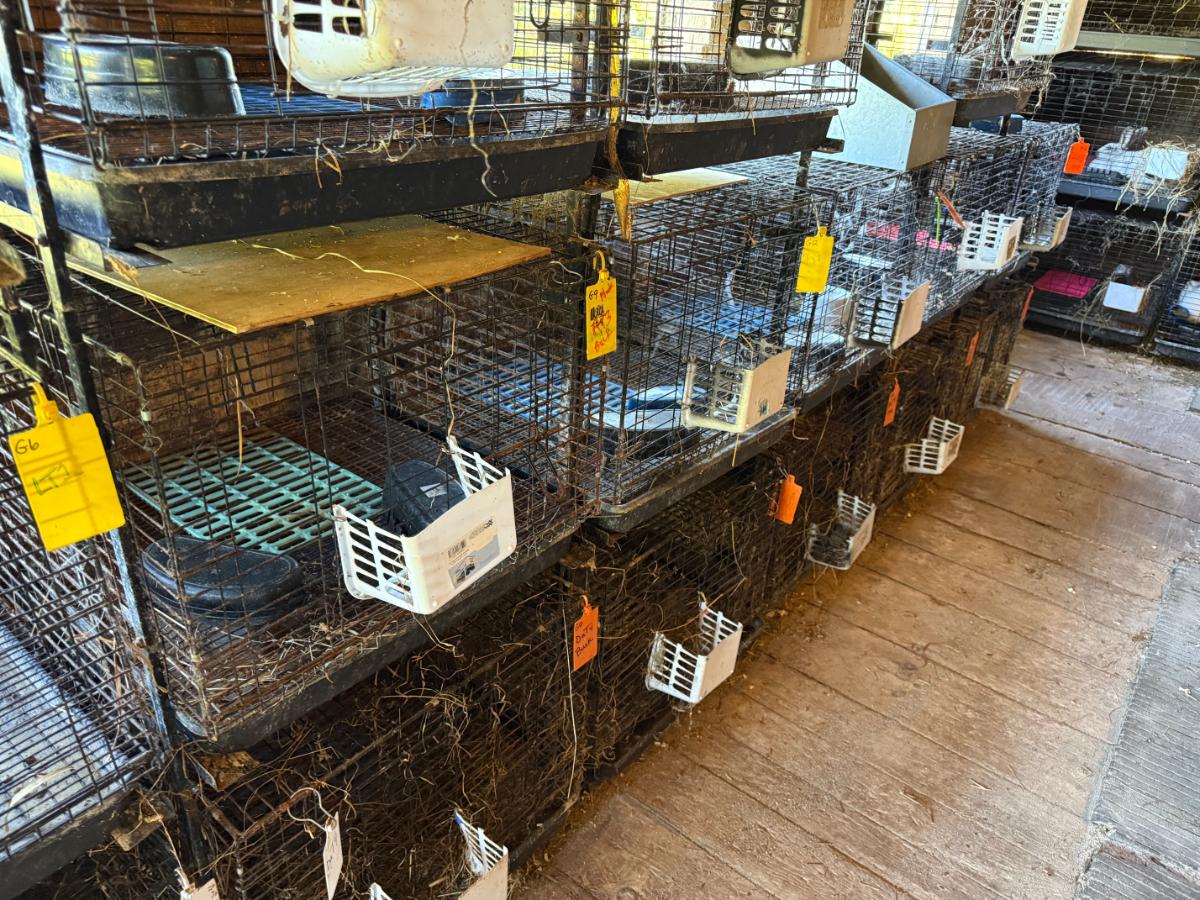
It’s good practice to plan on an annual spring or fall cleaning of your barn and cages. No matter how good your cleaning practices are, over time, you will end up with trapped and flying fur, piled-up refuse in corners and under cages, and general hidden detritus.
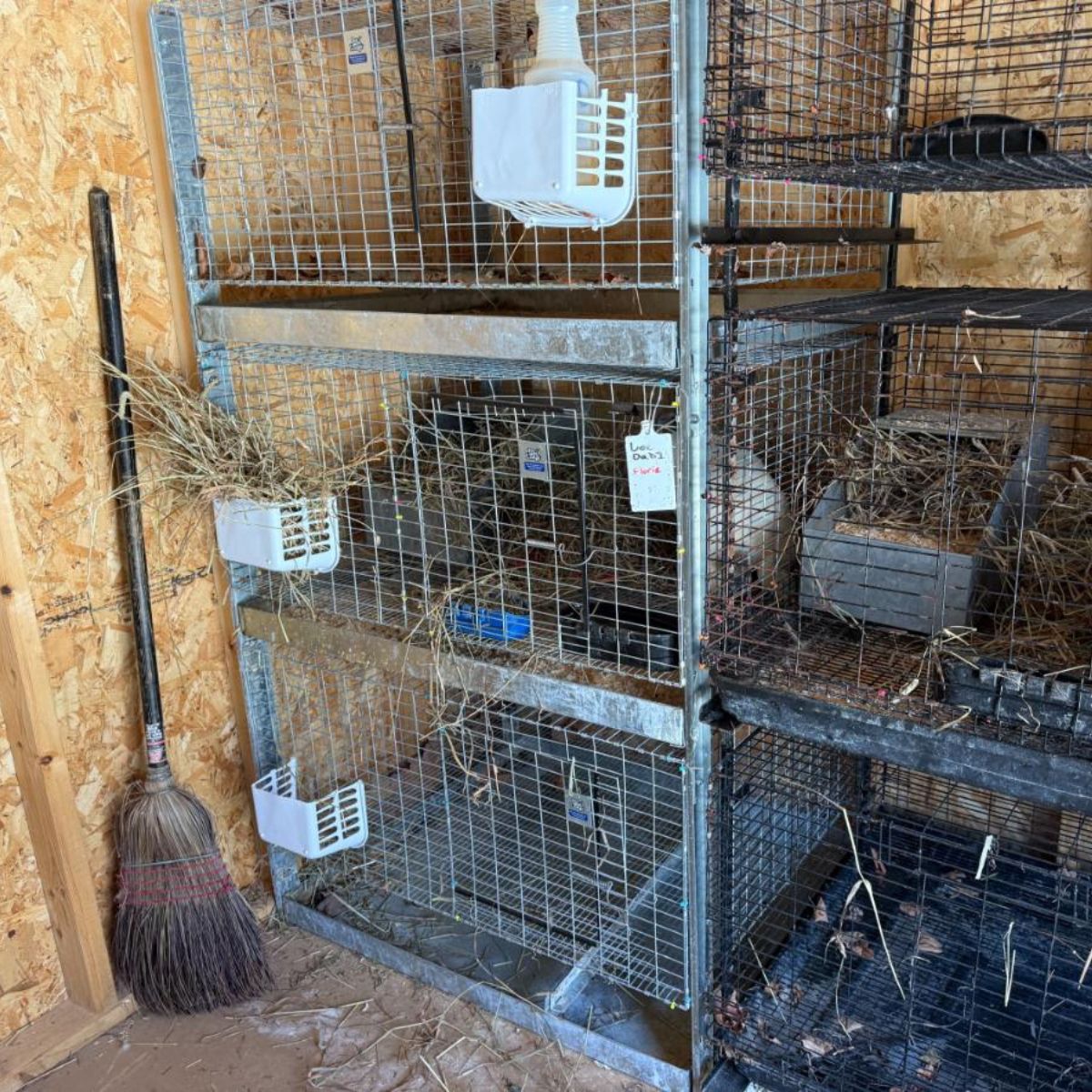
In a lot of your cages, especially breeders’ cages where adult rabbits live long term, you’ll end up with areas in the cages that get blocked up. This is usually the rabbit’s bathrooming corner. It usually starts after a molting phase when excess fur gets caught in the wire floor, and then manure and more hair, hay, and refuse get caught up in it.
So, once or twice a year, it’s good practice to take the cages out and give them a good “spring” cleaning (or fall or whenever works -- fall AND spring are an even better practice).
If you’re planning a move, it only makes sense to fit your annual or bi-annual cleaning to fit that timing, too.
Leave Infections and Infestations Behind
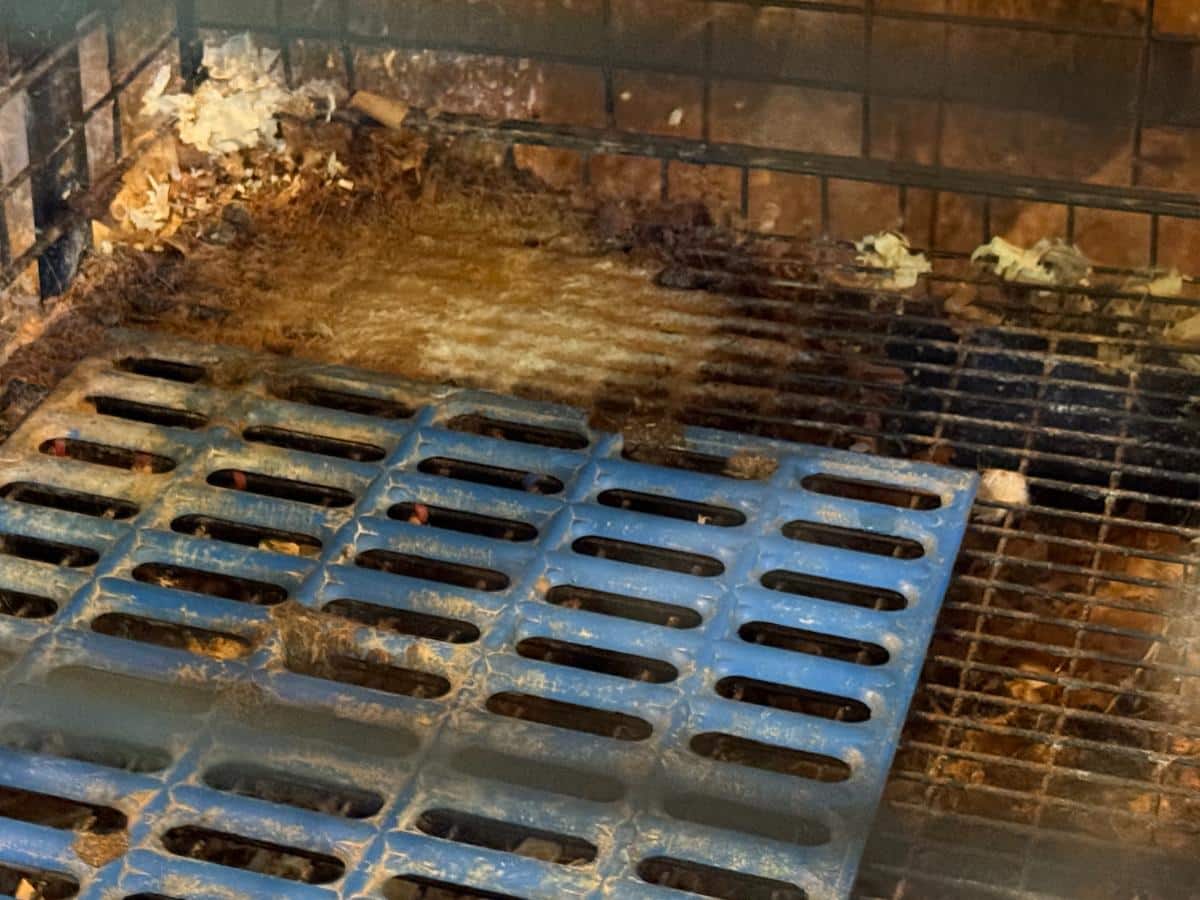
Cleaning and sanitizing cages and equipment before you relocate is largely for your own benefit. But it is also a sensible and responsible thing to do when you’re moving animals to a new location.
Taking the time to clean and sanitize your cages and equipment now will reduce any pathogens, parasites, pests, and potential diseases. This can include pests and parasites like mites, worms, e.cuniculi, and coccidia, among other common rabbit pests.
When you get where you’re going, not only will you have eliminated anything that might have been hiding in your rabbitry, but you will also prevent spreading it to the new area in which you will live. Other rabbit breeders there will appreciate that!
Cleaning and Sterilizing Cages
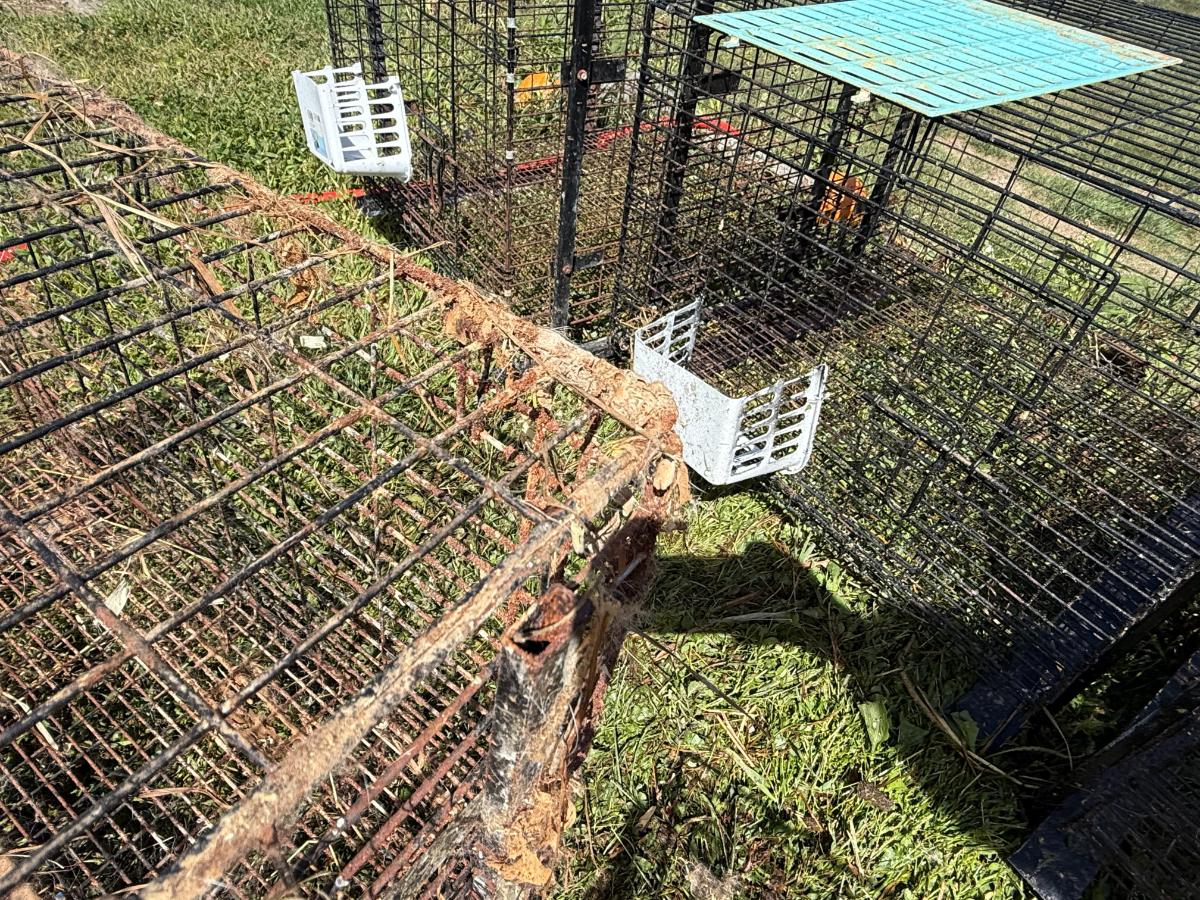
Cleaning and sterilizing get rid of blockages in cages and kill off parasites and pathogens.
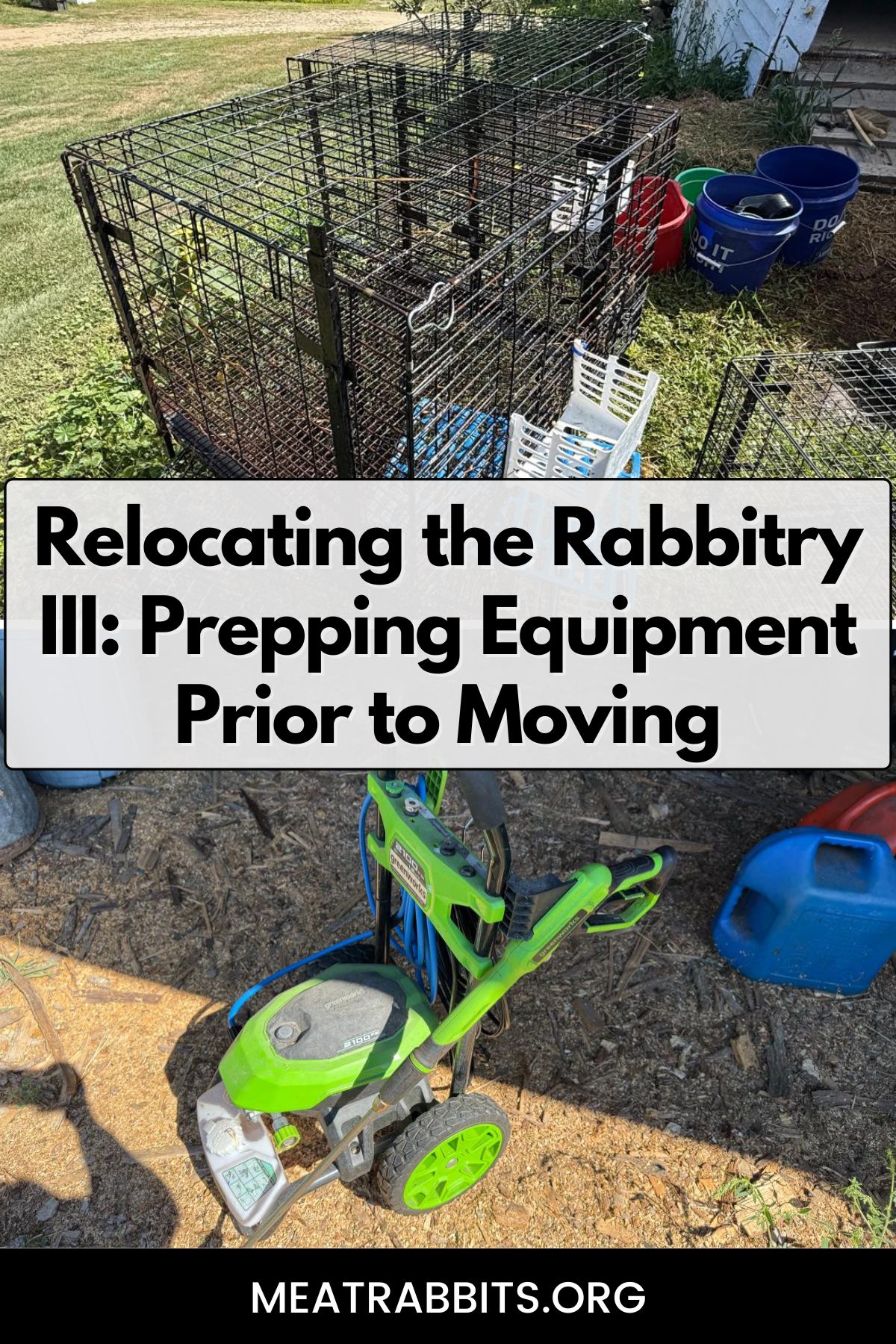
Much of what gets caked on and stuck in rabbit cages can be difficult to remove. Scraping with a hand tool will help for regular cleaning, but to really remove stuck-on calcifications or caked-on fur, hay, feed, manure, etc, you’ll need to empty the cages, take them outside, and take stronger measures.
Some good ways to clean and remove build-up and caked-on blockages include:
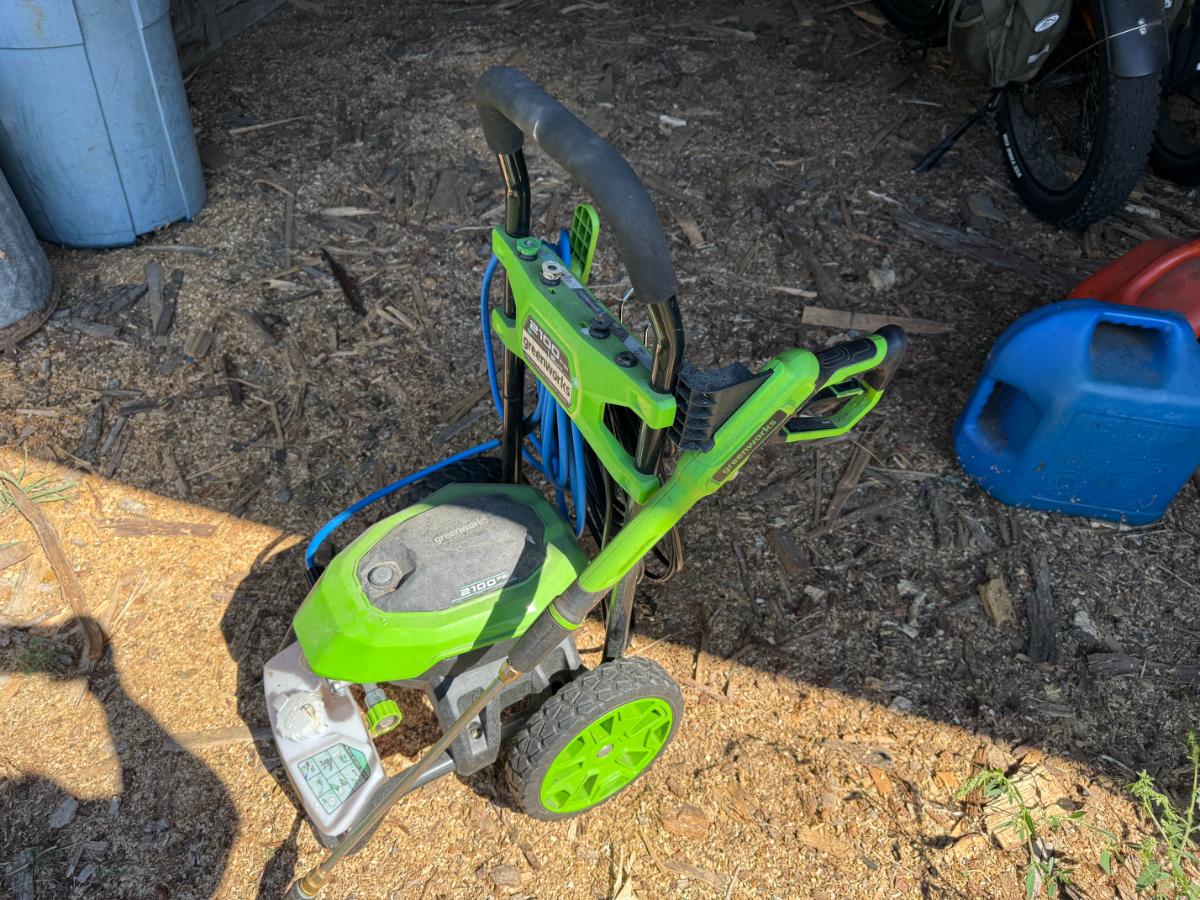
- A powerwasher
- If all metal cages without coatings, a handheld torch or flame weeder -- use cautiously, away from children, away from animals, away from buildings, and take all precautions!!
- A wire brush for brushing out stubborn hair
- A flat metal joint compound knife can also help scrape hard-to-remove buildup
For sterilization, a torch or flame weeder will sterilize cages. A home power washer with a soap dispenser is a worthwhile investment, and you can put a sterilizing solution in the soap dispenser of the power washer.
VIDEO: Next Step in Relocating the Rabbitry: Clean and Shuffle!
Disinfectant and Sterilization Solutions
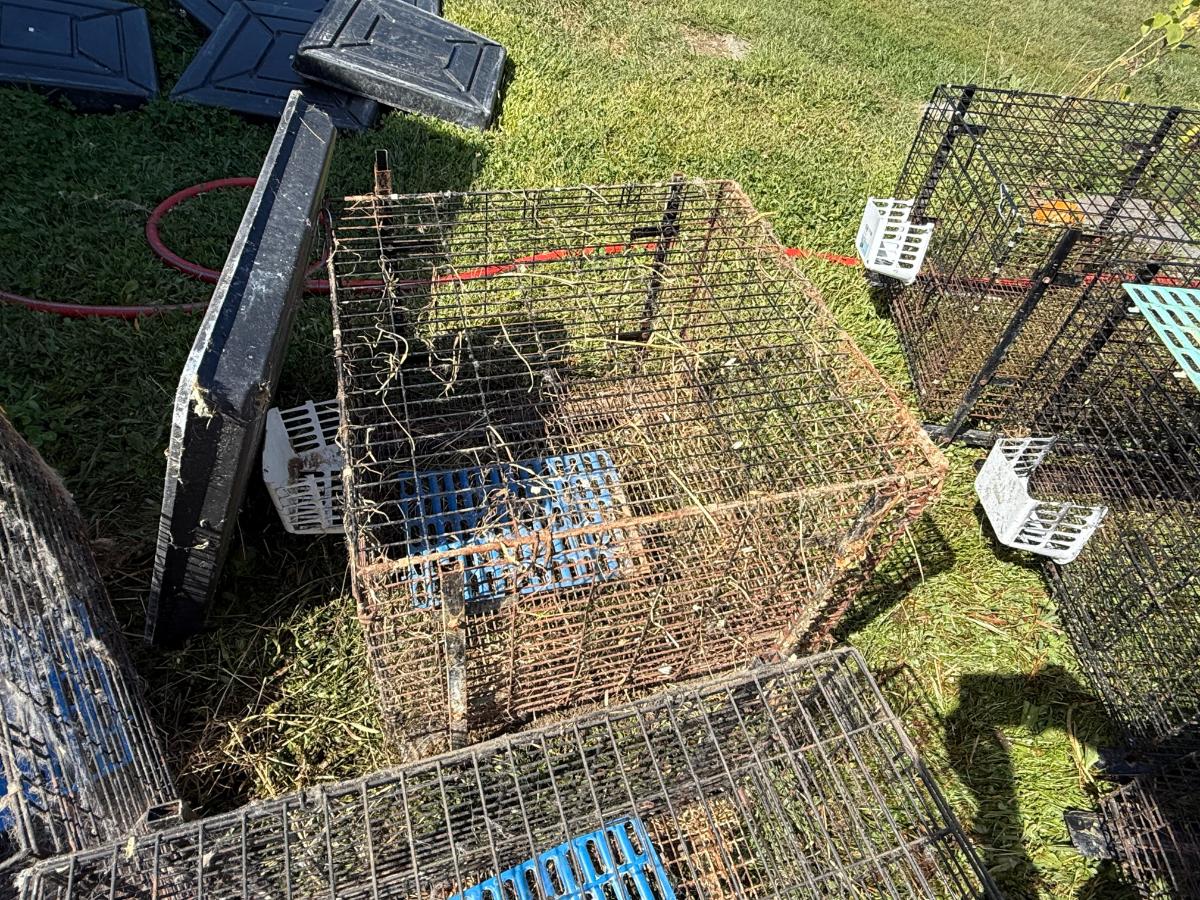
If you do not have a unit with an on-board dispenser, spray your cages with a bleach or ammonia preparation (ONE OR THE OTHER, but NOT both! Ammonia and bleach should never be mixed!) or use another heavy-duty sanitizer.
Recommended ratios for bleach disinfecting and sanitizing solutions:
- A lighter mixture is considered adequate for regular disinfection at a ratio of 1:32 bleach: water
- For daily disinfectant, use ⅓ cup of bleach to one gallon of water, or 1 tablespoon plus 1 teaspoon of bleach to 32 ounces for a one-quart spray bottle
- For sanitizing, bleach should be diluted at a rate of 1:10
- This is equal to 1 cup of bleach per gallon of water
- Or ¼ cup bleach per 32 ounces of water (if mixing for a one-quart spray bottle)
- This is the ratio recommended to kill most pathogens and parasites, and the strength needed for killing fungal spores like ringworm
- Mix bleach and water fresh prior to use, as bleach evaporates and breaks down in light and air, and an older solution will be weakened
Let the sanitizer sit on the cages for 15 to 20 minutes or as directed by the product’s label. Then spray the cages or power-wash them, removing all debris.
If you have caked on manure, it is smart to first spray off the worst of the material, then spray on a sanitizer and let it sit. Then, spray again to rinse off the sanitizing solution or let the cage completely air dry before a rabbit is put back into it.
Sterilizing Feed Cups and Waterers
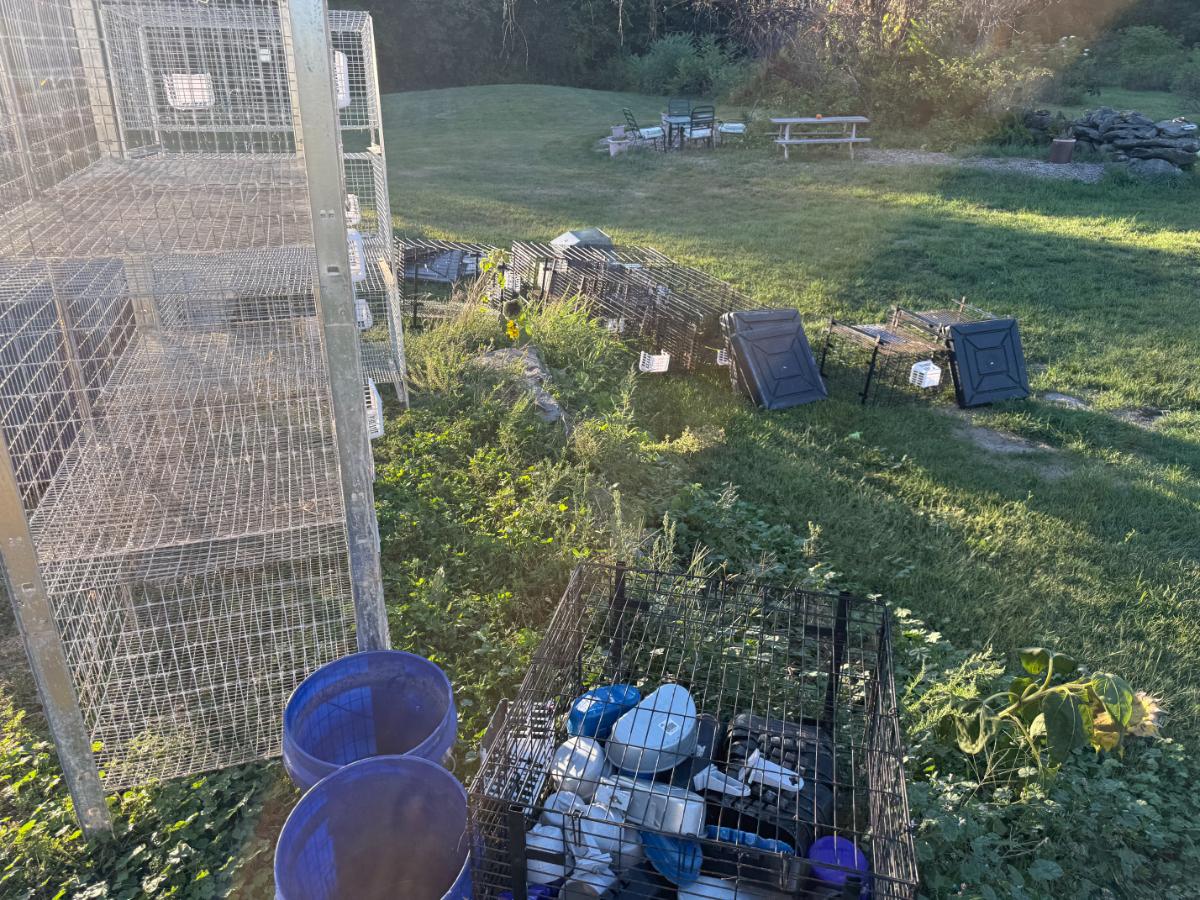
Sterilize all of your feed cups, watering bowls, or water bottles, or your watering system. Don’t take mold, mildew, buildup, and pathogens with you!
Rotate and cycle through the cups, bottles, and/or feeders that are in use in the cages so everything gets cleaned well and sanitized at least once, close to your move date.
Sanitizing cage cups, bottles, waterers, and feeders can be as easy as spraying or rinsing off units and soaking them in a bleach and water or sanitizer solution. Use the ratios listed above or follow the label instructions on a commercial disinfectant or sanitizer.
Repair What Needs Fixing
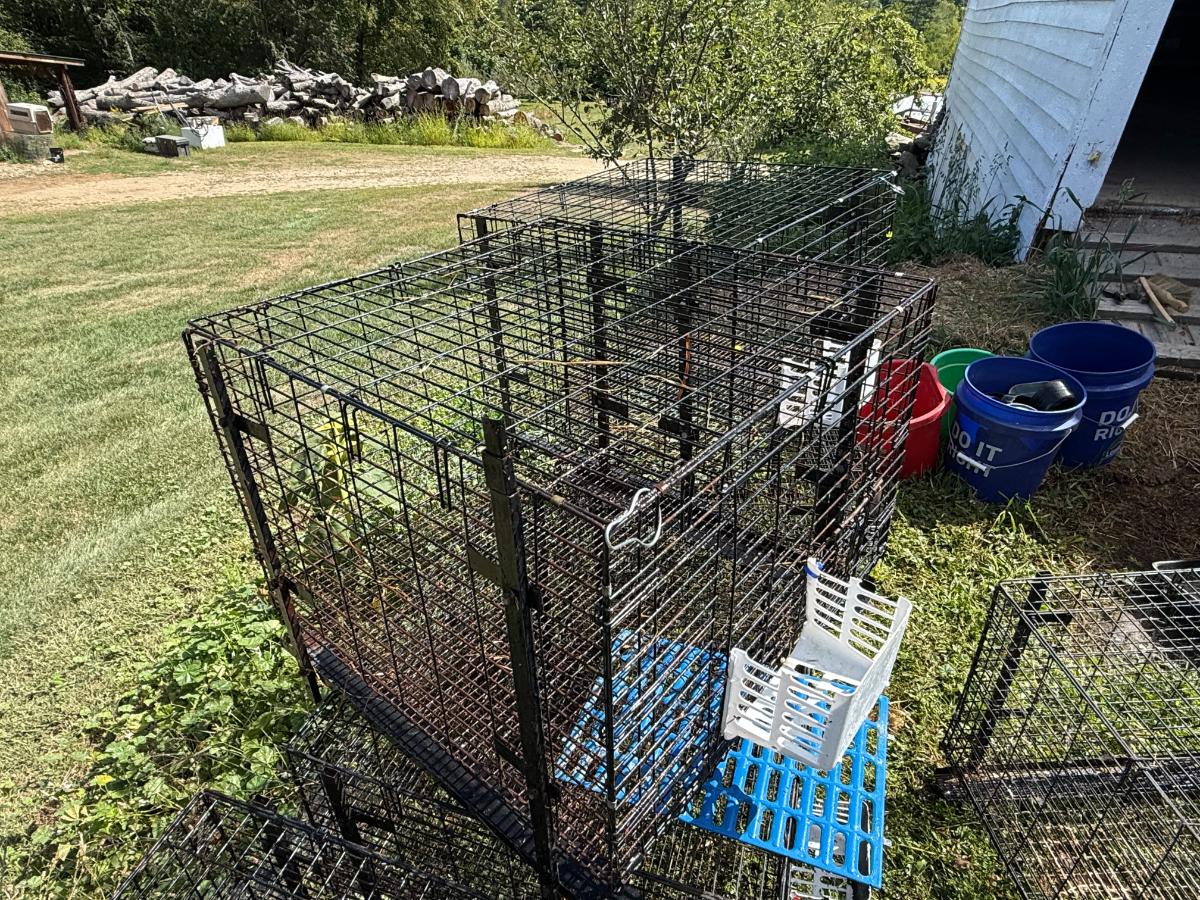
This is also the time to fix up any wear and tear on cages so they will be ready to set up and go when you get where you’re going. Yes, this takes some more time, but YES! you will definitely be glad to have your cages in good fighting fit condition when it comes time to get things set up in your new barn or location.
Some maintenance tasks to take care of include (but may not be limited to):
- Repair any locks or door slides
- Lubricate door slides to keep them from rusting (especially after power washing or burning off) -- a spray with WD40 works well!
- Replace any sections of floor or wall with new wire (use an appropriate gauge for the section being replaced)
- Inspect for holes or damage
- Fix broken welds or wires (if a small area, zip ties are one good repair option)
- If the cage is coated and coatings or paint are missing, you can paint the cages with Rustoleum paint
Start Off Right in Your New Location
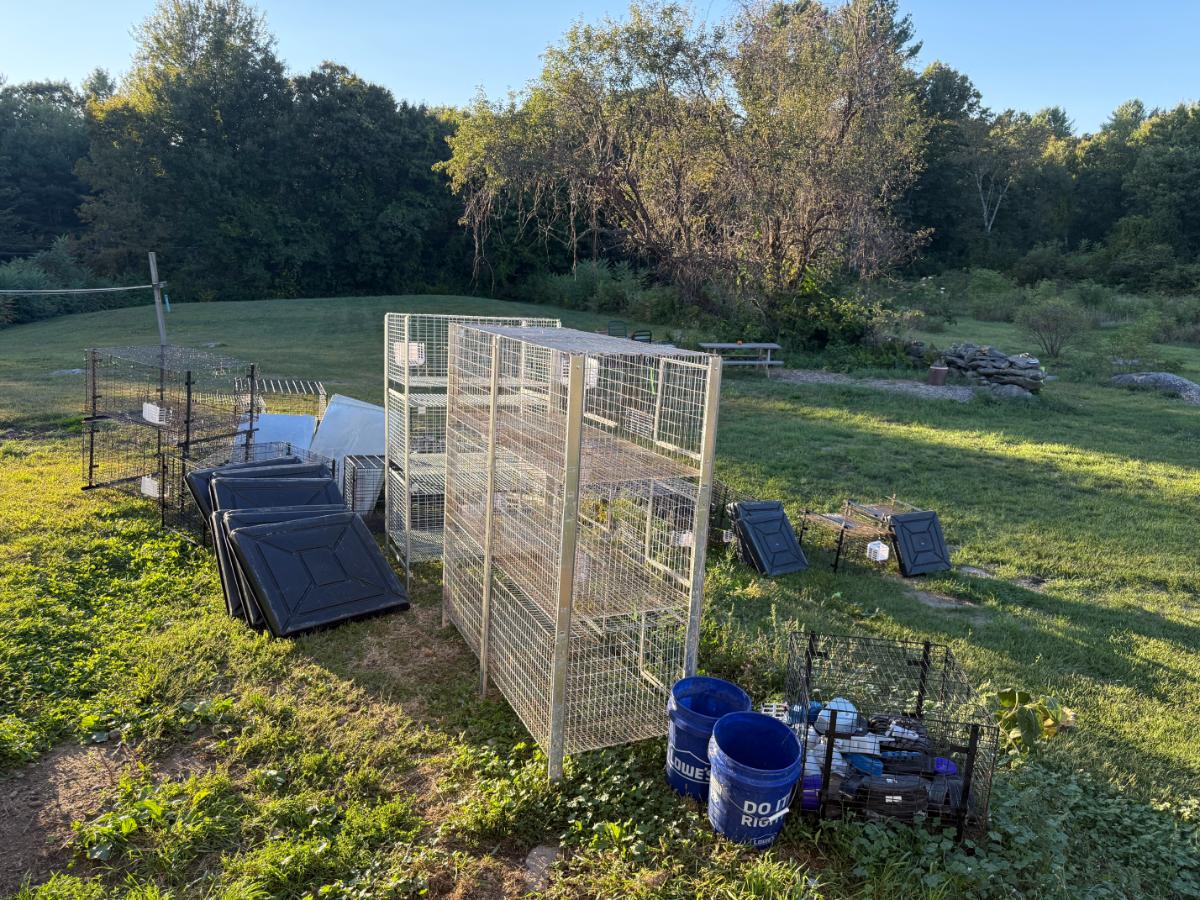
There’s a lot to do when moving or relocating a rabbitry. Time is always at a premium. But making the time to properly clean and care for your rabbitry equipment will pay dividends on the other side.
The last thing you need when you get your rabbits to their new home is an outbreak of parasites or disease onset from the added stress of the move, or animals becoming injured or escaping!
Leave a Reply