
Weaning is an important time in your rabbit kits’ lives. It’s an important time in your rabbitry, too, because it means things are moving on, and you’re getting closer to the harvest stage.
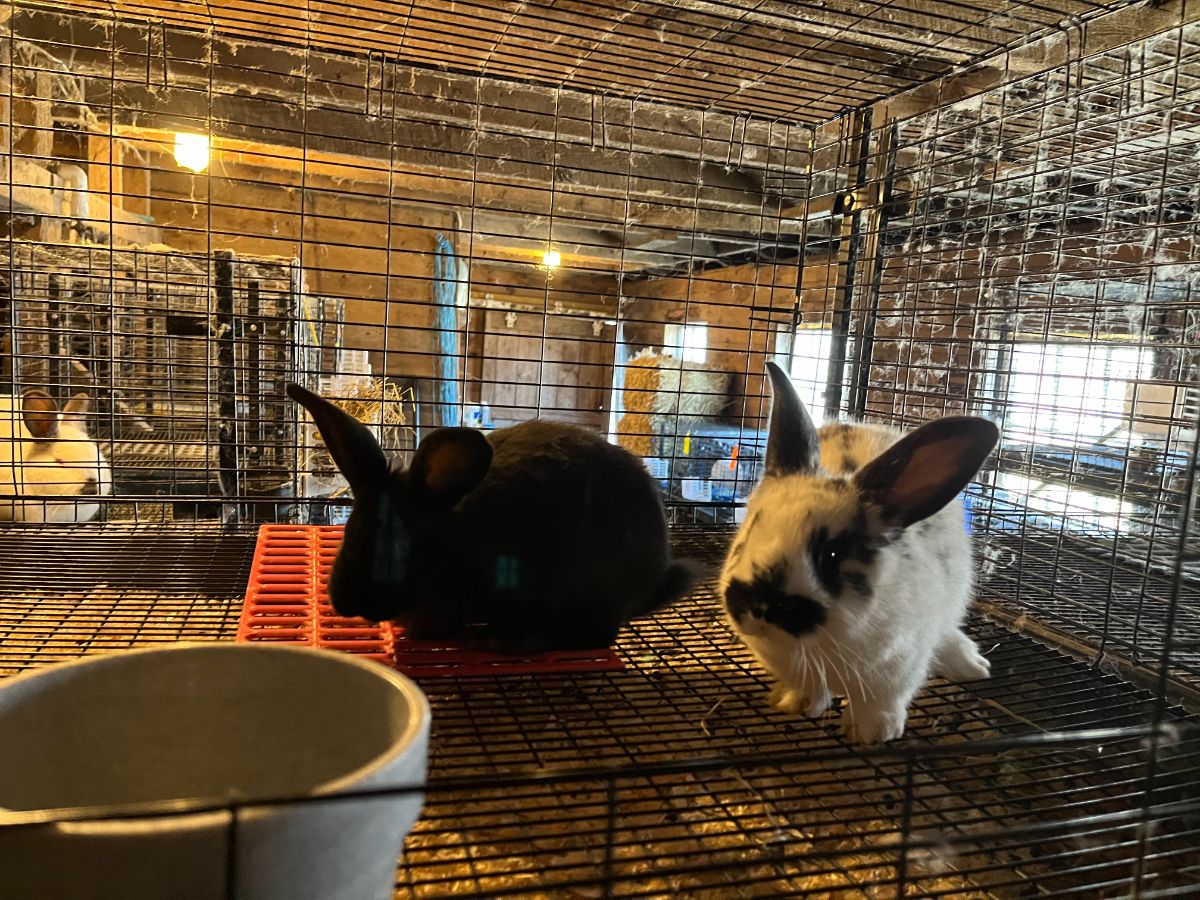
When is the right time to wean? And what are some signs to look for when you’re trying to make that decision?
Let’s take the guesswork out of weaning rabbits.
Jump to:
- What is Weaning?
- A Lot of the Weaning Happens Naturally
- Make Sure You Have a Good Place for Weaned Kits to Go
- Why Weaning Kits Too Young is a Problem
- Gut health and development
- Early weaning as a stressor
- Signs of weaning enteritis
- Ages to Wean Meat Rabbit Kits
- A better age to wean meat rabbit kits
- Signs it Might be Time to Wean Your Rabbit Litter
- Weaning Time Related to Doe Breed-Back
- You don’t need to wait to wean to breed
- The doe does need a break between litters
- A Couple of Different Ways to Wean Meat Rabbit Kits
- Weaning meat rabbit kits all at once
- Weaning kits in stages
- My preferred process and housing
- Keep Things in the Grow Out Cage Consistent to the Birthing Cage
- When Can Weaned Meat Rabbits Be Sold?
- Well-Timed and Well-Executed Weaning Sets the Stage for Good Growth and Harvest
What is Weaning?
Weaning, by definition, is the process of transitioning a mammal baby from drinking their mother’s milk to a more mature diet of solid foods.
Weaning also refers to the process of transitioning animals from one style or living setup to another -- I.e., taking them away from their parent to live on their own.
In the case of meat rabbit kits, weaning refers to both the process of transitioning the kits’ diet to solid food and water and also to the kits leaving or being moved out of the birthing cage and away from the mother doe.
In the rabbit world, when most people say “weaning,” they mean separating the litter from the doe and giving them their own home.
In short, weaning is the change to independent living for the litter of kits.
A Lot of the Weaning Happens Naturally
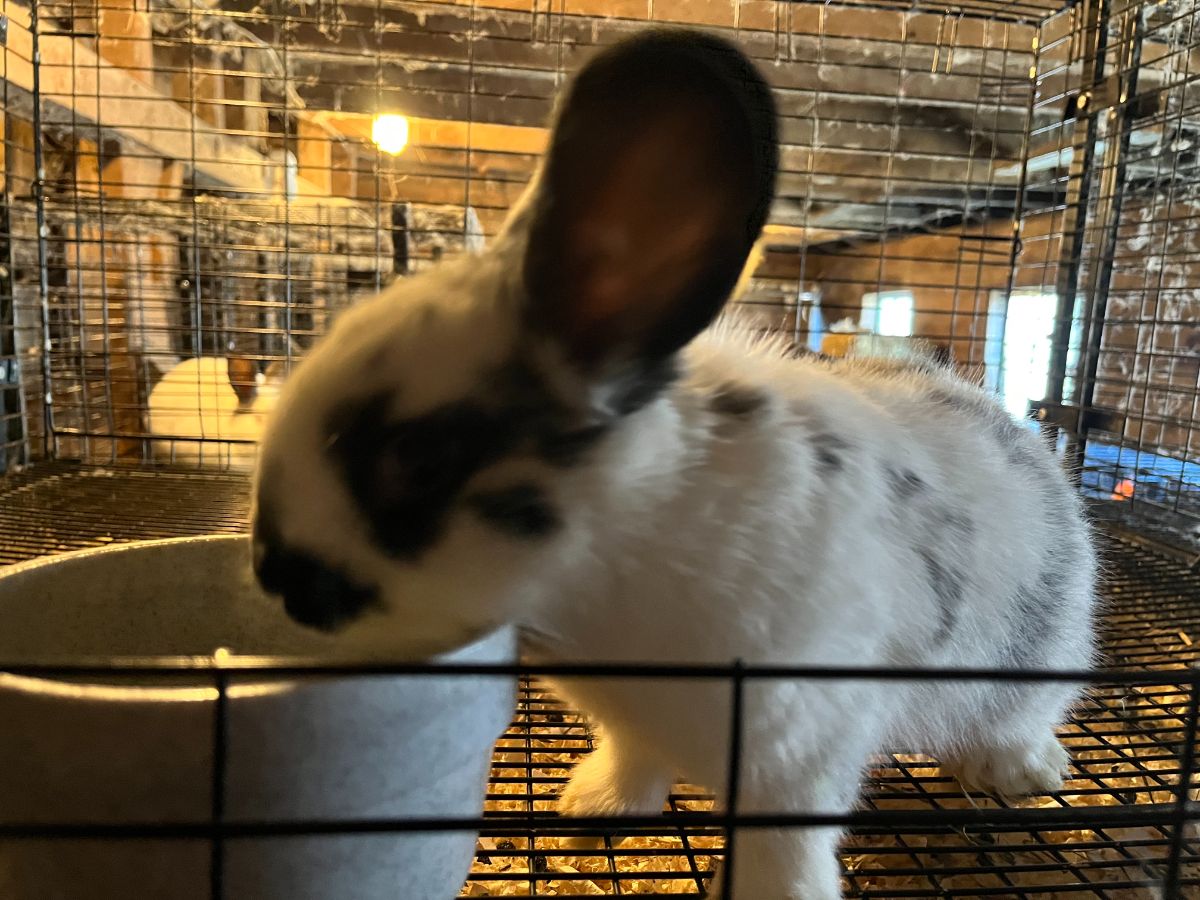
Though it may seem like weaning is an abrupt process, it really is not. The reason it is not is that weaning is already happening in your cage before you step in.
After the kits start to venture outside the nest, they will begin to nibble on any food that is available in the cage, and begin to sip water, too. This happens within days of the kits coming out of the nest, as early as two weeks old.
Once kits start eating and drinking from their mother’s supply, they will quickly increase their intake. As they grow and intake more and more solid food and water, they will become less and less dependent on their mother’s milk. They will nurse less and less.
The mother doe will also stop allowing the kits to nurse over the course of the next weeks and month. You may even see her jumping away from kits in the cage when they try to nurse. This is a sign that nature is taking its course and weaning has begun naturally.
Don’t be alarmed if you don’t see the mother deny the kits milk, and don’t be alarmed if you don’t see them nursing at all, either. Different mothers do different things in their own time.
It’s not very often that you will see kits of any age nursing anyway, because rabbit does only do this once or twice a day, early and late, and they tend to try to keep that private.
As long as the kits look well-fed, have good-looking coats of fur, are growing and gaining, and show good energy (relative to age and expected activity), there’s no need for you to worry.
What this all means is that by the time it is time for you to step in and take the kits away, the process has already mostly happened. Moving the kits is just the last and final step.
Make Sure You Have a Good Place for Weaned Kits to Go
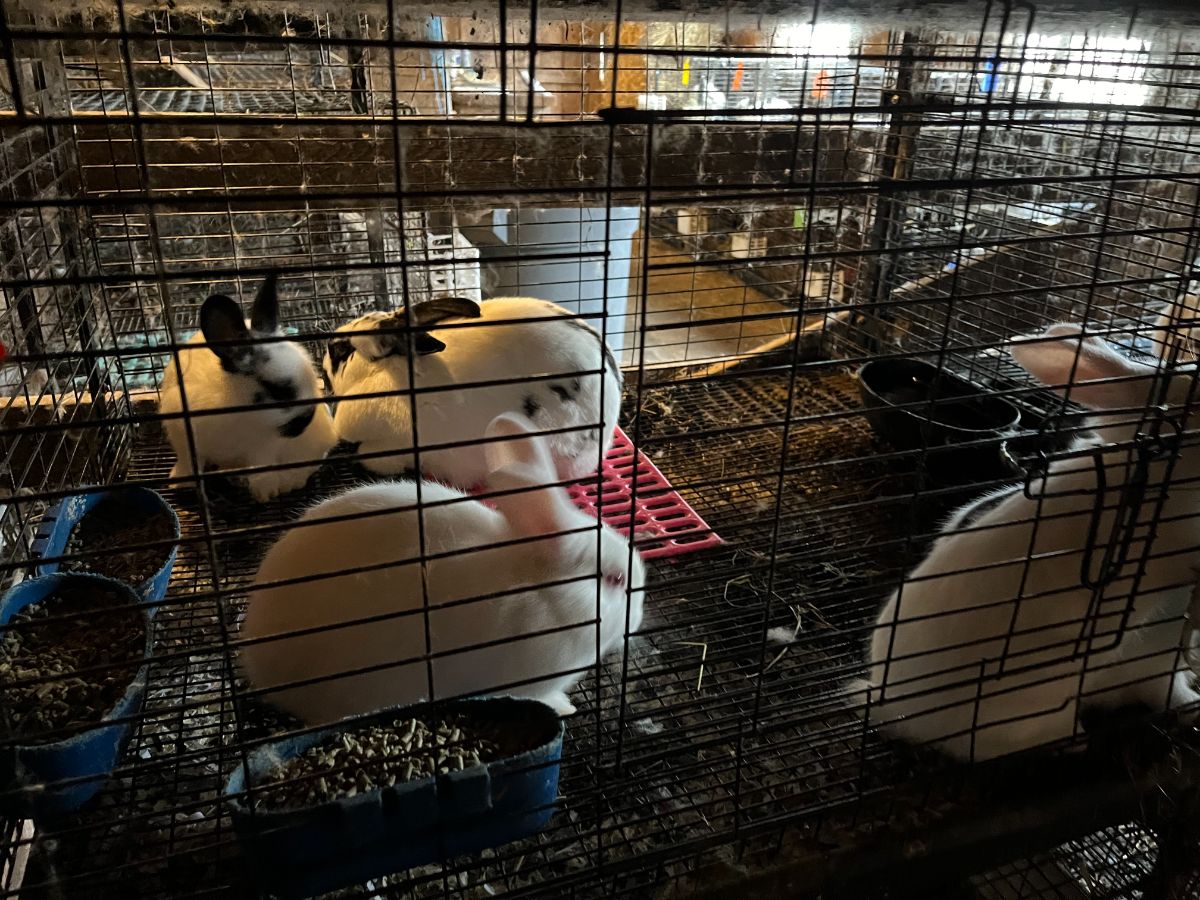
Before you make any moves to wean the litter, you have to have a place for them to go. Housing for your grow outs absolutely needs to be sorted out before you wean the kits.
People handle housing grow outs in different ways. Some popular options include:
- Moving the kits to a transition cage that is as large or larger than the birthing cage (the whole litter can be moved together if the cage is big enough and the kits are no more than 6 or 8 weeks old)
- The idea with a transition cage setup is that the kits will be moved again in about two weeks to their permanent home until harvest time. Plan to sex and house in permanent cages in about two weeks
- Splitting the litter into two transition or grow out cages, divided by sex*
- Housing all the grow outs together, or again, divided only by sex, in large grow out cages
- Moving kits to individual cages (or two to a cage), separated by sex, where they will stay until harvest
- Each rabbit should have at least two square feet of space to live as a grow out, and four square feet is better
- Cages, grow out tractors, and colonies are all options (my recommendation is growing in cages for health, predator and rodent protection, parasite and disease prevention, and more)
*Rabbit kits can be reliably sexed by 6 weeks old, though it can be a bit tricky, especially if you’ve never done it before. Mistakes are sometimes made, so it’s a good idea to check the sexes again at 8 or 10 weeks old. ...Unless you will be harvesting them all by 10 weeks, in which case it doesn’t matter that much.
However you decide to house your grow outs, the housing needs to be arranged and ready before you can wean your kits.
Why Weaning Kits Too Young is a Problem
Weaning at too young of age sets the kits up for a number of problems. One of the biggest and most likely to occur is weaning enteritis. This is a type of diarrhea and digestive illness that disrupts the rabbits’ abilities to properly digest and utilize food. It often ends in death.
With good care and management, weaning enteritis is preventable. One of the best ways to prevent it is not to wean at too young of an age.
Gut health and development
In those weeks with their mother, kits eat the mother’s cecotropes, and from them and her milk, they develop a balance of gut flora (probiotics and beneficial microorganisms). This is essential to establishing a well-working, well functioning digestive system and to building up those good bacteria and microorganisms so the kits can digest and then produce their own cecotropes.
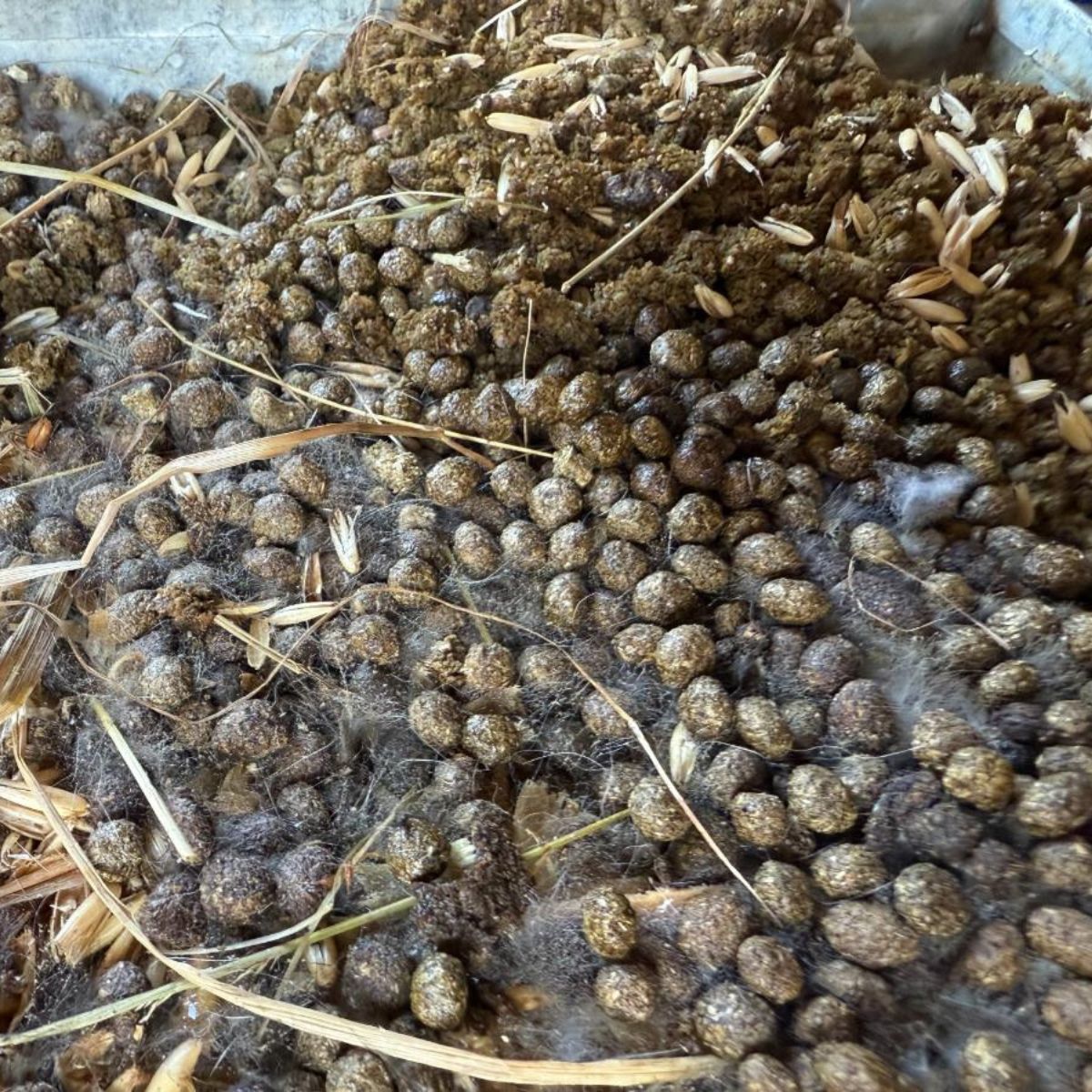
Cecotropes are a special kind of feces that rabbits produce in their hindgut. They are a small, fermented fecal pellet that is critical to rabbit nutrition and digestion. All rabbits at all ages need them from the time they start eating solid foods.
Fermented cecotropes allow rabbits to access and digest nutrients that they otherwise would not be able to. This is similar to (but clearly different from) how a cow rechews its cud to get all that it needs out of its food.
If kits are weaned too early, they do not have time to build up this beneficial system, and weaning enteritis is often the result.
Early weaning as a stressor
The stress of separation can also contribute to or cause weaning enteritis (stress is a common cause of digestive problems in rabbits). The older the kits are, the more equipped they are to deal with the separation, and they will be more ready for it.
Like all animals (including us humans), there comes a time when they want to leave the nest when they are ready for it. Once they’ve reached a stage of advanced development, it’s a natural and welcome move, but not when the kits are too young and before they are naturally ready for it.
Signs of weaning enteritis
Some signs of weaning enteritis include:
- Diarrhea
- Soft stools covered in mucus (clearly different from cecotropes, and mucus would be significantly more than just the shiny small cecotropes)
- Inactivity
- Hunching
- Discomfort
- Lethargy
- Restlessness (caused by discomfort)
- Distended or bloated abdomen
- Abdominal pain
- Tooth grinding (a pain symptom/response)
- Messy, diarrhea-covered hind end (this is often the most noticeable and first sign of weaning enteritis)
- Weight loss
- Dehydration as evidenced by dry eyes or mouth or skin that stays pinched when gently pinched together
- Poor coat quality (dull, patchy, etc.)
- Low body temperature
Ages to Wean Meat Rabbit Kits
What is too early to wean rabbit kits?
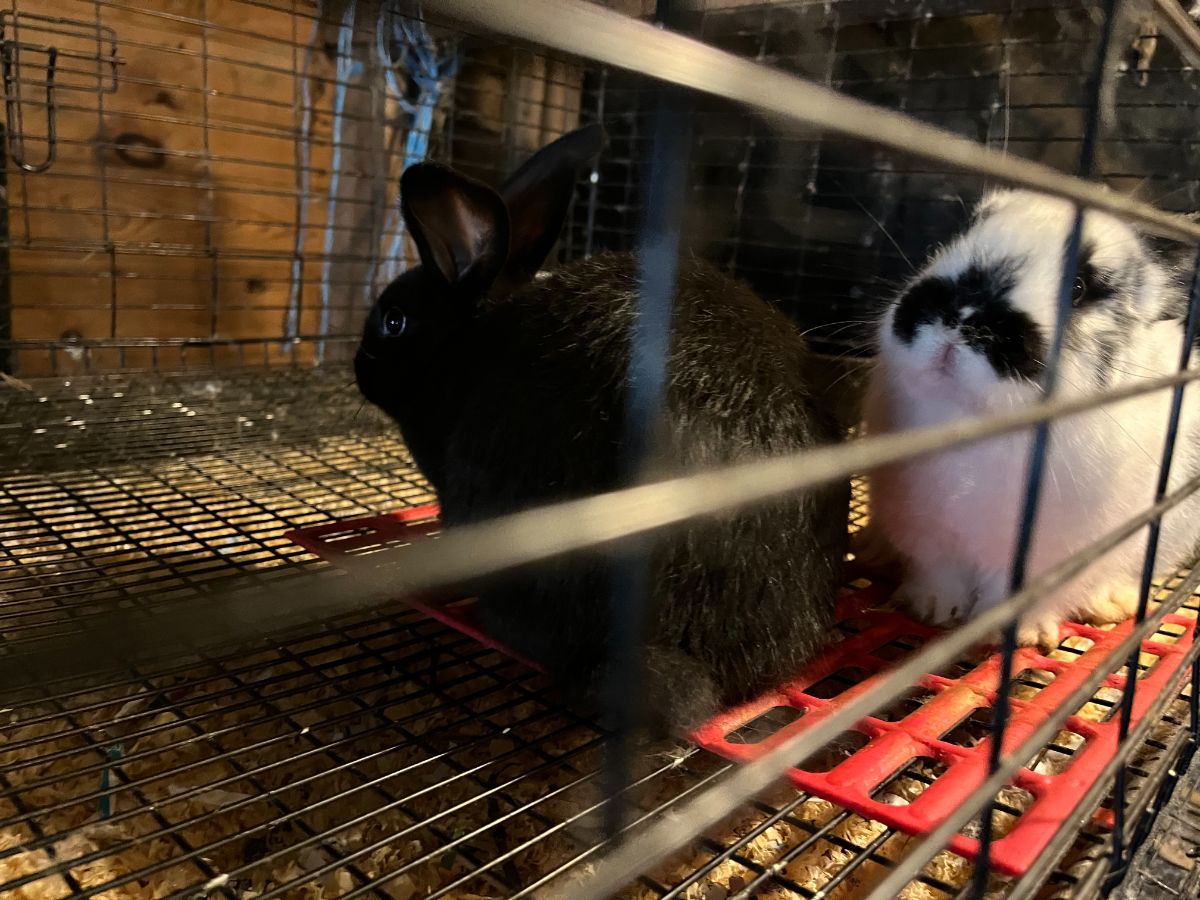
Anything under four weeks is certainly too early. There is no use – and a lot of risk – in weaning kits under four weeks.
Kits can be weaned at four weeks, but this is a borderline age and, in my opinion, unnecessarily risky. Just a week or two more can make a big difference and set the meat rabbit kits up well for a smooth, healthy transition.
The only real reason to wean at four weeks old would be if the doe is already rebred and is expecting to kindle within the next two weeks (more on this below). However, you can easily avoid having to wean at this young age simply by planning your breeding times out a little longer.
A better age to wean meat rabbit kits
A better age at which to wean your meat rabbit litters would be five to six weeks. You do not have to set this as a hard and fast rule, either. If the doe or kits don’t seem to be interested in one another, perhaps wean on the earlier side, at five weeks.
If all is well and if kits are looking a little small, maybe keep them with the doe for an extra week or two.
Kits grow and develop rapidly after four weeks. Two weeks can make a big difference in the size and strength of your kits. It also gives their digestive and immune systems more time to develop alongside the doe and along with the natural immunities and nutrition she is giving them.
I personally find that weaning at five and six weeks is best and proves to be a good time. The kits are healthy and do well. I’ve never lost a kit due to weaning at this age. The kits are strong enough, eating well, and doing quite well on their own, with practically no visible signs of stress and no signs of poor nourishment or ill health.
Kits could stay with their mother longer, and some people keep kits in with the doe for as long as eight weeks, but personally, I find that after six weeks (and sometimes five for a large litter or large kits), cage crowding and feed competition become issues, and it’s just time for the kits to go.
You will often see that the doe is disinterested and sometimes even bothered by kits at this age, too. It becomes clear that it is just time to wean and move on.
Signs it Might be Time to Wean Your Rabbit Litter
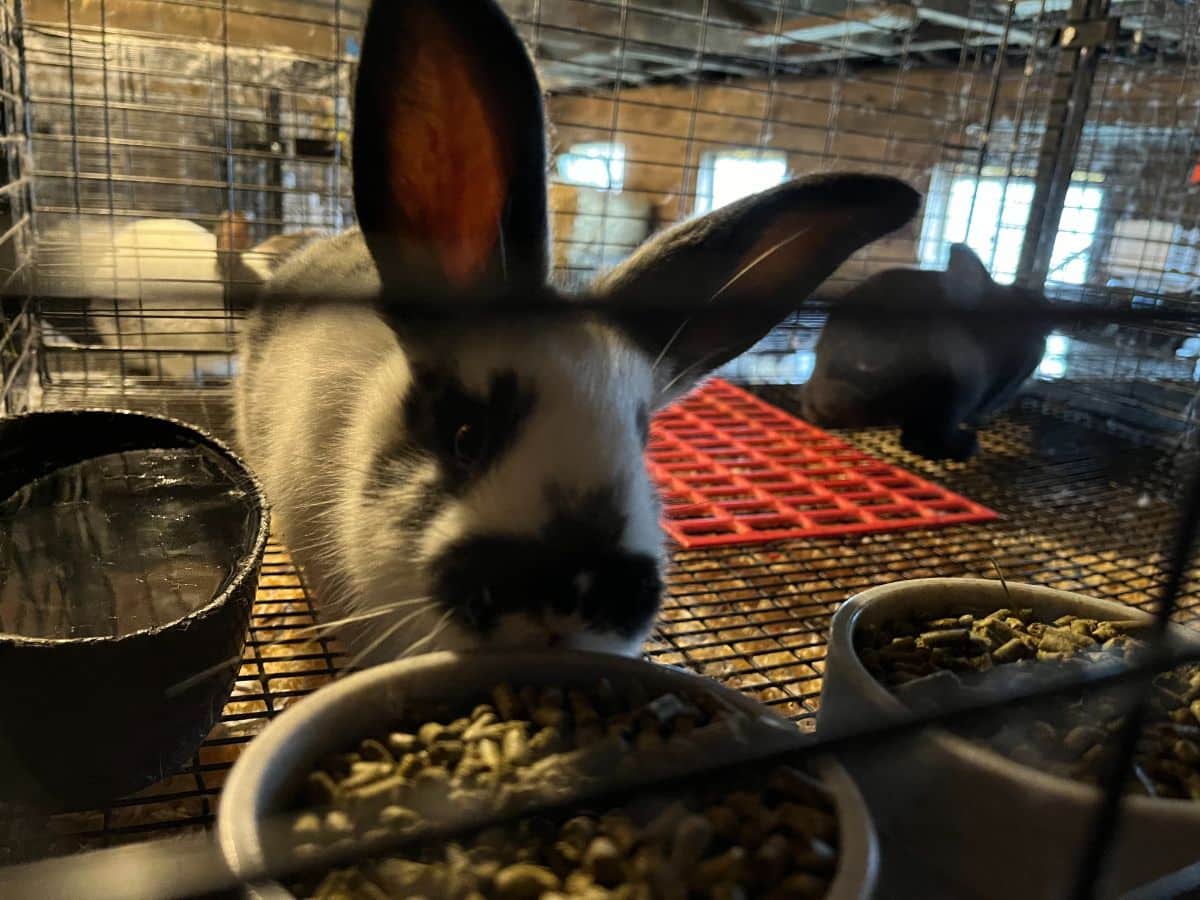
Let’s start with a few general signs that might tell you it’s time to wean your meat rabbit litter.
You may experience some or all of these signs, and in and of themselves, they are not problematic, per se, but they might help you make a decision if you’re not sure if the weaning time has come.
- Rabbits seem overcrowded in the cage
- There is little room for the kits or the doe to move around freely (keep in mind that movement is essential to good digestion and health, too)
- The doe seems agitated, put upon, or frustrated with kits
- Doe seems like she is constantly trying to get away from the kits or escape them but cannot
- It is difficult to keep enough food or water in the cage to supply all the animals (there should be a free feed of food and water available at all times)
- It takes too much space to put enough feeders or waterers in the cage
- Feed and water dishes or feeders take up too much space, further shrinking the available space in the cage
- The cage cannot be kept clean with regular cleaning
- Drop pans fill up with feces more than twice a week
- Feces piles up through cage wire and piles up in the cage, even with reasonable regular cleaning (a sign that there is too much waste for the cage and system to handle)
- Constant soiling of feed cups (soiling of feed cups is in part just part of life with kits as they will jump in and poop where they eat if they can, but it also might be a sign that the cage is crowded and kits are backed up to the feeders too much, causing them to urinate or defecate in the feed)
- Signs of fighting, injury, and aggression, either between kits or the doe
- Animals are yellowed from contact with urine and feces
- The doe is due to have another litter in two weeks or less (see below)
If you see any signs of aggression or fighting, it is time to wean immediately.
The same is true if you have kits urinating on each other. This is something that occurs with older males (usually not at less than eight weeks of age, though, so if you have this happening, you either have a serious crowding problem or your kits are far too old to be together in that space). It is past time for them to be separated and to be given more room.
Weaning Time Related to Doe Breed-Back
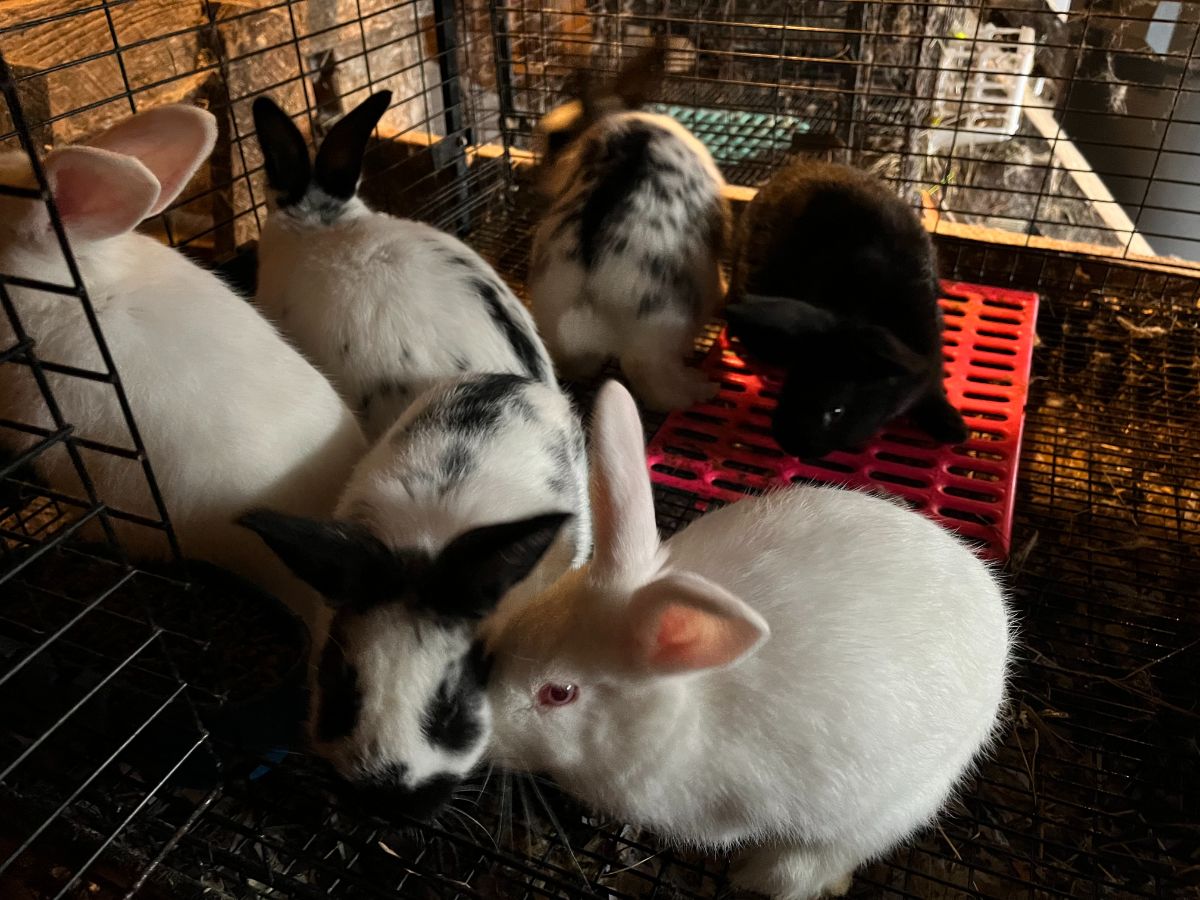
In a production meat rabbit program, weaning also relates to the management of the rabbitry. If you want to keep your does producing on a good schedule, you need to get older kits out of the cage in a reasonable timeframe.
There are two major reasons for this:
- Crowding and cage conditions become problematic and increase feed competition for all
- The doe’s body needs time to recover before giving birth again to keep her in good condition
As the doe approaches birth again, she would likely become aggressive if other kits were in the cage. She needs the time, space, and resources to grow her next litter healthfully and to maintain her condition.
This means that you will want to plan weaning so that you can keep the doe producing, so that you are meeting your goals and needs for meat production.
You don’t need to wait to wean to breed
It is okay to breed the doe back before the litter comes out of the cage. The demands on her will become less as the kits grow, and the demands on her of gestating the next litter are lower at the beginning of pregnancy, so her body can handle some crossover.
However, she cannot do both for the whole pregnancy. The current litter must come out of the cage with at least two weeks left before her next kindling.
For example, you could breed the doe back at four weeks (meaning the kits in the current litter are four weeks old) and then remove the kits by six weeks.
The doe does need a break between litters
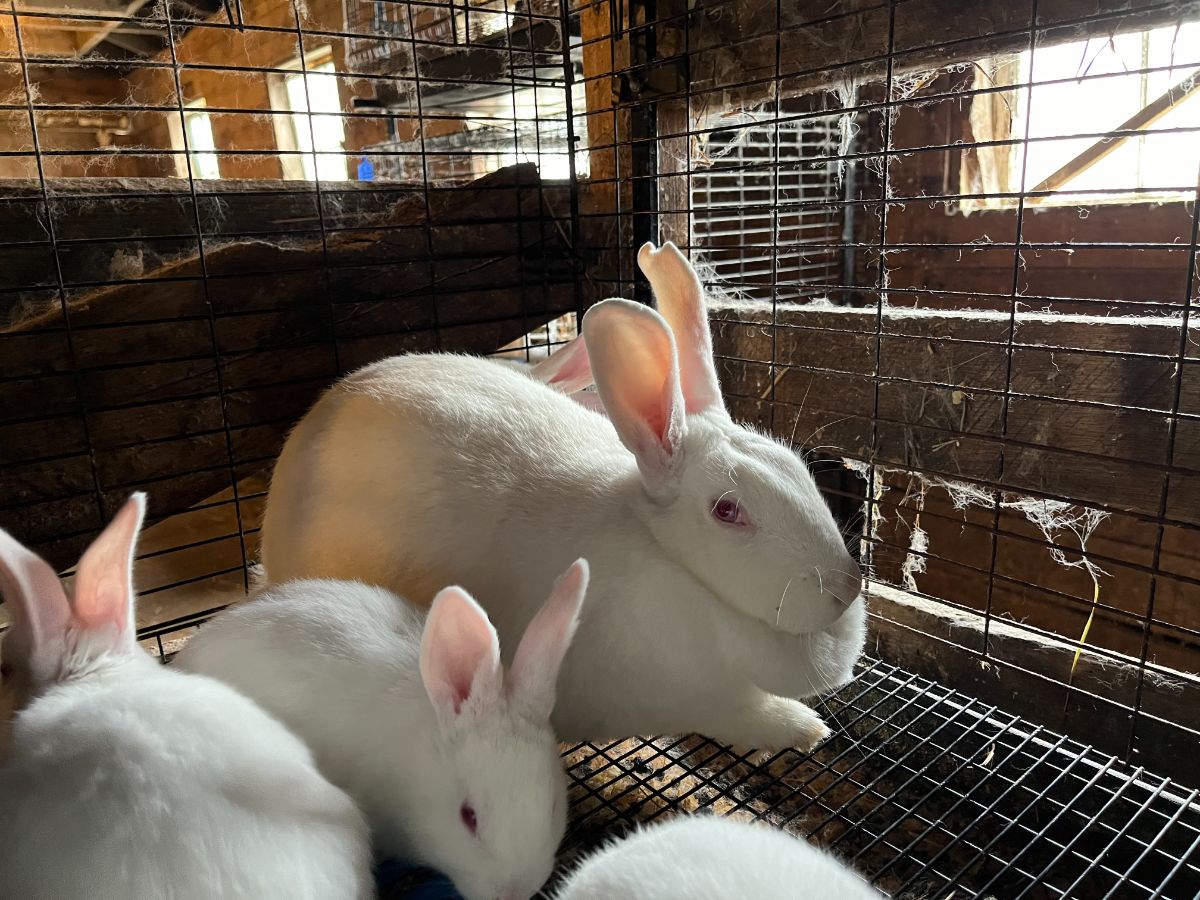
The doe does need at least two weeks without others in the cage for her to regroup, reset, and prepare the new nest without disruption or risk to the new kits and to be able to reset milk production so that there is colostrum for the new kits when they are born.
Not insignificantly, the mother also needs to be allowed a rest and needs to not have to endure the stress of overcrowding and competing with large weanlings.
Plan your breeding and weaning schedule so that the mother has this two-week break (or longer).
A Couple of Different Ways to Wean Meat Rabbit Kits
You can choose to wean your kits all at once, or you can take a slower approach and wean the litter over a period of a few days or a week.
Weaning meat rabbit kits all at once
This is the fastest and easiest way to wean a litter of kits.
Once you decide it is time to wean the litter, you simply move all the kits to their next accommodation—whether that is individual cages, a group grow out cage, or a transition cage.
The advantage of doing this is that it’s one move, and you do not have to spend time weaning over several days.
Another advantage is that if you do have a doe who is due and needs kits out quickly, this is a fast way to do it.
If you are concerned about this being too abrupt for the doe or the kits, don’t worry. This is not much more stressful for anyone (if at all) than weaning in stages. The doe, at this point, is more living with the kits than trying to actively care for them. Parting ways with her kits is natural, and it is what does, and kits are designed to do.
Weaning kits in stages
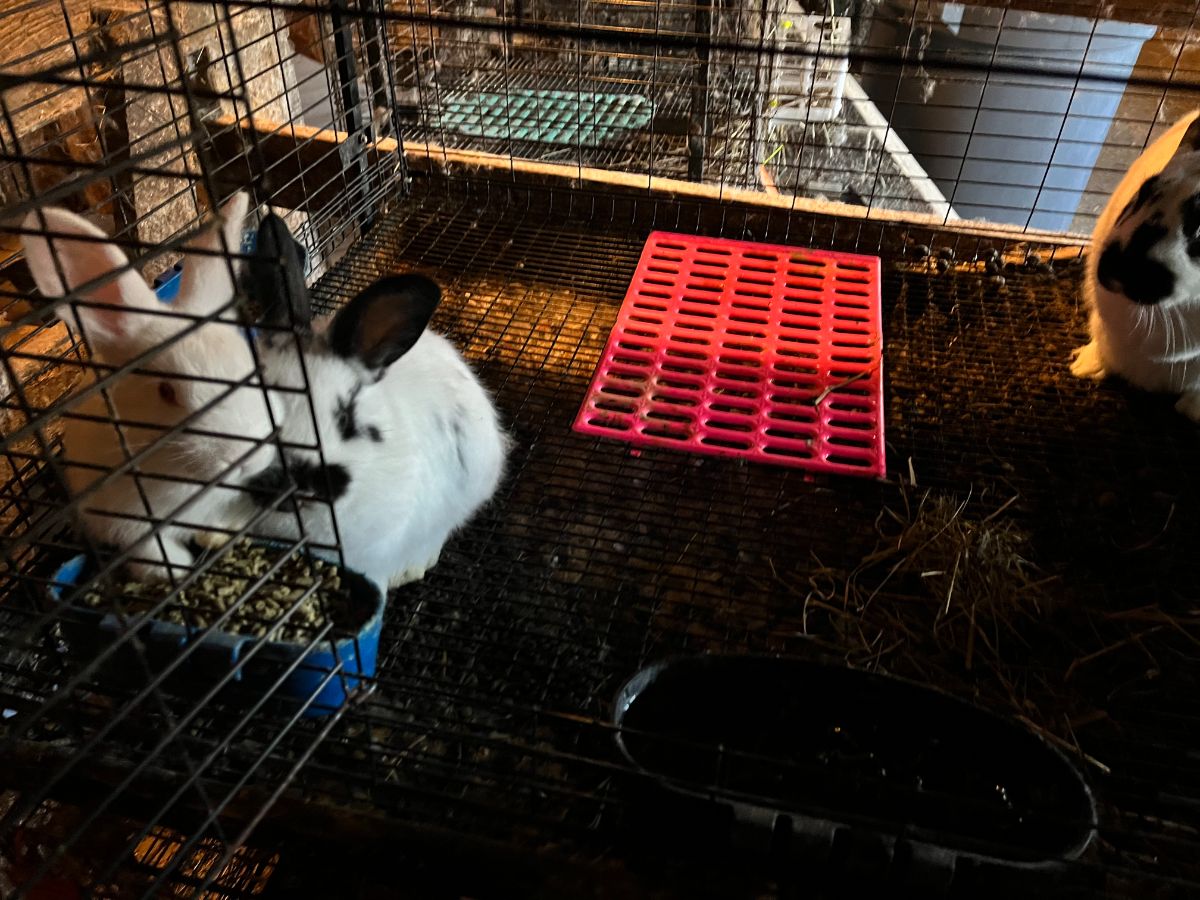
Often, breeders will choose to wean kits off in stages.
When you wean in stages, you remove some of the kits a little at a time over several days.
The thought behind this is this:
- If the doe is still nursing, it slowly decreases her milk supply and prevents mastitis
- Keep in mind that the doe’s supply has already been gradually decreasing with demand as the kits move to eating mostly solid food
- You can remove the larger of the kits and give the smaller kits a few more days to catch up
- If the doe is still nursing them, those kits will benefit from a few more days of eating their mother’s rich milk.
While this may seem negligible, keep in mind that kits will gain at a rate of around one to two ounces per day at 5 to 6 weeks, so even a few days of an enriched milk supplement can catch a small kit up quickly. This may give them time to get milk that the larger kits were keeping them from.
If you choose to wean in stages:
- Remove kits two or three at a time
- Take the larger kits out first
- Complete weaning over the course of four to seven days
- Each day or each two or three days, remove the next largest kits
- Continue until the whole litter is weaned and re-housed, and then let everyone settle in and move on
My preferred process and housing
I usually wean in stages and in two or three moves of the kits. This is to give small kits a chance to catch up, more than anything else. It might help dry up the doe’s milk more gradually, but this isn’t why I do it this way, and that has never been a problem here, either. It’s more for the kits than the doe.
When I move my kits, the process is:
- Day one, move two or three larger kits
- Day two, move two more
- Repeat as necessary for the number of kits in the litter
- The last of the litter (smallest kits) may get an extra couple of days with the doe
- Kits move to a transition cage (or two if the litter is too large for one cage)
- After two weeks in the transition cage, they move to individual grow out cages in the main room
- Kits are sexed when moved to grow out cages (unless I don’t care because I don’t plan to keep or raise any of the litter, and they will all be harvested)
- Sexing matters more if you are keeping kits housed together because you don’t want any accidental breeding
- I have and often do skip the transition cage altogether
- The purpose of the transition cage is only to help manage populations and reduce cleaning and maintenance tasks, while the kits are small
Keep Things in the Grow Out Cage Consistent to the Birthing Cage
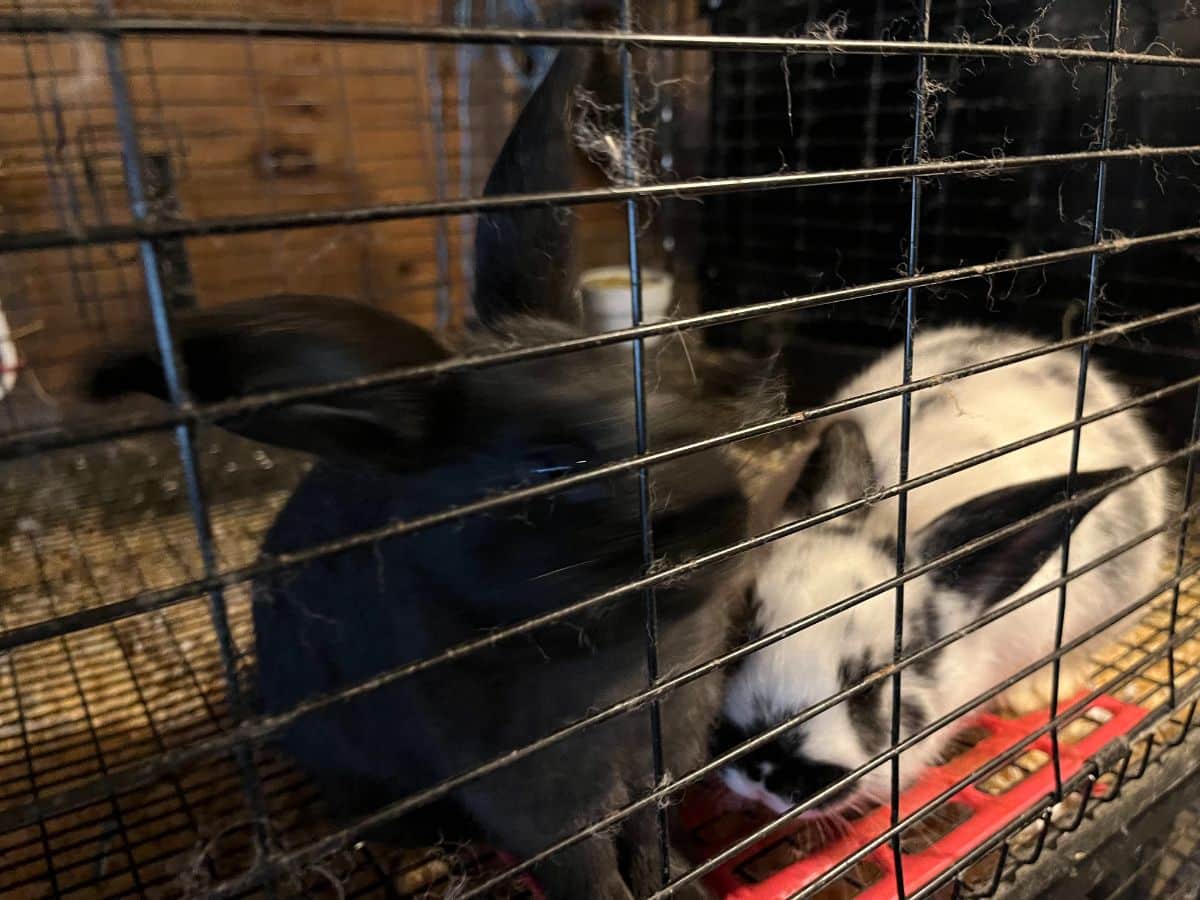
What does this mean?
This simply means that weaning is not the time for other changes in the lives of the kits. Specifically, the way they are fed and watered.
- Do not make any changes to the diet, and do not give treats or supplement feed if the kits have not been consistently eating what you’re offering
- Changes to the diet that are not adjusted to the kits’ gut bacteria are a prime cause of diarrhea (weaning enteritis)
- Continue to provide free feed pellets and hay (or whatever the diet is that the kits have been being fed
- Continue to provide access to fresh water daily, and keep water in front of the kits around the clock
- Provide extra dishes and feed in the cage if needed to accomplish a free-feed situation
- basically, if there is any small amount of feed left, when you feed again, you are feeding enough. If there is not, increase the access to food.
It can’t be said enough—just keep the feed program consistent. Make it the same as what the kits ate with their mother, and do not make changes at this time.
When Can Weaned Meat Rabbits Be Sold?
If you plan to sell or give away kits, you should wait until they are eight weeks old. Kits younger than this should only go if they go with their mother. In fact, in most locations, this is the law (though the laws do vary).
A good way to handle this is to wean by six weeks, keep the kits for two more weeks, and watch and observe them, then sell starting at eight weeks if and only if the kits are strong and healthy and are eating and drinking well.
Well-Timed and Well-Executed Weaning Sets the Stage for Good Growth and Harvest
By weaning well and watching your kits as they transition, you will set the stage for continued good growth and a good harvest.
As long as the grow outs are well-fed and protected from parasites and disease, you have little to worry about now. It is not likely that you will lose kits unless some serious medical condition arises. From here on out to harvest age, kits mostly eat, grow, and be merry little rabbits...soon to be big rabbits and an excellent and nutritious meal for your table.
Good job getting your kits through to weaning age and independent living!
Leave a Reply