
It’s helpful to know the more common terms that rabbit breeders and meat rabbit growers use so that you know what they’re talking about. People who have been around meat rabbits for a while and people on rabbit groups and in social media forums will throw these terms around and assume everyone knows what they’re talking about. But if you are new to raising meat rabbits, you might not.

To help you get geared up to read, learn, and join in the conversation, we’ve laid out some of the more common and more important terms for you to know.
Think of it as a meat rabbit glossary of sorts.
Jump to:
- Meat Rabbit Talk: The Most Common Rabbit Terms You May or May Not (But Should) Know
- Abattoir:
- Bone to meat ratio:
- Breed:
- Breeder:
- Buck:
- Cage:
- Cecotropes or caecotrophs:
- Coccidiosis:
- Colony:
- Commercial breed:
- Conformation:
- Crossbreed or crossbreeding:
- Cull:
- Breeder:
- Dam:
- Doe:
- Dressed, dressout, or dressed out:
- Drop pan:
- Fluffle:
- Fryers:
- Gestation:
- Grow outs (or growouts):
- Heat:
- Herd:
- Hocks:
- House (or Rabbit House):
- Hutch:
- Inbreeding:
- Intermediate:
- Junior rabbit:
- Kindle:
- Kits:
- Litter:
- Live weight:
- Mites:
- Molt:
- Mutt or Meat Mutt:
- Nest box:
- Pair:
- Palpate or palpation:
- Pedigree:
- Proven:
- Pup(s):
- Purebred or purebreed:
- Outcrossing:
- Quarantine:
- Rabbitry:
- Rest mat:
- Roaster:
- Runt:
- Select or selection:
- Sire:
- Senior:
- Snuffles:
- Standard or breed standard:
- Stewer or stew rabbit:
- Trio:
- Variety:
- Wean/weaning:
- Confused About a Term or Rabbit Reference? Let Us Help!
Meat Rabbit Talk: The Most Common Rabbit Terms You May or May Not (But Should) Know
Abattoir:
A facility that slaughters animals (not only rabbits, but an abattoir may specialize in only rabbits). A slaughterhouse.
Bone to meat ratio:

This refers to the amount of meat in comparison to the amount of bone in a harvested, dressed rabbit.
Not all dressed weights are the same. Giant breeds of rabbits tend to have large skeletal frames. While the bone can be used for things like broth and stock, you want more of the animal’s weight to be in edible meat, so you want a low bone-to-meat ratio. Rabbits with large skeletons also tend to grow the skeleton before the muscle, so they often take longer to produce meat, and they are not as efficient an animal as a meat source.
According to Michigan State University, 85% of the dressed weight of a rabbit should be edible (that is, meat and organs).
Breed:
A specific type, or sometimes referred to as a race, of rabbit. This is the same as a breed of dog or horse. Rabbits in the same breed should share a general body type, size, and colors (within the accepted and recognized range—like how you can have a yellow Labrador retriever or a chocolate lab).
Breeder:
A breeder is most often used to describe a rabbit that you keep long term for breeding and producing new meat rabbits and grow outs. A breeder can be the doe you use as a mother or the buck you use as the father (sire).
“Breeder” may also refer to the person who raises and breeds rabbits, whether for sale or for their own personal use—someone who facilitates the breeding of meat rabbits and raising of meat rabbits.
Buck:
A male rabbit. This can and does refer to male rabbits of any age, but it’s mostly used when referring to a male rabbit that you use for breeding.
Cage:

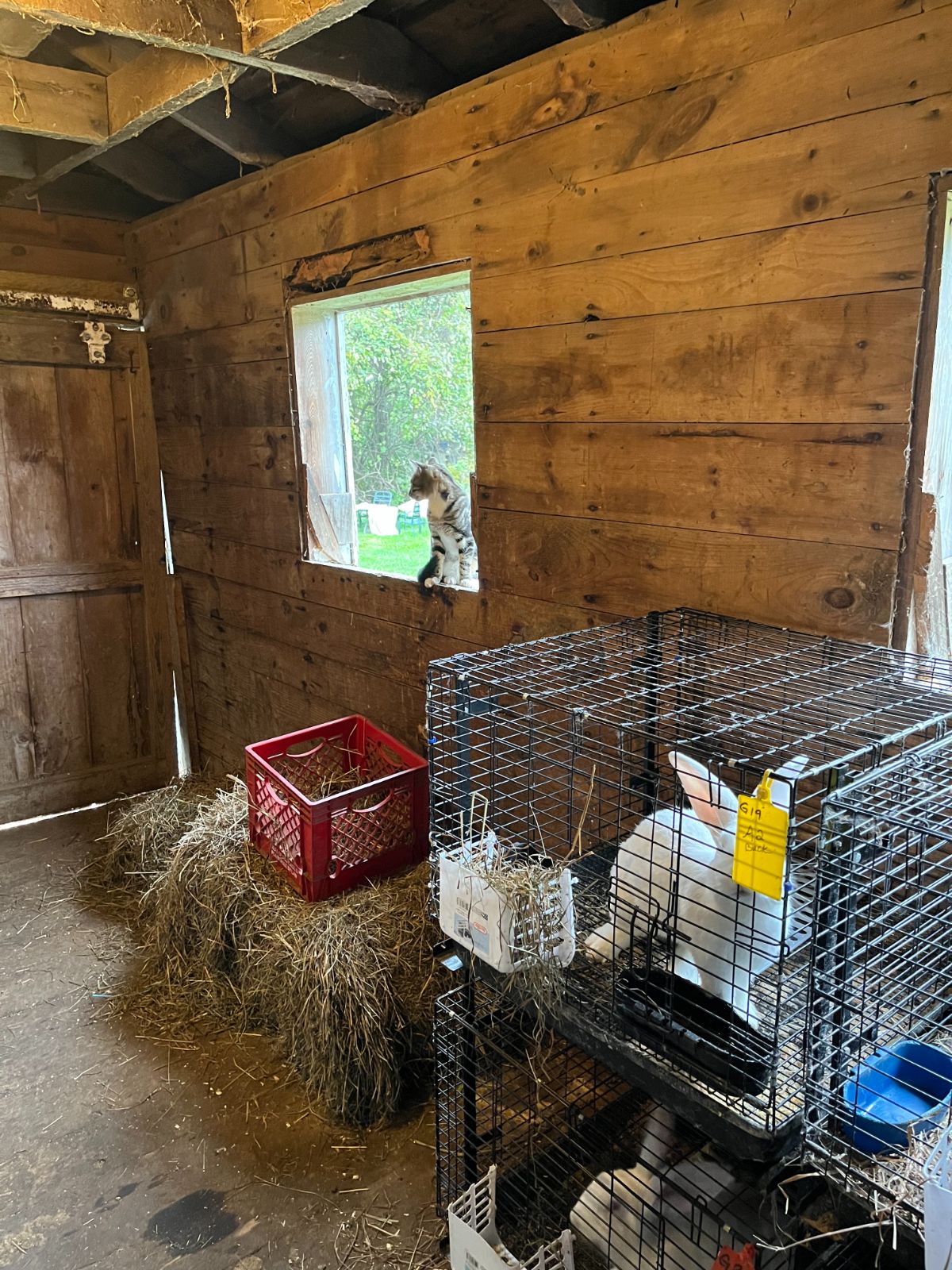
A cage is one of the more common ways to house rabbits, and it refers to an enclosure, usually made mostly or completely of welded wire, for housing rabbits and other small animals. Cages are usually housed in a barn, shed, or rabbit house or at least supported on a frame with some protection if outdoors. Cages may also be suspended from chains or stacked on frames with drop pans to make efficient use of space and for fast cleaning.
Cecotropes or caecotrophs:
A normal and necessary type of fecal matter (poop!) produced by rabbits. Cecotropes are much smaller and shinier than normal rabbit manure. They contain high levels of beneficial probiotics that the rabbits need to maintain gut health. Rabbits will eat these as they are produced.
They are not always visible to the keeper because they are eaten, but you may see these small, sticky, grapelike clusters in the cage or on the cage floor if they are not all consumed. Mother rabbits also feed these to their young when they begin to eat solid foods, which builds their beneficial gut bacteria and keeps their digestive tract in good health.
Coccidiosis:
A not uncommon disease of rabbits that is caused by a species-specific strain of the parasite coccidia. More common in outdoor and colony-raised rabbits. Characterized by lethargy and failure to thrive but also may exist in adult rabbits with no notable signs or symptoms.
Signs of infection are commonly found at dispatch and noted by yellow, spotted livers. The meat of the animal, if the rabbit is otherwise healthy, is safe to eat, but the organs should be discarded (livers especially). Coccidia is a common ground parasite that farm animals have, including chickens. They are often able to live with it, and some are more immune to the effects of coccidia than others (this is true in many animals living with coccidia).
Some sources say that all rabbits carry coccidia, whether you know it or not. Coccidiosis is when the load is so great as to cause obvious signs of illness or distress.
Coccidia are specific to the host and species. For example, the coccidia that lives in a dog will not survive in a meat rabbit, and so it is generally accepted that coccidia in rabbits does not pass on to infect other animals (such as dogs eating a raw diet of rabbit meat).
Heat in cooking kills the parasites. There is no real risk to human health when rabbit meat is properly prepared (just as chicken or any other meat should be properly cooked).
Colony:
Colony, in reference to rabbits, refers to a style of raising rabbits in groups. The groups are usually of mixed ages. This may be indoors but is often done outside in a large, fenced-in enclosure. It is considered a natural style of raising but has both its benefits and drawbacks.
A colony must be large enough for several ages and stages of rabbits, does, and litters to find distance away from each other to feel secure in their homes.
Commercial breed:
Refers to breeds with commercial value. It is a somewhat elusive definition but is often based on the types defined by the US American Rabbit Breeders Association, or ARBA. Meat rabbits fall into this category, but not all rabbits in the commercial category are good meat rabbits or are not all breeds that are most often kept as meat rabbits. The group includes some small and pet types.
Commercial breeds are widely accepted as the medium breeds that are larger than small dwarf pet breeds. Giant and large or extra-large breeds may also be included as commercial types. Large and giant breed rabbits are also sometimes kept for meat, but the commercial “medium” breeds of rabbits are considered the most efficient and best meat producers.
Commercial refers mostly to a type, so cross bred rabbits may qualify. Common commercial breeds that make good meat rabbits include the Californian, New Zealand, Chinchilla, Champagne D’argent, Crème D’argent, Silver Fox, Florida Whites, and others. Most of the time, when people talk about commercial breeds, they mean meat breeds such as these.
Conformation:

Conformation refers to the shape and proportions of the rabbit. In meat rabbits, there are desired shapes and characteristics that make up a rabbit’s conformation and show it to be a desirable animal that is likely to produce good meat.
Crossbreed or crossbreeding:
A cross breed is a breeding mix of rabbits of either two different breeds, or rabbits whose breed and history is not known. Cross breeds are often intentional in meat rabbit breeding because combining the traits of two or more good meat rabbit breeds can result in some quite healthy, vigorous, strong rabbits with good bone-to-meat ratios.
For example, it is a regular practice to breed a New Zealand rabbit to a Californian to net the benefits of large meat and muscle from the NZ and the finer boning and compact growth of the Californian.
Cross bred rabbits can be bred together as breeders for grow outs, especially if you are not picky about breeds, but you should work toward a type with favorable meat production, good growth rates, and overall efficient production.
Cross bred rabbits are not as widely accepted as breeding stock by people looking for production meat breeders, so know that if you want to sell breeding stock, you will usually get a lower price for these rabbits, and you may have a harder time finding buyers.
Cull:
Some people refer to harvesting as culling, but this is not exactly accurate. Culling is most accurately a practice of eliminating a rabbit to maintain health and quality in the rabbitry. It is the removal of sub-par animals, not the harvesting of animals for meat. That said, you may eat a cull rabbit if it is healthy.
For example, you may have held a growout to raise as a breeder, but as it developed, you realize that it does not grow as quickly as you would like, or that it is prone to sneezing, or it is a poor mother, and so you cut the rabbit from your breeding program so that those traits are not passed on. The animal is healthy and should not go to waste, so you process it to eat it, but its genetics are removed from the breeding program.
You may also cull a rabbit because it has a poor temperament, is a hygiene problem because it sprays too much, it bites or is aggressive with you, kids, or other rabbits when being bred, etc.
Other reasons to cull (and probably not eat) are if an animal is sick, injured, struggling, or failing to thrive. Culling may be a mercy in some instances.
The reasons you decide to cull or cut a rabbit from your program are up to you and the goals of your barn and herd.
Breeder:

A breeder is most often used to describe a rabbit that you keep long term for breeding and producing new meat rabbits and grow outs. A breeder can be the doe you use as a mother or the buck you use as the father (sire).
“Breeder” may also refer to the person who raises and breeds rabbits, whether for sale or for their own personal use—someone who facilitates the breeding of meat rabbits and raising of meat rabbits.
Dam:

A dam is a rabbit who mothered a particular rabbit, litter, or offspring. A mother rabbit.
Doe:
A doe is a female rabbit. Like the word “buck”, it is most often used to describe a breeding female who is kept to produce more meat rabbits, but a doe is a female rabbit of any age and can be used to describe any age female rabbit. It’s just more common for people to be talking about their breeders when they talk about their doe or does.
Dressed, dressout, or dressed out:
These terms refer to a butchered rabbit after hide and unusable innards are discarded. A rabbit that is “dressed” or “dressed out” consists of only usable meat and bone (organs may be included or kept separately).
A “dressed weight” is what the carcass weighs when it is ready for consumption.
These are important terms because they tell you how much meat (food) you are getting from your grown, processed rabbits. It’s also important to know if a person is talking about a live weight or a dressed weight so you can gauge the efficiency and production of the rabbit(s) in question.
A good meat rabbit should dress out at about 60 to 65% of its live weight. That means that if your rabbit weighed eight pounds when it was alive, you should get a dressed carcass that weighs about 4.8 to 5.2 pounds. (This would be a weight from an older roaster rabbit at around 16 weeks; a fryer would be expected to weigh 3 to 3.25 pounds dressed.)
Drop pan:
A drop pan is a large tray or “pan” that sits below a cage with a wire floor to catch waste like feces and urine. They are usually used with a stacking-style cage system. The trays slide out easily and can be easily dumped for cleaning. They keep urine and manure away from the rabbit because the waste drops below and out of the cage, not piling up in the cage where the animal may step or sit in it.
Fluffle:
Fluffle is a fun little word that means a group of rabbits!
Truly, you’re not likely to hear a lot of breeders use this word. It first referred to a group of wild rabbits, and some sources continue to list it as a reference only to wild rabbits. It’s a fun word to know, though; gives you a little trivia, and why shouldn’t we have some fun with our work?
Fryers:

A fryer is a young grown-out rabbit ready to harvest. This refers to a meat rabbit that is harvested at a weight of five pounds and at an age of between 10 to 12 weeks (with the goal being closer to the 10-week (about 2 and a half months)/5-pound target).
Fryers should dress out at more than half their live weight after processing.
Gestation:
The period of time a rabbit doe is pregnant. The amount of time it takes from breeding and conception to grow kits and to give birth.
In meat rabbits, this is usually a range of 28 to 35 days (as long as 40 in some rabbits, but that is less common). The average gestation for meat rabbits is 31 or 32 days (about 1 month), and most rabbits will give birth on this day/night (usually like clockwork on day 31).
Grow outs (or growouts):

Grow outs are rabbits that are marked for raising specifically for meat. Most of your rabbits will be grow outs, as the goal is meat production.
This is simply the term rabbit growers use to talk about the rabbits and litters they are currently raising for the table, as opposed to rabbits they may be selecting for breeding stock.
Note that if a grow out stands out while it is coming up, it can still be selected to save as a breeder!
Heat:
Heat refers to a reproductive cycle in an animal, which means it is in a stage of readiness to be bred. It is ovulating (releasing eggs) and receptive to the male. Rabbits do not have heat cycles like other animals do. They are induced ovulators, meaning that they release eggs when they are bred.
This is a benefit because they can be bred at almost any time (with perhaps the exception of a couple of days here and there). You do not need to watch for signs of heat to attempt breeding, and you do not have to hit a small window in which to breed.
For example, cows come into heat about every 21 days (about 3 weeks) and are only in heat and able to be bred for about a day, so you really have to know the signs of heat and timing for cows and other animals with true heat cycles. Not so for rabbits!
Herd:
The word herd with rabbits is used as a group term (like fluffle, only not as fun). It refers to all of your rabbits, your entire group. It’s not exactly accurate but is a word people commonly use to refer to their collective group.
Hocks:

The “foot” of the hind legs of rabbits, the first section of the foot/leg.
These are well-padded but may become sore and ulcerated if they rub too much on cage floors. Good, clean cage conditions, keeping rabbits out of manure and urine, will usually prevent a problem. Rest mats or straw or hay to rest on are good preventatives. Balms like petroleum jelly help heal and reduce irritation.
House (or Rabbit House):
A rabbit house is a type of housing for rabbits. It is usually used outdoors and is something between a shed, a covered stand, and a barn. It is a perfectly acceptable way to keep rabbits, even in colder northern climates.
A rabbit house typically has two or three sides and a roof. It has framed “shelves” where cages fit in on a frame or are set into shelves or racks. A drop pan system would normally be used so the upper tiers of rabbits are not soiling those below. The house is usually set up on legs to keep animals above the ground and lend some predator protection. Most houses have two or three floors of cages.
Hutch:
A rabbit hutch is usually built on stilts or legs. It may be a single, double, or triple hutch. Each hutch can house one rabbit or one litter (or doe and litter before kits are weaned). Hutches are not exactly mobile, but they can be moved.
A hutch will usually have a boxed-in wooden section where rabbits can hide, nest, and seek shelter from the weather. The other half of the cage is made of wire on a frame for air and light and for waste and feces to drop through.
Hutches are usually more expensive but can also be built by a handy rabbit keeper. They are a good solution if you don’t have a shed or barn so that you can raise your rabbits outdoors but with safe and weather-appropriate protection.
Inbreeding:
Breeding related rabbits, sometimes closely related, to each other. This may be a parent to an offspring, siblings (least common/advisable), a grandparent, aunt, or uncle to a “niece” or "nephew”, etc.
As long as good traits are selected for, and animals with poor traits are not bred together, this is an acceptable practice with rabbits that can result in strong characteristics and genes. Rabbits in the wild inbreed and line breed and share genetic material.
When meat rabbits are bred in a continuous inbred line, it is referred to as linebreeding, which stays in the same direct line for several generations; for example, older litters or generations bred with younger generations.
Intermediate:

Intermediate is a reference to age in rabbits. An intermediate rabbit is a rabbit that is between six and eight months old. People who show are more likely to use these types of terms for age, but it does apply to grow outs and breeders, too.
Junior rabbit:
Also, a reference to age. A junior rabbit is a rabbit that is less than six months old.
Kindle:
Kindle or kindling is what it is called when a rabbit gives birth. This is the act of giving birth to a rabbit.
Kits:
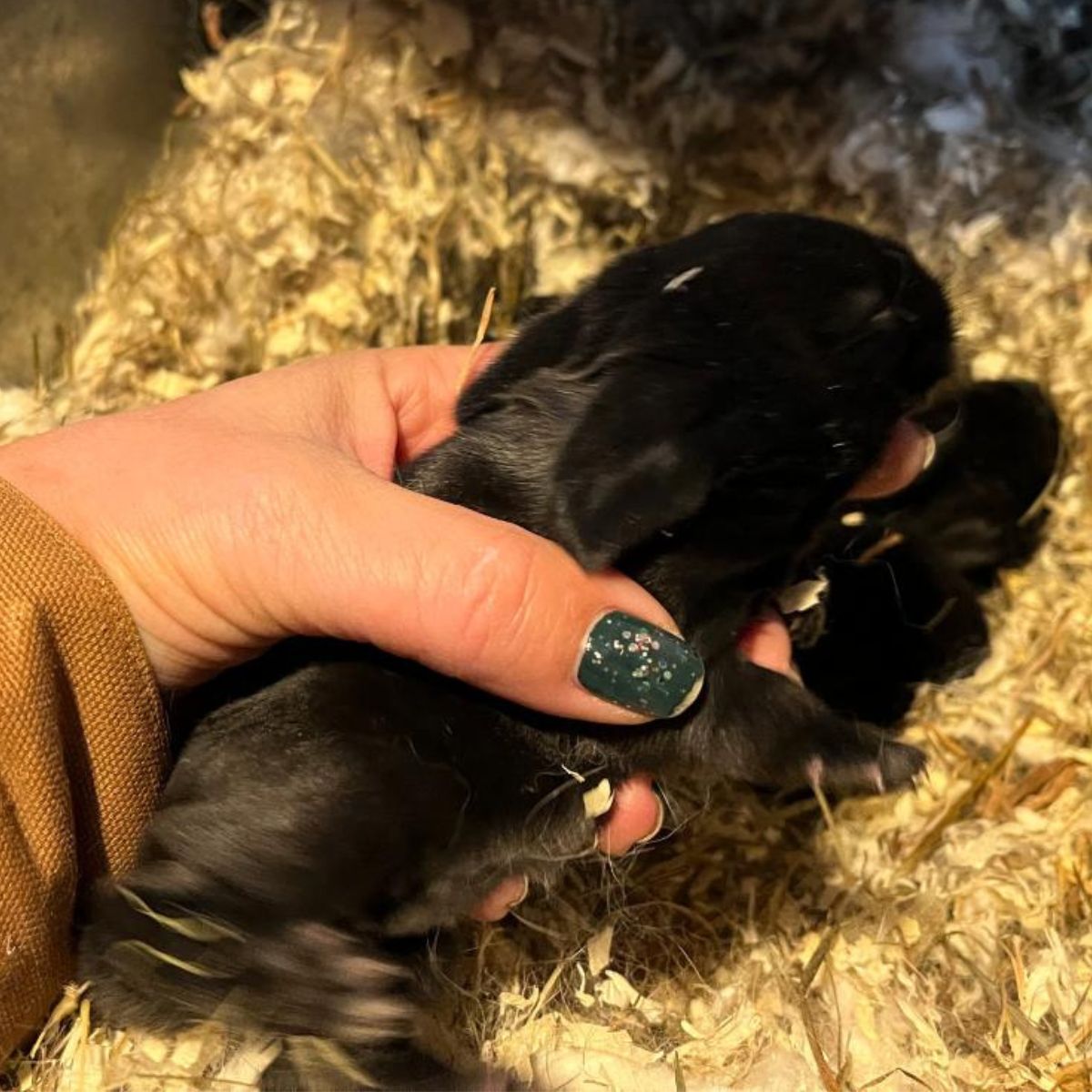
Baby rabbits are called kits.
Litter:

A litter is a group of kits born to a mother doe in one birthing. Like a litter of kittens, rabbits have litters of kits.
A doe kindles a litter of kits.
Live weight:
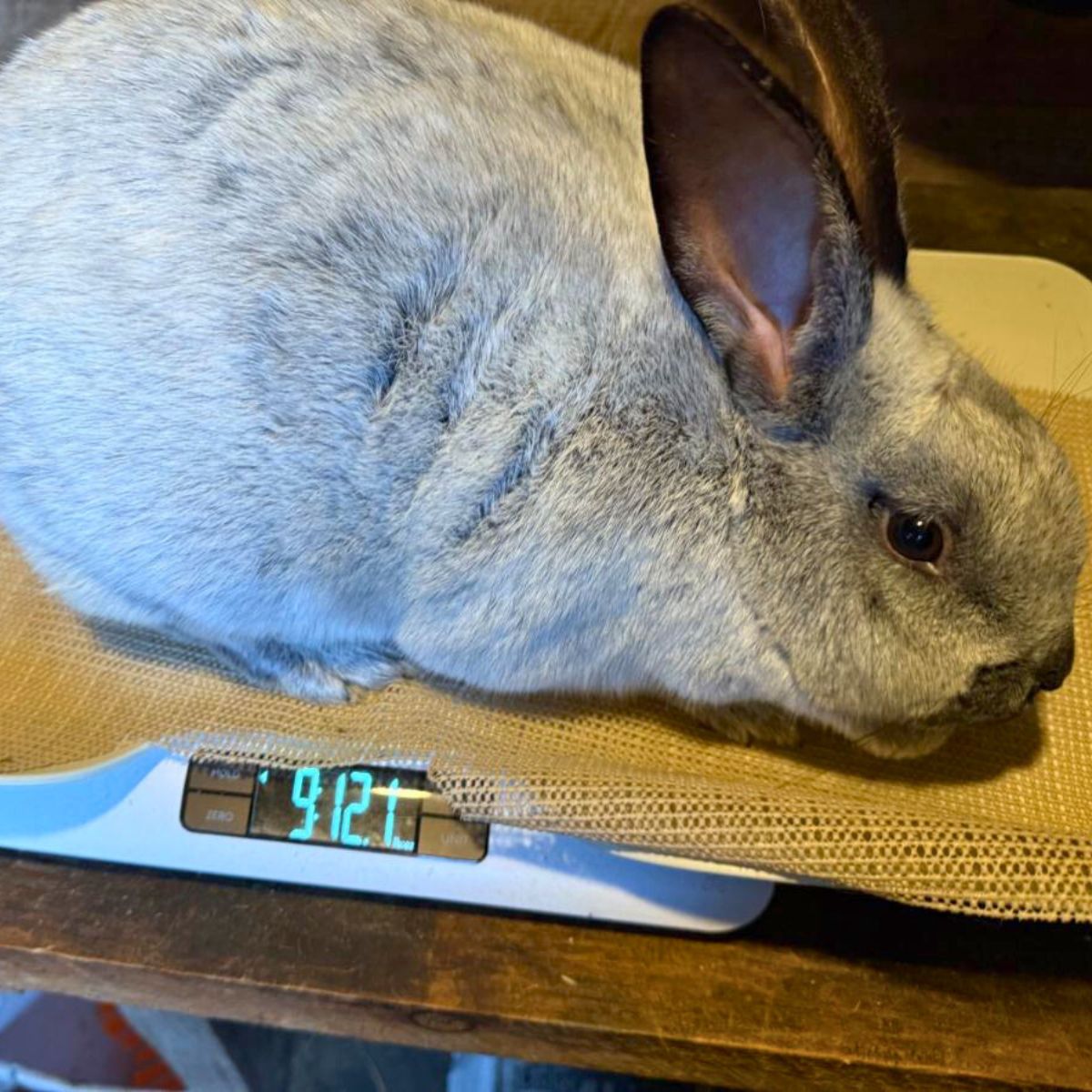
Live weight is what a rabbit weighs when it is alive. It is good to track live weights so you know how fast your rabbits are growing and how long it takes them to reach harvest weight. It is also good to know how much of that weight is lost in processing so that you know how much usable meat (food) you are getting from your rabbits after they are butchered and dressed.
Compare the live weight to the dressed weight to see how efficient and productive your rabbits are.
Mites:
A parasite that sometimes infects rabbits. This is not an uncommon condition, and rabbits may be more likely to contract mites depending on housing type, time of year, living conditions, and exposure to other animals or people who have handled other animals, like cats or dogs.
Mites usually live in the ears of rabbits, and ears will appear yellow and scabby. Mites are the same as the ear mites that live on household pets. They are easily treated and not cause for alarm, just action.
Molt:
Molting is a process by which rabbits replace their coat of fur. This is basically like shedding in dogs. Molting allows rabbits to lose excess fur before the warm summer or to build a thicker, warmer coat for winter.
Rabbits will usually molt twice each year, in spring/summer and fall. You may not see young rabbits molt because they may reach harvest age before that happens, but you will surely experience this in your breeders.
Mutt or Meat Mutt:
A mutt or meat mutt is just a term that refers to a rabbit of mixed breed or a rabbit for which you do not know the breed or ancestry. While the term sounds somewhat derogatory, it really is not.
Meat mutts make excellent meat rabbits. In fact, many breeders intentionally create meat “mutts” to capitalize on the hybrid vigor between two purebreds (or even two good mixed breed rabbits). They also do this intentionally to combine the best traits of two or more breeds to produce animals with excellent muscling and good bone-to-meat ratios so that more of the animal is meat and not an inedible skeleton.
Nest box:

A specially designed box that is put in with a pregnant doe several days before expected birthing. This simulates the burrow that a wild rabbit would make in the wild. It provides a warm, protected space where kits and the doe feel the litter is safe.
Nests and nest boxes allow does to control the heat and cooling of baby rabbits and keep the litter together for warmth, care, and feeding. Nest boxes should be filled with shavings in the bottom and straw or hay in the top, which the mother doe will arrange and pack with fur to keep the kits warm.
Pair:
Pair refers to a breeding pair of rabbits—one buck (male) and one doe (female).
Palpate or palpation:
This refers to feeling the underneath and sides of the abdomen of a bred doe to determine if she is pregnant. Palpation can be done starting at 10 to 14 days after breeding. If kits are forming, they can be felt as small marble-like pebbles in the horns of the uterus along the sides of the doe’s abdomen.
However, it should be noted that this is an acquired skill and that not all breeders become skilled at it. Don’t fret. If your doe is bred, she will kindle in a little more than two weeks anyway. This is something you will see rabbit breeders talk about fairly regularly, though, even though many never attempt to do it (or do not rely upon it if they do).
Pedigree:
A pedigree is simply a record that shows the parentage of the rabbit for three generations back. It must include three generations for both the dam (mother) and the sire (father).
A pedigree can be created for any rabbit for which the parents are known. It does not have to be for a purebred rabbit, and a pedigree is not a guarantee that a rabbit is a pure breed (unless you know that all the parents are purebred).
People have differing opinions on whether pedigrees are worth it or not. The information is only as good as the information that is provided and relies on people keeping good records and on their honesty. You can certainly access good rabbits without a pedigree.
For meat raising, it is probably more important to know the traits and characteristics of the parents and line. For example, it’s better to know how quickly the dam and sire grew to harvest weight or how quickly their offspring hit that weight than to know the names of the mother, grandmother, and great grandmother.
Proven:
A rabbit is “proven” if it has successfully sired or given birth to a litter of kits. That is to say, if you are talking about a “proven” buck, that you know he is capable of reproducing and breeding a doe because he bred a doe that gave birth to live kits. He has proven himself capable of breeding.
When you are talking about a proven doe, proven means that she is known to be able to be bred, carry a litter, and give birth to live young.
Some people take these definitions further, and there is some debate as to how far a doe or buck has to go to be considered “proven”. The most commonly accepted definition is proof of the ability to breed to the stage of live birth.
For example, a buck can fertilize a doe, and there are live kits born. A doe can conceive, gestate, and give birth to live young. At this point, they are considered proven by most rabbit raisers and most breeders.
If you want to know more about the quality, quantity, and success of the litter, ask further questions. If a breeder or seller tells you a buck or doe is “proven”, take it to mean just this—that they know they can breed and produce live kits.
Pup(s):
A pup is another name for a baby rabbit, more commonly and more accurately called a kit.
Purebred or purebreed:

Purebred means that a rabbit is from breeders of the same type and that it meets the recognized standard for the breed in question. In rabbits, a purebreed is not always 100% genetically all one breed. It is usually accepted that if it meets the breed standard, it is a purebred.
This is, in part, because even breed associations allow some outcrossing to boost certain colors or traits in a line of purebred rabbits. A purebred rabbit should not have a lot of mixing in its history, though, and should come from parents from the same breed.
Outcrossing:
Breeding unrelated rabbits, but rabbits that are of the same breed. This is different than cross breeding, which is intentionally mixing rabbits of a different type or breed. Outcrossing is done to mix in more genetics from unrelated rabbits to keep the animals strong and vigorous or to capture desired traits like size, conformation, or color.
Quarantine:
Quarantine for rabbits is the same as it is in other circumstances. This is the practice of separating a rabbit to either prevent it from spreading an illness or disease or to monitor the rabbit to make sure it is not ill before mixing it in a room or colony where it can spread germs to other rabbits. It is a measure to protect the health and safety of your fluffle.
It is recommended practice to quarantine new rabbits for a period of two to four weeks before they are housed in the same area as the rest of your rabbits.
Rabbitry:

A rabbitry is a rabbit room, area, or farm. It is a similar collective term for rabbit keeping or farming, or it can refer to the physical space where rabbits are kept. This is like how a stable might refer to a place where horses are kept or a business or act of keeping, caring for, and raising horses.
A rabbitry does not have to be an official, active, money-making business to be called a rabbitry (just as not everyone who has a horse stable is using it as a source of income).
Rest mat:
A rest mat is a piece of equipment used in a cage, usually a wire-bottomed cage, where the rabbit can sit or lay and get their feet off the wire. It is a comfort and health measure intended to prevent issues like sore hocks. Rest mats can be bought or made from DIY materials like large floor tiles or pieces of wood.
Roaster:
A roaster is a rabbit that is harvested for meat between 10 to 12 weeks (about 3 months) and 6 months old. Roasters are larger and have more meat. Meat has a firmer but still tender texture, and they are very good for eating. The meat is a bit darker in color and flavorful.
Typical live weights for roasters are in the range of 5 ½ to 9 pounds, and they should dress at more than half their live weight, so you should get at least 3 to 5 pounds of dressed meat from a roaster rabbit in this live weight range.
Runt:
A runt is a small, undersized kit. It is the smallest kit in a litter. They are often weak and may be failure to thrive. Runts often die naturally. This is common in wild animals and livestock and is no reflection on the rabbit keeper or the doe or buck.
Some people cull all runts as they are frequently unlikely to live long, and it can be a mercy that allows resources to go to stronger kits.
Not all runts die, but those that live often continue to be undersized and are not typically thriving, efficient grow outs. Runts should not be kept for breeding. Not all litters will have a runt. The difference is usually quite stark, and the size difference between kits can be as much as half or more.
Select or selection:

This means to observe characteristics and traits in rabbits and choose the rabbits accordingly, relative to the goal and intent of the selection.
For example, you may be selecting rabbits to cull, in which case you are looking for the least favorable traits and eliminating the rabbits that display them. You might select rabbits that are small, or that show sensitive respiratory conditions.
More often, you will be selecting for positive traits that you want to reproduce in breeders to improve the quality of your rabbits and your breeding program. Your selection criteria might be the best conformation or fastest growth rate. It may be good temperament and ease of handling or good mothering or breeding instincts.
The criteria for selection is up to you, based on your goals and needs.
Sire:
A father of a rabbit or litter of rabbits.
Senior:
Senior is a third-age reference term. A senior is a rabbit that has reached full growth and adult age. An adult rabbit over 8 months old.
Snuffles:
A respiratory disease of rabbits caused by a virus. This is a serious condition that is considered a reason to cull an individual because it can spread rapidly through the rabbitry and result in a high death toll. The disease is characterized by repeated, uncontrolled sneezing and accompanied by nasal discharge, which presents as opaque or yellow mucus around the nose and mouth. Feet and face may appear wet as the rabbit grooms.
Though this is a highly contagious and serious disease, it should be noted that not all sneezing in rabbits is snuffles. Before making a decision to cull, all symptoms should be considered along with quality research. Veterinary testing can confirm, though many breeders will manage by culling out all rabbits with questionable or susceptible respiratory systems (such as those prone to allergies or sneezing from light dust, etc.).
Standard or breed standard:

The breed standard is the accepted set of body traits and characteristics as set forth by an authoritative agency or association. The most commonly recognized breed standards are those set by the U.S. American Rabbit Breeders Association. Rabbits that meet the standard for a breed are generally accepted as being of that breed.
Stewer or stew rabbit:
A stew rabbit, or “stewer”, is a rabbit that is harvested for meat that is over six months old and weighs more than eight pounds live weight. Stewers tend to be firmer (some might say tough, but slow roasting or slow/moist cooking overcomes this), and they tend to have more fat in their cavities and over their backs.
Trio:
A set of breeding rabbits that includes one buck (male) and two does (females). A trio may or may not be related, though some rabbit raisers only consider a trio to be rabbits that are unrelated to each other.
Variety:

A sort of sub-group of a rabbit breed. Rabbits in a variety are all the same breed as the specified breed, but they vary in color, and the color variation is the variety.
For example, New Zealand Whites are one of the most common commercial rabbit breeds. white is the variety. You may see these abbreviated as NZW’s or REW – REW is a Red Eyed White, which is a New Zealand variety.
Other color varieties may be broken, chocolate, blue, lilac, etc. Not all breeds have the same range of colors, and so while a broken color may be a variety of several breeds, not all breeds will include a broken variety.
Wean/weaning:
To wean means to remove a litter of kits from its mother so it is no longer nursing or dependent on her for food and nourishment. In meat rabbits, this usually happens naturally by four to six weeks old, but you can manage your herd and wean kits on a schedule when you are confident they are able to eat and drink on their own (it is best to wait to at least four to five weeks so the kits get the benefit of the doe’s cecotropes and probiotics).
Weaning is the act of separating the kits from the doe.
Confused About a Term or Rabbit Reference? Let Us Help!
Did we miss a term? Have you come across a word in reference to meat rabbits that you didn’t understand or couldn’t find a definition for? Ask away! We’re here to help, to educate. No judgement—just answers!
Leave your term or question in the comments.

Leave a Reply