
Interested in keeping rabbits for homegrown meat?
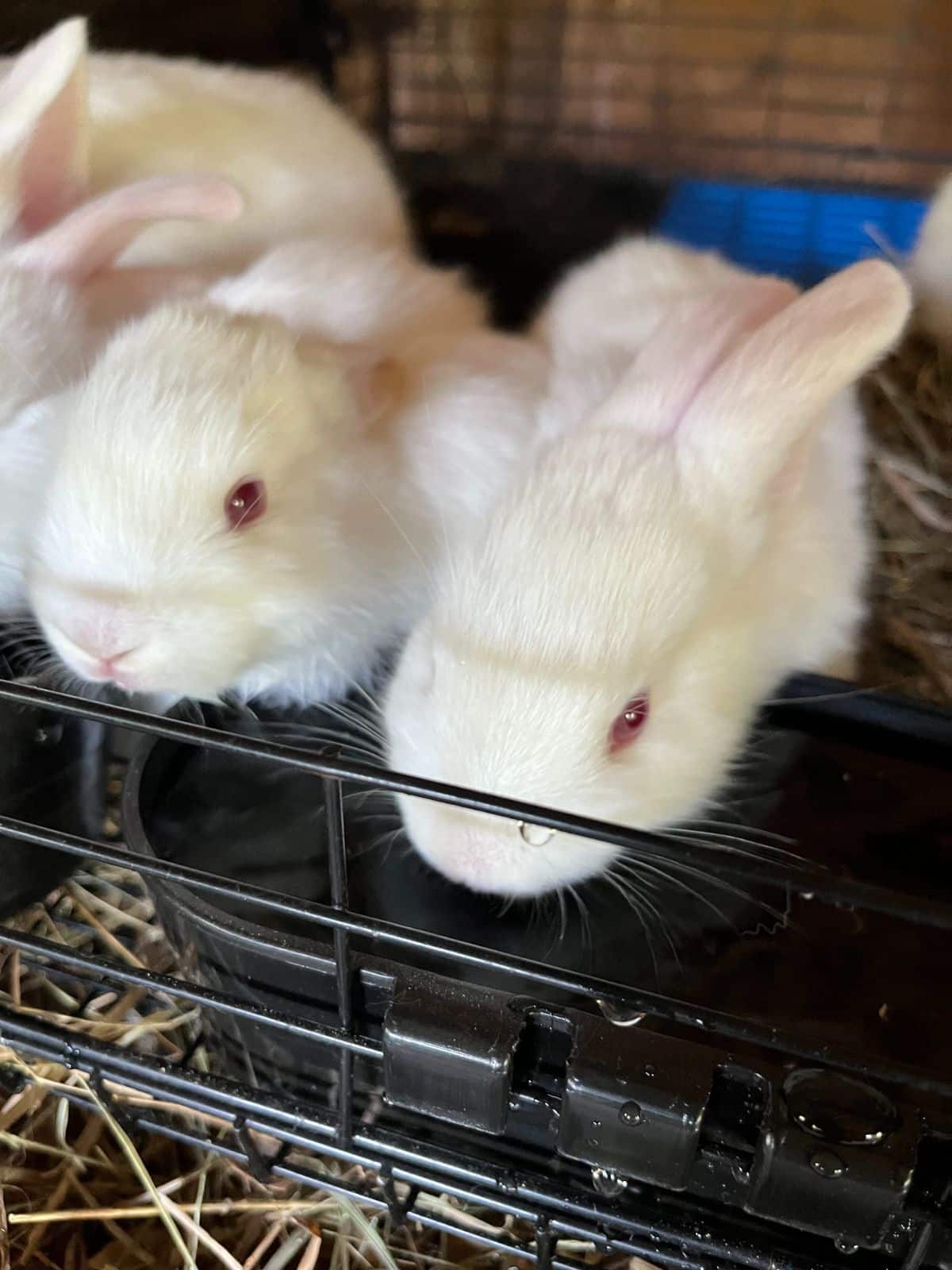
That’s great! You should be! And we’re to help.
But before you jump in and buy rabbits, there are some things you really should do. Here’s what we suggest (based on personal experience!).
Jump to:
- Do These Things Before You Buy Meat Rabbits
- 1. Try the meat.
- 2. Get a good book (or two).
- 3. Join some good meat rabbit groups. MEAT rabbit groups!
- 4. Make a plan for housing.
- 5. Make a plan to expand housing.
- 6. Find a local feed source.
- 7. Push a pencil on the costs.
- 8. Read up on a few breeds.
- 9. Feel out the local(ish) breed availability.
- 10. Consider local regulations.
- 11. Think about how you'll process and discard of carcasses.
- 12. Make a plan for poop.
- 13. Trust yourself.
- Learning as You Go and Your Rabbits Grow
Do These Things Before You Buy Meat Rabbits
Any honest rabbit breeder will tell you there were things he or she wished they knew before they started. Things they should have thought a little more about. Things that could have gone more smoothly if they had.
Hey, we’ve all been there. So let’s talk about some of the things that rabbit breeders think they should have put more thought or research into before they bought their first breeding pair or trio. Here are our top twelve pieces of advice for beginner meat rabbit growers:
1. Try the meat.
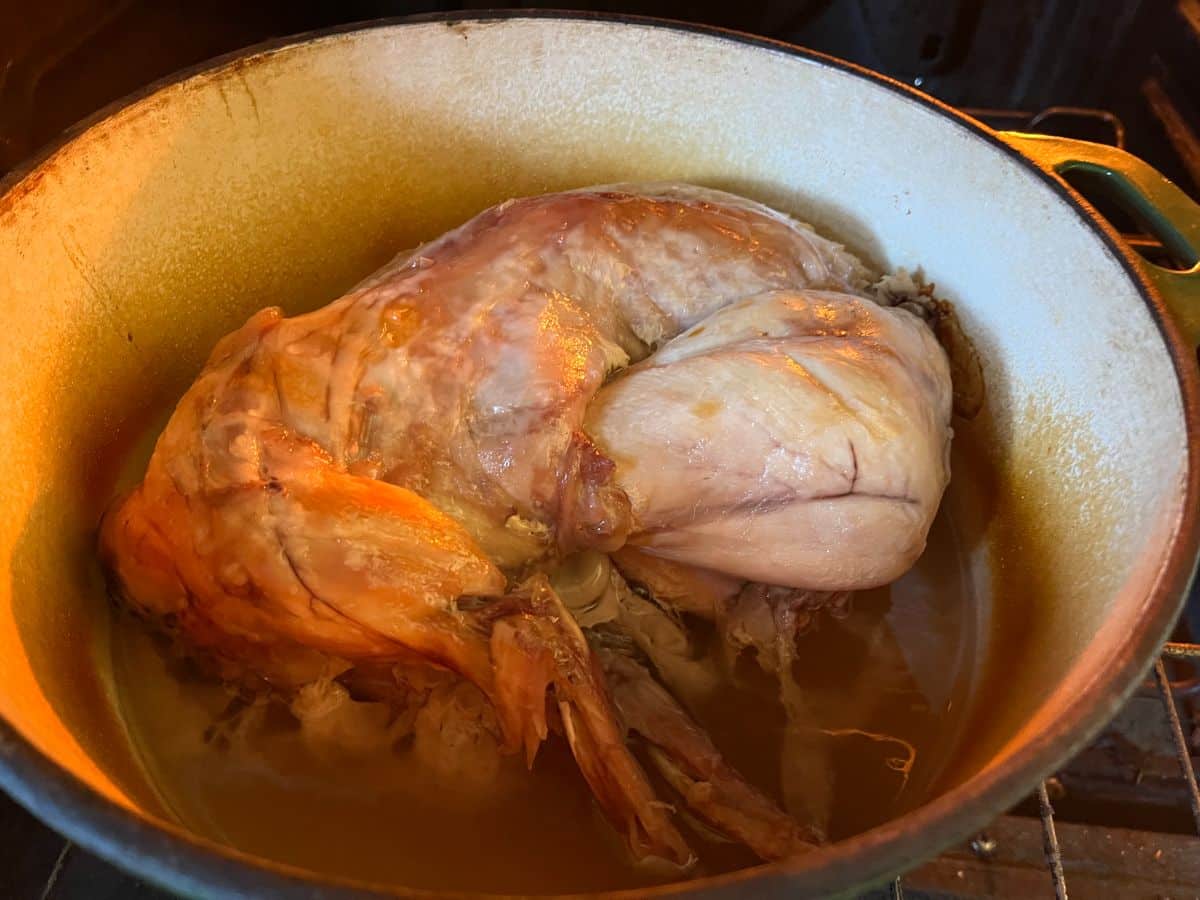
Have you ever had rabbit meat? Do you know if you like it? What if you don’t? What if you raise 10 or 20 kits to the full grow out stage, and you don’t even like to eat rabbit?
To be honest, rabbit is very good, and if you like chicken, you’re likely to love rabbit, too. But there are no guarantees. You won’t know until you try it—isn't that what your mother always said?
So, before you make that big of an investment in time, supplies, money, and resources, get ahold of a rabbit and cook it up. Try it, enjoy it. Then, when you know you’re happy with it, move on to researching and buying some rabbits.
Rabbit meat can be hard to find in a lot of places. It’s not that mainstream of meat. If your local grocery store doesn’t carry it, try contacting a local meat rabbit grower or breeder. Even if they don’t (or can’t legally) sell rabbit meat, they might sell you a live rabbit that you can process or have processed.
2. Get a good book (or two).
Invest in one or two solid resources on raising rabbits. Make it a meat rabbit book, not a book about keeping pet rabbits. There is a lot of misinformation and misleading information about raising rabbits, and a lot of it is found on pet rabbit sites and resources. Moreover, a meat rabbit raising book will talk about all the nitty gritty things that pet rabbit keepers do not want to know or confront.
Pet rabbit groups also talk a lot about boutique breeds, small breeds, and breeds that just won’t be productive for you. Get a book that gets down to brass tacks and has the information to answer the questions you’ll be asking.
Some good recommendations are:
Backyard Meat Rabbits (the Urban Rabbit Project Book 1) by Boyd Craven, Jr.
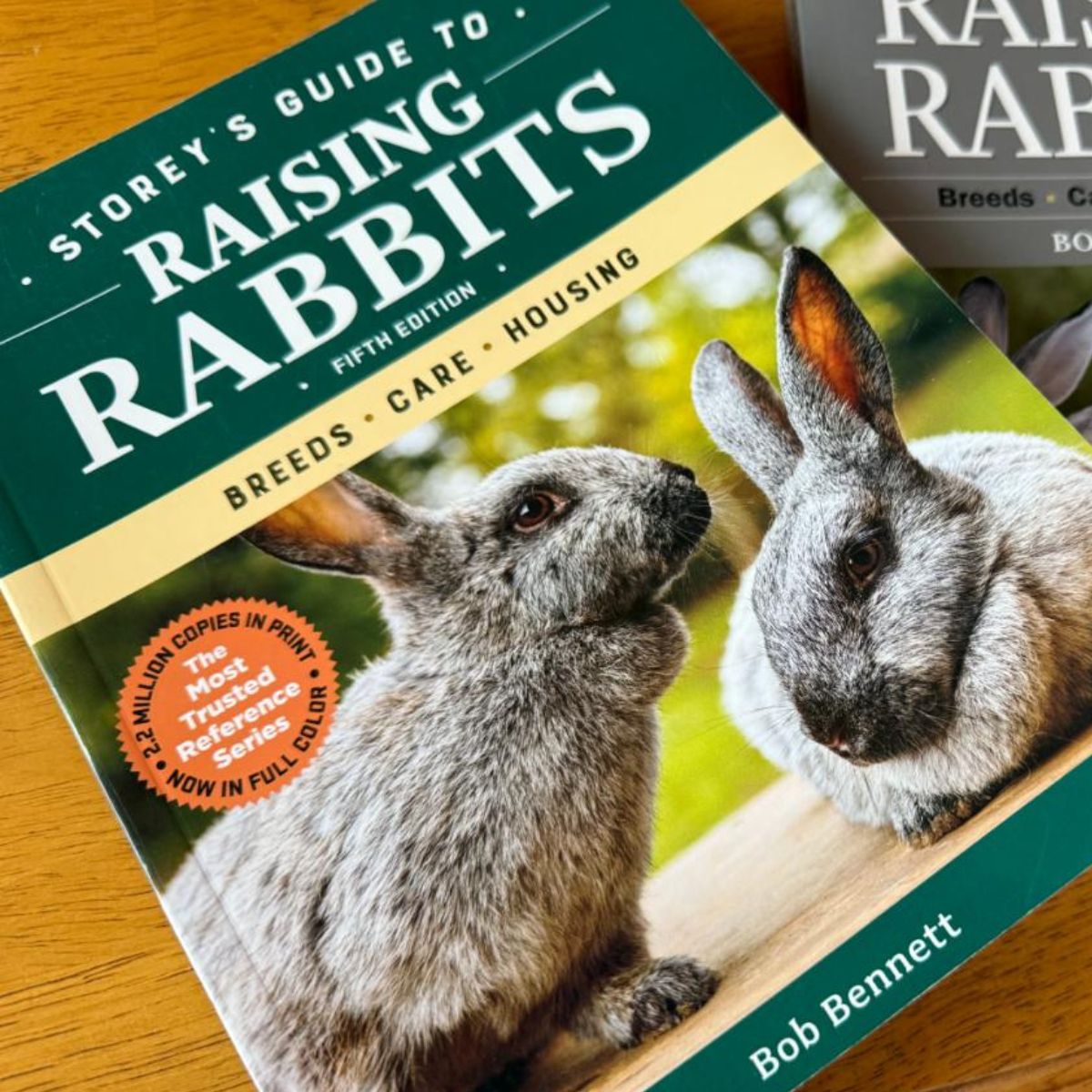
Storey’s Guide to Raising Rabbits by Bob Bennett(This book does go into pet and show rabbits but has solid sections and a lot of talk about raising rabbits for meat. It is probably weighted more towards meat rabbits than other types. Even the “pet” discussions approach raising rabbits in a more production-oriented way so as to make it more applicable to meat rabbit breeders.)
Raising Pastured Rabbits for Meat by Nichki Carangelo
3. Join some good meat rabbit groups. MEAT rabbit groups!
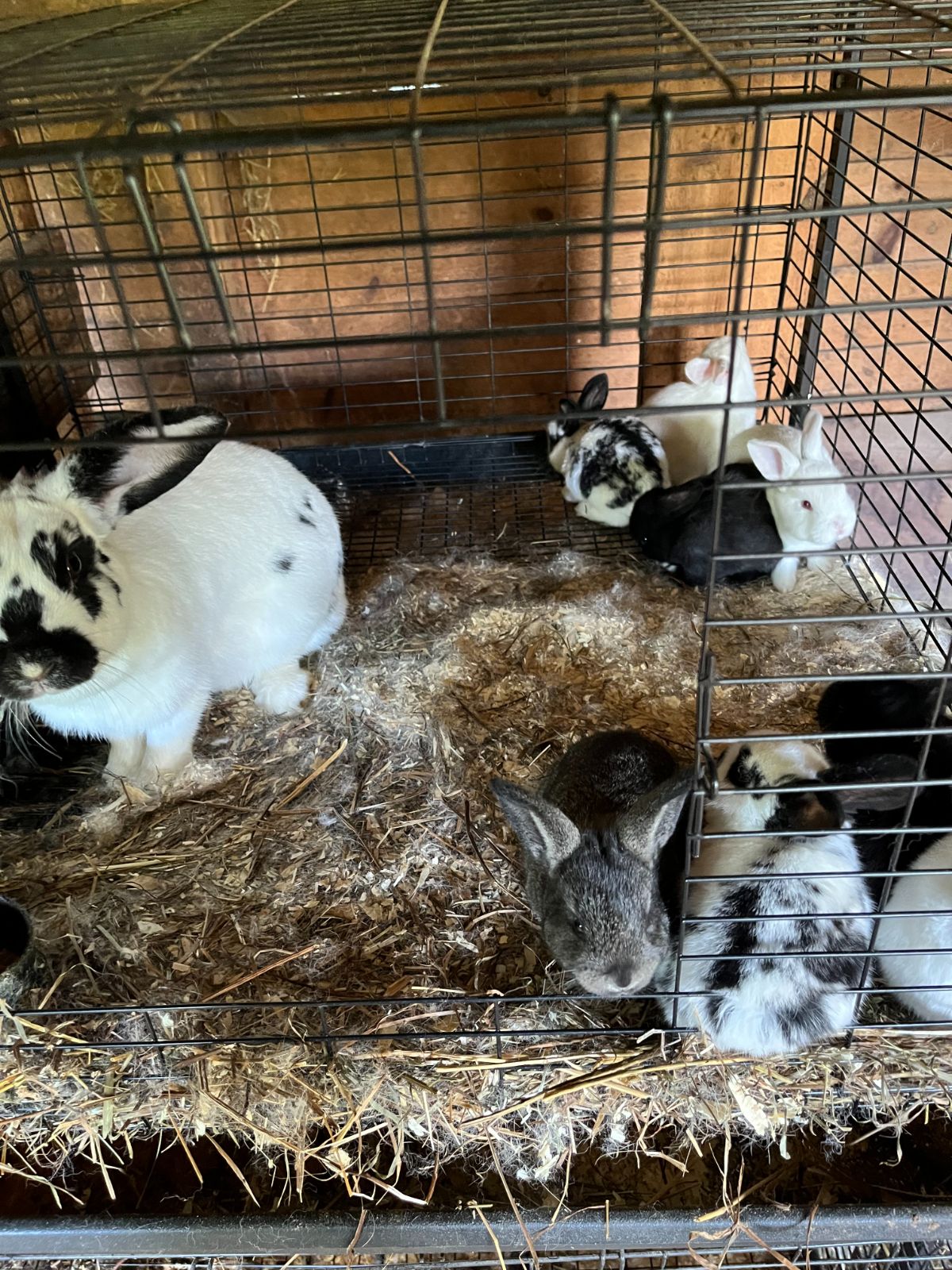
There are some very good groups of like-minded people on social media that are aimed specifically at meat rabbit breeders. There are plenty of breeders of all ages and experience levels in these groups. They are great places to watch and learn and ask questions. They’re good resources to bounce a question off of when you experience something new or have a problem with your rabbits.
They’re good places to learn about different feeding options and home veterinary care for rabbits. This is important because not all vets know or care for rabbits, and vet care is a big expense. Besides that, by the time you know a rabbit is ill, you need to act quickly; you may not be able to wait for a vet’s appointment slot.
By nature, rabbits will hide illness and weakness until they can’t. Most meat rabbit breeders keep outside vet care to a minimum and will often cull instead of treat. While this sounds harsh, there are real and practical reasons meat rabbits are managed this way. One of these is the cost factor and keeping affordability in line; another is the overall strength and health of the rabbitry and breeding program.
Make sure the groups you join are meat rabbit groups and not pet rabbit groups. Pet rabbits are a whole other world with different management and considerations. If you join pet rabbit groups, you will also be in groups with people who think eating rabbits is cruel and unusual, and you will take a lot of abuse from them. This is not the case in the best meat rabbit groups. There, the talk is pragmatic and practical, specific to rabbits raised for meat, and there is no abuse allowed.
Two good groups to join are Meat Rabbits for Everyone and Backyard Meat Rabbits.
4. Make a plan for housing.
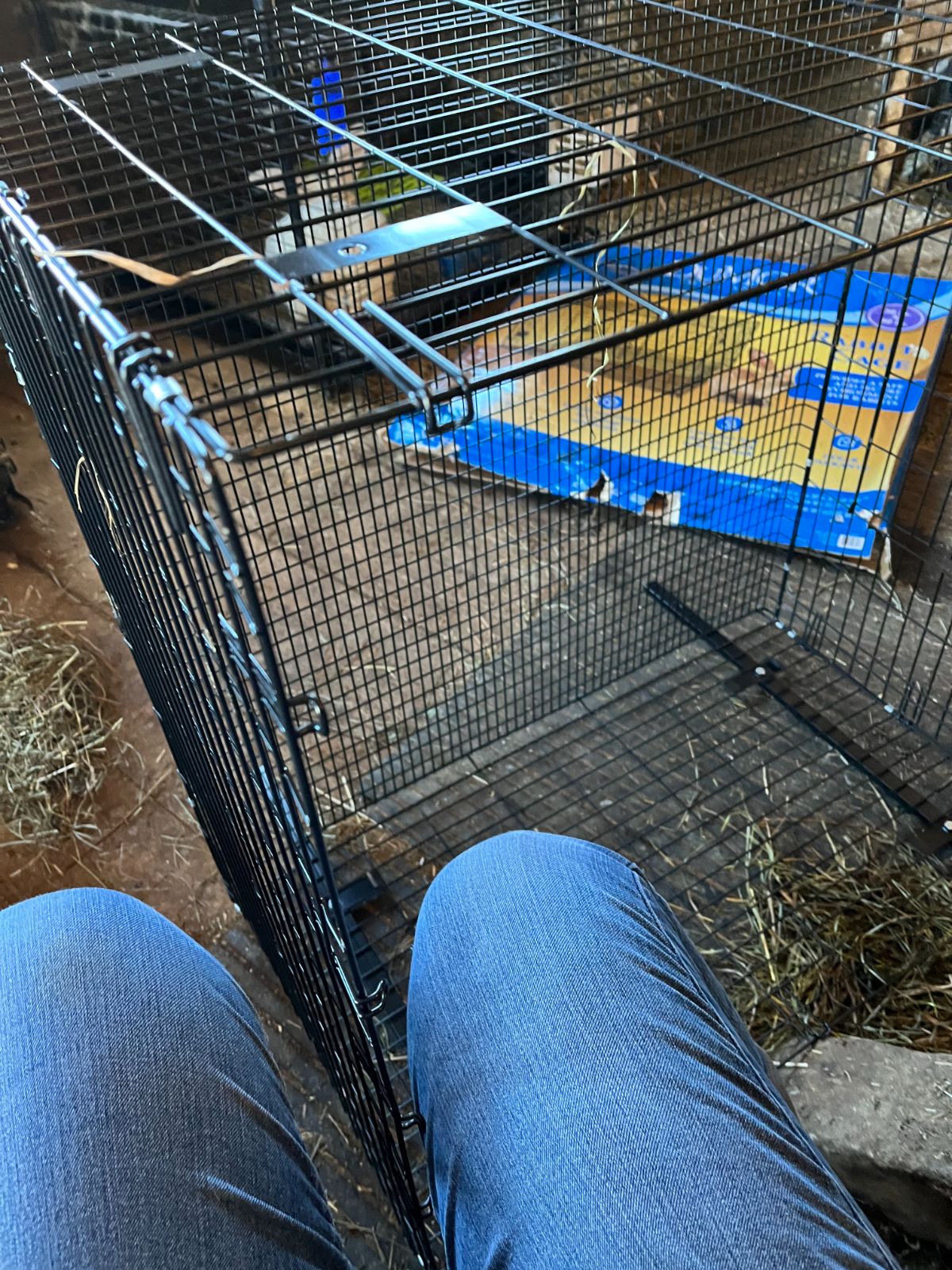
Don’t be the person who goes out, buys a trio of breeding rabbits, and then has nowhere to put them. Buy at least one cage per breeder before you bring your rabbits home. Have the cages set up and ready. They should be waiting with food, water, and bedding or drop pans (or whatever waste capture system you are using).
Rabbits can be easily stressed. Moving from one place to another is stressful. You should not count on keeping rabbits in boxes or transport kennels while you scramble for good homes. Prepare ahead, and make the transition as easy and as low-stress as it can be.
Don’t squeeze stressed animals together in temporary cages, either. That’s asking for fighting and injuries. And if you do, be prepared for litters in 30 days because that buck will have done his job while you got your act together.
5. Make a plan to expand housing.
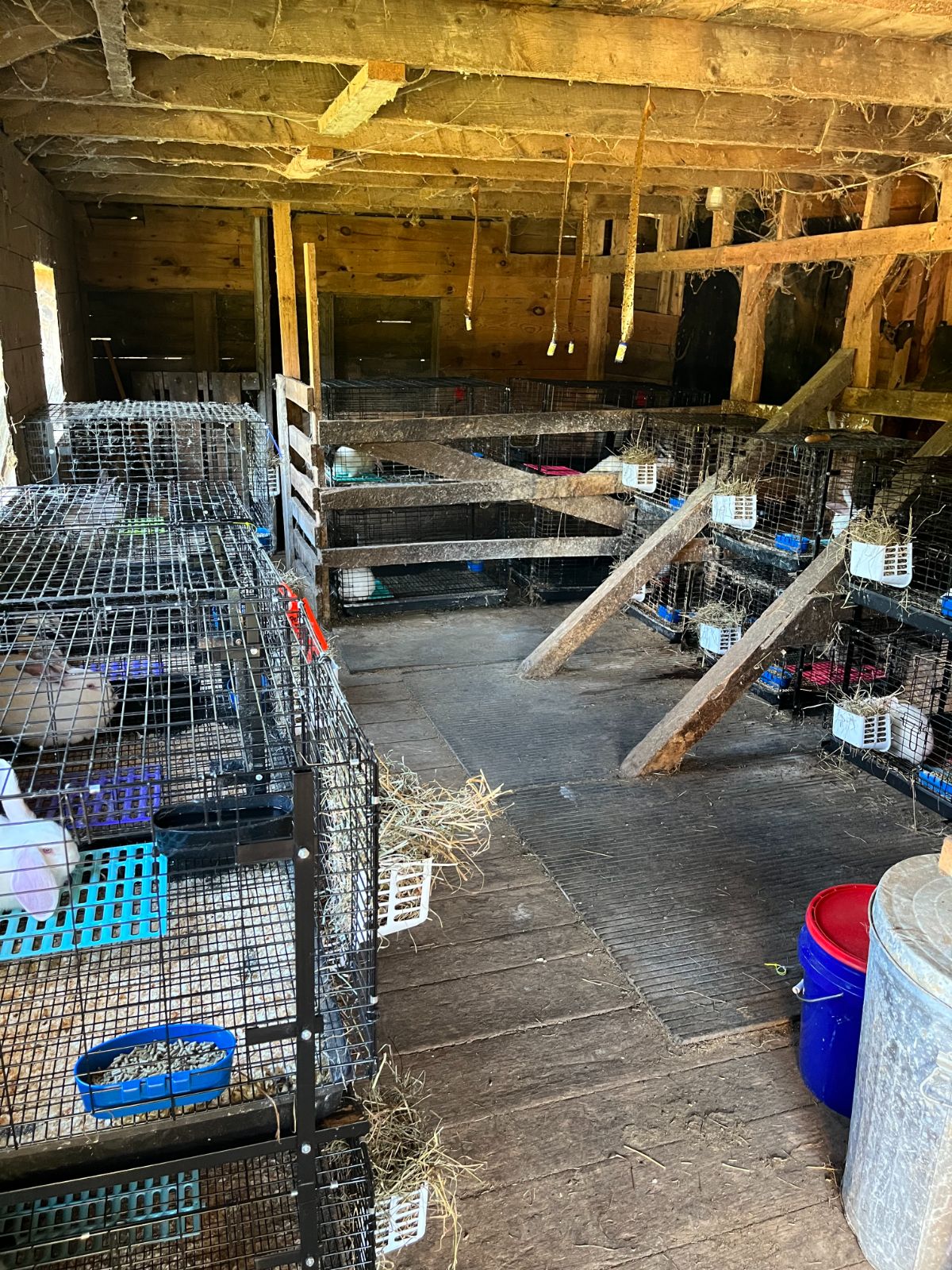
It’s easy to overlook the housing for growout litters. You’re thinking of getting started, you’re focusing on your breeders and making them a nice home, and you forget that grow outs don’t just live with mom until they are harvested. If you it does cross your mind, you think it’s far off in the future, and you have time.
You do have time, but not very much if you plan to start breeding right away (and you should breed right away if your breeders are age and stage ready). You don’t have as much time as you think, though.
Your doe will give birth (kindle) about one month after she is bred (28 to 35 days is the normal range, with 32 days being the most common). The kits will only stay with mom for five or six weeks; possibly up to eight weeks, but in most cases, both the kits and the doe are ready for weaning by five to six weeks. This means that you should have your grow out setup ready for kits in two months from the time of breeding.
Keep in mind that supplies have been limited, and some cage companies have had shipping times as long as four or six weeks. This is why it’s important to think about the growouts and how and where you will find cages long before you need them.
6. Find a local feed source.
You have to have a plan for feed as soon as you buy rabbits. Before you buy them. The feed needs to be of good quality with a high enough protein level to support breeding meat rabbits and grow outs (we recommend a minimum of 16% protein rabbit pellet for breeders and 18% for grow outs—you could use 16 or 18% for both if you don’t want to buy two feeds or if you find the condition is better on the 18%). The feed should be designed for farm and meat rabbits, not pets, and it should not be filled with junky treats and fillers. Treats and fillers aren’t good for the rabbits—they just make people feel better like they’re giving their rabbits some extra TLC (the opposite is usually true).
Feed designed for meat rabbits will be the most economical and will come in larger bulk sizes that are more reasonable to handle. This is not available in a lot of pet stores. Pet rabbit food is far too expensive to keep meat rabbits on.
Research options early so you can locate a good source. Your best bet is probably a farm and garden or livestock feed store. People who don’t have local sources often use services like Chewy (not usually the most affordable option, but an option and probably better than paying for pet store feed!).
Feed costs can vary greatly depending on the supplier. This is why you want to look early—make sure you have a reliable source and that it’s affordable.
If you plan to grow or mix your own feed, you need to plan for that, too. There’s a lot to know, so you’ll have even more research and planning to do before your rabbits come than those who feed mainly a pellet diet.
7. Push a pencil on the costs.
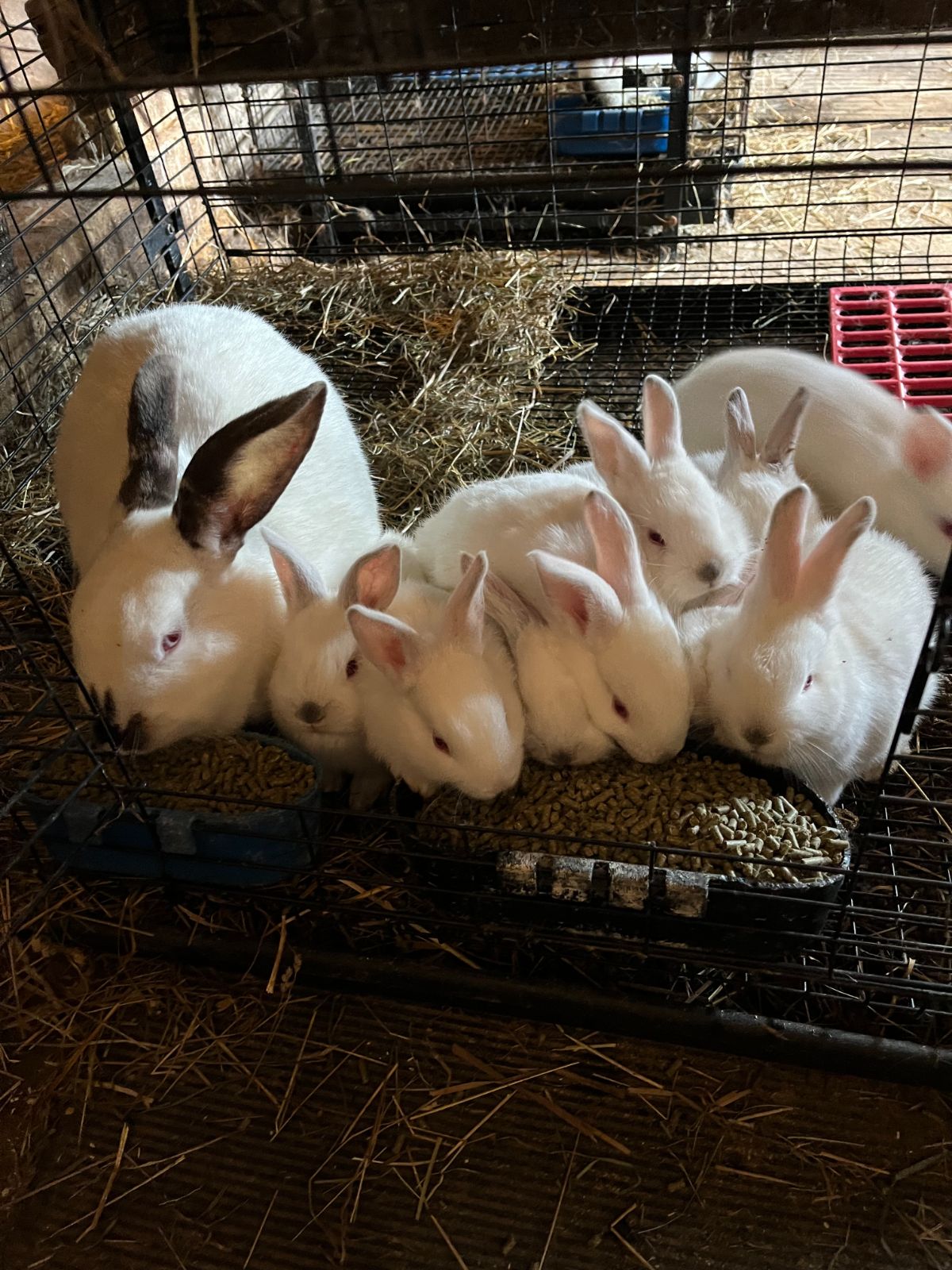
There are more costs involved in raising meat rabbits than just buying the breeders. You need to factor in startup expenses like cages and/or housing, feed and water dishes, etc. Cages and housing will be your biggest expense (but fortunately, you can make cages last for years—even some of the lower quality cages will last a long time so that expense is reduced over time).
You also need to factor in feed costs and costs of other consumable materials like shavings or bedding. Bedding depends on your housing setup. Plan to feed between four and eight ounces of feed per rabbit per day. This amount varies depending on the age of the rabbit and some other factors, but it’s the highest amount you should need for good growth and maintenance, so if you budget for it, you’ll have your bases covered.
If you plan to feed additional foods or supplements—hay, for example—you need to factor that cost in, too. If you’re feeding hay alongside a pellet, you have more flexibility over how much you feed, but at any rate, it’s probably not more than one to two pounds per week per rabbit (less when they are young).
8. Read up on a few breeds.
Researching breeds can be a little tricky because every rabbit breeder thinks theirs is the best. You will also come across mixed breeds. Mixed breed meat rabbits—if both parents are a quality meat breed or quality crossbreed—can be excellent rabbits that make the most of both parents’ breeds.
While this may make it sound like it’s impossible to settle on one breed of meat rabbit for your rabbitry, it’s not. You just have things to consider.
One of the biggest reasons this is important is so that you can recognize small pet rabbit breeds and so you know which breeds are good for meat rabbits. Technically any rabbit can be raised for meat, but you also don’t want to put your time, money, and resources into rabbits that can never grow to a good production size.
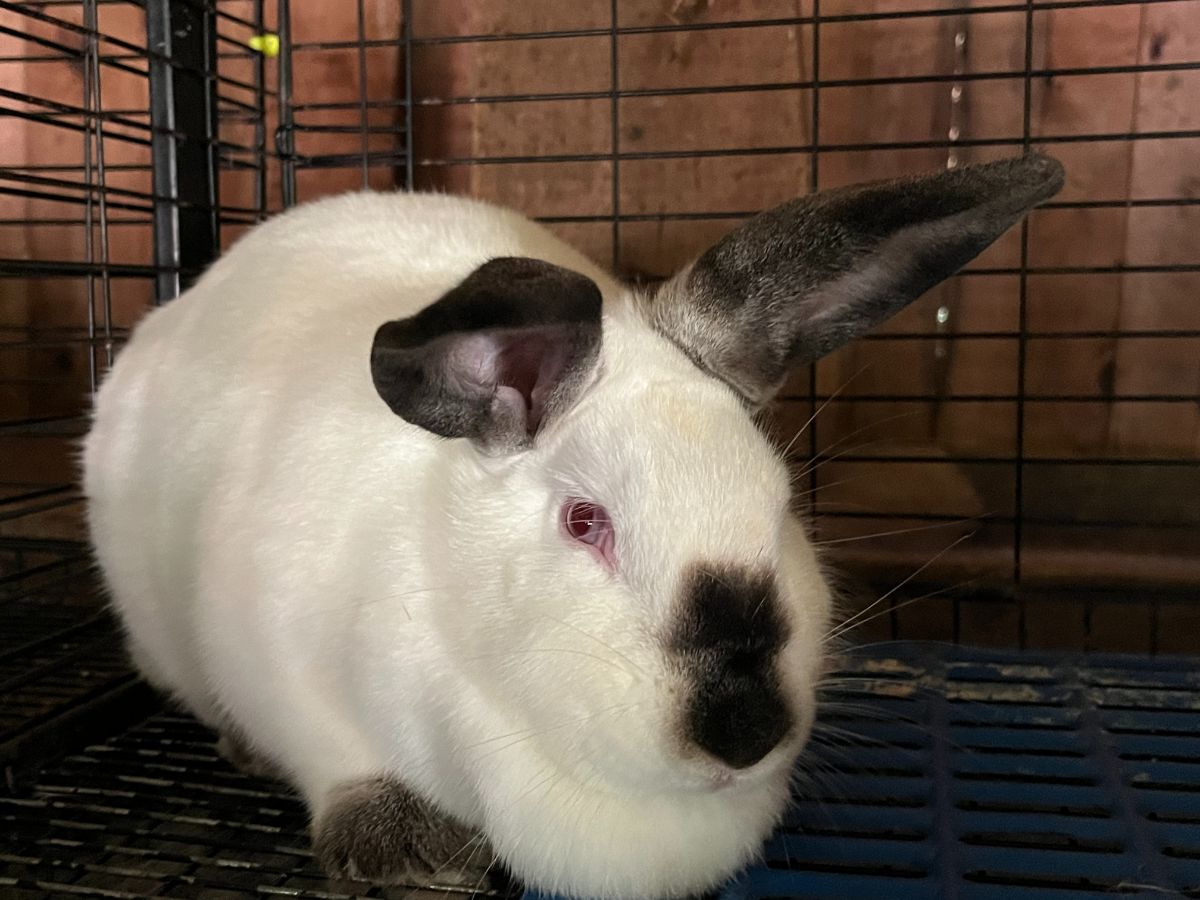
Some of the most reliable and most popular breeds of meat rabbits are Californians (probably my personal favorite), New Zealands (which I often cross with my Californians for a nice combination of size and bone-to-meat ratio), rex, Champagne d’argents, and silver fox. This is not an exhaustive list, but it’s a good place to start.
You’ll find Californians and New Zealands are the most popular and easiest to locate—because they are great meat rabbits! You may not need to research any further than these two breeds.
9. Feel out the local(ish) breed availability.
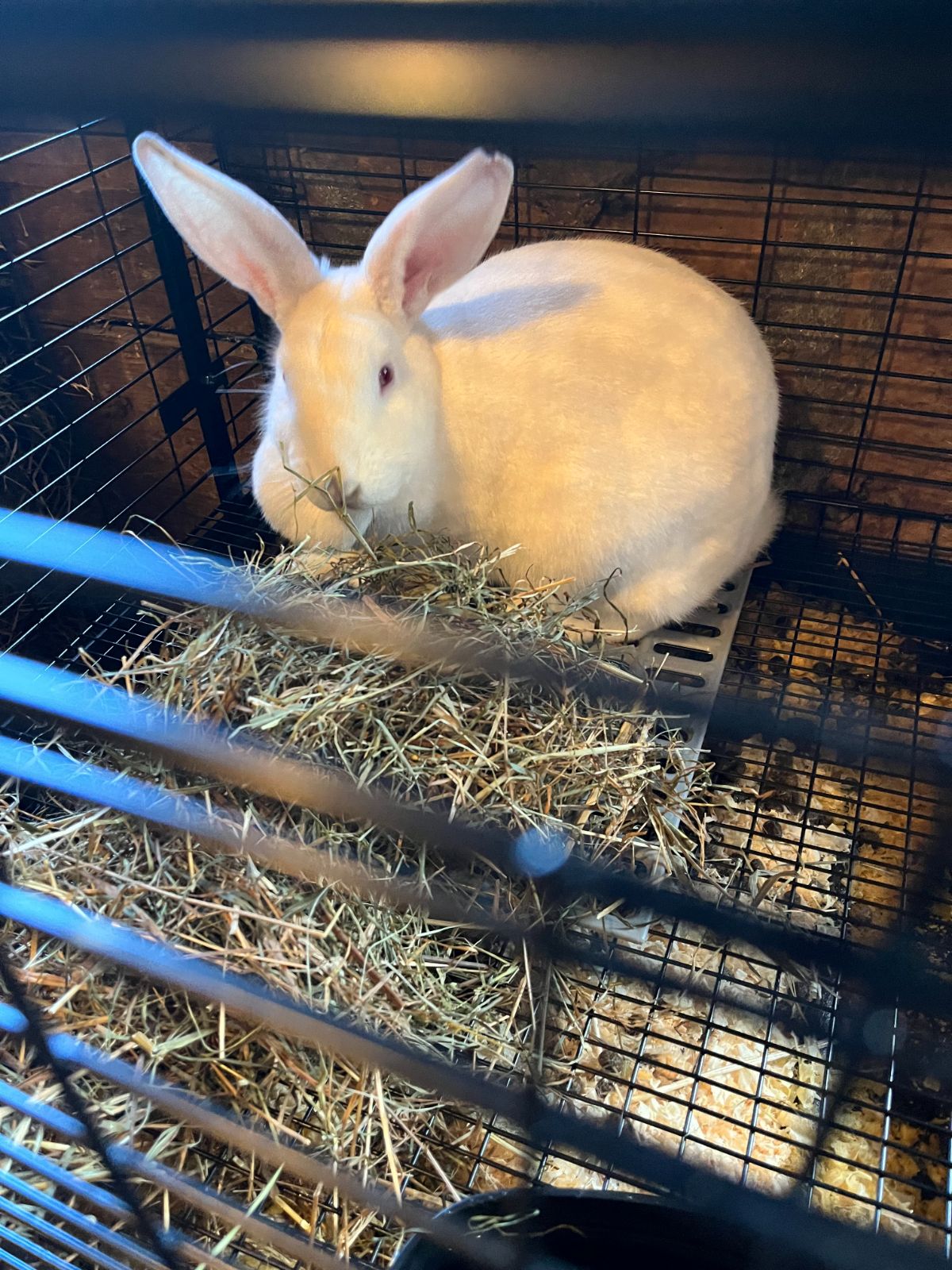
Do some research and see what you rabbits can buy for breeders in the local area to get you started.
You don’t have to go with the breeds that everyone around you is breeding, but maybe consider that there is a reason those are the breeds that people grow where you lie. These might be the most popular breeds, and they might be the breeds that are most in demand.
They might be the breeds that people want to buy the most; hence the breeds you can sell the easiest if you decide to sell some for meat or as breeding stock. They might be the breeds that can handle your weather and climate the best.
It also helps to have a source of replacement rabbits not too far away for when a breeder inevitably dies. It helps if you can make friends with a breeder that will serve as a mentor. Again, not strictly necessary, but it’s all helpful.
Transport services and traveling to buy rabbits are reasonable options, too, depending on your goals and why you’re choosing to buy rabbits from a distance away. Transport can be expensive, though, and it might be difficult to judge the animal sight-unseen (even if you have pictures). If you are having rabbits shipped, you might also consider the climate, weather, time of year and the conditions they were living in compared to where they’re coming to live.
Will the transition be too much? Is the breed prepared for your climate? Will they have the coat to deal with your cold or heat at this time of year? All things you should consider; and then consider whether more local rabbits are a better choice.
10. Consider local regulations.
Regulations that govern other livestock, like cows, goats, pigs, and chickens, do not usually extend to rabbits. Rabbits are often not regulated or fall under zoning as pets. This is one of the big benefits of choosing meat rabbits as your homestead meat source, especially for urban farmers.
This isn’t always true, though, so it’s smart to do some quiet research before you make your investment. How you choose to interpret those regulations is up to you.
11. Think about how you'll process and discard of carcasses.
You need to have a plan for harvesting your grow outs. You may be planning to harvest and process yourself, which is quite common and probably what most meat rabbit breeders do. If that is your plan, then consider buying a live rabbit and processing it before you buy breeders and start raising kits. A barn full of rabbits that need to be harvested is not the time to find out you aren’t up to the task.
If you don’t plan to do your own processing, then do some research and find out what your local options are. Don’t assume a local abattoir or slaughterhouse will process rabbits. Even if they do other farm animals, they may not take on rabbits. This isn’t because it’s hard—it's easy and probably the easiest meat animal you could dress and harvest; it’s usually more a matter of demand for their services, lower demand for rabbits, and licensing that they may not bother with obtaining because they’re busy enough with other animals.
If you want to sell some of your rabbit meat, you really need to find out what your state’s laws are and make sure there is a processor who can process for you to make the sales legal. That said, several states and locales allow a low number of rabbits (below 1,000 or 2,000) to be processed by the grower and sold directly to the consumer. Don’t assume that this is true for you, but if sales are part of your cost analysis, you’ll need to know.
If you are not selling, but you are looking for alternatives to processing yourself, consider setting up a bartering system with a local hunter or interested friend or neighbor.
There is a very good online course available here that will show you all that you need to know to process rabbits yourself.
You can also find some excellent videos and tutorials on YouTube.
12. Make a plan for poop.
Rabbits poop. They poop a lot, in fact. So, you need a plan for the poop.
One of the advantages of keeping meat rabbits is that their waste is considered a “cold” manure. That means that it does not have to be composted before it can be used in the garden. You can compost it, of course, if that is a better product for you, but you can also spread rabbit manure straight on your garden when you clean your cages or rabbit barn.
Rabbit manure can be used as a top dressing, or it can be tilled into the soil. Either way, it’s a great, naturally pelletized fertilizer that provides needed nutrients to garden soil.
What you don’t want is rabbit manure becoming a runoff or odor hazard—these are the kinds of things that get neighbors complaining. When manure is spread, such as in a garden, its odor disappears quickly because it is not concentrated, and a lot of the odor comes from the urine, which evaporates or washes down into the soil.
If you can’t use all your rabbit manure yourself, you can sell it. Many rabbit breeders have gardener friends and customers who are more than happy to take it off their hands or buy it for a small fee, so they don’t have to buy chemical fertilizers.
There are different ways you can handle rabbit manure. You just need to think about what’s right for you and have a plan.
13. Trust yourself.
Trust yourself. Have confidence. Yes, consider that there are aspects of producing meat rabbits that will not be altogether enjoyable. No one really enjoys harvesting a nice, live rabbit, but we understand the circle of life, the need to feed and sustain ourselves, and the respect and benefits that come with raising food of our own.
You may have misgivings about harvesting; You may wonder if you are able to really care for, raise, and manage your meat rabbits. A little confidence goes a long way. If you have read this far, odds are you’re ready. You can do this. You are a person who is clearly willing to take the time to learn the craft of growing rabbits and understanding the importance and benefits of growing your own meat. People who care this much care to educate themselves. That is far more than half the battle.
Learning as You Go and Your Rabbits Grow
Don’t expect to know it all before you start. The wise rabbit keeper knows that even the most experienced breeder doesn’t know it all. Things come up. Rabbits get sick. Rabbits succeed and expand more than you ever expected. There will be surprises and things you still need to learn. This is where your community comes in—good websites, good resources, good groups to ask a question of.
Arm yourself well with some good, solid research. Know something about what you’re getting into before you buy any rabbits. But don’t wait until you think you know it all. That’s not possible. Trust yourself and your learning, but then get growing. The best way to learn is to do. It’s true for raising meat rabbits, too!
Want to know more about the benefits of raising rabbits for meat? Check out these 27 reasons why you should!
Leave a Reply