
Meat rabbits are not as mainstream a meat as other types of meat, like beef, pork, or chicken. Rabbits have a solid standing in some cultures, and in years past, they’ve been a more popular source of meat, but that’s not as true today, at least not as one of the more popular meats.

Rabbit meat is extremely lean, nutritious, and delicious. There are great benefits to keeping meat rabbits, either on a small or a large scale. And while it may be an adjustment for people who are not as familiar with rabbits as a meat source, it’s an adjustment that is certainly worth making.
There are few, and possibly no, other sources of meat that the backyard meat grower or homesteader (or even the larger, more commercial type producer) can keep as efficiently or economically as meat rabbits. Let’s take a closer look at the benefits of rabbits as a meat source and why you should consider raising your own rabbit meat.
Jump to:
- 27 Reasons You Should Be Keeping Meat Rabbits
- 1. Low initial investment.
- 2. Sustainable reproduction.
- 3. Fast reproduction cycle.
- 4. Short period to meat harvest.
- 5. High protein, low fat white meat.
- 6. Year-round meat production.
- 7. Manageable reproduction schedule.
- 8. Off-grid and independent feed and raising options.
- 9. Low feed and production costs.
- 10. Zero utility inputs needed.
- 11. Hardy and cold tolerant.
- 12. Can grow in all climates and regions.
- 13. Variety of housing and raising options.
- 14. Low and manageable incidence of disease and mortality when properly cared for.
- 15. Easy keepers.
- 16. Low time investment.
- 17. Potential for sales to offset costs or as an income source.
- 18. Quiet keepers.
- 19. Low to no odor.
- 20. May not be subject to local farm animal restrictions or zoning.
- 21. Useful byproducts.
- 22. Ideal animal for gardeners to raise.
- 23. Interesting and enjoyable management.
- 24. Small and manageable enough for children and others.
- 25. Good project animals and a good introduction to animal husbandry.
- 26. Low risk animal.
- 27. Easy to harvest.
- There’s So Much to Recommend Rabbits as Viable, Productive Homegrown Meat Sources
27 Reasons You Should Be Keeping Meat Rabbits
1. Low initial investment.

Compared to keeping other meat animals, the investment in a breeding trio of meat rabbits is very low. It is not unreasonable to think that you can be in the meat rabbit breeding business for $150 to $200 U.S. (possibly less depending on location, breed, and availability). (A trio is one breeding buck and two breeding females.) If you start with a pair (one buck, one doe), the investment is even less ($50 to $100).
That trio can produce between 300 and 500 pounds of harvested meat per year with ease. (The large difference in the range depends on how often you want to rebreed and harvest and at what age you harvest your rabbits. A low, conservative estimate would be 250 pounds of meat in a year from a good production trio.)
2. Sustainable reproduction.
There’s a reason the saying is “breeds like rabbits”. And while it is not always exactly that easy, rabbits are reliable reproducers. They are a sustainable source of meat without having to constantly buy replacements. A single breeding doe can easily have five litters or more each year. Even at a conservative estimate of six to eight kits per litter, that’s 30 to 40 rabbits for meat harvest per year.
The real benefit, though, is that you don’t have to keep buying the kits to grow into meat. Most chickens for meat today must be bought from a hatchery. That’s an expense of at least $3 per head.
Rabbits just do what rabbits do—have kits, raise them, wean them, and have some more. Once you’ve bought the original breeding pair or trio, you don’t need to keep buying young stock to grow into meat.
And when your breeders start to get older, or if you want to expand the fluffle, you can simply select and raise from your best breeding stock (because with rabbits, linebreeding with a good selection is an accepted and recognized practice). (And, Yes! A group of rabbits really is called a fluffle! Though meat breeders might also just refer to them as a herd or refer to the rabbitry in general.)
3. Fast reproduction cycle.

Rabbits can technically breed every 30 days. Most people breed meat rabbits back between four and six weeks after they have a litter of kits. Does can be bred while they are still caring for a litter. This isn’t cruelty; it's how they’re designed naturally. In fact, your rabbits will be in better health and breeding condition if they are bred on a regular cycle than they will if you give them long periods of time off in which they’ll build up fat and won’t exercise their reproductive organs.
4. Short period to meat harvest.
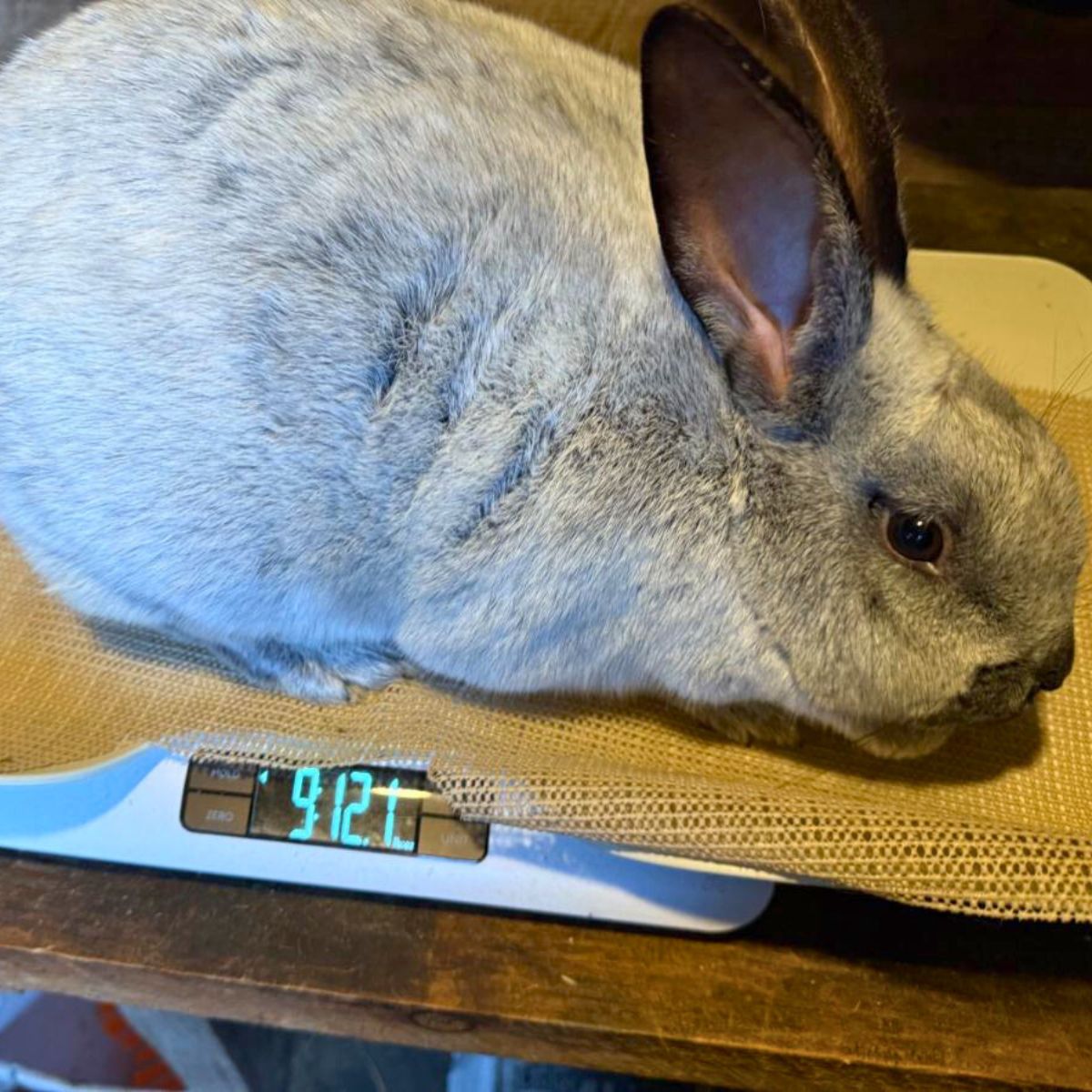
Rabbits are ready to harvest in a short period of time. Different people have different preferences, but the two most common ages and weights to harvest rabbits are at 10 to 12 weeks (about 3 months) old or 5 pounds live weight (dressing to about 2.5 to 3 pounds) or 16 weeks (about 3 and a half months) old and about 7 to 8 pounds live weight (which will put good meat rabbits at a dressed weight of about 4 to 5 pounds).
If you have an average litter of 8 to 10 kits, in three months, you can count on at least 20 to 25 pounds of meat, and if you grow to 16 weeks, you'll have meat in the range of 35 to 50 pounds of fresh, humanely raised, homegrown meat.
...And that’s just from ONE litter from ONE doe.
5. High protein, low fat white meat.

Some sources vary on the protein content of rabbit meat (probably because it is not as mainstream, less studied, and there is likely a smaller pool of varied producers/products to study as compared to the most popular meats like chicken and beef). Regardless, all sources agree that rabbit is undeniably a good source of very high protein.
Rabbit meat is, on the low end, listed as having a 22 to 23% protein content; resources list rabbit meat as being as high as 29% + protein -- including the United States Department of Agriculture. Many sources list it as having the highest protein content of all meats and fish.
The protein content of rabbit meat is only half the story, though. The fat content—or, more accurately, the lack thereof—is the other important piece of the nutritional puzzle. Rabbit is a very lean meat; leaner than almost every other type of meat and leaner than chicken, turkey, beef, and pork. In fact, rabbit meat has less than half the fat content of pork.
Rabbit also has the lowest amount of cholesterol of the land meat animals (fish is the only thing lower) and is an excellent source of important vitamins and minerals, including vitamin B-12 and selenium.
What this all comes down to is that rabbit is a highly nutritious meat that can be a better way to get essential nutrients and protein because it does not come at the high cost of high fat and cholesterol. Many of the other meat sources that offer these nutrients carry high amounts of fat and cholesterol along with them.
6. Year-round meat production.
Rabbits can breed all year round, so that means you can have litters of kits to grow into meat all year round. Keep the production cycle going as it fits you and your needs.
Cold weather is not generally a problem for meat rabbits or for breeding them; as long as you take good care, and you consider extra measures in extreme cold (but by extreme cold, we’re talking well into and below freezing). High temperatures and very hot weather are more of a problem for rabbits than cold (and there are good breeds for those locations, too).
That said, you can time breeding around the worst weather you might have, which for most people is a matter of a month or two, and you can be in production growing meat all year long.
7. Manageable reproduction schedule.

Rabbits don’t come into “heat” like other animals do. They simply ovulate when they are exposed (bred) to a buck. That means you never have to time it out or wait for your rabbit to be ready to breed. You can completely control when your does are bred and when they will have their kits. If it’s a busy time of year or you have a vacation coming up, you can wait to breed. If you are entering a time of year when you have more time and resources on your hands, breed extra. With rabbits, it can be on your schedule, in your own time.
8. Off-grid and independent feed and raising options.
A good meat rabbit grower pellet is an excellent feed and is what most people use, but the beauty of meat rabbits is that they can be grown completely on grasses and vegetables that you can grow and harvest. There are sprouted fodder systems that can be used for feed, too.
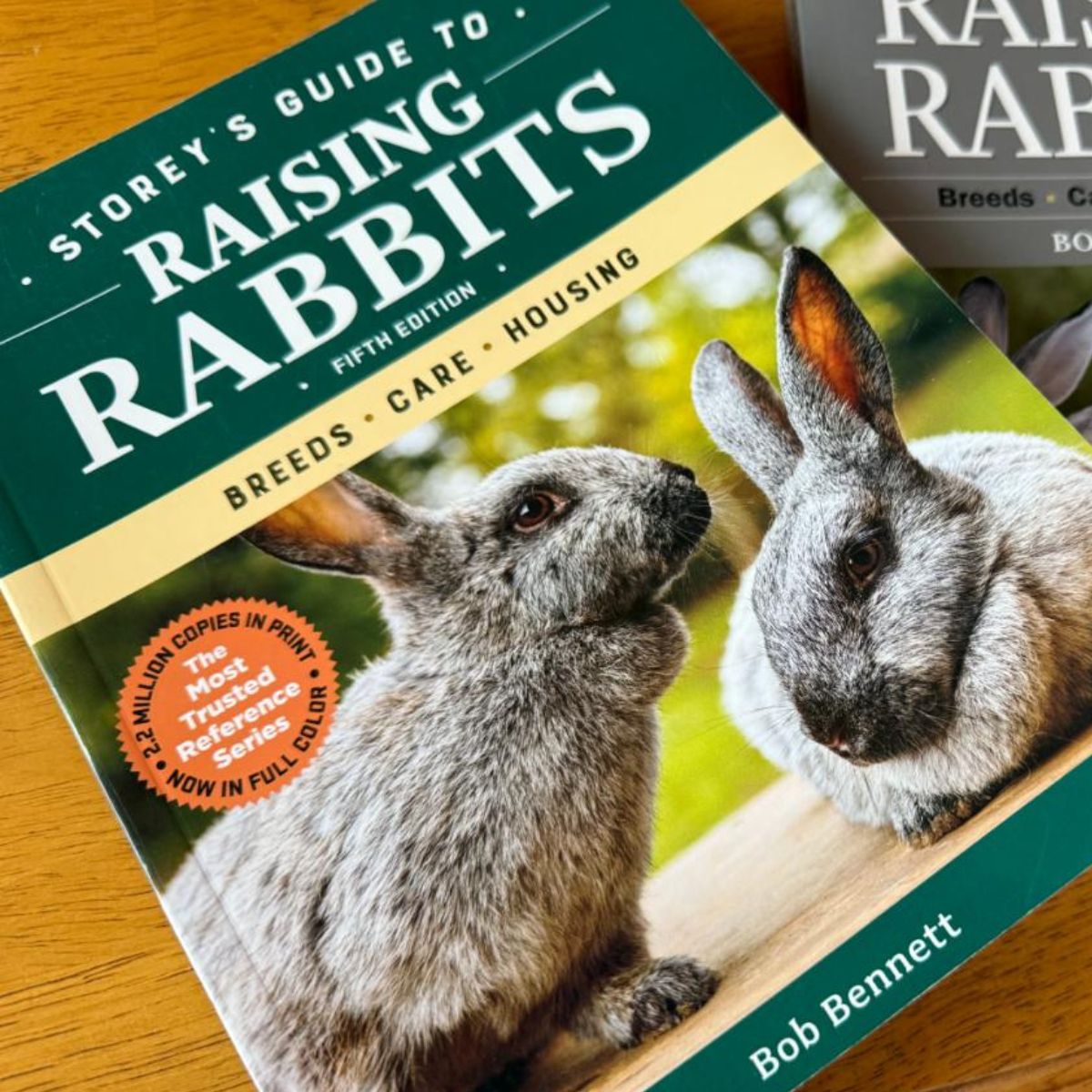
The options are too many to list out here, but rest assured that if you want or need to grow meat without buying any commercial feed at all, it is definitely possible. There’s even a highly recommended book from experienced breeders to tell you exactly how to do it.
9. Low feed and production costs.

Rabbits have a good feed conversion ratio. For every three pounds of feed they eat, they grow about one pound of meat (note that some sources set this conversion rate at 4:1 or higher). So, to grow a rabbit to a harvestable weight of 5 pounds for three pounds of dressed meat, it only takes about nine pounds of feed. If the feed costs 48 cents per pound (a going rate for a high-quality 18% growth pellet), you’re growing that three pounds of meat for under $5. If you supplement with hay or other forage, it may be even cheaper.
10. Zero utility inputs needed.
Unlike most of today’s meat chickens, rabbits are hardy animals that are good mothers capable of raising their young. Chickens (chicks) usually need to be under electric heat lamps or supplemental heat sources for weeks—often six or more. Rabbits require no light or additional heat. Those who do it find that it almost always does more harm than good.
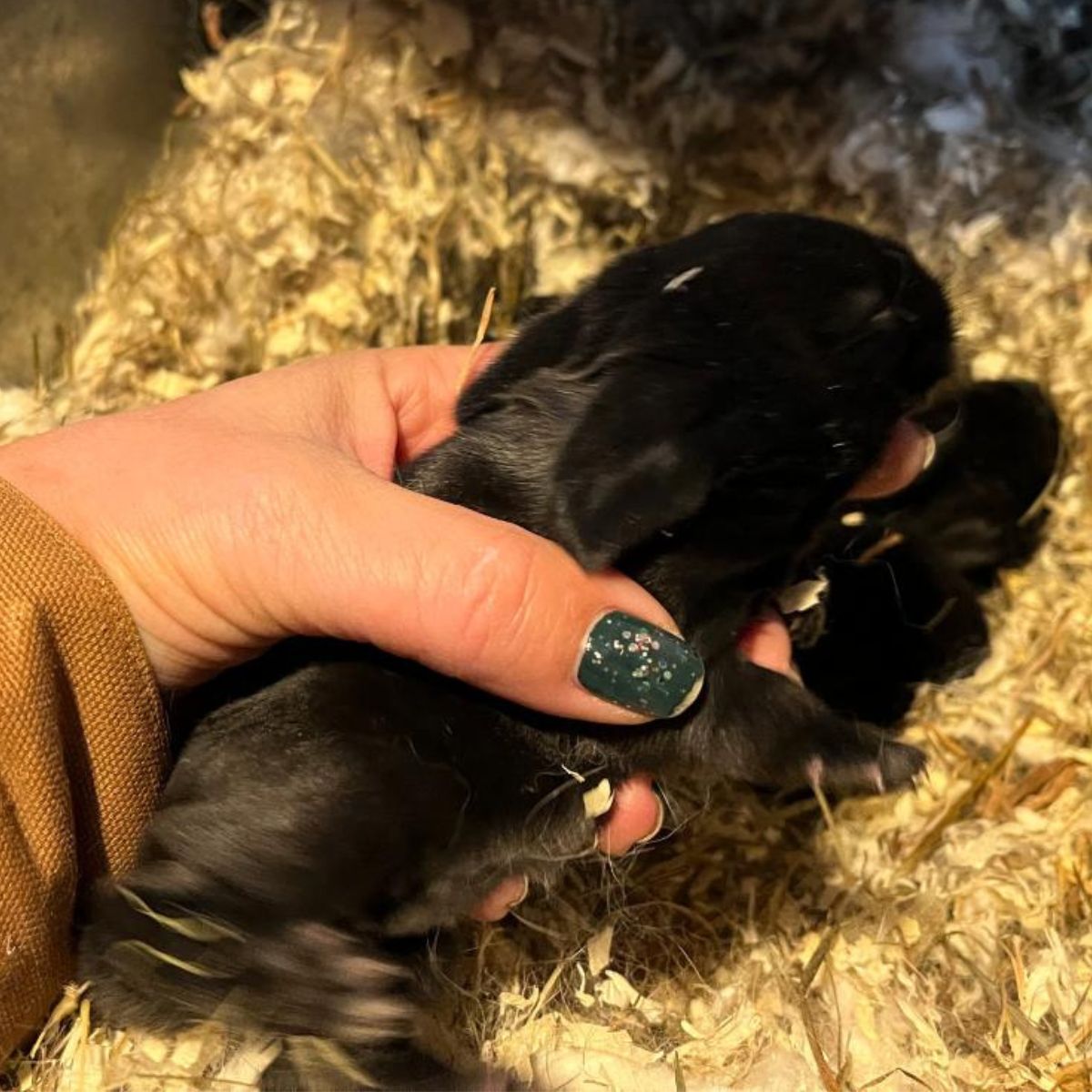
As long as you can see your rabbits to feed them, there is no need to ever use an electric light (or heat) source at all. That’s a huge cost savings all on its own. Rabbits have hair by the time they are days old. The mother rabbit will regulate the temperature of the litter in the nest box until they are mobile and moving on their own (at about two weeks old).
While that six-week-old chicken is starting to be weaned away from its heat lamp, the kit is being weaned and moved to its own cage, independent and ready to thrive.
11. Hardy and cold tolerant.

Not to say that rabbits never have issues and that you will never have any losses, but with good breeding stock and good care, losses are low. As mentioned, rabbits handle cold very well. They even handle heat relatively well unless it is extreme and for extended periods. Even then, you can manage your rabbitry so as to prevent and minimize losses.
12. Can grow in all climates and regions.
Regardless of where you live, you can keep rabbits. There is a meat rabbit breed for any region. There are large-eared breeds that shed heat better and tolerate hot climates. There are longer-haired and temperature-responsive breeds for cold and changeable locations. The only continent that doesn’t have wild rabbits is Antarctica. Where wild rabbits can live and grow, domestic meat rabbits can, too.
13. Variety of housing and raising options.

From cages to colonies, and indoor rabbitries to outdoor rabbit tractors, there are a variety of housing and caging options. People utilize different styles of raising to suit their property, management, care, and cleaning needs. When you decide to raise meat rabbits, you can choose the option that works best for you.
14. Low and manageable incidence of disease and mortality when properly cared for.
Good care and management are usually enough to keep meat rabbits in good health and production. Rabbits also respond well to home remedies. If you keep a good stock, select for good health when choosing breeders, keep your rabbits well fed and watered, cleaned, separated from wildlife and sources of infection, and you control pests like flies, you can prevent most of the problems that rabbits encounter.
15. Easy keepers.

Rabbits require little “extra” care and maintenance--meaning that besides daily good care, attention, feed, and management, there is not a lot of other work or additional high care needs to be met.
Additional care consists of things like periodic nail trimming, dental observation, and care (easily managed with extra chews to maintain teeth naturally), and general good health observation and management. But the truth is that if you make good care, cleaning, watering, and feeding a daily routine, you will not have to spend much extra time attending to the special needs for your rabbits.
The small extra care that is needed—nail trims and dental care, for example—are more a necessity for your breeding stock because the animals that are grown for meat harvests do not live beyond a few months old, and those typically do not reach an age where these become an issue. So, for instance, if you have a rabbit barn even with as many as 25 rabbits, five of those are probably older and/or breeding are stock that will require extra care and regular grooming like nail trimming, while the other 20 are harvest animals that will not require that level of extra maintenance.
16. Low time investment.
It doesn’t take a lot of time to properly care for rabbits. Even 30 cages and 50 rabbits can easily be cared for in 20 minutes a day, with an extra hour or two once per week for thorough cage cleaning, periodic additional care or grooming, and fluffle management.
17. Potential for sales to offset costs or as an income source.

Besides being a source of affordable, known meat for you and your family, rabbits can generate extra income. They can be an income source or supplement income to offset feed costs. Selling rabbit meat or selling live animals for harvest, pets, or breeding are all good ways to let your rabbits pay you back for your care, effort, and investment.
There is also a strong market for rabbits as pet food. It has a high demand among raw food pet owners. Pet food does is not usually regulated like sales of meat for human consumption are.
18. Quiet keepers.
Rabbits don’t make noise, so they’re nice, quiet keepers that won’t disturb the neighbors. Or you.
19. Low to no odor.

Rabbits are low-odor animals. If you keep their cages clean and drop pans emptied one or two times each week, you shouldn’t have issues with odors. As long as you don’t keep large piles of shavings and manure, there should not be a strong enough odor to bother you or your neighbors.
20. May not be subject to local farm animal restrictions or zoning.
You’ll have to check your local regulations, of course, but rabbits are considered pets in most areas, and most places don’t make a distinction between meat rabbits and pet rabbits, so you probably do not need to worry about laws and zoning anymore than you would if you kept a pet rabbit. This is one reason people keep meat rabbits as urban homesteading food sources (along with no noise and odor!). Well-kept rabbits can go virtually undetected.
21. Useful byproducts.

Rabbit manure is a cool, naturally pelletized manure that is a useful byproduct for gardens, compost, soil amendment, and more. Because it is a “cold” manure, it can be spread directly on plants and gardens. This helps to keep it from piling up. Some people even make a profit by selling the manure! It’s an easy natural fertilizer to handle.
22. Ideal animal for gardeners to raise.
Raising rabbits goes hand in hand with gardening and other homesteading. The products of the garden can be used to feed and keep the rabbits while the rabbits give back to the garden in the form of fertilizer.
23. Interesting and enjoyable management.

Keeping rabbits, keeping records, selecting, managing, breeding, watching, and participating in the life cycle and harvest circle of life...these are all things you may find interesting. A great use of your time. It can be quite a productive hobby.
24. Small and manageable enough for children and others.
Kids can easily help with rabbit chores, handling, feeding, management, and more. Unlike larger animals, rabbits, especially in cages, are small enough for children to take care of and to handle.
And for those wondering how kids handle knowing they are raising rabbits for meat, ask any experienced grower, and almost everyone will tell you that kids handle it very well. Usually, better than adults.
Open, clear, honest communication and clarity about which animals are long-term and which are not will go a long way in helping your kids accept your goals—and accomplishments! (Truth be told, it never hurts that there are always new cute baby rabbits coming along to replace the boring grown adolescents and adults).
25. Good project animals and a good introduction to animal husbandry.

For kids (or adults) interested in keeping show animals or in animals for projects like 4H, rabbits are ideal. They’re affordable enough to keep without breaking the bank, and there are many avenues for management and husbandry. Because their life and reproduction cycles are so short, they are fast-paced enough to show progress in a relatively short amount of time and fast-paced enough to hold interest.
26. Low risk animal.
Have you ever heard of anyone being attacked, charged, or mauled by a rabbit? Me neither.
Yes, it is true that scratches and even bites can occur. Good breeder selection, care, and regular handling will prevent this in 99% of cases. Compared to the risks involved in keeping large animals whose weights top in the hundreds to thousands of pounds, the risks from rabbits are very low and do not have catastrophic implications.
While a scratch or a bite may not be any fun, it’s not something that would be a risk to life or limb.
27. Easy to harvest.

Ease of harvest is one reason that sets rabbits above other meat animals. Compared to chickens, an animal of similar size and harvest age, rabbits have no special requirements in terms of equipment. You don’t need much more than a good knife. There is no need for scalders, pluckers, or waiting for water to boil. It takes very little time (10 or 15 minutes per rabbit, even for the unskilled processor). And you can use almost every bit of the animal in one way or another.
Depending on local services, you may find a processor to do the harvesting for you.
There’s So Much to Recommend Rabbits as Viable, Productive Homegrown Meat Sources
As you can tell, we’re fans of keeping meat rabbits. They’re simply an easy-keeping, affordable, productive, and reliable source of homegrown meat.
We may have failed to mention what is perhaps the best reason of all to grow your own rabbits for meat. And that is the comfort and satisfaction of knowing that you are growing an animal to feed you and yours that has been cared for, treated well, and harvested humanely; one that is providing important nutrition and sustenance for your household.
Every meat grower will come across some opposition, truth be told, but when you can firmly and confidently say that you know the meat you eat, that you know exactly what it ate, how it lived, and how it was treated, it’s tough for people to argue in favor of unknown factory farmed food. It makes it much clearer that there is real respect and reason behind growing your own meat and that rabbits are one of the best kinds of meat to grow.

Leave a Reply