
When you first get into meat rabbits, it’s easy to think that you will just be able to buy a breeding pair and start breeding. But that’s not always the reality when you buy meat rabbits for breeding and foundation stock.
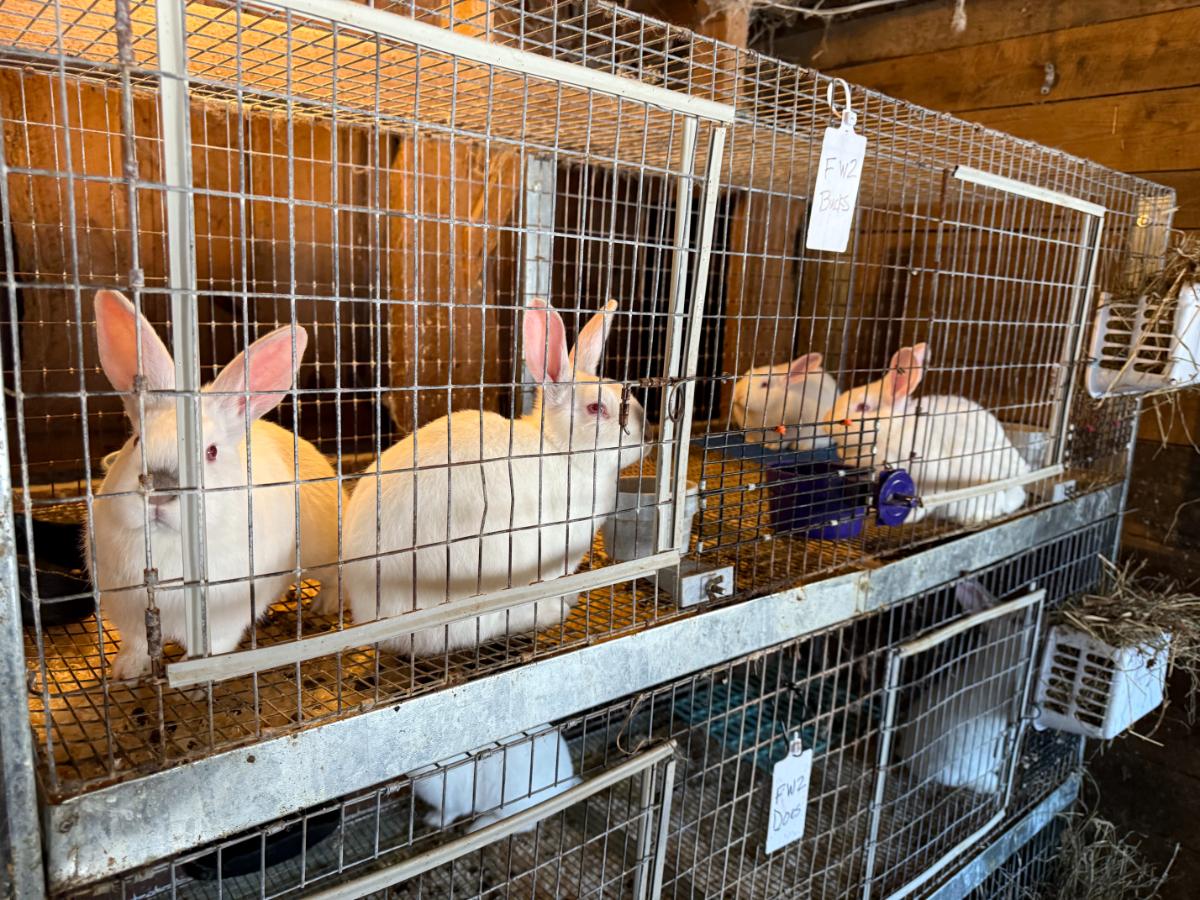
Here’s a primer on what you can expect when looking for meat rabbits, timing and considerations, and planning for a strong start.
Jump to:
- Junior Rabbits/Young Rabbits/Grow Outs
- Take time to evaluate young rabbits for sale and ask questions
- Intermediate Rabbits/Breeding Age/Mature Rabbits
- Senior Rabbits/Proven Rabbits
- The most reproductively reliable, but the least available
- VIDEO: What is the Best Time of Year to Start a Rabbitry?
- Costs and What You Might Expect to Pay for Meat Rabbit Breeding Stock
- Planning Ahead to Start a Rabbitry
- Where to Look for Meat Rabbits to Start a Rabbitry
Junior Rabbits/Young Rabbits/Grow Outs
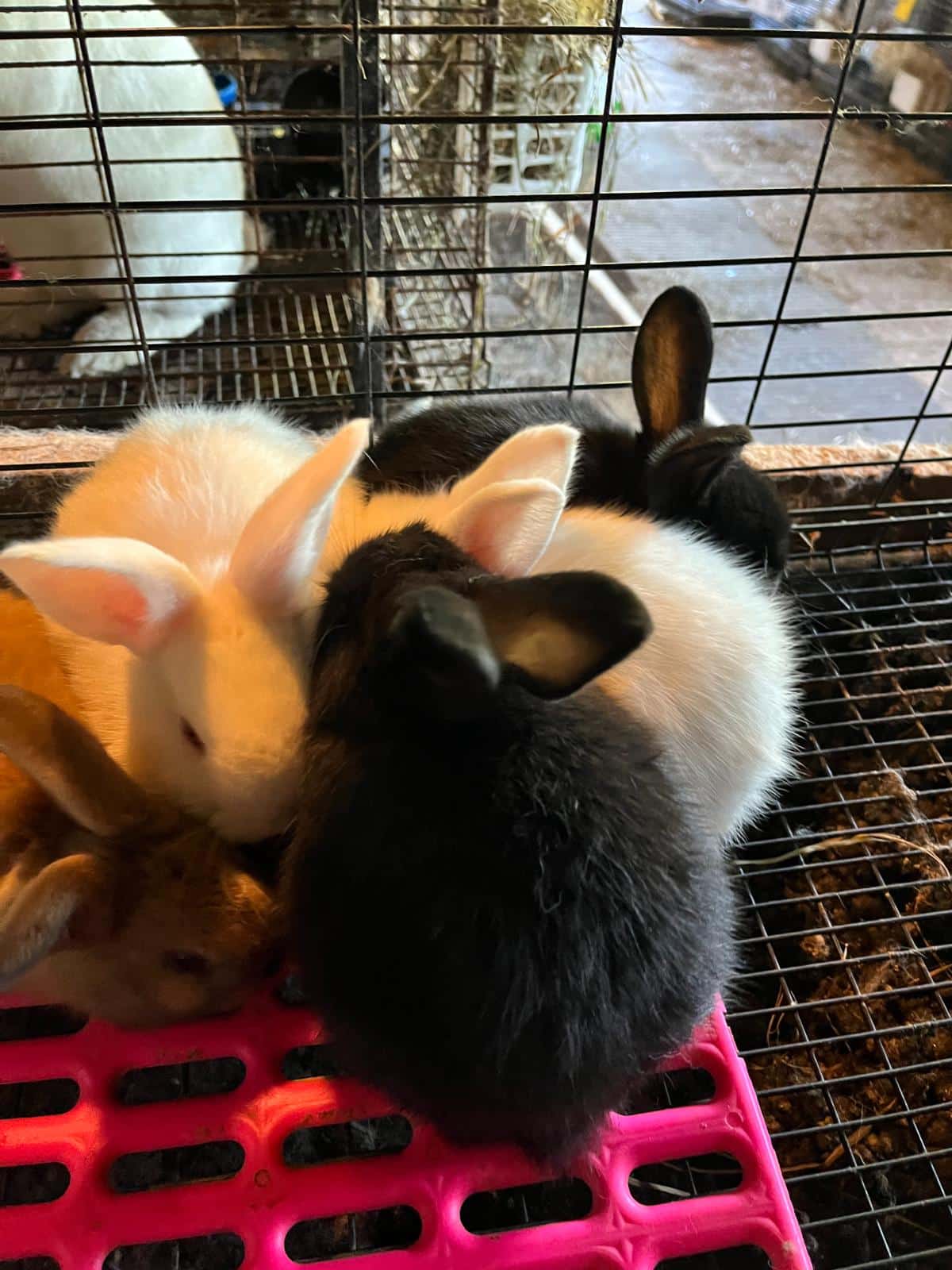
A junior rabbit is a rabbit that is younger than six months old. This is the age of meat rabbits that you will find for sale most often. This is the age range in which rabbits are most available.
There are a few reasons for this:
- Breeders prefer to sell rabbits between eight and 16 weeks old
- This is the period of time when rabbits are old enough to be legally sold (meaning, any age over eight weeks old)
- Rabbits in this age range are still within the range that most breeders would be raising them for meat, before harvest
- After this age, the rabbits that are not yet sold will typically be harvested and processed, unless there is a specific goal or reason the breeder is keeping them to grow on
- Breeders don’t want to keep feeding young rabbits for too long, or the cost of inputs becomes too high
- This raises the time and expense, lowering profits and raising the costs
- Unless the breeder is reasonably assured an older junior or intermediate rabbit will sell, they will typically harvest the rabbits; they are not likely to keep feeding and raising a rabbit for a potential sale
- There are always new litters of meat rabbits not too far behind the current litters, so it makes the most sense and the best efficiency to harvest what is not yet sold and start fresh with a new litter for sales offerings
Rabbits at this age are more abundant, simply as a reflection of the management and rotation in a meat rabbitry. These are certainly still valuable rabbits that can serve you and your breeding program well, and produce a lot of meat for you.
If you buy rabbits in this age range, you will need to keep them for several months to raise them to breeding age and size. You will need to wait several months (two to four, depending on the age of the rabbit) before you can start breeding them.
There is a benefit to this, though. This gives you time to establish a routine. It gives you time to build additional cages or housing for grow outs.
Very importantly, it gives you general experience, management, and handling of your rabbits before you add the added work of breeding and managing kits and litters of grow outs. This is a valuable experience that will make for smoother sailing.
Take time to evaluate young rabbits for sale and ask questions
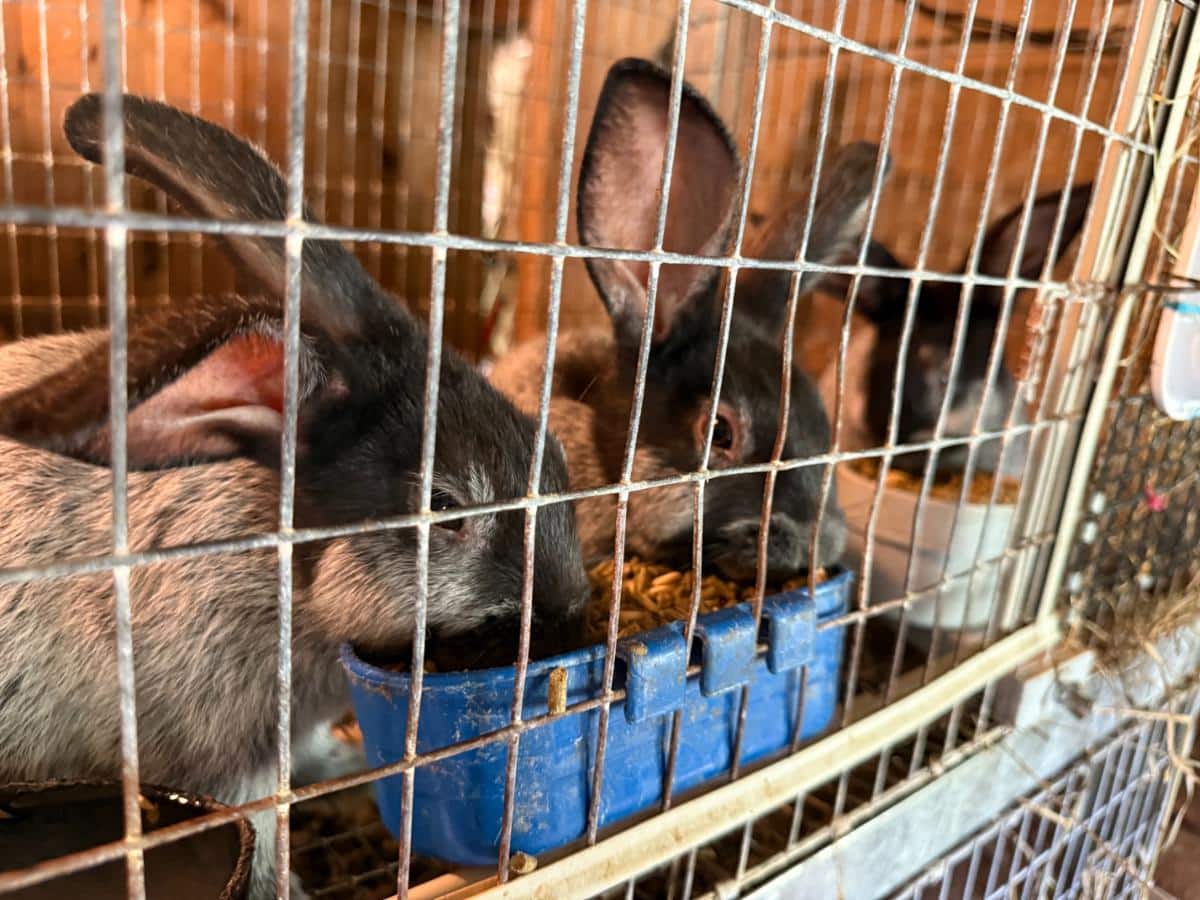
That said, be aware that breeders will have virtually their entire litters available up to 12 weeks of age, at least. That means that the litter may or may not have been evaluated and selected for prospective breeders. If the rabbits are in high demand, a breeder may sell all of a litter, with little concern for selection and traits.
To be clear, most good meat rabbit breeders will only sell stock that they think is suitable for your purpose. Also, the onus is really on you, as the buyer, to select rabbits that are acceptable to you. Many breeders will offer insight, but different people have different goals for their rabbitry. A good, reputable breeder will not, however, sell stock that has obvious health or dental problems, and should only sell rabbits that have good meat traits.
To be very clear, this is not to cast a bad light on any breeders or on breeders that are selling potential breeding stock at young ages. Again, junior rabbits are the most available, and it is quite likely you will have to start with rabbits at this age and then breed them up to mature breeding age. It is simply to point out that it is probably the time when a breeder is most likely not to have evaluated their rabbits.
Also, the younger the rabbit, the less time it has had for all of its traits to develop. That is not something that can be helped. One way to tip the odds in your favor is to ask questions on a more general scale (as well as about the individual).
For example, it can help to know things like
- The litter size of the doe
- Survival rates of kits and litters
- Mothering ability of the doe
- Growth rates of grow outs
- Size at harvest
- Age of harvest
Intermediate Rabbits/Breeding Age/Mature Rabbits

An intermediate rabbit is a rabbit that is between six and eight months old. These are rabbits that are just reaching the ideal first breeding age. At this age, the rabbit may have been previously bred and may be “proven” (see below), but most likely it will not be.
Meat rabbits only hit mature breeding age at five months old, at the earliest, so if a rabbit is six months old, it probably has not had time to deliver a litter. By eight months, it may have delivered, but it’s not that often that you’d find an eight-month-old rabbit for sale that has successfully delivered and weaned a litter of kits (it is, however, possible).
This is a good age for rabbit purchase. You can expect that rabbits at this age, since the breeder has more time, feed, and money into them, may command a higher price. This is fair, since the inputs are higher. However, that is time and money that you did not have to put in yourself, and you’ll have rabbits that you can start breeding soon.
At this age, the rabbits that breeders (at least reputable breeders) have on offer should show most of their traits, so evaluation is more reliable. You might also be more likely to find more selected, quality stock simply because a breeder is less likely to hold over and keep raising a rabbit that shows no promise.
This is, of course, not a guarantee (what’s available could just be a rabbit they haven’t gotten around to processing), but it is probably more often the case with intermediates than it is with junior rabbits.
Senior Rabbits/Proven Rabbits
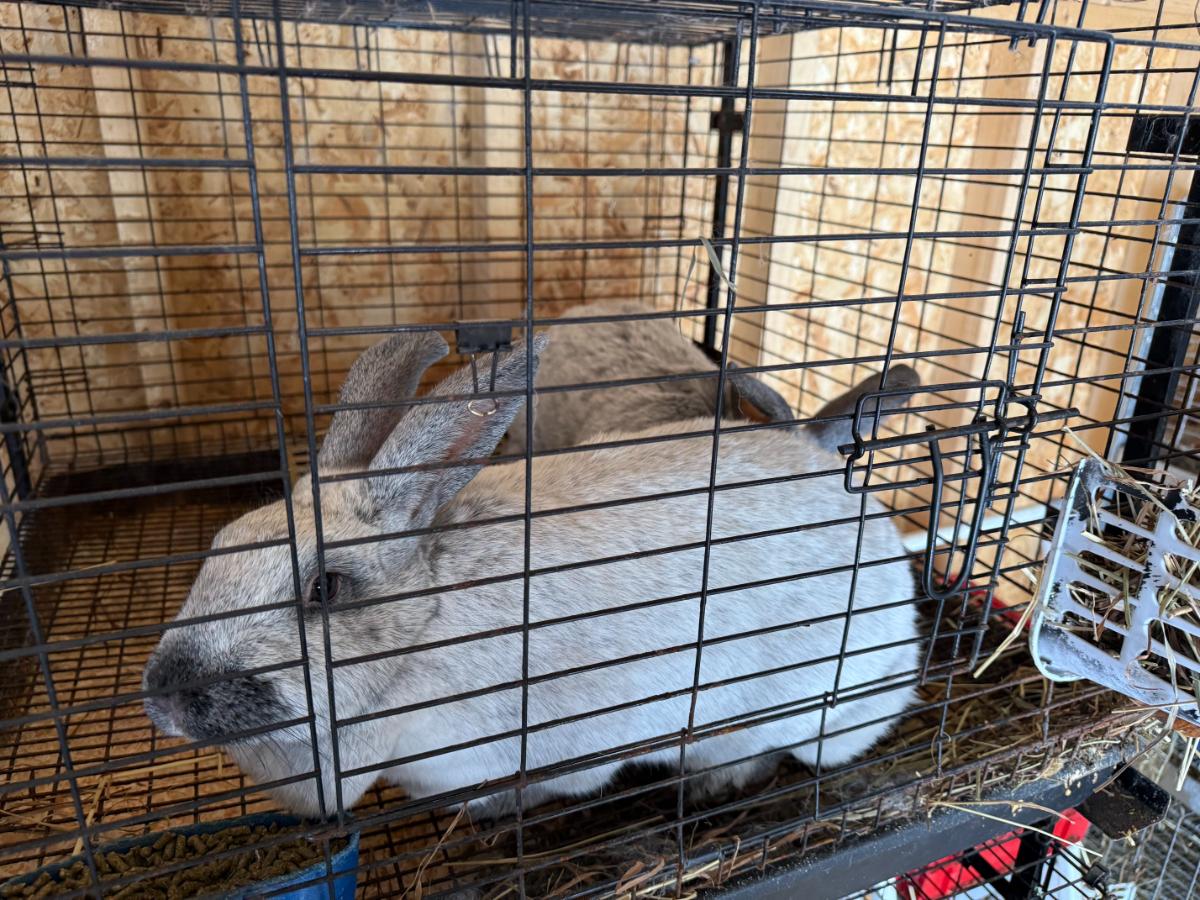
Senior rabbits are adult rabbits over the age of eight months. For the most part, this is an age at which the rabbit is fully grown.
A proven rabbit is a breeder that has successfully produced at least one litter of kits.
For does, this should mean that she has been bred, delivered, and reared her young to weaning age.
For bucks, this should mean that they have been bred to a doe and that that doe gave birth to a reasonably sized live litter of kits.
Though a buck or doe may be considered “proven” after producing one litter, and though there is some variation on this definition, some people will not consider a doe or a buck to be truly “proven” unless they have produced three litters of kits. The litters do not need to be produced with the same buck and doe pairings.
The most reproductively reliable, but the least available
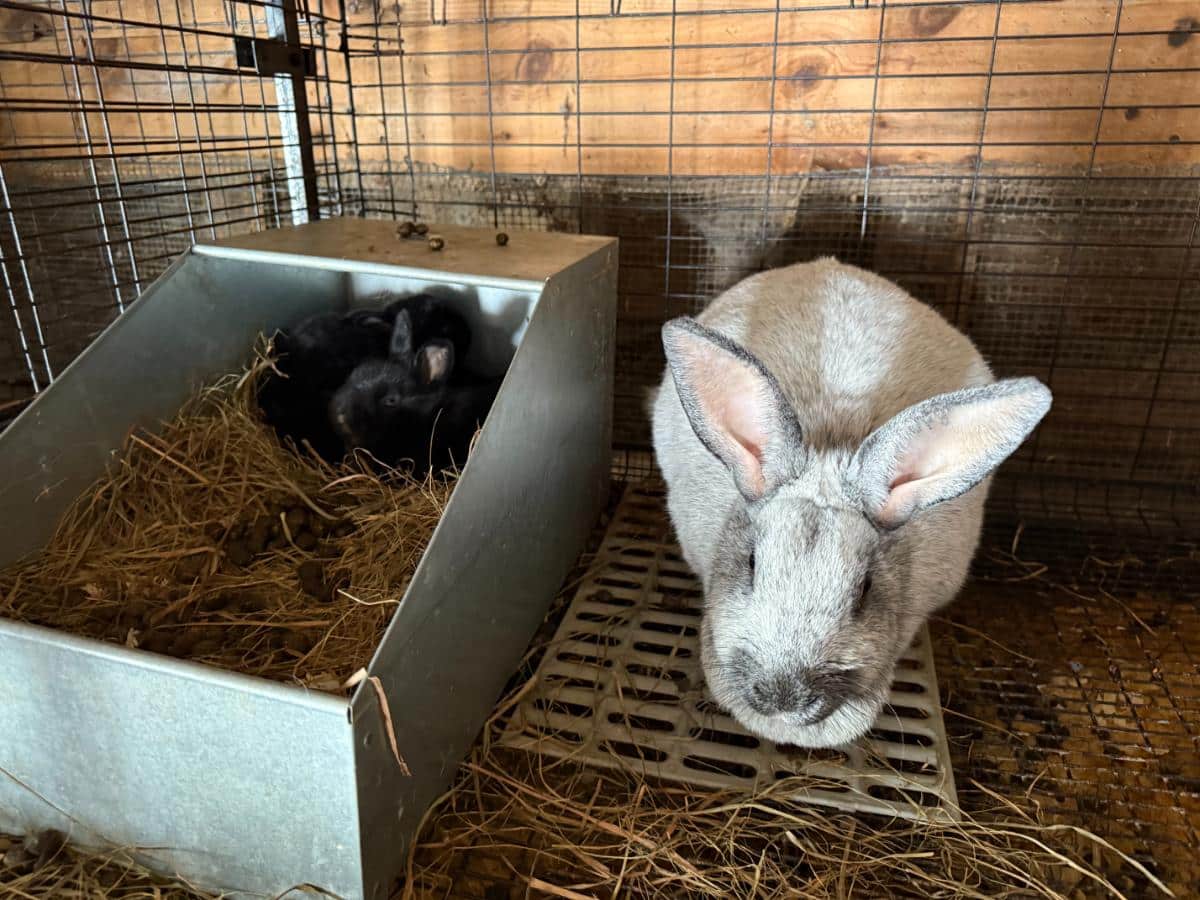
Proven meat rabbit breeders are the most reliable in terms of getting breeding quickly and reducing the likelihood of problems. With a proven buck or doe, you should have some history.
The quirks and issues that can happen and that are not uncommon with first-time bucks and does should be diminished with subsequent breedings and kindling. As does and bucks get more experience and learn to breed and then (for the does) mother and care for litters of kits, they tend to get better at it.
Proven breeding rabbits are usually the least available, but it is certainly possible to find them. Breeders tend to stick with good producers for most, if not all, of their reproductive life. There just is not the turnover in proven meat rabbits that there is in rabbits of a younger age.
You can expect proven meat rabbits to command a higher, and probably the highest, price. As the oldest of the three proven stocks have the most inputs (time, money, feed) into them, they simply need to cost more to cover expenses and turn at least some profit for the seller.
Don’t assume that a breeder who is selling proven stock is selling poor quality or inferior rabbits. In fact, they should not be. If proven meat rabbits are poor quality, inferior, or have difficulties with breeding and production, a responsible breeder will cull them rather than sell them as breeders.
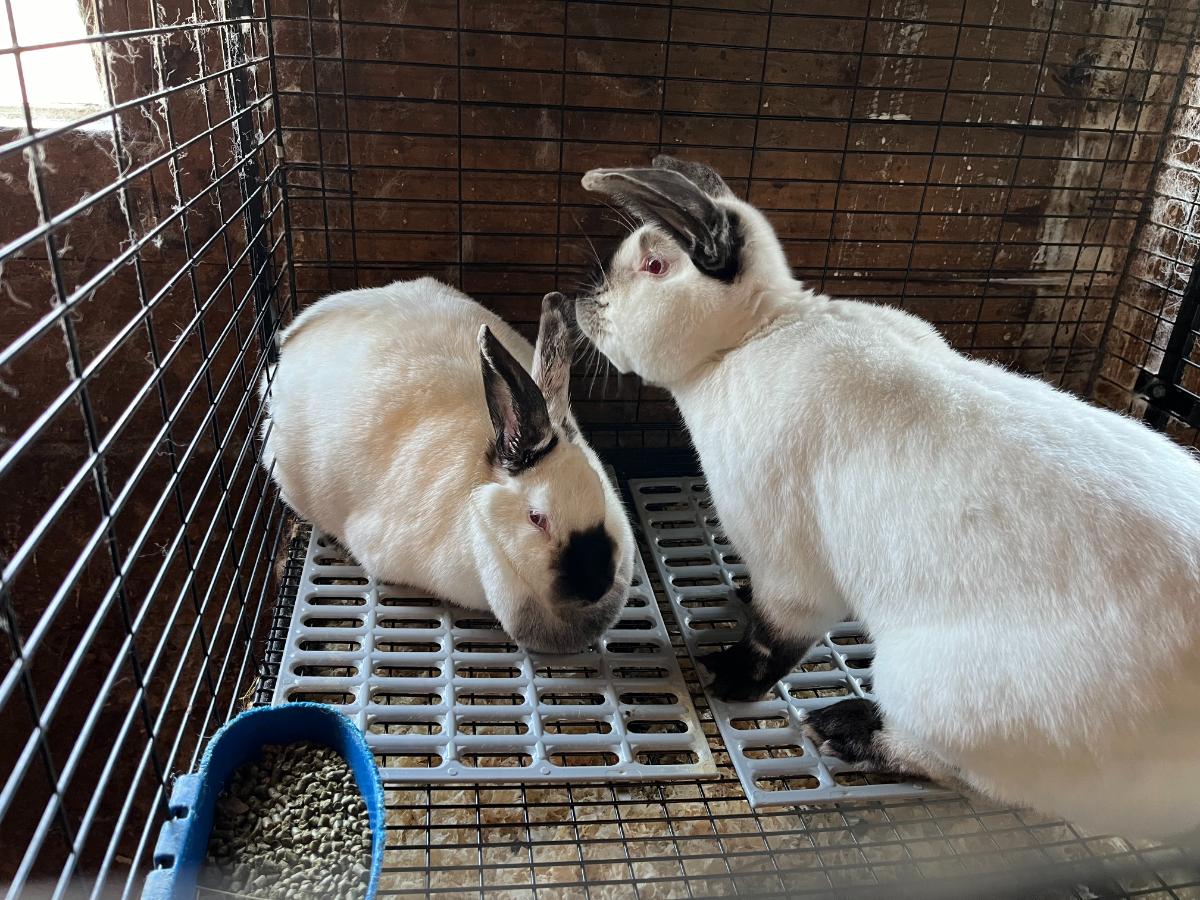
A few legitimate reasons why a breeder might sell good, proven stock are as follows:
- They may need to move breeders on so they have room to bring on new breeders
- They may be looking to refresh the genetic makeup of their rabbit barn (for example, if years of breeding the same lines have left them with too many related animals)
- They may be making room to focus on different breeds or different traits that they are interested in working on (colors, growth rate, conformation…there are all sorts of goals and possibilities)
- They may be downsizing their rabbitry
- They may have expressly raised a good breeder to production age and bred them once or twice to make sure they are proven before selling
- They may be showing and working on a specific goal
- They may have held replacement breeders back and held more than they knew they would need, but kept them long enough to select the best candidates for their rabbitry’s goals; this doesn’t mean the ones that didn't quite make the cut are of poor quality, though -- the line can be very thin between the “best” specimens of promising breeding stock from good parents!
- It may be aging out of the program and have a limited breeding life left. This is something for you to know. For the right price, these rabbits can still be worthwhile, but you should have a plan to keep the best of their offspring and replace older, proven rabbits with something younger soon.
That said, there will be a reason why a breeder is selling off their proven stock. And it’s perfectly fine to ask what that reason is, and collect what information you can about the rabbit’s history!
VIDEO: What is the Best Time of Year to Start a Rabbitry?
Costs and What You Might Expect to Pay for Meat Rabbit Breeding Stock
There is no way to really report a definite cost for meat rabbit breeding stock. The costs can vary depending on many factors. Some breeders will offer meat mutts at lower costs. Some will offer pedigreed stock and charge more for them. Some will offer just as high a quality without the papers, and may fall in between. Location, rabbit breed, age, proven status, and availability all come into play as well.
For general planning purposes, for good quality foundation stock for your meat rabbit endeavour, a [loose] estimate wouldbe between 40 and 60 dollars (U.S.), with prices up to 75 or 80 dollars not unreasonable, given the cost of feed, supplies, and a breeder’s time.
It is not unheard of to see prices go up to and sometimes over $120, especially for less common and rarer breeds.
[All price estimates, of course, are as of the time of publication.]
Contact some breeders; peruse meat rabbits for sale posts and listings on farm websites, rabbitry pages, and classifieds; see what is out there for rabbits and the general going rate near you. Then, if a rabbit is priced very low or very high, think about why that might be. Decide if it is worth it to you to buy a rabbit at a bargain basement or inflated price. [Buyer beware, you might get what you pay for -- or not!]
Using a rabbit or small animal transport is a possibility, too, but you will need to factor that into your cost, and the cost usually starts around $60 per rabbit, depending on the type of transport and distance.
Planning Ahead to Start a Rabbitry
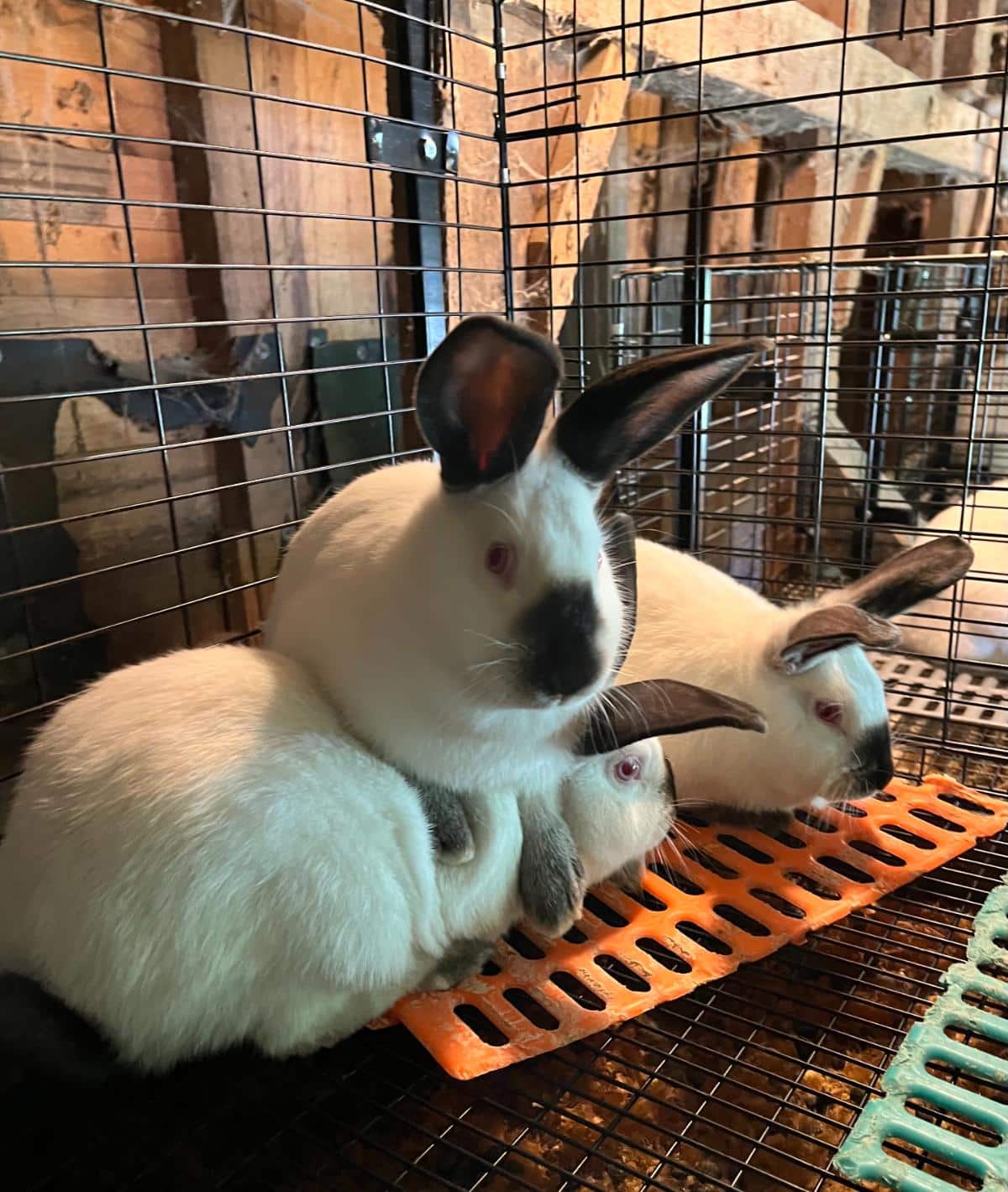
Knowing what you know now about the availability of meat rabbits for sale at different ages and stages, and something about the costs you can expect to pay, it’s wise to plan ahead for buying breeding stock for your meat rabbitry.
Know that it may be several months before you can breed your young rabbits, and that young juniors are what you will most likely have to buy. Build that into your timeline.
Start putting out feelers for buying meat rabbits earlier than you thought, so that you can find the best stock available to you. This will also help you to get put on waiting lists for litters, or, if the breeder does not keep a waiting list (because these can be cumbersome to maintain and have no guarantees), you can perhaps at least follow them on their website, social media, or maybe be put on an email list for updates and litters if they maintain one.
You may also get lucky and find that you hit the market at just the right time, and you can obtain breeding stock when you want them. Great if it happens, but if not, at least you're prepared to buy when it does.
Where to Look for Meat Rabbits to Start a Rabbitry
There is a complete article, including tips for where to look and locate meat rabbit breeding stock, here: Sourcing Meat Rabbits: Where Can You Buy Meat Rabbits?
This article gives a perspective on buying meat rabbit breeders from auctions: Is Buying Auction Meat Rabbits a Bad Idea?
Familiarize yourself with meat rabbit terminology here; it will make it easier to search for, buy, and communicate with breeders and sellers about potential meat rabbits to start your barn or rabbitry: 58 Rabbits Terms New Meat Rabbit Growers Should Know
Ralph Lyden
Can I purchase breeding stock from you this summer?
I am in central Maine
Mary Ward
Hi Ralph,
If I have something available this summer, I'd be happy to sell you stock. I will email you from my personal address and please check back with me later in the season.
Thank you!