

The period of three to four weeks old with meat rabbit kits is a time of transition and then maintenance. It is in this time when things start to get a little less stressful and when you will start feeling more confident about your – and your rabbit’s -- accomplishments.
Jump to:
- You Can Start to Relax a Little
- Kits Out of the Nest – Exciting Times!
- Be vigilant about rodents
- Preventative measures are key to rodent control
- Removing the Nest Box
- End of Week 3 through Week 4 – Kits Acting More like Miniature Rabbits
- Feeding 3 and 4 Week Old Rabbit Kits
- Time to Add Some Feeders and Waterers
- Watch, Maintain, Enjoy
- Not Quite Weaning Time
- The trouble with weaning too early
You Can Start to Relax a Little
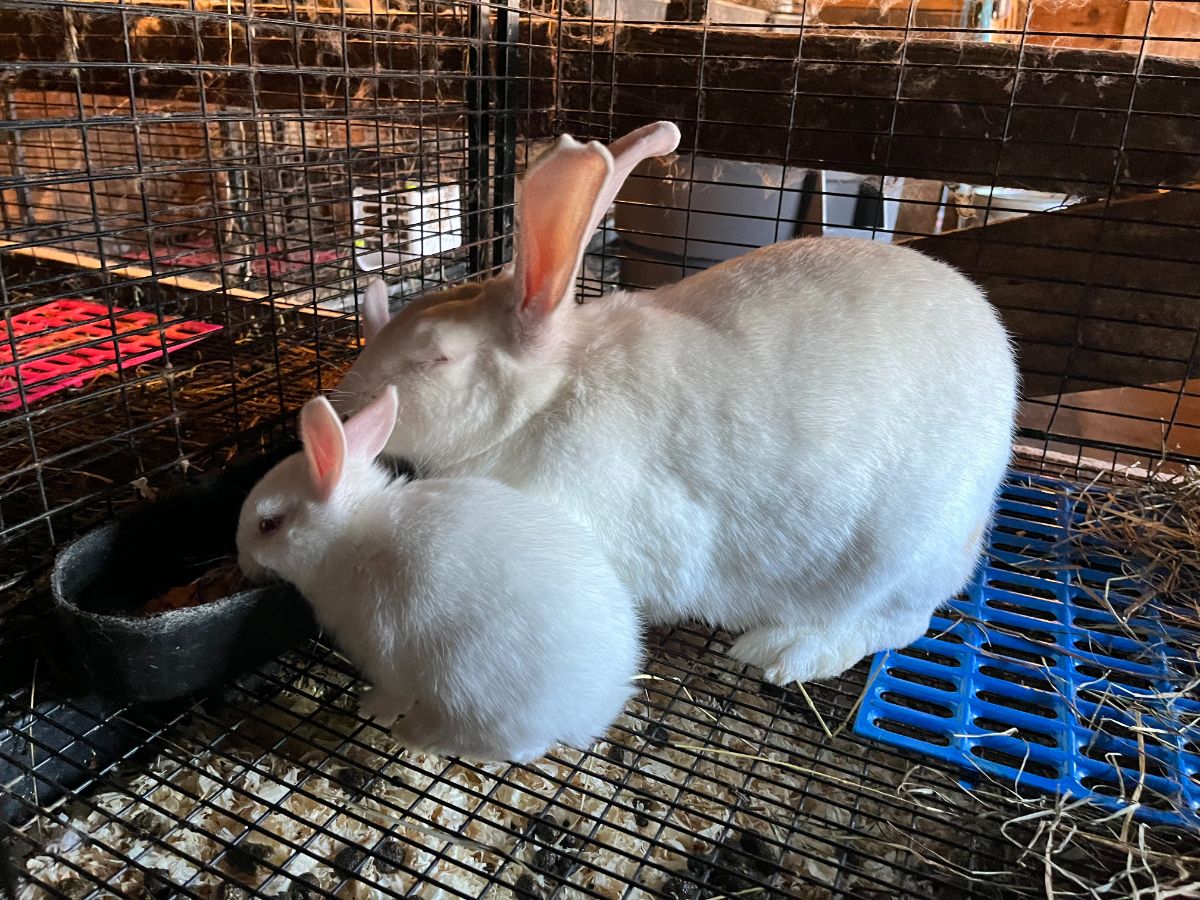
The first two weeks in the lives of meat rabbit kits are the period when you are most likely to have deaths occur in your new litter. This is not to say, of course, that other problems can’t crop up or that kits still can’t be lost, but it’s not as likely to happen after two weeks.
By now, both you and your doe will have settled into a routine. You’re keeping daily checks, protecting your rabbitry from rodents and predators, and everyone has settled into life with kits in the nest.
Even a nervous or first-time doe should be trusting you with her babies by now, so handling, checking, and maintaining them should be a snap.
Problems with the doe or with the nest should have arisen by now if they were going to, and they should be corrected or managed by now. (If you do think the doe is harming your kits, look for a bigger problem, like predators or rodents.)
All in all, by the time weeks three and four roll around, your kits will be becoming more and more independent by the day, and the riskiest periods will be moving behind you.
Kits Out of the Nest – Exciting Times!
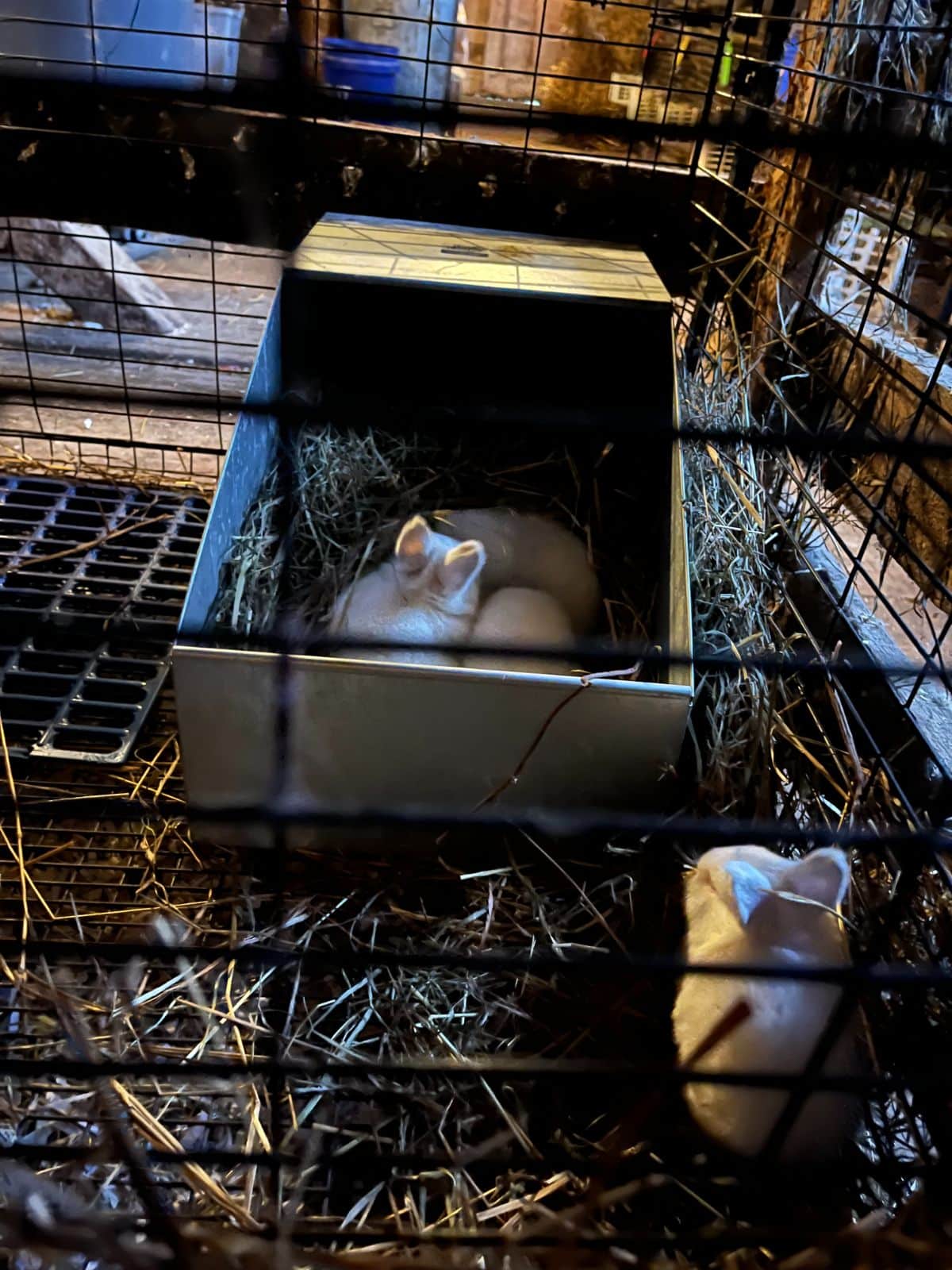
Kits will start coming out of the nest to test their legs and explore at around two weeks. This may be a little earlier or later, but by the end of week three, all of a sudden, you will see kits out and about a lot of the day.
If the weather is cold, you may also see that kits take a little longer to become explorers.
By the time kits are three and four weeks old, you don’t have to worry as much that they might accidentally wriggle through cage wires. If you have taken steps to prevent this in your cage, this isn’t such a big concern now that the kits are bigger and three to four weeks old. (Preventative steps are things like lining the cage with extra straw or hay in the early days of mobility or installing baby saver wire [more on that in kits in the first two weeks].)
What is more important to look for is to check the kits at night in the early part of the third week when they just start to explore. Make sure everyone has gotten back into the nest for warmth. It helps to put a brick or a pile of straw or hay in front of the nest box to help kits get back in at night so they can huddle for warmth.
Very soon, the kits will jump in and out without a problem, and by the end of three weeks, you won’t need to worry about this.
Be vigilant about rodents
One thing you should continue to be vigilant about is keeping mice, rats, and other rodents out of the rabbitry. Mice and rats are a problem any time they are present, but they present more of a danger to small kits in the first four to five weeks.
The reason they are more of a danger in the first month is that the kits are small and defenseless. They are immobile for the first two weeks, and then when they do start to mobilize at around days 10 to 14, they are shaky, slow, and gaining strength. They are simply good targets for rodents.
It does also seem as if the movement of kits out of the nest, or their rising above the fur and nesting materials when it is warm, draws more rodent attention to their presence. With kits coming out of the nest and starting to root and explore, this can become an issue.
Preventative measures are key to rodent control
There is almost no way you are going to keep a mouse or rat out of a standard rabbit cage if it wants to get in. Pest control experts say that a young mouse can fit through a hole as small as one-quarter of an inch; adults only need a hole between the size of a dime and a nickel.
Rodents like mice and rats lack collarbones, so if they can fit their head in a space, they can get into it.
That means that your only real defense is controlling the population. Use traps and other methods safely. Keep extra grain and bags of feed or food sources in metal cans with covers.
How do you know if rats and mice are attacking your kits and rabbit nests?
Here are some signs that rodents are attacking your nests and kits:
- Kits scattered and bitten or partially eaten (may be around the cage or scattered around in the nest or in the front of the nest box)
- When people see this, they are often quick to assume the doe is aggressive and eating her kits, but more often, the problem is with unseen rodents
- Does may try to “clean” and protect the nest by eating kits if rodents are attacking the nest
- It is unlikely a doe will harm or kill her kits herself at this age and stage of development
- Kits that are wet from the mother’s urine
(Mother does do this to mask the scent of the kits and hide them, but that wetness, especially in the cold, is a problem. You will know this is her and not the kits because of the quantity of urine and wetness.) - Kits found outside or under cages that look stretched and pulled and/or scraped, as if something worked hard to pull them through the cage wires
- Kits that are alive but have bites and injuries
Even if a rodent is just traveling through cages to eat feed, and even if they don’t physically harm kits, their presence is a problem because they can carry somewhere around 200 pathogens that cause disease. They are also vectors for mites, fleas, and other parasites.
Removing the Nest Box
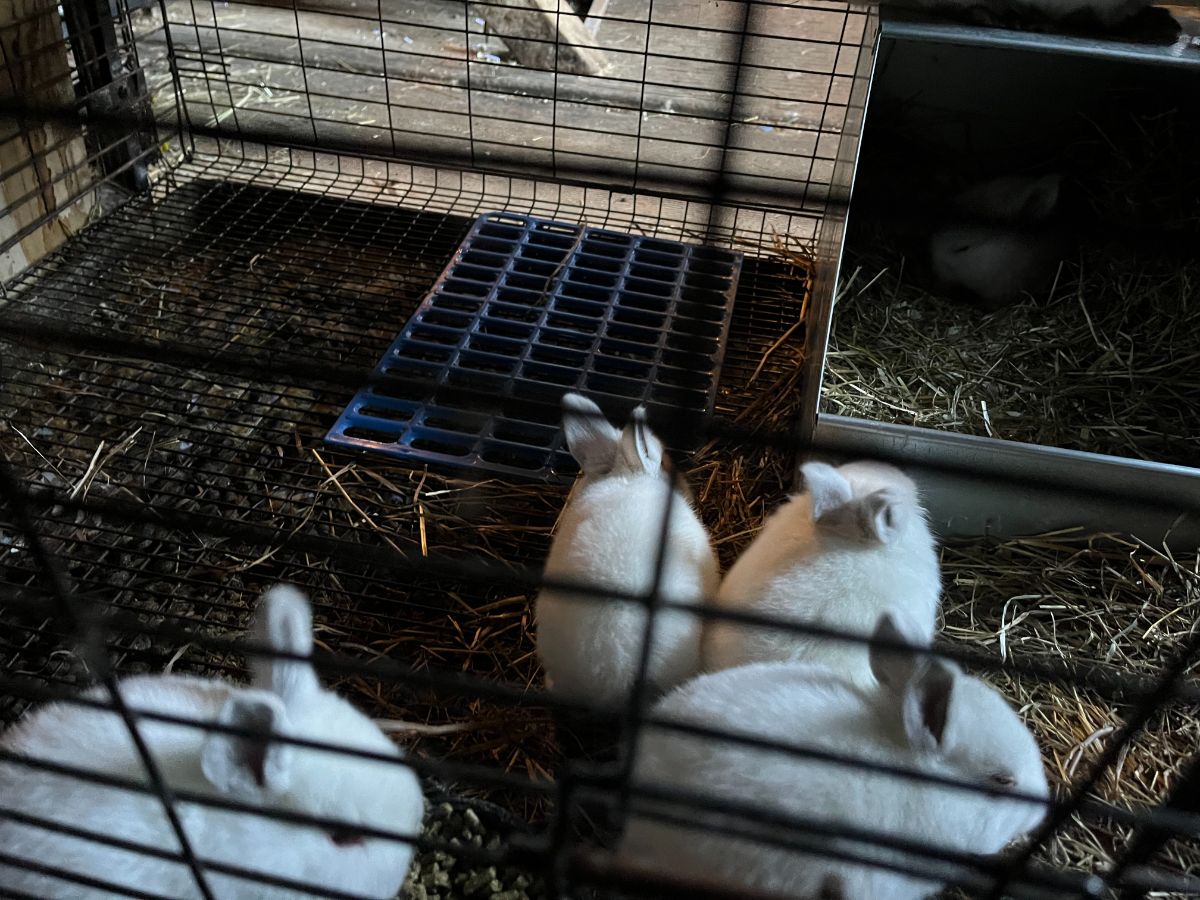
There is no hard and fast rule for when you must remove a nest box, but it is usually in these weeks that you will find it’s time for the nest box to come out.
For one thing, the kits will soon be too large for it, at least as a whole litter. You’ll find that their constant running and jumping around will move the box around in the cage a lot, and it just gets to the point where it seems to be in the way.
They will also start spending almost all of their time outside of the box when they are awake, and then the box becomes more of a nuisance than a help.
If the weather is cold and you are concerned that the kits might be too cold without the nest box, it is fine to leave it in, but it should be cleaned weekly from two to three weeks on (more often if needed).
If you don’t remove the nest box by the beginning of week three, it is time to clean it out:
- Remove all of the fur and bedding materials
- Replace the layer of shavings in the bottom for comfort and absorbency
- Put a new layer of hay on the top for warmth
- The doe is not likely to do much in terms of arranging the nest, so place the hay in towards the back, where the kits need to snuggle down for warmth. This is more necessary in week three than in week four (these kits develop fast!).
You should leave the box in through the whole third week (days 14 through 21 of life) while the kits build up their coats. After that, it is a judgment call.
In the first days after you remove the nest box, you can put a pile of hay or straw in the corner of the cage as a sort of transition. This isn’t strictly necessary, and the kits can still cuddle for warmth, but it is helpful in colder months.
When it gets to the point that the hay is more mess than comfort, stop putting that in the cage, too. Wet bedding is no good for anyone.
End of Week 3 through Week 4 – Kits Acting More like Miniature Rabbits
By the end of the third and fourth weeks, your meat rabbit kits will look and act just like miniature versions of the adults. They are nearly old enough to be weaned and to live independently on their own. Within the next couple of weeks, they will be.
Feeding 3 and 4 Week Old Rabbit Kits

The rabbits will still be nursing at three weeks and probably into week four. They may nurse beyond that, too.
Different does and different litters nurse for longer or shorter periods, but nature, the kits, and their mother know how to handle this, so there’s nothing for you to do in that respect.
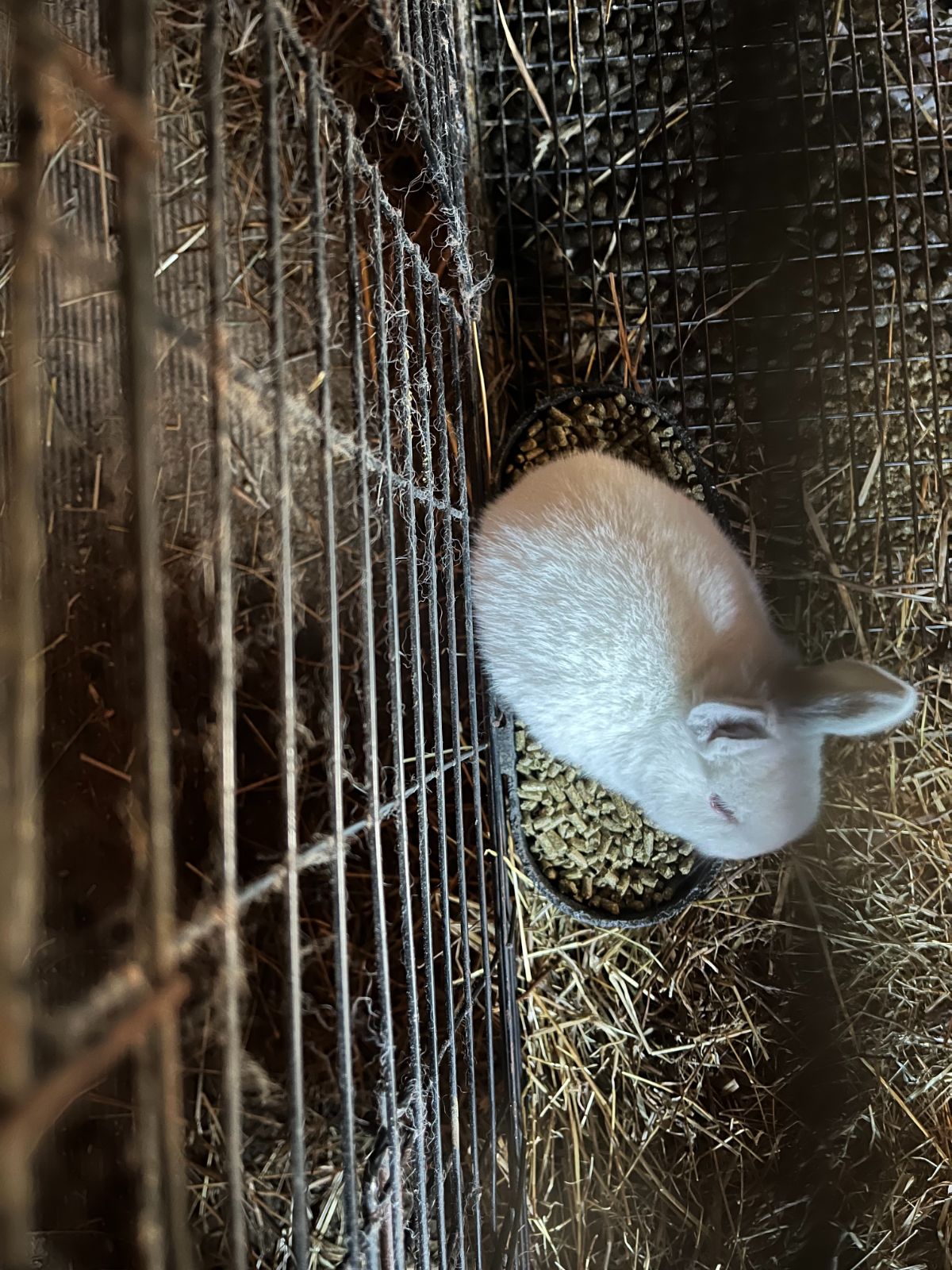
The kits will start nibbling pellets and sipping water within days of when they start roaming about the cage. Let them. This is exactly what they should be doing! Every day, they will eat and drink more and more and nurse from the doe less and less.
Once you see that the kits can move around the cage and hop with ease, lower water crocks until they are flat on the floor of the cage. Don’t leave space for the kits to get stuck under them, but they should be down where the kits can start to drink.
You’re not very likely to see the kits nursing by four weeks. By now, they are eating and drinking quite a lot, and their need for their mother’s milk is lessened.
Time to Add Some Feeders and Waterers
There’s no sense adding extra feeders and waterers to the cage until they’re needed, but they’re needed now.
- Kits and the doe should have free feed pellets (and hay if you feed it) in front of them all the time.
- As long as there is a little feed left when you go to feed the next day, they have enough to get through a 24-hour period.
- If feed dishes and waterers are completely empty, you need to be feeding more.
The kits will start eating a lot more over these two weeks, so don’t be surprised if you have to do this more than once. Once the demands on the cage get too great, it will be time to wean, but we’re not quite there at four weeks old*.
(*It is possible to wean kits at four weeks old, but if you don’t need to, it’s better to wait until five or six weeks so the kits get a stronger start.)
Watch, Maintain, Enjoy
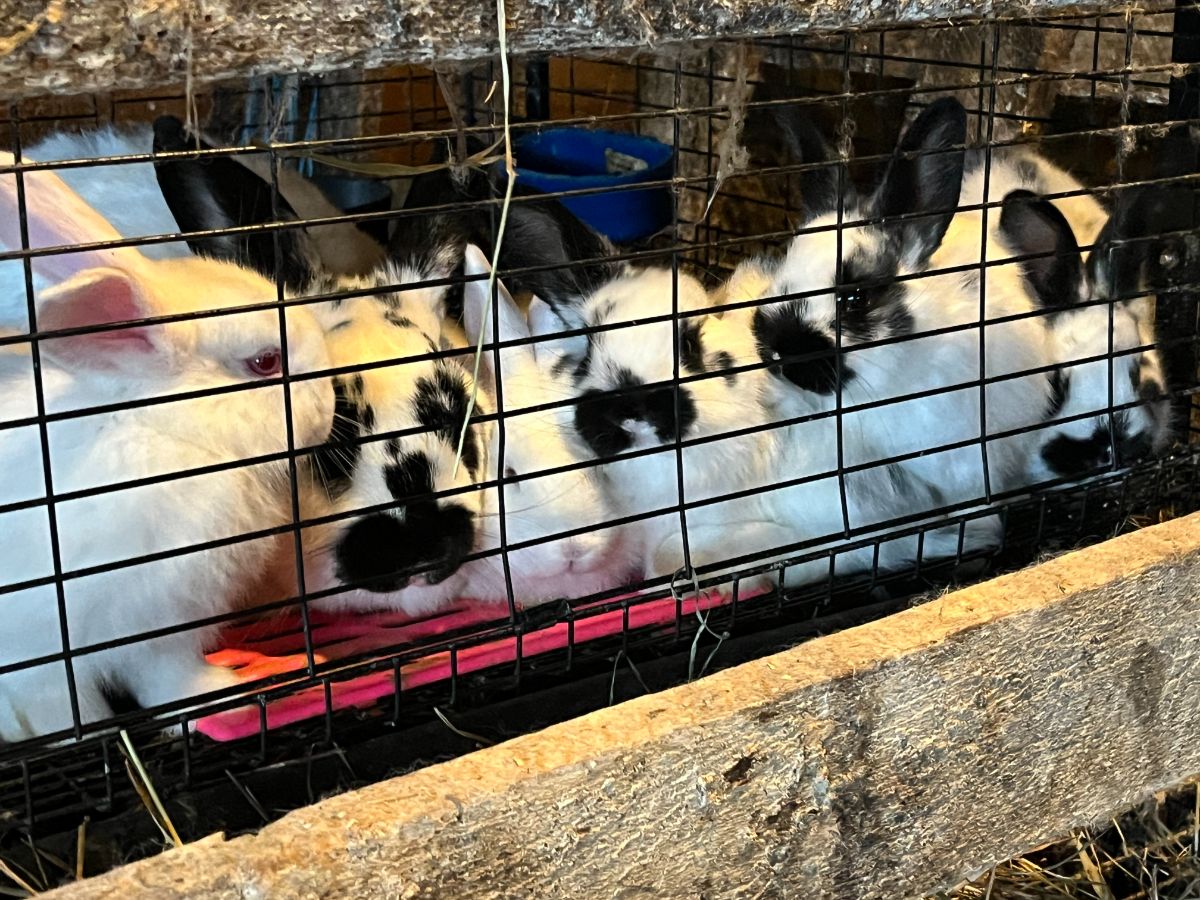
During this time, good care is all these kits need from you. Give everyone what they need and plenty of it. Then just enjoy watching the growth, development, and antics of these little guys!
Not Quite Weaning Time
Even though the kits are eating and drinking well on their own, there is still value in leaving them in with the doe for another week or two.
Four weeks old would be the earliest you should consider weaning kits, but an extra week or two (or more) is safer and better insurance.
Really, the only reason to wean at four weeks of age would be if you were running an intensive breeding program in which the doe was bred back at two weeks postpartum, meaning she is due to have another litter in about two weeks, and she needs to recover from the first litter before kindling again.
Most homestead and backyard breeders are not breeding on such a demanding and intensive schedule.
The trouble with weaning too early
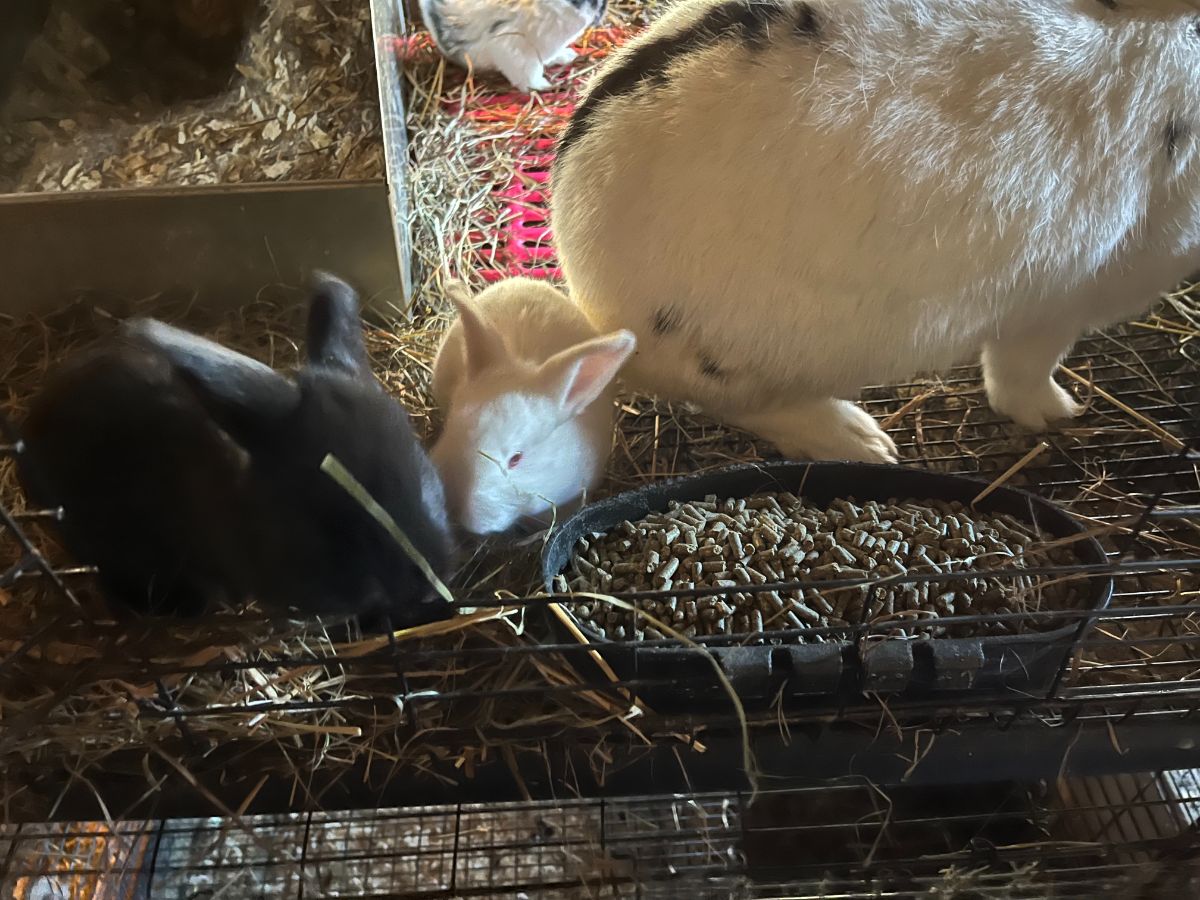
Weaning too early will result in weaning enteritis, which is a form of diarrhea. It is often severe when it occurs in young kits and often fatal.
During the time the young kits start eating solid foods, the mother will feed her kits her cecotropes. Cecotropes are essential for both kits and adult rabbits. Cecotropes help rabbits access necessary nutrients, and they contain probiotic microorganisms that are essential to gut balance, health, and the fermentation process.
Cecotropes ferment in a special part of the digestive tract, and that, along with whatever milk they are still drinking, is what will set the kits’ digestive tracts up for strong and seamless transitions when they are weaned and moved out of the cage.
At this age, even if the mother doe is not nursing and not doing much else for them, she’s not likely to be aggressive or have issues with them, either (that would be an extremely rare and unlikely scenario at this point). Keep the group together and give the kits a final few weeks to gain strength and develop strong, balanced digestive systems.
The time will come soon enough to wean the kits. In the meantime, start getting your grow out or transition cages ready. You’ll need them before you know it!

Leave a Reply