
Now that you have kits and you’ve gotten through the day of birth, you’ll need to know what comes next.
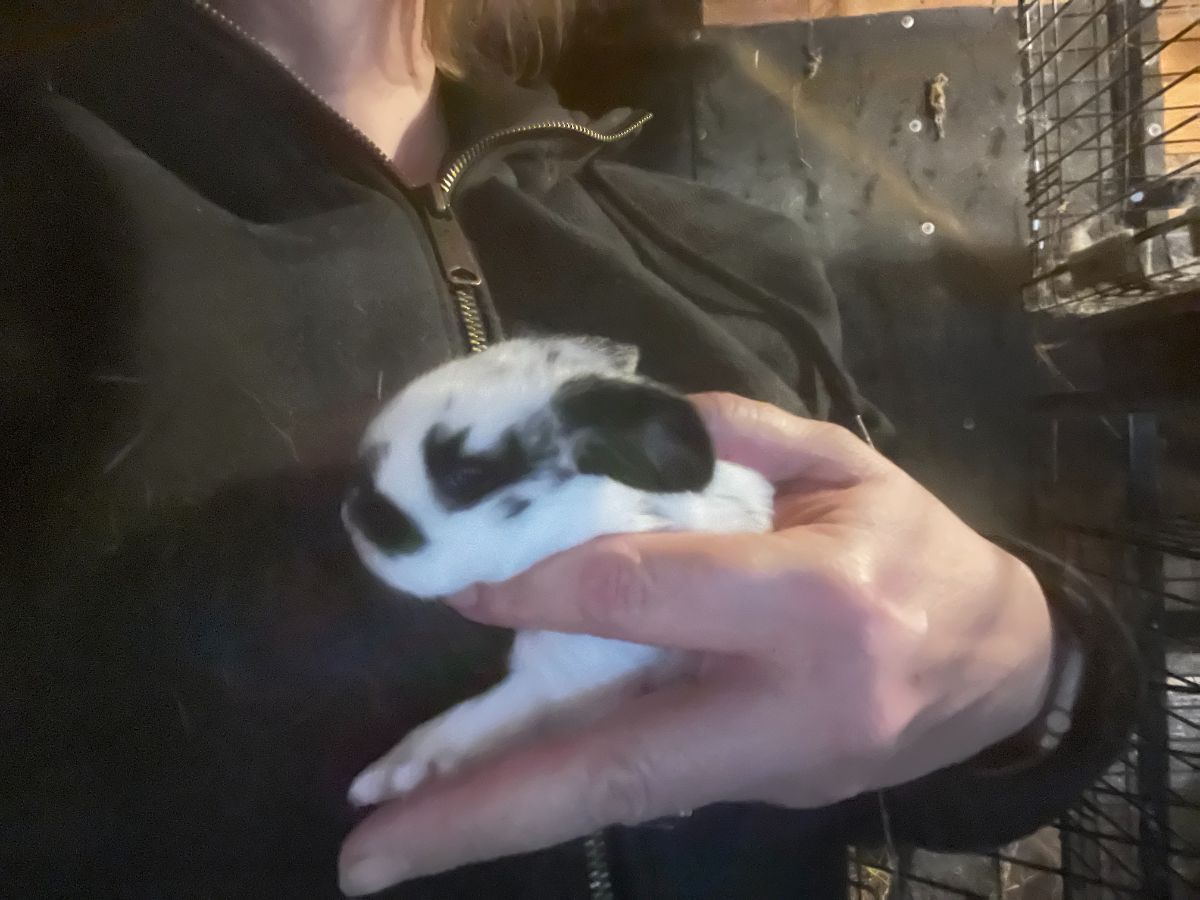
What can you expect in the first two weeks of life for your meat rabbit kits? What do you need to watch for? What does your doe and her litter need you to do?
Jump to:
- Kit Care Week One: Check, Observe, and Trust Your Mother
- Check in, but not to the point of disturbance
- When you may need to intervene in the first week
- Doe Care Week One and Two: Observation, Support, and Feeding
- Keep eyes open for signs of mastitis
- General signs to look for in post-partum meat rabbit does
- Should you supplement to increase the mother’s milk production?
- Kit Care Week Two: Prepare for Mobility and Exploration
- Cage prep for young rabbit explorers
- What Kits Look Like in the First Two Weeks and Changes You Should Look For
- Feeding Meat Rabbit Kits Week One
- Feeding Meat Rabbit Kits Week Two
- Getting Your Feet Under You Raising Meat Rabbits
Kit Care Week One: Check, Observe, and Trust Your Mother
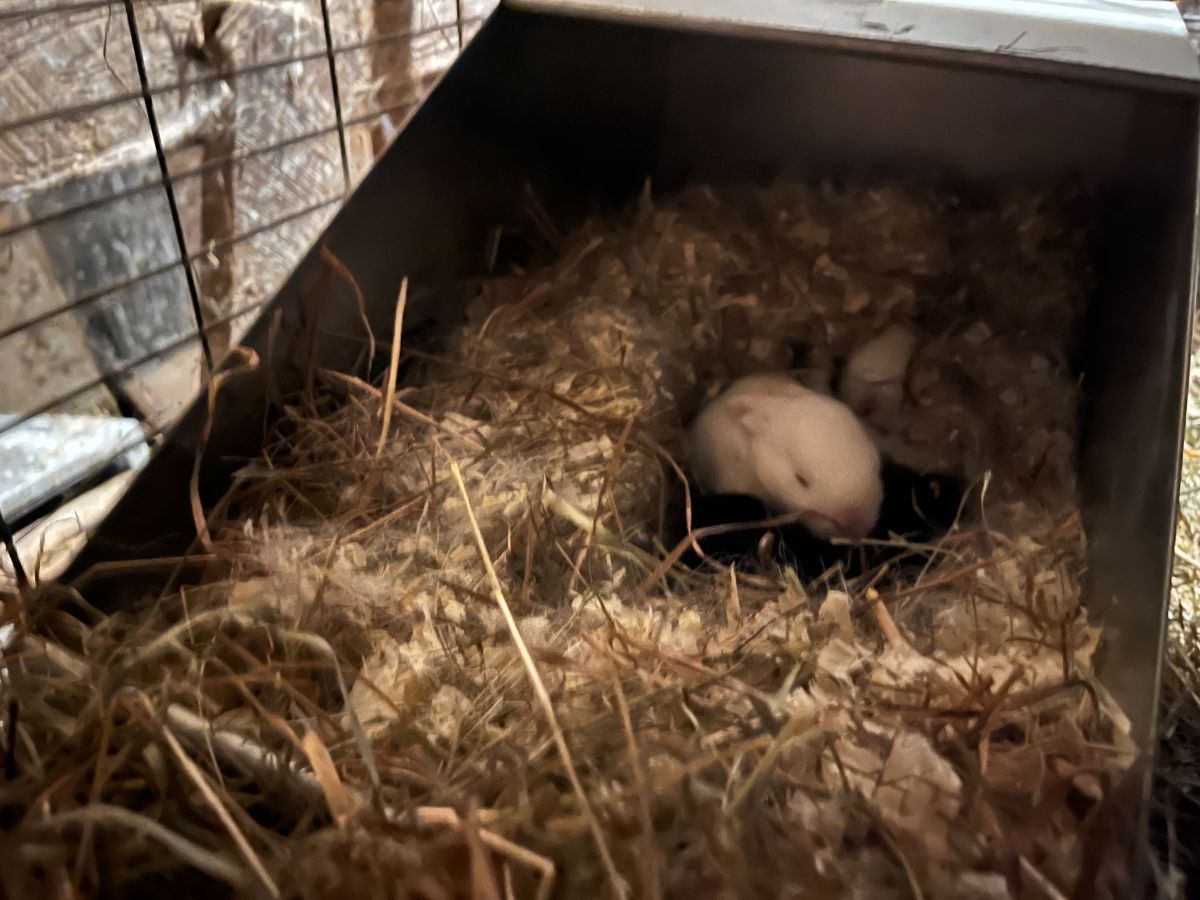
In the first week of life with meat rabbit kits, there is little that you should need to do.
If you have a good doe, she will take care of things. More often than not, any interference from you will be unnecessary. It may even be disruptive and cause issues where none exist.
Your job in the first week is twofold: focus on good care of the doe and simply be there as an observer and support for the kits, only stepping in if it is absolutely necessary.
When the doe is in good shape and when she is given all the feed, water, and materials she needs, she will almost always take complete care of the kits for the first week. She will moderate the temperature in the nest by covering kits when it is too cold for them and by uncovering or lightly pulling back nesting materials when they are too warm.
The kits themselves will not be mobile, but they can and will move around enough to work their way back into the cuddle of the litter. Note, this means that while they are in the nest, they can work and wriggle their way back into the fold. The kits are still sightless and only able to wriggle and squirm. They cannot jump or walk. That means that if the kits get out of the nest, they will not be able to get back in, and the mother doe is not able to pick them up and return them to the nest, either.
Check in, but not to the point of disturbance
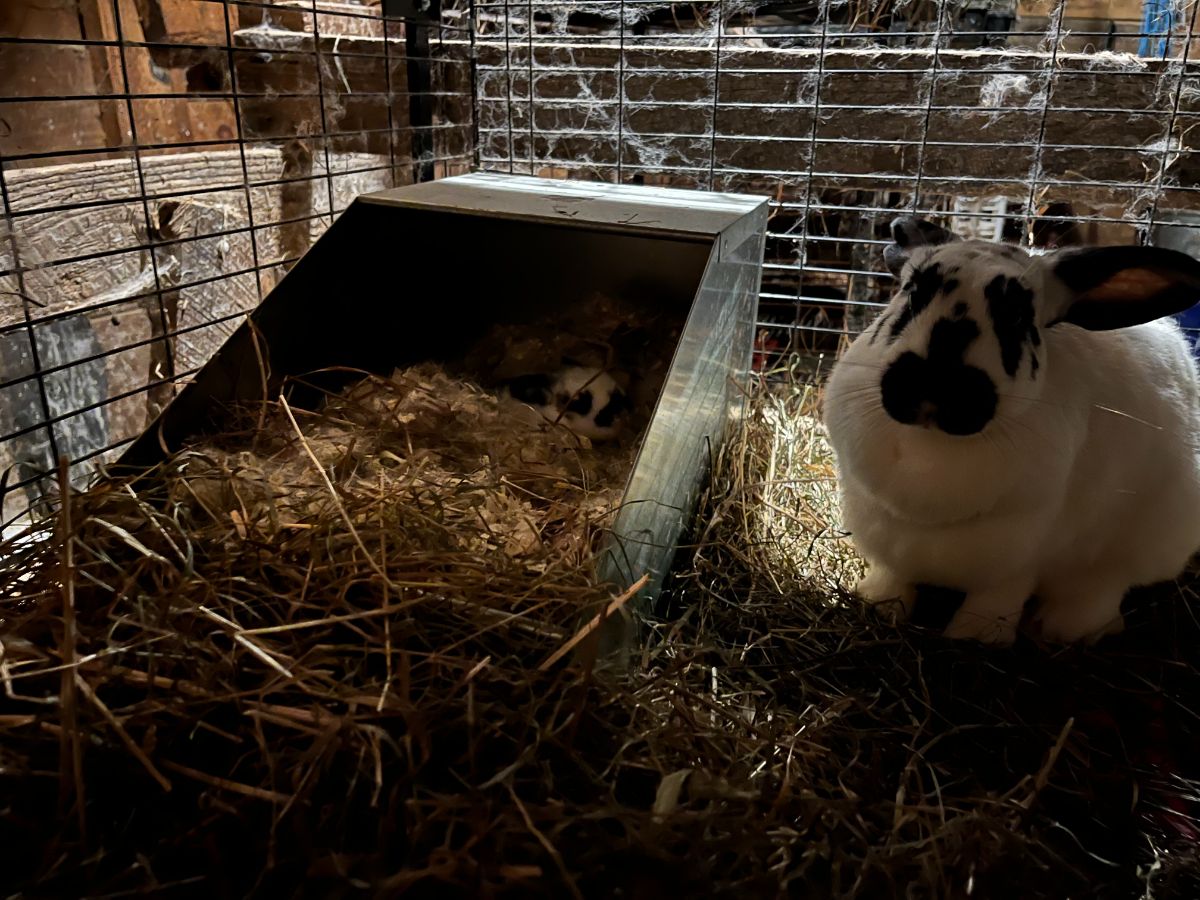
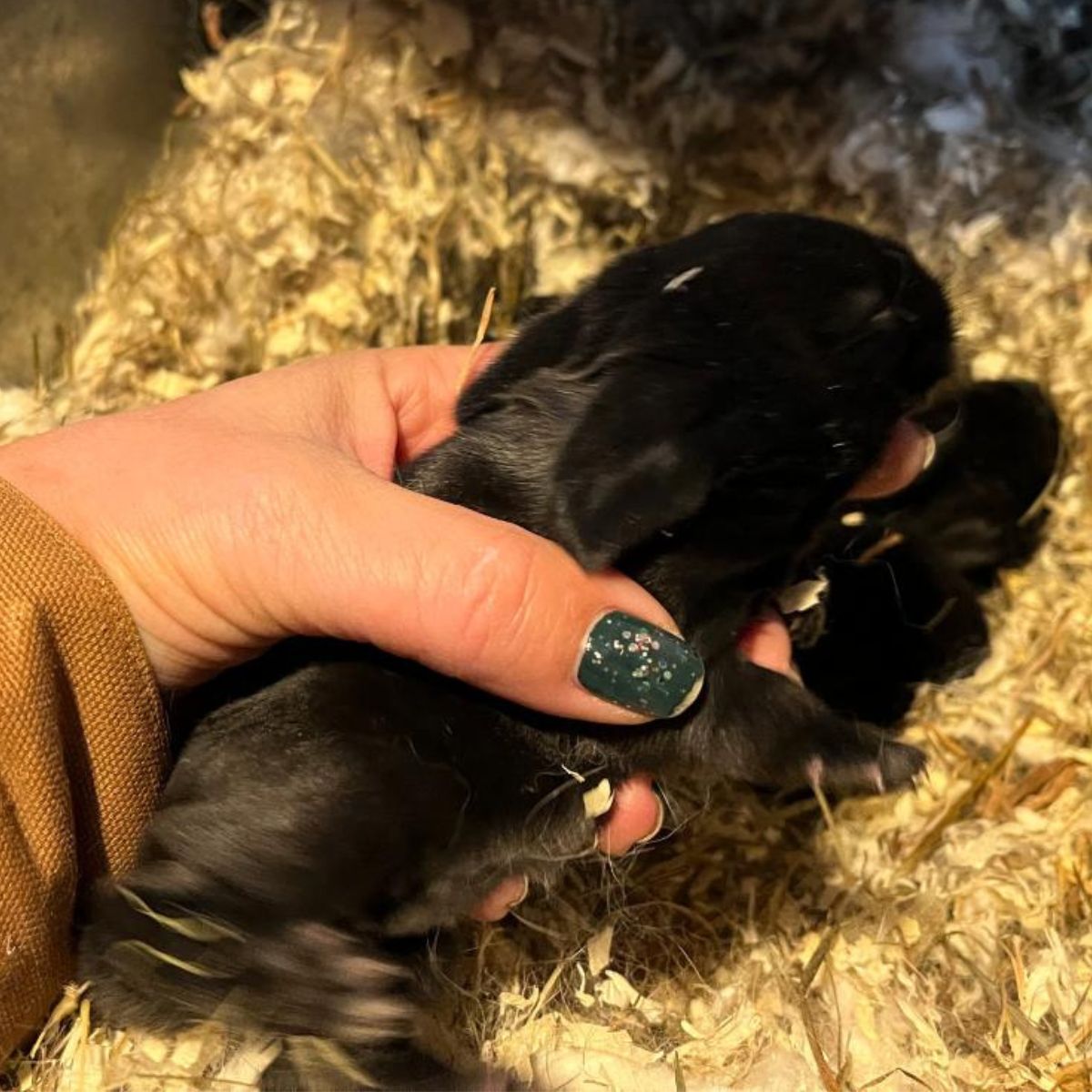
During this first week, check on your litter two or three times a day. Just don’t be too disruptive about it. Once a day or so, you can gently lay your hand on top of the fur pile to check that it is warm and squirming. You can pull the fur back to do a visual check and even touch or count the kits but don’t bother them or the doe too often.
Resist the urge to handle the kits too much, which can become bothersome and stressful for both the kits and the doe. It can also cause kits to become chilled from exposure to the cold. During this first week, while the kits are growing their fur and while their ability to generate and maintain body heat on their own gets going, they need to spend their time huddled in their nest with their littermates. Their mother’s nice nest keeps them warm and thriving.
When you may need to intervene in the first week
What you are mostly looking out for in your role as an observer is to make sure that no kits were accidentally pulled from the nest. This sometimes happens when a kit doesn’t let go of the nipple when the mother jumps out of the nest at feeding time.
Too much disruption that scares the doe away from her nest can often cause this, so again, don't overdo it on the obsessive checking and bothering, and keep things on a normal keel in the rabbitry—whatever she is used to for activity and traffic, and nothing significantly new, loud, or different.
To help avoid kits being accidentally pulled out when nursing, some people install a “kit scraper” to their nest boxes (and some nest box designs already have one). This is just a strip of wood a couple of inches wide that should catch a kit and detach it as the mother leaves the nest. As one commenter put it, it may sound harsh, but it’s better than dying outside the protection of the nest.
In cases of neglect
You may also need to intervene if the doe is neglecting her kits or being aggressive with them. This is not that common, and if it does happen, it’s most likely to occur with a young, inexperienced doe.
Feeding of neglected Kits:
If the doe is not feeding the young, you can try hand feeding them with supplemental milk or milk replacer. You will need to do thorough research on this before attempting it—even if you can manage bottle feeding the kits, the options for replacing the rich rabbit doe’s milk are not very good, and they may not develop. This is something you should consider only if there is no other choice (like if the mother dies or is ill).
Another option, if the mother is producing milk but just not caring for the litter, is to manage and force feedings. You would do this by going out twice per day (preferably early morning and evening/late evening), flipping the mother on her back on your lap (you can use a towel to handle her and make this easier), and then setting each kit to a nipple to let it nurse.
You can set several (or all) of the kits to the breast at the same time. They should only need to nurse for about three to five minutes.
Shelving and protecting kits from aggressive does
Does are not usually aggressive to kits, but if you feel kits may be unsafe—such as if the mother is chewing or eating them (maybe because she is bothered by a predator, or maybe because she is confused or stressed), you can limit her time with them to feeding only and “shelve” the kits.
Shelving simply means that you take the nest box out of the cage, bring it in the house to stay warm, and take it back outside at feeding times, at which time the meat rabbit doe will hopefully jump in and feed the kits. Take the box back out after feeding and return it to its warm space. Do this twice per day.
You should only need to do this for about a week/week and a half. By then, kits will begin to be mobile and will need to be where they can start to wander, nibble pellets, and drink water. They will still be nursing from the mother as their primary source of nourishment. Does are not likely to harm or kill kits at this age. She should start rearing them appropriately.
People also sometimes “shelve” kits if they think the weather will be too severe and cold, but that would only be called for in times of extreme cold. Even young kits can be raised perfectly fine by a good mother in a good nest, even with temperatures well below freezing. So by extreme, we mean really extreme—I wouldn’t even think about intervening in this way until temperatures hit 10 or 20 below (Fahrenheit).
Even in that case, my efforts would focus on fortifying the rabbitry to block wind and drafts, making sure everyone has good bedding to stay dry (dryness is the key!!), and perhaps stacking hay or straw around the outside of the box to provide further insulation. You could also line the inside of the nest box walls with cardboard to make sure they can’t be up against cold metal.
Fostering neglected kits to other does
If you breed two does at a time, you will have the option of fostering orphaned or neglected kits to another doe. This is assuming that doe is not overly taxed with too many kits to care for herself. You might do this if a doe fails or if she is harming or neglecting her kits.
The other doe’s litter needs to be in the same age range, within one week, and preferably the same age so larger kits don’t harm the younger, smaller kits. Keep in mind that meat rabbit breed does usually have eight or ten nipples, so they can only physically feed so many kits.
This is not to say that meat rabbit does can’t or won’t rear more than eight or ten kits, but they also won’t spend a lot of time in the nest to nurse (five to ten minutes). This means the slow and the weak may not get a chance to feed, so you want to keep litter numbers manageable. In a foster situation, you probably don’t want to let the total number of kits in the nest to go over 12.
Meat rabbit does that continue to be a problem litter after litter
If the doe continues to birth and neglect her kits, she must be culled and replaced. It can take three litters for a young doe to adjust and learn to care for her young (or she may be and probably will be a superstar right out of the gate). Give her up to three chances, but after that, don’t let sentiment prolong the problem. Cull her and replace her.
Doe Care Week One and Two: Observation, Support, and Feeding
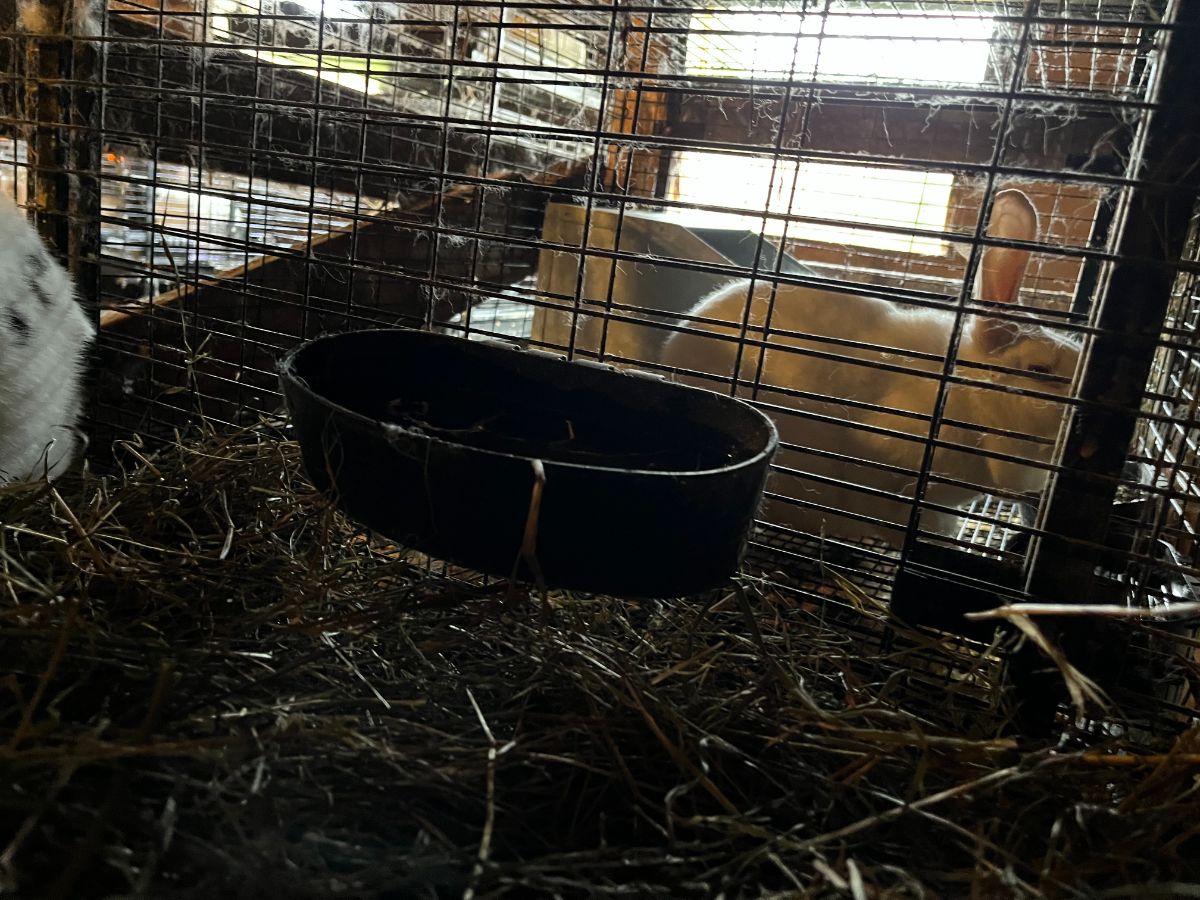
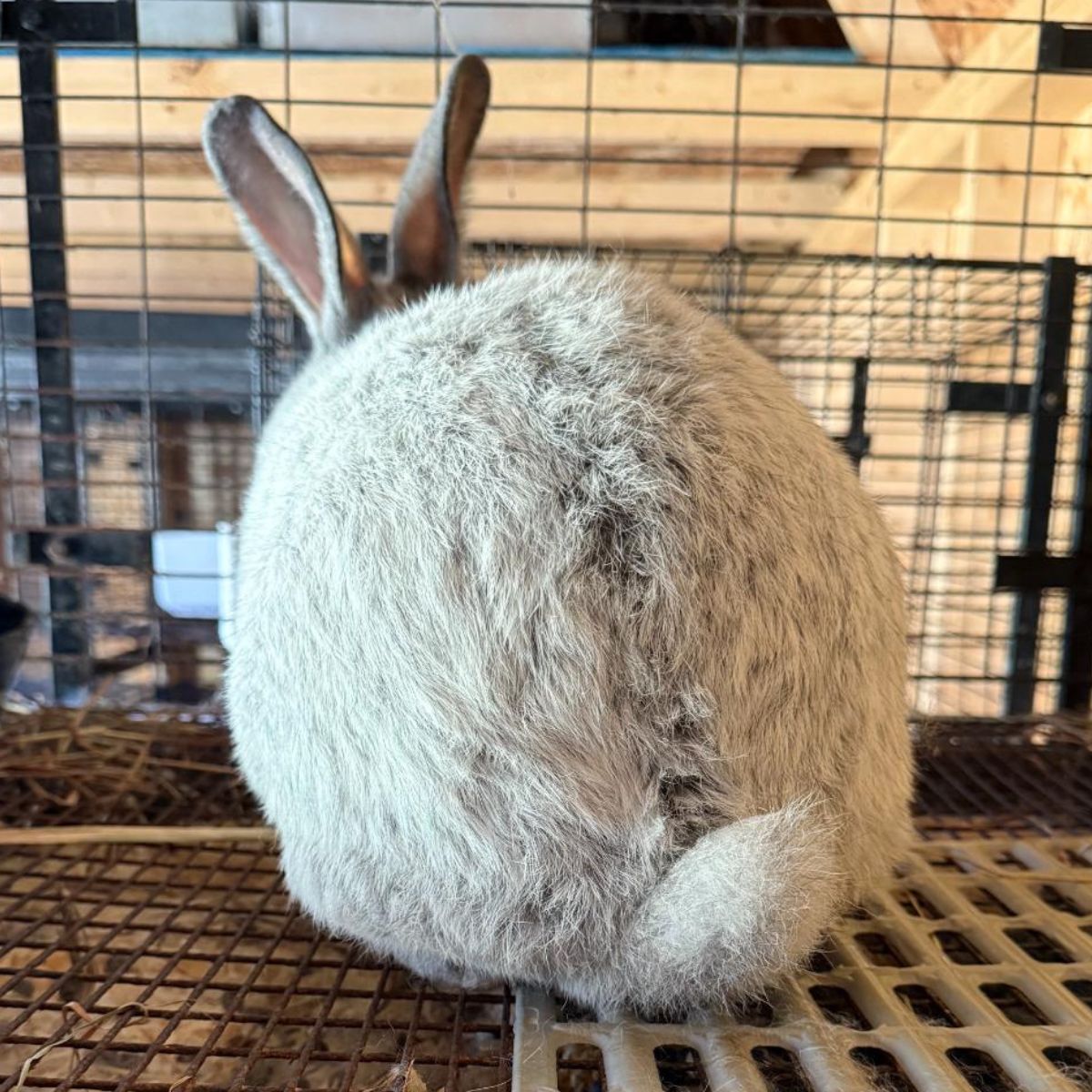
All you need to do for your meat rabbit doe in these weeks after birth is check on her and continue to provide good care and feeding.
The one most important thing to do is to make sure she has enough food and water. Keep in mind that the demands on her body are higher now. She is losing hydration in milk production. She needs more calories to make milk and to support her own body in good condition.
- Increase the doe’s feed to 16 ounces or more per day—basically, free feed your lactating doe
- Continue to provide supplemental hay if you use it
- Provide water at all times. Check more often and replenish as necessary.
Feed is important, of course, but water is crucial to keep the mother hydrated and to prevent mastitis.
Keep eyes open for signs of mastitis
Mastitis is inflammation and infection in the mammary glands. Milk will form clots or clumps and block the nipples, making it difficult or impossible for kits to nurse. Infections can become systemic and risk the life of the doe.
Mastitis happens, but it is another illness that is not overly common, especially in smaller-scale and home operations. It is, in fact, a potential problem for all mammals, including humans. So, while you should be aware of it and keep an eye out for signs of mastitis, you should not be overly concerned or stressed that it will happen.
Mastitis can often be prevented with good care:
- Keep clean conditions. A clean cage and a clean nest box are important. Raw, open nipples from nursing kits are points of entry for any bacteria that live in the cage.
- Regular nursing of the young is the best prevention. It will keep milk flowing and prevent swelling and edema, which might lead to mastitis. This is why access to her kits is important and why you might want to consider if you really need to shelve kits.
- Dehydration can cause mastitis. Water, water, water!
General signs to look for in post-partum meat rabbit does
What you are mostly looking for is a healthy doe that looks pretty much like her normal self. Her mammary glands will be fuller and larger. This may be more noticeable in older does who have had more litters.
If the doe is acting normally and appears most like her normal self, don’t worry. You’re doing fine. Signs that she is not well may include:
- Lethargy
- Not eating
- Not drinking
- Hard, swollen mammary glands
- Redness in mammary glands/nipples -- could be one or a few blocked ducts or a wider problem throughout
- Hot to the touch nipples and glands
- Discharge from nipples
- Blocked nipples that won’t emit milk or that produce clotted, clumpy milk (may be foul smelling in severe cases)
If you suspect mastitis, take pains to make sure the rabbit has plenty of water available and that she is drinking. Hot compresses can help ease edema and swelling and draw mastitis out. Often, antibiotics and nursing kits are the only solution.
Should you supplement to increase the mother’s milk production?
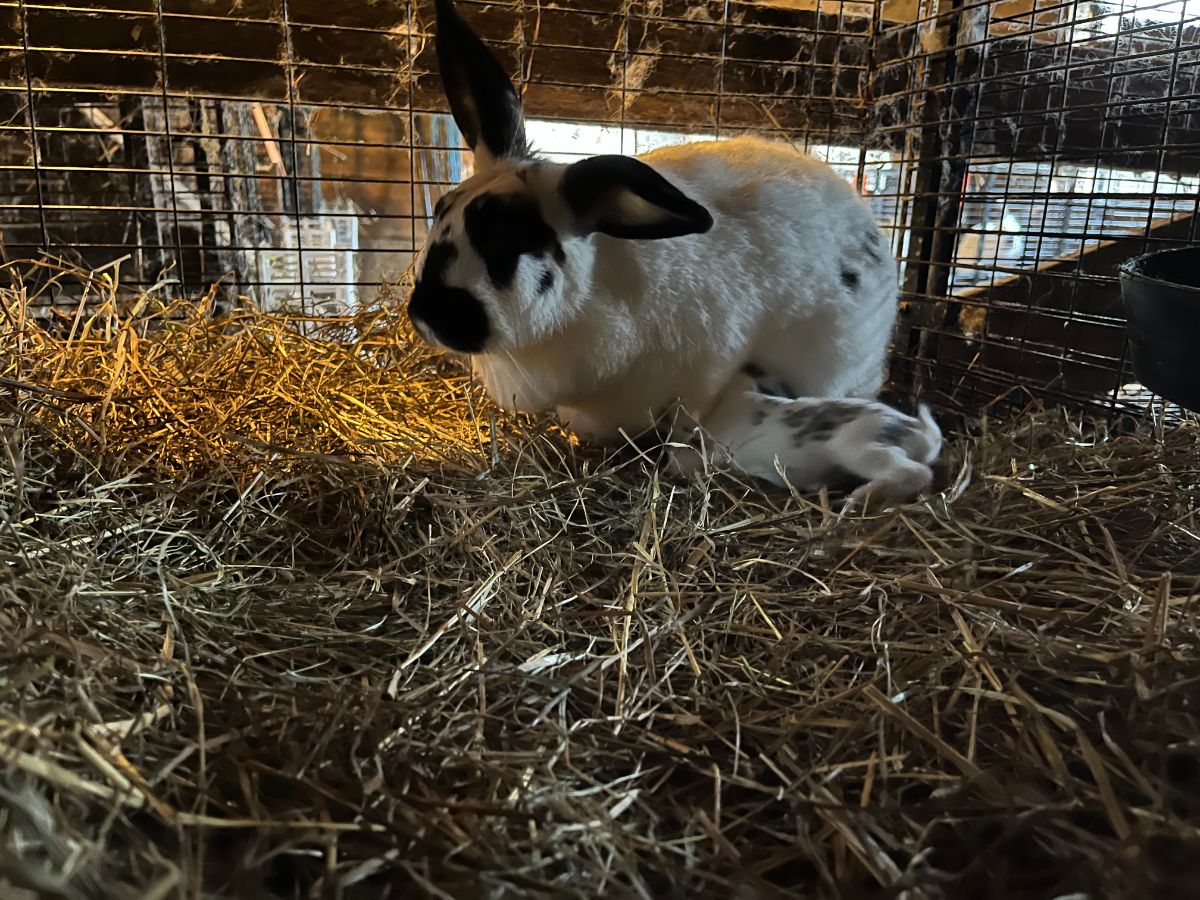
Some breeders will routinely supplement a doe’s feed when she gives birth. The idea is that supplements can help her increase milk production.
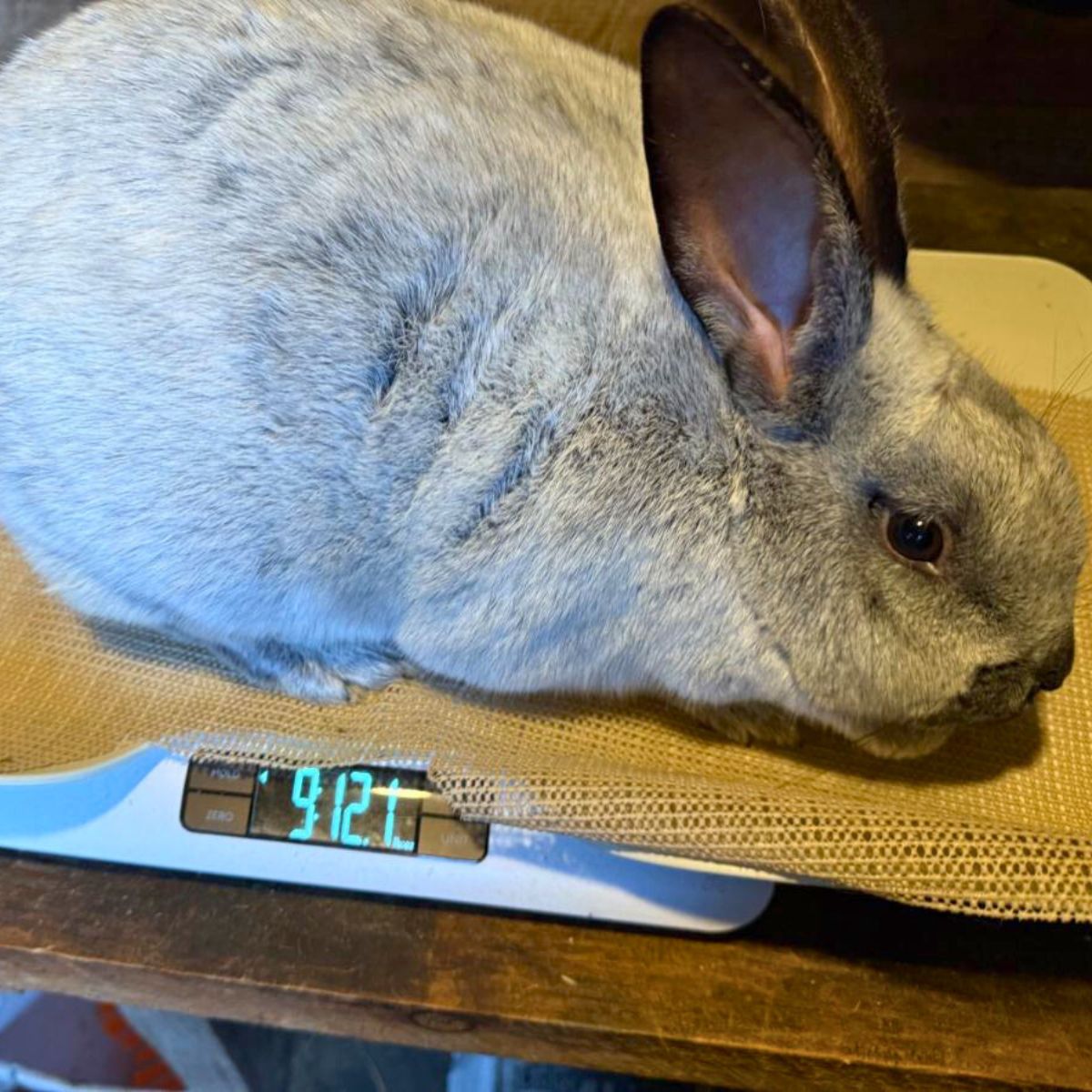
If you are feeding a well-balanced ration and the mother is used to living on the feed you provide, and if her condition is good on your feed program, you don’t need to worry about supplementing her feed; I personally would reserve this for times when you suspect her production is not keeping up with the kits. (Signs of this would be thin, underfed kits or the mother losing weight and condition—ribs sticking out and fur looking rough and dull).
Rather than a program of supplementation, I would be more inclined to give the doe a treat of some sunflower seeds when I’m working the cage or nest.
Before you decide to supplement, it is worth considering that an overproduction of milk that is not drunk by the kits can sometimes lead to mastitis. With normal production, this isn’t really much of an issue, but if you artificially inflate production for no reason, it could become one. Does, as all mammals do, adjust to the amount of milk demanded by the kits, and they are quick to make that adjustment. Before stepping in, watch the issue over a 12 to 24 hour period.
Rabbit breeders’ favorite lactation supplements:
These are the most common supplements that rabbit breeders give to lactating mothers. Keep in mind this is in addition to her diet and should not be given in large quantity. A tablespoon or two would be all that is needed.
- Black oil sunflower seed (rabbit people always refer to this as “BOSS”)
- Rolled oats (even the plain kind you buy in a grocery store for breakfast and baking are fine)
- Calf milk replacer or Calf-Manna*
(Calf-Manna is a brand name of calf milk replacer. There are many brands, and any would be fine if you decide you need it, but it seems rabbit breeders call it Calf Manna as a general name for any type of calf milk replacer. Use whatever brand is available to you locally.)
Kit Care Week Two: Prepare for Mobility and Exploration
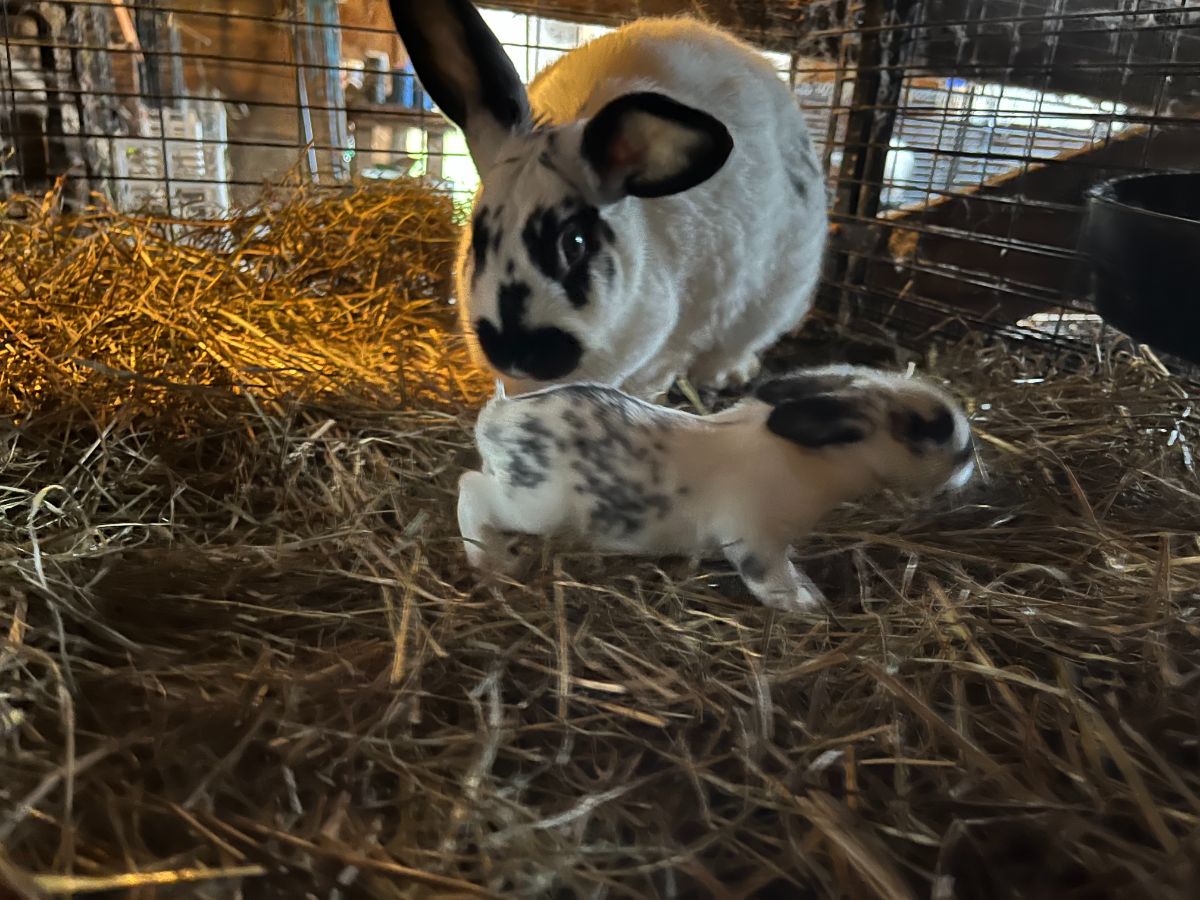
In the second week, what you really need to prepare for is for kits to become mobile. This will happen in around 10 to 14 days. Typically, what I see is one or two of the stronger and more curious kits come out first, followed by their littermates over the next few days.
By the time the kits come out, they have a good coat of fur and can keep pretty warm, but they can still get chilled and need the protection of the nest, especially at night and when the temperatures are low. So, they need the ability to get back in the nest, and/or they need something to burrow into in the cage if they get stuck outside of the nest and can’t get back in.
This is more important towards day 10 than it is after day 14 and beyond. By then, their mobility is greater, and they know better how to get back into the nest.
Cage prep for young rabbit explorers
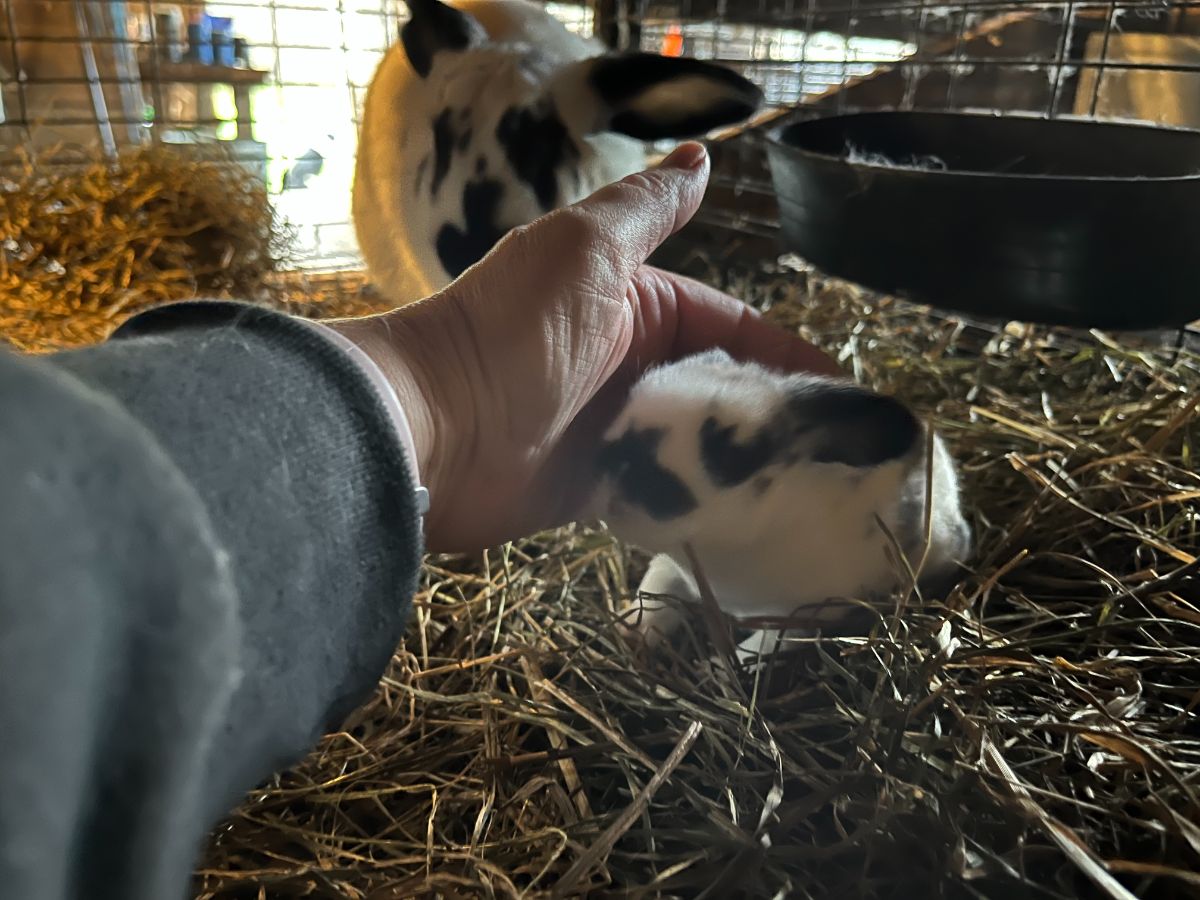
My tips for keeping kits warm and safe while they start to explore are these:
- Line the cage with hay or straw. You’ll need to clean the doe’s waste more often because this blocks the wire and stops waste from dropping through, but this stops kits from getting caught in the wire, and if they can’t get back to the cage, it gives them something to burrow into and warm up. If there are gaps larger than one inch long or wide in the side wire, pack extra hay around there for three to five days until the kits are big enough not to accidentally wriggle out.
- Stack a brick or hay up in front of the nest box so kits can make the climb over the lip. I choose hay (since I’m lining the cage with it anyway), which makes it easy for kits to climb the “ramp” from the floor to the box.
- Optional: Turn the nest box on its side. Some people prefer to turn the nest box on its side so the kits can wriggle in and out. This is not my method of choice because I find it hard to keep the nest intact, but it’s popular, and it works, too.
- Hang water crocks higher for the first few days. This is a precaution to keep kits from getting into the water they can’t get out of and to keep wriggling kits from getting caught underneath the crock. By two to two and a half weeks, I put the crock low and flat with the cage’s bottom. Once the kits are good at moving and hopping, I can trust that they can escape a water dish. By the end of week two and into week three, you’ll also want them to be able to start drinking water (until then, mom’s milk is plenty of hydration).
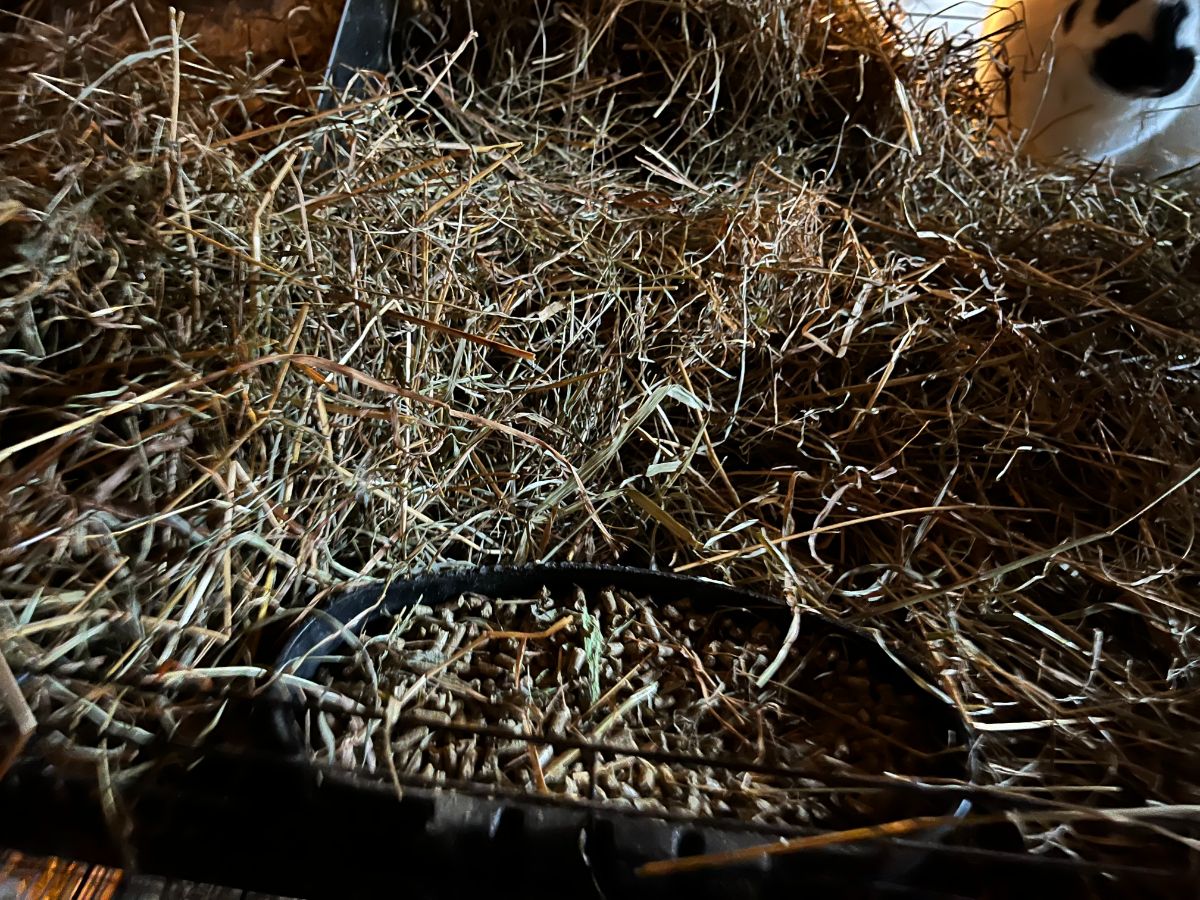
- Keep the feed (pellet) dish low and flat so the kits don’t get stuck under it but so that they have access enough to start nibbling feed when they want to—which they will do soon after they start venturing out of the nest.
What Kits Look Like in the First Two Weeks and Changes You Should Look For
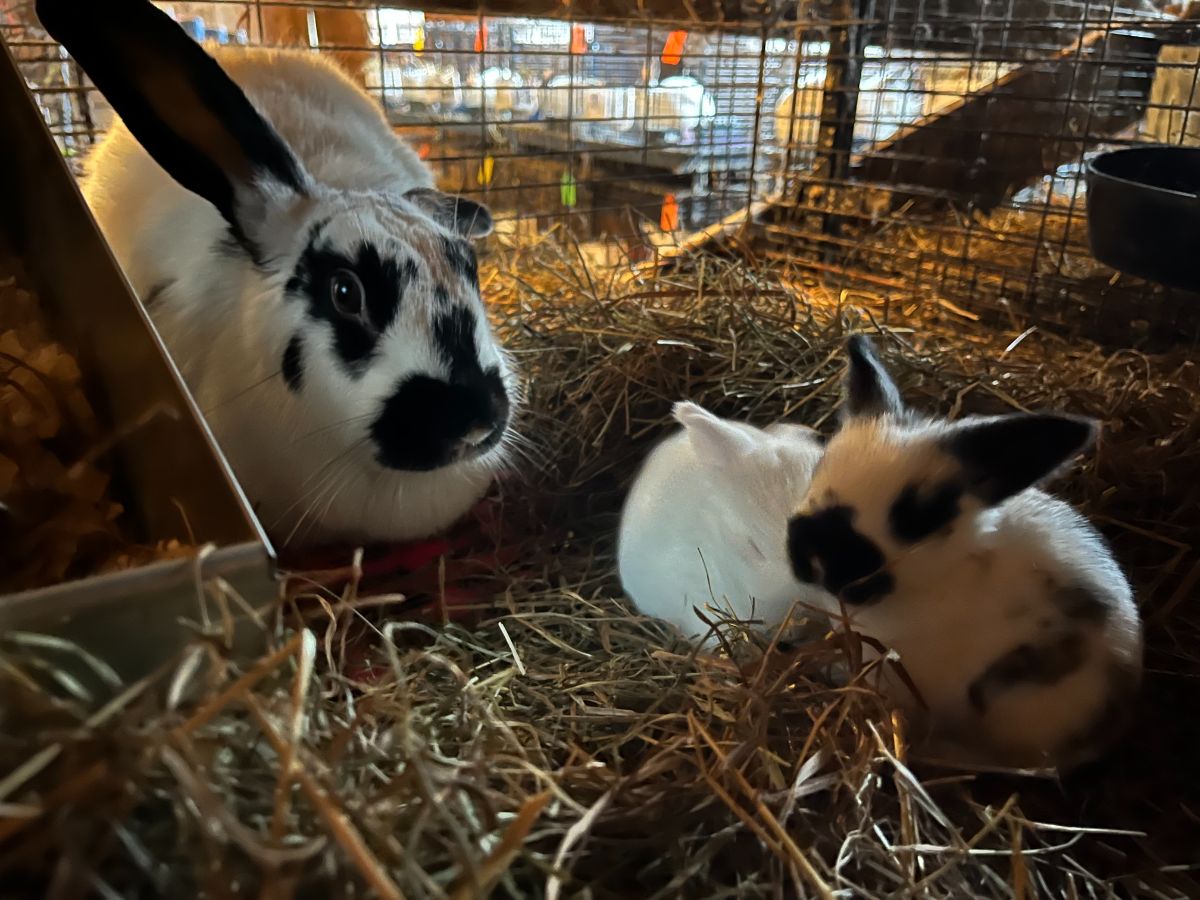
At one week old, kits will look much more like “real” rabbits. Their eyes will still be closed, but they will open somewhere between 10 days and two weeks. They will have a complete but thin coat of fur. Their bodies will be plump, and their legs will still look a little thin and weak until they start using them.
By ten to fourteen days, the kits will grow stronger. They will begin to walk and jump, and their legs will strengthen and look more able to support their bodies. Soon, they will look like miniature versions of their parents. The coat will come in thicker, and they will have better protection against the cold, but it will get thicker still in the next weeks. The kits will reach the point where they are quite cold hardy, and capable of independent survival.
Feeding Meat Rabbit Kits Week One
In week one, the mother doe will do all the feeding. Kits will be nursing exclusively and will not need you to feed them (except in the rare cases when there is a problem).
Feeding kits in the first week is really about feeding the mother—feed her well, with plenty of feed available at all times, and give her plenty of fresh water.
Feeding Meat Rabbit Kits Week Two
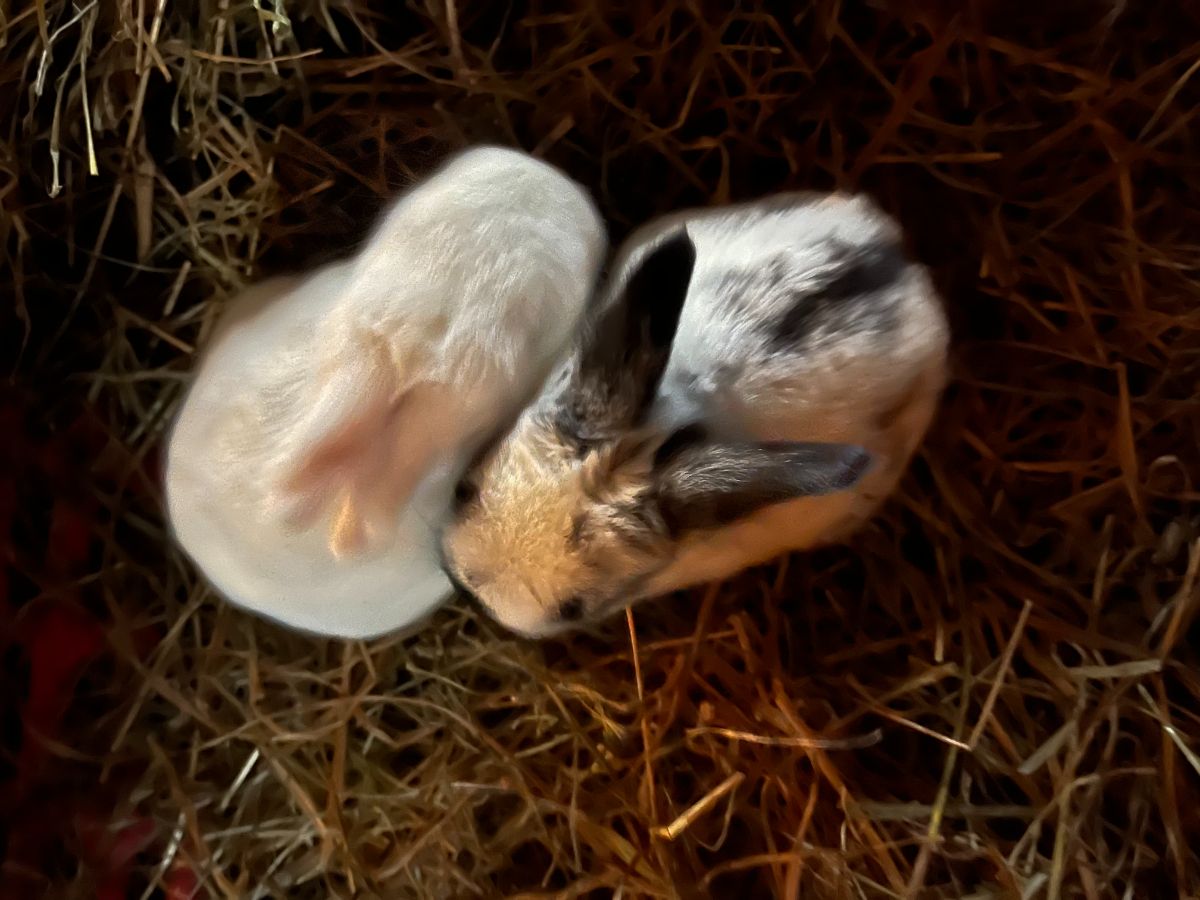
When kits start to come out of the nest and explore at the end of the second week, they will begin nibbling on whatever is available in the cage. Their bellies will tolerate this as long as this is mom’s regular and consistent diet.
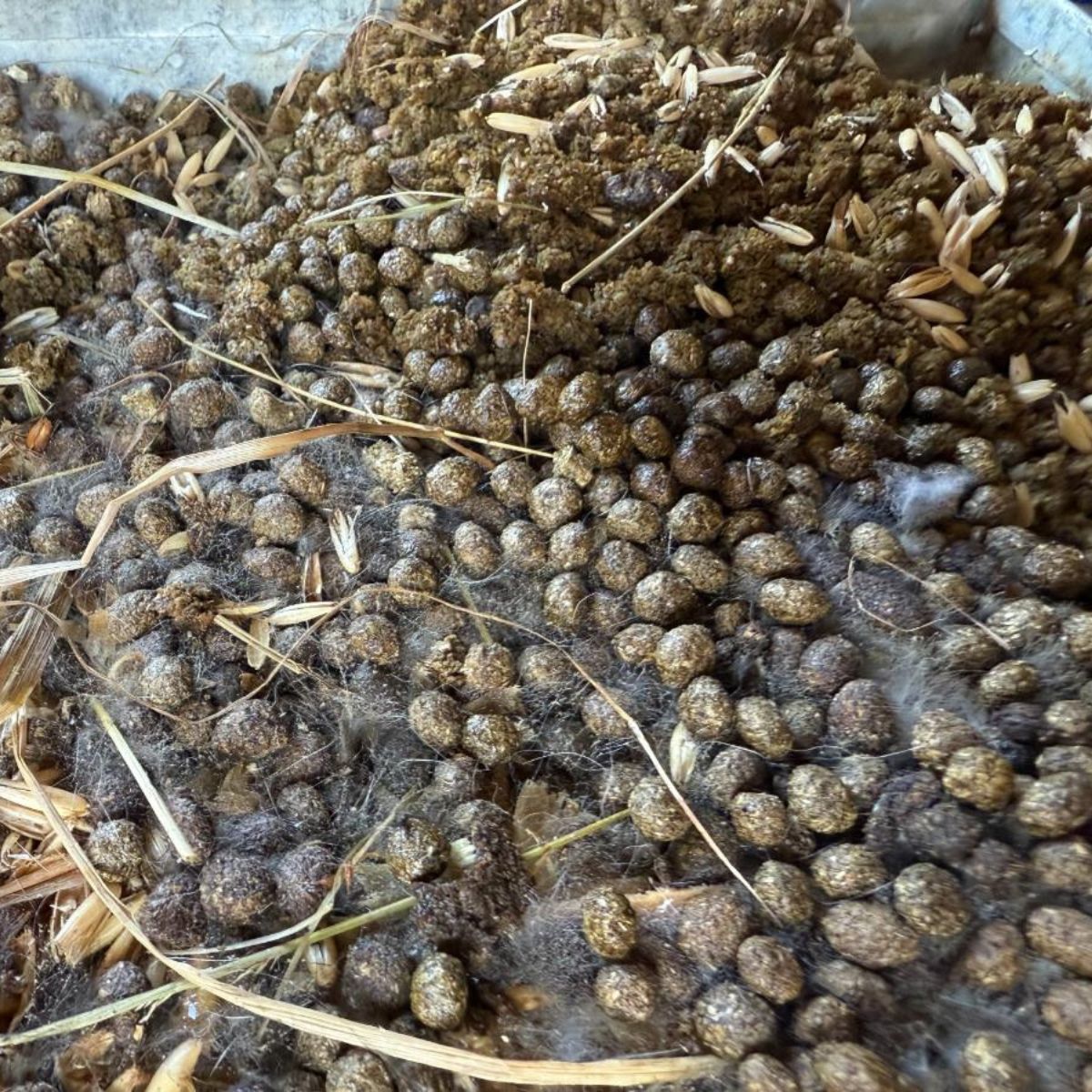
Rabbit kits get probiotics through their mother’s breast milk and from her cecotropes when she feeds them to the kits. Her cecotropes and breast milk are adjusted to produce probiotics according to her diet. The kits can begin eating what she’s been eating and should not have any problems.
If you see your kits nibbling on hay or pellets or mom’s feed, let them. This is what is supposed to happen—a slow introduction to solid foods while they are getting their main nutrition from the mother. It’s good to have pellets (and hay if you’re feeding it) available to the kits from the time they become mobile.
Since you’ll be keeping feed in front of mom anyway, you don’t really have to do anything different here—just know that it is expected that the kits will start nibbling. It’s perfectly natural and perfectly fine. It’s a good thing!
Getting Your Feet Under You Raising Meat Rabbits
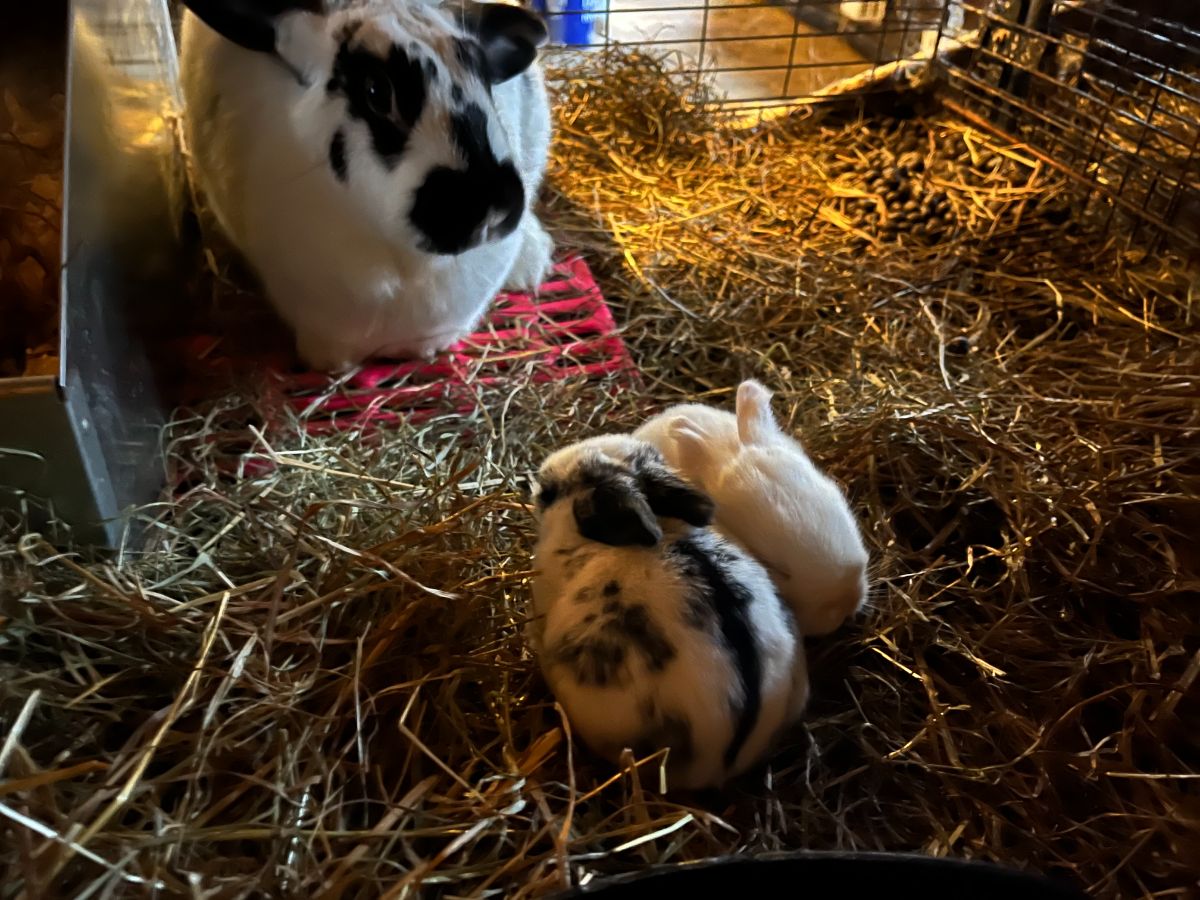
If this is your first litter, you’ve just springboarded yourself into raising meat rabbits for real. If you’ve had litters before, you know that this is when the fun and management in your rabbitry really begins. You’re well on your way to production now, and before long, you’ll find a rhythm and a balance of your own.
There will be more to do with your kits in the weeks to come, though in the middle weeks, rearing rabbit kits is still easy and low maintenance. You will have feeding and weaning to come in the coming weeks. We’ll explore those topics in future articles.
Leave a Reply