
It’s been requested that I do a sort of “tour” of my rabbitry. I do see the value in these types of things. I’m always curious to see other meat rabbit breeders’ housing, organization, and setups.
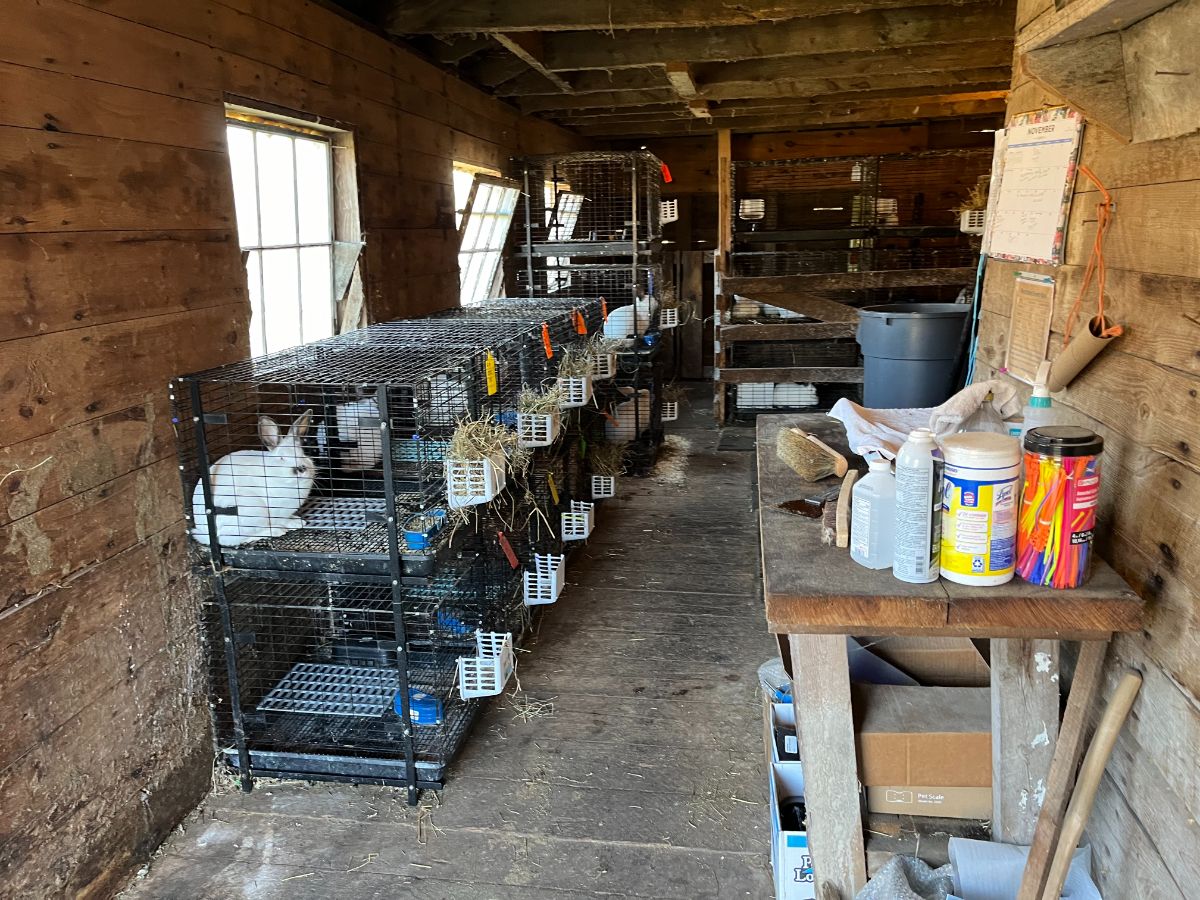
Seeing how other meat rabbit keepers house their rabbits and arrange their areas can give you good ideas for yours. Besides, you never know what little tip, trick, or hack you might pick up along the way.
So “come on in,” and I’ll show you around my rabbit barn. See what you might find that works for you!
Jump to:
What’s In My Rabbitry?
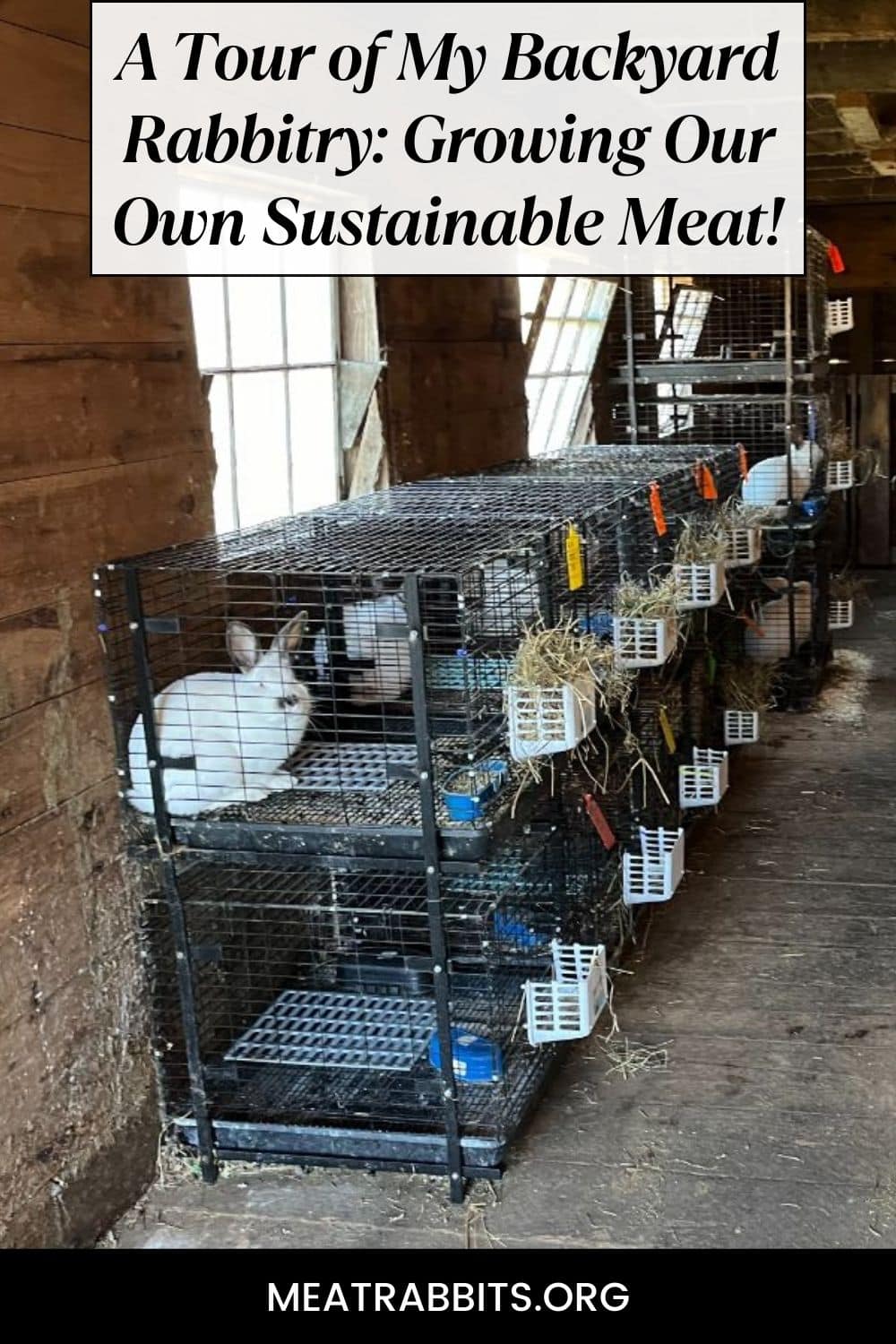
My rabbitry has four main areas:
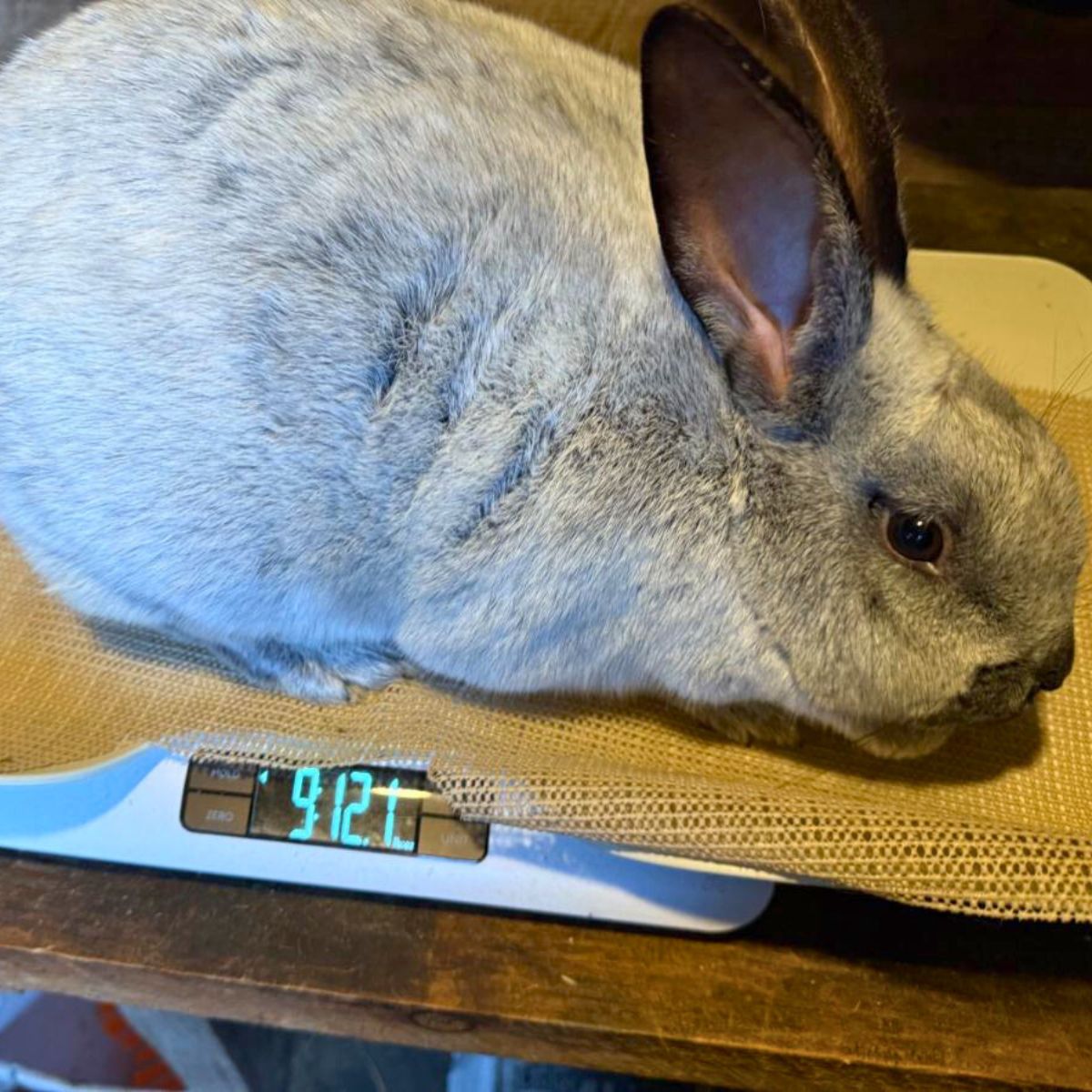
- A worktable with scale and supplies
- Two banks of cages for grow outs
- One bank of cages separated from does and grow outs where breeding bucks are housed
- A section with breeding doe cages and two extra cages that are used for transitioning litters of kits after weaning before they go into grow out cages
Buck cage arrangement and placement
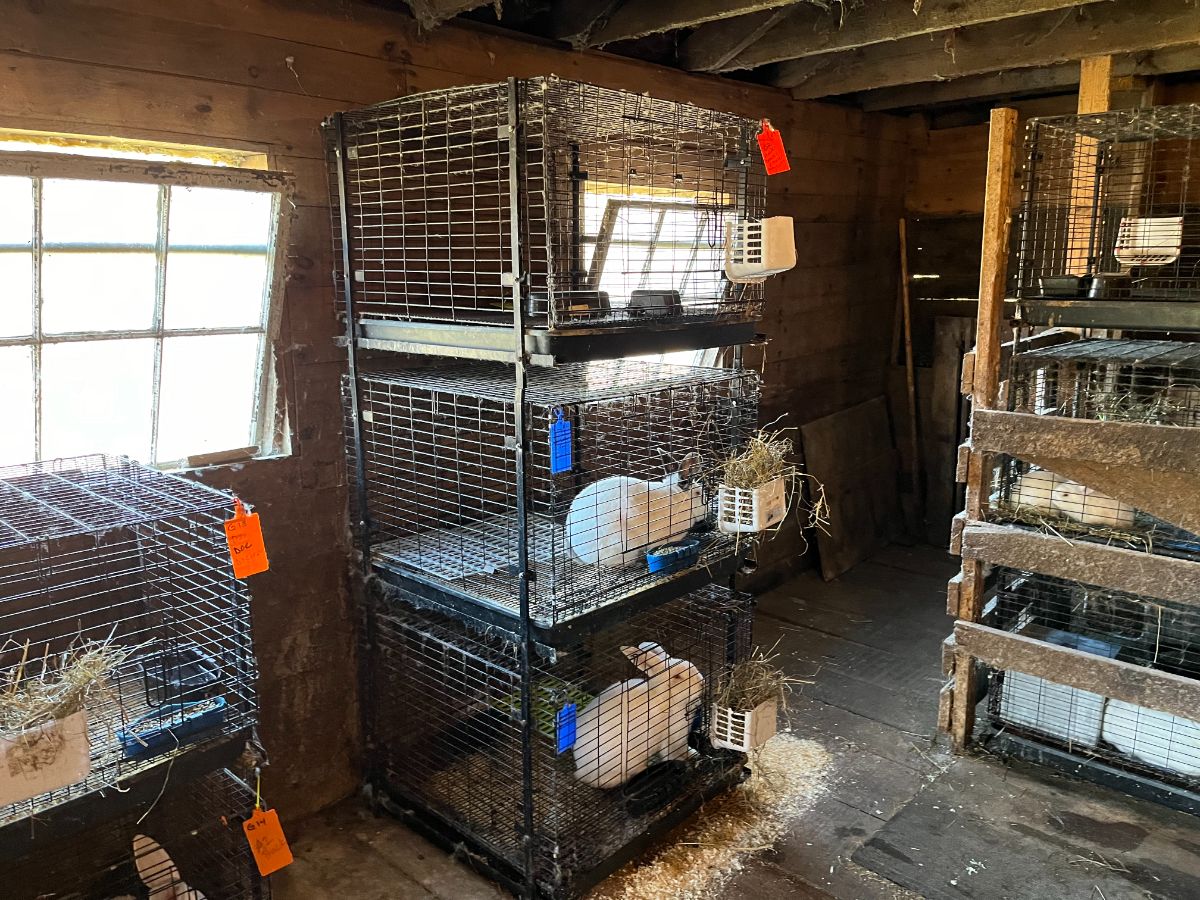
Bucks are kept several feet away from grow outs and does to minimize spraying and the upsetting of mothers when they have kits in the cage. I prefer to stack my bucks’ cages because they can and will urinate on and spray each other and might even try to fight through the cage wire.
It is okay to have bucks next to each other, but for the sake of keeping the bucks and the area clean, you’ll probably want a partition between the cages so they can’t see and spray one another. The bucks are gross.
Location and arrangement of doe cages
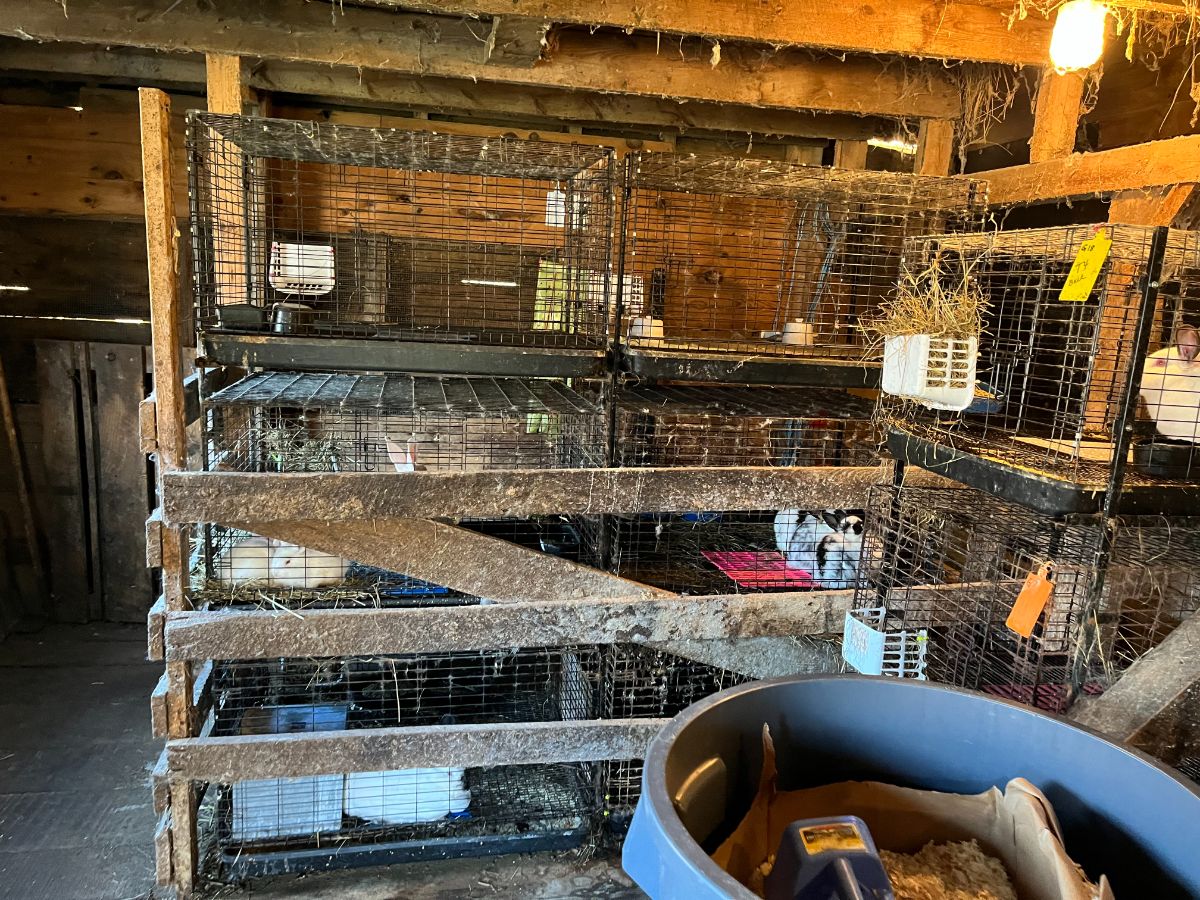
Breeding does are in the back of the room, away from the door, and grow outs in a space that affords them a little more privacy, and where they cannot be harassed by the bucks. This is not essential, but I had the option in my rabbit room, and it makes the most sense to me.
It does seem to give them a quieter space away from the commotion of the yard (when the barn door is open) and with some separation from the activity of the rest of the room. When we are harvesting growouts, for example, the does don’t much notice the commotion of moving rabbits out, and there’s no disturbance to them or their cages.
I do keep does side by side in large cages, and they do not seem to have a problem with each other, even when there are nest boxes and kits in the cages.
Feed and Bedding Storage
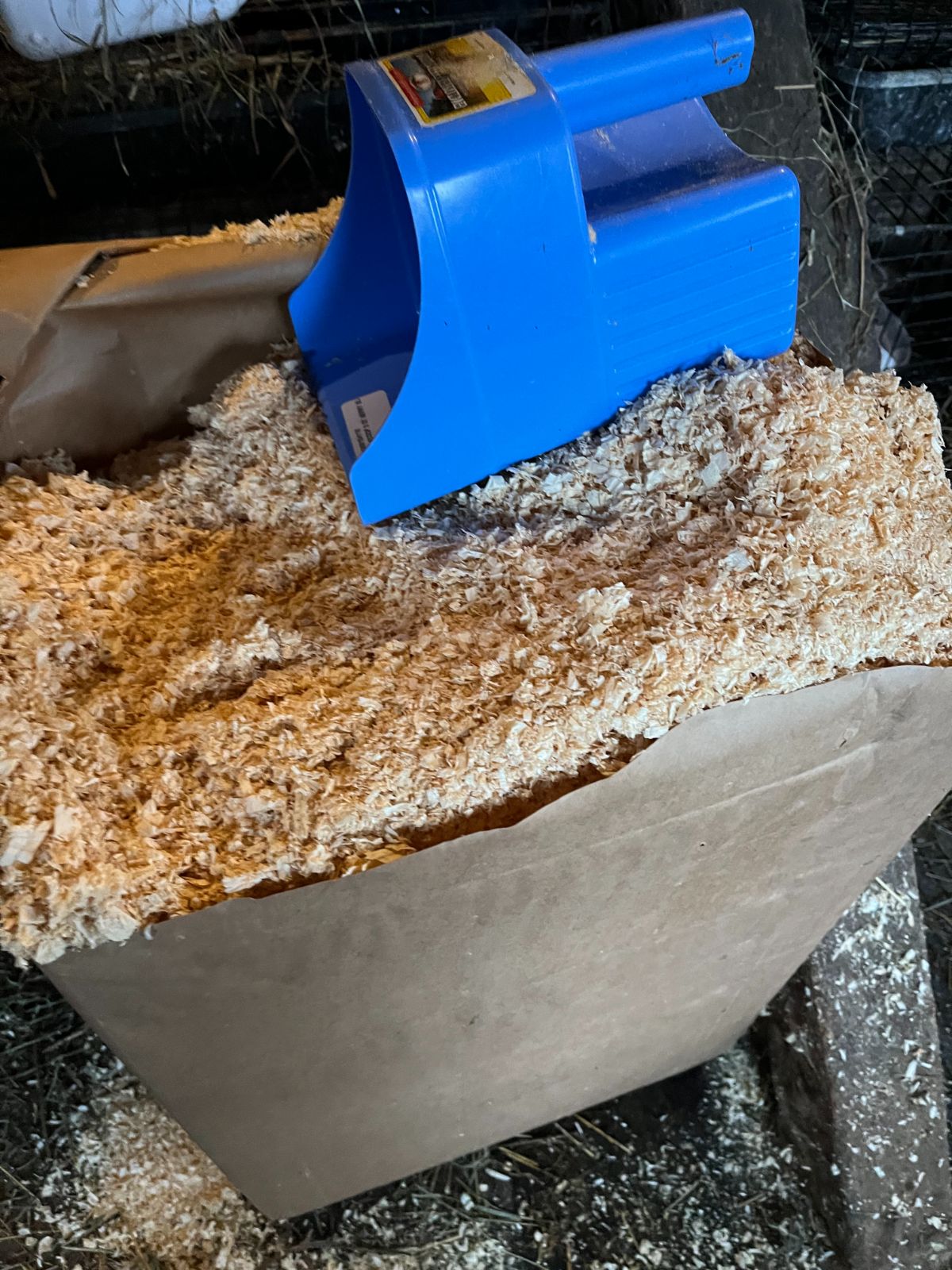
Of course, I also have feed and bedding supplies:
- Unopened bags of grain are stacked until ready to use
- Hay is kept behind the divider of the old manger (the big stockpile is upstairs in a hay loft)
- Opened bags of pellets are kept in a galvanized can with a cover
- Shavings are kept in a bag or large rolling trash can
I usually don’t buy pellet feed too far ahead because I want fresh pellets, not something that is too old and runs the risk of breaking down in nutrient content or becoming moist/wet and moldy.
I may keep grain stocked up two or three weeks ahead. In that case, I keep what is not in the can in closed bags. Closed feed bags that are well stored are usually pretty safe from rodents and predators.
Shavings that are kept dry are fine to stockpile well ahead of time. For the sake of space and spreading out costs, I don’t usually buy more than a few bags at a time, but there’s no reason you can’t as long as you have a good place to store them.
I go through about one bag of shavings every two weeks, even if all my cages are full. (Shavings are really only used in a light layer in the drop pans to absorb fluids and keep odors and insects down in the rabbitry. They are also used in nest boxes.)
Pet, Rodent, and Predator Protection in the Rabbitry
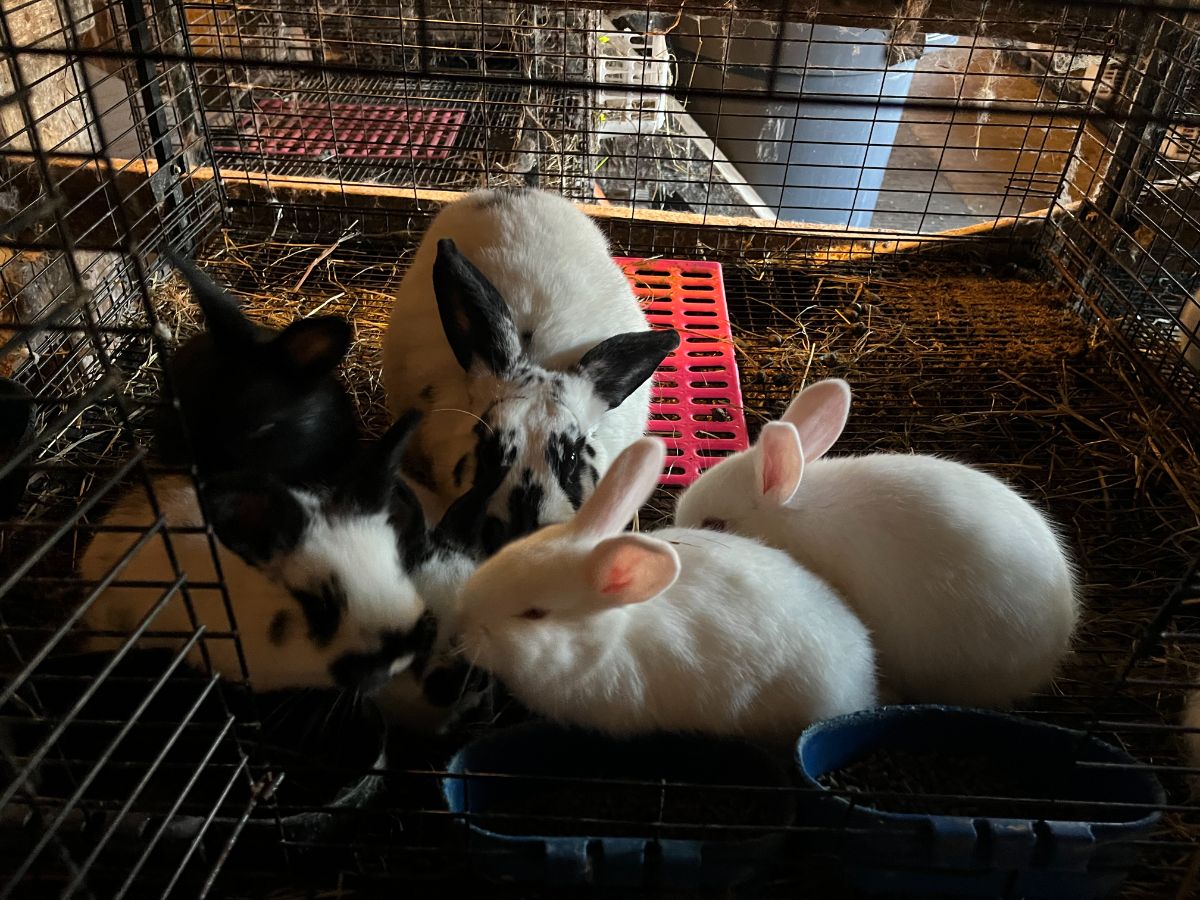
Rodents like mice and rats can be a big problem in a rabbit area. They will get into cages to eat feed, spreading disease, and will pull rabbit kits through the wire and kill them. They will even get into nest boxes to go after kits, setting off protective instincts in the mother that can cause problems, too.
My experience is that they are more of a problem in winter, which is typical of rodents in any barn or even in homes.
Because there is always feed out for both rabbits and chickens (rabbits in their cages, but still quite accessible to rodents), there will always be some level of mouse, rodent, and opportunistic predators to deal with.
The best advice I can give here is that prevention is key. Some tips that have worked well for us over many years of keeping backyard animals ranging from chickens and rabbits to goats, pigs, cows, and more:
- Trap or poison preventatively
- Take extreme caution if using poison, and make sure it cannot be accessed or eaten by pets, livestock, or children!
- Always assume there are rodents around
- Predators are most active at night. Close and lock down cages and rabbit yards and barns to whatever extent is possible
- High fencing can be helpful for outdoor yards but is most effective against larger predators (but many of them can dig down and climb over)
- Rabbits that are outside, such as in fenced colonies or housing, should be protected from aerial attack by hawks and birds of prey
- Keep feed well-stored
- Keep open bags of feed in a closed metal container
- If outside, use a can with a locking lid or bungee cord to keep wily raccoons and other smart animals out
- Keep your farm and yard clean and keep trash and other things that draw wildlife in well-closed
- Motion sensor lights may help in outside spaces to scare off wild animals
- Set traps whenever you know or suspect you have active wildlife—look for signs like scent or tracks or attempts to break into enclosures
- Clean up spilled feed and food sources that rodents, wild rabbits, and other wildlife might seek out
Some of the more common predators that can plague rabbit owners include raccoons, rats, weasels, skunks, bobcats, coyotes and feral dogs, pet dogs and cats, and neighborhood dogs. This will depend on what lives in your area and is not an exhaustive list by any means.
My rabbits are housed in a barn, so I have the luxury of doors that can be closed at night. I do keep them open during the day for airflow. Windows are open all day and night in warm weather (removed entirely in warm months). My barn wall is about 15 feet off the ground where the windows are.
When it comes to rodent and predator protection for your meat rabbits, there is no way to protect yourself 100%, but you can accomplish a lot with secure cages and housing, denying food sources, and closing animals up at night.
My opinion on pets in the rabbitry
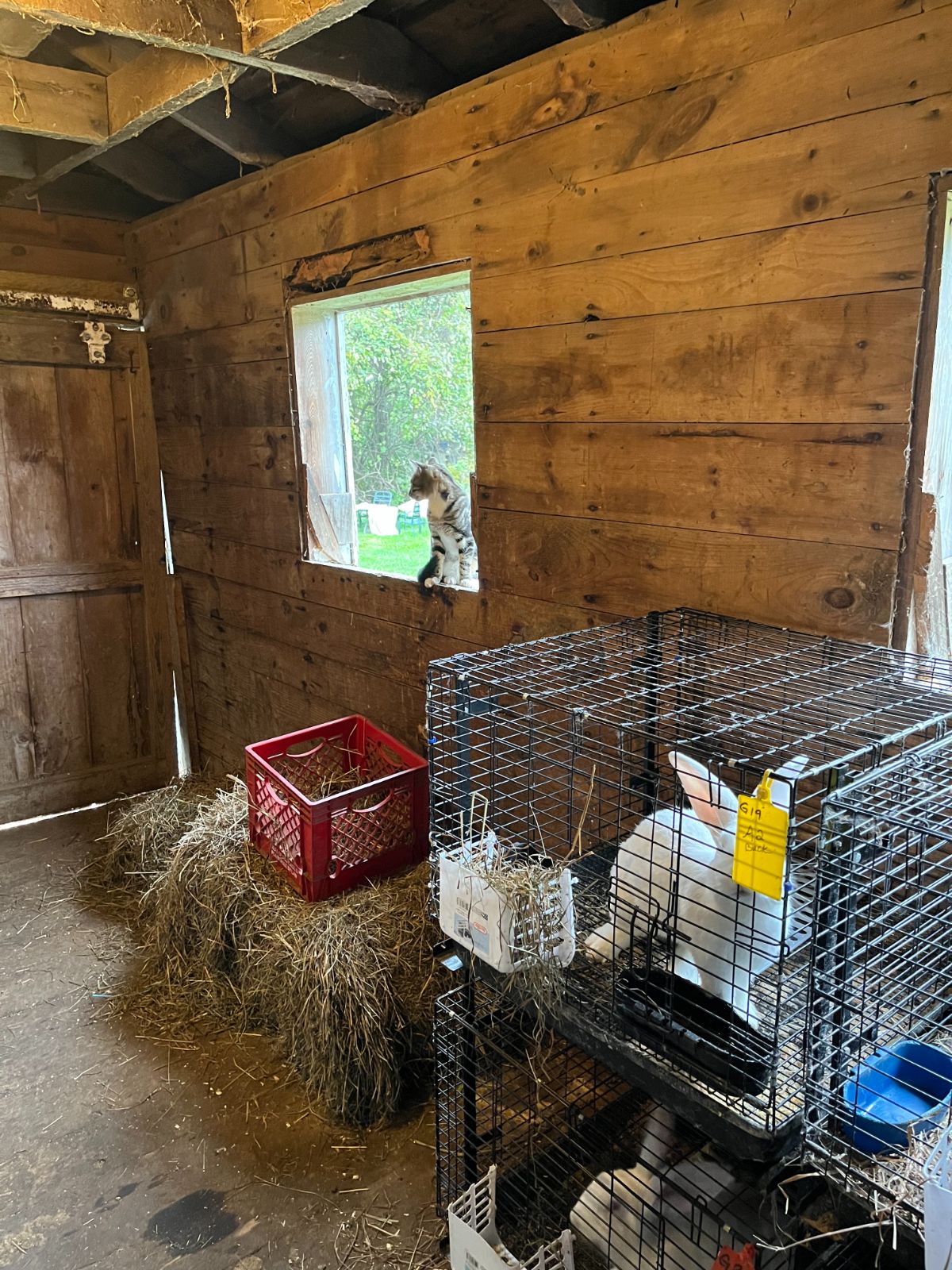
People have differing opinions on whether your own pets, like cats and dogs, should be allowed in or around your rabbitry. This obviously depends on your housing and setup (for example, rabbits in fenced colonies should obviously not have cats or dogs with access to them).
Since my rabbits are in cages in a barn, and they are secure in those cages, I do allow my cats and dogs into the barn and the rabbit room. My thought is this:
The barn door is open during the day for airflow. The front doors of the barn are often open and other members of the household are in and out and through the barn. Though I could keep the pets out, it would be a constant battle.
With all of these things considered, I’d rather have the rabbits, which again are safely caged from the pets, used to the cats and the dogs being around. It’s rather inevitable on my farm that they will get into the rabbit room now and again, and I’d rather the rabbits be used to them, not afraid, and not startled by their presence.
Rabbits will adjust to that which is part of their regular experience. In my situation, it’s just better that they know the animals and know they do not have to protect themselves or their litters of kits by doing something drastic.
All of that said, I only allow the animals to roam in and through. They are not allowed to stalk or attack the rabbits or their cages. It’s their presence that I allow, not any kind of risk to the rabbits. This is how we’ve done things with all our animals, some free-ranging, and it’s worked out well as long as you train your pets to leave livestock alone (unless it’s their job or there is a working reason to have them interacting).
Other Small and Miscellaneous Supplies and Solutions
This covers most of my supplies and setup, but there are some other tools and supplies I keep around. A few of these include:
- A scale to weigh rabbits
- Towels to help handle them without having to scruff the animals and also to help youngsters hold rabbits without them escaping and scratching
- Plastic cage tags (luggage/shipping tags I buy off Amazon)
- Dry erase and permanent markers to use on the cage tags
- Alcohol to clean off old ink so the tags are reusable
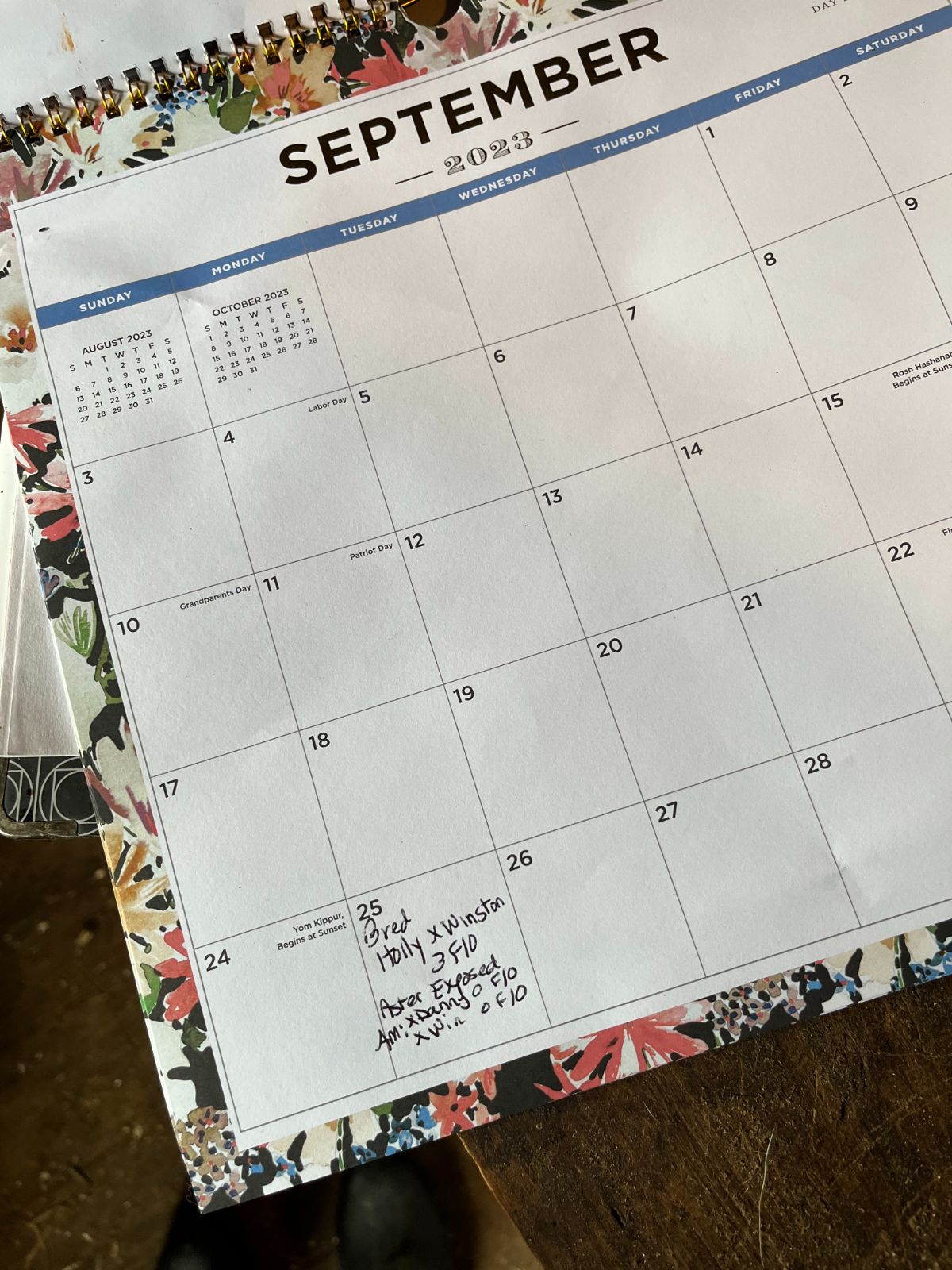
- A calendar to keep track of breeding, days of gestation, due dates, etc.
- A clipboard with litter record sheets and weight tracking
- First aid and natural remedy supplies like Rabbit Vet Rx, mineral and tea tree oil (for mites, etc.), salve for injury or skin problems (this sees very little use with my system)
- Nail trimmers (breeders need periodic nail trimming, grow outs don’t usually live long enough to need this)
- Apple cider vinegar to add to water for various reasons (and makes a good general cleaner, too)
- Probiotics that I’ll occasionally use in water for new or stressed rabbits or as a preventative for weaning enteritis (I’ve not found much need to use this except for some stressed rabbits that came in in the past) -- Just over-the-counter tablets or powder from the pharmacy
- Joint compound knives and wire brush to help clean plugged spots in cages
- Zip ties for various uses
- Storage for extra bowls and feeders
- Binder clips to clip on tags or notes as needed—can also be used to stop rabbits from tipping crocks
Build a Rabbitry That Works for You
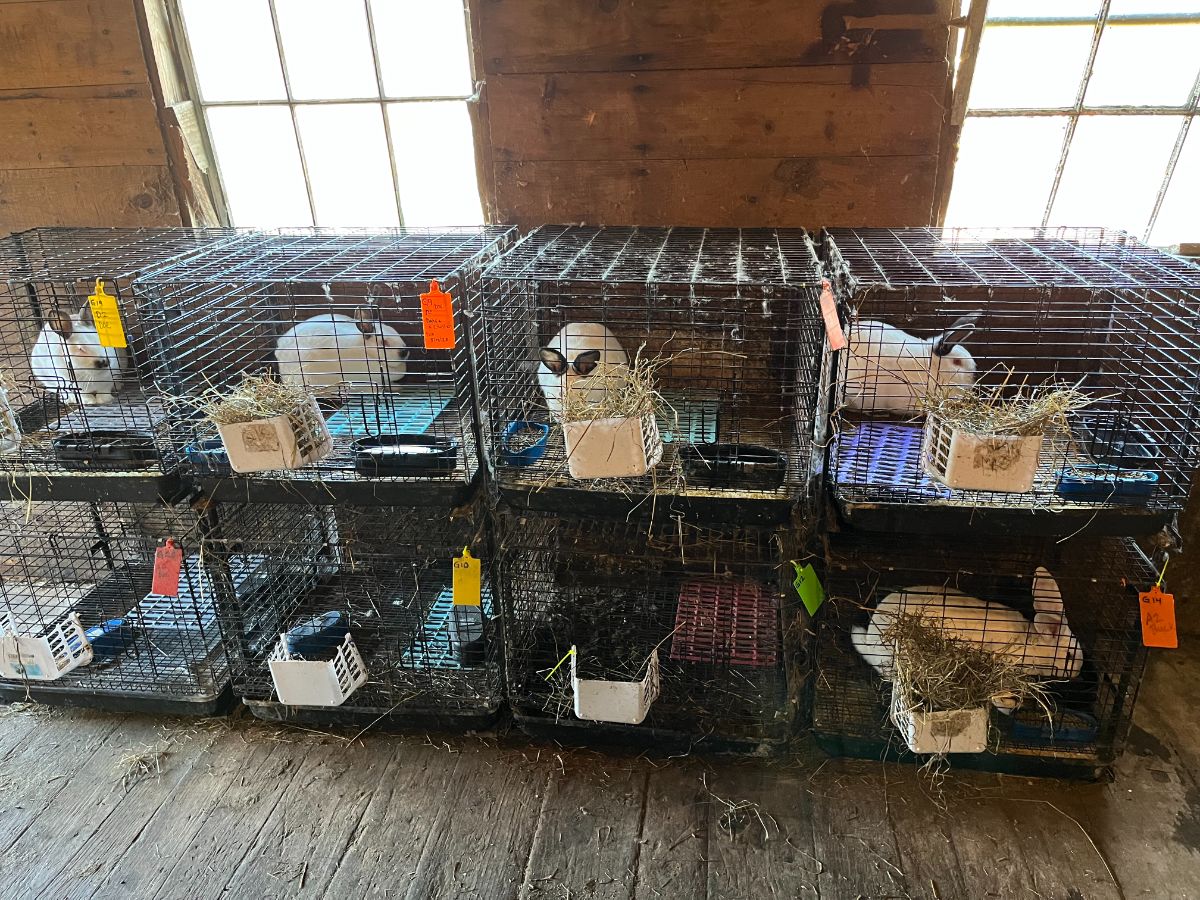
This is my setup, a bit about my system, and a sampling of some of my supplies. If you see something in pictures or videos you'd like to know more about, please ask! I’m happy to share what I’ve found works for me.
Each and every one of us is sure to personalize our rabbitry based on our needs, space, number of animals, etc. It does help to learn from a variety of breeders and pick and choose what works best for you.
*Do note my rabbitry is much larger than what an average family needs, and that is largely the result of my interest in rabbits, the fun in managing and raising them, and the interest I’ve had from local buyers. Please don’t feel like you need to be as big as my setup—find what works for you, large or small!
Jeffrey A Eiynck
Hello,i dont know if i emailed you before but im looking for some rex rabbits.do you have any for sale,or know of any body around that do ?
Mary Ward
I do not breed Rex. This article will give you several places to look to source some.
Where are you located? I might know of a breeder or two. Also check with transporters. They'd know who has which breeds. Hippity Hop Express on Facebook is a good one to start with.
https://meatrabbits.org/sourcing-meat-rabbits-where-can-you-buy-meat-rabbits/