
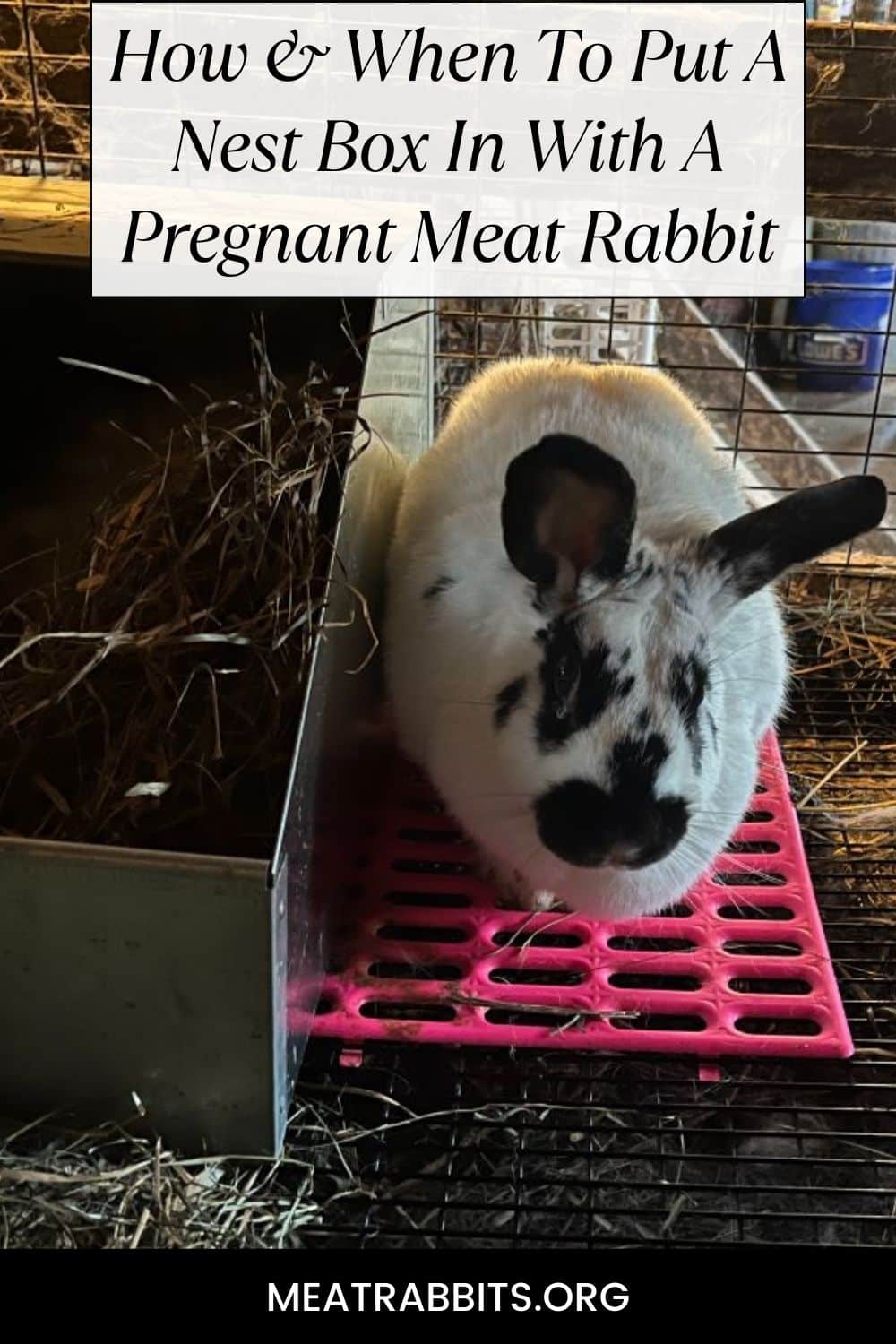
When it’s getting near time for your meat rabbit doe to give birth, you’ll need to put a nest box in the cage with her.
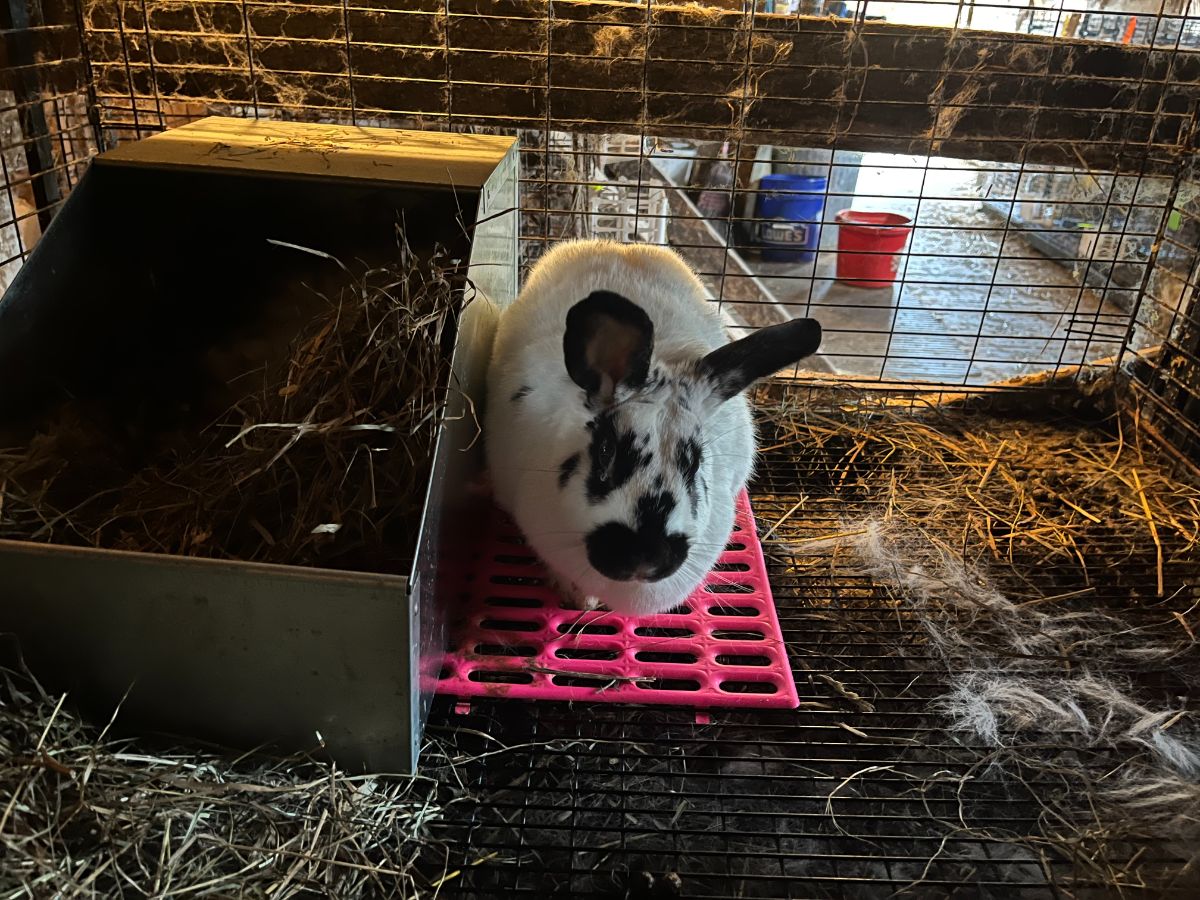
Many people use nest boxes even in other, more community-type housing setups like colonies. Those in rabbit tractors, open barn setups, and hutches should use them, too (though some hutches will have hide box-type enclosures that serve as nest boxes).
What is a nest box? Why do you need to use one? And what is the right time to put the next box in with your expecting doe?
Jump to:
- What is a Rabbit Nest Box?
- Why a Nest Box? What is the Purpose of the Nest Box?
- Choosing or Building a Meat Rabbit Nest Box
- How big should a nest box be for meat rabbits?
- Meat Rabbit Nest Box Design
- Purchased or DIY Meat Rabbit Nest Boxes?
- What Material Should a Meat Rabbit Nest Box be Made Of?
- Putting the Nest Box In
- Preparing the nest box
- What to Watch for and What to Do in the Days Before Kindling
- When to Clean the Nest Box After Kindling (Meat rabbit birth)
- When to Remove the Nest Box
What is a Rabbit Nest Box?
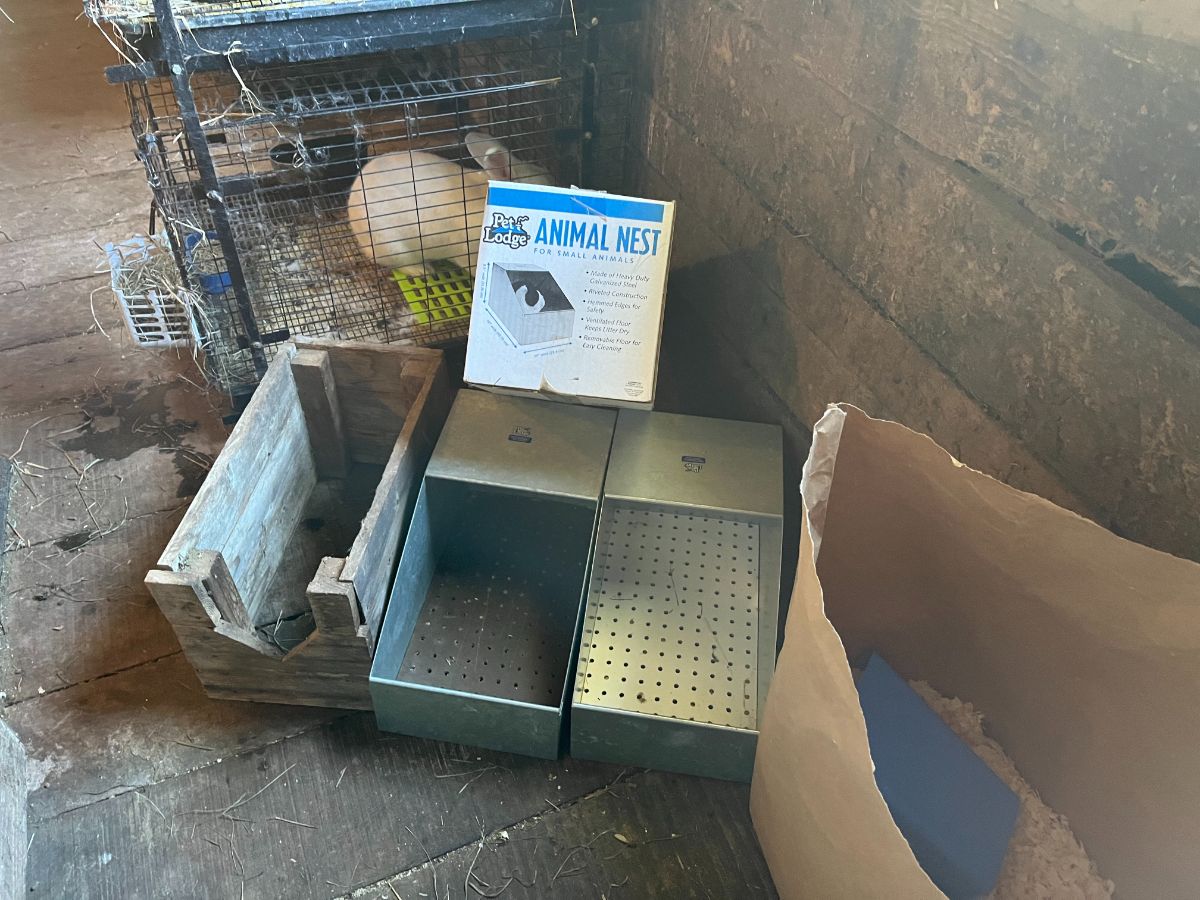
A rabbit next box is an enclosure that is put into a doe rabbit’s cage when she is nearing the time to give birth to a litter of kits. It has an opening for the mother (and eventually the mobile kits) to get in and out of the box.
Nest boxes are removable and are only used when kits are expected and for a few weeks after birth. The box itself is only a shell—a container of sorts. It needs to be lined with materials to bed the kits and for the mother to use to make a nest with.
Why a Nest Box? What is the Purpose of the Nest Box?
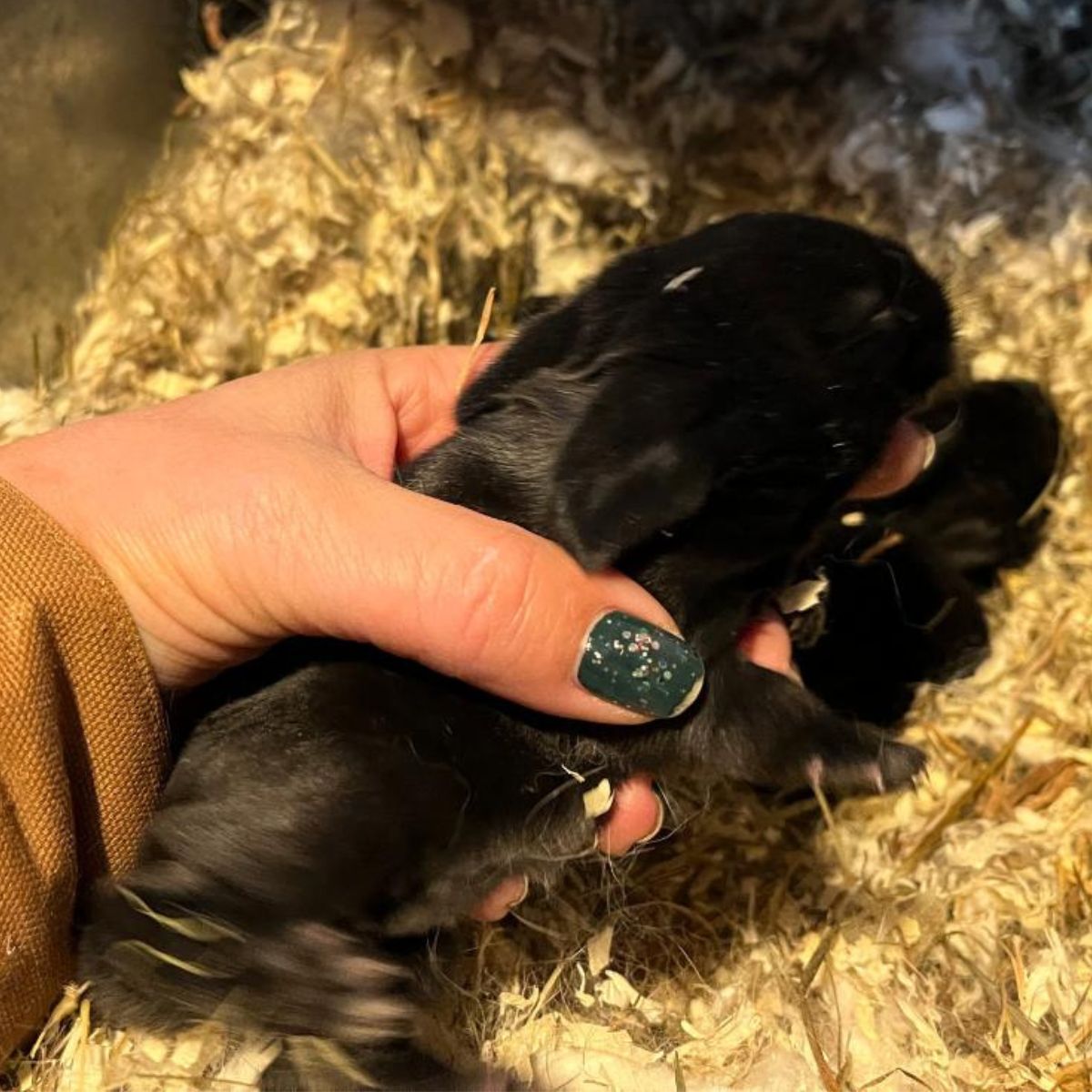
A rabbit nest box is a box designed to house a litter of kits from birth through about three to four weeks of age. Kits are born hairless and blind (with their eyes closed) and depend on a well-built nest and the work of their mother to keep them safe and warm.
A nest box replicates the burrow and lined nest that a doe rabbit would build in the wild. It is a place where she will build a nest, line it with warming fur for the furless kits, give birth, feed, and care for her young until they grow fur and begin to move and eat independently.
Choosing or Building a Meat Rabbit Nest Box
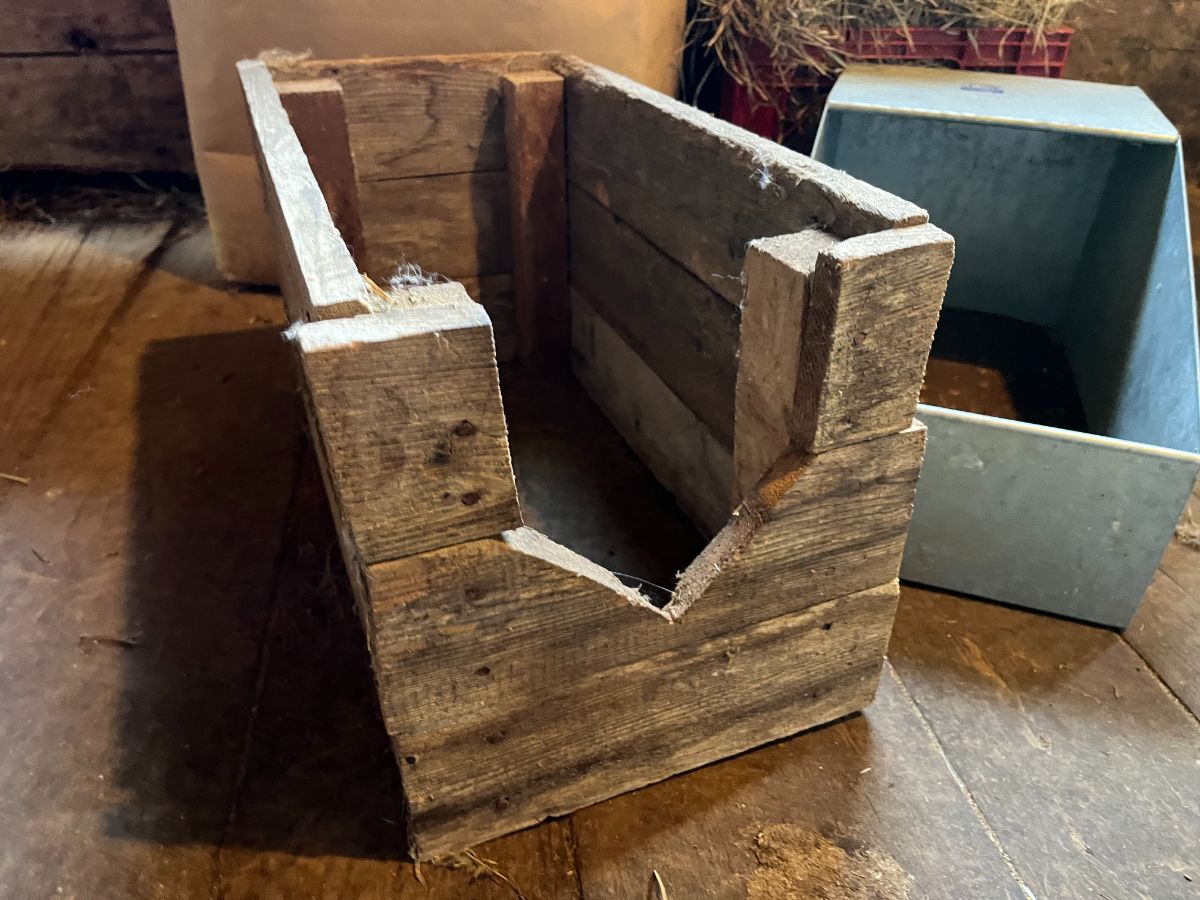
You can either buy or build your own nest boxes for your rabbits. Here are some details and some considerations for choosing (or making) a nest box:
How big should a nest box be for meat rabbits?
For most meat rabbits, nest box measurements should be approximately as follows:
- 10 inches wide
- 10 inches high, usually slanting down to 4 inches high in the front
- 18 inches long (front to back)
This is the standard size of nest boxes for rabbits and is suitable for the majority of rabbit breeds. This includes the majority of meat rabbit breeds and all the most popular recommended of the meat rabbit breeds—New Zealands, Californians, Champagnes, Silver fox, Rex, and others. These would be rabbits that, at mature weight, weigh in in the range of 9 to 12 pounds.
For giant breeds, a larger nest box is recommended.
It’s not recommended to use a larger size nest box than needed, or it may leave too much room for kits to roam, and it will take up too much space in the cage for mom to move freely.
Meat Rabbit Nest Box Design
The most common style has angled sides that allow for more access for the mother (and you), and that lets young kits explore a bit more and look around. Also, the deeper, covered back helps the mother to feel more like it is a naturally protected burrow.
Kits nestle down in the box and in the nest, and the raised sides help to keep them safely contained until they can walk, jump, and move around enough to get in and out of the box. In the early weeks, it’s important for kits to stay contained because doe rabbits, unlike mother cats, cannot lift and carry their young. They can push and nudge them to a degree. but not lift and carry them. So, if young kits do not have a nest box, they may wiggle around on wire and not stay in the nest where they are kept warm and protected.
This design also provides warmth towards the back, where the mother is likely to nest and keep her kits, and it provides airflow and room for the kits to explore toward the front as they grow and start becoming more independent.
Nest boxes will often have a “roof” at the back that provides added privacy and protection, but that also gives the mother rabbit a place to hop up and escape pestering kits when they become mobile.
There are slight variations in the design, but the basic principle is the same.
Purchased or DIY Meat Rabbit Nest Boxes?
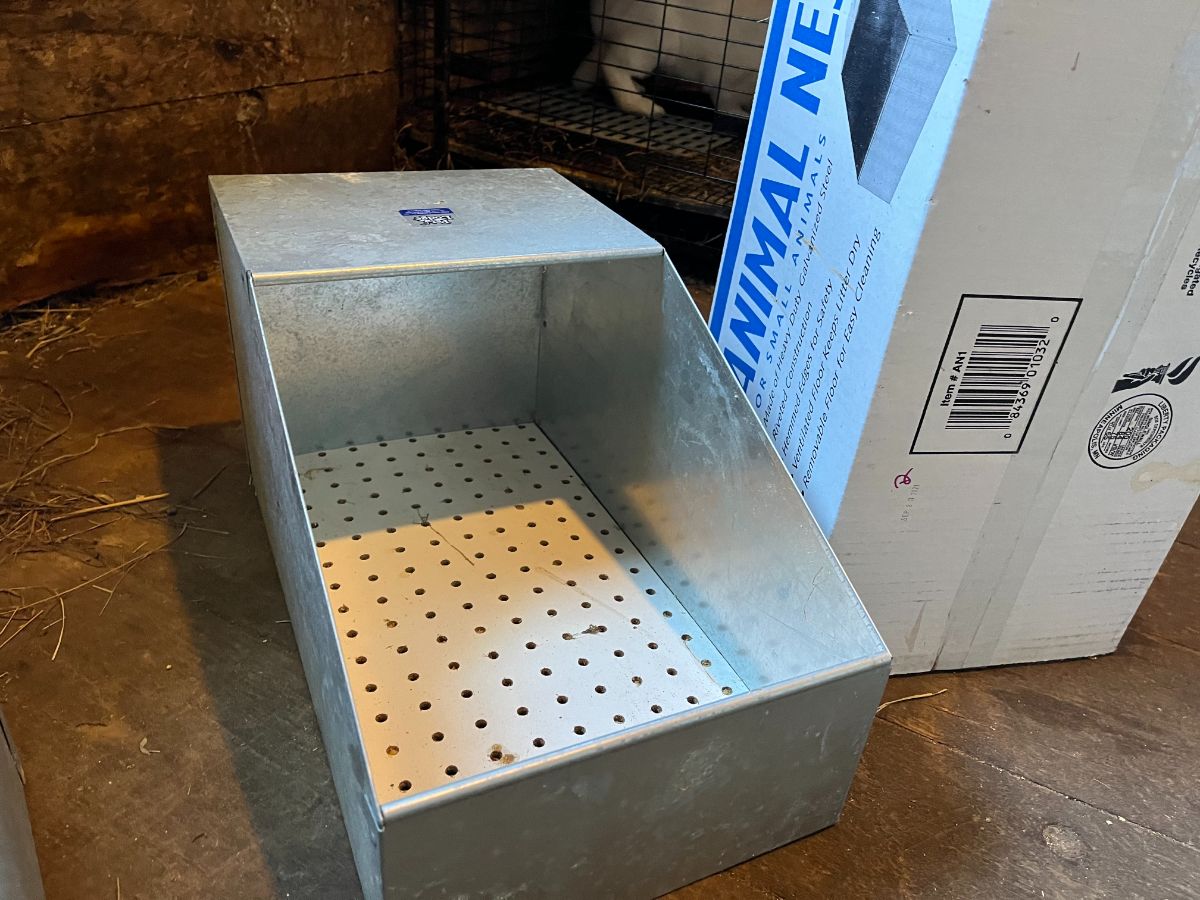
It really does not matter whether you buy your nest boxes for your meat rabbits or if you make them—as long as you use a good design and good materials. The design is the important thing. Rabbits don’t care about labels! Just make sure there are no exposed raw edges that might cut you, the doe, or the kits.
If you are handy and can make your own meat rabbit nest boxes, there are plenty of good plans online to help you do so (you’ll also find them included in Bob Bennett’s book and surely in others).
What Material Should a Meat Rabbit Nest Box be Made Of?
The two most popular materials for rabbit nesting boxes are metal (usually galvanized metal) or wood. Both have their advantages, and both are good to use. Here are some features of each:
- Galvanized or metal nest boxes are non-porous and are the most cleanable and the most able to be sanitized.
- One drawback of metal nest boxes is that they can be cold in the winter. This is not usually too much of an issue because the mother lines the nest, but in a few rare instances, kits may lean too close to the metal in cold weather and become chilled. If kits are too cold, they will easily die (but again, the doe usually keeps them well centered and well covered and insulated, and this isn’t that much of an issue). If the weather will be severe, you can also pile hay or straw outside the box to insulate it further.
- Wood is a bit thicker and warmer than metal.
- Thick wood sizes can shrink the interior size of the box and the space for the doe.
- Wood is not as cleanable and can hold germs and molds for much longer and more easily than metal.
- Wood can become swollen if it becomes wet (such as with deep cleaning and scrubbing) and can deteriorate over time.
- Wood is more likely to hold odors and urine.
- Does and older kits can chew wood, but not metal.
- Perforated floors or floors with small holes drain better and keep boxes drier and cleaner (a feature more often seen in metal boxes with wood floors than in solid wood boxes).
- Metal nest boxes often have a pegboard or wooden bottom that allows excess wetness to drain away. These may become ruined over time but are easily and cheaply replaceable.
Some people even improvise and use things like cat litter boxes, empty plastic litter buckets with lips, or dishpans from the dollar store. These can work but don’t provide the same privacy, security, protection, or shelf space for the doe to escape to. Because they are plastic, they can also be chewed, which leaves jagged edges for kits (and does) to get cut on.
It is wiser to invest a modest amount in a quality nest box—whether DIY homemade or purchased, pre-made. Every litter is a valuable food source and/or breeding source, so it’s worth investing to protect that valuable commodity.
Nest boxes are reusable many times over, and good boxes will last for years, so over time, the expense of even a premade purchased box is minimal. It’s worth spending a little more to do it right.
Putting the Nest Box In
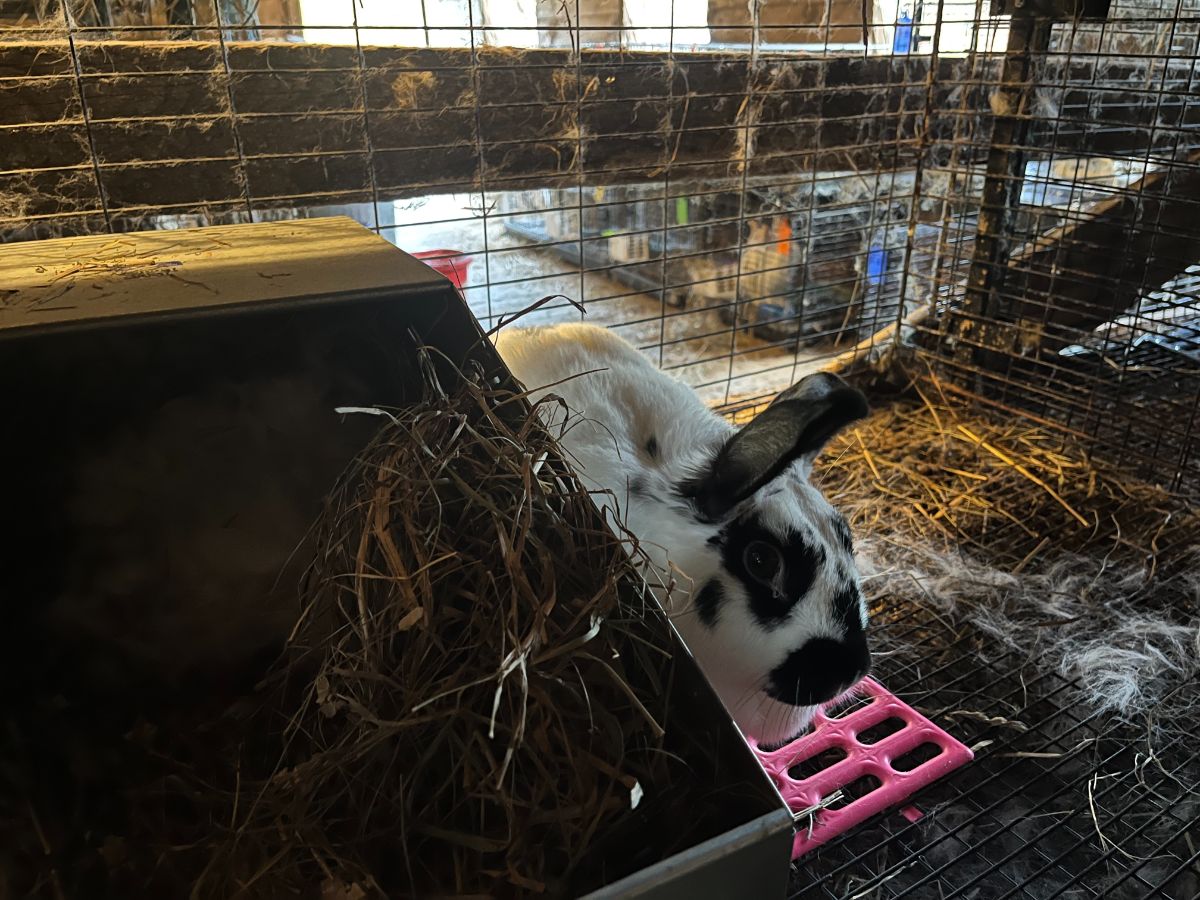
Nest boxes should not stay in the rabbit’s cage all the time. They should be put in only when the doe is close to delivering and kept in only as long as it is needed.
The right time to put the nest box in the expectant mother doe’s cage is on day 28 after breeding. Keep a good record of all matings and count from the first day after the doe is bred. So, for example, if the doe was taken to the buck on Sunday the 10th, Day 1 is Monday the 11th.
Your rabbit is most likely to deliver on day 31 or 32, but the range can be anywhere from day 28 to day 35. Once you have a couple of litters, you’ll know when your doe is likely to deliver—they keep pretty much the same clockwork schedule every time.
Putting the nest box in on day 28 gives the doe time to prepare her nest without misusing it. If you put the box in too early, many, if not most, does will mistake it for something else, and they will often use it as a litter box. (They need that nesting instinct that comes with impending birth to treat it as a nesting space. So, wait until day 28 [no earlier than day 27] to put the nest box in.
Preparing the nest box
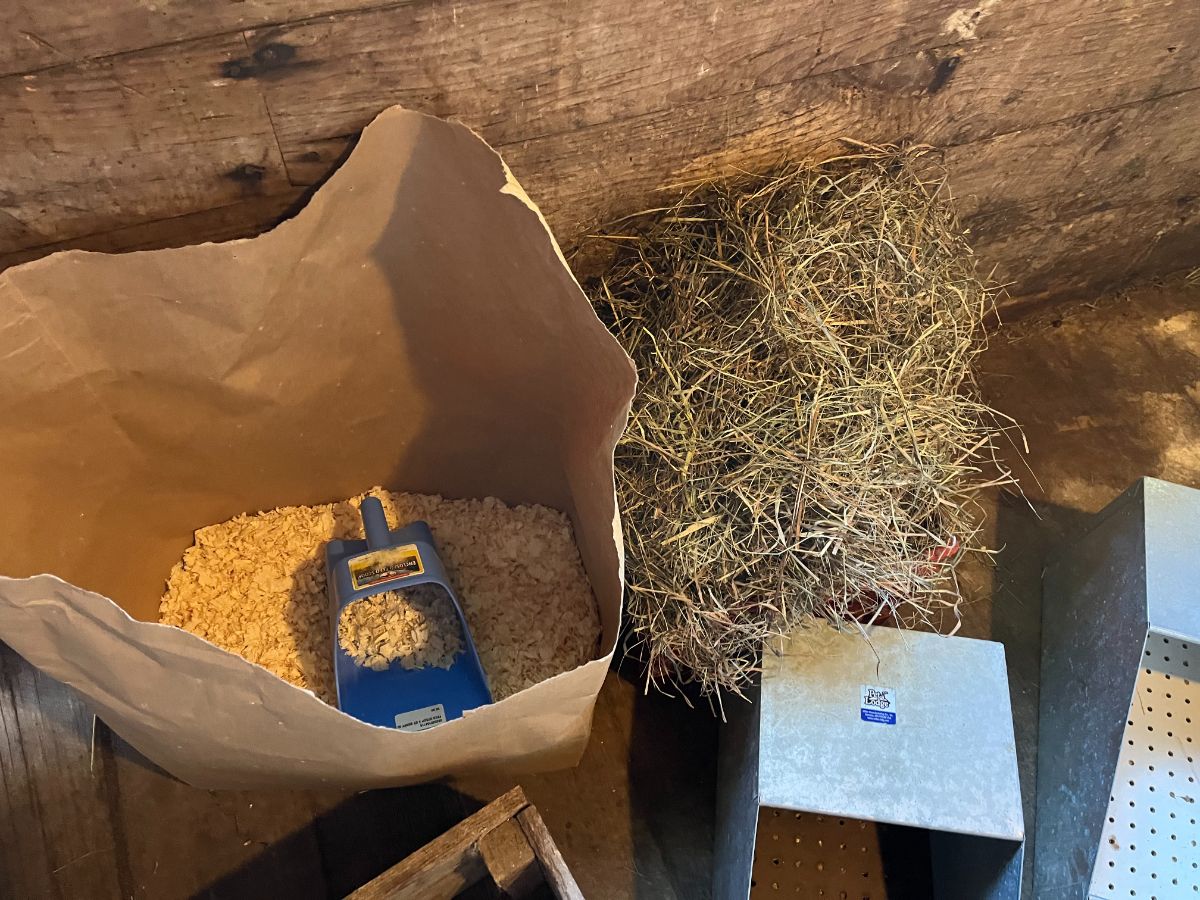
The box should be lined in the bottom with an absorbent material, like shavings, and then the doe should be given additional materials, like hay, to make a bed and burrow with.
This combination of shavings-then-hay keeps moisture away from the kits, provides cushioning and, more importantly, warmth, and the hay is sturdy enough to make a firm but soft, semi-rigid structure that will insulate the nest and make the mother feel as if she has a safe burrow for her litter.
This is how to prepare a nest box before putting it in the cage:
- Shavings: Put a layer of shavings about three inches deep in the bottom of the nest box; Pine shavings and any kiln-dried shavings are good to use. They’re absorbent and keep the box clean and dry.
- Hay or straw: Next, you want to provide that more moldable material. Either hay or straw works well. For a new mother, put a small handful in the box or at the front of it (inside the box on top of the shavings). Most does like to do their own work with the hay or straw, so don’t overdo it—just give her the idea.
- Put the nest box in the cage: Place the nest box in the back corner of the cage.
- Where to place the next box in the cage: A corner spot is best to provide privacy and help keep the box from moving around too much when the doe jumps in and out. Try to keep the box away from the doe’s usual waste area (or “poop corner”).
- Provide extra hay or straw for nest building: Put a large pile of loose hay or straw in the cage for the doe to build with. Does can go through a lot of hay in this process, so you should provide a large amount. If she goes through the hay quickly and packs it all in the box, give her more until she stops taking the hay (or straw). Then, if there is a lot of hay leftover when the nest looks packed, you can take the rest out of the cage to help keep the cage clean. Don’t try to add to her nest unless she fails to build one—does know what they need in most cases and adjust to weather and temperatures.
That’s it! Your nest box is ready for kits—or will be, once mom makes it her own. There is nothing else you need to do except watch and wait for kits in about four days.
What to Watch for and What to Do in the Days Before Kindling
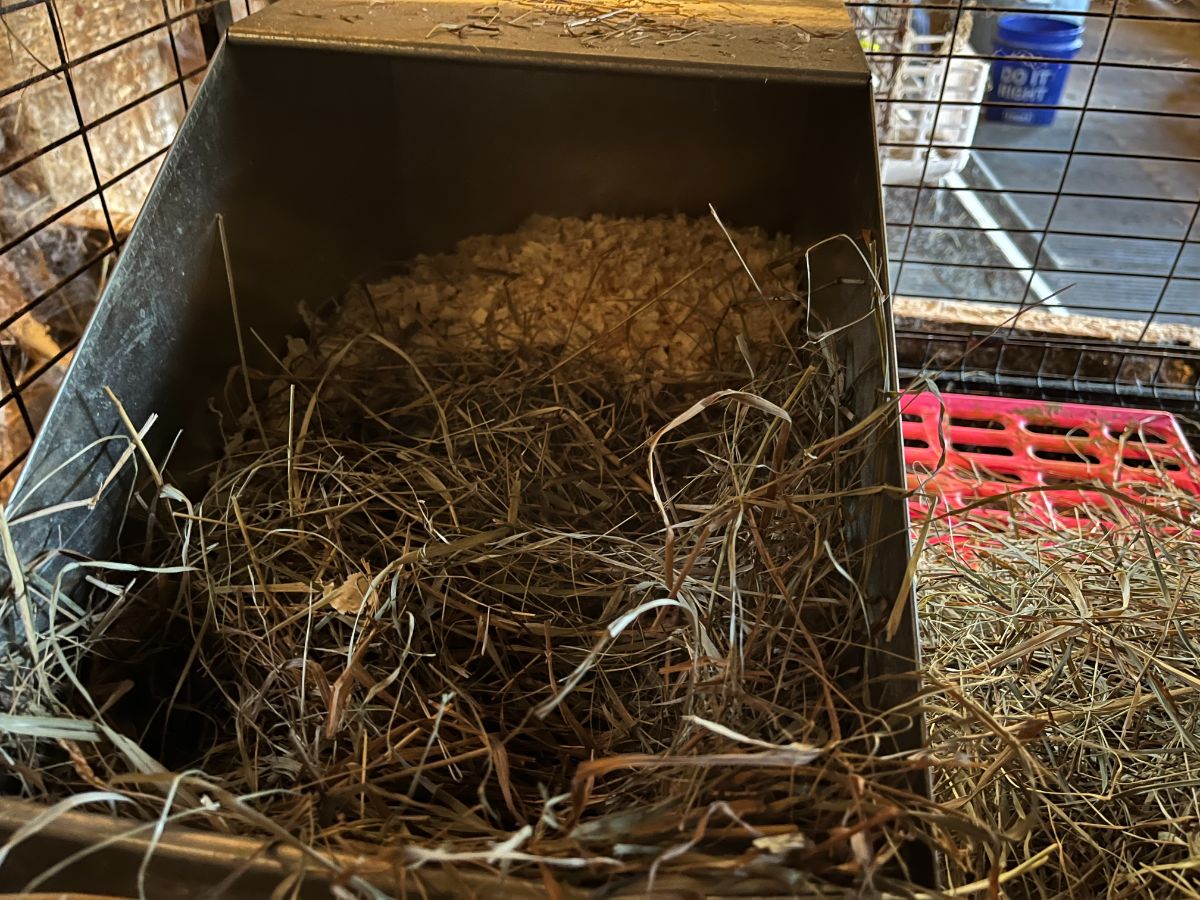
- Watch to make sure the mother starts to build a nest. Look for her carrying around mouthfuls of hay and creating a cylindrical-type burrow with the hay.
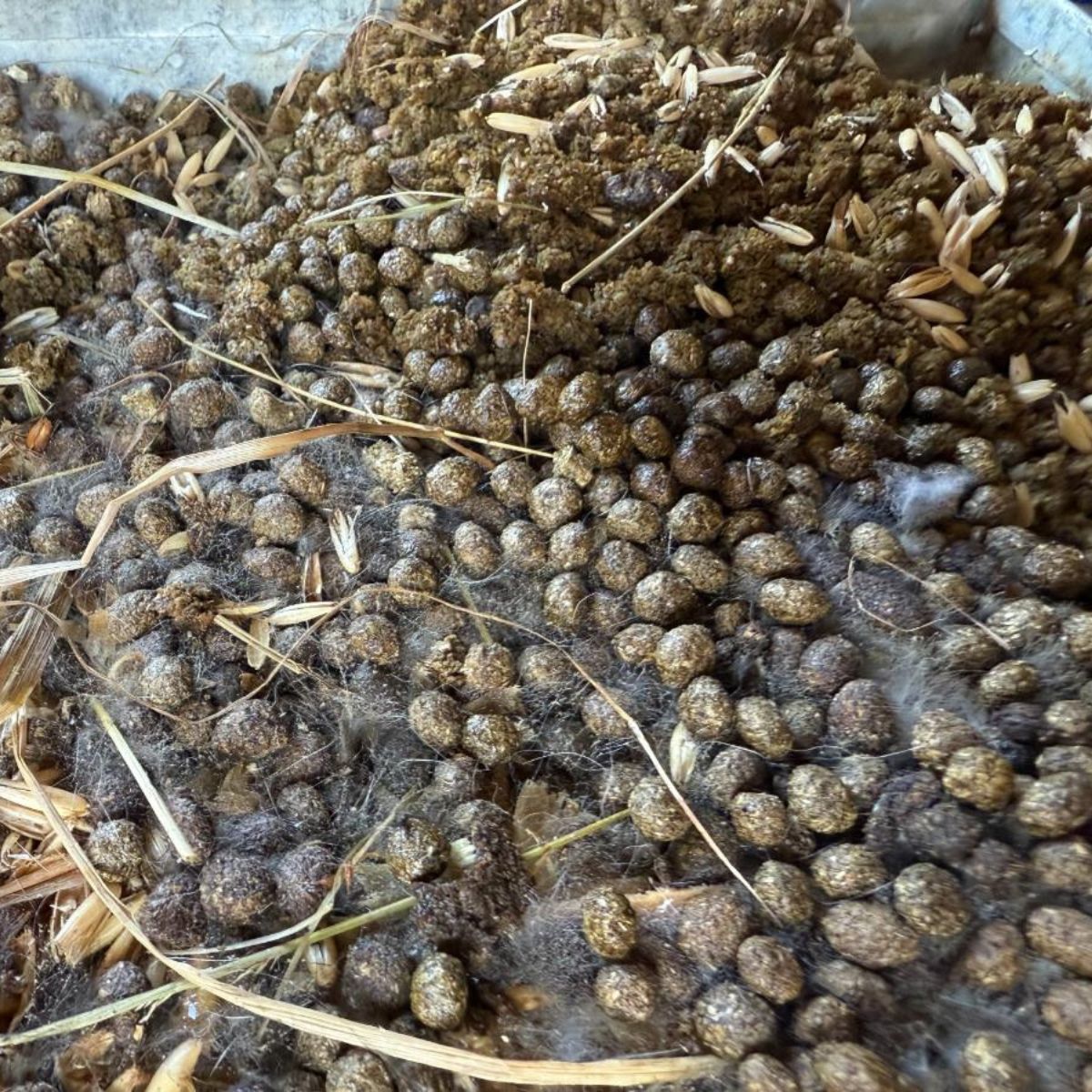
- Check the box to make sure the doe isn’t using it as a litter box. If she does, remove the soiled material and start fresh. If you put the box in early, wait until day 28 to replace it. If it’s day 28 or later, just keep cleaning and packing the box (you don’t want to risk birth without a box and protective materials in the cage).
- It can take new, unproven does some time to figure things out, so be patient with them and keep an extra eye on their nesting behavior.
- The doe will line the nest with a large pile of fur that she pulls from her chest/dewlap and breast area. This is what keeps the hairless kits warm. This is often not done until right at the time of birth or shortly before, so don’t worry if you don’t see it until then.
- If the doe does not pull fur and there are kits in the nest, or if she only pulls a little and it’s not enough to keep the kits warm, you can gently pull some yourself. You can also use things like dryer lint or stretched cotton balls. It’s good to keep some on hand, just in case.
Other than that, just keep feeding and watering as usual. And keep an eye out for your new litter of kits!
When to Clean the Nest Box After Kindling (Meat rabbit birth)
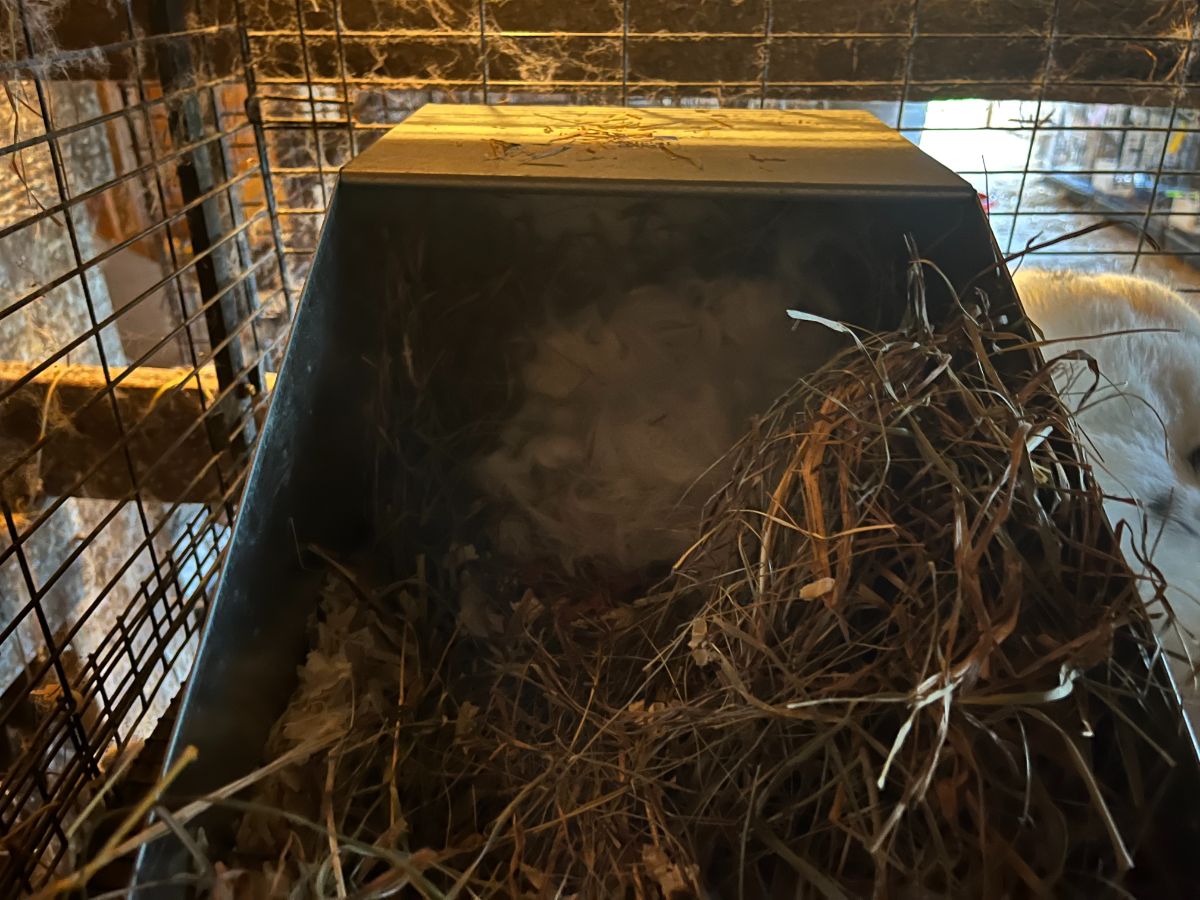
You do not need to do anything to clean the nest box in the first days after birth. The mother will take care of that. In fact, it’s best not to disturb or try to clean the nest for many days—weeks—afterward. Meat rabbits does know what they’re doing 95% of the time or more.
If you do major cleaning, you’re stripping away the protection the doe built for her kits. In the early days, the kits’ waste is minimal, and the layers of material will be very good absorption, keeping the nest clean and dry, even when the litters are large.
You can wait to clean the nest box when they are less dependent on it, which is in about two weeks, and after they have fur to keep themselves warm. Once the kits start moving freely in the cage, you can keep the box but change out the shavings and hay for fresh materials.
If at any point the nest becomes wet, change the materials anyway. If the fur is dry, you can reuse it but if it is too sullied, it should also be replaced. You can replace the mother's fur with pulled cotton balls if you can't pull fur from her body.
When to Remove the Nest Box
The kits will start venturing outside the nest box at around 10 to 14 days old. Their eyes will start opening then, but some venture out even with their eyes closed.
Pile some hay or straw in front of the box to help them get back in. The hay should be even with the opening and should ramp up so they can climb up until they really start hopping. At this time, some people choose to turn the box on its side so the kits can scoot in and out without climbing (but I’ve found it difficult to keep the nest neat and intact this way).
You can clean or remove the next box any time from week three on. If the weather is cool, a pile of straw or hay in the corner where the box was can add extra warmth and protection. At this age and with the snuggling litter and doe, you’d be amazed at how hearty young meat rabbit kits are.
In fact, in just two more weeks, they’ll be ready for homes of their own. And you can feel good about having your first litter of meat rabbit kits, born, bred, weaned, and growing!
Nancy Tuuk
I have a doe that is due in about 5-6 days. I have not clipped her nails in several months. She hates to be picked up so I put it off and then forgot. Should I get her out and get that done before kindling? Should I wait until shortly after and then do it? I don't want to hurt the unborn kits, and I don't want to hurt the newborn if she scratches them. I'm very unsure what to do.
Mary Ward
HI Nancy,
To me, it would depend on how long the nails are and if you think they are too long and pose a danger to the kits. It sounds like they might be since it has been several months (don't feel bad, time gets away from me, too!). If you do think they're an injury risk, then I would do it now, before she kindles. Because if they are going to present an accidental scratch problem, that can happen from the moment there are kits on the ground, and before you'd feel like it's time to take her out and handle her. And, she is more likely to be more irritable after delivery than before.
The way I look at it is that at 5 to 6 days out from kindling, that's still 20% of her pregnancy to go. That's quite a bit of gestational time and if you handle her gently, this shouldn't pose a threat to her. I would suggest gently wrapping her in a towel with her back to your belly, sitting, then pulling one paw at a time out of the towel to clip. She should be calmer and easier to handle this way. If you drape the towel gently over her face and eyes, that also should quiet her down.
Good luck and I hope you have a nice litter of healthy kits!