
“Rabbit Math” is a thing. It’s the thing meat rabbit raisers talk about when they talk about how wildly productive meat rabbits are. And once the math starts, it keeps going.

A single doe and buck meat rabbit pair can easily produce 40 to 60 young a year—and that’s with moderate breeding four or five times a year. So you can see how quickly the math adds up.
With math like that, you’re going to want to keep at least a few things straight.
Jump to:
Keeping Meat Rabbit Records
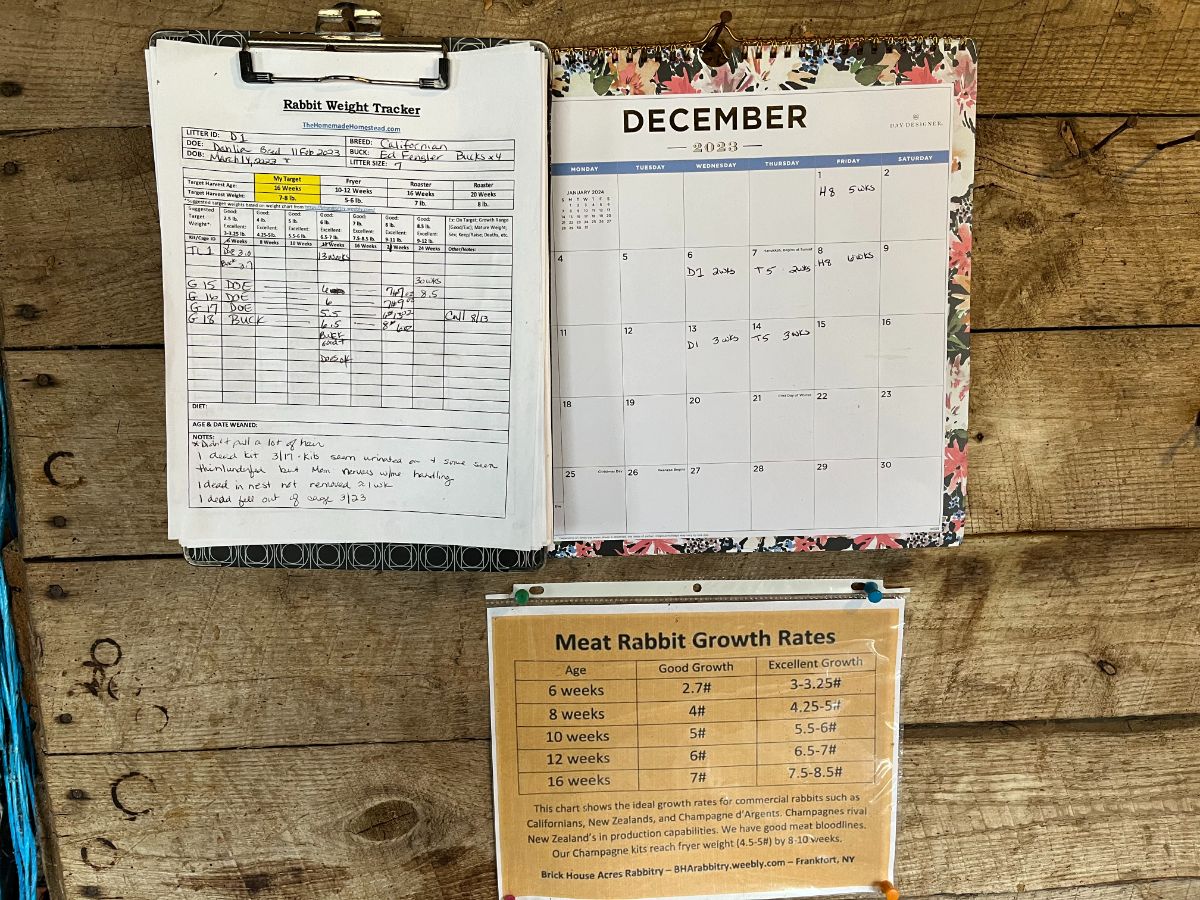
Meat rabbit records do not have to be hard or complex. You can make them as simple or as detailed as you want. But you will want at least a minimum of record keeping, at least enough to keep breeding dates, due dates, and pairings straight.
There are two basic records that I keep. One is a wall calendar where I can quickly and easily jot things down.
The other is a weight tracker/litter record.
Both are fast and easy ways to keep track of the fluffle. (Yes, fluffle is a real rabbit term. You can learn about it and other meat rabbit terms in this article.)
Keep a Wall Calendar to Record Important Dates
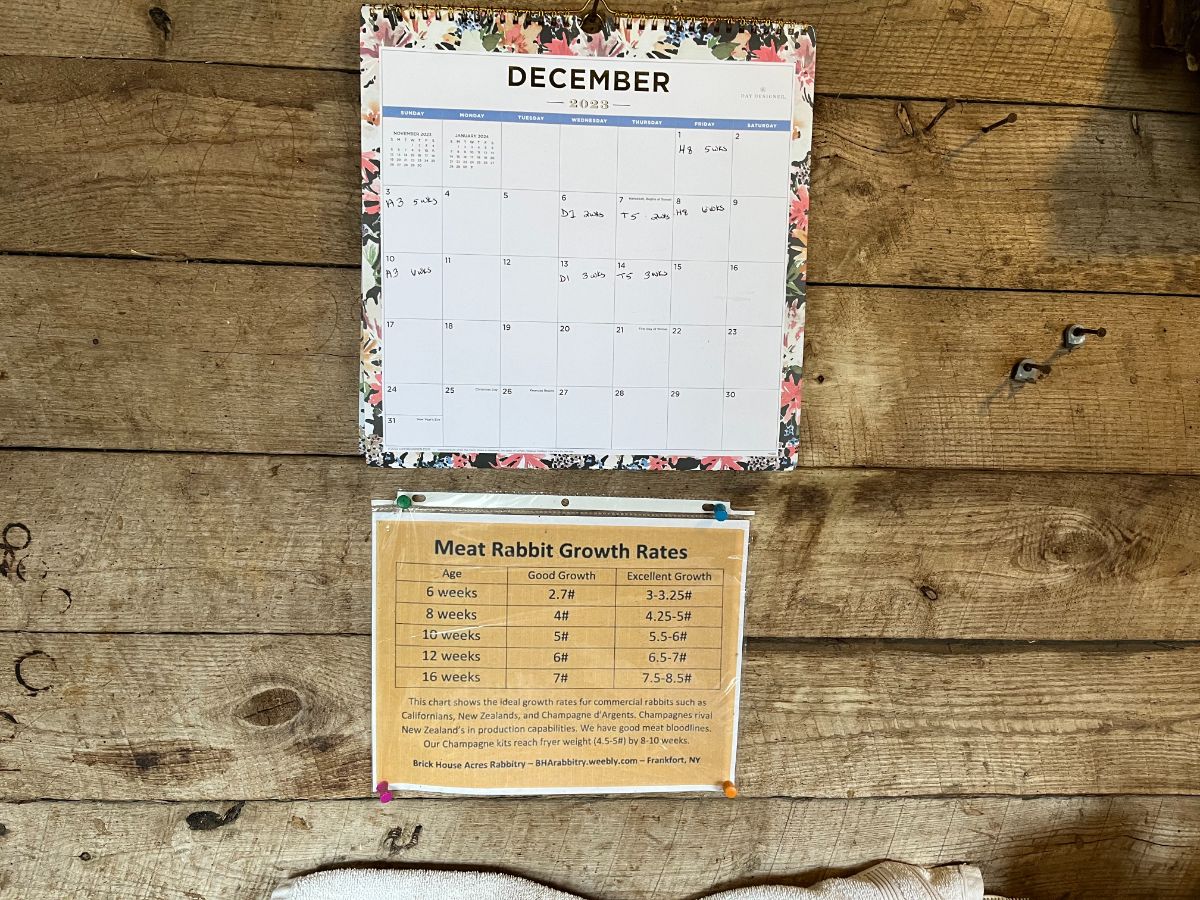
A good, basic wall calendar can keep track of a lot of things for you.
Some things I record on the rabbit room calendar include:
- When does were bred
- Which doe was bred to which buck
- How many fall offs occurred during the mating
- Gestation days (for example, the day after breeding is day 1; I count up to 32, and if no kindling happens, I keep going to day 35, at which time I call it a fail and rebreed)
- When a doe needs a nest box put in (Day 28)
- Expected due date (Day 31 or 32)
- When litters were born (I create a code for each litter like H1 is Holly’s 1st litter)
- Age of litters in weeks
- Any other health or herd issues worthy of noting
- Treatments for illness or parasites (for example, ear mites), preventative treatments given
- When retreatments need to be given
- Harvest, cull, or retirement dates
- Anything else of interest or that I feel is worth noting
Choose a calendar with large blocks that aren’t cluttered up, so there is plenty of room for you to write on any day of the month. I prefer paper calendars to be glossy because if it’s cold outside and pens are not cooperative, a pencil will always write on it.
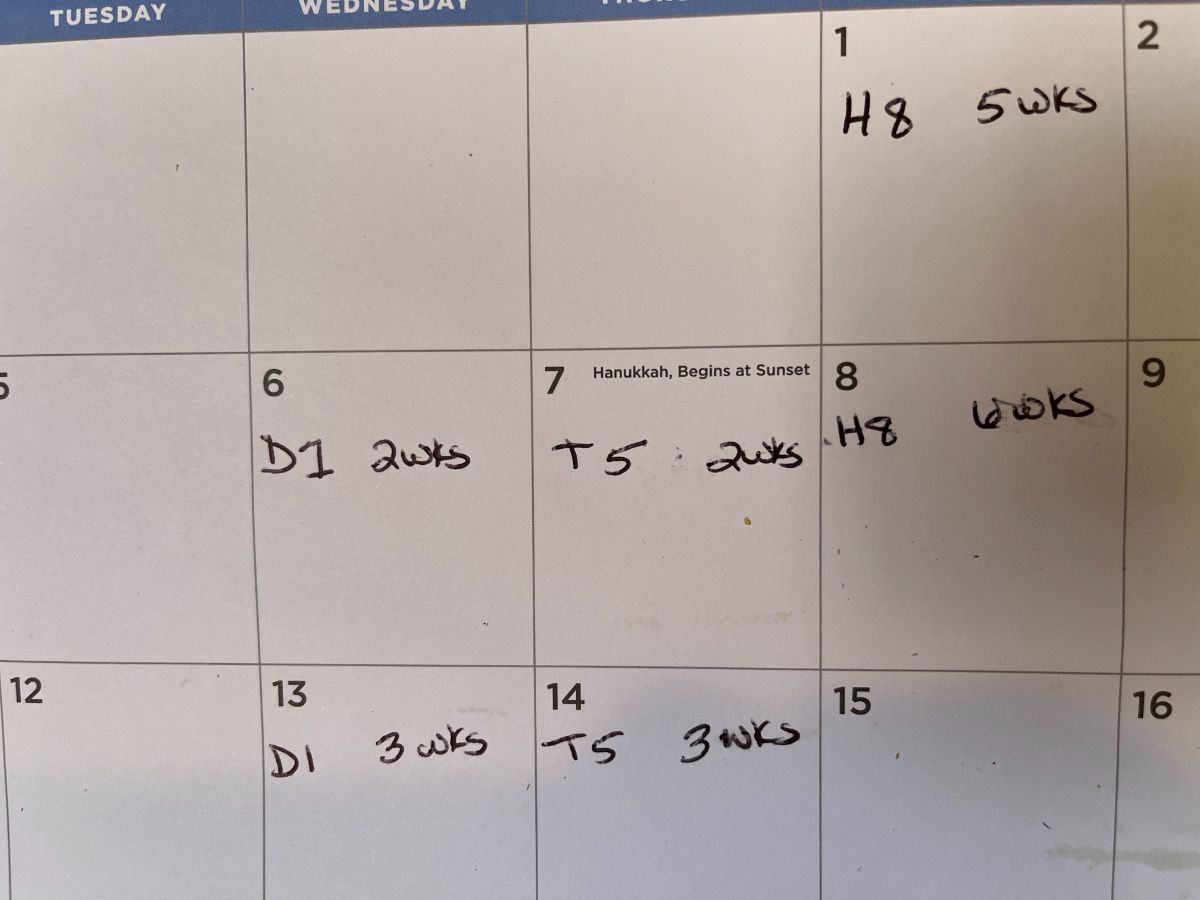
It’s nice if you can have the calendar nearby to your rabbits. In the same room is best, but if your rabbits are outside, keep it somewhere accessible so you can put down notes quickly when you need to—maybe near your door or hanging on a clipboard on the wall where it’s easy to grab and take out with you when you know there’s business to keep track of.
Use the Litter Record to Track Individual Weights and Litter Details
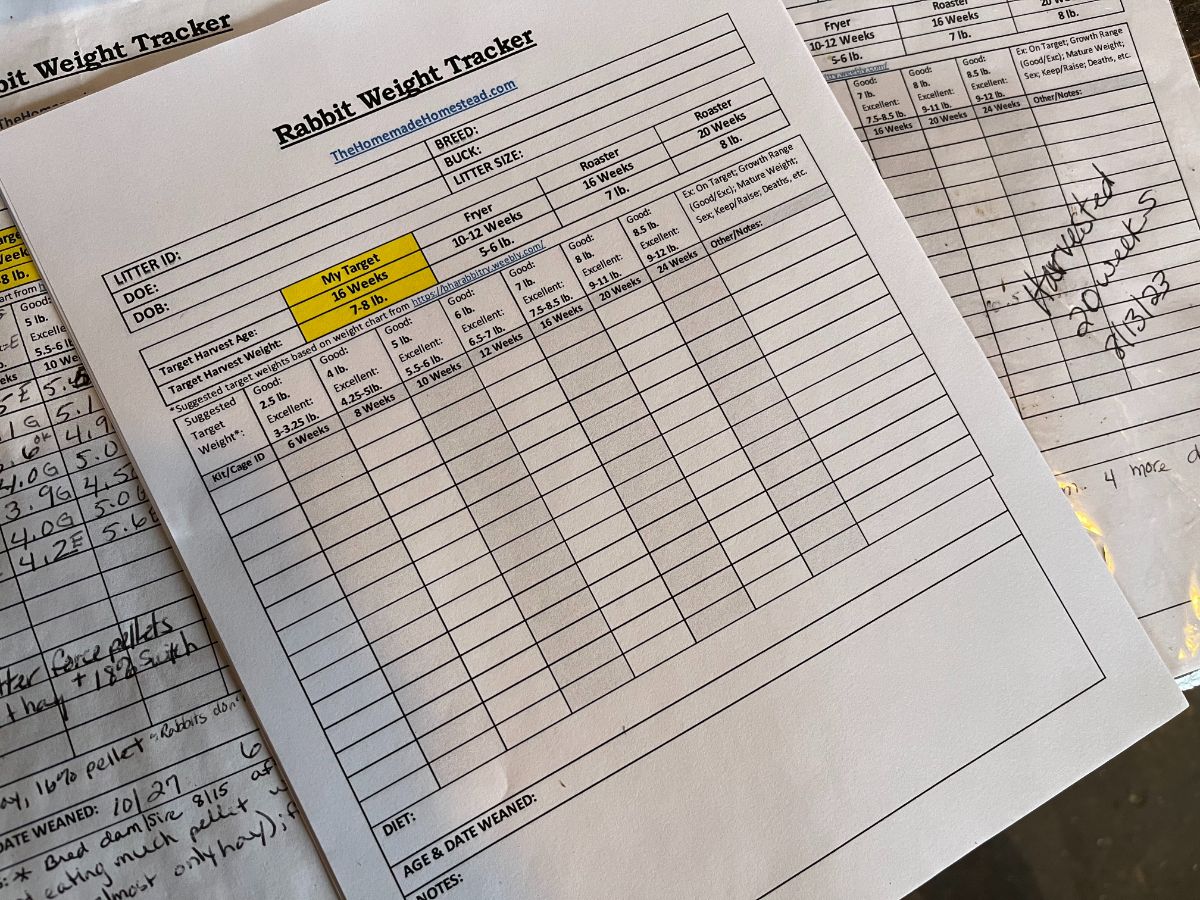
I also keep a weight tracker and litter record for each litter. This is basically a fill-in chart with space for notes. Once the rabbits are moved to grow out cages, they are identified by their cage number.
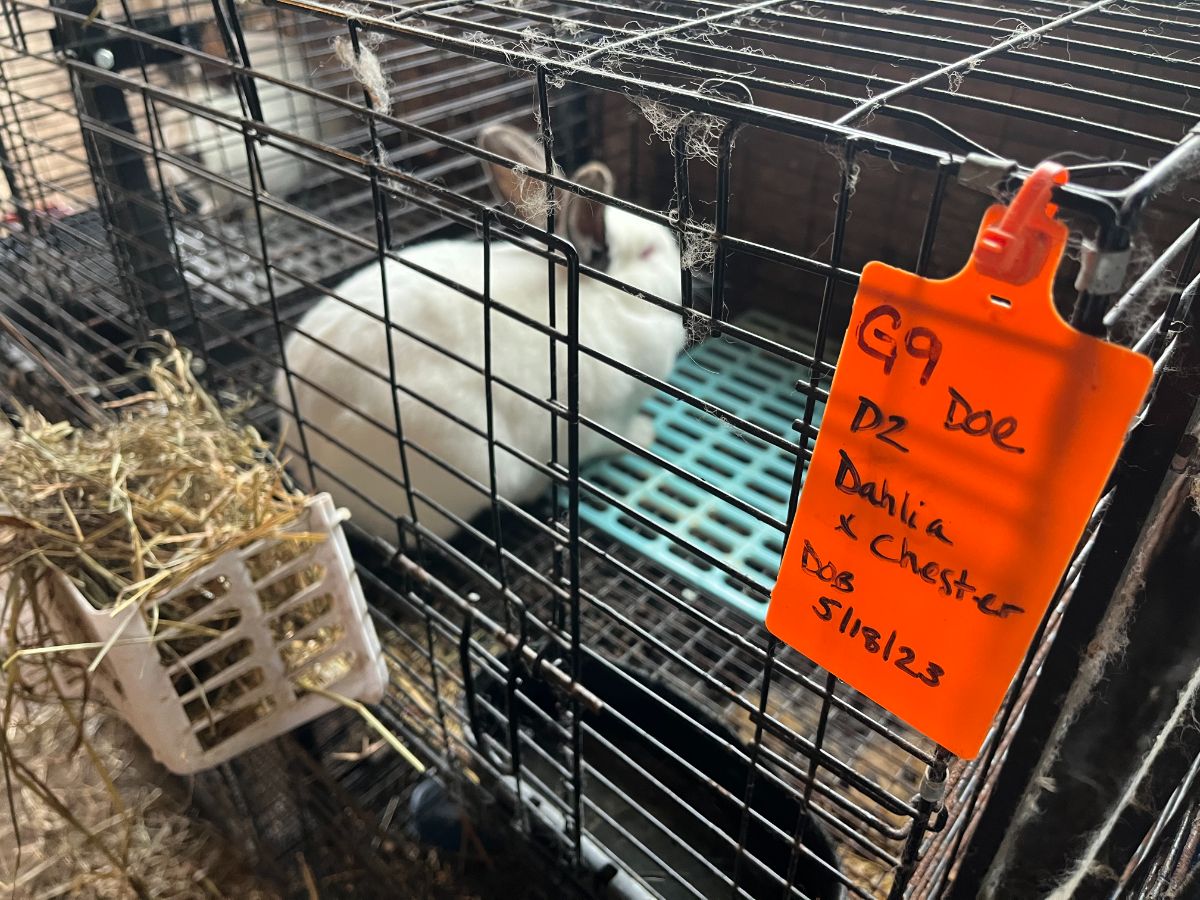
All cages have a tag with a number on it. Grow out cages start with a “G”, and they run G1 through G20. If you tattoo your rabbits, that could be used as their identifier, but I do not tattoo (only because I don’t show or keep pedigrees, so it’s an extra step that I don’t find necessary for myself and my purposes).
This is what I record on the litter sheet:
- Does name
- Buck’s name
- Breed
- Litter size
- Date of Birth
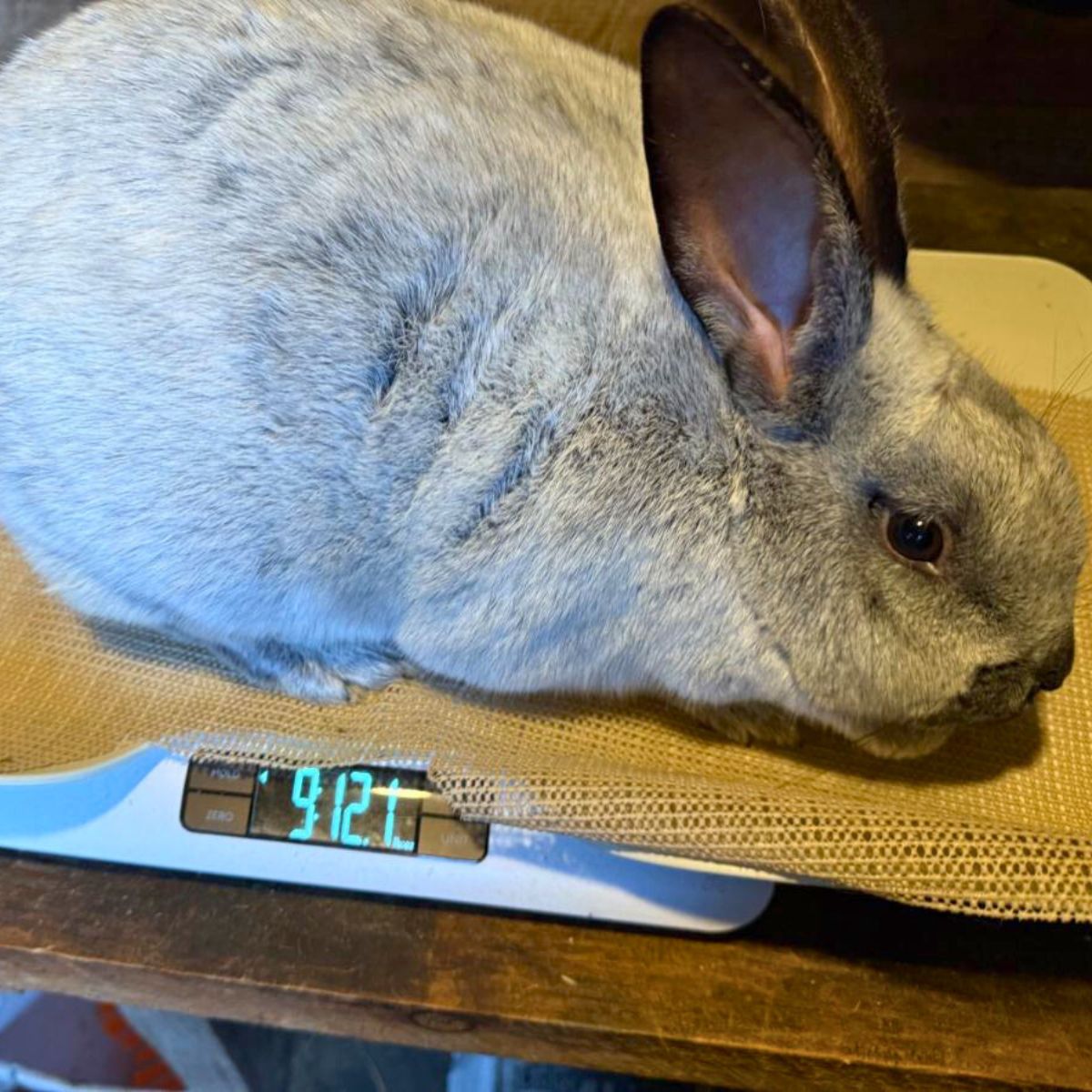
- Weights
- Notes
There is a reference area listing what standard weights are for meat rabbits at different harvest ages. The reference lists good and excellent rates of growth.
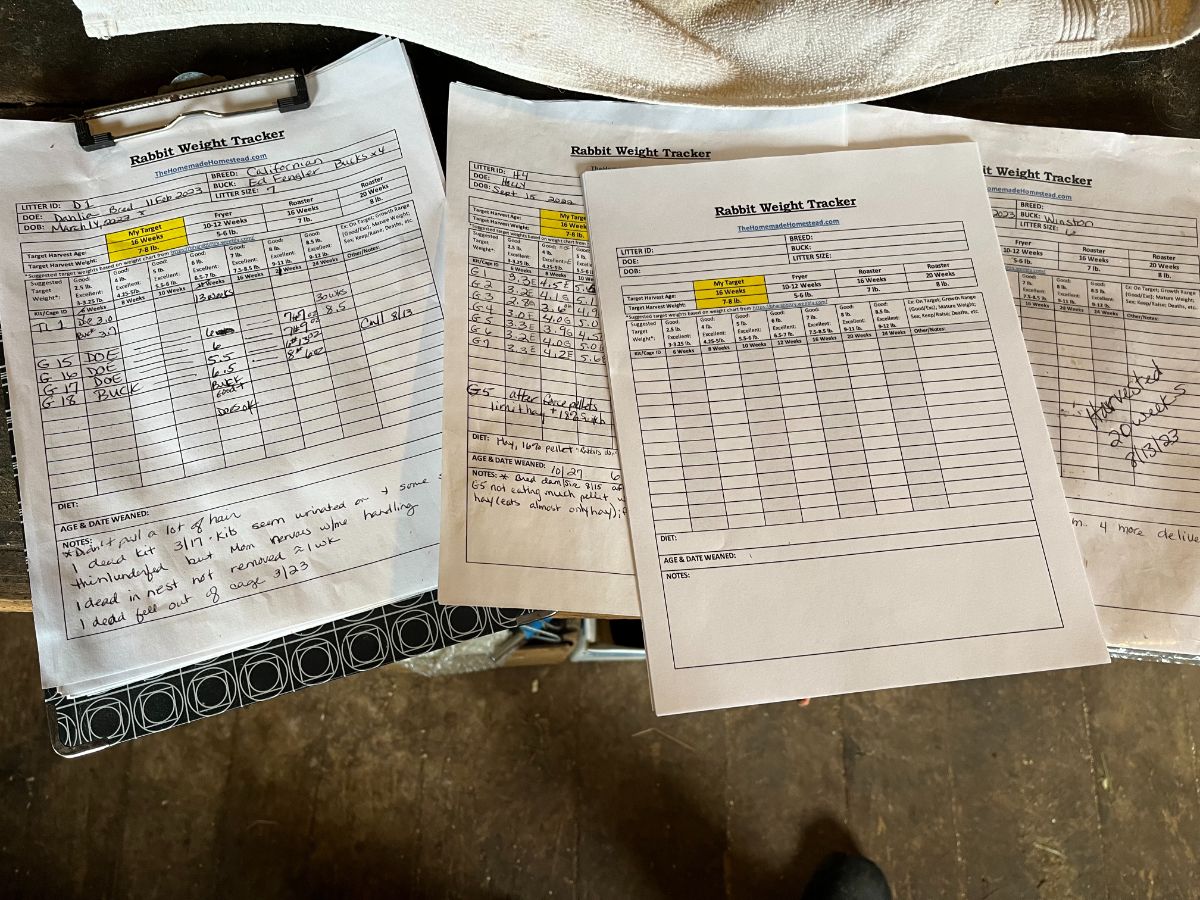
There is a section where you can write down your harvest target age and target weight for the litter (how big and by what age you want the kits to weigh before you harvest). This can be personalized to your goals.
Then there is the section for recording weights at different ages:
- 6 weeks
- 8 weeks
- 10 weeks
- 12 weeks
- 16 weeks
- 20 weeks
I am not always strict about taking all these weights. It is nice to have the option and the space. If I am tracking breeding potential, etc., I am apt to be more stringent about it.
At the side and bottom of the record, there is room for important or interesting notes.
This record is a good way to keep records while working in the rabbitry. If apps and data are your thing, it can easily be inputted into the app later on. I personally like to be able to flip back quickly and see performances or see what a litter in the rabbit room has been up to.
Download and save or print this FREE LITTER RECORD and WEIGHT TRACKER here.
Some Things Records and Weight Tracking Can Tell You

Tracking weights and litter notes can be useful in several ways.
Having this information can help you evaluate your litters. Some of the things you can deduce from the records are:
- Whether your rabbits are growing efficiently, maximizing production
- Whether you hit production targets or not
- If a doe and buck pairing produce good kits with good size and growth weights
- If different doe and buck pairings seem to work better
- If feed programs are working well or need adjusting
- If there is a pattern to issues—for example, low litter sizes in the summer
- If a doe or buck seems to be reducing in litter size
- Reduced litter size can tell you it may be time to retire a breeder
- Which individual rabbits have better growth rates and hit target times for size
- Which individual rabbits are best to keep for replacement breeders
It is worth keeping at least a minimum of records in your rabbitry. At the very least, minimal records will guide you so you can provide for the needs of your rabbits and their young. Taken a step further, a moderate system of records will help you better manage when and what you breed.
In the end, these basic records will give you the best meat production for you and yours by helping you breed selectively and on a schedule that meets your needs.
Download Link for Rabbit Weight Tracker
See this post for more on target harvest weights and ages.

Leave a Reply