
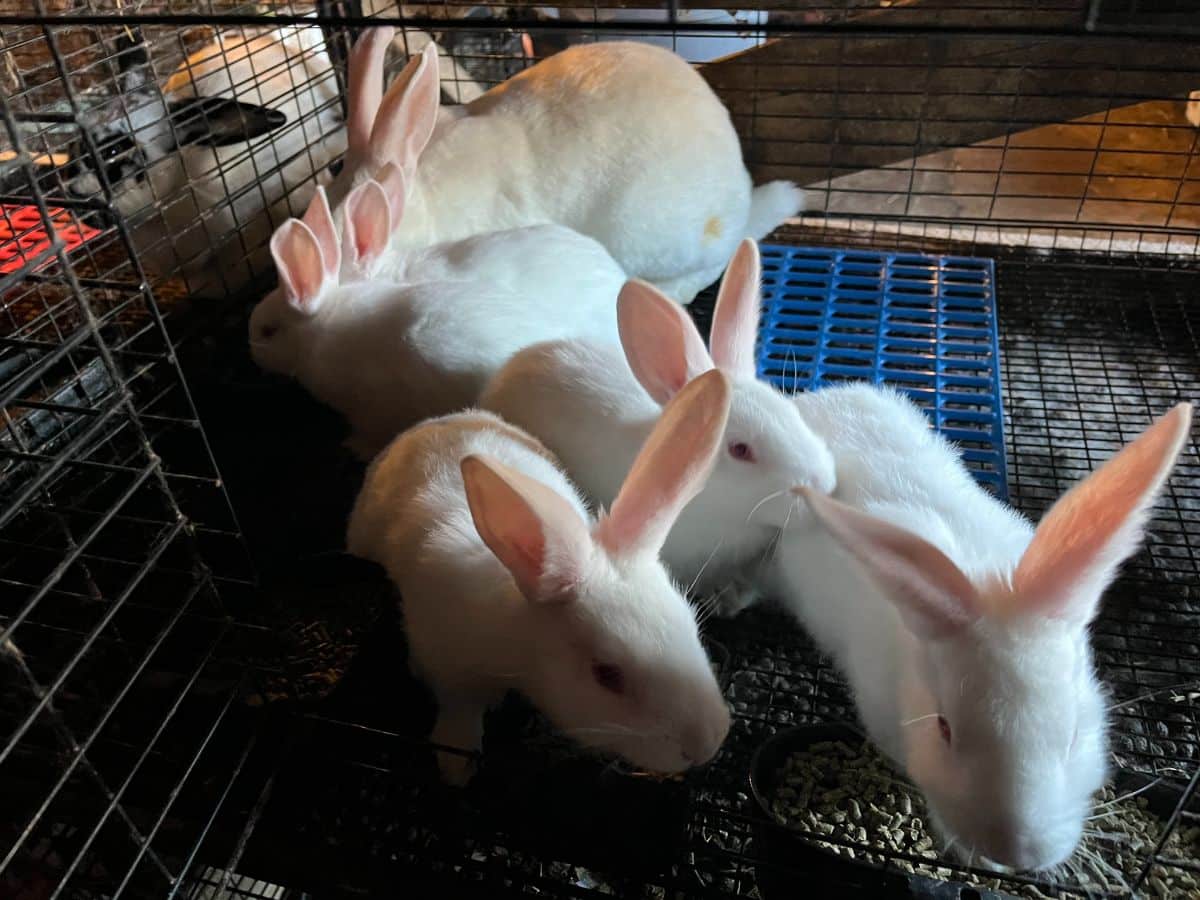
Meat rabbit kits at five and six weeks of age should only need good care and good animal husbandry from you. This is a phase of growth and a time for them to transition into rabbits that will thrive on their own.
Jump to:
- Caring for Rabbits Kits at 5 and 6 Weeks Old
- No Need for Nest Boxes
- Dry and no drafts equals good meat rabbit living
- Continue to Free Feed and Provide Plenty of Fresh Water
- Watch for Feed Competition and Cage Crowding
- Prepare Cages for Weaning
- When to Wean Meat Rabbit Kits
- Weaning kits relate to when you breed back the doe (and other factors)
Caring for Rabbits Kits at 5 and 6 Weeks Old
By the time kits reach the end of their fourth week of life, they are growing stronger and are quite independent.
In fact, technically, kits can leave the doe after four weeks of age, which shows just how independent they really are.
Your biggest job at this point is to observe, maintain, and provide good daily care for the doe and her litter. (Regular cage cleaning and maintenance goes without saying.)
No Need for Nest Boxes
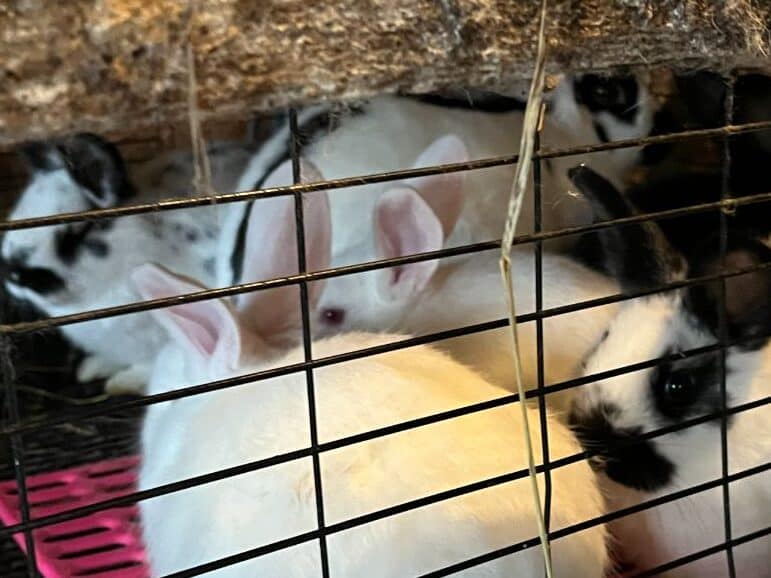
There is no need for kits to have nest boxes by this time. They are usually in the way and risk becoming litter boxes. These kits will be urinating and defecating quite a lot, so you want them making waste in the cage where it can drop down (or however you handle your waste and cleaning).
The kits are good at generating their own heat now. For the most part, whatever you are doing to provide good conditions for your adults, you should do the same for the kits. If you are concerned about them being cold, a pile of hay or straw in one corner will give them some added comfort and warmth.
However, do note that in wire-floored cages, hay and straw can block up holes and cause waste to stay in the cage. The cage can become wetter as a result, so it’s often more of a problem than a solution.
Personally, I do this only if the weather is severe, and I plan to remove and change the hay daily.
By keeping the litter in the same way as you keep your adult rabbits through these final weeks in the birthing cage, you’re preparing them for independent living once they move out of the cage.
Dry and no drafts equals good meat rabbit living
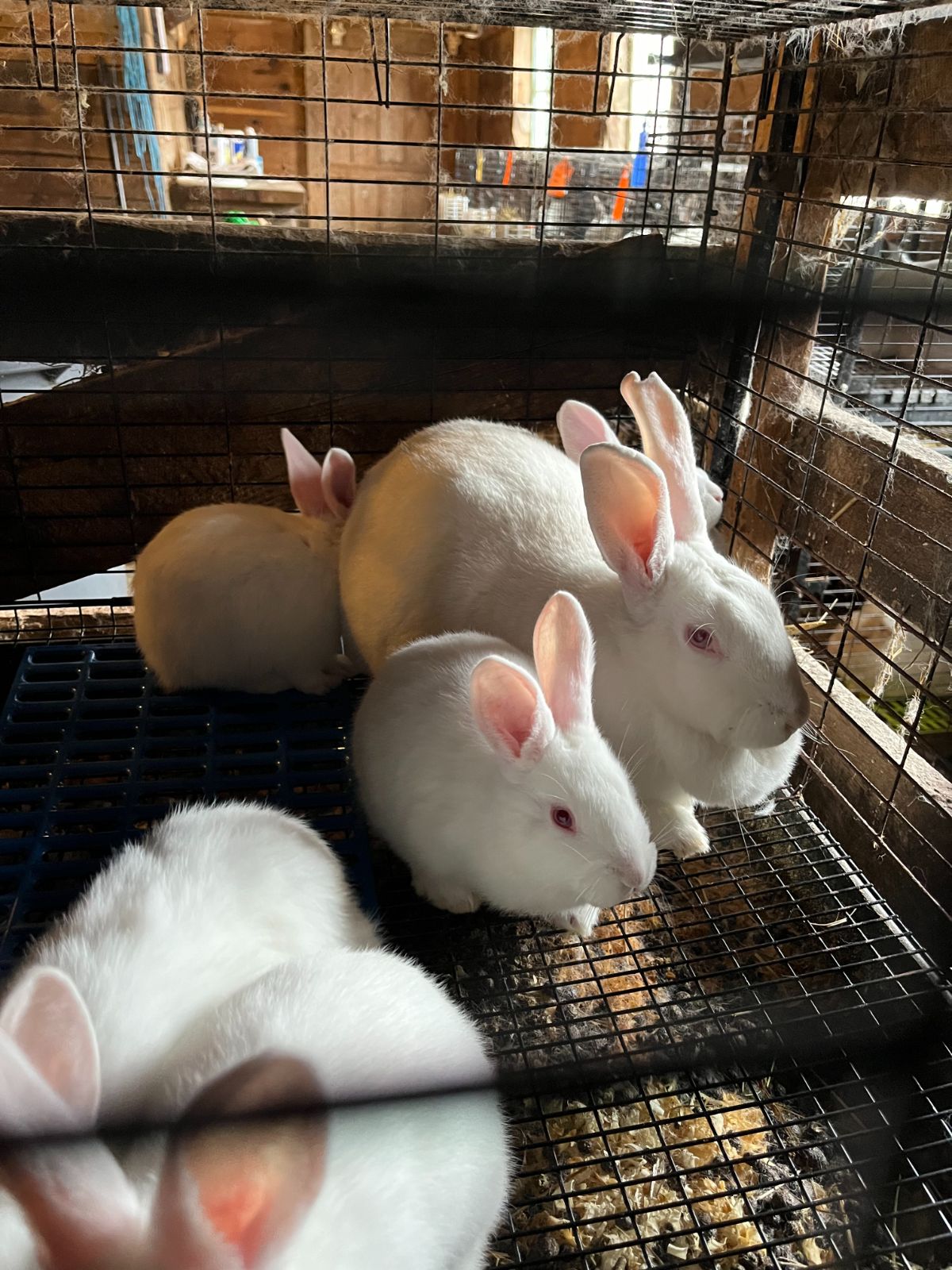
There are two things that cause meat rabbit illness and death more than anything else.
No, they are not cold weather. Rabbits do very well in cold weather. They’re built for it.
It is being wet and being in wind and drafts.
(That said, reasonable breeziness and light wind are tolerable, but extremes are not.)
Excessive wind and drafts whisk away body heat. Wetness does, too, and the combination of these factors is a real risk.
Fortunately, these things are easy to avoid, even for rabbits housed outside.
- Provide windbreaks
- Place cages where there is a break or respite from the wind
- Use hide boxes if necessary
- Provide extra bedding in weather extremes
- Above all else, always keep cages clean and dry!!
Continue to Free Feed and Provide Plenty of Fresh Water
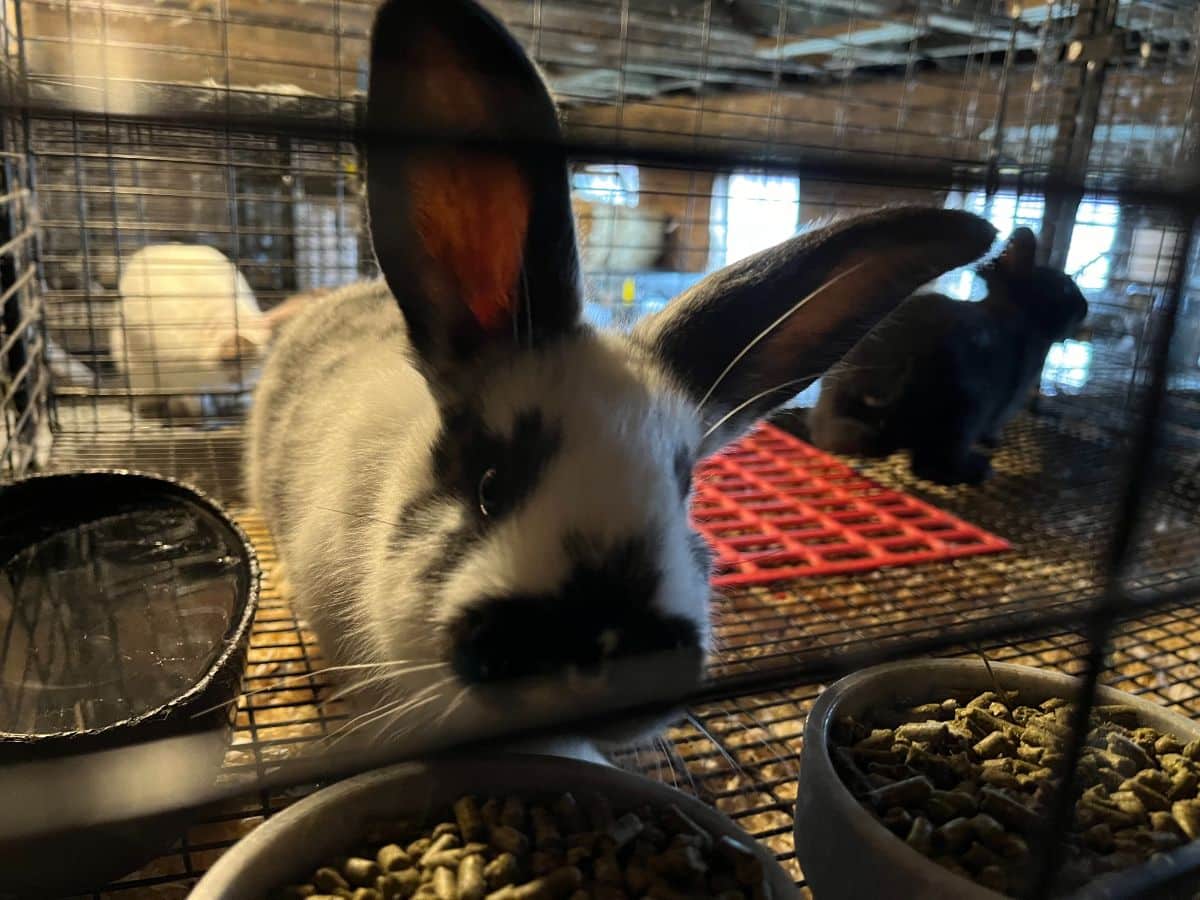
One of the few things you will need to do for your kits at this age is feed them!
That, of course, goes without saying, but do make sure that you are free-feeding rabbits at this age. Free feed means that they basically have access to pellets (and hay if you’re feeding it) or whatever your regular feed program is all the time.
Constant access to fresh water is a must, too.
- Depending on what you are using for crocks, dishes, or feeders, you may need to add some feed and water dishes at this time.
- Do what you need to do to keep their need for feed met.
- You can tell your kits are being given enough feed if there is at least a little left when you go back to feed at your regularly scheduled time.
- It doesn’t have to be a lot left over, but enough to know that there was the option of eating if they wanted to.
- Kits (or adults) acting “hungry” and excited for more pellets at feeding time is not always an indicator because rabbits will often just act this way anyway.
- If there is some feed left over when you feed again, it shows they had the option of eating and just chose not to.
- Good body condition, a nice coat, and growth rate are good indicators of adequate feeding, too.
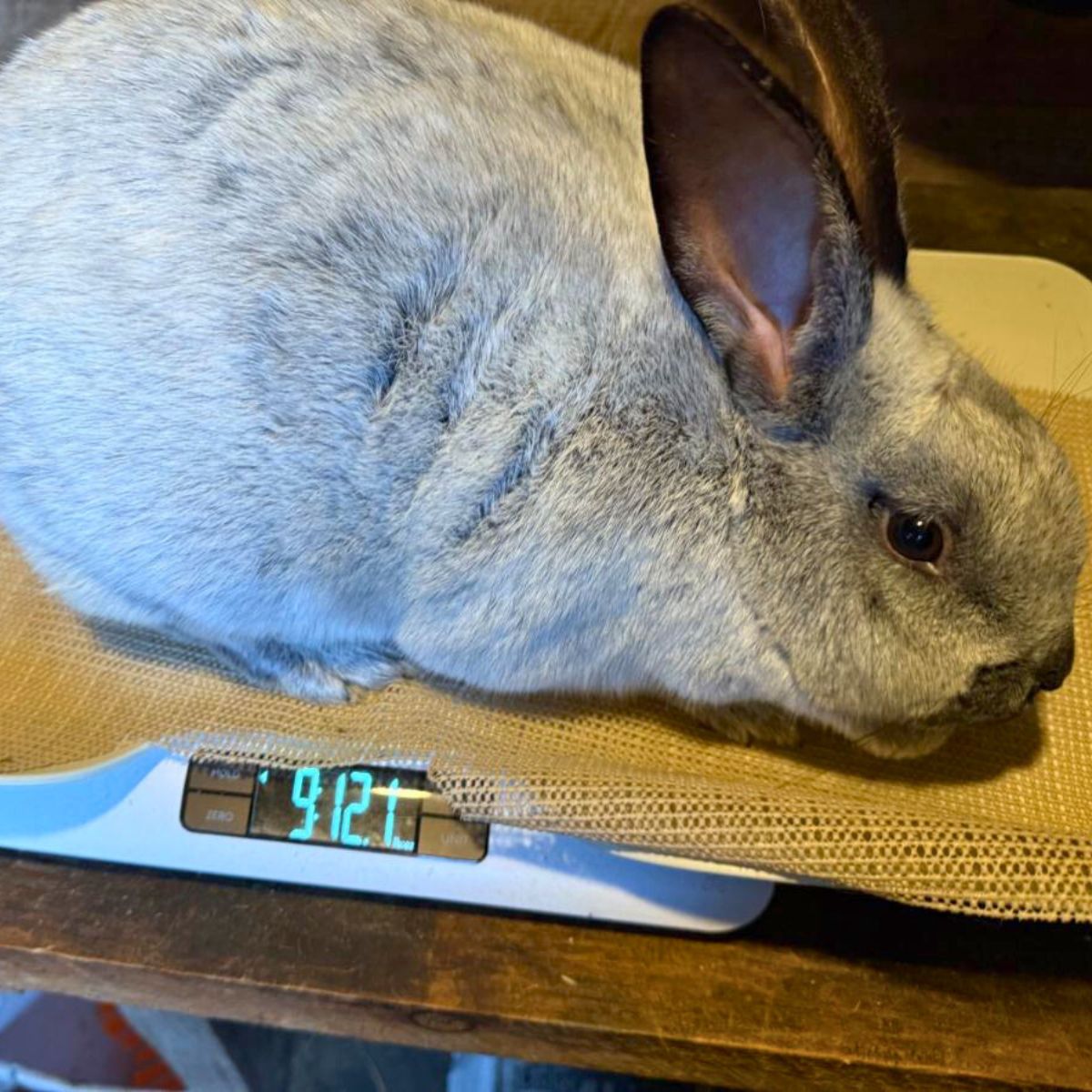
- Kits that weigh two and a half pounds at six weeks are considered good weights.
- Three pounds and higher by six weeks is an excellent rate of growth.
After six weeks, kits will really start to gain. From eight weeks onward, expect meat rabbits to gain at a rate of one-half pound per week.
Watch for Feed Competition and Cage Crowding
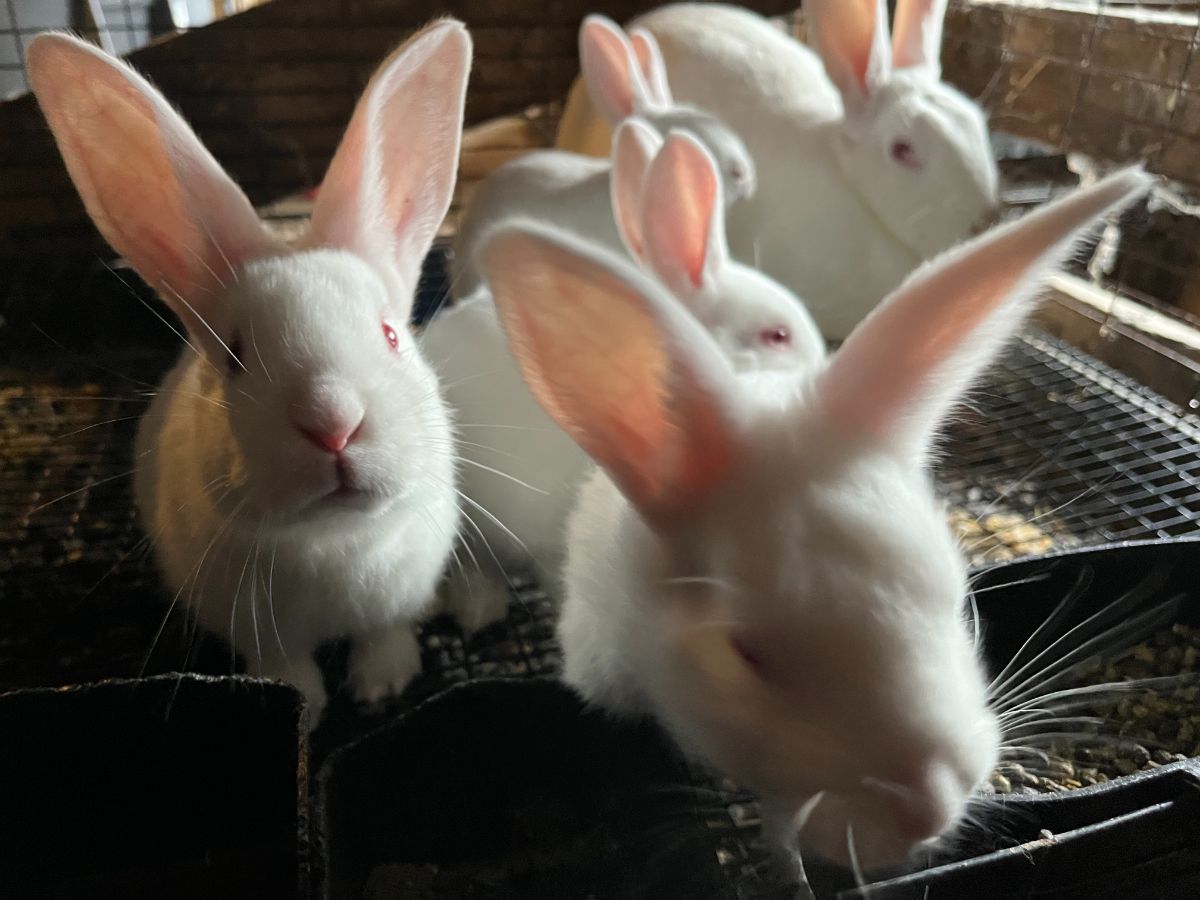
As you come into weeks five and six, you’ll start noticing that it’s becoming time for the grow outs to move out on their own.
At this time, you’ll need to keep an eye out for overcrowding and competition for food.
- Don’t let competition for feed cause malnutrition in any of the kits
- Free feeding helps reduce feed competition and crowding out of kits from the feeder
- Look for excessive discrepancies in kit sizes, especially if size differences are new and more pronounced
- Some variation in size is to be expected, but you should not have any kits that are not growing consistently relative to where they started
- Dull, poor coats are a sign of malnutrition
- Rabbits that don’t grow are a red flag
- Rabbits that lose weight and feel bony need extra care and may not be competing for food
Some of these things will tell you that weaning time is almost here.
Prepare Cages for Weaning
With the weaning time approaching, you have to have a plan for moving those kits out of the birthing cage. If you do not have a cage or cages, tractor, or other setup ready to move those kits into, the time to get or build one is now.
Some options for the next step include:
- A large transition litter cage that the whole litter will stay in together for another couple of weeks before going to permanent grow out housing (at least 30x36 inches)
- A large grow out setup, such as a large cage or tractor (as always, my preferred and recommended choice for health and safety are cages). Plan for at least two square feet per rabbit; four is better.
- Grow out cages, 24x24 inches (this is what I use and recommend, but when there are a lot of grow outs, I may double them up).
- If you are growing beyond 10 or 12 weeks before you butcher your meat rabbits, you need to have separate accommodations for males and females
- Even before 12 weeks, for the sake of feed competition, growing space, and urinating or fighting, I prefer to separate kits by sex by 8 weeks; ideally, I keep bucks on their own because even young bucks can urinate on each other, spray, and make a mess.
When to Wean Meat Rabbit Kits
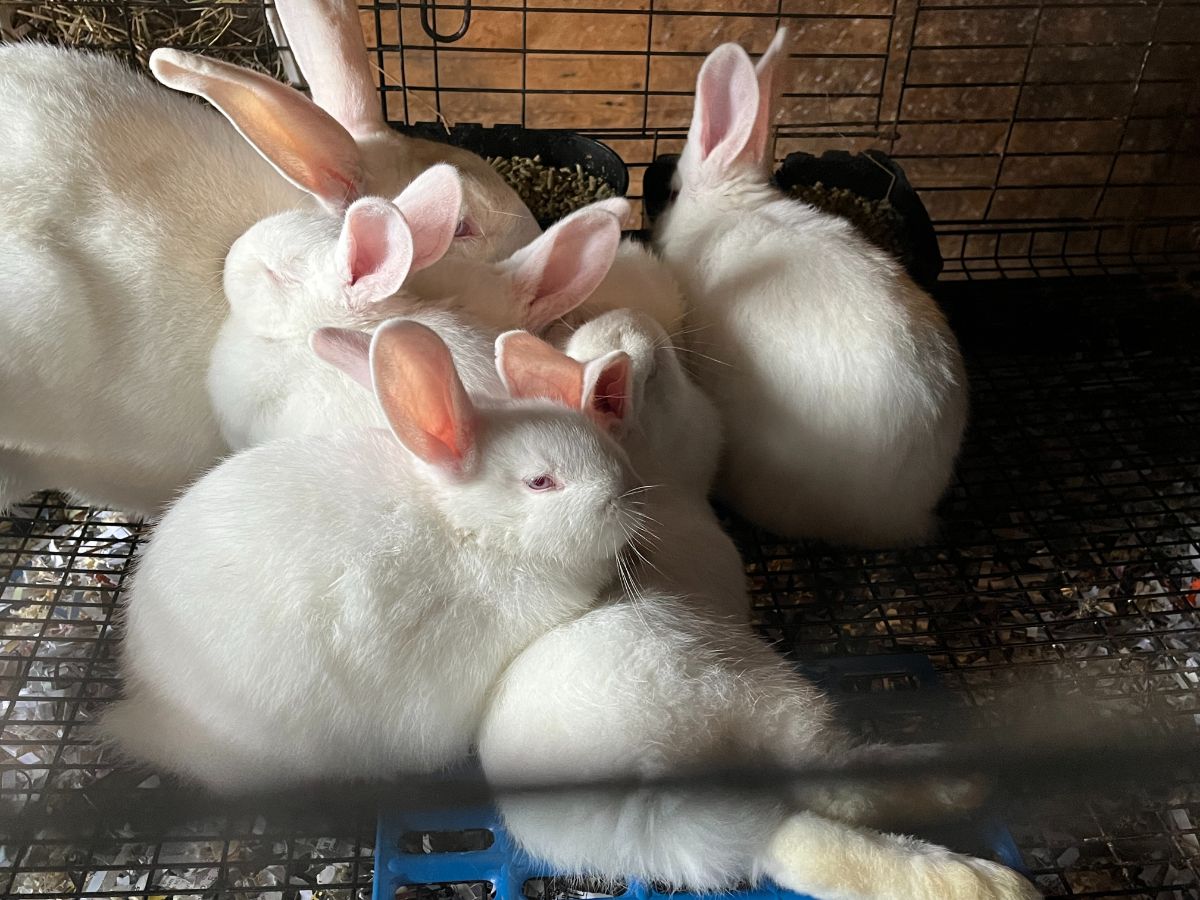
The youngest that I would recommend weaning kits is five weeks. No longer than six weeks is an average and recommended weaning age. You may go as long as eight, but this is often an overcrowded and high-competition scenario by then.
You can read more about this in our article on when to wean, including some good signs to look for to help you decide when to remove the kits from the doe.
Weaning kits relate to when you breed back the doe (and other factors)
When you need to wean relates at least in part to when you want to breed back your doe and how often you want to produce litters. However, you time things out and plan for the doe to have at least two weeks with no kits in her cage.
This will give her time to dry up and then restart milk production with the next litter. This is important so that the litter gets colostrum. It is also very important to keep your doe in good health and condition.
Growing fetuses, raising kits, producing milk, and keeping her own body in good condition takes a lot out of a doe. It’s critical that you not place too many demands upon her. Doing so will only shorten (and threaten) the life of your doe and of her developing kits, too.
Continued good care of your kits and your doe will lead you easily into the next phase of life with meat rabbits. In no time at all, you will be weaning your kits and then approaching harvest time. And that will mark a successful circle of life and sustenance!
Leave a Reply