
You may or may not have come across references to “baby saver” wire in rabbit books, on websites, and on forums.

What is it? Do you need it? Should you use it? And how do you use it?
Jump to:
- What is Baby Saver Wire?
- What is Baby Saver Wire Used For? Do You Need Baby Saver Wire for Your Meat Rabbit Kits?
- Fall and escape prevention in the early weeks
- Rodent and predator protection – including pets!
- Who needs to use baby saver wire on their meat rabbit cages?
- How Hard is it to Install Baby Saver Wire in Meat Rabbit Cages?
- What Tools or Equipment Do You Need to Install Baby Saver Wire?
- How to Attach Baby Saver Wire in Meat Rabbit Cages
- Purchasing Options for Buying Meat Rabbit Baby Saver Wire
- Rabbit Baby Saver Wire – Worth Your Time and (Minimal) Trouble!
What is Baby Saver Wire?

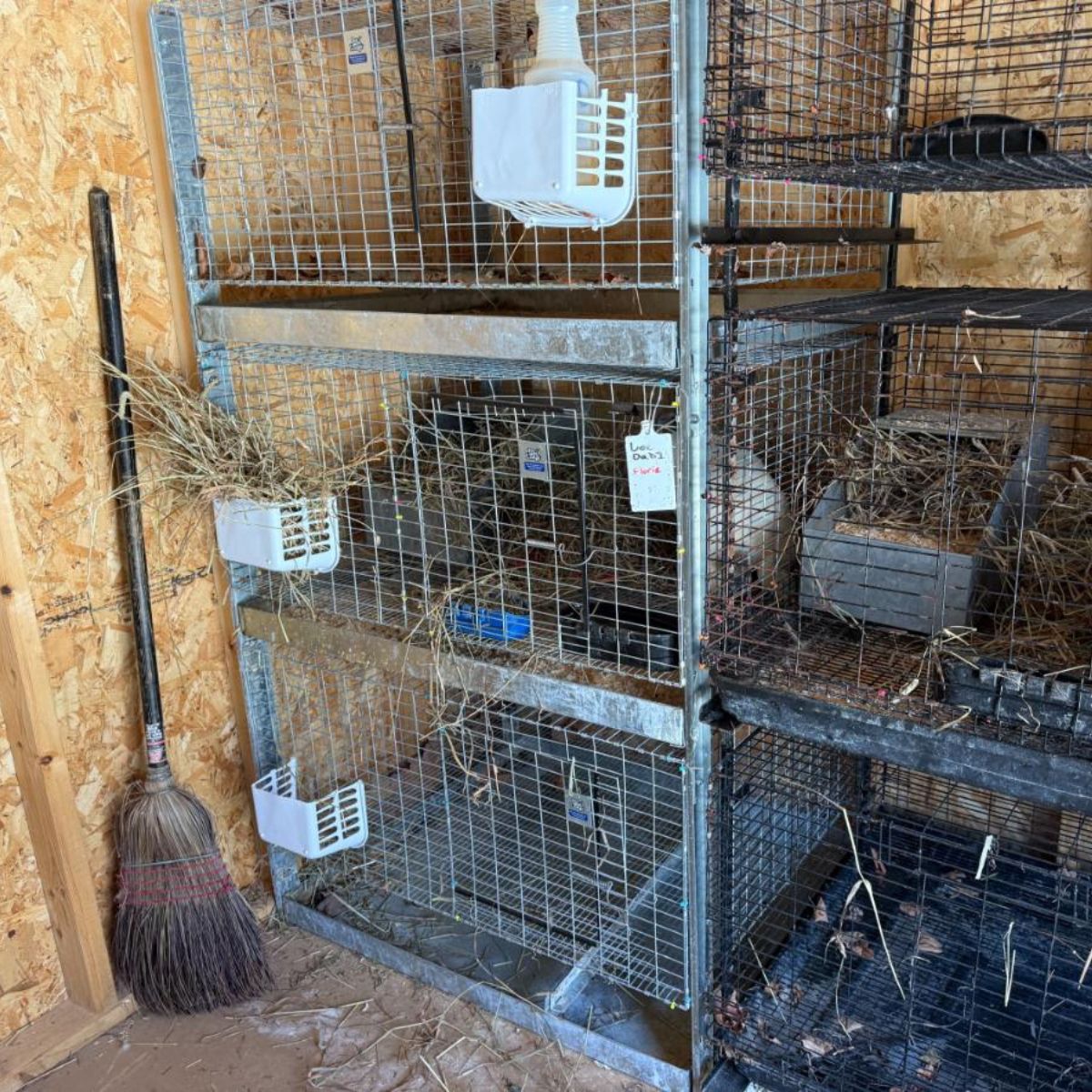
Baby saver wire is a stretch of welded wire with smaller openings than what most standard rabbit cages have. It shrinks the gaps in the bottom section of wire down to a size that is too small for baby rabbit kits to get through.
A typical wire size for rabbit cages is one inch tall by two inches wide per opening (1 x 2 inches), sometimes three. While this is fine for meat rabbit kits that are older than two to three weeks old, and fine for grow outs and adult meat rabbits, it is large enough for young kits to get through.
For young kits, openings at the bottom of the cage should be, at the minimum, no larger than one by one inch (1 x 1) square, and one-half inch (½ x 1) is even better security.
Typical baby saver wire has openings that are one inch long by one-half inch tall (½ x 1 inch). The section is usually two or three inches tall so that it covers the lower 2 to 3 inches of the cage where kits could wiggle through.
You do not need to install wire above 2 to 3 inches of the bottom because by the time kits can climb that high, they will be too large to fit through – you just need to close up the gap at the very bottom to keep them safe while they’re small.
When most people talk about baby saver wire, they are talking about sections of wire that you can buy and add to an existing cage to make the bottom of the cage safe for the young kits. These add-on sections cover and shrink the cage openings so young rabbit kits cannot get through them.
The sections come in pre-measured and pre-cut lengths that you can order to fit the length of your cage bottoms. The wire is also available in rolls for the DIY rabbit keeper, along with other design and buying options, which we will go into in more detail in a little bit.
What is Baby Saver Wire Used For? Do You Need Baby Saver Wire for Your Meat Rabbit Kits?

As said, the point of using baby saver wire is to reduce the openings in your doe’s cages so that it is small enough that a young kit cannot get through.
This is 100% a time when an ounce of prevention is worth a pound of cure (and there won’t be a cure for kits that die from falling outside the cage where they are prey for animals and subject to cold and freezing to death – even in warmer months!!)
Fall and escape prevention in the early weeks

Once kits are over three weeks old, they are generally too large to get through a one-inch opening, but before that, they can get through a small opening – either accidentally or when pulled through by a rodent or predator.
You’d be surprised at the size of the opening, that a young kit can wriggle through, or that a rodent or predator can pull it through.
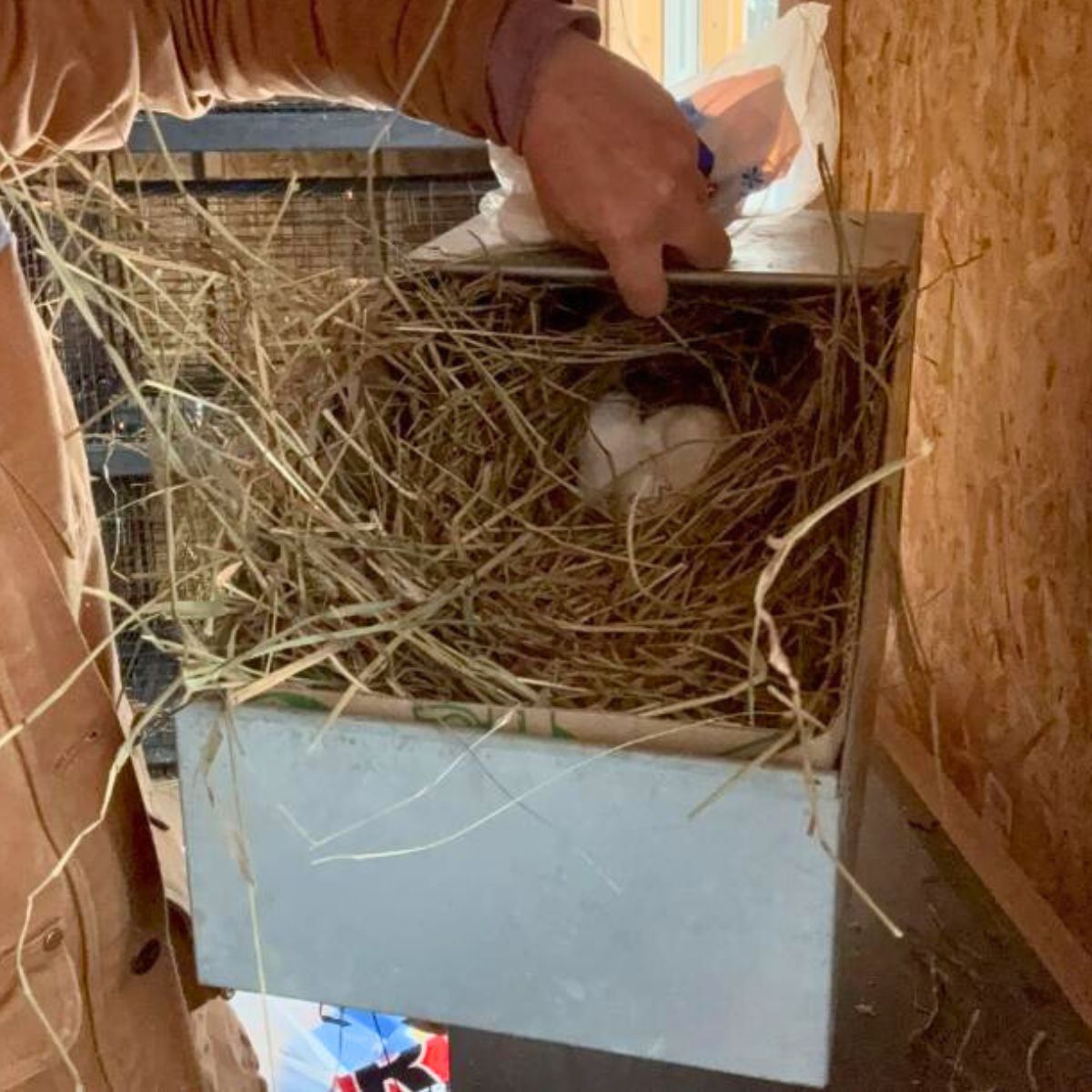
Kits do sometimes come out of the nest box accidentally.
Sometimes, mothers misbehave and give birth to kits on the wire.

Sometimes kits remain attached to the mother’s nipple when she leaves the next box at the end of feeding (or if disturbed and startled during feeding) and kits get pulled out of the nest box, then drop on the wire cage bottom.
Kits’ eyes are closed for the first two weeks, so when things like this happen, they will wriggle around aimlessly, searching for warmth, the doe, or to get back to their litter mates.
Of course, kits also are mostly immobile at this point and don’t really stand, walk, or jump, so they can’t get back to into the nest. This is when they often wriggle out of large gaps in the cage wire.
Even young kits that are just becoming mobile and venturing outside the nest box can get stuck and squeeze (somehow!) through larger wire gaps. There is also the chance that precocious kits might become mobile and start leaving the nest sooner than you’d expect, at 9 or 10 days or earlier rather than 11 to 14.
You might think you’ll have time to line the cage with hay or take some other temporary precaution, but the kits may surprise you and venture out before you get that done. In warmer months, kits leave the warmth of the nest earlier than what you'll see in the winter, and therefore, while they’re smaller, they can still be at risk of becoming too chilled or of finding a way through the wire, especially if they are out when their eyes are still closed.
Rabbit does are not like cats, and they can’t pick up their young and restore the kit to the nest. When things like this happen, if the opening of the cage is large enough and a kit gets itself worked to the edge or a corner, it will often wiggle through the opening and fall out of the cage.
If you’re lucky, you might find the kit in time while it is still warm; often, the outcome is much worse.
Rodent and predator protection – including pets!

And then there are rodents and predators. Mice and rats can get into cages. Baby saver wire will not stop them, but it might stop them from pulling a kit out with them. (This is why rodent control is so important in the rabbitry—especially in colder months.)
The kits stand a much better chance in a cage where the mother can possibly fight off the rodents and protect the nest. Of course, there are no guarantees, and mice and rats certainly can and will do damage if they access a rabbit cage, but the best chance for the kits is obviously in a cage with the mother.
Baby saver wire will usually stop a kit from being pulled out through the wire, though.
Mice and rats are not the only possible predators. Things like raccoons, possums, weasels, and even domestic cats (yours, strays, feral, or a neighbors) will sometimes reach through wire and pull kits out of the nest. This is harder to do from higher up, especially in raised cages that are hanging or higher off the ground.
Who needs to use baby saver wire on their meat rabbit cages?

Anyone who has an opening larger than one by one inch at the bottom of their meat rabbit cages that will be housing kits in nest boxes under three weeks old should install baby saver wire.
You do not need to install the wire on cages for grow outs, because they won’t go into those cages until after weaning, at four to six weeks old or older, and by then the kits will be too large to fit through standard cage wire openings.
Buck’s cages do not need baby saver wire because they don’t raise young kits. It’s only needed in cages where does will kindle and raise their young.
It takes a little time to install the wire, and there is a little cost involved, but the investment is well worth it in the lives and value of the kits that you will save. It’s simply good, cheap insurance for young kits.
How Hard is it to Install Baby Saver Wire in Meat Rabbit Cages?

It’s very easy to install baby saver wire.
If you’re buying wire by the roll, there is a little more skill and effort involved because you also have to cut the wire to size, but if you buy the pre-cut, pre-measured sections it only takes a few minutes for each side of the cage you’re installing wire on.
It won’t take you more than 15 or 20 minutes to install the wire to the whole cage (and that’s probably a generous time estimate).
What Tools or Equipment Do You Need to Install Baby Saver Wire?
You don’t need much to install baby saver wire on rabbit cages. In fact, you can do it without tools at all.

You will need:
- Baby saver wire – either pre-cut to length or cut to length yourself
- Wire cutters if cutting your own lengths (not needed for pre-cut)
EITHER

- J-pliers or hog ring pliers and crimping clamps/cage clips, or
- Zip ties (plastic are fine, cheap, and available, but if you use metal, the rabbits can’t chew them ...I have not had an issue with the plastic zip ties getting chewed too much, but it’s possible if you have bored rabbits that like to chew)
How to Attach Baby Saver Wire in Meat Rabbit Cages

Attaching the wire is pretty simple:
- Use pre-cut wire pieces or cut to size
- Decide whether to install the wire inside or outside your cage (this will depend on how well it fits in or out of the cage)
- Make sure the wire will lay flat when it is attached
- Slide the section of the baby saver wire into place. The bottom of the wire should be flush with the bottom of the floor; the wire should be able to be pulled flat into place against the cage wire with no large gaps
- Avoid sharp cut ends of wire where the kits can become scratched or cut on them (this may be a reason to install the wire on the outside of the cage instead of the inside)
- There is often one side of the wire with a raw cut end; place this away from the inside of the cage; put the smoothest side against the cage where rabbits might rub against it
- Fasten the wire at the ends first to secure it
- Using either cage clips and pliers or zip ties, put a clip or tie at the top and bottom of the baby saver wire
- Now, work down the cage and fasten a clip or tie on the top of the wire and bottom so it stays flat against the cage, with no gaps and holes. Gaps will allow small kits and feet to get caught!
- Place a clip or tie every 2 or 3 inches to firmly secure the wire and pull it flat against the cage wire with no gaps
And that’s it! Installation is quick and easy.

The most important thing to watch for is to make sure there are no gaps or bumps that would let kits get caught and to make sure there are no large spaces left on the end where kits might get caught, pulled, or work through.
Purchasing Options for Buying Meat Rabbit Baby Saver Wire

I bought my baby saver wire from All Things Bunnies. This is a good supplier of quality, intuitive products for rabbit owners. I use them a lot for a variety of supplies, including cage cups, rest mats, baby saver wire, nest boxes, and more. They are one of my “go-to” rabbit equipment suppliers.
What I can say about the baby saver wire from All Things Bunnies is that it is affordably priced and it is coated in vinyl, which is a nice feature that makes it less likely to scratch or cut the kits if they do contact a raw edge, and helps it last a long time.
All Things Bunnies sells their wire in a pre-cut lengths. You can choose from packages to fit different standard sizes of rabbit cages. They also sell their wire by the roll (but it is a 100-foot roll and so it is pricey) or you can email for custom sizes.
There are other vendors that sell baby saver wire, too.
Some other purchasing options include:
- Buying by the length or the roll from other vendors
- Buying baby saver wire by the foot
- Buying full-height cage wire with baby-saver openings at the bottom if you are making your own cages
- Example: 18-inch tall wire by the roll with 1 x 2-inch openings in the top 14 inches and the bottom 4 inches are only ½ x 1 inch – this would not be for adding on to existing cages, but it would be a great idea if you are building your own DIY doe cages
- KW cages sells 18-inch baby saver cage wire for building cages by the foot: KW Cages Baby Saver Cage Wire
- Louispage.com sells baby saver cage wire by the roll; contact for a quote; likely more for the breeder who is building a lot of cages
Rabbit Baby Saver Wire – Worth Your Time and (Minimal) Trouble!
I speak from experience when I tell you that taking a few minutes to wrangle your cages and install baby saver wire on the wider bottom sections is well worth it. It’s a minimal expense that will last for years (you should only need to do this once for the life of the cage). It will, however, save lives.
I can’t tell you that it is 100% foolproof (nothing is), but it is probably 98% or better and is a simple, reliable solution that will save you the sadness of coming out to young kits lost outside the cage.


Leave a Reply