
Tracking the weight and growth rates of your meat rabbit litters is a good idea. It can tell you a lot and help guide meaningful decisions in your meat rabbitry.

Jump to:
- About this Litter (Litter PS1)
- Evaluating the Weight Results and Growth Rates
- Common Harvest and Processing Targets
- Champagne D’Argent Weights, from 4 through 16 Weeks of Age
- 4 Week Weights:
- 6 Week Weights:
- 8 Week Weights:
- 10 Week Weights:
- 12 Week Weights:
- 14 Week Weights:
- 16 Week Weights:
- Why Track Weights of Meat Rabbit Grow Outs?
About this Litter (Litter PS1)
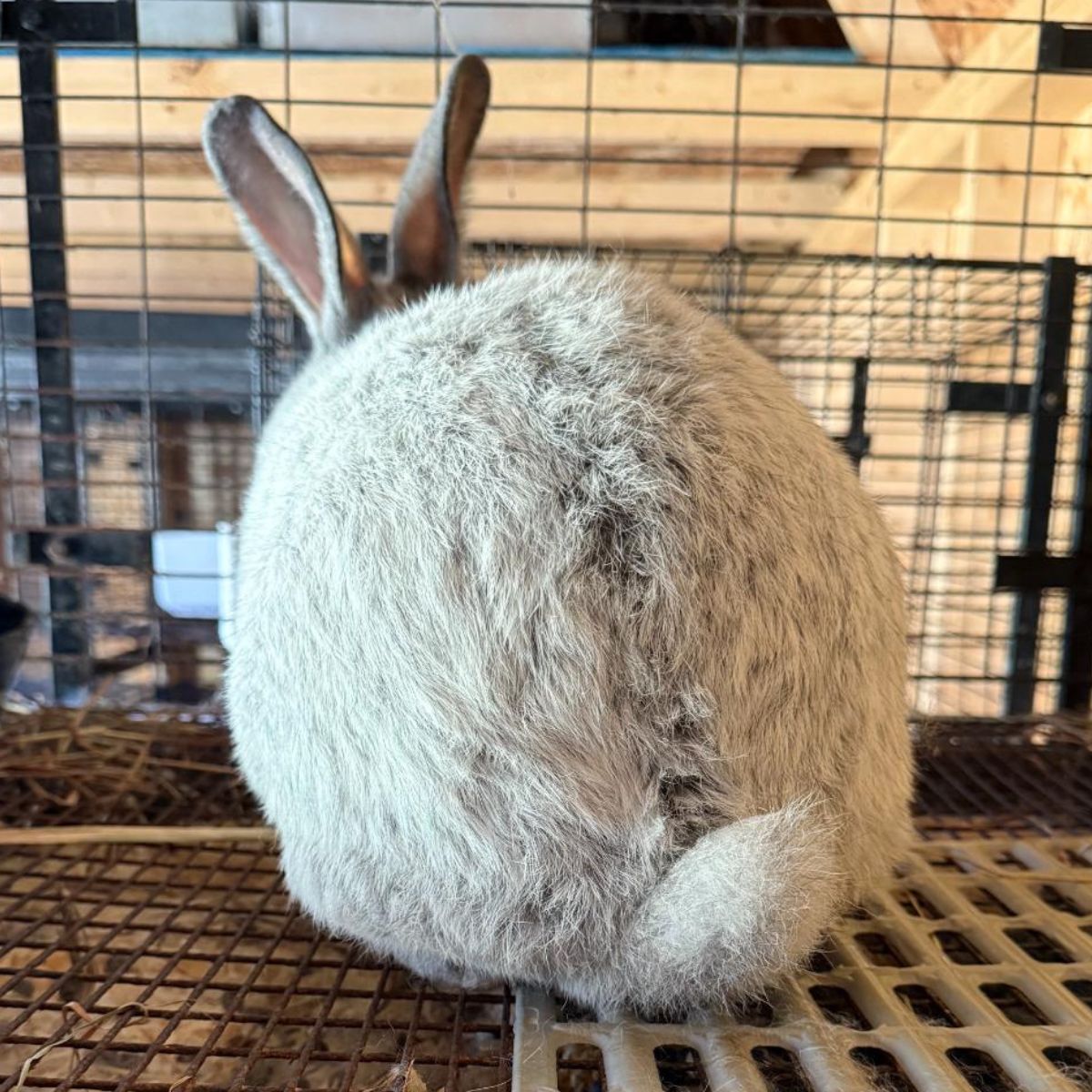
This year, I’ve added Champagne D’Argent meat rabbits to my rabbitry. Recently, I’ve completed weigh-ins on the first litter of kits from my first champagne d’argent kindling.
This litter is from Peony (the doe/dam) and Sunny (buck/sire). They are purebred champagnes from good stock, expected to produce fast-growing, thrifty, easy keepers.
The kits were grown on 16% pellets from Poulin Grain with free choice hay fed in cage-mounted hay racks.
On this feed program, they were expected to be able to reach a weight of five pounds live weight by 10 weeks.
The results are in. How did they do?
Evaluating the Weight Results and Growth Rates
These results, compared with common weight and age targets for meat rabbits, show me how this litter has performed, and how quickly they reached common harvest weights. The more quickly those weights are reached, the more efficient their production is.
Common Harvest and Processing Targets
Targets for harvesting and processing (slaughtering, butchering) are typically a goal of weight and/or age. Read more about common meat rabbits processing ages and weights here.
The most common target for processing meat rabbits is five (5) pounds of live weight, which you would hope for your rabbits to hit by 10 to 12 weeks of age.
Another common target (and my preferred harvest goal) is 16 weeks of age. If you are harvesting at 16 weeks, you are probably doing so for one or two reasons:
- You want larger carcasses and more meat
- You want to keep and tan hides (hides less than 16 weeks are not good for tanning)
When people choose to process at 16 weeks, they may be a little less focused on hitting a weight criteria, but still, you’ll want to maximize the animal and you want it to be at a good, healthy, worthwhile weight.
For 16 week old meat rabbits, you should be targeting a live weight between seven (7) and eight (8) pounds.
Champagne D’Argent Weights, from 4 through 16 Weeks of Age
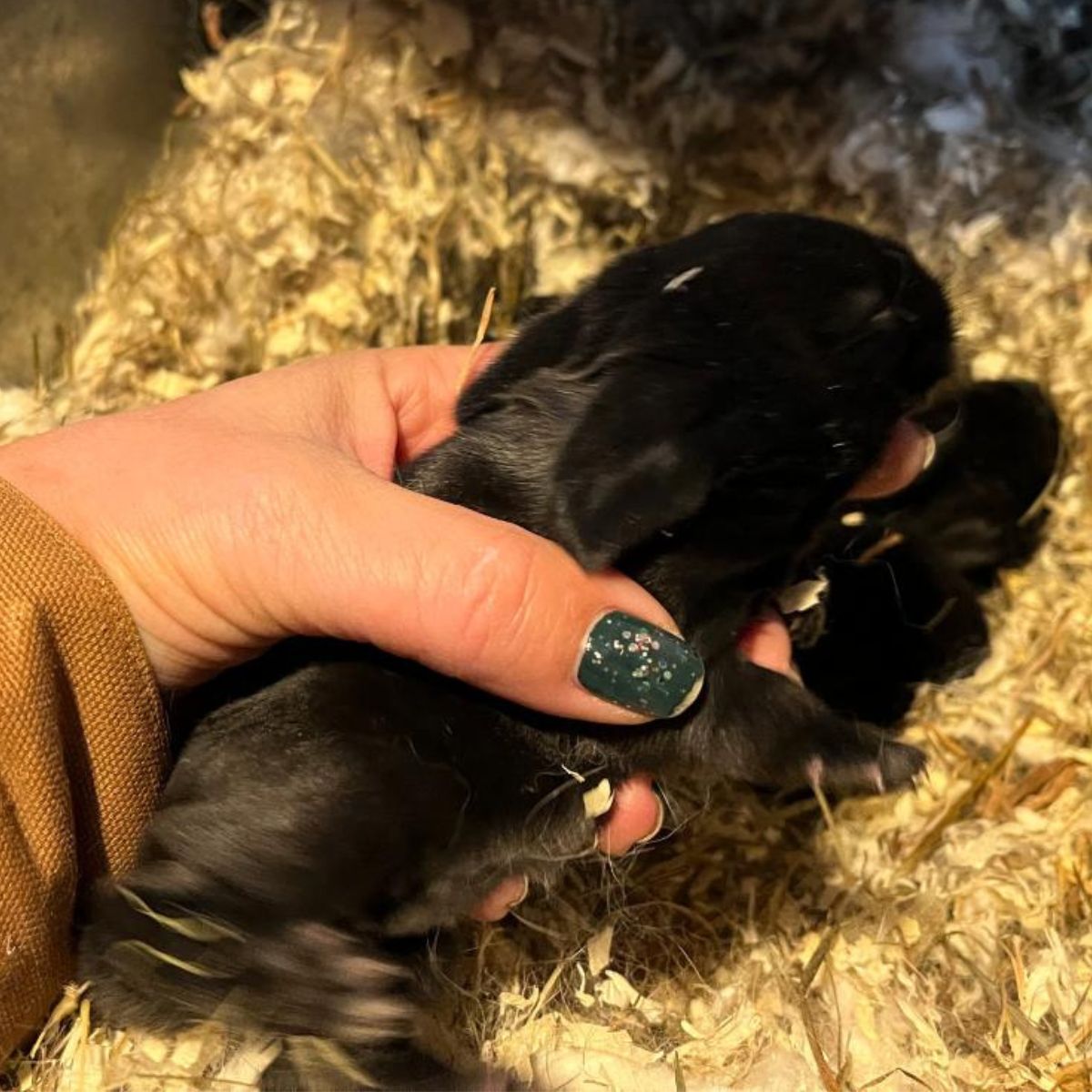
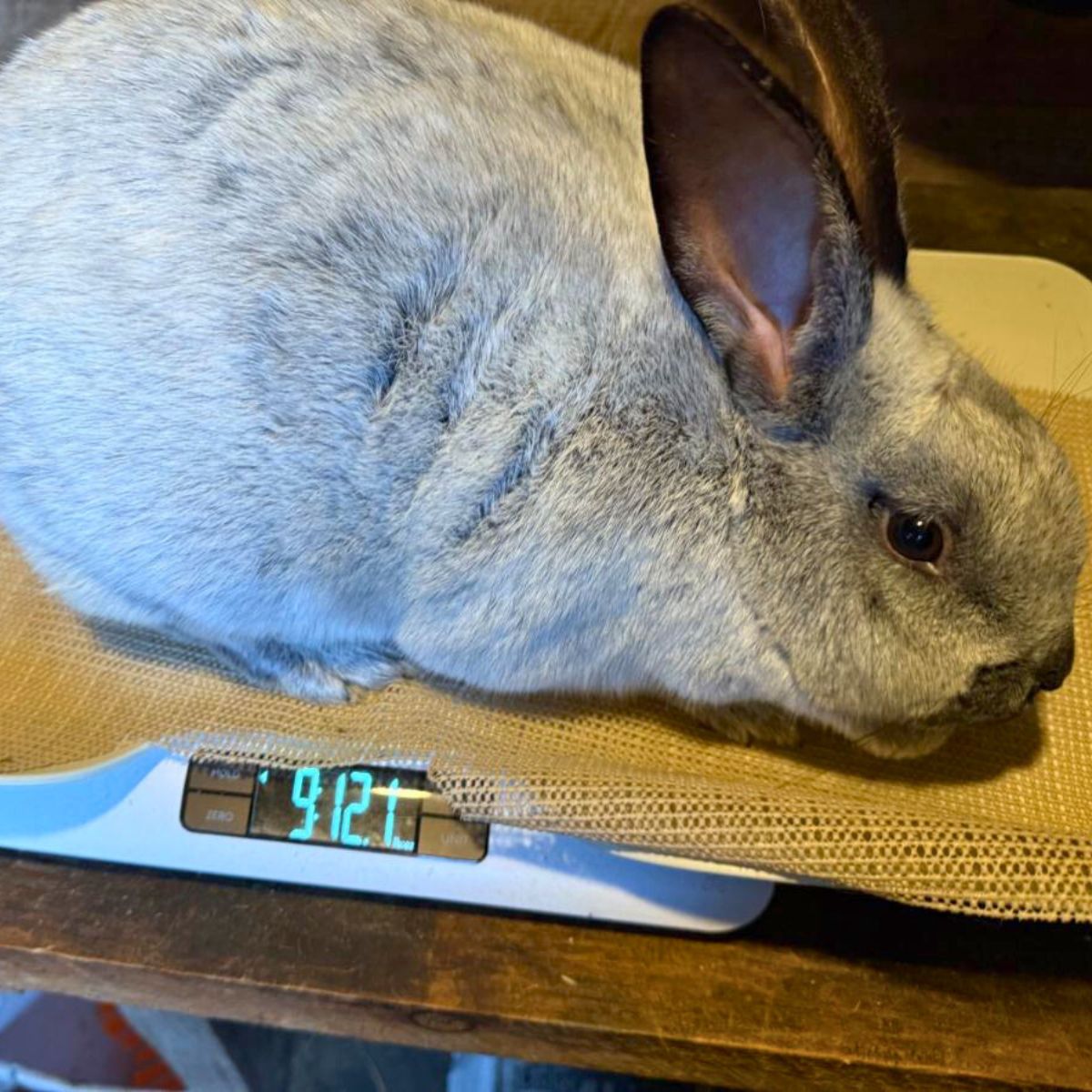
There were four kits in this litter. I started weighing them before they were weaned, at four weeks of age. Following are their weights at two-week intervals.
4 Week Weights:

- 1 lb 10 oz
- 1 lb 10 oz
- 1 lb 9 oz
- 1 lb 10 oz
6 Week Weights:

- 3 lbs 1 oz
- 3 lbs 1 oz
- 2 lbs 13 oz
- 3 lbs 1 oz
Update on My First Litter of Champagne D’Argent Meat Rabbits
8 Week Weights:

- 4 lbs 6 oz
- 4 lbs 9 oz
- 4 lbs 4 oz
- 4 lbs 8 oz
Champagne D’Argent 8 Week Weigh In. Watch these kits grow!
10 Week Weights:

- 5 lbs 8 oz
- 5 lbs 12 oz
- 5 lbs 3 oz
- 5 lbs 12 oz
Champagne D’Argent Grow Outs 10 Week Weigh In -- More than hit their harvest weight!
12 Week Weights:

- 6 lbs 4 oz
- 6 lbs 8 oz
- 6 lbs 3 oz
- 6 lbs 10 oz
12 Week Champagne D’Argent Weigh In
14 Week Weights:

- 7 lbs 1 oz
- 7 lbs 3 oz
- 7 lbs 1 oz
- 7 lbs 7 oz
14 Weeks Old: Champagne D’Argent Weigh In + Color Change Update
16 Week Weights:

- 7 lbs 13 oz
- 7 lbs 15 oz
- 7 lbs 9 oz
- 7 lbs 15 oz
16 Week Champagne D’Argent Weigh In + Breed Update
Why Track Weights of Meat Rabbit Grow Outs?

Keeping track of kits by weighing and evaluating them at different ages and stages does different things. It can
- Show you if different matings or crossings make good grow outs for harvest
- Tell you if you are hitting your goals for age and weight
- Show you how efficiently your kits are converting to meat
- Give you a growth record for prospective buyers, especially buyers who want breeding stock or show rabbits
- Help you decide which grow outs might be good candidates to hold back as replacement breeders or which grow outs might help you boost weights and growth rates
- Give you valuable information for making decisions such as breeding and selection
- Reveal if performance is slowing or falling off
- Tell you when it is time to harvest and put meat on your table!

Tracking and record keeping is interesting and even a bit of fun. But it is valuable information to have, too. Without weighing and tracking, it’s really all a guessing game. For the best production, performance, and progress in your rabbitry, taking some weights and tracking some factors can be quite revealing. And helpful!

Leave a Reply