
Rabbits are typically easy to get started with, and it’s not too hard to transition new rabbits to a new home. There are some things you can (and should) do to set yourself up for an easier transition, for good rabbit health, and for success.

Here’s a guide to help you through bringing new rabbits home and introducing new rabbits into an existing rabbitry safely.
Jump to:
- Bringing New Rabbits Home Starts BEFORE You Get Them
- Transporting New Rabbits Home
- Quarantining Rabbits for the Safety of All
- Moving is Stressful
- Hold Off on Handling
- Transitioning Rabbits When They Arrive
- Make Sure New Rabbits Are Drinking, and Consider Your Waterers!
- Move New Rabbits into the Rabbitry
- Most of the time, things go right, so don’t worry, and don’t be overwhelmed!
Bringing New Rabbits Home Starts BEFORE You Get Them
Before you go to pick up your rabbits, you should get things situated at home. That way, they’ll be able to get housed, fed, and watered quickly and reduce transport stress.
- Have your cages built, ready, and waiting
- This includes having fresh, clean crocks, feeders, or water bottles (whatever you’re using) ready to fill and serve
- Have food and hay ready to feed them (don’t make them wait while you run out, and don’t get stuck with no food in case it ends up being after hours when you get home)
- Set up cages in a quarantine area away from your other rabbits (see below)
- Get cages ready before you go to fetch the rabbits so that they can quickly get into their new homes when you get back – they'll need fresh air, food, and water as soon as possible
Transporting New Rabbits Home

Here’s how to make sure the rabbits ride safely and comfortably with as little stress as possible.

- Be prepared with safe carriers or boxes with holes
- Cat or small animal carriers work well
- Three-hole rabbit carriers (the kind that people use for rabbit shows) are a good option if you have them, but they may be more of an investment than you want to make if you won’t be frequently transporting rabbits
- Carriers should be small enough so that the rabbits can’t move and harm themselves too much but large enough to comfortably accommodate the rabbits for as long as needed (BHA Rabbitry suggests 12x12x18 minimum for transport)
- Make sure carriers have air holes!! This is important if you are using boxes or other crates!
- Cut one or two inch holes in the tops and sides of boxes or carrieirs if they do not have ventilation.
- If it’s a long trip, more than a few hours, the rabbits will need an option for food and water along the way
- Stop after three or four hours and offer water
- Line the bottom of the carriers or boxes with some bedding, hay, or straw for comfort and safety. Hay is a good choice because it will give the rabbits something to nibble on.
- Before you go to pick up the rabbits, ask the seller/breeder how many carriers you need and how the traveling rabbits should be grouped. This ensures you have enough carriers.
- Don’t expect your breeder to provide boxes or carriers.
- Young littermates may do better traveling together in a carrier, while older rabbits, breeding-age rabbits, and rabbits that are unfamiliar with each other are likely to fight, so they should not be kept in the same carrier.
- Let the breeder guide you and take their advice on who should or shouldn’t travel or be housed together.
- If in doubt, you’ll always be safest keeping individual rabbits separate both in travel and in housing.
- Remember that breeding-age rabbits can and will breed on the way home if you put them together (and then they might fight when they’ve had their fun)! This includes related rabbits and litter mates of breeding age!
- If the animals are riding in the back of an open truck, they’ll need protection from constant sun and possible rain
- If in a car or cab, keep the temperature cool – rabbits overheat easily! If that means you need to bring yourself an extra sweater for riding comfort, do so.
Quarantining Rabbits for the Safety of All

Even rabbits that look healthy by all accounts can carry illness or parasites. Stress tends to bring these things out because it lowers the rabbits’ immune systems (not unlike us).
For this reason, it is best to separate and quarantine new rabbits away from your herd. This gives you an opportunity to look for signs of illness like sneezing, lethargy, diarrhea, or worms, or parasites like mites.
Watch and observe before you mix new rabbits in contact with your existing rabbits so that a small problem doesn’t spread like wildfire.
- Keep new rabbits separate for at least two weeks; 30 days is best
- Watch and observe for signs of illness, pests, or disease
- Ideally, new rabbits will be housed in another room, building, or section of barn, or an area outside that is removed from where your current rabbits are
- At the very least, move new rabbits’ cages several feet away from your rabbits; some things will spread through the air, but most conditions require animal-to-animal contact
- Do not breed new stock to old stock until you are confident they are healthy
- Do not put new rabbits next to other rabbits where they can touch and share wire
- Make sure the room or area is well-ventilated
- If the cages are close enough that rabbits can spray each other (two or three feet), put up a solid board to separate them and their urine spray
- Feed, water, and care for newcomers last when you feed each day
- If grooming or maintenance needs to be performed on your rabbits, leave the newest and care for them last
- Wash your hands or at least use hand sanitizer after handling new animals (and it doesn’t hurt to sanitize between your rabbits and the new ones, either)
If a new rabbit shows signs of illness or parasites:
- Remove sick animals from the rabbitry altogether
- Treat when possible or practical and extend quarantine for sick rabbits for another 30 days
- Consider culling (a hard but perhaps necessary decision – why it’s important to do what you can to buy from reputable, quality breeders, inspect before you buy, and if you can, see where the rabbits are housed)
- Disinfect cages and feeders from sick rabbits
Moving is Stressful

Rabbits do get stressed from being rehomed and this can lower their immune response. It can also result in injury if they jump and flail suddenly.
Do what you can to keep loud noise, disruption, and frightening sounds or actions to a minimum during the first several days.
- Try to keep loud noise and stress to a minimum in the rabbitry, especially in the first few days
- Keep in mind that your rabbits may be used to the regular noise and activity of your home and yard, but newbies will not; give them time to get used to your noises
- Limit pets in and through the room; not all rabbits will know what a pet cat or dog is and your pets are likely to be curious
- Talk to young children about moving slowly and quietly if they will be in your rabbit area
You can add supplemental immune boosters to rabbit water if you like. This is a good time to use Rabbit VetRx to give a bit of a boost and help support the immune system. Don't overdo it on the supplements because one thing you do not want to do is disrupt their gut biome and GI health.
Hold Off on Handling
Hold off on handling new rabbits until they look more comfortable and adjusted to their new surroundings. This should only take a few days, maybe up to a week. After that, you can start petting and handling them as you would your other rabbits.
Watch the rabbits’ body language. You’ll know when they’re feeling more at home.
Transitioning Rabbits When They Arrive

Transitioning new rabbits to your food and feed program is one of the things that is most likely to cause them upset. GI stasis and bloat can result if a switch is made too abruptly, and the rabbits' digestive tracts don’t have time to adjust and create the right probiotic/microbiome to handle it.
There are a few things you can do to prevent this:
- Transition the rabbits over to your feed gradually
- Either ask the seller for a small bag of their feed or find out what the feed is (exactly) and buy a bag of that so you can make it a gradual transition (you’ll want one to two quarts per rabbit)
- Transition the rabbits to the new feed over a period of 7 to 10 days
- On day one, feed just the pellet they are used to and free-feed hay
- Starting on day two, mix a small amount of your feed into the feed that came with the rabbit (or whatever feed it is used to)
- Each day, add more of the new pellet to the bag until by around day 7, all that’s in the bag is your new feed
- From here on out, just feed according to your feed program
- If you plan to feed fresh or green grass or plants and the rabbits have never had it, wait to make that transition. Don’t start until week two or later, and then only offer a small amount at a time, building up from there.
- Rabbits especially need time to adjust their gut from a dry and pellet diet to a fresh plant diet
Hay is a good feed, even if you don’t plan to feed it all the time
Hay is always smart to feed stressed or new rabbits. If in doubt and the rabbits seem to be showing signs of digestive stress, take away pellets, feed only hay and water, use gas drops if needed, and slowly reintroduce pellets when they look more comfortable and more active.
Decreased appetite is normal for the first couple of days
Don’t worry if the new rabbits don’t eat pellets for the first few days. This is not uncommon, and their appetite should rebound quickly. Offer hay during this time to help cover.
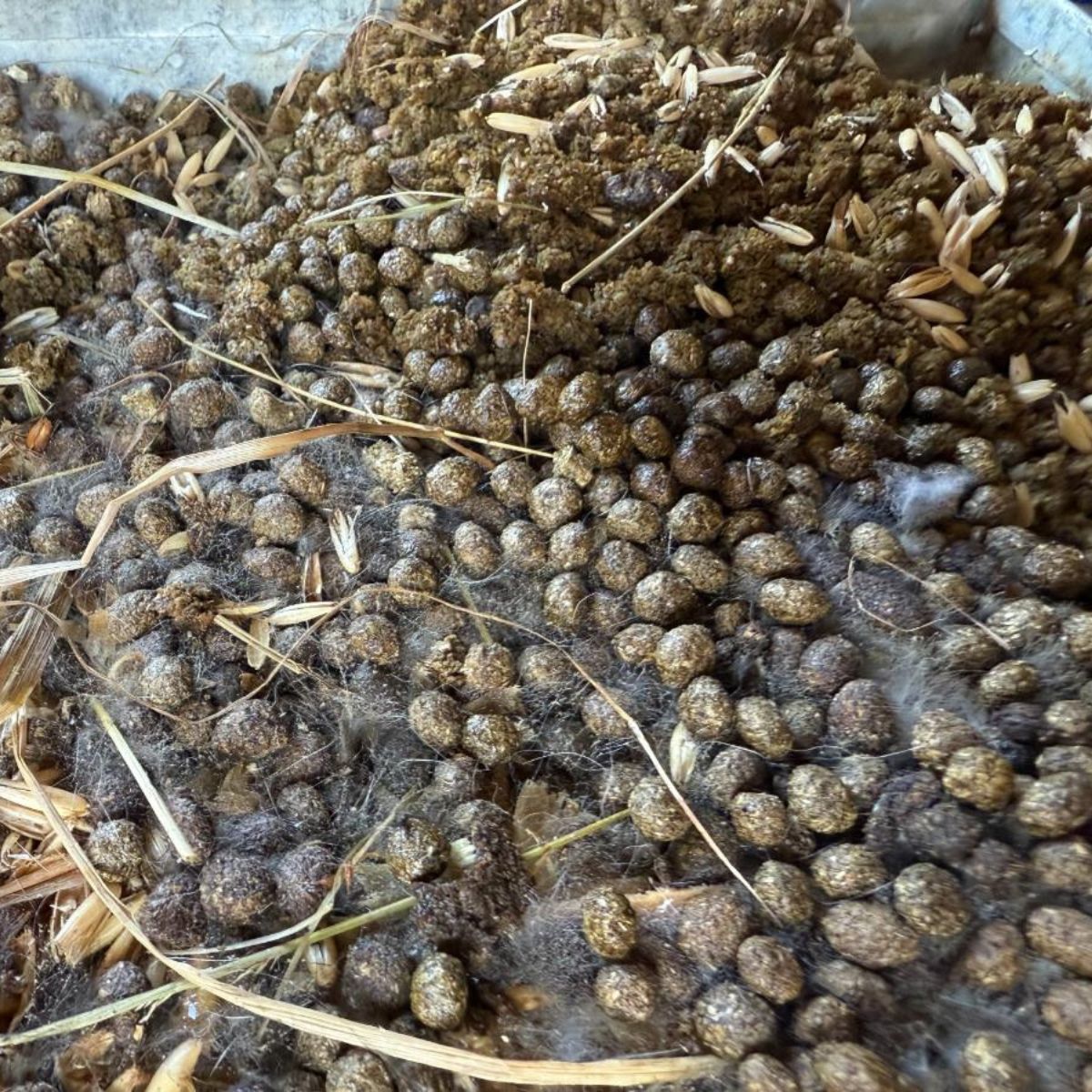
Watch manure for signs of problems
Watch manure droppings for signs of something being off. The fecal pellets should look normal, slightly moist, not too dry, not runny and no diarrhea. They should not be excreting mucus. Feces should be small, round, and well formed.
Any variation of this is cause for closer observation and concern and perhaps action. Check the rabbits a few times each day and more frequently if they display symptoms of digestive problems.
Probiotics are good prevention and treatment
As insurance or in response to problems, you can add some probiotics to the water or feed to help restore gut balance and get their digestive tracts working properly again. Just sprinkle a half to one hole capsule (broken open) or a similar amount into water or over pellets. Water may be a better delivery system, since rabbits might not eat but will usually drink.
Make Sure New Rabbits Are Drinking, and Consider Your Waterers!

Water is water, and there isn’t much you need to worry about here, but there are just a couple of things to consider:
- Your water may taste or smell different, especially if your water comes from a treated (chlorinated) municipal supply
- Rabbits aren't likely to not drink your water, but they can be slow to accept it.
- A trick of people who show rabbits (and so may at times have to give water other than their own) is to add a little VetRx or apple cider vinegar to mask the new taste but keep in mind that that might be a new taste, too if the rabbits are not used to drinking it
What I worry about more is about how the rabbits are used to drinking.
- What style of waterer are the rabbits used to?
- Were they using bottles?
- Did they drink from a nipple system in an automatic watering setup?
- Are they used to drinking from crocks?
- Will they know what a bottle or automatic nipple is?
It is helpful to have a spare bottle or crock around just for this purpose. You can transition the rabbits onto your preferred style of waterer (which, for me, is cage cups). The most important thing when your rabbits first arrive, though, is that they drink water.
If the rabbits are used to a different style of waterer, offer them both in the beginning. Usually, rabbits that drink from bottles will be quick to take to open water like cage cups or crocks (and they may even prefer them and drink more water from an open source).
Rabbits that are used to an open source like a cage cup or crock are more likely to be confused by metal bottle nipples or automatic waterer nipples, and they may not drink at first.
When you are sure that the rabbits are using your preferred system, take away the other option.
Some rabbits may need more convincing (especially if moving to a bottle or nipple), which means you may have to offer only that option so they are forced to use it, but if that is the case, wait until they have recovered from the journey and adjusted to your rabbitry so they don’t endure additional stress and you can make sure they stay hydrated well through the worst of their transition. Then, keep an eye on them to make sure you see them using the waterer from time to time when you do make the switch.
Move New Rabbits into the Rabbitry

Assuming all goes well through the transition and quarantine period – and rest assured that usually, it does – then you can move the new rabbits to more permanent settings in your rabbitry. Assign them a cage, start breeding, and you’ll soon be in business!
Most of the time, things go right, so don’t worry, and don’t be overwhelmed!
Though guides like these can be a lot of information to take in, and they sometimes make it sound like it’s overwhelming and difficult to keep meat rabbits, most of the time, they really are not. But we should all be prepared and have some resources to help us as we go.
Just don’t take meaningful information and advice as a warning against keeping rabbits. Don’t be scared off. Meat rabbits are easy to care for, breed, and maintain most of the time—as long as you’re armed with good knowledge to put you on the right track!

Leave a Reply