
When you raise meat rabbits, you don’t just get meat. Yes, meat is the primary reason to raise meat rabbits, but there are a number of products you can get from a rabbit. We’re listing eleven, but when you expand each category, the number is far larger.

Let’s look at all the things you can really get from your meat rabbits.
Jump to:
11 Things You Can Get from A Meat Rabbit

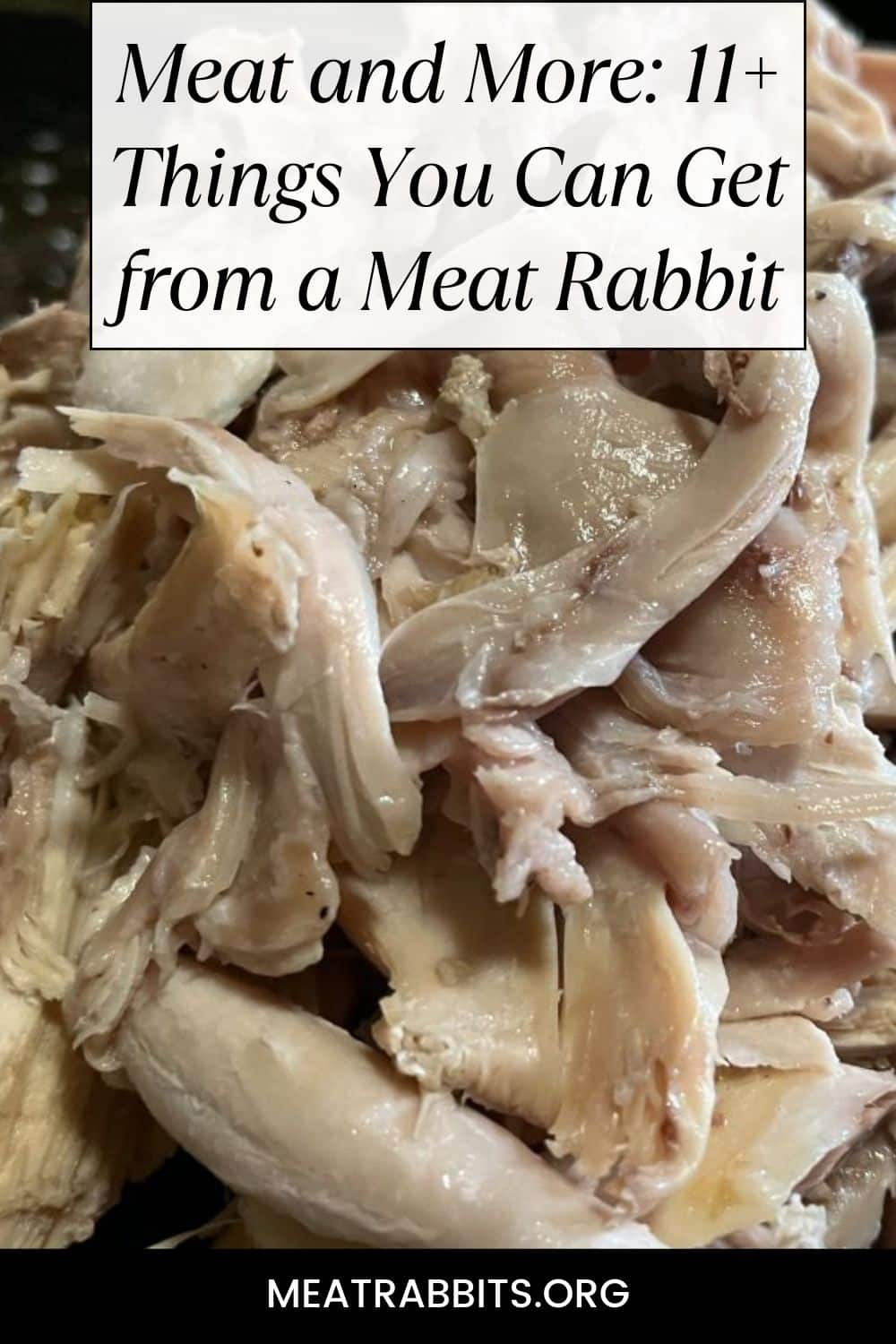
- Meat. The average young fryer, at just 10 to 12 weeks old, will dress out between two and a half and three pounds of meat (bone-in). The average roaster at 16 weeks old, just four weeks later, will dress between four and five pounds or more.
- Bones. Rabbit bones make excellent stock and bone broth. Some people even grind down the bones after making broth for bone meal for the garden. Bones are certainly a secondary product worth using and not a waste product.
- Organs. The liver, heart, and kidney are all organs that people make good use of (with nutritional benefits, too!). The organs of rabbits are more mildly flavored than larger animals. They are more in line with chicken or poultry organs. The liver makes a fast and easy pate, useful as a spread, hors d’oeuvre, or for sandwiches. If you’re not into organs yourself, they can be used for dog food or treats. For them, lungs and other organs can be used, too.

If all you use from your meat rabbits are the meat, bones, and organs, or even just the meat and bones, you have made good use of your rabbits and gotten a lot out of them. A single roasting rabbit can be a meal or more, and the bones will make an excellent broth that can be used by itself or as the base for another meal’s gravy or soup broth. This is still a high-use, low-waste scenario.
But your rabbits have even more to give—including the following:
- Fat. Rabbits do not have a lot of fat, but the older the rabbit is, the more fat there will be. While a 10-week-old fryer will have next to no fat, a 16-week-old will have noticeable fat deposits, and a 20-week-old or older rabbit will have larger deposits still and larger fat deposits over the shoulders. By no means is this a lot in any rabbit, not compared to what you’re used to seeing in other types of meat.
The thing about rabbit fat is that it is not marbleized the way beef fat and pork is. It is on the surface mostly over the shoulders and inside the body cavity after organs are removed. It can be pulled away very easily, so if you don’t want fat in your meat, you can easily remove it to use elsewhere. Or leave it if you like it!
Where else might you use rabbit fat? Well, it can be rendered like lard for a healthier cooking fat. Some people use it to make tallow candles and soap (similar to how beef fat is used for crafts like these). You can collect it (keep an “add on” container or bag going in the freezer) and use it when you want to make rabbit ground rabbit or sausage, so it’s moister and more cohesive. It can also be fed to animals, including pets and chickens. - Blood. Rabbit blood from processing can be diluted and poured around garden and landscape plants in place of bone meal.
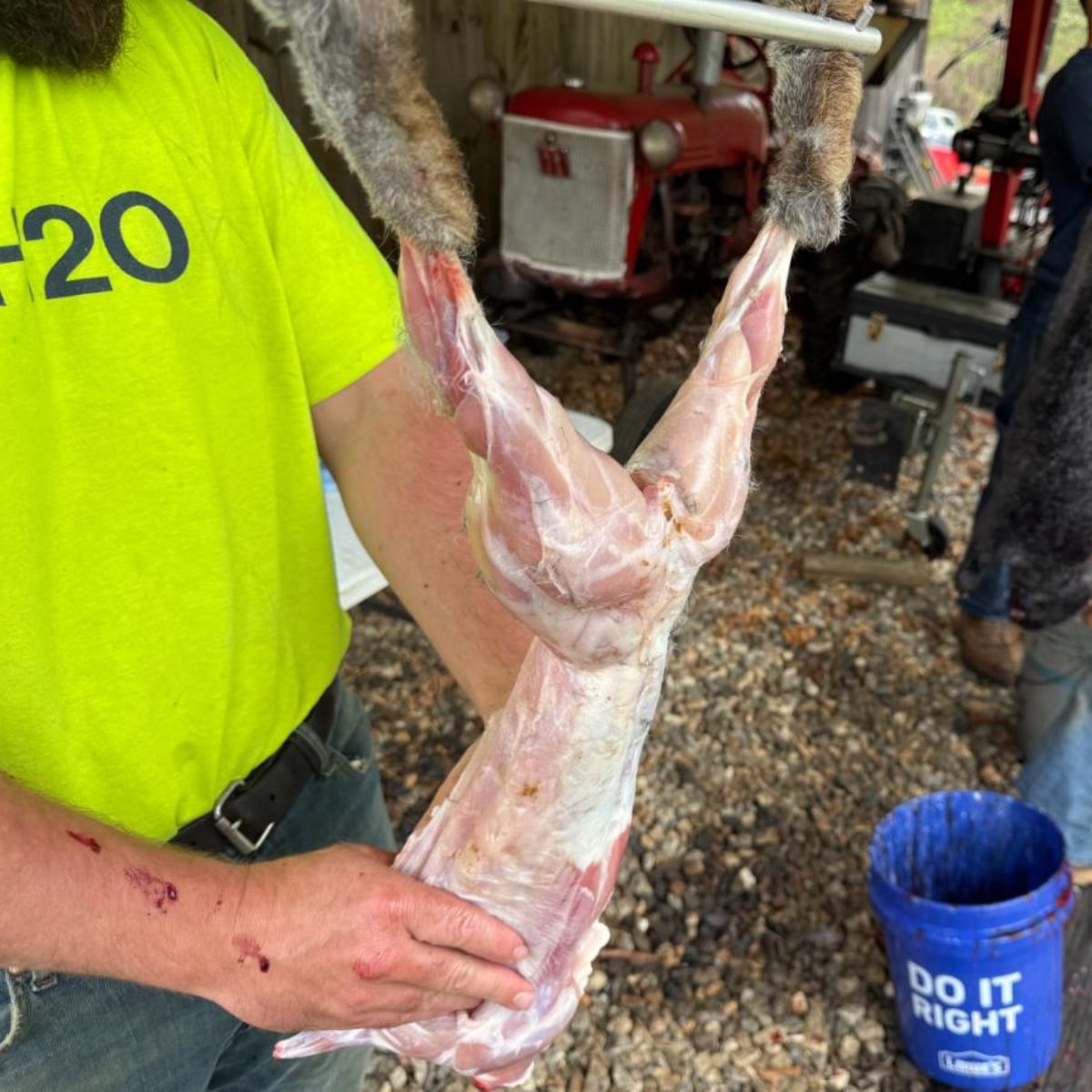
- Hides. Hides have many uses. They can be tanned and used for clothing, hats, gloves, mittens, and more. If that’s not your thing, they’re also used as dog food and treats. Some hunters and dog breeders or trainers may be interested in them as training aids, too.
- Dog chews and treats. There are a few parts of the rabbit that can be used for dog chews and treats. Some are byproduct discards, like hides. The ears and feet are good dog chews. Hides can be cut into serving-size strips. They can be dehydrated or dried (outside—it stinks when you dehydrate them!). They can also be frozen and thrown to the dogs straight from the freezer. Many raw dog diet feeders and others like a rabbit for chews because the fur is a natural food that dogs evolved on, and the fur is a natural dewormer.

- Dog food. For people who feed a raw or prey diet or even cooked homemade dog food, rabbit is essential. Dog owners who have dogs with allergies are often seeking rabbit meat because they tend not to be allergic to rabbit meat.
You are apt to find a lot of interest in your rabbits for this purpose once word gets out that you raise meat rabbits. Rabbit can be fed as a whole rabbit, fresh or frozen, or as ground. The whole rabbit can be ground, bones, and all. Most of the rabbit (and sometimes all) is used in these types of feed programs. These people are also often willing to just buy your discarded hides, innards, organs, and parts. Selling rabbit as pet food is generally easy and unregulated, making it a much easier point of sale than selling rabbit meat for human consumption (all depending on where you live). - Exotic pet foods and wildlife rescue food. Rabbits, especially young rabbits and kits, are used as feed for exotic animals like snakes and are valued by wildlife rehabbers because they are a natural—and hard-to-obtain—food for recovering wild animals like owls.
Unfortunate to say, but there will come a time when you lose young kits at birth or soon after. It happens. But when it does, assuming the death was from complications of birthing, cold, because the kit was a runt, poor mothering, or failure to thrive (in other words, not disease), that short life can still be put to good use to support another.
Freeze the lost kit(s) immediately and contact a wildlife rehab group. It’s smart to identify a group ahead of time so that when you have animals they can use, you know just where they can go. Also, you can get information ahead of time about what stage, size, and age of rabbit they can use, along with any other important information. - Manure and waste. Rabbit manure, waste, and soiled bedding are excellent fertilizers for the garden. They are great to add to compost, too, though one of the biggest advantages of using rabbit manure is that it is a “cold” manure that does not have to be composted or aged before it can be used. This is also a valuable garden amendment and mulch that you can sell—and yes, there’s a market for it!
- Interest and Enjoyment. When you enjoy raising meat rabbits, you’ll find a lot to take an interest and enjoyment in. Raising rabbits can also be very educational for children, and many a homeschool, farm club, or 4-H project has been taught or built around meat rabbits. There’s nothing to say that just because you will be eating the rabbits, you shouldn’t enjoy them. In fact, the opposite is true. You should enjoy your rabbits. You should treat them well. And you should feel good about how you raised the meat you eat, knowing exactly how it lived and what went into it (and what didn’t!).
So Many More Ways Rabbit Can be Used—and Useful

Each of the things listed has exponentially more ways in which they can be used. Consider the myriad ways you could use rabbit meat—all the different dishes and recipes. Just a few favorites off the top of my head are:
- Roast seasoned rabbit
- Bone broth and soup stock
- Rabbit stew
- Rabbit noodle soup
- Rabbit tacos (what we affectionately call “Racos” in my house full of smart alecs)
- Rabbit Quesadillas (Ruesadillas)
- Enchiladas (you get the gist)
- Burritos
- Chili
- Rabbit Marsala
- Pulled barbecue rabbit
- Rabbit salad for sandwiches (use any chicken salad recipe and substitute cooked rabbit)
- Rabbit nuggets
- Meatballs or loaf
- Stir fry
- Pot pie!!
An easy way to think of how you can use rabbit meat is to treat it like chicken. Use rabbit instead of chicken in any dish or recipe you would use chicken in or that calls for chicken. (But don’t necessarily stop there—no limits! Rabbit is not a “lesser” chicken! Quite the opposite!)
More and Best Use Makes Meat Rabbits More Cost-Effective

It's worth considering all of what you can get out of your meat rabbits because the more you can get out of any animal, vegetable, or product you grow, the better it is. The more cost-effective and efficient it is. Suddenly, your expenses, spread over the many products you are really reaping, become less. There is more for you to use yourself, and you may find some things that you can sell or barter to make them turn a profit or to reduce your costs even further.
Look at all the ways that you can make good use of the meat, organs, and the carcass. Then, look at the byproducts, waste, and other potential parts of the rabbit that you or someone else can use. As the old saying goes, waste not, want not.


Leave a Reply