
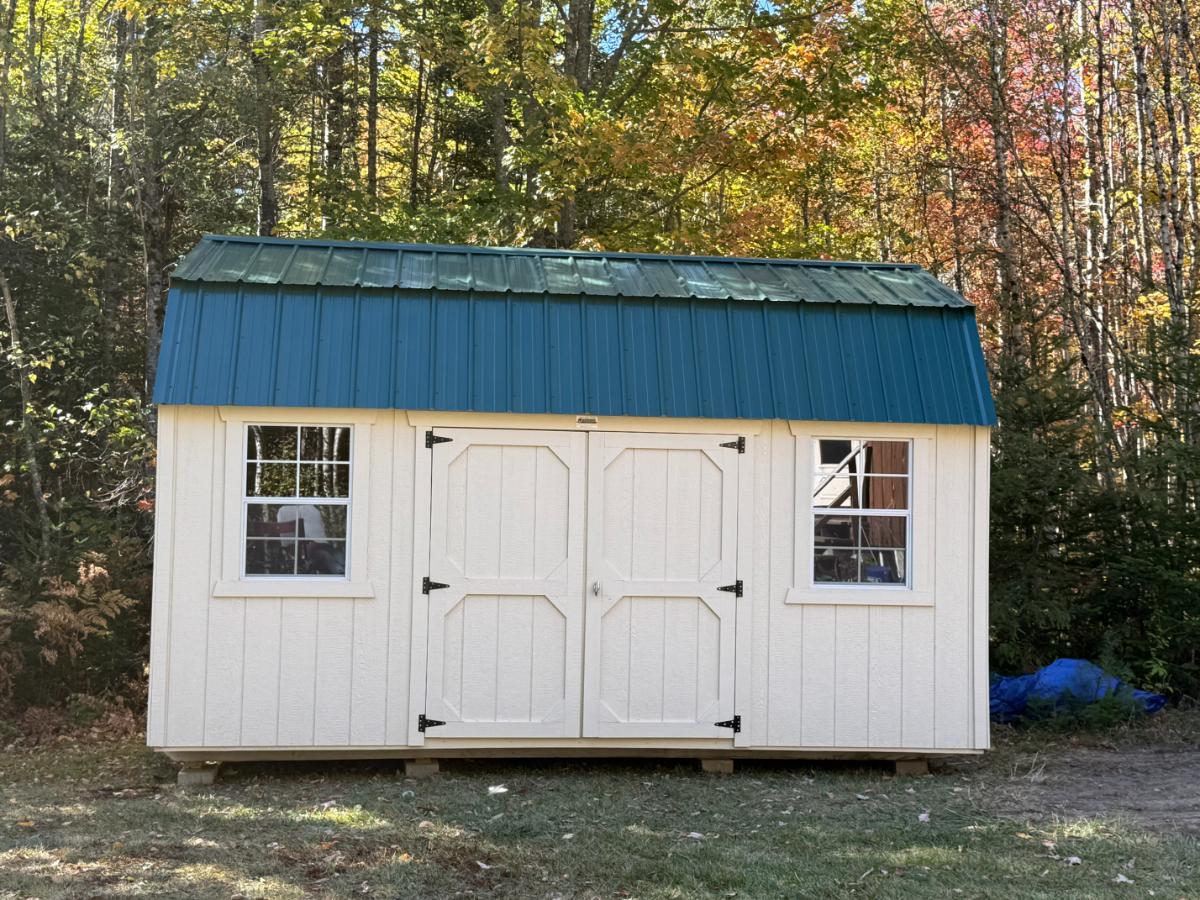
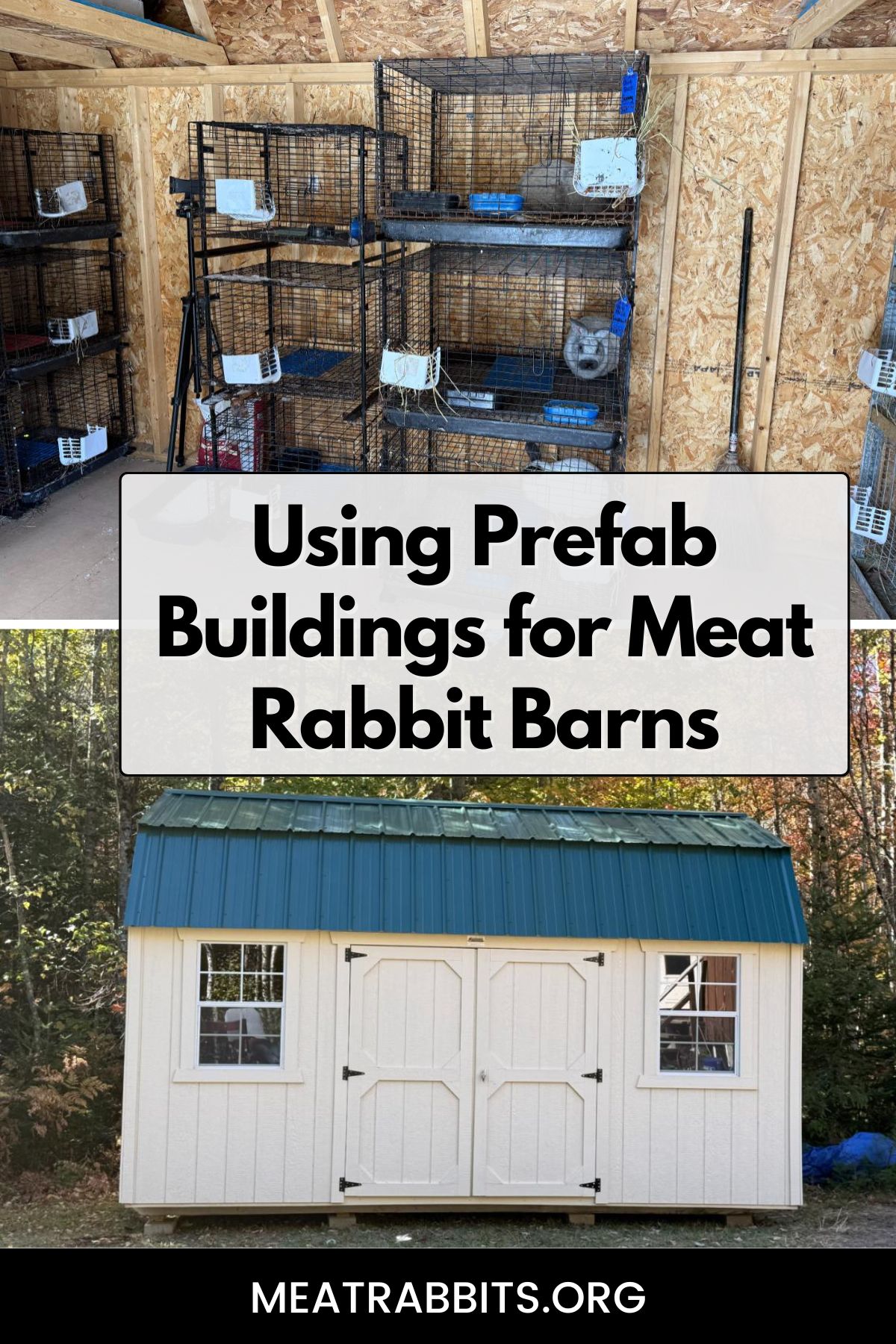
Prefabricated barns and sheds can make excellent rabbit housing and meat rabbit barns. They are available in different sizes and price points, with various features.
Jump to:
- Pros of Buying Prefab Buildings for Meat Rabbit Barns
- Cons of Prefab Sheds for Meat Rabbit Barns
- Choosing a Size
- VIDEO: Shopping for a Prefabricated Shed Mini Barn for Meat Rabbits
- Design Considerations
- Cage Layout Considerations
- Additional Features That Might be Worthwhile
- Upgrades to Think About
- VIDEO: Setting UP the Prefab Shed Meat Rabbit Barn
- Pre-built Structures Can Make Useful Meat Rabbit Barns
Pros of Buying Prefab Buildings for Meat Rabbit Barns
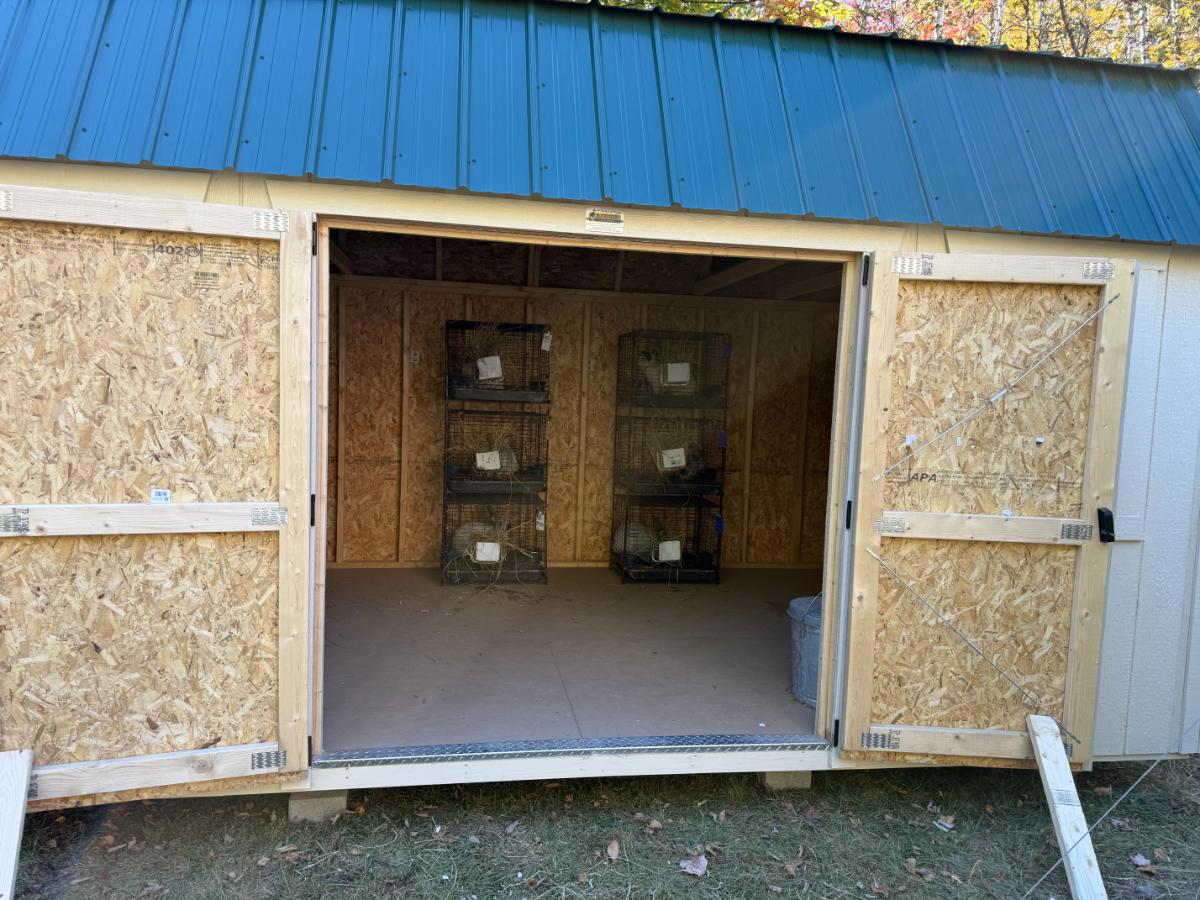
Rabbits can, of course, be housed inside or out. An enclosed barn offers a lot of benefits, chief among them protection from rain, wind, severe weather, and predators.
There are all sorts of structures you can choose from to house your rabbits. In fact, they don’t absolutely need a closed barn or shed at all, but if you’ve decided to go this route, it is well worth considering purchasing a prefabricated shed or small barn to house your rabbits in.
Prebuilt sheds and barns have the advantages of being
- Convenient
- No carpentry skills required
- Fast access to get a barn set up in a short time -- typically within weeks, weather dependent
- You can choose from display models, so you can see exactly what you’re getting -- good for those of us with limited ability to envision structures
- Affordable
- Long lasting
Cons of Prefab Sheds for Meat Rabbit Barns
- Limits to the size and design of the structure
- Prefab barns and sheds will typically only go up to about 14 feet wide, with most being more in the 8 to 10 foot wide range (typically due to delivery and placement ability)
- Though larger, wider prefabricated structures exist, the price goes up with them because trucking, delivery, and setting of the building will cost more
- Doors, windows, and design are set
- More expensive than stick built
- Possibly lower-quality building materials, but that depends on the company and on what you or your carpenter would use
Choosing a Size
The size of the barn is probably the most important feature when you are deciding on a barn to buy. You will first need to decide what size cages you will use, and how many rabbits [cages] you plan to house.
Something else you will need to decide is if you will use stacked cages or hanging cages. If you are using a stacking system, you can fit three tiers. Stacked cages are a good way to maximize floorspace.
When you are choosing the size of your rabbitry, you need to keep in mind cages and space for future grow outs. Even if you don’t have the growouts or their cages when you are buying the barn, plan for them. It’s easy to forget and underestimate the housing you will need for your grow out litters.
Also, think about how many litters you will have growing out at once. If you breed all your does at the same time, all their kits will need housing at the same time.
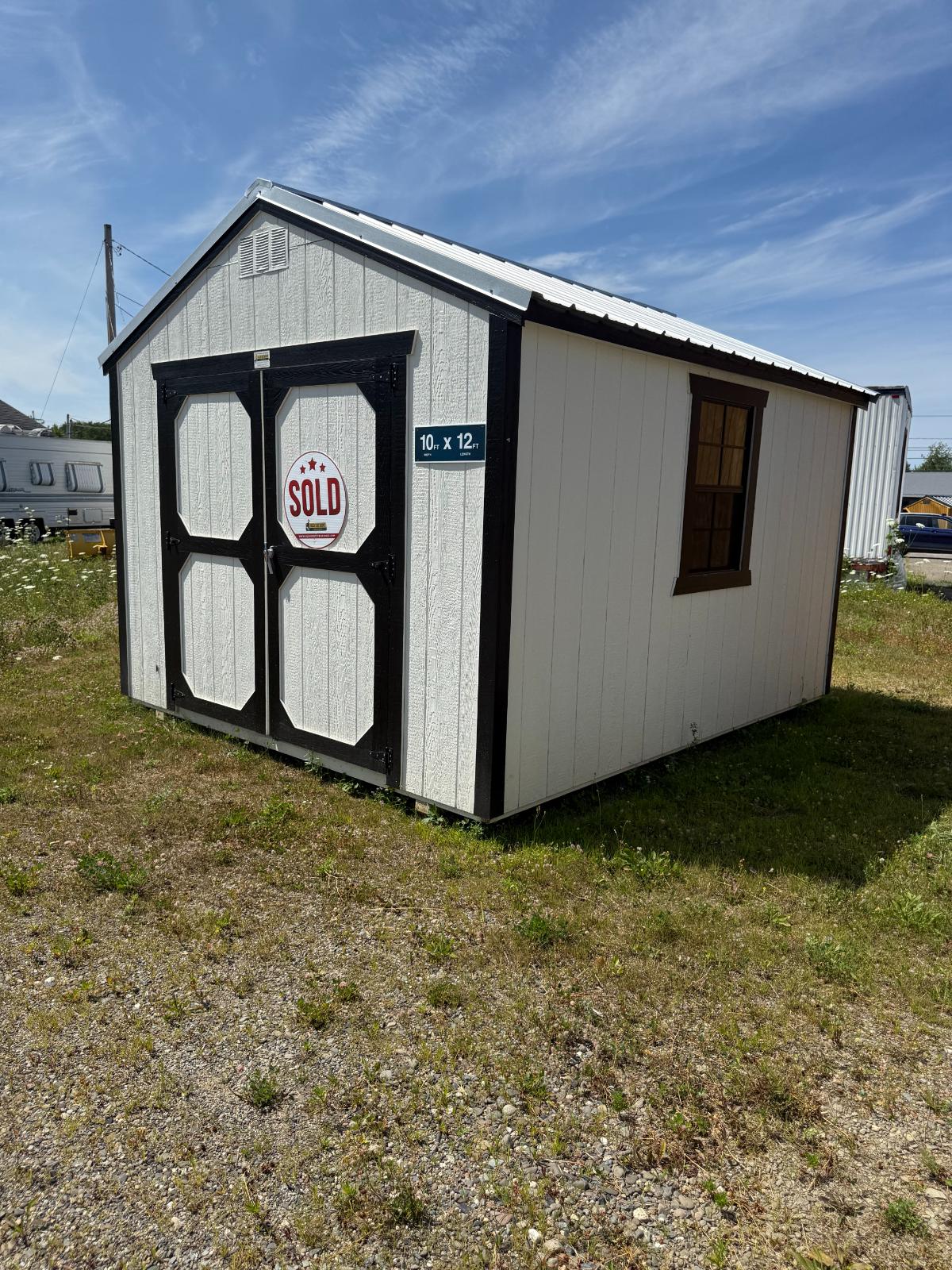
A small barn or shed of eight by ten or 10 by 12 is probably adequate housing if you only plan to keep one buck and one or two does, and if you grow out litters that will be harvested by 12 weeks. However, to make a building that size work, you should plan for stacking cages, at least for the grow outs.
A more comfortable size, if it is in the budget, is at least a 10-by-16 building. This allows for more room to grow and space for additional items like feed and supplies. A 10 by 20 building will be a bit roomier and can allow for an extra set of cages and supply space.
Considerations when determining barn size
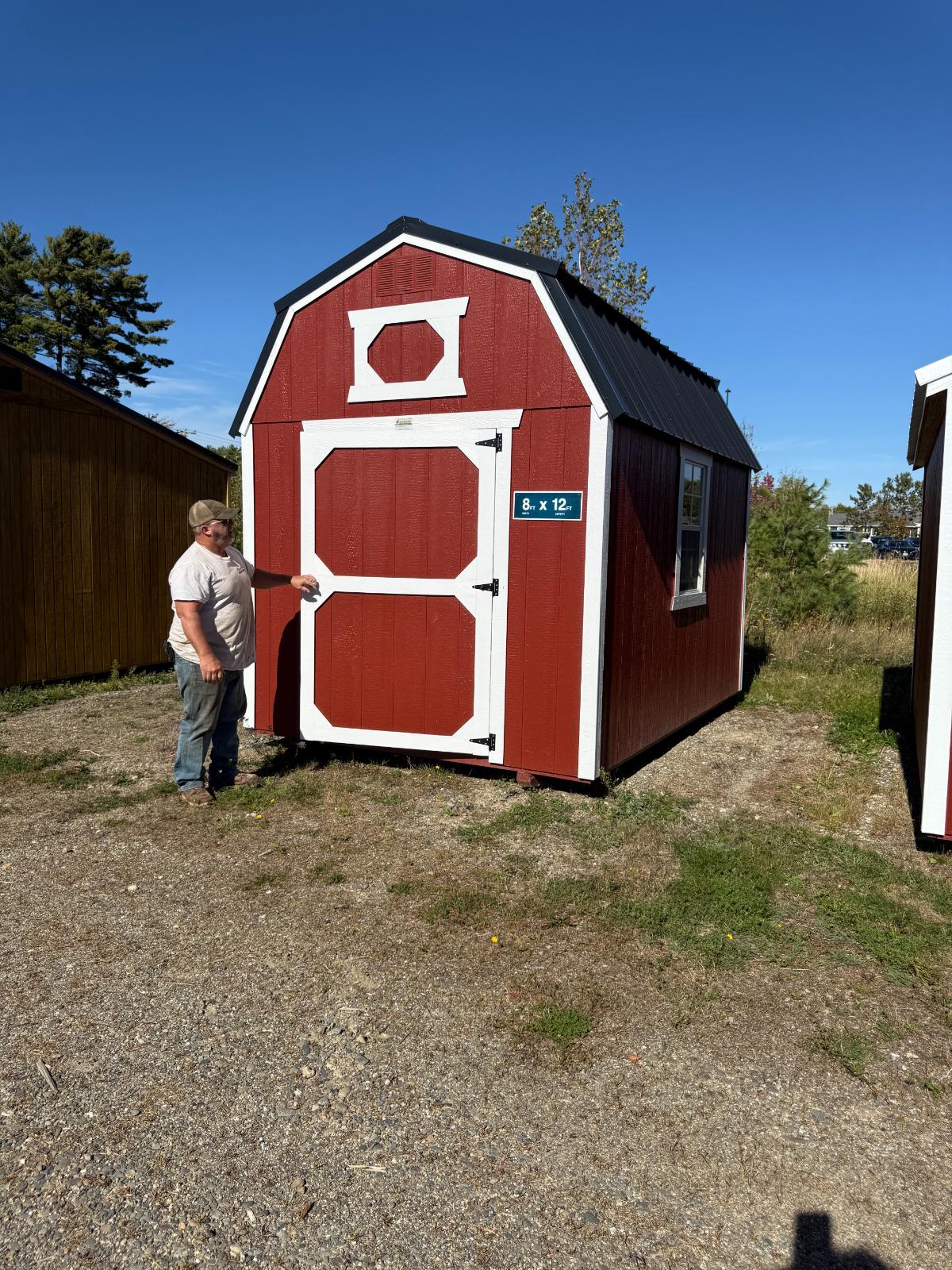
There are a few things to take into account when choosing the size of the barn. Common dimensions are 8 by 10 feet, 10 by 12, 10 or 12 by 16, 10 or 12 by 20 feet.
When you choose a size, there are some things you’ll want to keep in mind so that the cage space you think you have is really able to be achieved when given the constraints of use and arrangement:
- Building dimensions are listed/advertised for the exterior of the building
- Interior framing and studs reduce the interior dimensions
- Interior wall space and dimensions may not all be usable space, depending on the style of cages you use, cleaning system, and cage access (doors)
- Wider may or may not be better
- If the extra building width is not wide enough to allow for a middle row of cages and the working space around them, then the middle width may end up as wasted space at a higher cost
- If you are upgrading the size, it may be better to put the money into space, rather than just width (length may gain you more space than width; this may also depend on door placement)
- For the most part, the wall space is where your cages will be in this type of building
VIDEO: Shopping for a Prefabricated Shed Mini Barn for Meat Rabbits
Design Considerations
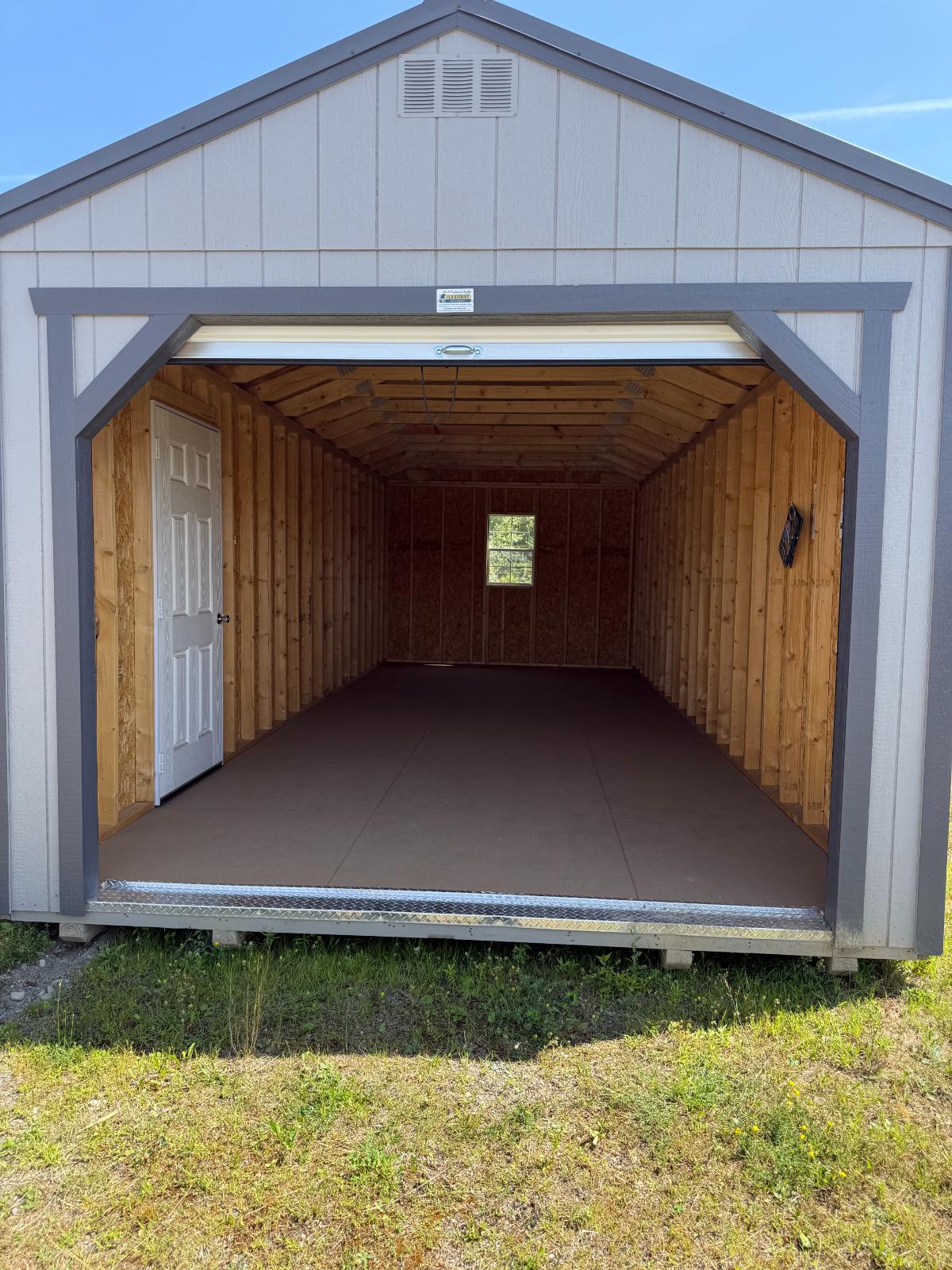
Your rabbit barn should not be a solid-walled, dark structure. Light and air flow do matter. Air flow is especially important, the more cages and rabbits you have in your building.
Even if there is enough space to hold your cages, you need to make sure the air quality and comfort can be maintained at a comfortable and healthy level.
Some of the more important things to account for include:
- Light
- Airflow
- Door and window placement
- Door and window placement matter because if they cannot be blocked, then you cannot place cages there
- You may want to consider if you can place cages in front of windows -- can you still open them? Will they pour hot sunlight onto rabbits in front of them? Will covering windows impede airflow, especially in summer?
- Doors and windows can complicate cage layout; give some real thought to their placement, because what you thought was straightforward and big enough may turn out not to be
Cage Layout Considerations
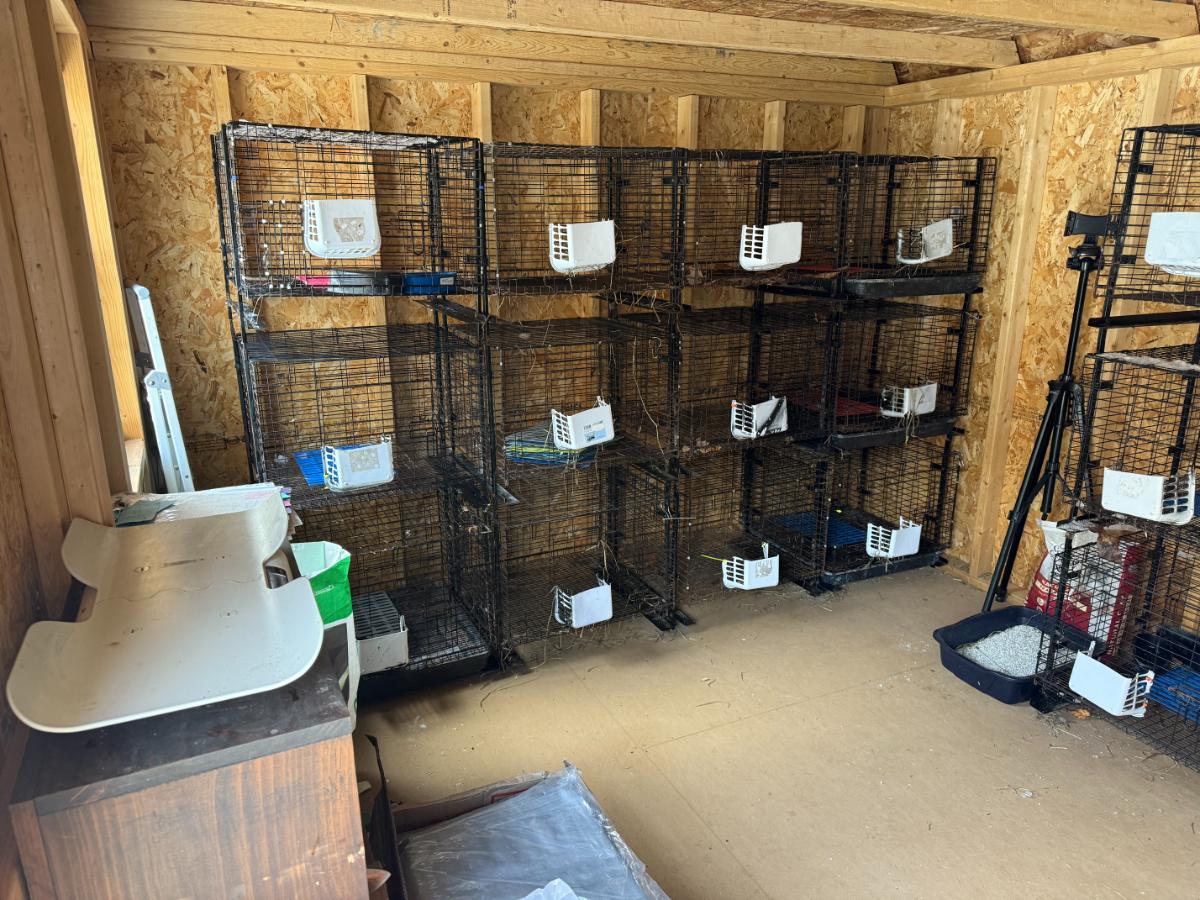
The type of cages you have, the type of cleaning system you have, and the placement of cage doors all dictate how you can arrange your cages. Hence, how many cages the shed can fit.
Typically, you can’t just place cages all along the walls because then you will have some that cannot be opened, cages you can’t easily reach into to feed, water, or remove rabbits, and you may end up with wasted space in blind corners.
Here are a few things to keep in mind when you think about the potential layout of the barn or shed you are thinking about buying:
- Cage arrangement, openings, and access can result in limited layout options and blind corners (corners of empty space where cages meet)
- Doe cages need to be spaced at least 6 inches away to separate bucks
- This eliminates the possibility of breeding through the cage wire and reduces fighting, attitude problems, and territorial does and spraying bucks
- You will not be able to butt cages together in corners if doing so would block doors
- If you have stacked cages and/or drop trays for cleaning, those will need to be able to be pulled out fully
- The next row of cages will have to be spaced at least as far away as the tray is deep, so that it can be pulled out for cleaning
- This may require more space than you accounted for for feeding, general car,e and cage access
Additional Features That Might be Worthwhile
Many barns and sheds have optional features. If the optional features are within your budget, these could help you make the most efficient use of your space. It should solve some floor space problems, without actually paying for a larger shed.
Some features that can be worth a slight increase in cost are:
- Lofted ceiling areas for storage
- Wall space for other tools and equipment
- Additional windows for more light and air flow
- Ridge vents or skylights that allow for better lighting
Upgrades to Think About
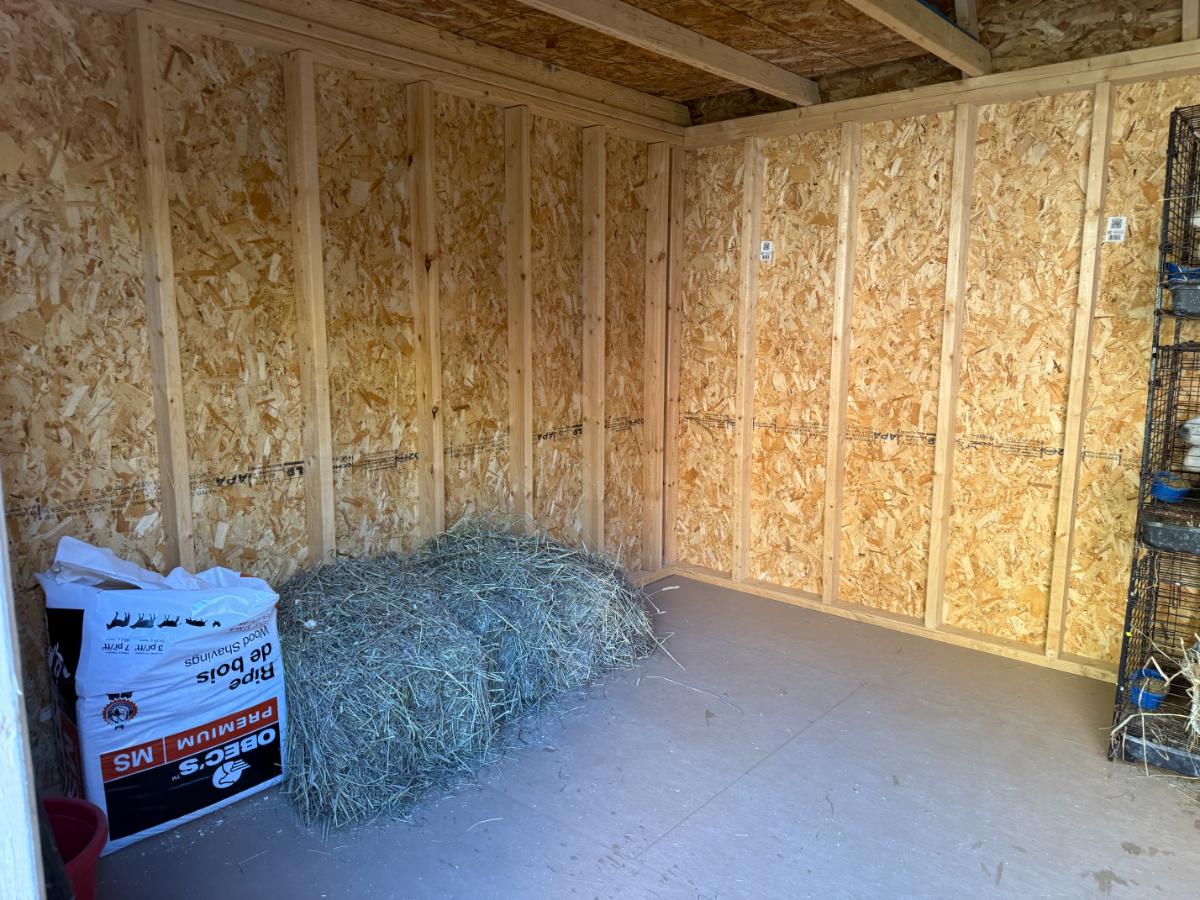
Once you have your barn, there are upgrades you can do, now or over time, that can improve the use, longevity, comfort, or aesthetic of your prefabricated barn.
Upgrades and additions you might consider for your prefab meat rabbit barn are things like:
- Painting walls to make a more cleanable surface and reduce urine and moisture absorption
- Lining walls with cleanable plastic sheeting/paneling
- Lining floors with washable flooring
- Painting floors to increase cleanability, reduce moisture, and urine absorption
- Install additional windows for increased light and/or airflow
- Adding lean to’s to the exterior of the building for outdoor cage placement and housing, for storage space, or to set up a processing space for your meat rabbits
VIDEO: Setting UP the Prefab Shed Meat Rabbit Barn
Pre-built Structures Can Make Useful Meat Rabbit Barns
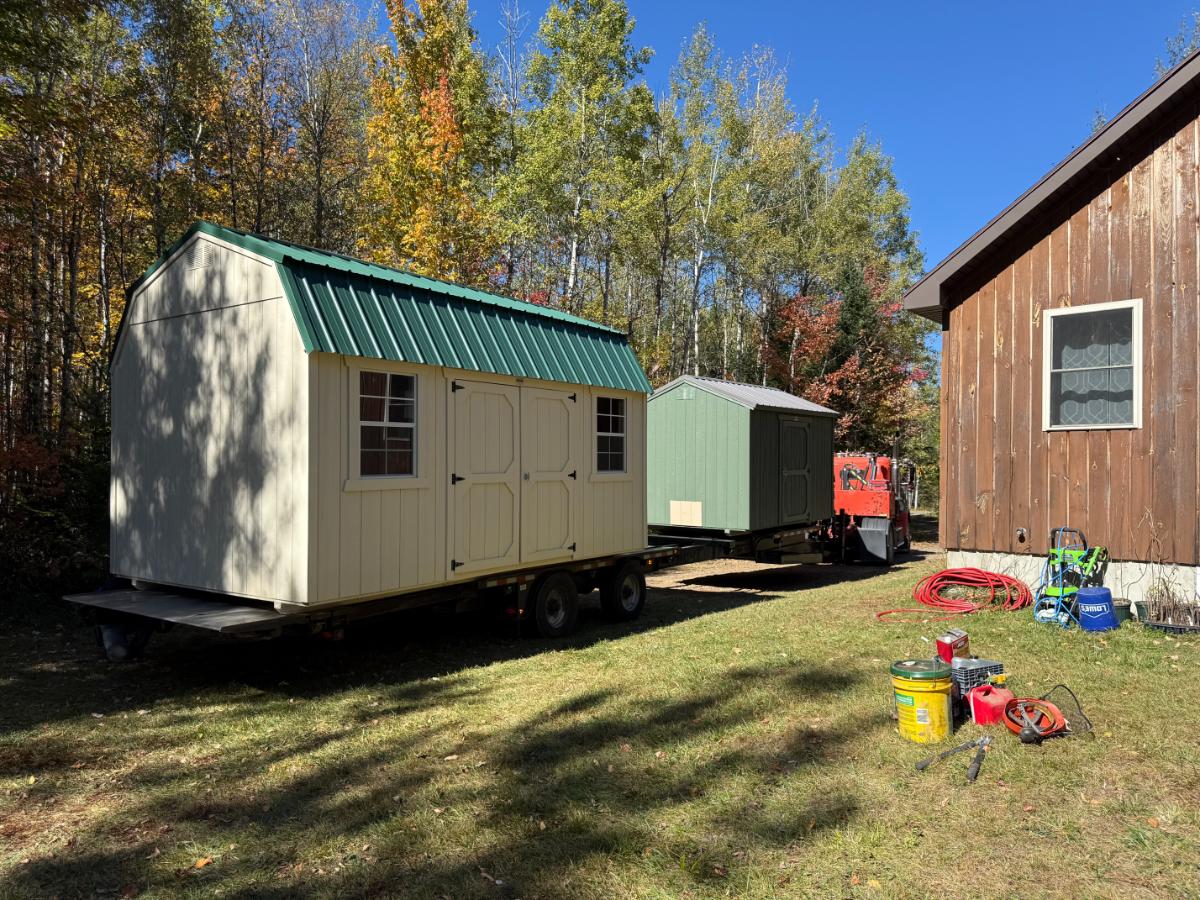
Pre-built sheds and mini barns can be an affordable way to house your meat rabbits while also affording you protection from predators, including neighborhood dogs and more.
They can also be a good way to increase the privacy of your rabbitry, and the fact that you are breeding and processing meat rabbits. There are still plenty of people who disdain meat rabbits as a livestock and meat animal (even though rabbits were domesticated first for the purpose of meat and fur bearing!).
Though rabbits can be safely housed outside if they are given the right protection from wind, rain, and predation, sometimes a building is still the best answer to avoid prying eyes and contentious attitudes. A prefabricated shed or barn can be just the solution to these problems.


Leave a Reply