
*This is the first article in a series that will walk you through the process of moving or relocating your rabbitry. When we decided to move out of state, I had about 40 cages filled with meat rabbits. That required some foresight and planning. Come along with my rabbitry’s journey, and see if there are some tips, tricks, or management methods that might be put to good use for you!

As we neared making a decision as to whether to move and relocate to another state, I began to put some thought into the process of how I would manage the rabbitry through the move. With some thought and planning, a few things became clear. Some early management decisions and planning steps took form. Starting with breeding.
Jump to:
- Planning Breeding Around the Move
- Top Concerns Surrounding Breeding Schedules and Moving
- Maintaining reproductive health for breeders, especially does
- Timing litters according to projected move dates
- Weaning litters before selling
- VIDEO: Where Have All the Rabbits Gone? Prepping for a Big Move!
- Summing Up, Tips, and Advice: Planning A Rabbitry Relocation
Planning Breeding Around the Move
The first step in relocating the rabbitry started months before the move dates. In fact, it started before we were even sure we were going to put the farm on the market.
The first step in a planned relocation was timing out my breeding schedule.
I wanted to be sure that whatever we did, I maintained the herd in the best possible health and productivity in the long run. And also that I didn’t have excessive numbers of grow outs to move.
Top Concerns Surrounding Breeding Schedules and Moving

There were two goals related to moving and breeding:
- Reproductive health of the breeders
- Manageable numbers of rabbits to move
Maintaining reproductive health for breeders, especially does
One thing I wanted to avoid was having does that were open (meaning not bred) for too many months. When meat rabbit does remain unbred for long stretches of time, they pack fat in the body cavity. Fat builds up around the ovaries, reproductive tracts, and organs, including reproductive organs.
This is a top cause of low fertility and low productivity in meat rabbit does.
The best way to keep meat rabbit breeders in good, productive shape is to breed them often. Ideally, you should be breeding does between four and six times per year. Stretches of four to six months or more without breeding often result in difficulty breeding or birthing (or both).
I decided to breed the does back as quickly as possible after weaning their previous litters, breeding back by five weeks post partum. Not only did I not want to move bred does or does with litters, but we were entering a period of high summer heat, with early summer days reaching over 90 degrees Fahrenheit. That is heat sterility territory, which meant that the bucks would likely be infertile for the next several months. This would have ultimately extended the time into many months without being able to breed the does.
Bred does could be moved, but moving is an added stress. Pregnancy adds a layer of stress and demand on the doe’s body. While it could be done, my personal preference would be to move the does that were not bred. I certainly would not want to move does that were close to their due date.
Timing litters according to projected move dates

The other issue was working to have the litters born in time so that they were old enough to be moved out before we moved.
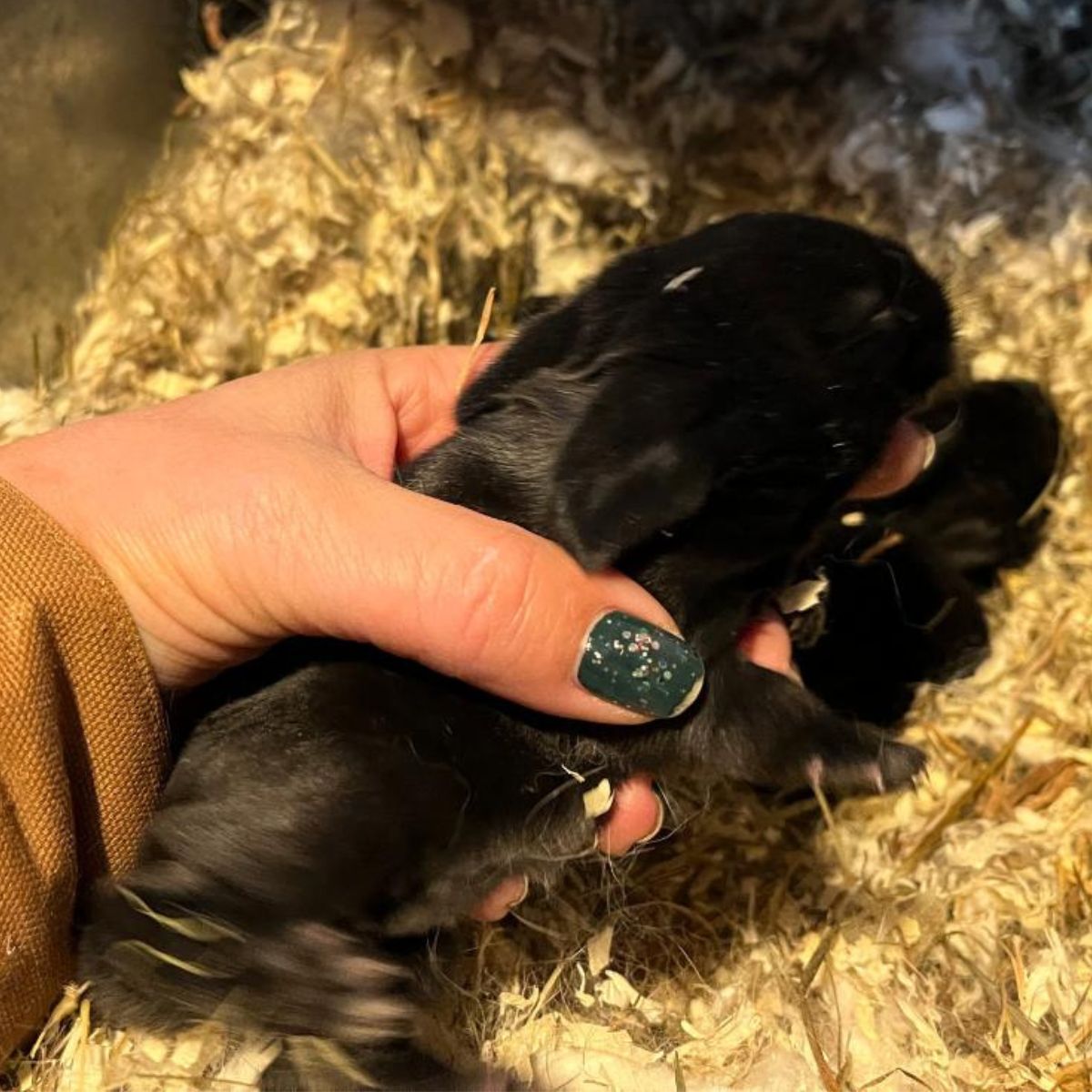
It is possible to move litters, but it is less ideal. If I were to move litters of young rabbits, I would move them together as a litter in a separate carrier and not with the doe. Then I would make sure the kits get back in with the doe as soon as possible to get their two feedings in for that day.
Logistically, I wanted to avoid moving kits and grow outs if at all possible. New housing will need to be set up at the new location. An interim arrangement may be required. The best-case scenario is for me to move as few rabbits as possible. It is also necessary to move rabbits that are old enough so that they are the least likely to experience stress and the immune and digestive issues that can stem from stress.
In the rabbitry, that is, adult rabbits.
This meant that I needed to account for 32 days for pregnancy, plus eight weeks until the kits were old enough to be legally sold. (Some states will allow sales as a complete litter at less than eight weeks, sales of kits with the doe, and/or sales of younger than eight weeks if for agricultural purposes.)
Weaning litters before selling

Not only do the grow outs need to be old enough to be sold legally, but they need to be weaned and independently eating, drinking, and digesting on their own.
That means I needed at least two weeks to let the weaned kits acclimate. In other words, the kits needed to be weaned in grow out cages weeks before the move. This, too, needed to be considered in the timing.
VIDEO: Where Have All the Rabbits Gone? Prepping for a Big Move!
Summing Up, Tips, and Advice: Planning A Rabbitry Relocation

If a move is in your future, here are some thoughts, tips, and planning steps to consider.
- Figure out a time estimate for when the relocation will happen
- Decide if you are willing to move litters of kits or grow outs
- In order not to move young kits, you will either need to hold off breeding or have enough time for the pregnancy, plus growing out to weaning and selling or harvest size
- To breed and grow kits to selling age, you need 30 days plus 8 weeks (in most locations, with some exceptions made for agricultural purposes or if kits are sold as a litter or kits and the doe are sold together)
- Practically speaking, plan for 12 to 13 weeks to breed, deliver, and grow out kits to be able to sell or disperse before a move
- To breed and harvest grow outs before moving, you will need 30 days plus 10 to 12 weeks (also consider adding a week or more to give you time to process them well in advance of the move)
- Practically speaking, plan for 16 to 18 weeks if you plan to breed, deliver, grow out, and harvest kits before relocating
- If you do not have that long of a window for either sale or harvest, or if you are unsure, it is best to wait to breed your does after the move takes place
Questions to consider:
- Do you want to move kits or older grow outs?
- What is your capacity for transporting, cages, and space in vehicles to devote to rabbits?
- Will you have housing on the other end to support every rabbit you are moving?
- When were your does last bred?
- How long would does remain open (not bred) if you do not breed before the move?
- If you are planning to process the grow outs before moving, do you have the time to manage that, considering all that is involved in relocating?
- If you process meat, will you be able to handle and move the meat in a food-safe manner (i.e., keep it frozen)?
- If you cannot process grow outs before moving, will you be able to sell them? Is an auction dispersal or other avenue an option?
Moving when you have livestock is a much different task than just packing up and moving a house (a daunting task all on its own!). An efficient, simplified, successful move takes planning.
When at all possible, planning should start several months ahead of time. This will give you the most flexibility in decision-making and the best opportunity to prepare your meat rabbits for a move without majorly impacting their health, fertility, and future reproduction.

Leave a Reply