
It is extremely important to provide good care for your meat rabbits during the summer. In fact, summer care is more important than winter care.

(Of course, good care is important all year round, but in terms of increased care and attention needs, summer is a more crucial time of need for your meat rabbits.)
People often think winter care needs are higher, but that’s not the case with rabbits.
Jump to:
- Why is Summer Meat Rabbit Care So Important?
- How meat rabbits cool off
- Plan Your Space and Setup for Heat and Summer
- Rabbits Need Shade and Sun Protection
- Creating rabbit shade doesn’t have to be fancy
- Maintain Good Airflow
- Water is the Most Crucial
- Water twice daily, check more often in high heat
- Have a good system
- Try not to let rabbits use water as a cooling tactic
- Breed and Select for Summer Heat Tolerance
- Control Flies in the Rabbitry
- Control Biting Insects and Mites
- Plan Breeding Accordingly
- Summer litters – to breed or not to breed?
- Heat sterility in Meat Rabbit Bucks
- Consecutive Hot Days and Heat Waves Increase Stress
- Watch for Signs of Heat Stress and Heat Stroke
- Rabbits May Eat Less During High Heat
- Helpful Tips and Tricks to Keep Rabbits Cool on Hot Summer Days
- *A note about frozen treats and wetting greens
- Adjust According to Your Rabbitry, Your Setup, and Your Rabbits’ Needs
- Rabbit Raising Usually Goes Right – Even in the Summer!
Why is Summer Meat Rabbit Care So Important?
Rabbits can handle cold weather just fine. It’s hot weather that they struggle in.
Rabbits are obviously fur-bearing animals, and they are better suited to cold than heat.
One of the big reasons that is true is that rabbits do not have sweat glands.
How meat rabbits cool off
Rabbits only have a couple of ways to disperse heat and cool themselves. They can dispel some heat through mouth breathing. Drinking cool water and cooling the mouth helps, too.
Another way to dispel heat is through air movement, moving heat off the rabbit’s body.
The primary way in which meat rabbits (all rabbits) dispel heat to cool down is through their ears. Rabbits have large blood vessels in the ears that radiate heat. The cooler blood then circulates through the body.
So you can see how rabbits could be easily overcome by high heat and unable to cool themselves during the hot summer months – especially when temperatures climb particularly high.
There are several ways in which you can help prepare your meat rabbits for summer weather and ways to help them when they need a bit of extra summertime TLC.
Plan Your Space and Setup for Heat and Summer

First off, you need to plan your space for summer living. Think about this when you set up your rabbitry (whether it’s inside or out).
If your rabbitry is already set up, pay particular attention in sunny, hot weather. Look for the areas that might cause problems for your rabbits. Either move the rabbits or do something to eliminate problems and stresses.
Rabbits Need Shade and Sun Protection
One of the most critical things you need to do for your rabbits to live well, thrive, and survive in summer is to make sure they have shade. There’s no need for your rabbits to be in direct sun in the summer (or winter either, for that matter).
Make sure cages are out of direct sun. Make sure there is an option of shade for rabbits no matter what setup you keep – including in colony and rabbit tractor set-ups.
If your rabbits are indoors, be sure they are not where the sun will shine directly on them through windows or doors.
Visit your rabbitry at different times of the day to make sure there is never stressful direct sunlight falling on your rabbits that they can’t get out of. As the sun moves throughout the day, it may fall through windows and doors where it didn’t seem to be a problem earlier (or later) in the day.
The same is true for outdoor cages. As the sun shifts, make sure the rabbits can stay out of its direct beams.
Creating rabbit shade doesn’t have to be fancy
Creating shade can be as simple as setting up a pop-up tent or tarps as a shade sail.
It can be as easy as laying plywood over the tops of cages.
It can be choosing an area under trees and out of direct sunlight in which to place your hutches or cages.
You don’t have to get fancy and you don’t have to spend a lot, but you do have to have shade and protection from the sun for your rabbits.
Maintain Good Airflow

Airflow is always important in the rabbits’ area (again, indoors or out doesn’t matter, but the conditions of the rabbits’ area does).
Airflow is important for good respiratory health and health in general in the meat rabbitry. It is also an important part of keeping your rabbits cool.
Your rabbitry or the outdoor area or hutches and housing that your rabbits live in needs to be airy, with good air quality and air movement.
If air movement doesn't happen naturally on its own, create it.
- Fans are one good option if you don’t have breezes and air through the barn or cage area. There are some good solar options for those who don’t have electricity in the rabbitry.
- If cages or conditions are overcrowded or are set up in a way that airflow is blocked, thin them out and move them to achieve good airflow.
- Make sure all the rabbits have room to stretch out in their cages. Wire can create a good source of cooling and airflow if the cages are not too crowded. Rabbits can cool better if they can stretch out.
In my experience, a well-ventilated barn with windows and open doors will provide enough airflow in most cases. Shady outdoor living in wire where air can flow through is good, too.
I try not to have to rely on electricity for animal comfort. It’s an additional expense so when I can avoid it, I do.
Electricity can also go out through weather or brown- or blackouts in periods of high demand.
Mostly, I want animals to live like animals. I just make sure I give them what they need to be able to do that without relying on too much manmade intervention.
Water is the Most Crucial

Water and hydration are obviously the most important things to any living creature. Rabbits need a lot of water at all times throughout the year. In the summer, water becomes even more critically important.
Your meat rabbits should never be without clean, fresh water.
Water twice daily, check more often in high heat
This may mean that you have to check or refill your rabbits’ water several times a day.
Twice a day, morning and night, is truly enough most of the time. Even if a rabbit spills its water or something happens, they will not usually perish if you check a couple of times per day and they get watered once or twice.
But you do want to err on the side of caution in the summer, and you want them to be as comfortable as they can be.
This is why we check. And recheck.
I find that rabbits do most of their drinking at night, even when it’s hot outside, so make sure they have plenty of water in the evening before your day is done.
That is not to say that rabbits don’t drink during the day, but it is to say that you want to make sure they have water to drink at night, which is when rabbits are most active and when they may feel more energetic to drink and eat.
Have a good system

All breeders have their own preferred method for providing water to their meat rabbits. I personally prefer cage cups or crocks.
I use cups that clip over the side of the wire so they aren’t tossed around too much. (Though there will always be a few who play and figure out how to unhook the cups – they always need checking two or three times a day in hot weather!).
Water bottles are a good and popular option. Automatic watering systems make life easy and generally ensure that there is water available to your rabbits at all times.
I say generally because we can’t forget that automatic watering systems need tending, too.
Many run on buckets that need refilling. Check more often in hot weather to make sure the supply is keeping up with demand.
Things can go wrong with automatic rabbit waterers, too. Lines can be chewed or spring leaks. Nipples can plug and fail.
All of these are reasons to make sure you check your rabbit watering system at least once every day – even if you think you have a “set it and forget it” system of automatic feed and water.
(In my opinion, there is no such thing as “set it and forget it” in good meat rabbit husbandry. You at least check Every. Single. Day. More, even.)
Make sure water bottles don’t leak too much
Check all your bottles and make sure they’re not leaking all the water out.
If bottles are empty when you feed every day, the odds are that they’re leaking, and it’s not the rabbits drinking all of that water.
Leaking bottles can make rabbits run out of water too quickly and leave them dehydrated without a source of water.
Make sure your rabbits use it
Whatever system you have for watering your meat rabbits, make sure they are all using it. Regardless of the weather, rabbits need water daily.
If you have new or young rabbits, they may not be used to whatever system you have. This goes even for the basics like crocks and water bottles.
Crocks or cage cups aren’t usually too hard to get rabbits to drink from, and most prefer it (and will drink more from an open water source than a nipple style).
If it’s the other way around, it may take days for rabbits to catch on to water bottles or nipples on automatic systems.
Very simply, it’s important to know that your rabbits will use whatever you’re offering and that they know how to get water when they need it.
Try not to let rabbits use water as a cooling tactic

In hot weather, rabbits will sometimes use their water as a cooling feature.
- They may lay under dripping water bottles or waterers
- They may lie next to or in water crocks and cage cups
- They may flip over water for a splash
This may seem like it could be helpful, but it is not.
First off, this often leaves the rabbit with no water left to drink. That’s the first problem.
When a rabbit’s fur stays wet, it may cause hair loss and fungal infections and may invite fly strikes. Also, big problems.
If rabbits get wet once in a while it won’t hurt, but you don’t want your rabbits to lay around with wet fur, even in high heat.
- If your rabbits have figured out how to lay in or under water sources, you may have to switch it out for a different style of waterer (crocks or cage cups to bottles and vice versa – some smart meat rabbits will figure out how to lay against a water bottle or nipple and make it drip onto them)
- It can help to hang either cage cups or water bottles higher so they can’t be activated to drip or be laid in
Breed and Select for Summer Heat Tolerance

This is a more long-term action, but it’s one that will serve you well.
- Breed and select rabbits for the conditions in which you live
- When you are choosing new breeders, select those that tolerate the conditions that are normal for the summers in your area
- If you live in a location where summers are very hot and days are consistently hot, look into breeds that are known to handle the heat better. Tamuks (developed for large ears and heat dissipation) are known for their heat tolerance.
- Keep in mind that if you are selecting for climate conditions, you need to keep your winters in mind, too. Winter tolerance is secondary to summer, but you do need to select breeds and individuals that can thrive in all seasons, and does that will mother accordingly, too.
- A Tamuk, for example, may be an excellent choice for the heat of Texas, but it may struggle in the cold of the north with its oversized ears and thin fur coat
Control Flies in the Rabbitry
Flies come along with warm weather and reproduce faster in high heat. They are a nuisance and can be a stress to meat rabbits.
Every stress that you can reduce or remove, even if it is not directly related to temperature, is one less thing for the rabbits to deal with.
The other problem with flies is that they cause flystrike. Flystrike is more likely to happen if rabbits are wet or wounded or if they are dirty because they’re feeling the heat and not cleaning themselves.
Suffice it to say, it’s better for your rabbits if you do what you can to reduce the fly population in their area.
Here are 15 Tips for Controlling Flies in the Rabbitry
Control Biting Insects and Mites

Again, this speaks to reducing stress on your rabbits. It also speaks to rabbit health and wellbeing.
Mites infest rabbits’ ears, and their ears are basically their only cooling mechanism and certainly the largest.
Keep a good check on your rabbits’ ears and treat them at the first sign of mites to keep them healthy and functional.
Plan Breeding Accordingly
There are two aspects of breeding to consider during the summer:
- The doe and her ability to remain healthy and comfortable and also to care for kits in the nest
- Bucks and their ability to breed after periods of very high heat
Summer litters – to breed or not to breed?

If your rabbits are well cared for and you take the steps listed here to keep all your rabbits in good condition, tolerating and surviving the heat without too much difficulty, you probably don’t need to worry too much about your doe and her kits.
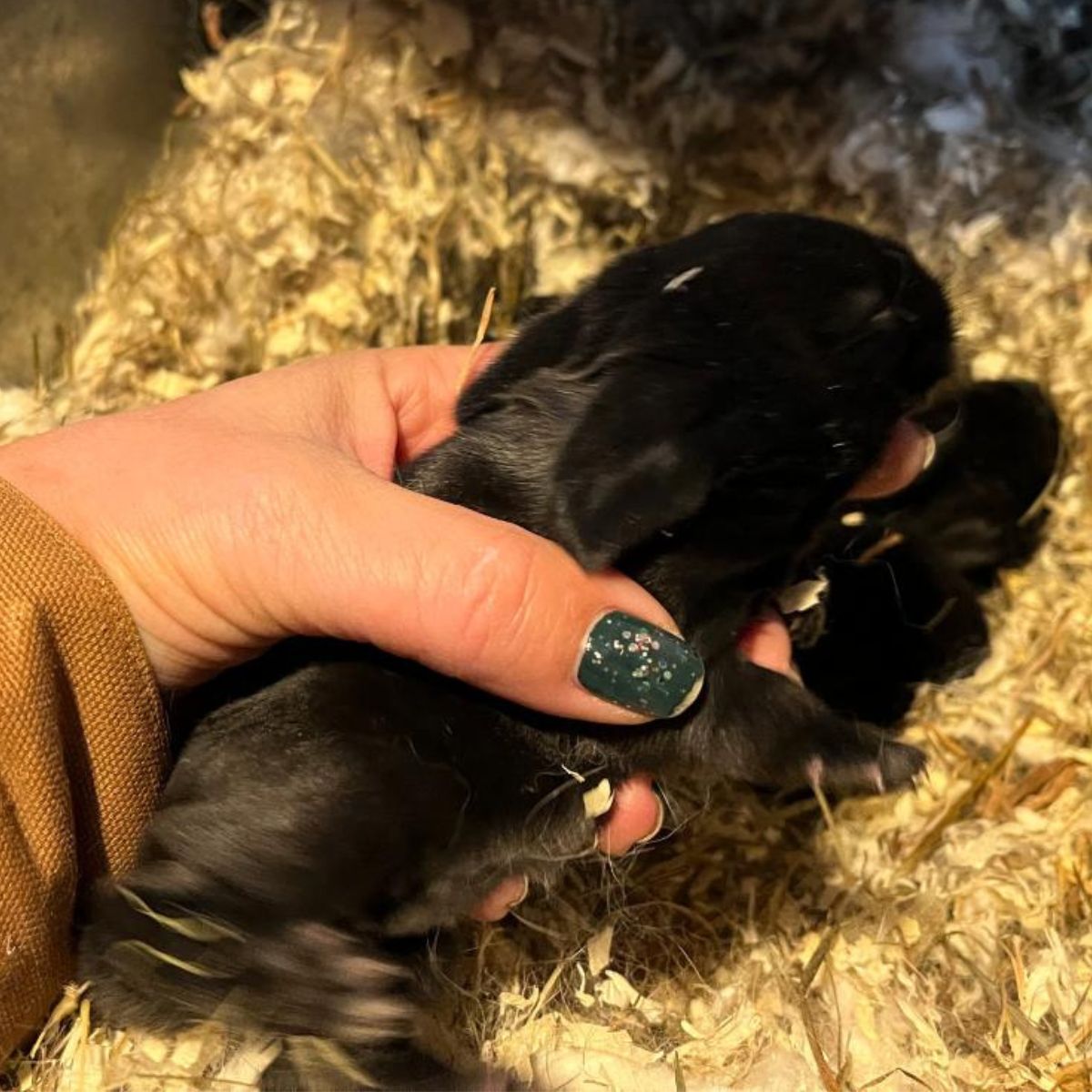
Kits are actually quite good at regulating their temperature by moving up and down in the nest, and the doe will help them along by pulling back the fur lining.
Keep in mind that not breeding does for an extended period is horrible for their reproduction and can often make matters worse, especially if they become fat in the interim.
Still, you can plan to breed around the worst heat of the summer if you live where temperatures will be a challenge for many weeks or months. In the Northeast U.S., I breed year-round without issue and don't have problems in the summer.
Making room in doe cages with weanlings
One thing I do is move kits out if it’s going to get hot and they are ready to wean. I would not wean or move them under four weeks (and unless I had to, I wouldn’t move them under five weeks – they just do better for me when weaned at this age).
However, if the time is right, the kits are thriving, and there are a lot of bodies in the doe’s cage with heat coming on, it’s probably better for all concerned to spread them out into more cages to reduce the body heat and increase the airflow and give everyone room to stretch out and cool down.
Heat sterility in Meat Rabbit Bucks

Male meat rabbits (all rabbits) can go sterile from high heat. The rule of thumb is that bucks may go sterile after three consecutive days of heat, about 95 degrees (Fahrenheit -- 35° Celsius).
Some sources say the threshold is even lower, towards 90° F (32.22° C).
You do your best to keep your animals cool and comfortable, but you may not be able to avoid a period of heat sterility. This is not, however, a permanent condition.
It may take a month or more for bucks to recover and become potent again. The time may be delayed by continual hot weather.
Either way, the best thing to do to return a buck to reproduction is to get them breeding again. Clearing the system of low or dead sperm is the best way to get it functional.
Breeding before a heat wave hits
Because of this, if you know a heat wave is forecast and you have does on the cusp of breeding, it’s smart to breed them before the heat hits.
If you miss this chance, it could be months before your bucks rebound and you get another opportunity to breed successfully. That could be a serious setback to your meat production or your breeding program.
Consecutive Hot Days and Heat Waves Increase Stress
A single hot day may be hard to take, but the longer the high heat goes on, the harder it is for the rabbits to continue to tolerate.
This is especially true if temperatures are not cooling down much at night and the animals aren’t able to cool off and recover from the heat of the day.
You may not be able to control the weather, but you can control your care, management, and your response to it.
Whereas if you have just a day or two of truly hot, oppressive weather, you may not choose to go to extra measures, if the situation is ongoing for several days with little or no break, you might want to up your game.
This is where you continue to provide the essentials of summer care, but you give the rabbits some extra help. Mainly, this comes in the form of extra checks and cooling measures.
Watch for Signs of Heat Stress and Heat Stroke

Keep a watch on your meat rabbits for signs of serious distress, heat stress, and heat stroke. Do your best to preempt it, and definitely step in with increased measures if your rabbits start to show any of the following signs:
- Rabbits are lethargic
- Breathing heavily
- Breathing with open mouths
- Drooping, half-closed eyes
- Drooling
- Dehydration (sunken and dry coat/skin, dry eyes, mouth, nose)
- Animals are unresponsive (heat stroke)
- Rabbits having convulsions (heat stroke)
- Lack of coordination or inability to stand and move (heat stroke)
If the situation is that a rabbit seems a little overheated, see the list below and do something to help them cool off.
If it is more advanced (signs of heat stroke), get the rabbit inside to a cool area, preferably one with air conditioning, or at least in front of a fan.
Rabbits May Eat Less During High Heat
It is not uncommon for rabbits to eat less when they are hot. With extended heat, you may see that your rabbits are not going through nearly as much feed as they usually do.
You may want to consider whether you need to adjust your feeding program during hot weather.
For example, if the weather is hot and I know rabbits are eating less, I might cut back or cut out feeding hay for a day or two. That way, I know that when they are eating, they are eating higher calorie, balanced feed with known protein.
This is a judgment call but something to consider.
Also, make sure that feeders are not blocked, the pellets are not absorbing too much moisture, and that there are not flies or insects taking advantage of moist feed.
Even J-style feeders tend to block up in humid weather when pellets start soaking in moisture from the air.
Young kits (and some adults with bad habits) may also dirty their feeders if they use them as litter boxes or sit in them when they eat.
Helpful Tips and Tricks to Keep Rabbits Cool on Hot Summer Days

The following are some tips and tricks that you can use to help your rabbits stay cool:
- Cool tiles – freeze or refrigerate 12-inch stone or ceramic floor tiles and give them to the rabbits to lay on
- Frozen water bottles – freeze plastic water or soda bottles and put them in the cages for the rabbits to lay up against; these are cooling sources different from drinking water!
- Ice packs – same concept as frozen bottles, but make sure rabbits aren’t chewing them (gel ice packs)
- Fans
- Mist ears – use a mister to mist the rabbits' ears and help them dispel heat
- Pop-up tents, shade cloths, or tents for creating shade in open areas
- Add ice cubes to water dishes
- Give ice cubes to chew on
- Partially fill and freeze water bottles, then fill the other half with tap water so there is free water to drink; the frozen portion will keep the water cool for a long time
- Feed a few frozen treats – ice cubes to chew, frozen berries*
- Feed fresh, wet greens*
- Put blocks of ice in the cage for rabbits to lay against
Again, you don’t want your rabbits’ fur staying wet all the time, but in the worst of the heat these are useful things to do, even if they’ll be wet for a little while after. Just try not to let them stay that way for too long or have their fur stay wet all of the time.
*A note about frozen treats and wetting greens
Frozen foods can be a relief to rabbits, but if what you’re freezing or soaking and feeding is not part of their normal diet, you need to take it slowly and introduce the food over several days.
This is to let the rabbits build up their gut biome so they have the beneficial bacteria to digest and tolerate the foods you’re feeding.
- Feed only a berry or two or a small amount of fresh greens each day
- Watch the rabbits; if they tolerate it, you can increase the amount by a little more
- Over several days or a couple of weeks, you can get the rabbits up to a full portion
- If at any point the rabbits show signs of stress, mucus in feces, or poor health, stop the treats and supplements and feed a diet of just hay, then add back in the pellets when they rebound
Ideally, you will introduce your rabbits to the things you want to feed and make it a part of their regular diet before the summer heat makes these things a necessity. That way, they will be accustomed to it and freezing the fruit, berries, or soaking the greens will just be an additional step you take.
Adjust According to Your Rabbitry, Your Setup, and Your Rabbits’ Needs
Everyone's setup and area will be a little different, so you need to see what the needs of your rabbits and your area are.
If you find you have spots where the sun hits hard at certain times of day, set up a shade or blocker.
Take the time to look at your setup at different times so you see what the rabbits are really experiencing throughout the day. Don’t assume that shade in the morning means shade in the afternoon.
Rabbit Raising Usually Goes Right – Even in the Summer!
Though this may sound daunting, be assured that the information here is meant as a help and a reference. We have to outline what can go wrong, even though it is not necessarily likely to go wrong.
The fact is, if you take care of the basics – breed well, feed well, water often, and provide an airy, shady place for your meat rabbits to live in – the rest will take care of itself 99% of the time.
In the interest of information sharing and troubleshooting, both in informational articles and in online forums and meat rabbit groups, the perception can be that meat rabbits are hard to keep and that everything kills them.
That’s not so. People are more apt to discuss what goes wrong because they’re looking for help and answers.
Most of the time, meat rabbits are easy keepers. When you put in the time to research, learn, and adjust, you’ll find a setup and a flow that works for you.
Trust your animals, treat them well, and enjoy this excellent source of homegrown meat.

Leave a Reply