
Rabbit meat does not carry a lot of potential for making people ill, in that there is very little that can make a rabbit sick that can sicken a human being. However, all raw meats have the potential for spoilage and contamination if they are not safely handled. Rabbit meat, like all meats, needs to be cooked to an appropriate temperature that can kill off any bacteria that may reside in the meat. This is simply the facts of consuming meat.
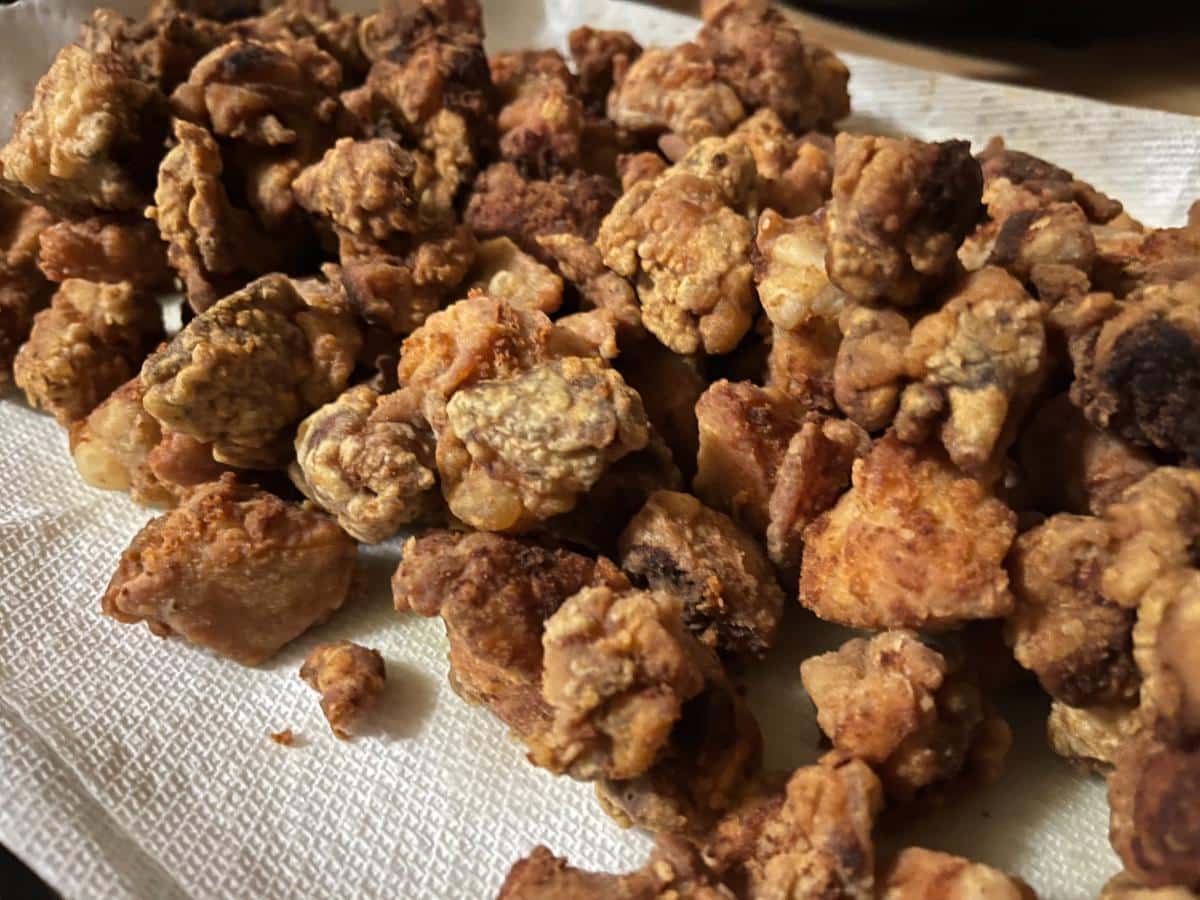
Here, we run through the basics of good handling of rabbit carcasses and rabbit meat from processing to storage and cooking.
It’s really not hard once you know what to aim for. It just comes down to time, temperature, and basic common food sense.
Jump to:
- Basic Meat Food Safety Rules
- Handling at and Immediately After Harvest
- Refrigerating Raw Rabbit
- Thawing Rabbit Meat
- Using Meat After Safe Thawing
- Safe Cooking Temperature for Rabbit Meat
- Leftover Rabbit Meat Handling
- Freezing Rabbit
- Refreezing Thawed Rabbit Meat
- Safe Handling of Whole Rabbits and Rabbit Meat Makes for Delicious, Enjoyable Homegrown Meat
- Further Reading and Resources:
Basic Meat Food Safety Rules
Handling rabbit meat safely is really no different than handling any type of raw meat. It can be tricky to find safe handling information specific to rabbit meat, but when in doubt, follow safe handling for poultry.
The basics of safe meat handling and storage are:
- Wash hands, utensils, and all surfaces before and after handling
- Separate raw meat from fresh foods
- Keep rabbit meat out of the food danger zone, which is between 40 and 140 F, and for no more than two hours (one hour if over 90 F)
- This means that raw rabbit needs to be kept below 40 until cooked, and it should be brought to under 40 F within two hours of processing
- Cooked rabbit should be heated and held over 140 F and spend no more than two hours in the “danger zone” (this is the temperature and time zone in which pathogens most prolifically produce and can cause illness -- over and under this zone for appropriate times are considered food safe by the USDA)
Handling at and Immediately After Harvest
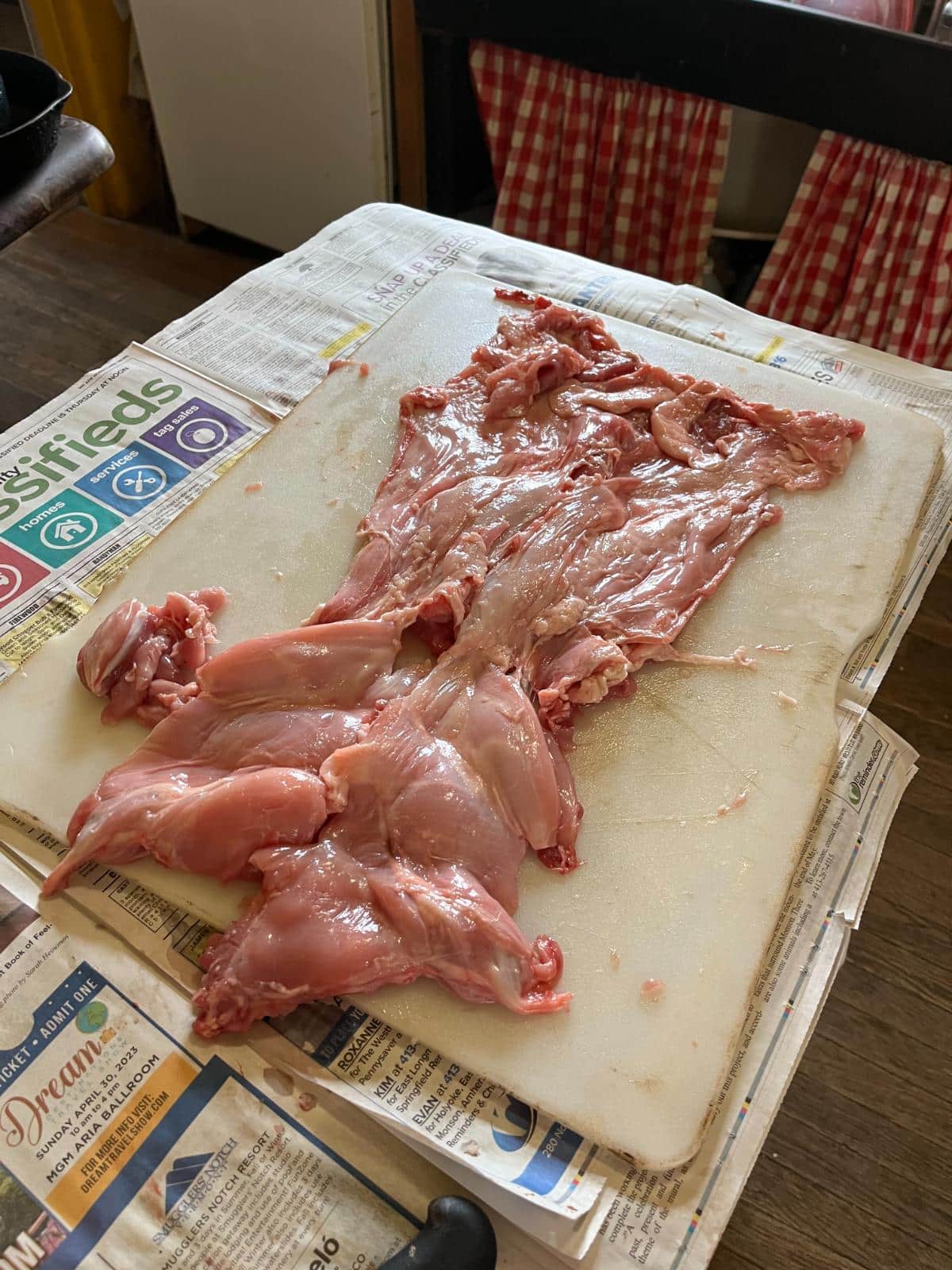
A key to safe rabbit meat handling and to protecting the best flavor of your rabbit meat is to cool the meat as quickly as possible when processing. Then, maintain a chain of good, safe handling.
- After slaughtering and processing the rabbit, immediately immerse it in a cooler filled with ice water
- Spraying the carcass inside and out with cold water before putting it in the cooling water begins the cooling process, removes excess hair, and helps keep your cooling water bath colder, longer
- Aim to keep the carcass in the water for only about 15 to 30 minutes; longer than that, the meat can absorb excess water. NOTE that as long as the water remains cold, extra time in the water is not a safety issue, but a quality preference; realistically, your whole rabbits may end up in the cooling water for one or two hours as you work through your harvest. The meat will still be good quality! In fact, a lot of people will soak in ice water overnight. The best results are to soak while processing, and then get the cooled carcasses into a cold refrigerator immediately after.
- Ideally, aim for 40 F (4 C) water temperature, but if there is ice in the water, you should be in good shape
- Refresh the ice water as needed during processing, so that the water does not become too warm as you add carcasses to it
- An alternative to ice water that is considered safe for the initial cooling is to soak the rabbit carcasses in a container that has constantly running cold water through it (such as a cooler, clean buckets, or food safe barrel with a garden hose filling and overflowing the top the whole time); the rabbit carcasses will cool to the temperature of the water, which is generally about 50 F (10 C) out of the ground, and then you only need to achieve 10 degrees [Fahrenheit] more cooling in the next step
- Then, you can move to ice water, or an ice pack [cooler or container filled only with ice, no water] (which will not warm as quickly and so you will not need to replace or go through so much ice); continue on with your processing.
- When processing and the initial cooling soak are done, move the meat rabbit carcasses into a refrigerator that can cool and hold them between 33 and 40F (.5 to 4 C)
- The goal is to cool the carcasses to an internal temperature of 40 F (4 C) within four hours of slaughter. As long as you do that, the meat is safe, even if that entire 4 hours is in a cold water/ice water bath.
- Maintain the freshly processed rabbits between 33 and 40 for 24 hours to allow for rigor mortis to subside, then pack for long-term keeping and use.
- This 24-hour cooling is key to producing tender rabbit meat
- Refrigerate whole rabbits (or parted out pieces) for up to three days if you plan to use the meat for fresh eating
- Anything you do not plan to use in the next two to three days should be frozen in order to maintain the optimal quality; this is assuming a maintained temperature at or below 40 F (4 C) under constant refrigeration
Refrigerating Raw Rabbit
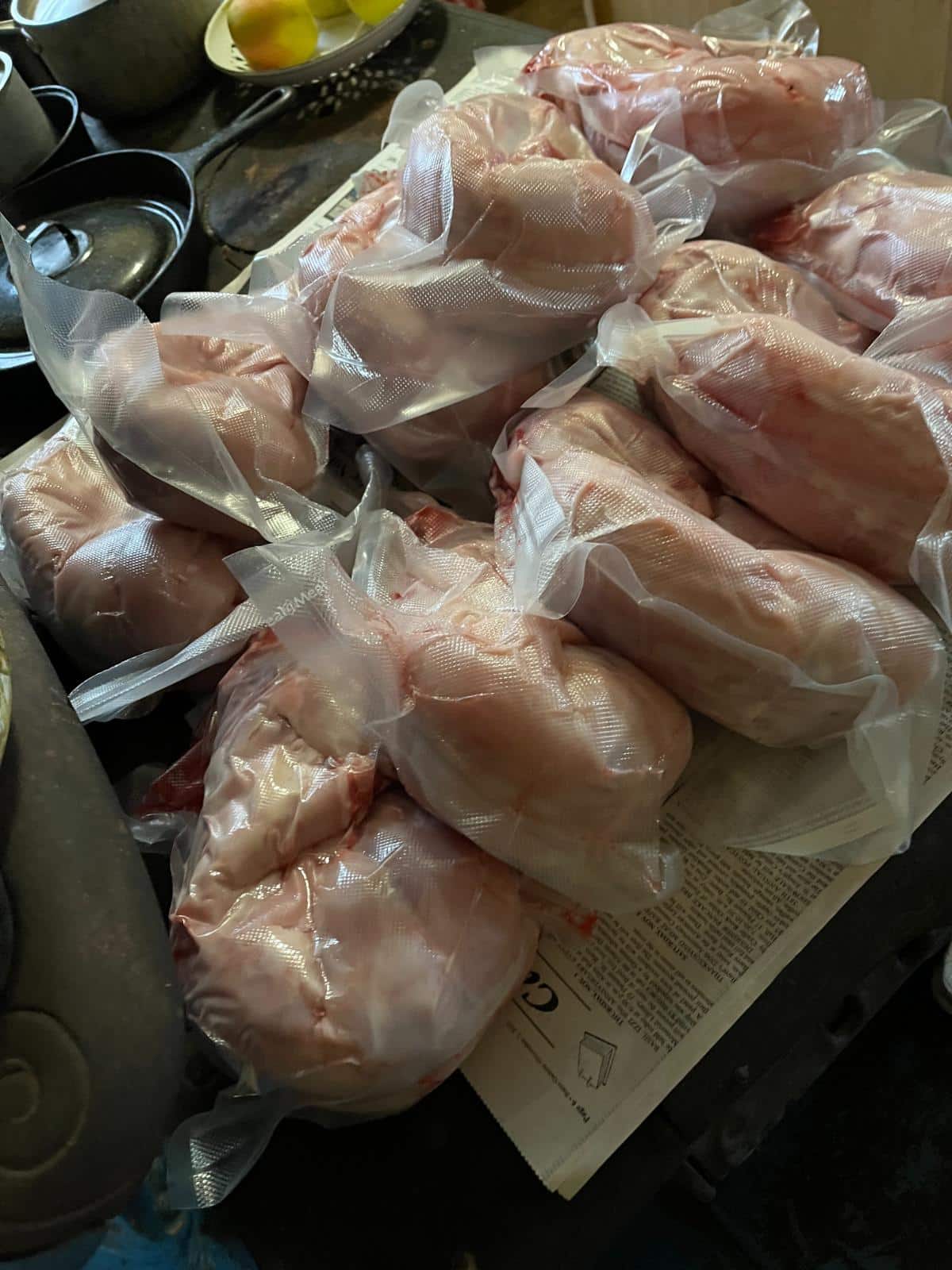
- Refrigerate raw rabbit meat at or below 40 F
- Fresh rabbit meat is easily safe for 48 hours at this temperature, and probably longer
- For the best quality, however, it is most sensible to freeze or use meat within 48 hours, which will give you not only the safest meat, but the best-tasting and best-quality rabbit meat, too
Where you store your raw rabbit meat in your refrigerator matters.
- Raw rabbit meat, as with all meats, should be stored below fresh fruits and vegetables and prepared foods.
- This is to prevent raw meat juices from leaking onto foods that will not be cooked before being consumed
- Rabbit is generally treated like poultry (though it is not the same, but similar)
- It is cooked at one of the highest temperatures
- For this reason, if you are storing other raw meats in the refrigerator with raw rabbit, the rabbit should be below those other meats
- The order of organization for rabbit and raw meats in the refrigerator would be: poultry on the lowest shelf, rabbit above, then ground meats, whole cuts of pork, beef, and lamb, and then seafood on the highest
Thawing Rabbit Meat
- Whole rabbits and rabbit meat or pieces should be thawed in the refrigerator
- Plan to move a frozen rabbit to the refrigerator 24 hours before you plan to use it
- In a pinch, you can thaw rabbit in a bath of cold water
- Thawing as part of the cooking process is perfectly food safe, too, though it is not the easiest or the most ideal from a cooking and culinary perspective
Using Meat After Safe Thawing
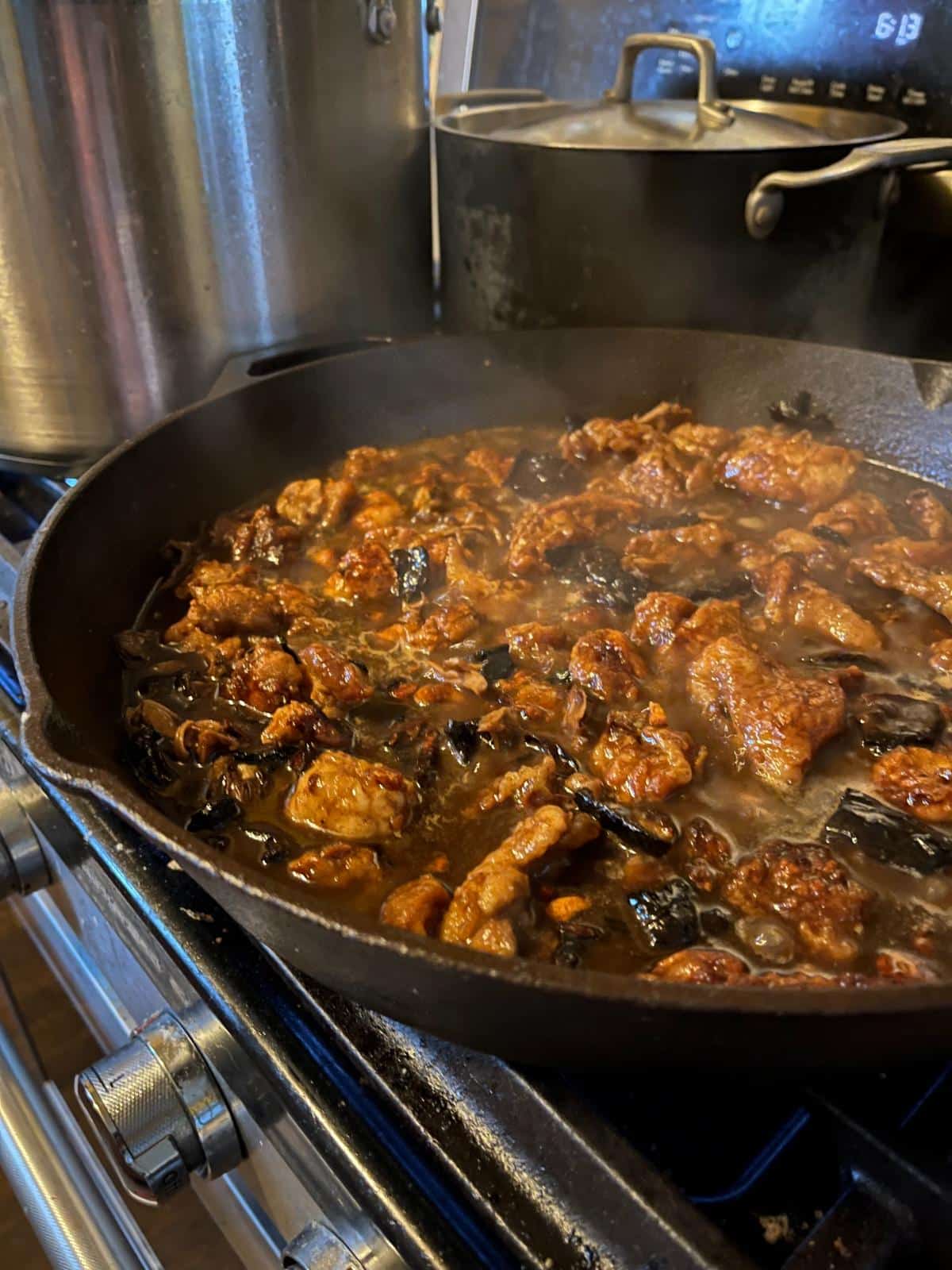
After you have safely thawed your rabbit meat, you’ll want to continue to handle it well and use it promptly.
- Cook thawed rabbit meat within 48 hours
- If not able to cook within two days, freeze the meat (see below for information on refreezing and food safety)
Safe Cooking Temperature for Rabbit Meat
- Safe cooking temperature for rabbit is to cook to an internal temperature of 160 F (71 C)
- Cook rabbit meat to a minimum of 160 (71 C) with the temperature taken with a reliable probe thermometer in the thickest part of the meat (the thigh)
- You can cook rabbit meat higher, and for pulled rabbit, slow-smoked rabbit, and many other dishes, this may be the goal
- Over 160 is a preference and quality issue, but it is not a food safety issue
Leftover Rabbit Meat Handling
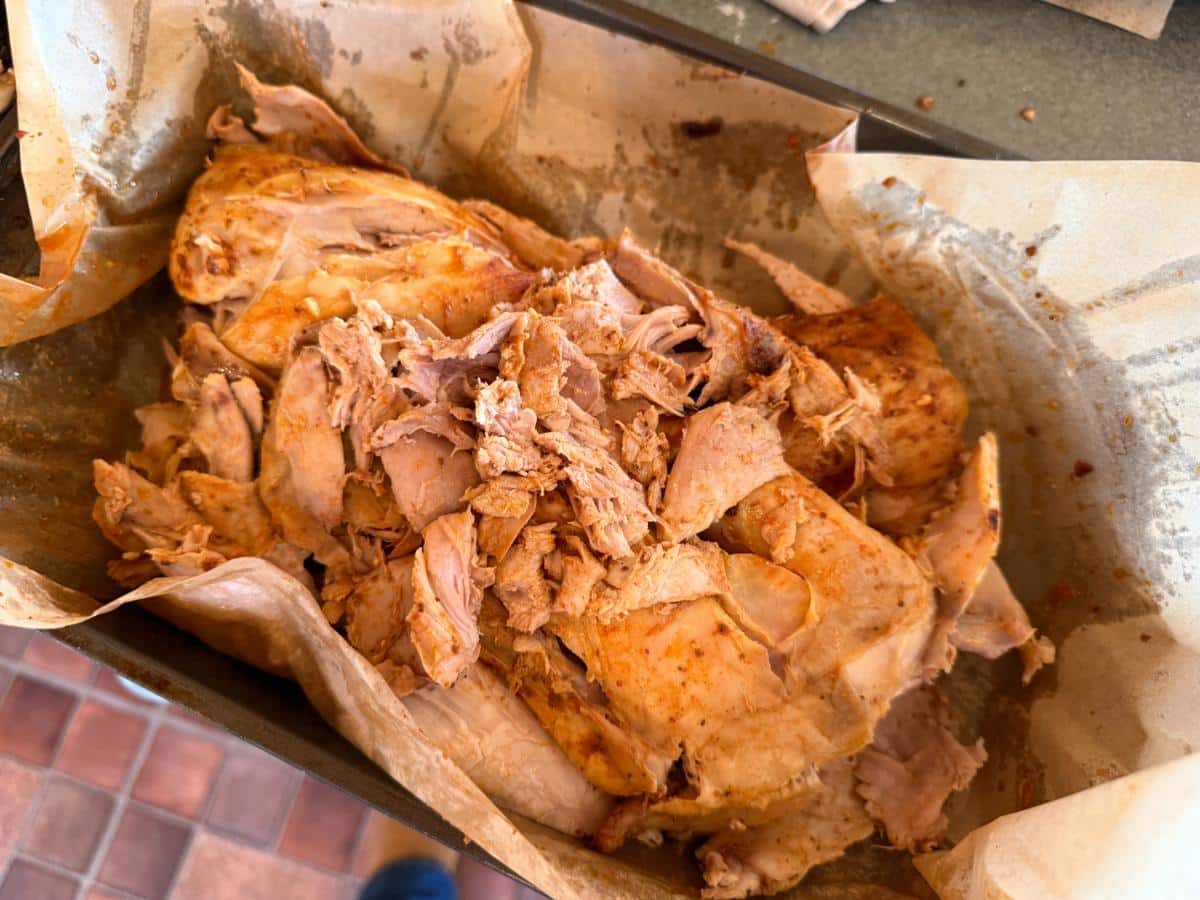
- Handle any leftover rabbit meat or dishes as you would other leftovers
- Respect the danger zone for time and temperature
- Cool to under 40 degrees (4 C) within two hours after use
- If leaving cooked rabbit meat out for serving, keep the temperature above 140 F (60 F) for as long as the rabbit is being served (this keeps a safe time and temperature window)
- Eat leftovers within four days, or
- Freeze leftovers within four days to thaw, reheat, and eat later
Freezing Rabbit
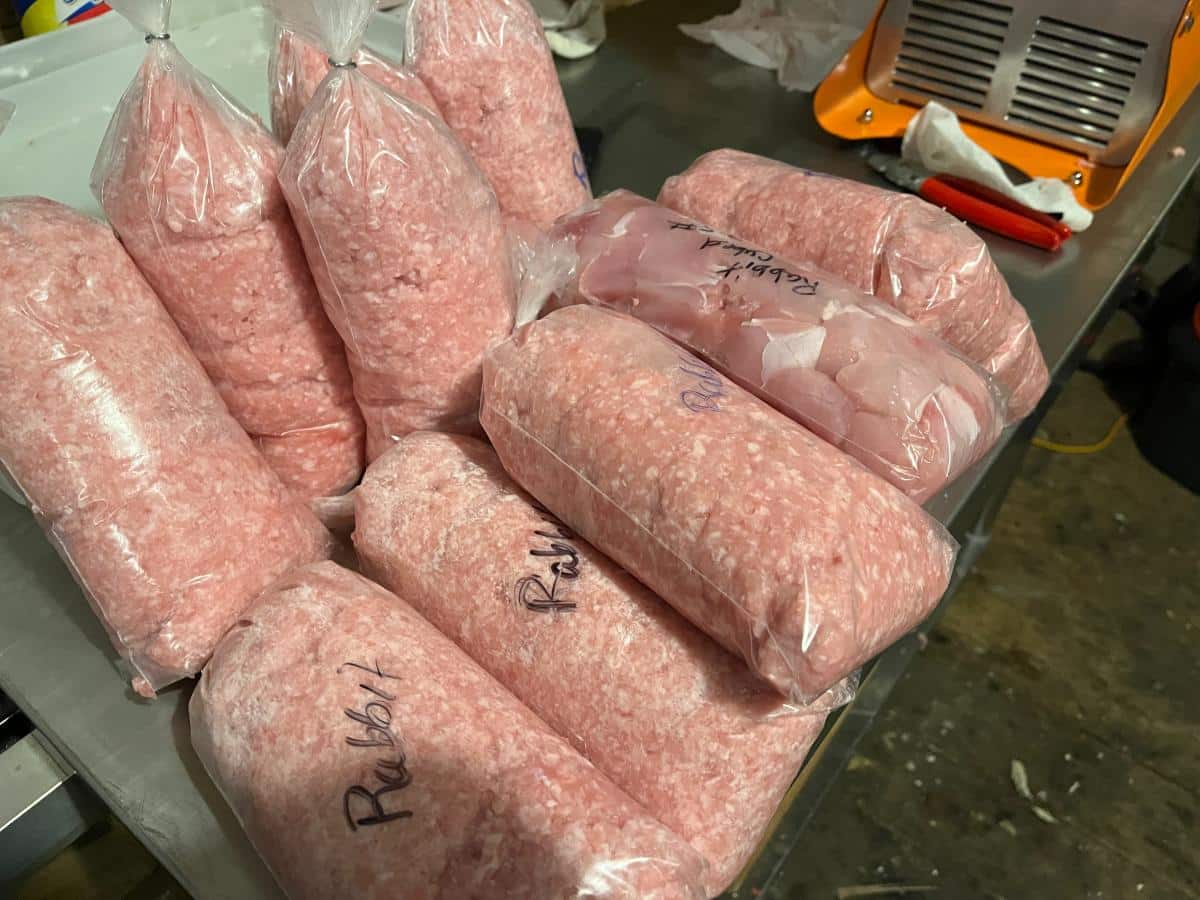
- Rabbit meat that you don’t cook as fresh within the first few days after processing should be promptly frozen, as soon as possible, to give you the best safety and best quality meat
- Because your fresh rabbit has not been transported or handled before you refrigerated it, you can probably go up to 5 days, but there is little point in pushing the boundary -- you can always thaw and use the meat from frozen; and because it was fresh and well handled, you aren’t even likely to notice a difference
- Although 32 F (0 C) is the freezing point of water, meat needs to be frozen at lower temperatures
- Zero degrees Fahrenheit (0 F or -18 C) or lower is the safe freezing temperature for rabbit meat (and all meats)
- Whole rabbits can be frozen up to 12 months before using
- Rabbit meat pieces can be kept for 9 months in the freezer
- After 9 to 12 months, you can safely consume frozen/thawed rabbit meat if you are happy with its quality, as long as it was continuously frozen
Refreezing Thawed Rabbit Meat
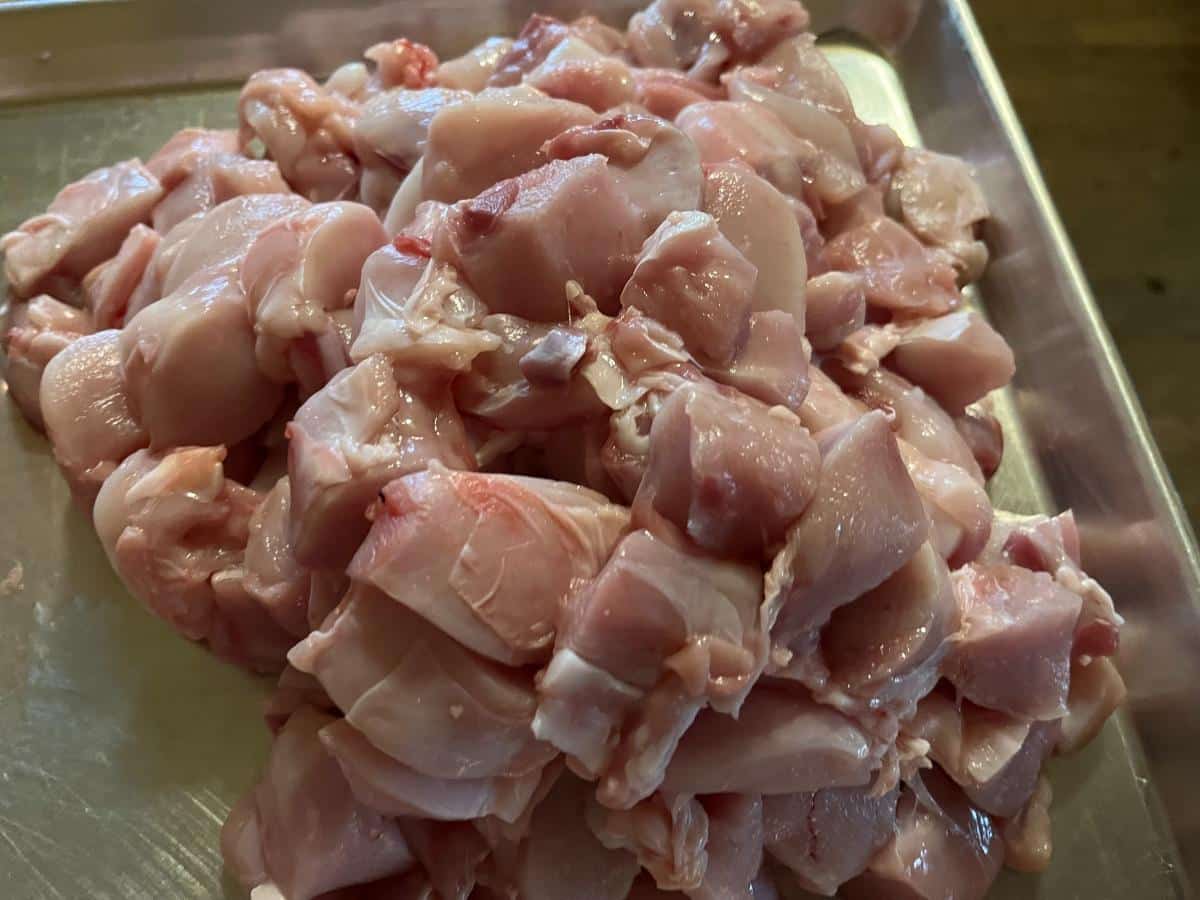
Though we are accustomed to never refreezing meat that was previously frozen and then thawed, as long as your rabbit meat stayed within safe times and temperatures, and it did not warm above 40 F (4 C) , then it can be safely frozen again, then thawed and used at a later date.
- Refreezing may be a moisture or quality issue, especially after multiple refreezings, but it is not a food safety issue
- Modern warnings not to refreeze meat come from commercial marketing schemes dating back around the 1950’s, but do not come from government or food safety sources, except if safe temperatures are not maintained during the chain
- There is a rule of thumb that says fresh meat can be refrozen up to three times without major quality problems
- You may not know how many times grocery store meat was previously frozen or refrozen, but you will know how many times your homegrown rabbit meat has been (if at all)
- If you suspect a lower quality due to refreezing, consider more forgiving and hydrating cooking methods, likes braising, soups, and stews
- Another good option is to cook the thawed rabbit meat, and then freeze the cooked meat, either as meat that you can grab and use later, or in a recipe, casserole, or dish
Safe Handling of Whole Rabbits and Rabbit Meat Makes for Delicious, Enjoyable Homegrown Meat
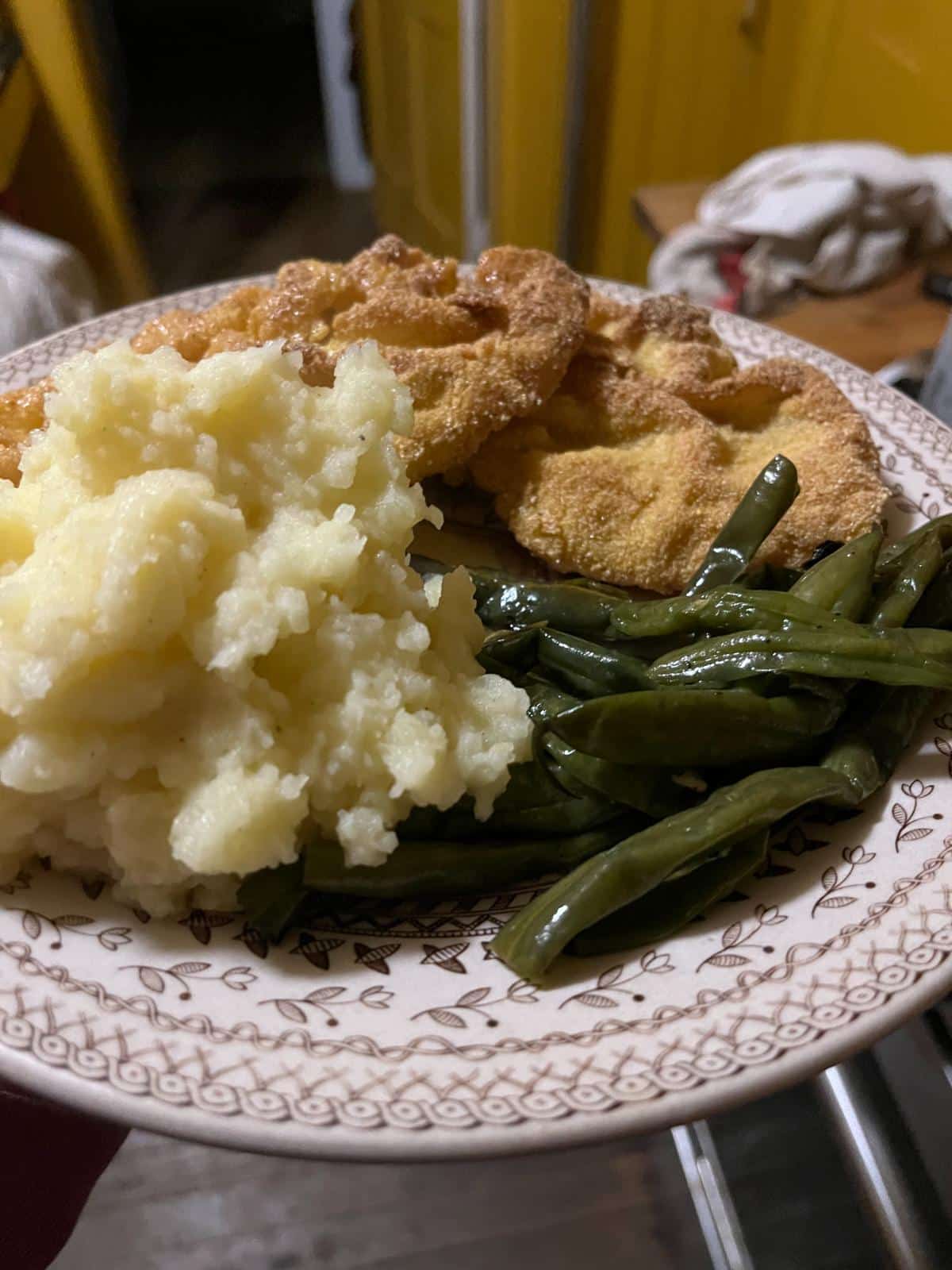
Learning how to safely handle, store, and use the meat you grow is key to a positive experience with start-to-finish meat rabbit production. When you know how to best manage your rabbit meat, you will be well on your way to a rewarding -- and tasty -- experience.
Further Reading and Resources:
- Rabbit: From Farm to Table – USDA FSIS
- Cook to a Safe Minimum Internal Temperature – FoodSafety.gov
- Rabbit Meat Storing and Cooking – Hostile Hare
- How Do You Cook Rabbit Safely – Ask USDA
- Raising Rabbits for Meat – Countryside
- Modernization of Poultry Slaughter Inspection: Amendments to Chilling Requirements – FSIS (USDA)
- Backyard Chickens – Raising & Processing Guide – Barnyards & Backyards (University of Wyoming)
- Home Processing of Poultry – University of Minnesota Extension
- Rabbit Recipes – Homestead Rabbits
- Cold Food Storage Chart – FoodSafety.gov
- “Danger Zone” (40 °F – 140 °F) – USDA FSIS Food Safety Basics
- The Final Word on Refreezing Homegrown Meats: Considerations for Safety and Quality – Mother Earth News
- Leftovers and Food Safety – USDA FSIS Food Safety Basics
Leave a Reply