
It can be difficult to know if a meat rabbit doe is bred or not. Fortunately, if a doe does not take and become pregnant in a given breeding, you don’t have to wait very long to find out, since the average gestation is only about one month.
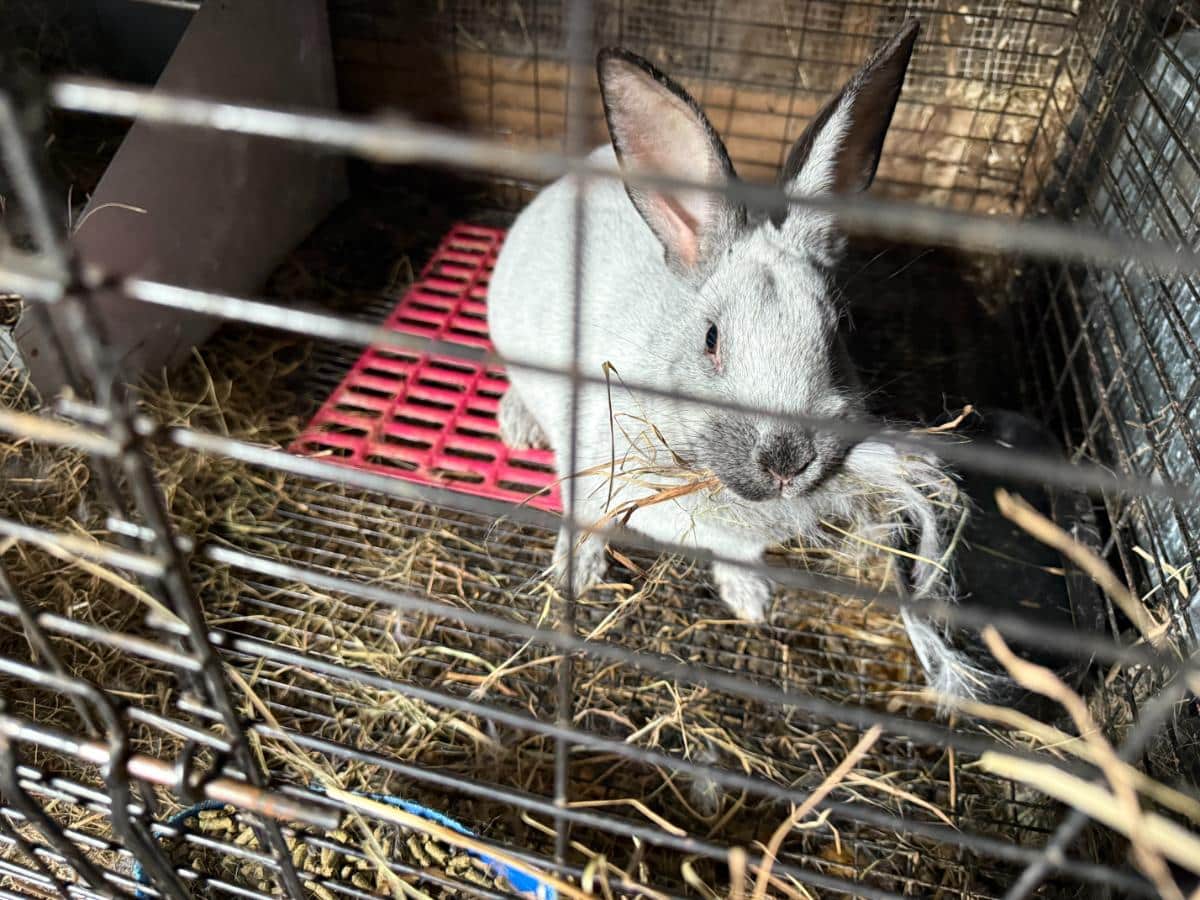
A bred doe often does not act or look much different than an unbred doe.
Jump to:
- Preliminary Versus False or Early Nesting
- Promising First Nesting Signs
- VIDEO: Promising Nest Building Behavior -- A Good Sign for Upcoming Kits
- Signs You DON’T Want to See in Nesting Does
- Later Nesting Signs Closer to Delivery
- Other Ways to Determine if a Meat Rabbit Doe is Pregnant
- Patience doesn’t cost much in time
Preliminary Versus False or Early Nesting
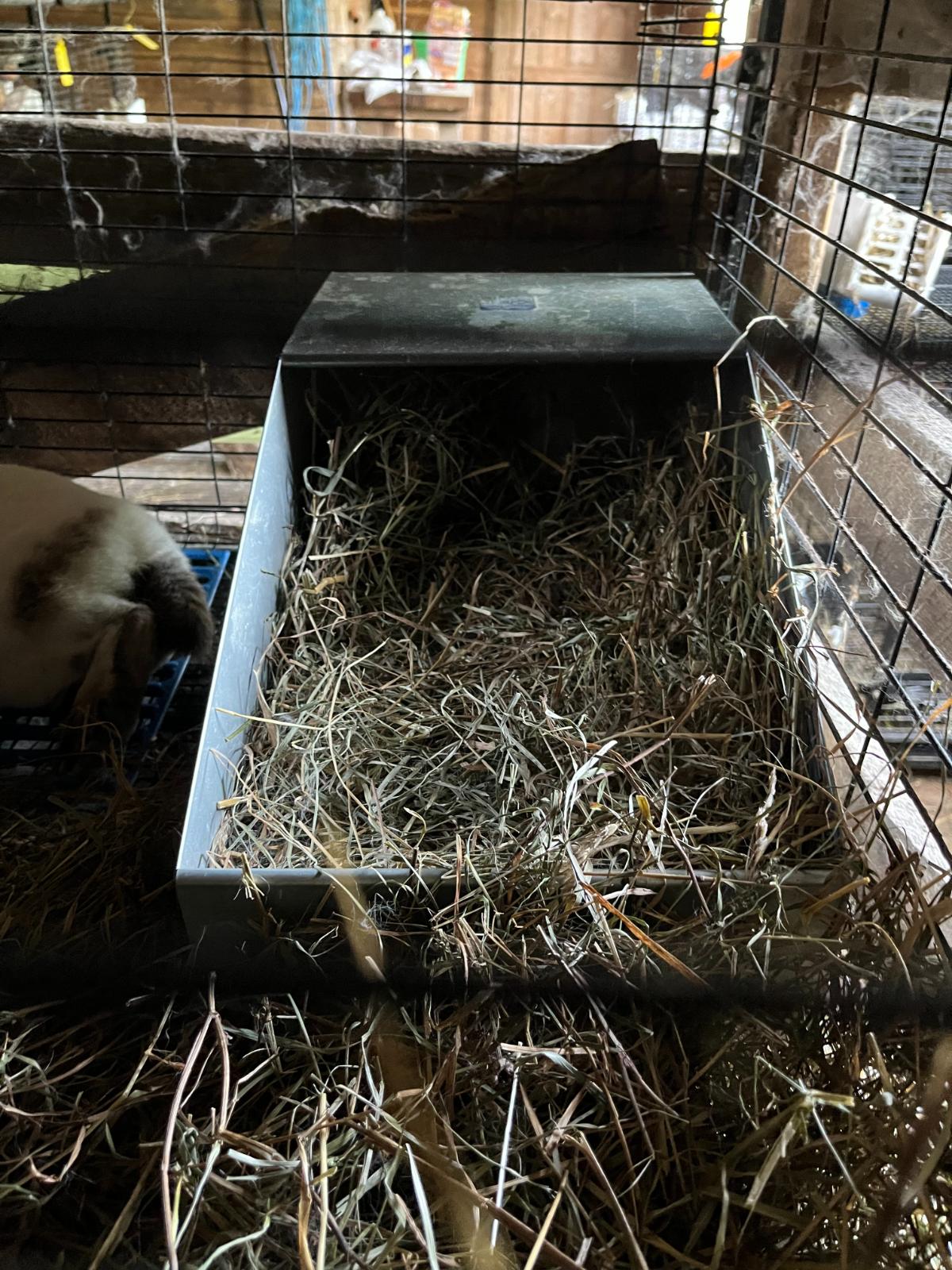
False nesting or very early nesting behavior may or may not indicate successful breeding. Preliminary nest building for this discussion is nest building that happens when you put the nest box in the doe’s cage on day 28 after breeding.
While nesting activity one or two weeks before birth is not a sure sign that there is or isn’t a pregnancy, what we are focusing on here is a more meaningful activity closer to kindling.
Most successfully bred does will show an interest and start building their nest very soon after the nest box is placed. Of course, they are all individuals and work in their own time, but usually a bred doe will start to prepare her nest within a day or two of it being put into the cage.
Promising First Nesting Signs
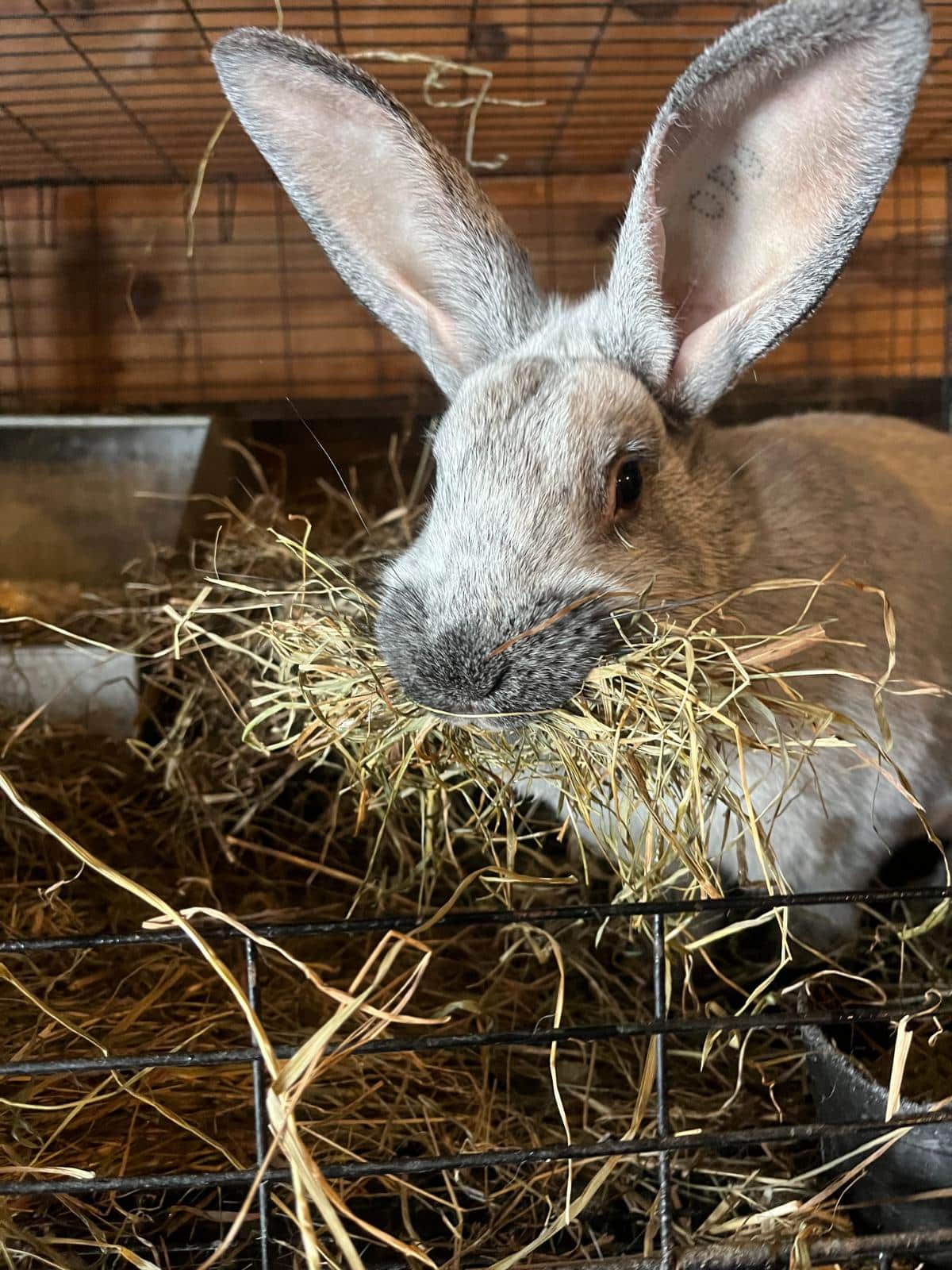
If you put a nest box in on day 28 and the doe starts showing the following signs, there’s a good chance you have kits coming within the next two to four days.
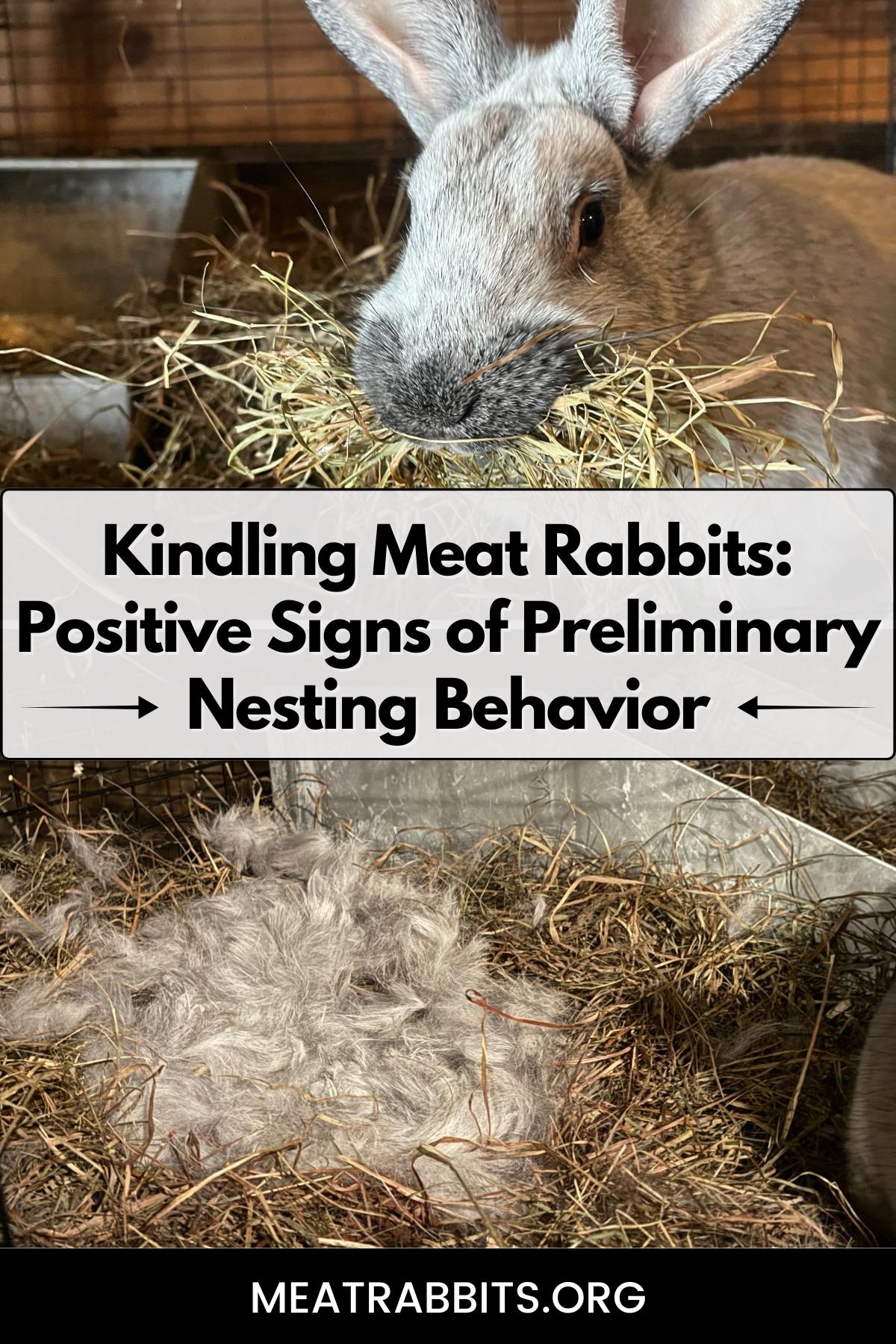
- Stashing hay. This looks like chewing hay into shorter lengths and gathering mouthfuls of hay. The does will then move the hay into the next box or the area where she intends to nest. You need this area to be the designated nest box area. If she does not stash her hay in the nest box, try to move the hay into it and encourage her to build her nest in the box.
- Carrying around mouthfuls of hay (sometimes does will do this without taking it to the nest)
- Fluffing and hollowing out hay mounds
- Lining and hollowing out the hay and nest box materials into a burrow
Whether you see these signs or not, continue to act as if your doe is bred. Give her what she needs. The most you risk is a bit of lost time and nesting materials. The alternative is far worse.
VIDEO: Promising Nest Building Behavior -- A Good Sign for Upcoming Kits
Signs You DON’T Want to See in Nesting Does
Rabbits don’t offer guarantees, so again, with or without these behaviors, continue to provide for the bred doe until the timeline for delivery has passed (for my rabbits, I call it a miss after 35 days post breeding; some breeds may be as long as 40 days, but usually if you don’t have kits by day 35, you won’t have kits).
- Lack of interest in nesting behavior
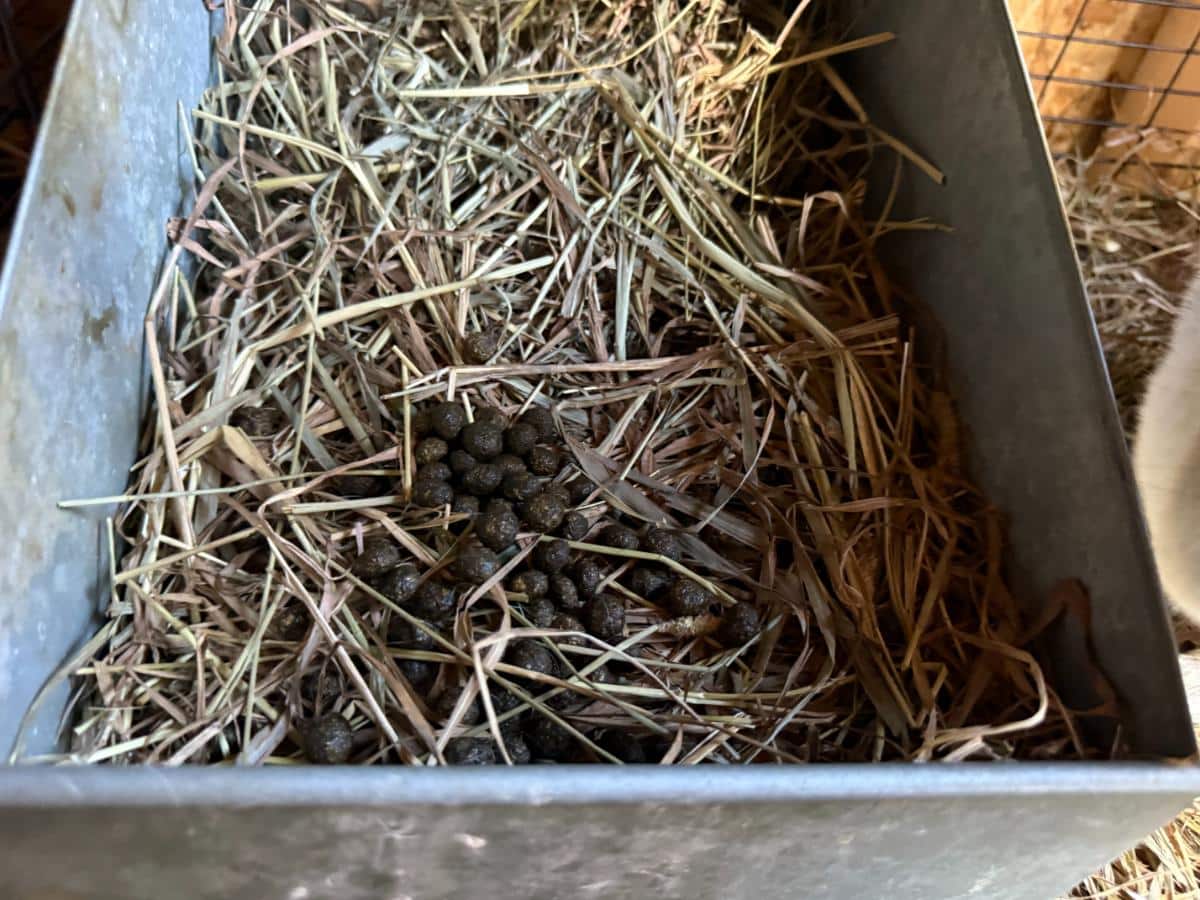
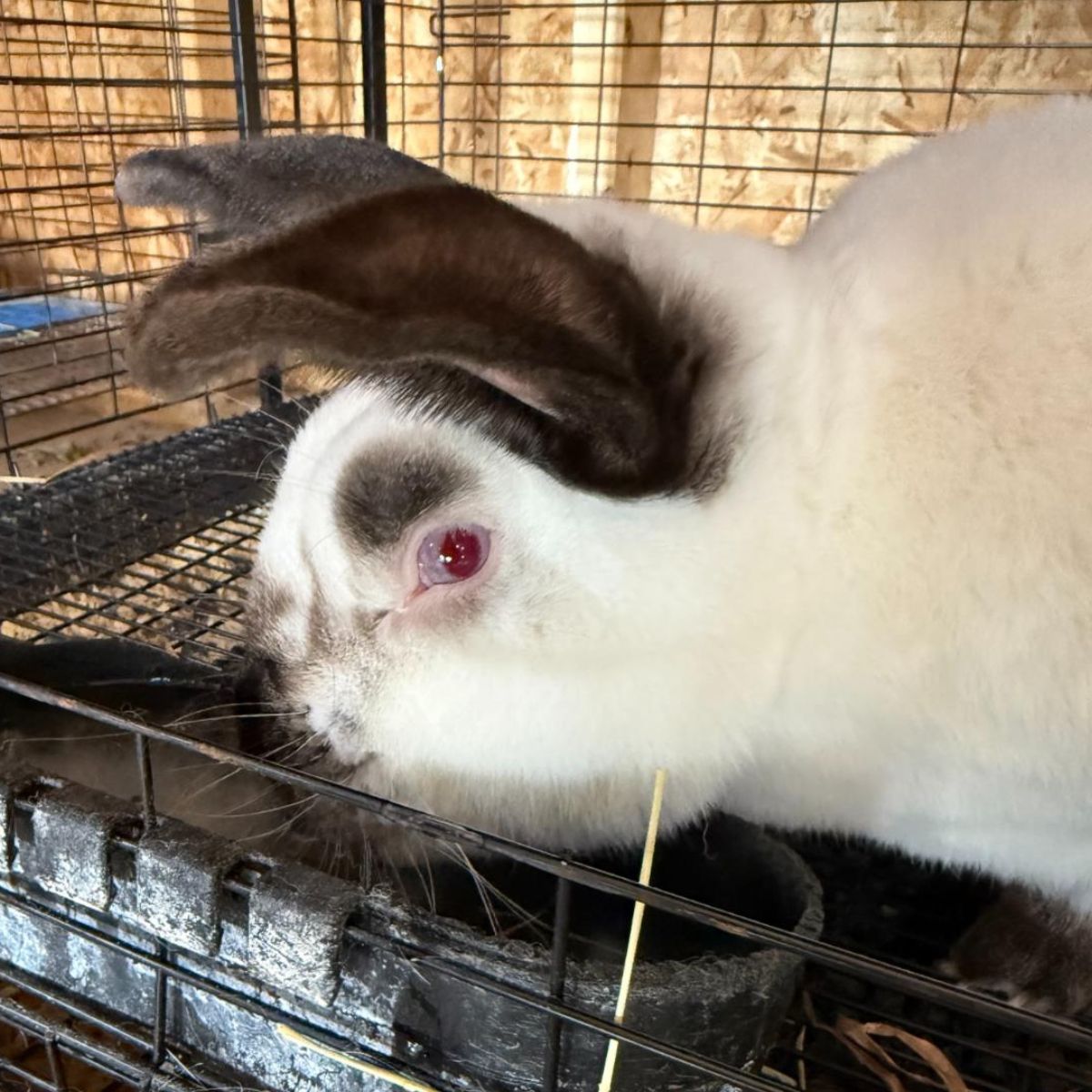
- Using the nest box as a litter box -- this does usually lean toward “not bred”, but is also not entirely conclusive.
Some does don't like their nest box, and may nest elsewhere in the cage and litter in the box (especially if you place it in their bathroom corner). I’ve even had some who mess in the front of the box as they build and deliver their kits in the back. However, usually defecating in a box is at least a sign they don’t plan to use it for kindling.
Later Nesting Signs Closer to Delivery
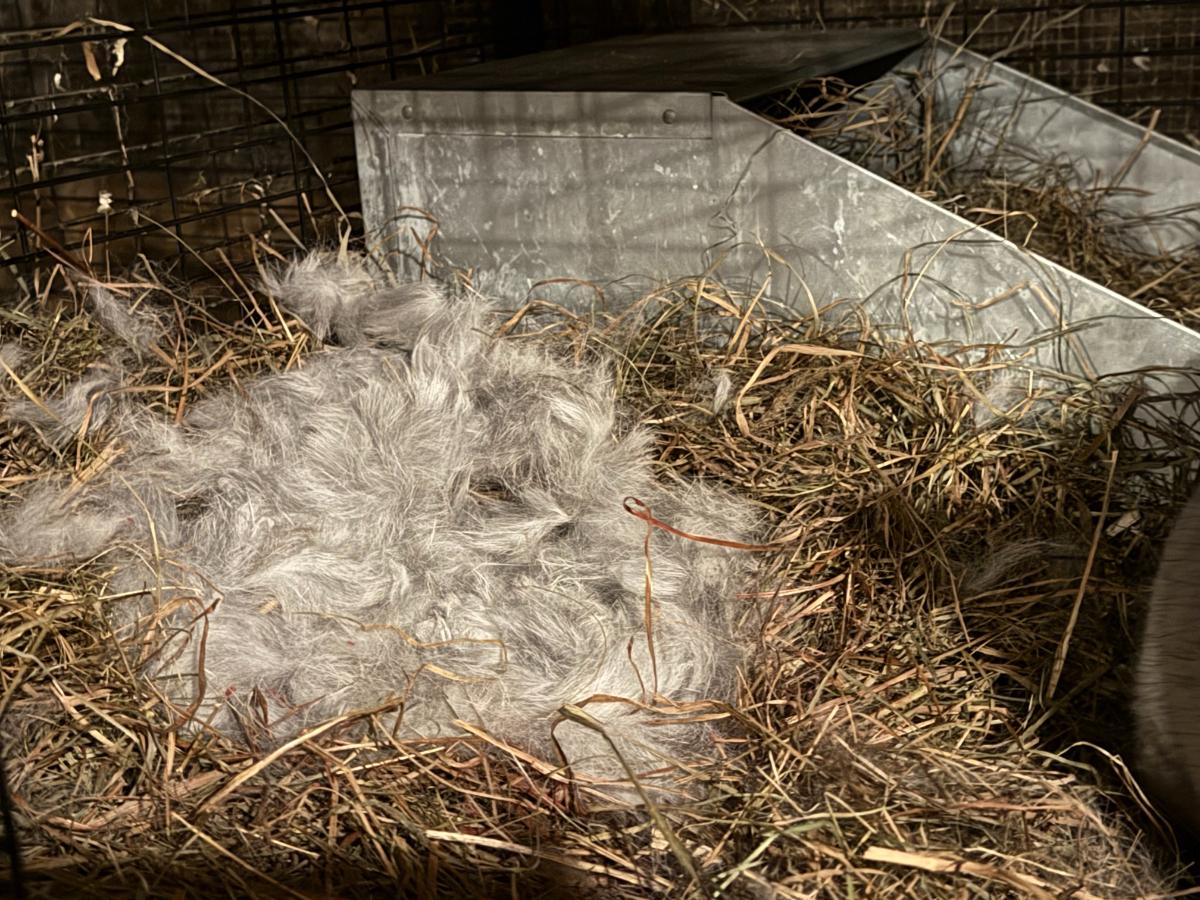
Your meat rabbit doe should pull fur to line the nest for her kits. This keeps them cushioned and warm. This is a pretty positive sign of pregnancy and impending delivery.
However, do not be discouraged if you don’t see this behavior ahead of time. Most does will not pull fur very early on. They will usually wait until just before or after delivery of the kits. Some will pull a small amount of fur ahead of time, and then really pull a pile after the whole litter is born.
Signs closer to delivery include:
- Pulling fur
- Lining the next box with fur
- Tufts of fur around the cage
Other Ways to Determine if a Meat Rabbit Doe is Pregnant
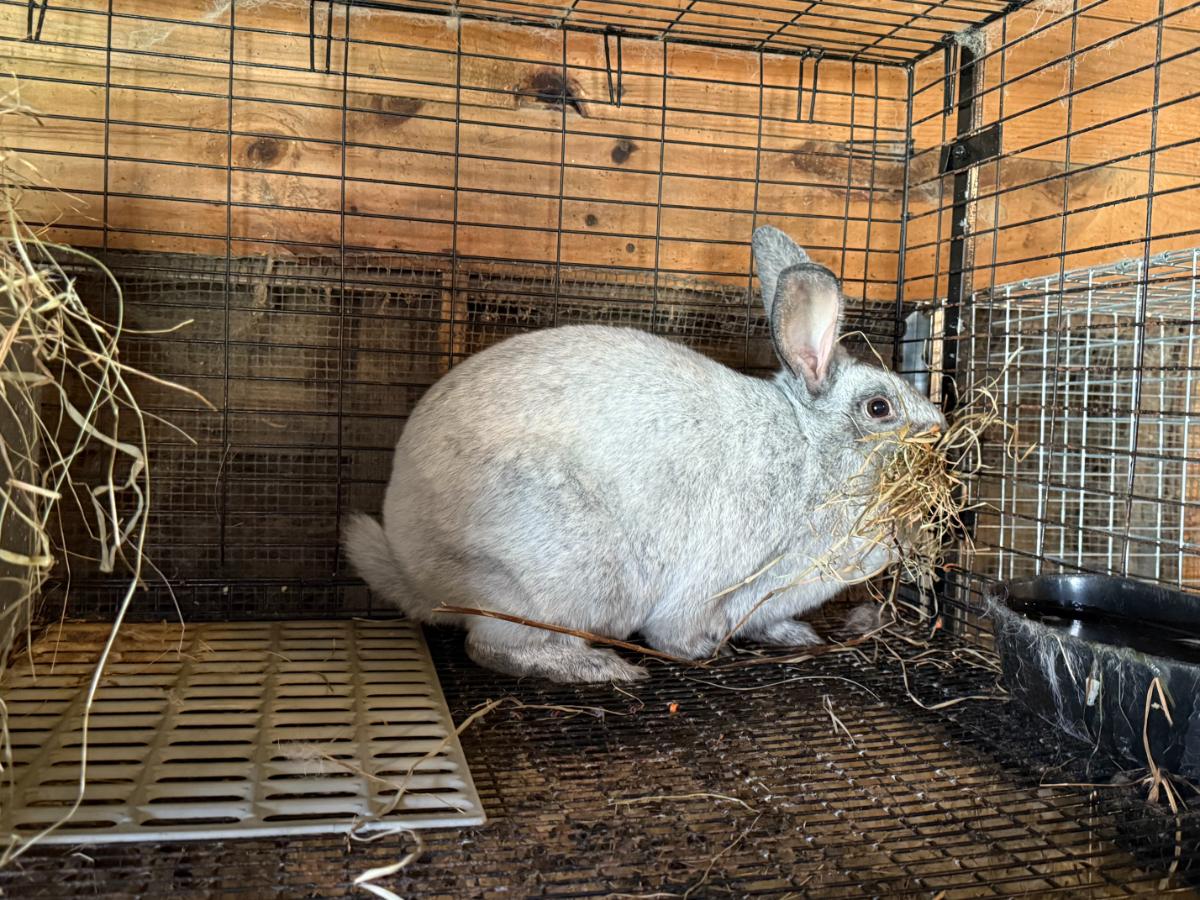
There are a couple of other ways to try and confirm a pregnancy in your meat rabbit doe.
Weight gain
If you weigh your doe at breeding and then weigh her weekly after that, you should see a modest increase in weight. This is not a sure sign of pregnancy because an unbred doe that is being fed for pregnancy can also gain weight. However, it might be some indication of success to prepare you. Just don’t count on it as an absolute.
Palpation
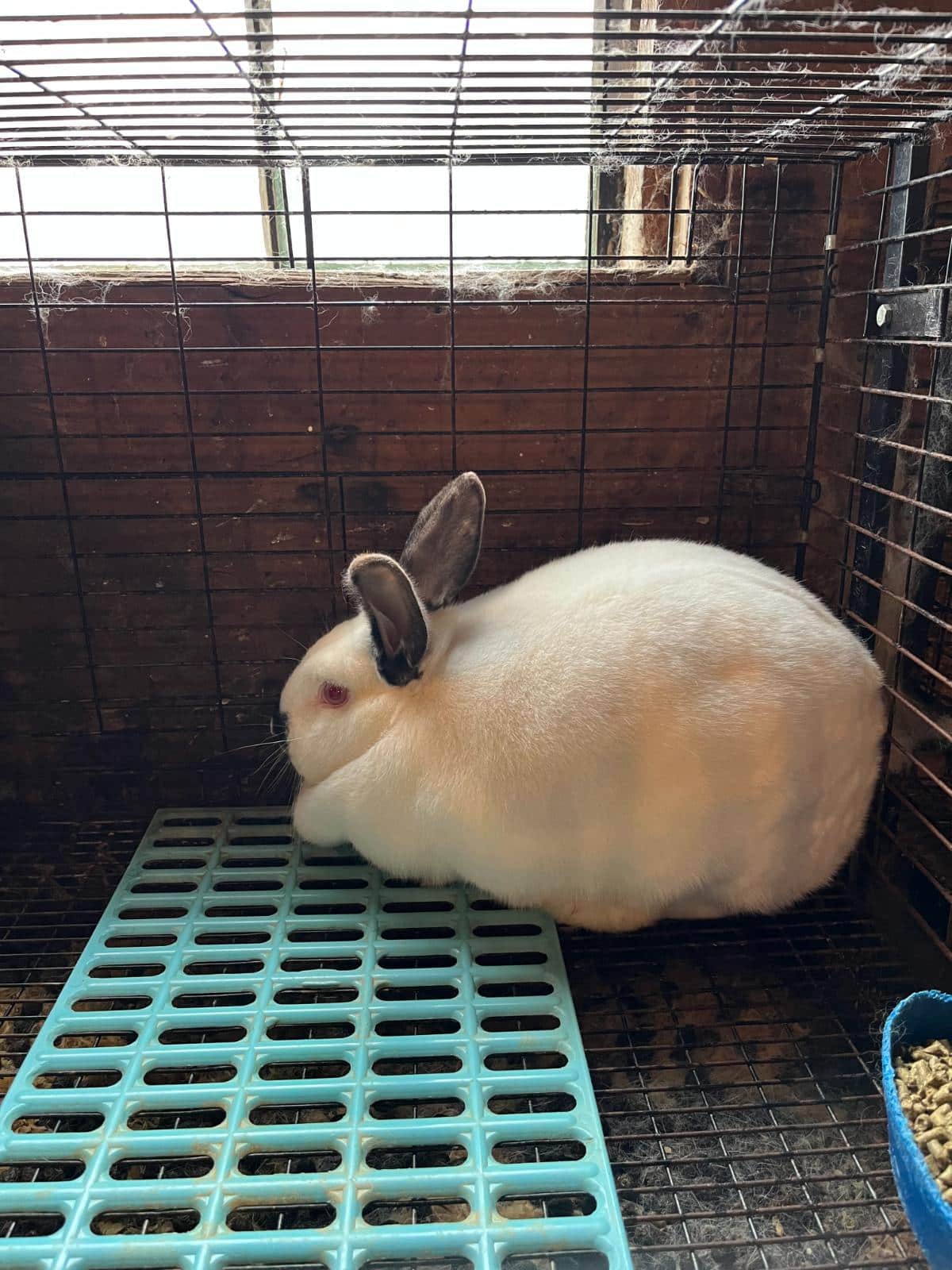
Time and kits born are really the only guarantees that a doe was bred. However, if you want to know sooner than the 32 days (on average) until delivery, you could try palpating the abdomen of the doe.
Palpating is the process of gently but firmly feeling through the belly to feel for developing kits. Palpating can be done after 10 days, but should be done before 14 days of gestation. Developing kits will feel like marbles and will enlarge as the pregnancy progresses. There is some indication that palpating after 14 days may pose a risk to the rabbit or her developing kits.
This is a technique that requires practice and repetition.
Palpating is still not a guarantee, but a skilled breeder who is experienced in palpating will have a strong idea of whether the doe is bred. Even a person skilled in palpating can mistake internal organs or waste for kits in the womb.
Ultrasound
Another option would be to have an ultrasound performed on the pregnant doe. This usually requires a vet, or you would have to purchase equipment. A positive ultrasound performed by someone who knows how to perform one safely and who knows for certain what they are looking for would be the most accurate confirmation of pregnancy.
Ultrasound can be costly. It can not be performed accurately until after seven to ten days.
At the end of the day, either of these techniques may be of negligible value. There is some risk to trying to rebreed a doe that you think is not bred if it is actually pregnant. Abortion can result, or there can be fighting between the doe and buck, which can result in miscarriage or injury to either the buck or the doe.
Patience doesn’t cost much in time
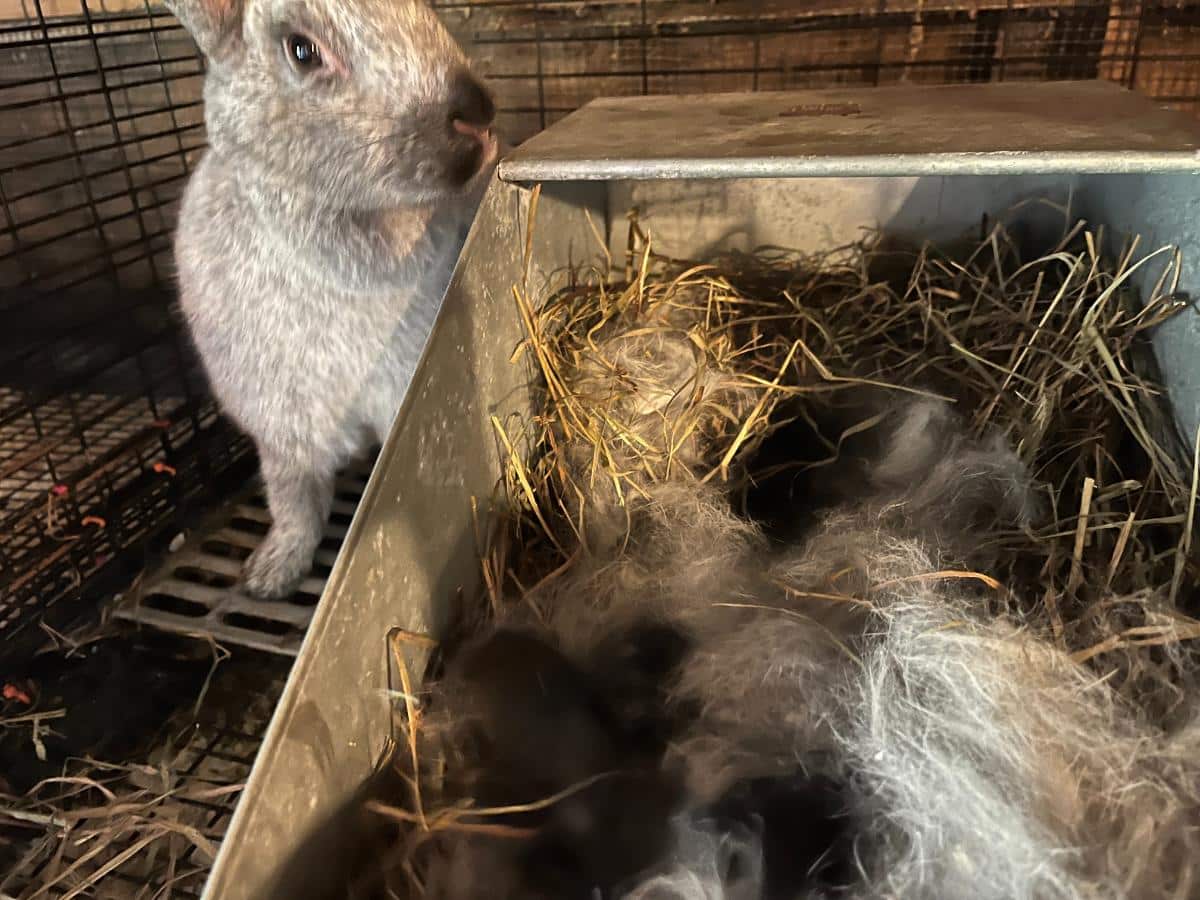
In many cases, it is best (and certainly the least costly) to just wait out the 35 to 40 days until maximum gestation, and rebreed at that time if the doe does not deliver. This only costs you a couple of weeks, from when palpating or an ultrasound can be performed anyway.
You’ll need to wait a minimum of one and a half to two weeks to perform palpation or an ultrasound. A false negative could cause problems. From the time you can perform these tests, you’d only have to wait about two more weeks to see if the doe delivers anyway.


Leave a Reply